Close
Digital Health & Ai Innovation summit 2026
Medical Taiwan 2026

SINTX Technologies Develops New Mask Fabric with Silicon Nitride

SINTX Technologies Develops New Mask Fabric with Silicon Nitride

SINTX Technologies, Inc., an original equipment manufacturer of silicon nitride ceramic for medical and non-medical applications, announced progress toward the manufacture of a “catch-and-kill” mask that will inactivate respiratory viruses. Exposure to silicon nitride has been shown to neutralize several bacterial species and viral strains.

The company said that it has successfully dispersed and embedded silicon nitride particles into nonwoven and woven fabric fibers. Optimization of this process, fabric safety and efficacy testing, and manufacturing scale-up are the next steps beyond this critical milestone.

“By investing in our human resources and equipment, we expedited this development in-house, rather than relying on outside parties,” said Dr. Bal, President, and CEO of SINTX Technologies. “The attached scanning electron image shows silicon nitride particles preferentially bonded to polypropylene fibers, at the micron level, without stray particles. Fabrics containing silicon nitride from this process will be tested for their antiviral effect. Previous scientific data have shown that silicon nitride strongly inactivates SAR-CoV-2, the virus causing the COVID-19 pandemic.”

“Initial process development activities have shown promising results and we are hopeful that we will soon have a mask that catches and kills the coronavirus,” said Bruce Lorange, CEO of O2TODAY (www.O2TODAY.com), who has an agreement with SINTX to develop and commercialize antimicrobial face masks. “We are excited by the rapid progress we are making and looking forward to sharing more updates as we have them.”

“We believe that the consumer market for a face mask capable of inactivating bacteria and viruses extends well beyond the present concerns about COVID-19,” said Dr. Bal. “In densely-packed Asian cities, for example, respiratory viruses and air pollution are common health concerns, and protective mask use existed even before COVID-19. Similar concerns may endure in Western countries as well, long after a COVID-19 vaccine is freely available. We believe that our antipathogenic masks and the underlying fabric technology will have lasting consumer demand.”

About SINTX Technologies, Inc.

SINTX Technologies is an OEM ceramics company that develops and commercializes silicon nitride for medical and non-medical applications. The core strength of SINTX Technologies is the manufacturing, research, and development of silicon nitride ceramics for external partners. The Company presently manufactures silicon nitride powders and components in its FDA registered and ISO 13485:2016 certified manufacturing facility.

MTHFR Gene Mutation – Symptoms And Treatments

MTHFR Gene Mutation - Symptoms And Treatments

Methylenetetrahydrofolate reductase, otherwise known as MTHFR, is an enzyme that is responsible for breaking down the amino acid homocysteine. In fact, it helps convert the folic acid into an active form that is called L-methylfolate and that plays an important role in regulating the levels of dopamine, serotonin and norepinephrine. Simply put, it helps regulate our mood.

As explained by Genesight, there are people that carry a mutation of this gene, which negatively affects their ability to produce L-methylfolate. This abnormality can either limit the functioning of this enzyme or completely deactivate it. In both of those cases, people carrying the mutation are in risk of developing certain medical conditions, including mental disorders, birth abnormalities, glaucoma and even some types of cancer.

We all carry two MTHFR genes in our bodies, one from each parent. Consequently, everyone can have either one or two variations of the gene. Of course, you can also have no mutations, but we won’t be talking about that option today. Anyway, it is generally believed that carrying two variations can lead to more serious problems than carrying only one.

These are discovered with the help of genetic testing, but the truth is that this type of testing isn’t recommended unless a person already shows to have high levels of homocysteine, or unless there are certain other indications that you might be carrying a mutation. This is because the test can be rather expensive and might not be covered by insurance. Those “other indications” that I have mentioned are actually medical issues that might be symptoms of MTHFR mutation. Let’s check those symptoms out.

Symptoms

It’s important to understand that symptoms can vary from person to person, meaning that there isn’t one clear indicator of MTHFR mutation. In addition to that, you need to keep in mind that this gene is still being researched, so the things that have been found out so far might not be conclusive. Regardless, research has shown that there are some indicators of MTHFR mutation, so let’s check them out.

First, you might want to get more info about the overall condition: https://www.medicalnewstoday.com/articles/326181

There are multiple medical conditions that are said to be caused by this abnormality in the MTHFR genes. Those include migraines, chronic pain and fatigue, certain cardiovascular diseases, as well as some mental disorders such as anxiety, depression, schizophrenia and bipolar disorders. It’s also said that recurrent miscarriages in women that are of child-bearing age can also be a symptom of this genetic abnormality.

Once again, I need to emphasize that the results of these researches still aren’t conclusive. This doesn’t mean that the info I provided you with isn’t correct. It simply means that new findings might emerge overtime and those might even extend the list of possible symptoms and conditions connected to the mutations, which might be helpful for the discovery process.

There is one more thing you should remember when it comes to the discovery of this abnormality. A large number of people never actually discover these mutations even though they have been carrying them all along. This is due to the fact that testing isn’t so frequently done, as explained above. Unless people develop certain problems that might be linked to this abnormality, the tests will most likely never be done.

Treatment

First of all, you should understand that having a MTHFR mutation doesn’t necessarily mean you need a specific treatment plan. Most likely, vitamin B will be enough to supplement for certain things that this gene abnormality might be causing. As you can see here, treatment usually consists of addressing the health issues that might be caused by this particular mutation.

Most of those treatments don’t even take MTHFR into account, but there is an exception to that rule. For example, you might be diagnosed with MTHFR mutation, high homocysteine levels and certain vitamins deficiencies all at the same time. That’s when the gene is definitely taken into consideration and doctors usually recommend all the supplementation necessary for dealing with those deficiencies, while also suggesting treatment plans that might be needed for specific medical conditions that might be caused by this particular combination of issues. Preventive measures for keeping homocysteine levels low can also be taken.

AIG Hospitals and Satisfai Health announce collaboration to transform Gastroenterology and GI Endoscopy with Artificial Intelligence

AIG Hospitals and Satisfai Health announce collaboration to transform Gastroenterology and GI Endoscopy with Artificial Intelligence

Satisfai Health Inc., a leading medical company providing artificial intelligence solutions in the field of Gastroenterology, has signed a data licensing and partnership agreement with AIG Hospitals, one of the leading hospitals in India, and the largest centre in Asia for therapeutic endoscopy, to help drive Satisfai’s mission to be the global leader in providing AI solutions in Gastroenterology and GI Endoscopy.

Satisfai Health has already achieved notable success in this domain as a founding member of the ai4gi joint venture, through its license & co-development agreement with Olympus Corporation of the Americas in relation to applying artificial intelligence solutions to help practitioners better diagnose colon polyps during screening for colorectal cancer.

Satisfai Health has continued to extend its reach in terms of developing AI tools in Gastroenterology towards clinical applicability and commercialization using its extensive networks for data procurement, curation, annotation, and advocacy via the global clinical leaders working with Satisfai.

AIG Hospitals is at the forefront of Gastroenterology in India, across Asia, and globally, having been enrolled as a member of the Mayo Clinic Care Network since 2019. The hospital group has been keen to collaborate with a leading medical AI group to harness the power of the huge volume of high quality data now being procured by AIG Hospitals— where up to 500 endoscopic procedures are now completed daily.

“We are now very well established in the rapidly growing field as the leaders of Artificial Intelligence in Gastroenterology, with some critical milestones now achieved for our Company, both academically and commercially”, said Dr Michael Byrne, CEO and founder of Satisfai Health. “A key strategic evolution for Satisfai is the opportunity to partner with truly world renowned groups such as AIG Hospitals. This partnership will dramatically increase our data pipeline and access to very high quality endoscopic and clinical data for our work in AI applications. This Agreement solidifies our collaboration with the clinical innovators and thought-leaders at AIG, including Dr Nageshwar Reddy and Dr Rakesh Kalapala.”

“We are delighted to collaborate with Satisfai Health in the field of AI in Gastroenterology”, said Dr Nageshwar Reddy, chairman of AIG Hospitals. “We are always at the forefront of developing and contributing to innovations in the field of GI Endoscopy, and I am sure AI in GI will take a big leap forward in the near future.”

“I am excited to be a part of this great collaborative work with Satisfai Health”, said Dr Rakesh Kalapala, Director of Endoscopy at AIG. “We at AIG Hospitals thrive constantly for innovation and technology development in GI Endoscopy. I look forward to a productive association and to quickly develop standard algorithms using Artificial Intelligence.”

“AI solutions in gastroenterology are fast becoming a reality” said Dr Doug Rex, a global leader in endoscopy. “Satisfai is the leader at the cutting edge in this space, and this partnership and collaboration with a group I know well—AIG hospitals—can only serve to bring such solutions to our patients sooner. The quality and volume of clinical and endoscopic data generated at AIG is highly impressive”.

“Canada continues to invest heavily in the field of artificial intelligence and machine learning, and recognizes the importance of supporting Canadian companies abroad as they develop new medical technologies,” said Nadir Patel, High Commissioner for Canada to India. “Canada welcomes this new partnership between Satisfai Health Inc. and AIG Hospitals Group in India; a great example of a successful Canadian company advancing and accelerating the development of new AI solutions for early detection and diagnosis of GI cancers, potentially saving lives in Canada, India, and abroad.”


About Satisfai Health Inc.

Satisfai Health Inc. is a leading medical solutions provider specializing in AI applications applied to large addressable markets in gastroenterology. Its solutions deliver real-time analysis of medical imagery and provide clinicians with real-time decision-making intelligence that dramatically improves patient outcomes. Satisfai is supported by a highly respected board of medical clinicians and key opinion leaders who operate at the top of their fields in the many areas of Gastroenterology, and provide us with access to high quality medical data and imaging while also ensuring we focus on the clinical problems with the widest market appeal. We enjoy a strong voice on academic panels and leading GI societies as well as direct access to very large industry players seeking to adopt new AI technologies in Gastroenterology.

Satisfai is a founding member of “ai4gi”, a commercial joint venture with Olympus Corporation of the Americas to develop and commercialize AI solutions for real-time clinical decision support during colonoscopy.

About AIG Hospitals Group

AIG Hospitals is a unit of Asian Institute of Gastroenterology, India’s foremost Gastroenterology hospital. Spread across 1.4 million sq.ft, AIG Hospitals is a state-of-the-art 800-bed super specialty Hospital, which is among the largest hospitals in the country today.

Led by Dr. D Nageshwar Reddy, Chairman and Managing Director & Dr. G V Rao, Director, AIG Hospitals offers comprehensive healthcare services across 8 key Centres of Excellence – Medical & Surgical Gastroenterology, Liver Sciences, Organ Transplant, Pulmonary Sciences, Renal Sciences, Oncology, Cardiac Sciences, Obesity & Metabolic Therapy.

The Hospital has been custom designed to undertake transplant surgeries including Liver, Kidney, Heart, Pancreas and Islet Cell. All the above services will be well supported by active Emergency and Critical Care services to ensure sick patients get the care they truly deserve.

AIG Hospitals is the first health care facility in India to become a member of the Mayo Clinic Care Network, a group of carefully vetted, independent health care systems that have special access to Mayo Clinic’s knowledge and expertise.


Masimo Announces Consumer Launch of the Radius T Continuous Thermometer, a More Convenient Way to Keep Track of Fever

Masimo Announces Consumer Launch of the Radius T Continuous Thermometer, a More Convenient Way to Keep Track of Fever

Masimo announced the launch of the Radius T° Continuous Thermometer for consumers. Unlike spot-check, episodic thermometers, the wearable, wireless Radius T° measures body temperature continuously, seamlessly transmitting data and customizable temperature notifications to the user’s smartphone – helping caregivers, such as parents, monitor loved ones’ temperatures even while they sleep.

Radius T° represents a paradigm shift in thermometry by making it continuous, wearable, and hassle-free. Traditional periodic and invasive methods depend on the user repeatedly conducting a series of steps that can interrupt daily activities, including sleep, and can miss body temperature trends and patterns. With a traditional thermometer, a person may only notice a spike in temperature hours after a spike has occurred, or may not even become aware of it if it is during sleep.

By contrast, Radius T° continuously and seamlessly measures temperatures using a small, inconspicuous, wearable sensor that can be easily applied to anyone from children to elderly adults – with no action needed after initial application to the skin. Radius T° eliminates manual measurements while providing continuous insight into changes in the user’s temperature and helps users understand which way their temperature is trending. In addition, Radius T° uses proprietary algorithms to provide body temperature measurements for users five years or older that approximate oral temperature, not just external skin temperature. Radius T° provides temperature measurements with laboratory accuracy within ±0.1°C, whereas other oral thermometry solutions typically have laboratory accuracy within ±0.2°C.

Earlier this year, Masimo launched Radius T° as part of the Masimo SafetyNet™ remote patient management solution, for use both in hospitals and by patients at home. Dr. Neal Fleming, M.D., Ph.D., Vice Chair for Education in the Department of Anesthesiology and Pain Medicine at UC Davis Health, commenting on his experience using Radius T°, said, “Radius T° is noninvasive and convenient for patients. I do not have to interrupt their daily activities or their sleep and it provides me continuous trend data that is a powerful guide to patient care. It makes it easier for me to recognize possible changes in their symptoms.”

Flexible and slim, each disposable Radius T° sensor can be worn comfortably for up to eight days, and is water resistant during shower and exercise. Users are free to carry on with their daily activities and sleep, without interruption or hassle – all while Radius T° continuously collects temperature data. Using built-in Bluetooth®, the sensor easily pairs with the Masimo Radius T° App on the user’s smartphone, providing real-time temperature values with user-definable automatic notifications (for example, when temperature exceeds a certain user-selected threshold or if it spikes), as well as detailed historical trending data, revealing the baseline and fluctuation patterns unique to each person that can help users determine whether a rise in temperature warrants action. In addition, the user-friendly Masimo Radius T° App can support multiple family member profiles and can be easily set to schedule medication reminders.

Joe Kiani, Founder and CEO of Masimo, said, “We’re excited to expand our growing line of consumer solutions, which includes MightySat® and Masimo Sleep™, with the Radius T° Continuous Thermometer. For years, clinicians have trusted Masimo technology to monitor patients in the hospital. With Radius T° and our other consumer solutions, we’re bringing our expertise and experience in accurately and reliably measuring physiological data from the hospital to the home.”

About Masimo
Masimo is a global medical technology company that develops and produces a wide array of industry-leading monitoring technologies, including innovative measurements, sensors, patient monitors, and automation and connectivity solutions. Our mission is to improve patient outcomes and reduce the cost of care. Masimo SET® Measure-through Motion and Low Perfusion™ pulse oximetry, introduced in 1995, has been shown in over 100 independent and objective studies to outperform other pulse oximetry technologies.1 Masimo SET® has also been shown to help clinicians reduce severe retinopathy of prematurity in neonates,2 improve CCHD screening in newborns,3 and, when used for continuous monitoring with Masimo Patient SafetyNet™ in post-surgical wards, reduce rapid response team activations, ICU transfers, and costs.

OSF HealthCare implements new digital solutions

OSF HealthCare implements new digital solutions

Kyruus, the leader in provider search and scheduling solutions for health systems, announced OSF HealthCare, a nonprofit Catholic health system based in Illinois, is connecting consumers with care through Kyruus ProviderMatch for Consumers. Through its work with Kyruus, OSF HealthCare is empowering consumers with a more dynamic and robust care search experience on its website – a core component of the health system’s digital transformation. As part of the implementation, OSF HealthCare also activated an integration between Kyruus and GYANT to help patients navigate to the right care through their virtual assistant.

Owned and operated by The Sisters of the Third Order of St. Francis, OSF HealthCare serves patients across Illinois and Michigan at more than 140 locations, including 14 hospitals. In 2019, it launched its Saint Gabriel Digital Health initiative aimed at using digital technology to expand patient access and meet consumer demand for convenience. OSF HealthCare chose the award-winning ProviderMatch for Consumers solution to deliver a more modern online search experience, enabling consumers to find appropriate providers – along with other convenient care options, such as urgent or virtual care – using keyword-based search and flexible filters for key matching criteria. The solution will also allow OSF HealthCare to integrate and expand online scheduling.

In order to maintain accurate provider and location information to power the new search experience, OSF HealthCare first worked with Kyruus to create a comprehensive directory. An organization that has continuously expanded providers and organizations under its umbrella, OSF HealthCare lacked a centralized solution to manage all of this data efficiently. With the KyruusOne platform, the health system not only gained a robust systemwide directory, but also a new level of insight into providers’ clinical areas of focus – paving the way for more advanced patient-provider matching online.

“Even before the COVID-19 pandemic put a spotlight on the need for better digital access in healthcare, convenience was a rising factor in consumer care decisions and experiences,” said Jennifer Junis, senior vice president of Saint Gabriel Digital Health at OSF HealthCare. “We’re thrilled to now be helping consumers more easily find the providers, services, locations, and modes of care that best match their needs through ProviderMatch.”

OSF HealthCare also built on the deployment of Clare, its virtual assistant from GYANT, by utilizing an integration with Kyruus to help consumers further navigate to the right care online. The integration enables consumers engaging with Clare to find providers by name, location, or keyword within a chat-based experience.

“OSF HealthCare is a great example of an organization that is rapidly accelerating digital access innovation, while ensuring that it weaves together solutions from different vendors effectively for an integrated consumer experience online,” said Dr. Graham Gardner, CEO of Kyruus. “We are honored that OSF HealthCare chose us as a partner in the Saint Gabriel initiative and look forward to continuing to support their commitment to delivering more convenient, digitally-enabled access.”

Manchester University NHS FT uses Versius to perform first robotic keyhole surgery

Asensus Surgical Announces Machine Learning and Cloud Infrastructure Collaboration with Google Cloud to Advance Performance-Guided Surgery

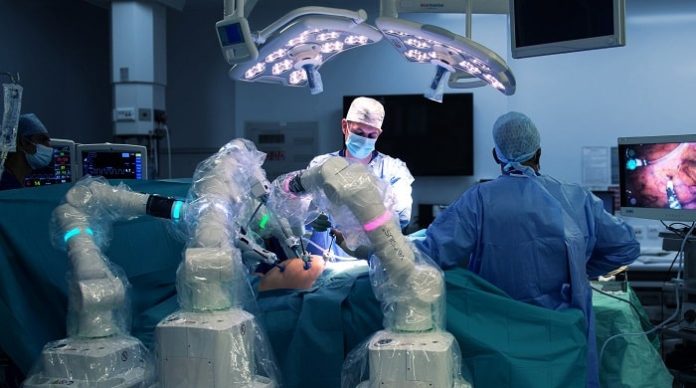
CMR Surgical has announced the introduction of its surgical robotics system, Versius at Manchester Royal Infirmary (MRI), part of the Manchester University NHS FT.

Versius becomes the first surgical robot to be used to perform minimal access surgery at Manchester Royal Infirmary and will initially be used to perform colorectal cancer surgery.

WHY IT MATTERS

Colorectal surgery is commonly used to remove part of the bowel for people with inflammatory bowel disease or to remove tumour cells from patients with colorectal cancer.

The procedures are often complex and may last for many hours. Using robotic keyhole surgery enables surgeons to bring the benefits of keyhole surgery to the patient which includes the potential for faster recovery time, as well as making the procedure less strenuous on the surgeon.

At Manchester Royal Infirmary, it is estimated that this could equate to hundreds of bed days freed up each year.

THE LARGER TREND

Keen to expand, Versius has launched its technology to a number of hospitals. Frimley Health NHS Foundation Trust has partnered with CMR Surgical to introduce the Versius Surgical Robotic System to expand its surgical robotics programme.

Last month, Versius’ surgical robotic system launched in France at the Clinique du Parc Hospital in Saint-Etienne, to perform procedures such as hernia repair surgeries, prostatectomies and hysterectomies.

ON THE RECORD

Mr Nicholas A. Stylianides, consultant colorectal and general surgeon at Manchester Royal Infirmary said: “The introduction of Versius at Manchester Royal Infirmary is an exciting step forward and one that will help our team continue to deliver world-leading surgical training and care. Today, more than ever, it is vital that we are able to minimise complications from surgery and help patients recover quickly – keeping them well and out of hospital. Using robotic minimal access surgery more frequently will play an important role in this and Versius will therefore be a critical tool for our surgical teams moving forward.”

Mark Slack, chief medical officer at CMR Surgical said: “The fact that this leading teaching hospital has never had a surgical robot highlights the need for a new approach to surgical robotics and reinforces the value of the defining features of Versius – its portability, versatility and its cost-effectiveness. These are attributes that we believe will open the door to more minimal access surgery across the world improving outcomes for patients, surgeons and hospitals.”

KenSci Launches AI Platform for Digital Health to Accelerate AI and Analytics Enabled Healthcare

Orion Health Unveils New Predictive Intelligence Using Machine Learning to Help Save Billions in Healthcare Costs

KenSci, a healthcare analytics and artificial intelligence (AI) company, announced the launch of their AI Platform for Digital Health that helps healthcare organizations accelerate their journey from business intelligence (BI) to AI to return on investment (ROI). The re-imagined AI platform extends KenSci’s runtime engine with BI-AI development capabilities and the latest predictive analytics technology that enables health organizations to develop BI and AI-based workloads in an easy and agile way.

Hospitals, healthcare systems, providers and health plans are redefining the way data-driven insights are integrated with their operational, clinical and financial workflows. Built specifically for healthcare, KenSci’s AI Platform for Digital Health is an interpretable, integrated, and simplified data platform which powers operational and clinical workflows with AI based insights. The KenSci solution enables users to rapidly build their own customized AI-enabled use cases or deploy KenSci solutions built into the platform.

“Healthcare organizations have access to a treasure trove of data which can be maximized to gain insights and improve quality of care and the patient experience,” said Samir Manjure, KenSci chief executive officer. “The bottleneck in the AI journey originates from the time it takes to transform and shape data into a format that allows for intelligent insights to be extracted. The KenSci AI Platform for Digital Health aims to bridge this gap using a modern AI-ready data architecture that we truly believe will be a game changer in making the healthcare industry AI ready.”

The KenSci AI platform has comprehensive and scalable data management functionality that delivers a real-time data pipeline ready for advanced analytics use cases. A key feature is a late-binding extract-load-transform (ELT) capability which moves data from various health data sources – including electronic medical records (EMR), insurance claims, admittance, discharge and transfer records (HL7 ADT), and medical device data – into the KenSci AI platform. Data can then be mapped into standard data schemas such as fast healthcare interoperability resources (FHIR) and other commonly used formats for downstream analytics.

With a comprehensive AI model development, scoring and monitoring environment, the KenSci AI Platform for Digital Health allows users to build, train and manage AI models and accelerate their impact across a diverse set of operational and clinical scenarios. Pre-built AI models and a clinically validated feature library enable analytics teams to quickly fire up new AI-based solutions and applications on top of the service-level-agreement (SLA)-backed managed data pipeline.

KenSci’s AI Platform for Digital Health integrates Microsoft Power BI data visualization tools to enable in-house analytics on top of the data pipeline. Analytics teams can leverage auto-generated key performance indicators, system-wide metrics and pre-built integrations directly into Microsoft Power Apps, Microsoft Teams and key EMRs to streamline adoption. New analytics-based applications can be developed and deployed in matter of days without complex customization work.

Through collaboration with Microsoft and using their healthcare technology expertise, KenSci is helping healthcare organizations simplify their data movement to the cloud, accelerating use of AI in improving operational and care management outcomes. KenSci’s AI platform for digital health helps health teams build data-rich use-cases and innovate in a secure data pipeline within their own Azure environments.” said Heather Cartwright, General Manager, Microsoft Health.

KenSci’s existing customers have access to the new features and capabilities of the AI platform through their existing subscriptions and can enable their analytics teams to build and innovate leveraging the latest analytics technology. Health organizations that are looking to reduce the time-to-value for their Azure cloud investments will benefit by adopting KenSci’s AI platform to quickly transform their data into an ROI generating asset in their own Azure environments.

About KenSci

KenSci’s AI Platform for Digital Health enables healthcare organizations to bring analytics and artificial intelligence to the core of their operational, clinical and care workflows, improving care experience and health outcomes. KenSci accelerates business transformation for health providers, payers, medical device and other healthcare organizations, delivering mission critical insights in real time to improve care quality while reducing costs. With KenSci’s AI Platform that integrates latest descriptive and predictive analytics technology, health organizations can rapidly develop, deploy and manage analytics and AI use-cases to modernize their workflows and power a digital, data-driven, value-based healthcare system. By making AI use in health systems more explainable, interpretable and assistive, KenSci is helping healthcare become more efficient and accountable.

KareXpert Brings Virtual Care Platform Technology For A Group of Healthcare Professionals

KareXpert Brings Virtual Care Platform Technology For A Group of Healthcare Professionals

KareXpert, a Reliance Jio platform funded venture, launched a fully integrated, ‘Virtual Care Platform (VCP)’ specially designed for a group of doctors to open a virtual hospital.

Today, doctors are struggling financially due to reduced patient footfall in their clinics due to COVID-19 and increased patient expectations. The patient is now looking for multi-specialty like services rather than a single service to save time and get holistic healthcare. The patient is also looking for integrated telemedicine and OPD consultation services.

To meet patient expectations, doctors are joining hands with each other with complementary specialties, creating an online quality healthcare service. However, these online healthcare services require a technology stack where these groups of doctors can come online and start offering services to their patients. The current aggregation technology solutions do not ensure patient privacy and as a result healthcare providers are afraid of losing their patients.

Unlike the current solutions, KareXpert VCP makes the doctor and his/her patient relationship truly private by creating a full-fledged virtual hospital by a group of known doctors (10 or more) using cloud-based, mobile-based technology stack. The patient’s self-registration enables him to log in to the virtual hospital and avail services from any of the doctors.

This virtual hospital offers online appointments, telemedicine, OPD consultation, e-prescription, patient EMR/EHR health records, online payment, and central call center services to the patients. The virtual hospital has also the capability to add neighborhood diagnostic labs and pharmacy shops to create an integrated offering for the patients. The virtual hospital appointed admin has the control to add and remove members.

KareXpert’s ‘Virtual Care Platform (VCP)’ is a pre-integrated SaaS (Software as a service) based solution. Opening a virtual hospital is a very easy process with an affordable monthly fixed fee.

“The Virtual Care Platform by KareXpert is going to bridge the gap between doctors and their patients using advanced technology stack without compromising patient privacy and security unlike the current solution,” said Nidhi Jain, CEO & Founder of KareXpert Technologies.

KareXpert Digital Healthcare Platform is already being used in some of the top healthcare providers across India, helping them achieve their digital health journey and providing enhanced healthcare services to their patients.

About KareXpert Technologies:

KareXpert has built an AI-Led Digital Healthcare Platform using ground zero approaches with the latest software technologies. The platform is built using Cloud first, Mobile first, AI-first approach. KareXpert offers a Software-as-a-service (SaaS) model which brings much-needed cash flow relief with fully managed cloud and application service. The platform services include Advanced HIMS, EMR/EHR, Telehealth, ERS Ambulance, LIMS, RIS/PACS Integration, Pharmacy, Medical IoT, Advanced BI, and COVID-19 Outbreak Management Platform.

Diagnostic Robotics collab with Brown University focuses on AI-powered upgrades to healthcare

Diagnostic Robotics collab with Brown University focuses on AI-powered upgrades to healthcare

Israeli company Diagnostic Robotics, which develops AI-powered medical solutions to improve patient care, announced a new collaboration with Ivy League school Brown University’s Lifespan Center for Digital Health. The joint venture will see the acceleration of Machine-Learning technologies to provide data-backed high-quality healthcare.

Optimizing healthcare for patients and providers

The partnership will continue the advancement of AI-powered healthcare systems to improve patient care and outcomes, help predict treatments and deploy preemptive healthcare, while also reducing the incredible costs of quality medical care, especially in the U.S. The collaboration will focus on overcoming some of the most challenging pain points along the care continuum, including predicting avoidable events and ensuring access to the most appropriate level of care for an individual’s unique needs.

Diagnostic Robotics has already established key partnerships with healthcare providers in both Israel and the U.S.with a focus on identifying which patients will benefit from proactive interventions to improve their health and avoid unnecessary spending. Furthermore, the AI-driven innovation will help the other side of the healthcare coin, as in the patients, who will receive real-time insight regarding their condition, helping reduce costly and sometimes unnecessary hospitalization. By tailoring medical care to the patients’ needs, healthcare providers can optimize priority care and better budget instead of focusing on per capita spending.

“The US health system is under considerable strain from fragmented care management and the subsequent poor outcomes and avoidable financial waste,” said Jonathan Amir, Diagnostic Robotics’ CEO. “Artificial intelligence and machine learning are ideally suited to help prevent gaps in care before they occur, leading to more coordinated care and better quality of life for patients with chronic conditions.”

The Brown-Lifespan Center for Digital Health was founded to accelerate the creation of digital health innovations that improve lives. The leadership of the Center includes anthropologists, psychologists, computer scientists, engineers, and physicians. Building on direct connections with our patients, communities, and practitioners, the Center’s research is informed by both current and future clinical needs. The team collaboratively designs, tests, and deploys digital health projects that address society’s most pressing health challenges. Key initiatives include multiple federally-funded grants that span from early-stage scientific discovery to late-stage implementation; education for learners ranging from undergraduate to practicing clinicians; and partnerships with organizations like Diagnostic Robotics that allow a quick scaling of the science, toward impact.

In addition to its robust suite of patient triage and navigation tools, Diagnostic Robotics has recently adapted its technology to develop a separate COVID-19 risk assessment and monitoring tool. In partnership with the Rhode Island Department of Health, Diagnostic Robotics has rolled out the platform to all Rhode Island residents, as well as working with Salesforce and Deloitte to make the platform available to governments and healthcare systems globally.

“Diagnostic Robotics is making a real difference to patients with cutting-edge patient navigation tools, COVID-19 assessment capabilities, and highly accurate predictive analytics,” said Dr. Megan Ranney, founding Director of the Brown-Lifespan Center for Digital Health. “We are excited to work together on validating and refining this approach to augmenting the health system with artificial intelligence to expand access to high-quality care.”

Diagnostic Robotics was founded in 2017 by three true experts in their fields, starting with CEO Jonathan Amir, who was picked in Forbes 30 under 30 rising stars; Chairwoman and AI expert Dr. Kira Radinsky, also a Forbes 30 under 30 star, as well as co-founding Ebay acquired SalesPredict; and Engineering Director Professor Moshe Shoham, a robotics specialist who previously co-founded two NASDAQ companies in Microbot Medical and Mazor Robotics. The company’s headquarters are based in Tel Aviv. To date, Diagnostic Robotics has raised $24 million.

OPUM Partners With Leading US Surgical Electronic Healthcare Provider

MEDITECH Launches Expanse Virtual Assistant through Strategic Conversational AI Collaboration with Nuance

OPUM US Inc. has partnered with iProcedures, a leading provider of perioperative digital solutions, to advance remote management for patients pre and post orthopedic surgery.

OPUM’s Digital Knee® is a remote patient management platform which consists of a modular wearable brace with connected apps. Their knee orthotics work to collect insights on recovery and deliver personalized rehabilitation to the patient through a consumer facing mobile app which enhances both engagement and independence. Actionable insights are also presented to providers via a web portal to enable scalable management of remote patients.

This partnership with iProcedure’s solution, iPro ASC, is focused on seamless integration of the Digital Knee® with Electronic Health Record (EHR) systems in the ambulatory surgery center (ASC) setting. As the top-rated vendor by KLAS Research, iProcedures has a nationwide presence in the US and is experiencing rapid growth in the ASC market.

“The combination of an EHR designed for ASCs and OPUM’s remote patient monitoring solution is an exciting next step in the area of orthopedic care,” says Dr. Jonathan Myer, Orthopedic Surgeon, Synergy Orthopedic Specialists Medical Group.

This partnership will make remote patient monitoring services simple and accessible to providers, giving greater confidence in early discharge of patients from ASCs. Providers will be able to increase their remote patient care and add additional revenue through expanded services. Data interoperability will also enable providers to manage patients in one location and glean previously unattainable insights into pre-operative planning as well as tracking recovery post-surgery to ensure successful outcomes.

“The telehealth industry has accelerated through COVID and has been asking for ways to grow their remote patient offerings,” says OPUM CEO Andrew McDaid. “This partnership makes it even easier for orthopedic practices to include remote patient care.”

About OPUM:

OPUM US Inc. is a medical device and data company transforming the musculoskeletal care industry through AI and automation of personalized patient rehabilitation. Based on years of medical device research, OPUM was formed in 2016 and launched the Digital Knee® into the US market in 2019. The company is currently expanding into ASCs around the US to provide improved care for patients pre and post-surgery, while managing costs associated with surgical complications and rehabilitation.

About iProcedures:

iProcedures provides a variety of innovative solutions to clinicians, practices, and patients alike. iProcedures’ ASC solution, iPro ASC, is specifically designed to optimize outpatient surgery results and clinical efficiency with an integrated solution tailored to fit the needs of ambulatory practices. This holistic and intuitive EHR is perfect for ambulatory surgery centers because it provides the capability for medical professionals to create and manage complete electronic records of patients related to surgery or treatment in outpatient care facilities.

Translate »