












Close
Digital Health & Ai Innovation summit 2026
LiGHT26

Predict, Prevent, Prioritize: How AI is Reshaping Pharma Infrastructure

AI in Pharma Infrastructure

By Siemens SI Global Head of Life Sciences, Christophe Peytremann

Pharma manufacturers are under pressure to boost resilience, cut risk and stay compliant โ€’ and infrastructure systems play a crucial role. While predictive maintenance has laid the groundwork, artificial intelligence (AI) is now driving the real transformation, fundamentally reimagining how pharmaceutical facilities move from reactive firefighting to intelligent prediction.

For lab and facility managers, AI integration means moving beyond simple alerts to smart systems that learn, adapt, and predict with unprecedented accuracy. The result is a fundamental shift from reactive maintenance to proactive optimization โ€’ less downtime, stronger compliance and dramatically more efficient use of time and resources.

I believe AI has the potential to redefine what it means to run a modern pharmaceutical site, including fewer failures, less firefighting and a lot more intelligent control.

The Hidden Infrastructure Crisis

When pharmaceutical executives discuss operational risk, conversations typically center on production equipment, supply chains, and regulatory compliance. Yet lurking beneath these visible concerns is a more fundamental threat โ€“ the complex web of infrastructure systems that make everything else possible.

A single HVAC failure at a major pharmaceutical facility can cost hundreds of thousands of euros per hour in lost production and waste materials. Power distribution issues can compromise entire batches. Environmental monitoring failures can trigger regulatory investigations that last months and cost millions.

Despite these stakes, many pharmaceutical companies continue operating with a reactive maintenance model โ€’ waiting for critical infrastructure to fail before taking action. This approach, once considered standard practice, is increasingly untenable in an industry where margins are tight, regulations are stringent, and downtime costs are extortionate.

The Predictive Foundation

The pharmaceutical industry’s infrastructure management is undergoing a fundamental shift. Companies that have adopted predictive maintenance are reporting dramatic improvements: up to 85% better downtime forecasting, 50% fewer unplanned outages, and maintenance cost reductions of up to 40%.

Take fume hoods, critical to both safety and energy efficiency yet often unmonitored between maintenance checks. Without real-time visibility, they may run outside compliance parameters or remain open when unused, driving up energy costs and operational risk. Advanced platforms now provide early alerts โ€’ for instance, if sashes are left open too frequently โ€’ enabling managers to prioritize high-impact fixes based on energy-saving potential.

Similarly, continuous monitoring of cold storage systems spots abnormal freezer or fridge behavior before it compromises critical samples and chemicals, protecting both product integrity and regulatory compliance.

But while predictive maintenance has established the foundation, AI is challenging the status quo. It isn’t just making predictive maintenance better โ€’ itโ€™s completely reimagining this approach from reactive problem-solving to intelligent, proactive optimization.

From Reactive to Predictive

The most significant shift isn’t just technological โ€’ it’s philosophical. AI is fundamentally changing how pharmaceutical facilities think about infrastructure management, moving from a model where problems are solved after they occur to one where they’re prevented before they begin.

Traditional predictive maintenance relied on predetermined thresholds and basic pattern recognition. This approach, while better than purely reactive maintenance, still operated within rigid, predefined parameters.

AI changes everything. The latest AI enabled systems don’t just monitor against fixed thresholds โ€’ they learn the unique behavioral patterns of each piece of equipment, understand seasonal variations, account for production schedules, and even factor in external conditions like weather patterns that might affect HVAC performance.

Most compelling is how AI transforms data into actionable intelligence. Instead of generating alerts that technicians must interpret, AI systems provide specific recommendations, for example: “Adjust HVAC settings now to prevent compliance breach during tomorrow’s temperature spike.”

This represents a fundamental reimagining of maintenance โ€’ from reactive problem-solving to intelligent prevention.

AI-Powered Remote Diagnostics

Predictive maintenance Remote Diagnostic

The integration of AI with remote diagnostics capabilities represents another leap forward in reimagining pharmaceutical infrastructure management. Where traditional remote monitoring provided data, AI-powered systems provide insight and action.

Consider how AI recently transformed a motor fault scenario at a pharmaceutical manufacturing facility. When a frequency drive error occurred, the AI system didn’t just detect the fault โ€’ it immediately analyzed the error pattern against thousands of similar incidents, predicted the most likely failure mode, and recommended the specific replacement part before a human technician even looked at the alert.

The AI system guided a field service engineer through remote diagnosis, providing not just historical data but intelligent analysis.

This AI-guided approach doesn’t just save time โ€’ it transforms decision-making from reactive guesswork to intelligent, data-driven precision. The system learned from this incident, making future predictions even more accurate.

Beyond Human Capability

What makes AI truly transformative in pharmaceutical infrastructure isn’t just its ability to process data faster than humans โ€’ it’s its capacity to see patterns that humans simply cannot detect. AI systems can simultaneously monitor thousands of data points across multiple systems, identifying subtle correlations that would be impossible for human operators to recognize.

For example, an AI system might notice that slight variations in ambient humidity, combined with specific production schedules and minor fluctuations in power quality, create conditions that lead to HVAC failures three weeks later. No human could track and correlate these variables across time, but AI makes these connections automatically, enabling truly predictive interventions.

I’m particularly impressed by AI’s ability to learn from near-misses โ€’ those situations where systems almost failed but didn’t. Traditional maintenance approaches largely ignore these events, but AI systems analyze them as valuable learning opportunities, gradually building a more complete picture of system vulnerabilities and resilience factors.

Breaking the Cultural Barrier

From what I’m seeing in the field, the pharmaceutical industry’s adoption of AI-powered infrastructure management remains uneven despite the transformative potential. The technology exists, the business case is compelling, and the competitive advantages are clear โ€’ yet the biggest barrier isn’t technical, it’s cultural.

The challenge is that AI requires a fundamental shift in thinking. Traditional maintenance cultures reward firefighting โ€’ the heroic technician who fixes the crisis gets recognition. AI-driven prevention, by contrast, looks like nothing happened at all. Success becomes invisible, making it harder to justify and celebrate. This creates a paradox where the most valuable maintenance activities are often the least visible to senior management.

Breaking through requires reimagining maintenance processes around what AI makes possible rather than simply applying AI to existing approaches.

The mindset shift requires deliberate action across three key areas, with AI intelligence at the center:

AI-Powered Infrastructure Visibility: Traditional maintenance discussions focus on production equipment, but AI can monitor and optimize all infrastructure systems โ€’ HVAC, clean utilities, power distribution โ€’ simultaneously. Success requires demonstrating to every department how AI prevents failures, protects compliance, and reduces risk through intelligent prediction rather than reactive response.

Start small with AI pilot projects: Build on this awareness by running a focused an AI enhanced predictive maintenance pilot on a critical infrastructure asset โ€“ something visible, high-impact and easy to measure. A quick, successful pilot not only builds confidence but creates internal advocates who can help scale adoption across other systems.

AI-Ready Data Integration: Building maintenance data often exists in separate systems, but AI needs comprehensive data streams to deliver maximum value. This requires both technical integration and organizational changes that prioritize data sharing to feed AI systems that become smarter over time.

The AI Imperative: Redefining Pharmaceutical Operations

In my view, the pharmaceutical industry can no longer afford to treat infrastructure failures as inevitable costs of doing business. What I’m witnessing goes beyond incremental improvement โ€’ AI is fundamentally reimagining what it means to operate a modern pharmaceutical site.

AI-powered facilities are moving toward a model where failures become increasingly rare and, when they do occur, are addressed with minimal disruption because the AI system predicted them weeks in advance. Companies can leverage AI to access global expertise instantly while focusing internal resources on strategic optimization.

What makes this particularly compelling is AI’s compounding competitive advantage. These systems get better over time โ€’ each incident, each near-miss, each successful prediction makes them smarter. The longer an AI system operates, the more intelligent it becomes. Facilities that delay adoption aren’t just missing current benefits โ€’ they’re falling further behind with each passing day as competitors’ AI systems accumulate more knowledge and become more accurate.

This transformation also extends beyond cost savings. In an industry where product quality and regulatory compliance are paramount, AI’s ability to predict and prevent infrastructure issues before they impact operations represents a new form of operational excellence. AI systems can simultaneously ensure GMP compliance, optimize energy efficiency, extend equipment life, and reduce environmental impact โ€’ all while learning continuously.

The question facing pharmaceutical manufacturers isn’t whether AI will transform infrastructure management โ€’ it’s already happening. For lab and facility managers, the path forward is clear: embrace artificial intelligence not as a tool to make existing processes better, but as a technology that reimagines pharmaceutical infrastructure management entirely. The AI revolution in pharma infrastructure has begun โ€’ and the companies that recognize and act on this transformation today will define the operational standards of tomorrow.

Predictive maintenance Remote DiagnosticAbout Christophe Peytremann

Christophe Peytremannย is Global Head of Life Science at Siemens Smart Infrastructure, where he works closely with pharmaceutical lab, operations and production teams to explore how digital technologies can boost efficiency, ensure regulatory compliance and support long-term productivity. He brings deep sector expertise from more than a decade at Novartis, most recently as Global Head of Operational Excellence, where he led the lean transformation of the companyโ€™s global QC labs network and oversaw major QA and capability-building initiatives. With a dual background in environmental science and business management, Christophe combines hands-on operational knowledge with a strategic mindset.


Effective Strategies for Managing Dental Anxiety

Effective Strategies for Managing

Done with being anxious about the dentist?

Dental fear and anxiety is a very real problem that impacts people’s ability to access oral healthcare.

In fact, 15.3% of all adults worldwide experience dental fear and anxiety, which in turn results in negative impacts on their oral healthcare.

The thing isโ€ฆ

There are a ton of strategies out there that have been shown to effectively reduce patients’ anxiety and make it easier for them to receive the dental services they need.

Whether you are in the market for a new practice or have been avoiding the dentist for years, Boston Dental clinic provides a comprehensive approach to treating their anxious patients with comfort and ease.

In this article, we are breaking down everything we know about the different types of dental anxiety and the strategies that have been shown to be the most effective at reducing it.

Here’s what you’ll learn:

  • Understanding your dental anxiety triggers
  • Preparation techniques that actually work
  • Communication strategies that make appointments better
  • The technology and comfort options that exist today

Understanding Your Dental Anxiety Triggers

One of the most important things to know about dental anxiety is that it is often situational and very specific to a patient’s individual experience and triggers.

The most common triggers are:

  • Fear of pain during procedures
  • Feeling helpless or out of control
  • Traumatic experiences with dentists in the past
  • Smells and sounds of the dentist office
  • Embarrassment about the condition of your teeth

Here’s a fun factโ€ฆ

Research shows that 61% of people all over the world experience some form of dental fear.

And the largest share of people, 39% of people fear pain, followed by the smell of chemicals (24%), and the sound of the dental drill (21%).

Meaning you’re definitely not alone.

For many patients, dental anxiety stems from childhood experiences or even horror stories they may have heard from others.

Oftentimes, dental anxiety isn’t even based on personal experiences – but the anticipation of what could possibly happen.

By understanding your specific anxiety triggers, you can work with your dental team to identify and address them directly.

Preparation Techniques That Actually Work

Guess what the secret is to reducing dental anxiety before you even walk in the door?

Preparation.

The right preparation techniques can significantly lower your stress levels and help you to feel more in control.

Here are some proven preparation methods:

Deep breathing exercises are actually a very effective way to manage anxiety. One of our favorites is the 4-7-8 breathing technique where you breathe in for 4 counts, hold for 7 counts, and then exhale for 8 counts.

Visualization can also be a powerful tool. Spend time picturing yourself having a positive dental experience.

Progressive muscle relaxation is another helpful technique where you tense and relax each muscle group, starting at your toes and working your way up your body.

The thing isโ€ฆ

Preparation can also include some practical things that help you get ready for an appointment such as:

  • Scheduling appointments at times when you feel most relaxed
  • Bringing headphones for music or podcasts
  • Asking a friend or family member to come with you
  • Taking time off work after the appointment so you don’t feel rushed

Communication Strategies For Better Appointments

Relationships with your dental care team really make all the difference.

Open communication is key when it comes to managing dental anxiety.

The good news is that most dental professionals are trained in how to work with anxious patients and want you to feel as comfortable as possible.

Here are some tips for communication with your dental team:

Before your appointment:

  • Call ahead and let them know what your anxiety level is like
  • Ask about any sedation options available if needed
  • Request a consultation before your procedure to meet the team first
  • Share your concerns and past experiences

During your appointment:

  • Ask questions about what each procedure involves before it starts
  • Request breaks whenever you need them
  • Establish hand signals for “stop” or “pause”
  • Speak up if something is uncomfortable

The most important thing to remember isโ€ฆ

Don’t be embarrassed about your dental anxiety. Dental professionals encounter anxious patients all the time and they understand.

Being open and honest about your fears allows them to adjust their approach to make you more comfortable.

In fact, many practices now have amenities specifically for anxious patients such as blankets, pillows, and entertainment systems.

Technology and Comfort Options Available Today

Did you know that modern dentistry has come a long way in making procedures more comfortable?

Here are some of the latest comfort options available today:

Sedation dentistry offers a variety of different levels of relaxation from mild sedation (also called laughing gas) to deeper levels of sedation for more anxious patients. Many patients find even light sedation makes a huge difference.

Laser dentistry has reduced the need for drills in many procedures which helps eliminate the sounds and vibrations that many patients are anxious about.

Topical anesthetics can be applied to numb the area before injections, which even makes the numbing process more comfortable.

Digital technology allows for faster and more precise treatments, which means less time in the chair.

But it’s not just about the technologyโ€ฆ

Many dental offices now focus on creating a spa-like environment complete with comfortable seating, aromatherapy, warm blankets, and entertainment systems.

The result?

Patients report feeling significantly more relaxed and even actually look forward to their dental visits.

Advanced Techniques for Severe Anxiety

For some patients, additional support beyond the basic comfort measures is necessary to manage dental anxiety.

Cognitive Behavioral Therapy (CBT) specifically designed for dental anxiety has shown to be very effective.

Exposure therapy is another technique that gradually introduces you to dental environments in a controlled way.

Professional counseling can help address any underlying trauma that may be contributing to dental anxiety.

Prescription medication may be recommended for more severe cases of anxiety.

Building Long-Term Comfort with Dental Care

The goal is not just to get through a single appointment – but to start building a positive relationship with dental care in general.

Start small and work your way up to more complex procedures as you gain confidence.

Stick to regular checkups and cleanings to prevent small problems from becoming bigger, more anxiety-provoking issues down the road.

Reward yourself after appointments to create positive associations with dental care.

Look for dental practices that specifically mention anxiety management and patient comfort on their websites and in reviews.

Making Your Next Appointment

Feeling empowered and ready to make your next appointment?

The first step is easier than you might think.

Call a dental office that specializes in working with anxious patients and be honest about your concerns and anxiety level during the initial conversation.

Remember:

  • Your anxiety is valid and more common than you think
  • Modern dentistry offers a wide variety of comfort options
  • Communication with your dental team is key
  • Baby steps lead to major improvements in your overall comfort

Taking care of your oral health is an investment in your overall health and wellbeing.

With the right strategies and support, you can overcome dental anxiety and enjoy a healthy smile for life.

Wrapping It All Together

Dental anxiety is not about being “brave” – it’s about using proven strategies that actually work.

From understanding your anxiety triggers to communicating openly with your dental team, there are a variety of strategies that can make a huge difference in your dental visits.

Modern technology and sedation options have also made it possible for more patients to receive the dental care they need without feeling like a trip to the dentist is a “scary” experience.

The key isโ€ฆ

Don’t let dental anxiety stand in the way of you getting the dental care you need and deserve.

With the right preparation, communication, and dental team by your side, you can transform your relationship with dental care completely.

Start with baby steps, be patient with yourself, and remember that every positive dental experience builds your confidence for the future.

WHO Supplies Medical Equipment for Post-Marburg Virus Heal

WHO Supplies Medical Equipment for Post Marburg Virus Heal

In a recent move, the World Health Organization has reinforced its support for post-Marburg virus heal in Tanzania by way of handing over the necessary medical equipment, which is worth TZS 112 million, to the health authorities in the Biharamulo district, which is one of the areas that happens to be the most affected by the outbreak.

Apparently, the equipment package happens to include personal protective equipment (PPE), hospital beds, diagnostic tools, and emergency medical kits, which are critical in order to restore routine health services as well as elevate the outbreak preparedness at the district level.

In an official handover ceremony, the acting WHO representative in Tanzania, Dr. Galbert Fedjo, reaffirmed the long-term support by WHO, saying that this handover happens to be a part of a broader commitment in order to strengthen outbreak preparedness as well as response capacities in Tanzania. He added that they are indeed proud to stand with the government as well as the people of Tanzania on this road from recovery to resilience.

The donation happens to be a part of a larger post-Marburg virus heal in Tanzania with a support package, which was made possible by way of funding from the government of the United Kingdom through the Foreign, Commonwealth, and Development Office (FCDO). Apart from the medical supplies, the support has also contributed towards psychosocial recovery, risk communication, and training of health workers throughout the affected regions.

The director of emergency at the Ministry of Health, Dr. Erasto Sylvanus, upon receiving the equipment on behalf of the government, expressed his appreciation towards WHO as well as its partners. He added that this support comes at a very crucial time as they continue to strengthen their health systems and also make sure that the frontline workers are well equipped in order to handle future health emergencies. He said that they indeed thank theย WHO along with the UK government for standing with them.

It is well to be noted that the Marburg virus disease outbreak was officially declared in March 2025 and is now successfully contained by way of rapid response efforts, which were led by the Ministry of Health along with the support from WHO as well as the partners. This handover marks a prominent step in the recovery phase and also in enhancing the country’s preparedness for any long-term public health emergency.

Life Sciences Sector Plan Sets UK on Global Growth Track

Life Sciences Sector Plan Sets UK

UK Life Sciences Sector Plan Sets Sights on Global Top 3 by 2035

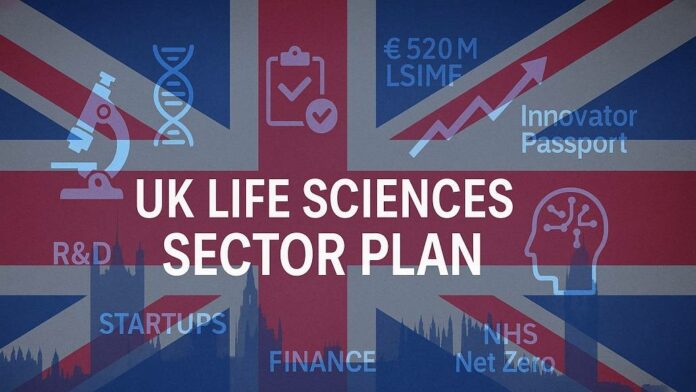
The UK Government has laid out a bold ambition: to become Europeโ€™s leading life sciences economy by 2030, and the third-largest globally by 2035, behind only the United States and China. This is not a vague aspirationโ€”itโ€™s the central benchmark driving a detailed and accountable strategy, laid out in the Life Sciences Sector Plan (July 2025).ย The plan spans public investment, regulatory reform, NHS transformation, and regional infrastructure developmentโ€”all with the goal of turning the UK into a powerhouse of biomedical innovation, health outcomes, and industrial growth.

Why Ranking Among the Top 3 Matters

Economic Significance

The UK life sciences sector already contributes over ยฃ108 billion in turnover and supports more than 300,000 jobs, but its growth potential is far from capped. Government modelling indicates that if current bottlenecks are addressed, the sector could grow by an additional ยฃ41 billion (165%) by 2035.

Climbing to the No. 3 global position would not only solidify the UKโ€™s status as a top destination for research and development (R&D), but also spur exports, attract foreign direct investment (FDI), and generate high-value employment across the country.

Health and Societal Outcomes

Translating cutting-edge science into real-world clinical benefit is central to the plan. Accelerating the adoption of medical innovations will enhance patient access to new treatments and technologies, improve public health, and reduce economic losses. The UK currently loses ยฃ132 billion annually due to ill health among the working-age populationโ€”better, faster healthcare solutions are not just a public good, they are an economic imperative.

Headline Metrics for 2030 and 2035

To track its ascent, the UK Government has defined four core strategic outcomes:

Strategic Metric 2030 Target (Europe) 2035 Target (Global)
Commercial R&D Investment Highest in Europe Highest globally (excl. US & China)
Access to Scale-Up Capital Most raised in Europe Most raised globally (excl. US & China)
Speed of Patient Access Top-three in Europe N/A (focus remains on European peers)
Life Sciences FDI Inflows Largest in Europe Largest globally (excl. US & China)

Annual public reporting and scorecard updates will measure progress and provide accountability.

Key Levers to Reach the Top

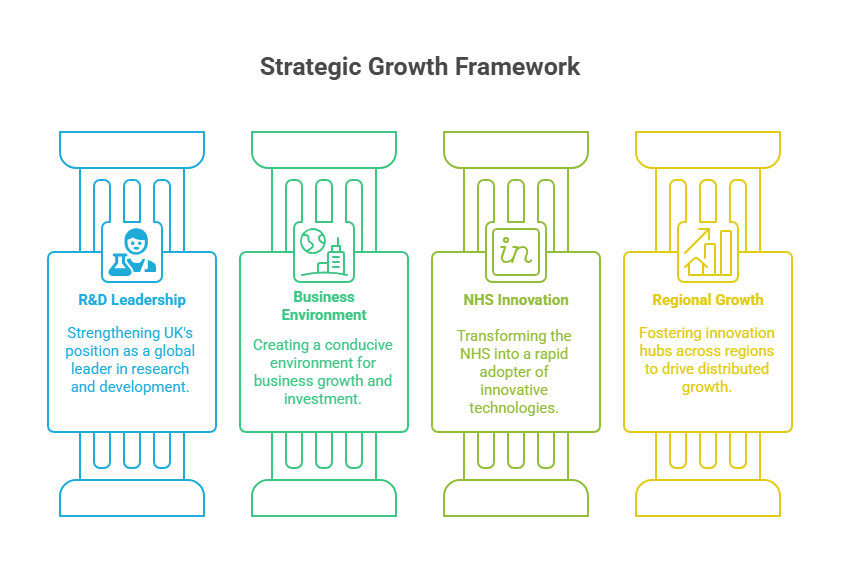
1. Strengthening UK R&D Leadership

The plan backs over ยฃ2 billion in public sector R&D for this spending cycle, with long-term commitments in place. This investment is paired with efforts to position the UK as the best place in the world to run clinical trials.

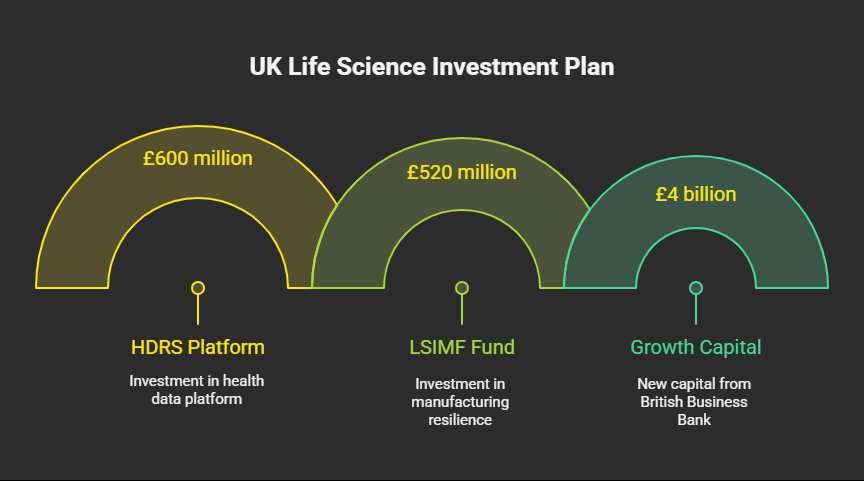
  • Health Data Research Service (HDRS): Up to ยฃ600 million to build a world-class, AI-ready data platform, making the UK globally competitive for real-world evidence generation and digital health trials.
  • Clinical Trials Reform: Commercial trial setup timelines will be reduced to under 150 days by March 2026, with the goal of doubling trial participants by 2029, reversing recent declines in global trial rankings.

2. Creating a Business Environment for Scale

To overcome the UKโ€™s historic late-stage investment gap, the government is launching significant capital initiatives:

  • ยฃ4 billion in Growth Capital via the British Business Bank to crowd-in ยฃ12 billion in private funding for scale-ups.
  • Life Sciences Innovative Manufacturing Fund (ยฃ520 million) to attract globally mobile manufacturing and bolster domestic resilience.
  • Skills and talent are also a core focus, with new AI fellowships, a UK Research Workforce Strategy, and a Global Talent Taskforce designed to keep top-tier talent within the UK ecosystem.

3. Accelerating Innovation Through the NHS

The NHS is being transformed into a rapid adopter of innovation through:

  • Joint MHRA-NICE approvals, reducing delays between regulatory sign-off and patient access.
  • The Innovator Passport and Rules-Based Pathway (RBP) to fast-track adoption of proven MedTech and digital tools.
  • A Single National Formulary to eliminate postcode prescribing disparities and ensure faster nationwide rollout.
  • Confidential commercial pricing models to smooth reimbursement and enable equitable patient access across England.

4. Driving Regional and Cluster-Led Growth

Recognizing the need for distributed growth, the Plan invests in high-potential innovation hubs:

  • Regional Health Innovation Zones will act as full-scale testbeds for integrated regulatory, commissioning, and digital transformation initiatives before national rollout.
  • Strategic infrastructure, such as East-West Rail, HS2 nodes, and new city-region investment zones, will enable innovation clusters that rival global counterparts like Bostonโ€™s Kendall Square or Silicon Valleyโ€™s biotech corridor.

Governance, Risk, and Accountability

The plan isnโ€™t just ambitiousโ€”itโ€™s rigorously managed. Each of the 33 headline initiatives is assigned a Senior Responsible Officer and is linked to a clear performance metric. An annual implementation report and six-monthly Council reviews ensure mid-course corrections and transparency.

This governance model turns a visionary document into a living strategyโ€”monitored, measured, and adjusted as needed.

Looking Ahead: A New Global Force in Life Sciences

If the outlined milestones are met, the UK will not only dominate Europeโ€™s life sciences sector by 2030, but stand as the worldโ€™s third-most powerful life sciences economy by 2035, behind only the US and China.

This is more than a race to the topโ€”itโ€™s a national blueprint to build a virtuous circle of health innovation, economic growth, and global influence. With unmatched investment in R&D, capital access, streamlined NHS innovation pathways, and thriving regional clusters, the UK is positioning itself as the next global engine of biomedical progress.

For patients, this means earlier access to advanced treatments. For innovators, it offers a faster, more supportive commercialisation environment. And for the economy, it promises sustainable, inclusive, high-value growth in one of the most critical industries of the future.

As the Planโ€™s implementation begins, all eyes will be on whether the UK can translate ambition into impactโ€”and reshape the global life sciences landscape in the process.

UK Government Launches Ambitious Life Sciences Sector Plan

UK Life Sciences Sector Plan

Government Unveils Life Sciences Roadmap for Growth and Innovation

London, July 2025 – The UK Government has officially launched its new UK Life Sciences Sector Plan, marking a watershed moment for an industry hailed as one of the nation’s greatest assets. With cross-party support and input from over 250 organisations and 400 individuals across life sciences businesses, the plan sets out a sweeping vision to reinforce the UK as a leader in global health innovation. While ensuring that scientific breakthroughs deliver tangible benefits to patients, the NHS, and the wider economy.

In a joint ministerial foreword, Secretary of State for Science, Innovation, and Technology Peter Kyle, Secretary of State for Business and Trade Jonathan Reynolds, and Secretary of State for Health and Social Care Wes Streeting expressed their determination to remove longstanding barriers such as slow commercialisation and regulatory bottlenecks that have historically hampered the sectorโ€™s enormous potential. โ€œFrom hospital to community, from analogue to digital, and from sickness to prevention: these are the three major shifts this government is determined to deliver,โ€ the ministers declared.

The Sector Plan: A Blueprint for the Next Decade

The Opportunity

  • World-Leading Legacy: The UKโ€™s life sciences industry boasts numerous world firstsโ€”from pioneering vaccines and monoclonal antibodies to launching the first CRISPR therapy and leading personalised cancer vaccine research.
  • Economic Engine: With over 300,000 people employed and ยฃ108.1 billion in turnover recorded for 2021/22, the sector’s growth is vital for national economic health. High-value jobs, a 13% annual increase in turnover, and diverse regional impact underpin its significance.

The Challenge

The new sector strategy addresses enduring obstacles:

  • World-class at discovery, but weak on commercialisation and product adoption.
  • Median setup times for clinical trials lag behind competitor nations.
  • UK life sciences companies face difficulties scaling, partly due to limited access to venture capital and cautious domestic investors.
  • Competition for international investment has intensified, especially post-pandemic, necessitating a shift from โ€œincremental adjustmentโ€ to โ€œcomprehensive reform.โ€

Three Pillars of the Plan

The plan revolves around three interconnected pillars:

1. Enabling World Class R&D

  • Record government R&D investmentโ€”over ยฃ2 billion allocated in this spending review.
  • Focused funding for discovery science, translational models (including alternatives to animal models), and AI-driven biomedical research.
  • Establishment of the Health Data Research Service (HDRS): a new ยฃ600 million platform for secure, AI-ready health data, making the UK a magnet for global clinical trials.

2. Making the UK a Hub for Startups, Scale-ups, and Investment

  • Launch of the ยฃ520 million Life Sciences Innovative Manufacturing Fund (LSIMF) to attract manufacturing investment and build domestic supply chain resilience.
  • Enhanced access to finance, including ยฃ4 billion in new growth capital from the British Business Bank to stimulate investment and crowd in private sector funding.
  • Ambitious skills and talent strategies, diversity initiatives, and support for attracting top global researchers.
  • Partnerships like the BioNTech agreement and dedicated services to help 10โ€“20 high-potential UK companies scale domestically.

3. Driving Health Innovation and NHS Reform

  • Commitment to streamline regulation, including reforms at the Medicines and Healthcare products Regulatory Agency (MHRA) and faster integration of innovations with the National Institute for Health and Care Excellence (NICE).
  • Targets for reducing clinical trial setup times to under 150 days by March 2026.
  • Innovation-friendly frameworks, a new โ€œInnovator Passportโ€ for medtech, and national procurement reforms to speed up patient access to new treatments and technologies.
  • Delivering the NHSโ€™s Net Zero Roadmap in partnership with industry.

Headline Actions and Targets

The government will prioritise six core actions for rapid impact:

  • Building the HDRS health data platform
  • Reducing clinical trial setup delays
  • Backing manufacturing via LSIMF
  • Streamlining regulation and market access
  • Introducing low-friction procurement for medtech
  • Creating new industry partnerships and support structures for growth firms

Progress will be tracked transparently with annual implementation updates and monitored by a refreshed Life Sciences Council comprising government, industry, and public stakeholders.

Key Targets by 2030โ€“2035:

  • Lead Europe in commercial R&D investment, scale-up capital, and foreign direct investment (FDI)
  • Rank as the third most important global life sciences economy (behind only the US and China)
  • Become one of the top three fastest regions in Europe for patient access to medicines and medical technology

Looking Forward

By 2035, the government envisions the UK as a powerhouse in life sciences, with:

  • A robust ecosystem built from world-class R&D, investment, and manufacturing infrastructure.
  • Nimble regulatory and market access frameworks, adopter-oriented NHS, and flourishing clusters from Cambridge to Glasgow.
  • Increased capital markets capacity enabling more UK-based companies to grow into global firms.
  • Enhanced and equitable health outcomes for patients nationwide, underpinned by early adoption of cutting-edge technologies, genomics, and personalised medicine.

The planโ€™s accountability mechanisms, annual reviews, and clear timelines are designed to sidestep the pitfalls of past strategies and ensure that the UKโ€™s life sciences sector delivers economic growth, high-skilled jobs, and better health for all. The launch signals not just a promise, but a commitment to sustained action, partnership, and progress throughout the next decade and beyond.

Highly Customized Treatments to Offer Specialized Care to UK

Highly Customized Treatments to Offer Specialized Care to UK

The Human Medicines Regulations 2025, which came into force on 23 July 2025, happens to make the UK the first country to have a dedicated legal framework when it comes to medicines that are produced at the point of care.

The new rules, which are introduced by the Medicines and Healthcare Products Regulatory Agency (MHRA), enable the hospitals, ambulances, and even the local care settings in order to carry out the final stages when it comes to manufacturing highly customized treatments to offer specialized care to UK and to offer time-sensitive treatments by way of using regulated protocols.

The health and social care secretary of the UK, Wes Streeting,ย said that this world-first legislation happens to be a game changer for patients. Cancer treatments that are customized in days, not months, are going to be a reality. Life-saving therapies are going to be made at bedside and not hundreds of miles away.

Streeting said that their plan for change promised to build an NHS that is fit for the future. And today they are delivering on that pledge by way of bridging the cutting-edge care directly to patients when they actually require it the most.

He said that they are turning around their NHS with waiting lists at the lowest for the last two years, and this type of therapy goes to mean that patients can be treated and even return home more quickly.

It is well to be noted that until now, therapies like CAR-T, which involved modifying immune cells of the patient to fight their specific cancer, happened to be sent to specialist facilities, which were often located quite far. Delays went on to mean that some patients became too ill to receive the therapy, or the medicinesย having a short shelf life could not get delivered in time.

As per the new framework, a cancer patient can have their cells collected, altered, and even returned for treatment within days. Interestingly, a child with a rare genetic disorder could get freshly prepared therapy that is made and administered on-site, even if it only has a few minutes of shelf life left.

The new legislation goes on to apply to the cell and gene therapies and tissue-engineered treatments. Gases, blood products, medical gases, and 3-D printed products. Hospitals will follow protocols with oversight coming from a central control authority, which would be similar to how chemotherapy or antibiotics are getting prepared locally.

Lord Vallance,ย the science minister, said that this world-first framework goes on to give the NHS as well as innovators a very safe and clear way to bring advanced treatments from laboratories to the bedside of the patients. It is indeed a powerful example of how smart regulation can enable more patients to benefit from the best in British science.

He added that they are indeed determined to clear the path pertaining to more health innovation of this kind. Furthermore, he said that their recently published life sciences sector plan happens to set out a very clear vision to do just that with a viewpoint to unlocking investment, growth, and even delivering a more robust prevention-focused system of healthcare.

It is well to be noted that the regulations also support mobile manufacturing units, thereby offering choices for patients who are too unwell to travel or those who have immune systems that make hospital visits much riskier. Apparently, the change supports the plan of the NHS to broaden hospital-at-home care by way of including virtual wards.

Lawrence Tallon, the chief executive of MHRA, said that patients will now get highly customized treatments to offer specialized care to UK patients and also near to their bedside with the same steep standards as all the medicines. According to him, this is specifically significant in a scenario where every hour matters or where a treatment is so specific that it cannot simply be made available in advance.

This, according to him, is indeed a landmark moment, which opens the doors toย a personalized treatment futureย that is made for one person, at one time, in one place, and becomes a part of the routine care.

He goes on to say that the UK is indeed leading the world when it comes to the next generation of medical innovation, and as the UK regulator for medicine and medical devices, they are indeed determined to play their role in terms of offering a supportive regulatory framework in order to enable health partners as well as medicine innovators to bring these novel treatments to the patient fraternity.

AI-Designed Minibinders for Customized Cancer Treatment

AI Designed Minibinders for Customized Cancer Treatment

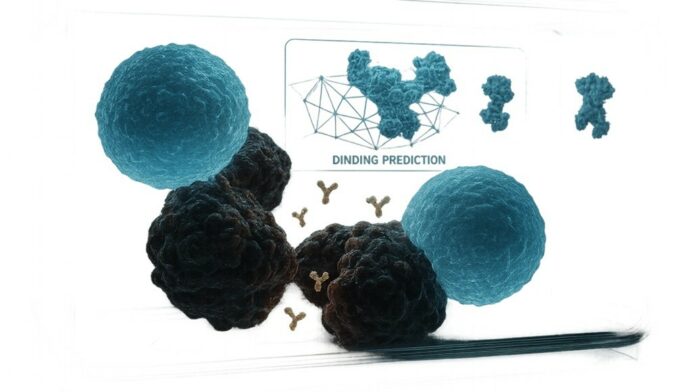
There is no shred of doubt that precision cancer treatment on a larger scale happens to be moving closer afterย researchers have gone on to develop an AI platform that can customize protein components and arm the immune cells of the patient to fight cancer. This new method, which is published in the scientific journal Science, goes on to demonstrate for the very first time that it is possible now to design proteins in the computer so as to redirect the immune cells to target cancer cells by way of pMHC molecules.

Apparently, all this dramatically shortens the process of finding effective molecules in the case of cancer treatment and has curtailed the process from years to a few weeks.

Targeted missiles to thwart cancer

The AI platform, which has been developed by a team from the Technical University of Denmark (DTU) as well as the American Scripps Research Institute, looks forward to solving a major challenge when it comes to cancer immunotherapy by way of demonstrating how scientists can go ahead and generate target treatments pertaining to tumor cells and also avoid damaging the healthy tissues.

It is well to be noted that T cells naturally pinpoint cancer cells by way of recognizing specific protein fragments, which are known as peptides that are presented on the cell surface by molecules known as pMHCs. This usually happens to be a very slow and challenging process in order to utilize this knowledge for therapy, often due to the variation in the body’s own T-cell receptors that make it quite challenging to create a customized treatment.

Boosting the immune system of the body

In the study, the researchers went on to test the strength of the AI platform on the well-recognized cancer target NY-ESO-1, which is mostly found in a wide range of cancers. The team went on to succeed in designing a minibinder that bound tightly to the NYโ€“ESOโ€“1 pMHc molecules. Apparently, when the design got inserted into T cells, it went on to create a very distinct new cell product called IMPAC-T cells by the researchers, therebyย effectively guiding the T cells toย kill cancer cells in the laboratory experiments.

According to the author of the study and researcher at the Technical University of Denmark, postdoc Kristoffer Haurum Johansen, it was indeed very exciting to take these minibinders, which happened to be created entirely on a computer, and also see them work in an effective way in the laboratory.

The researchers also applied the pipeline to certain design binders for a cancer target that was identified in the metastatic melanoma patient, thereby successfully generating binders for this target also. All this went on to document that the method can also be used for customized immunotherapy against the novel cancer targets.

Screening of the treatments

Interestingly, a critical step in the innovation of the researchers was the development of a virtual safety check. The team went on to use AI-designed minibinders and also evaluate them with regard to pMHC molecules, which were found on healthy cells. This methodology helped them to filter out the minibinders, which could as well cause certain dangerous side effects before any experiments were practically carried out.

Five years when it comes to treatment

Timothy Patrick Jenkins, who is the associate professor at the Technical University of Denmark and also the last author of the study, says that he expects it will take almost 5 years before the new method is up and running for initial clinical trials on humans. Once the method gets ready, the treatment process is going to resemble the present cancer treatments using genetically modified T cells, which are also called CAR-T cells that are at present used in order to treat lymphoma as well as leukemia. Patients will first have their blood drawn at the hospital, which is very similar to a routine blood test. Their immune cells will then get extracted from this blood sample and thereafter be modified within the laboratory so as to carry the AI-designed minibinders. These enhanced immune cells would then get returned to the patient, where they will act like targeted missiles that are accurately finding and also eliminating the cancer cells within the body.

UK Life Sciences Sector Plan Eases Startup Regulations

UK Life Sciences Sector Plan

How the UK Life Sciences Sector Plan Reduces Regulatory Barriers for Healthcare Startups

The UK’s new Life Sciences Sector Plan, launched in July 2025, lays out a comprehensive roadmap to make regulation faster, clearer, and more innovation-friendly for healthcare startups. Hereโ€™s how the plan specifically addresses regulatory hurdles:

Streamlined Regulatory Approvals

  1. Faster Risk-Proportionate Approvals
  • The Medicines and Healthcare products Regulatory Agency (MHRA) is set to become a more agile, responsive regulator with increased funding to reduce regulatory costs and approval times by 25%.
  • Startups will benefit from quicker, predictable timelines for obtaining licenses for new products, including medicines, medical devices, and digital health tools.
  1. Parallel Approvals and Integrated Advice
  • Closer coordination between the MHRA and the National Institute for Health and Care Excellence (NICE) will allow for joint advice and parallel approvals. This is expected to reduce the time to market by three to six months for new treatments and technologies.
  1. Reformed Medical Devices Regulation
  • Introduction of an innovation-friendly pathway for UK Conformity Assessment (UKCA) certification, making it easier for startups to get medical devices to market.
  • A new framework for AI-driven and software-based medical technologies will be published in 2026, ensuring regulatory processes keep pace with digital innovation.

โ€œInnovator Passportโ€ and Rules-Based Pathway for MedTech

  1. Innovator Passport
  • A new NHS โ€œInnovator Passportโ€ will be rolled out to provide startups with a streamlined, clear route for getting medtech products trialed and adopted by the NHS, reducing duplication in local purchasing decisions and speeding national adoption.
  1. Rules-Based Pathway (RBP)
  • The RBP will allow proven medical technologies that address unmet clinical needs to fast-track procurement and gain accelerated commercial support in the NHS.

Simplifying Market Entry and Access

  1. International Reliance Routes
  • Startups with products already approved by international regulators (such as in the US or EU) will have an easier process to secure UK approvals, reducing unnecessary duplication and delays.
  1. Lower Friction Procurement
  • The plan introduces โ€œlow-frictionโ€ purchasing pathways, cutting bureaucracy and offering a single national formulary for medicines and clear processes for medtech, so startups donโ€™t face multiple, inconsistent NHS requirements across regions.

Other Measures Supporting Startups

  1. Standardized Clinical Trial Contracts
  • Startup companies benefit from standard contracts and the target to reduce commercial clinical trial setup time to fewer than 150 days by March 2026.
  1. Support for IP-Rich SMEs
  • The establishment of a new working group to address regulatory and non-regulatory barriers to lending for startups rich in intellectual property aims to boost access to finance.
  1. Active Partnerships
  • Direct support services are planned for 10โ€“20 high-potential UK life sciences startups each year, helping them navigate regulation, commercialise, and scale.

Summary Table: Regulatory Reforms Benefiting Startups

Reform Area Startup Benefit
Faster MHRA/NICE approvals Quicker and more predictable product licensing and access to NHS markets
Innovator Passport & RBP Streamlined NHS adoption and procurement pathways for medtech
International Reliance Routes Lower duplication for globally approved products
Standardized contracts Reduced clinical trial bureaucratic delays
New frameworks for AI/software Clear, updated guidance for digital health and AI innovation
Direct startup support services Hands-on regulatory and scale-up assistance


By cutting regulatory red tape, providing clear and quicker pathways to market, and supporting startups with direct services and funding, the UK Life Sciences Sector Plan aims to transform the innovation landscape for healthcare startupsโ€”making it easier, faster, and more attractive to develop and commercialise healthcare solutions in the UK.

A Reality: High-Precision Micro 3-D Printing in Healthcare

A Reality High Precision Micro 3-D Printing in Healthcare

When we talk of the grand theatre of modern medicine, where data reigns supreme and robots dance across the operating rooms, a quiet revolution is also shaping the very fabric of patient care. At the intersection of high-precision micro 3-D printing in healthcare and breakthrough material science, medicine is being reimagined, not with bold slogansย but with microscopic details, which promise macro-level transition. This kind of convergence is not about advanced tools or futuristic therapies, but it is more about medical innovation, which redefines patient care at its very core โ€“ more effective, more personal, and far more adaptive when it comes to the real lives of patients.

Right from tools to transformation โ€“ precision as the new benchmark

While 3-D printing in healthcare happens to be no longer fresh and novel, having proved its mettle in dental implants, prosthetics, and even orthopedic guides, it happens to be the advent of high-precision micro 3-D printing in healthcare, functioning at resolutions as fine as a micron, which is indeed setting a new gold benchmark. This is not additive manufacturing as we have always known it. This happens to be nano-level engineering, which is capable of constructing structures having intricate internal geometry, which mimic the real tissues or even deliver medications at intervals that are controlled.

Just imagine, for example, a customized drug delivery implant, which is the size of a fingernail, engineered to release medication in sync with the circadian rhythm of the body. Or consider a bioresorbableย scaffold printed to fit a coronary artery of a patient along with cellular-level precision, dissolving after healing. This is the medical innovation that redefines patient care โ€“ precisely, quietly, and powerfully.

What actually sets apart this new wave is not only scale but also specificity. High-precision micro 3-D printing in healthcare helps a kind of care that is fundamentally patient-matched, thereby replacing the one-size-fits-most legacy with customized solutions that are engineered to the biology of a patient.

The material transition โ€“ from plastics to living polymers

However, precision and printing are only as meaningful as the materials getting printed. What is actually fueling the next chapter of transformation happens to be a new generation of bioactive, sustainable, and programmable materials that work with the body and not against it.

Apparently, this revolution in material science has turned micro 3-D printers into biomedical sculptures that are capable of creating everything from micro needle patches in terms of painless vaccinations to living tissue scaffolds that nurture the stem cells. And the result is the treatments are no longer just about the mechanical fixes, but they are more about biological harmonious integration.

In this regard, medical innovation that redefined patient care has gone on to become not just an aspiration but an operating principle โ€“ devices that go on to adapt to the human body rather than compel the body to adapt to the device.

Therapeutic frontiers, right from regeneration to real-time treatment

It is well to be noted that one of the most striking outcomes of this convergence happens to be its impact on regenerative medicine. With high-precision micro 3-D printing in healthcare, researchers are coming up with frameworks in terms of cell growth that replicate the intricate architecture of organs as well as tissues. Early experiments have successfully gone on to print vascular networks, which have long been considered to be a barrier in bioprinting viable organs, thereby bringing the dream of lab-grown and patient-specific organs much closer to the clinical reality.

Although fully functional bioprinted organs are still some time away, the groundwork has already been laid with tissue patches, scaffold implants for cartilage and bone repair, and organ-and-chip devices. Interestingly, each success story happens to bring us closer to a future wherein organ donation shortages, waitlists, and transplant rejection shall become tales of the past.

Notably, this shift is not merely technical, but it is profoundly human. It means that there would be fewer side effects, outcomes that are better, and ultimately, treatments that work with the lifestyle of the patient and not against it.

It happens to be at its core – medical innovation, which redefines patient care in real as well as measurable ways.

Diagnostics, which are reimagined โ€“ tiny devices having massive impact

It is worth noting that precision does not stop at treatment, however; it extends into diagnostics. Micro 3-D printing enables the development of ultra-small and highly sensitive diagnostic tools that can live inside the body or even sit discreetly on the skin. These happen to include biosensors, which are embedded within wearables, ingestible microfluidic chips that evaluate the gut health, and also implantable monitors, which can track organ function, and that too in real time.

Apparently, such tools happen to be just miniaturized versions of the present diagnostics โ€“ they are a new class of medical devices that offer data in real time and that too often without the requirement for clinical visits or laboratory tests. For patients who are managing chronic illnesses, theseย tools go on to represent a major shift โ€“ continuous care without any kind of constant clinical intervention.

What actually crops up is a future where healthcare happens to be proactive rather than being reactive โ€“ where data as well as diagnostics flow as naturally as the blood, guiding care Much before the crisis. And once again, it is a quite force โ€“ micro printing as well as advanced materials are indeed fuelling that kind of transformation.

The integration challenges โ€“ Going beyond the clinical threshold

In spite of its promise, The pathway from The research lab to clinical use is never smooth. Regulatory frameworks are still going ahead and adapting to technologies which operate at a very fine scale and a long-term biocompatibilityย of certain materials has to be thoroughly validated. Besides this, hospitals and healthcare providers have to be trained not only to use, but also to trust the new devices.

Apparently, infrastructure also happens to be a factor. Micro 3-D printers are highly specialised tools which often require controlled environments, rigorousย quality control, and technical expertise. These are the elements that are not always readily available within a healthcare set up as it is still grappling with digitizationย and labour shortages.

But the pace of adoption is certainly speeding up. There are several hospitals along with medical research centres which have established certain in-house fabrication labs that are capable of fast prototyping as well as low volume production. With advancements within AI as well as simulation software, the design process is becoming much faster and even more automated โ€“ thereby bringing People closer to a world where medical innovation which redefines the patient care is not just an aspiration, but it has turned Into a reality, which is embedded in clinical workflows.

So what is the economics of precision โ€“ value beyond expenditure?

From a market standpoint, high-precision micro 3-D printing as well as new materials are indeed redefining value within healthcare. These technologies not just offer incremental benefits but also reduce the surgical time, limit certain complications, customize the treatment, and also, in many cases, eradicate the requirement for follow-up procedures.

While the upfront investment in technology may look pretty steep, the downstream savings when it comes to hospital stays, admission rates, and medication usage are really compelling. As the expenditure of printing hardware drops as well as material supply chains mature, the economies are going to transition further in favorย of a scalable rollout.

Significantly, these innovations go on to promise much greater health equity. By way of decentralizing manufacturing, along with helping low-volume, high-impact devices, rural clinics as well as underserved regions can go ahead and access tools, which at one time required intricate logistics or even urban hospital infrastructure. The democratization when it comes to precision medicine may as well be one of the most powerful long-term outcomes of it.

The ethical mandate: designing with humanity in consideration

As with many other powerful innovations, questions do arise. Who happens to own the design of a printed organ scaffold? How can patient data get integrated into AI-generated implant geometry? What kind of protocols make sure of a safe degradation when it comes to bioresorbable materials?

All these arenโ€™t just academic questions, but they are policy challenges that have to be addressed along with innovation.

It is well to be noted that ethical innovation needs transparency, inclusivity, and even regulations that keep pace with the technology. It needs to listen to both patients as well as engineers and also create standards that protect safety without stifling progress. All put together, it demands a patient-first kind of mindset, which is precisely the mindset that goes into medical innovation that happens to redefine patient care.

In the end, the next chapter is patient-centered medicine

As we all stand at the threshold of a very new era, it is not the flashing technologies or the headline-grabbing breakthroughs that are going to define the healthcare future. It is the precision, personalization, and ability to treat every patient as a unique biological spectrum who is deserving of a therapy that is engineered and not approximated.

High-precision micro 3-D printing, along with the evolution of new materials, is not just a tool in this transition, but it is the very engine of it. Together they enable us to rethink every element of the patient journey, right from diagnosis to treatment to even recovery, not as a discrete stage but as a connected whole designed with intention as well as intelligence. This is theย kind of promise and proof of medical innovation that defines patient care. It’s not just about the future of medicine. It is the medicine of the future, which is quietly reshaping every layer.

NHS Life Sciences Sector Plan Accelerates Innovation in UK

NHS Life Sciences Sector Plan

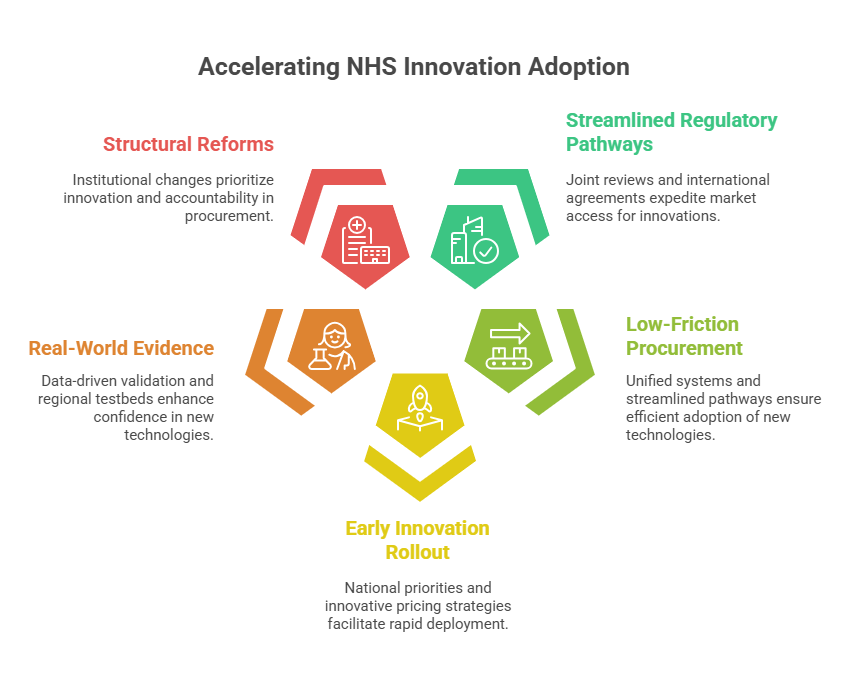
The UK Governmentโ€™s NHS Life Sciences Sector Plan is ushering in a transformative era for the National Health Service (NHS), aimed at closing the gap between medical innovation and patient access. Through a comprehensive set of reforms and operational changes, the plan is designed to fast-track the adoption of cutting-edge medicines, medical technologies, and digital health tools across the NHSโ€”removing longstanding regulatory, commercial, and structural barriers in the process.

Key Enablers for Faster NHS Adoption


1. Streamlined Regulatory and Market Access Pathways

A cornerstone of the plan is the tighter integration between the Medicines and Healthcare products Regulatory Agency (MHRA) and the National Institute for Health and Care Excellence (NICE). This collaborative model allows for joint reviews and parallel approvals, cutting the lag time between regulatory clearance and NHS rolloutโ€”potentially reducing patient wait times by 3 to 6 months.

The MHRAโ€™s risk-proportionate review system is also being modernised to provide clearer, faster paths to market for high-impact innovations, supported by increased investment in regulatory capacity. Further, international regulatory recognition agreements will allow products approved in trusted markets such as the US and EU to bypass redundant steps and gain faster NHS access.

2. Low-Friction Procurement and Adoption Mechanisms

To eliminate local inconsistencies and delays, the government is introducing a Single National Formulary for medicines. This unified system will ensure that once a treatment is approved, it can be prescribed anywhere in the NHS without regional variation.

In the medical technology space, the upcoming Rules-Based Pathway (RBP)โ€”slated for launch in April 2026โ€”will provide a streamlined commercial route for high-value innovations, particularly those addressing unmet clinical needs. Complementing this is the NHS Innovator Passport, which simplifies evaluation processes for digital and device-based solutions, enabling quicker procurement across the NHS.

3. Early and Widespread Innovation Rollout

The plan emphasises the importance of clear direction and prioritisation. National Innovation Priorities will guide development efforts and fast-track NHS-wide scaling for technologies that address these predefined focus areas.

Innovative pricing strategies, including confidential commercial models for primary care, are being introduced to ensure that novel therapies can be deployed faster and equitablyโ€”eliminating some of the pricing bottlenecks that have historically delayed adoption.

4. Real-World Evidence and Regional Testbeds

Recognising the value of real-world performance data, the plan actively supports the use of real-world evidence (RWE) to validate MedTech and digital solutions. This shift empowers innovators to demonstrate value outside of traditional clinical trials and helps decision-makers within the NHS adopt new technologies more confidently and swiftly.

To further this, Regional Health Innovation Zones will serve as controlled environments for testing and refining innovations before theyโ€™re scaled nationally, reducing risk while increasing speed to adoption.

5. Structural Reforms and Institutional Accountability

The NHS is being restructured to prioritise value and innovation in its procurement processes. A new growth mandate for the NHS Supply Chain requires that innovation be factored into purchasing decisionsโ€”not just cost efficiency.

Meanwhile, the Innovation Scorecard, a national tool used to track adoption of new medicines and technologies, is being enhanced to flag slow uptake and spotlight successful implementations. These accountability mechanisms will ensure that innovations donโ€™t just reach the marketโ€”they reach patients.

Digital Transformation as a Core Enabler

By 2026, the MHRA aims to become a digitally enabled, AI-assisted regulator, capable of delivering faster, more intelligent reviews. This overhaul will help align the speed of approval with the speed of adoption, allowing healthcare providers to access and implement innovations more efficiently.

Additionally, the Health Data Research Service (HDRS) will open up secure, AI-ready NHS datasets to innovators and clinicians, expediting evidence generation and supporting smarter, data-informed decisions about what gets adopted.

Conclusion

The UKโ€™s NHS Life Sciences Sector Plan marks a pivotal moment for the countryโ€™s healthcare innovation landscape. By aligning regulatory frameworks, streamlining procurement, embracing real-world data, and modernising digital infrastructure, the plan creates a clear, scalable pathway from lab bench to hospital bedside.

For patients, it means faster access to life-saving therapies. For innovators, it offers a more navigable and supportive environment. And for

the NHS, it promises a future where evidence-based innovation becomes the normโ€”not the exception.

Translate ยป