Close
Digital Health & Ai Innovation summit 2026
LiGHT26

Siemens, Prisma Health Value Partnership Boost with $50m

Siemens Prisma Health Value Partnership Boost with $50m

Based in Greenville, USA, Siemens Healthineers, Prisma Health are eying a Value Partnership boost with $50m in order to elevate the benchmark of cancer care in South Carolina as well as Tennessee. The Value Partnership boost with $50m investment by Prisma Health happens to include the acquisition of the Ethos adaptive radiotherapy system from Varian, which is a Siemens Healthineers company. Adaptive radiotherapy offers cancer patients more accurate as well as customized care by way of an AI-driven treatment and planning process that adapts to the tumor as well as the anatomical changes in real time in order to protect the healthy tissue.

After 2021, Siemens Healthineers, Prisma Health grow Value Partnership of 10 years so as to improve care, promote innovation, and also develop a local workforce. The expanded collaboration will now integrate next-generation technology, as well as specialist clinic oncology along with professional services, in addition to new tools and time-saving workflows. The objective of the value partnership happens to be the advancement of more customized, accessible, and efficient care for communities that Prisma Health happens to serve.

The executive vice president and the chief operating officer of Prisma Health, Clarence Sevillian, said that since entering into the Value partnership along with Siemens Healthineers, their company has expanded access when it comes to imaging services and also introduced new technologies and care locations in order to better serve their communities. Their priority happens to be making sure that patients have access to care that is both compassionate and informed by the upgraded clinical insights. The next phase of the collaboration goes on to reflect a consistent spirit of partnership, which integrates advanced oncology tools along with support services, which may as well help in streamlining the operations and also elevating the overall experience of patients.

The president and the head of the Americas at Siemens Healthineers, John Kowal, said that working along with Prisma Health so as to establish a complete continuum of cancer care right from screening to diagnosis to survivorship happens to be a massive point of pride for their organization. Blending the power of diagnostic imaging and radiation therapy, as well as post-treatment monitoring, with professional services so as to manage intricate oncology operations helps in making sure that advances in patient care remain consistent and sustainable with time.

China Takes Decision on Medical Device Contracts for the EU

China Takes Decision on Medical Device Contracts for the EU

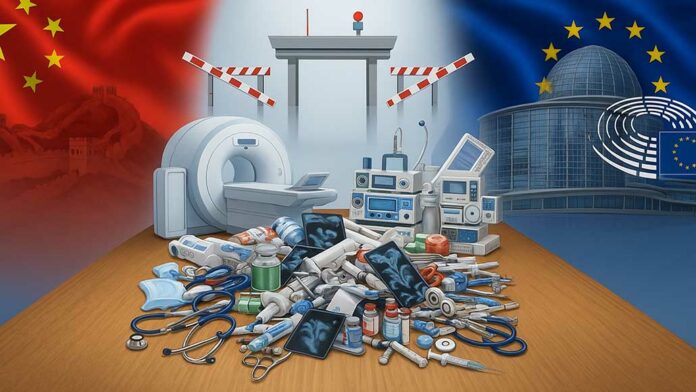
China has hit back against certain EU restrictions that were imposed on Chinese firms in July 2025 by way of barring European companies from major Chinese government medical device contracts.

The ministry of finance in China said that the European Union companies without operations in China are now excluded from government device contracts, which are valued at over 45 million yuan, which is $6.3 million.

Apparently, this restriction does not apply to the EU-funded companies that are operating in China.

It is well to be noted that the non-EU companies that are taking part in such government tenders must not allocate over half of the total contract value when it comes to importing medical devices from the EU, as per the finance ministry.

The ministry of commerce confirmed that this move was the last resort since Beijing had repeatedly expressed, by way of bilateral dialogues, its willingness to resolve the differences through consultation as well as arrangements when it came to government procurement.

In spite of the goodwill of China and its sincerity, the EU has persisted in taking certain restrictive measures and building new protectionist barriers, said the Ministry of Commerce.

Due to this, China has no choice but to go ahead and adopt reciprocal countermeasures. The statement added that these actions look forward to safeguarding the legitimate rights as well as interests of Chinese enterprises and also uphold a competitive environment that is fair. It is worth noting that in June 2025, the EU went on to bar Chinese medical device companies from bidding on public tenders, which were worth more than โ‚ฌ5 million for the next five years. The step followed the European Commission investigation, which concluded in January 2025, that stated that there was clear evidence that China was limiting access to EU medical device producers to its government contracts in a very discriminatory as well as unfair way.

Interestingly, China and the EU are scheduled to hold a summit in August in Beijing, marking their 50th anniversary of diplomatic relations. In preparation for this meeting, both sides have been addressing certain trade disputes that range from cognac to EV.

The technical part of negotiations, when it came to resolving the EV dispute, had been finalized with just the final step remaining. This was confirmed by one of the social media accounts affiliated with the state broadcaster. It went on to say that a deal now hinges on the political will coming from the European side.

In addition to the frictions that were surrounding the medical device contracts, China announced recently that it would also impose anti-dumping tariffs on European brandy, which is mostly produced in France. The tariff on it would be almost 34.9% and would last for five years.

In mid-June 2025, European Commission President Ursula von der Leyen went on to accuse China of flooding the global market with subsidized overcapacity and further weaponizing the dominance of China when it comes to rare supply chains.

BD Commits Expanding the Prefilled Flush Syringes in the US

BD Commits Expanding the Prefilled Flush Syringes in the US

Beckton Dickinson โ€“ BD is investing over $35mn in order to expand production of the prefilled flush syringes in the US at its facility in Columbus, Nebraska, the company confirmed on August 4, 2025.

Apparently, this investment is going to add almost 50 jobs at the site and equip BD in order to make hundreds of millions more units a year in order to meet the rising demand coming from US hospitals as well as health systems.

BD has gone on to frame this spending as part of its ongoing commitment to its Posiflush line, which has also witnessed it invest over $80mn in order to expand the production of syringes in the last three years.

Healthcare professionals make use of flush syringes in order to stop vascular access systems from getting blocked and to enable removing medication that is left at the catheter site. The resilience of the supply chain of the industry came under scrutiny when, in 2021, Cardinal Health recalled Monoject devices, leading to a shortage that persisted till 2023 and drove the FDA to share strategies so as to conserve these devices.

Due to this backdrop, BD has already increased its US Posiflush production capacity. The company said that it has grown capacity by almost 10% in 2025 by bringing its total output of the prefilled flush syringes in the US to be more than 750 million units.

In 2024, BD added new needle and syringe production lines at its plant in Nebraska and Connecticut, which were a part of over a $10mn investment. The latest investment comes three months after BD remarked that it was going to invest $2.5bn in US manufacturing in the next five years.

It is well to be noted that this week’s $35mn commitment happens to be a part of a series of vows by companies to invest in manufacturing within the US, due to the growing threat and imposition of tariffs. Yet BD has also warned that tariffs are actually causing it to relocate some of its production lines from Nebraska to overseas facilities.

The CEO of BD, Tom Polen, has explained how tariffs are moving some of its production out of the US at an event that was hosted by Golden Sachs in June this year.

Pollen had said that historically, their flush syringes always came out of Columbus, Nebraska, and then they would ship those to China. They have a facility in China now that is going to source just for China. He added that there is indeed more downside to tariff impacts from a US manufacturing perspective when it comes to the medtech industry as compared to others.

Smart Strategies to Pay Down Student Debt Faster

Smart Strategies to Pay Down

Have you ever felt overwhelmed looking at your student loan balance and wondering how long it will take to pay it off? Many graduates face the same challenge. The good news is that there are practical ways to manage this debt and pay it off sooner than you think.

In this blog, we will share smart strategies to pay down student debt faster.

Create a Clear Budget and Stick to It

The first step in paying down student debt faster is understanding where your money goes each month. A detailed budget helps you see how much you earn and where you spend. Start by tracking all your income and expenses for one or two months. Once you have this information, separate your spending into categories such as housing, utilities, food, transportation, and discretionary purchases. This will show you areas where you can cut back and free up more money for your loans.

After setting up your budget, make it a habit to stick with it. Choose realistic spending limits for each category and adjust as needed. You can use budgeting apps or simple spreadsheets to stay on track. Reducing unnecessary expenses, such as dining out frequently or buying items you do not need, can help you apply more money to your debt.

Refinance Your Loans for a Lower Rate

Refinancing student loans can significantly reduce the amount you pay over time. When you refinance, you replace your current loans with a new one at a lower interest rate. This means more of your payment goes toward the principal balance instead of interest. A lower interest rate can save you thousands of dollars, especially if you have a large loan balance.

For medical residents or professionals in training, some lenders offer specialized refinancing options. For example, you can explore programs like https://www.sofi.com/medical-resident-refinance/ if you meet the criteria. These programs can provide better terms during residency or fellowship. Refinancing may also let you simplify your payments by combining multiple loans into one. However, review the terms carefully to ensure you are not giving up federal loan benefits like income-driven repayment or forgiveness options if you need them.

Make Extra Payments Whenever Possible

One of the most effective ways to pay down student debt quickly is by making extra payments. Even tiny additional amounts can make a big difference. Paying extra reduces your principal balance more quickly, which lowers the interest charged over time. You can choose to make an additional payment each month or make larger lump-sum payments whenever you have extra funds, such as from a tax refund or bonus at work.

If you decide to make extra payments, confirm with your loan servicer that the money applies directly to the principal. Some servicers may apply it to your next month’s payment instead, which will not reduce the balance as effectively. Consistent extra payments, even if they are small, can shorten the life of your loan and help you become debt-free much sooner.

Focus on the Highest-Interest Loan First

If you have multiple student loans, targeting the one with the highest interest rate first can save you money. This method, often called the avalanche method, helps you minimize the total interest paid over time. While making minimum payments on all your loans, put any extra money toward the loan with the highest rate. Once that loan is paid off, move on to the next highest rate, and so on.

This approach requires discipline but can be highly effective. Paying off the highest-interest loan first allows you to keep more of your money instead of losing it to interest charges. Seeing progress as each loan gets paid off can also be motivating. By focusing on the most expensive debt, you accelerate your overall payoff timeline.

Consider Income-Driven Repayment Plans if Needed

For borrowers struggling to make monthly payments, income-driven repayment plans can provide relief. These plans set your payment based on your income and family size, which can make your loans more manageable. While these plans may extend your repayment term, they can prevent you from falling behind and facing late fees or credit damage. If you qualify, some plans may even offer loan forgiveness after a set period of consistent payments.

However, if your goal is to pay off debt faster, income-driven plans may not be the best long-term solution. Because these plans usually stretch out repayment, you could end up paying more in interest. If you use one temporarily, try to increase payments as soon as your income grows. This will help you get back on track with reducing your balance.

Automate Your Payments for Consistency

Automating your student loan payments is a simple way to stay on schedule. Many lenders offer a small reduction in interest rate, often around 0.25%, if you set up automatic payments. These savings may seem small, but they can add up over time. Automatic payments also reduce the risk of missing a due date and facing late fees or damage to your credit score.

Once you set up automatic payments, you will not have to worry about remembering deadlines each month. This consistency can help you focus on making extra payments or budgeting for other financial goals. If your budget allows, you can even automate extra payments to increase your progress without thinking about it each month.

In conclusion, paying down student debt faster requires planning, discipline, and determination, but it is possible. By budgeting carefully, exploring refinancing, making extra payments, and finding ways to increase your income, you can take control of your financial future. It may take time, but each payment brings you one step closer to financial freedom. Focus on what you can do today and stay committed to your plan. With consistent effort, you can move past your student debt and build the life you want with greater confidence.

MHRA Wants Fast Patient Access to Innovative Medical Devices

MHRA Wants Fast Patient Access to Innovative Medical Devices

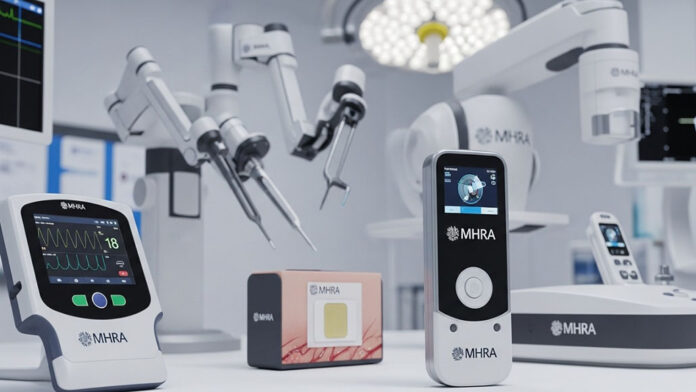
The medicines and healthcare products regulatory agency โ€“ MHRA in the UK is setting out itsย intention very clearly in order to help earlier access in terms of innovativeย medical devices that address unmet clinical requirements within the NHS. As part of this, capabilities are going to be invested-in, in order to establish a new kind of early access service so as to offer time-limited and conditional access to certain promising technologies ahead of full regulatory approval when there is going to be a clear clinical requirement as well as supporting evidence of benefits to the patients.

Designed in order to support innovators, which includes the likes of small as well as medium-sized enterprises, the Early Accessย service looks forward to helping bring safe as well as effective medical devices to patients in a quicker way. Focus initially will be on certain innovative medical devices, especially the diagnostic ones – those that support the most urgent requirements of the NHS. This happens to form part of the wider contribution by the MHRA to the UK government and its life sciences sector plan and, of course, the 10-year health plan and also supports the ambition of the UK to be a worldwide leader when it comes to medical device innovation.

It is well to be noted that Early Access services will make use of learning from the Unmet Clinical Need Authorisation (UCNA) tool, which is piloted in the Innovative Devices Access Pathway (IDAP) and will be shaped by certain stakeholder engagement along with key sector representatives.

Apparently, this initiative sits in a broader program of regulatory reform, which includes more robust post-market surveillance along with increased international collaboration. The MHRA is going to continue to work with the industry, NHS leaders, and clinicians, as well as other partners, in order to shape the pathway and also support growth throughout the UK MedTech sector.

Portable Digital Radiography for Hospitals, Ambulatory Units

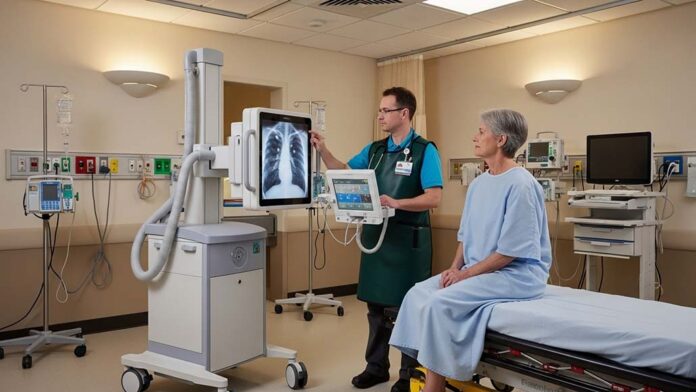
FUJIFILM Healthcare Americas Corporation, which happens to be a leading provider of diagnostic and enterprise imaging solutions, has on July 30, 2025, announced the US launch of the FDR Go iQ, which happens to be an innovative portable digital radiography (DR) solution that is built for hospitals as well as ambulatory surgery centers.

Equipped with intuitive touchscreen controls asย well as a display at the tube head, along with convenient built-in smart charging, technologists can attain x-ray room image quality, even at the bedside of the patient.

According to the director of strategic marketing in the medical imaging systems with FUJIFILM Healthcare Americas Corporation, Rob Fabrizio, this new portable digital radiography system happens to represent a prominent step forward when it comes to imaging mobility, performance, and user experience. Apparently, according to him, the FDR Go iQ happens to have an extremely slim as well as lightweight design, a retractable column, and alsoย an ultra-low profile, all of which elevate the safety as well as flexibility evenย in the busiest clinical settings. Moreover, innovative built-in charging, along with touchscreen tube head controls, makes sure that speed as well as precision is maintained wherever care has to be delivered.

The FDR Go iQ Characteristics include

– A built-in 3-D camera having advanced positioning guidance as well as the ability to upgrade to future AI technologies

– An intelligent smart charging automated in-bin connection, which keeps the detector powered so as to get extended usage

– A touchscreen tube head display as well as controls that provide advanced positioning along with tube alignment guidance and motion detection, as well as exam parameters that are easily within reach

– Extra-large 19-inch display so as to get confident image verification at the bedside

– A slim as well as lightweight design at only 22.5 inches wide and 970 pounds so as to get optimized mobility within tight spaces

– Polyurethane wheels, which are marked free, and 360ยฐ swivel casters to get smooth travel and turning

– Convenient detector holding slots right at the top of the main body in order to hold a DR detector in a secured way during the baggingย as well as wipe down

– Wipes and gloves storage in order to support fast access along with controls in infection

The system happens to feature innovative technologies in order to optimize the quality of the image, workflow, and also patient safety. The FDR Go iQ, teamed with FDR D-EVO III Ultra light glass-free detectors, goes on to feature the exclusive Hydro AG antibacterial coating of FUJIFILM and the patented irradiated side sampling so as to get higher resolution and improved dose efficiency as compared to the regular circuitry designs.

By way of acquiring its data on the patient side of the circuitry, ISS goes on to elevate sharpness and detective quantum efficiency (DQE) and at the same time decreases the scatter and blur at ultra-low doses. Moreover, the onboard technologist console of the system features the proprietary dynamic visualization II intelligent feature recognition processing of FUJIFILM, which automatically adapts to the anatomic characteristics as well as hardware so as to produce exceptional images that have higher detail and contrast levels all across.

$12 M APAC AI For Society Initiative Launched by Google

12 M APAC AI For Society Initiative Launched by Google

In a move that highlights the deepening commitmentย of Google to harnessing artificial intelligence as far as societal advancement is concerned, the tech giant has unveiled its APAC AI for Society initiative, which is aimed at addressing some of the most pressing challenges by way of AI innovation in the Asia Pacific region. Announced by way of a companyโ€™s official blog post, this program looks forward to partnering with academic institutions, nonprofit organizations, and of course the government in order to roll out AI solutions in areas of environmental sustainability, education, and healthcare. This initiative builds on the AI opportunity agenda of Google, which stresses offering equitable access to technology all across the diverse populations.

At its center, the APAC AI for Society initiative focuses on fostering AI-driven projects that can scale the effect in a region that is home to more than 4.5 billion people, many of whom happen to face the unique barriers of fast urbanization and climate susceptibility. Google looks forward to investing in research grants, collaborations, and technical supportย to accelerate these efforts, drawing from its previous extensive AI expertise developed by way of tools such as Bard and TensorFlow.

Scaling artificial intelligence for regional barriers

Recent updates underscore The momentum of the initiative with google.org expanding its AI opportunity fund across Asia Pacific by $12 million earlier in 2025. This infusion goes on to target training programs for small businesses, workers, and even nonprofits โ€™s by helping them to integrate AI within their operations. For example, the fund goes on to support 49 organizations that are selected by the Asian Venture Philanthropy Network (AVPN) so as to upskill APAC workers.

This expansion goes on to sync with the participation of Google in forums such as APEC 2024, where the company went on to showcase public-private collaborations in order to broaden the benefits of AI as detailed in its own policy blog. There are industry insiders who note that such partnerships are very critical in terms of navigating the regulatory intricacies in APAC, where countries such as Singapore and India are racing to establish the framework within AI governance.

Right from workforce training to social impact

Going deep, the initiative extends the legacy of AI for social good at Google, which dates back to 2018, when the company went on to launch a $25 million challenge for beneficial AI projects. In APAC, this goes on to manifest through programs such as Google for Startups AI Academy, which offers three-month cohorts to help the entrepreneurs make utmost use of AI for business growth.

Besides this, security as well as resilience happen to form a key pillar, with google.orgโ€™s 2023 grant program helping NGOs within cybersecurity as well as AI upskilling. This kind of holistic approach by the company makes sure that AI not only drives the efficiency, but at the same time, it also safeguards the susceptible communities against digital threats.

Policy recommendations along with future outlook

The AI opportunity agenda by Google happens to provide a blueprint for policymakers, recommending investments within skill development, infrastructure, and also ethical AI deployment, as mentioned in the 2023 blog post. For APAC, this means customizing solutions to local contexts, like using AI for disaster response when it comes to flood-prone locations or even elevating education across remote villages.

As the initiative goes on to evolve, experts expect more cross-border partnerships, potentially influencing the worldwide AI standards. With the present expansion, Google happens to be positioning itself as a major player in making sure that AI serves society equitably, although there are challenges such as job displacement as well as data privacy, which remain a strong point of scrutiny for regulators as well as insiders. This kind of strategic push could redefine how tech giants engage across the emerging markets by ensuring that innovations resonate far beyond a specific location.

America’s AI Action Plan Transforms Healthcare Industry

America s AI Action Plan

America’s AI Action Plan: Transforming Healthcare, Medical, and Pharmaceutical Industries

The Trump Administration’s comprehensive AI Action Plan represents a pivotal moment for the healthcare, medical, pharmaceutical, and biopharmaceutical sectors. Released in July 2025, this strategic framework outlines ambitious policies designed to accelerate AI adoption across critical healthcare domains while maintaining safety standards and promoting American innovation leadership.

Addressing Healthcare’s Slow AI Adoption Challenge

The Action Plan explicitly acknowledges that healthcare is one of the most critical sectors in America and has been “especially slow to adopt [AI] due to a variety of factors, including a complex regulatory landscape, a lack of clear governance and risk mitigation standards, and distrust or lack of understanding of the technology.” The foundation for focused interventions aimed at removing these structural obstacles is laid by this awareness.

The plan’s response centres on establishing a “try-first” culture across American healthcare through coordinated federal efforts. This approach represents a significant departure from traditional regulatory caution, emphasising innovation acceleration while maintaining safety protocols.

Revolutionary Regulatory Sandboxes for Healthcare Innovation

A cornerstone of the Action Plan involves creating regulatory sandboxes or AI Centers of Excellence where healthcare researchers, startups, and established enterprises can rapidly deploy and test AI tools. These initiatives will be enabled by key regulatory agencies, most notably the Food and Drug Administration (FDA), working in partnership with the Department of Commerce through its AI evaluation initiatives at NIST.

The FDA’s role extends beyond traditional oversight to active participation in innovation facilitation. The agency has already begun implementing AI-assisted review processes, with Commissioner Dr. Martin Makary describing their pilot program as a “game-changer technology” that enables scientific review tasks to be completed “in minutes that used to take three days”. This transformation in regulatory efficiency could dramatically accelerate the approval timelines for AI-enabled medical devices and pharmaceutical products.

Comprehensive Standards Development Through NIST

The National Institute of Standards and Technology (NIST) emerges as a central coordinating body for healthcare AI standards. The plan directs NIST to launch domain-specific efforts in healthcare, convening public, private, and academic stakeholders to accelerate the development and adoption of national standards for AI systems. These efforts will specifically measure how AI increases productivity in critical areas including medical imaging, diagnostics, clinical workflow, and population health analytics.

Notably, the plan requires NIST to revise its AI Risk Management Framework to eliminate references to “misinformation, Diversity, Equity, and Inclusion, and climate change,” refocusing on objective truth and technical performance metrics. This revision signals a shift toward performance-based evaluation criteria for healthcare AI systems.

Advanced Scientific Dataset Development for Medical AI
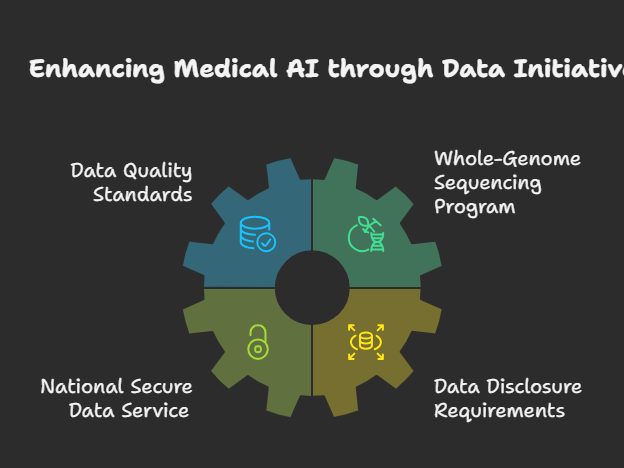
The Action Plan positions high-quality data as a “national strategic asset” and outlines extensive measures to build world-class scientific datasets for AI training. For healthcare applications, this includes several transformative initiatives:

The plan establishes minimum data quality standards for biological, materials science, chemical, and physical data modalities used in AI model training through the National Science and Technology Council. Additionally, it proposes creating a whole-genome sequencing program for life on Federal lands, which would generate valuable resources for training future biological foundation models.

A National Secure Data Service (NSDS) portal will expand access to non-sensitive, health-related datasets for AI model development, while federally funded researchers will be required to disclose high-quality datasets to support medical AI research. These measures address one of the most significant bottlenecks in healthcare AI development: access to comprehensive, high-quality training data.

Biosecurity and Pharmaceutical Safety Measures

Recognising the dual-use potential of AI in biological research, the Action Plan implements comprehensive biosecurity measures specifically relevant to pharmaceutical and biopharmaceutical industries. The plan requires all institutions receiving federal funding to use nucleic acid synthesis tools and providers with “robust nucleic acid sequence screening and customer verification procedures”.

This multi-tiered biosecurity approach includes enforcement mechanisms rather than voluntary attestation, ensuring that pharmaceutical research organisations maintain rigorous safety standards when using AI-powered biological design tools. The Office of Science and Technology Policy will convene industry and government stakeholders to develop systems for nucleic acid providers to share data on suspicious requests in real-time.

Workforce Development and Healthcare AI Skills

The Action Plan addresses the critical need for AI-literate healthcare professionals through comprehensive workforce development initiatives. A new federal hub will examine AI’s impact on healthcare jobs, including hiring trends, wages, and occupational demand. The Department of Labor will establish an AI Workforce Research Hub to evaluate AI’s impact on the healthcare labor market and generate actionable insights for workforce policy.

The plan also clarifies that AI literacy and skill development programs may qualify as eligible educational assistance under tax codes, enabling healthcare employers to offer tax-free reimbursement for AI-related training. This provision could significantly accelerate the adoption of AI skills among healthcare professionals.

Infrastructure and Cybersecurity Enhancement

Healthcare organisations will benefit from the plan’s broader AI infrastructure investments, including expanded data centers and improved grid access that may enhance AI processing capacity for health systems and academic medical centres. The Department of Homeland Security will launch an AI Information Sharing and Analysis Centre to help healthcare and other critical infrastructure sectors defend against AI-driven cyber threats.

These cybersecurity measures are particularly crucial given healthcare’s vulnerability to cyberattacks and the sensitive nature of medical data. The plan ensures that AI adoption in healthcare occurs within a robust security framework.

Federal Procurement and Healthcare AI Integration

The Action Plan mandates that all federal agencies ensure employees whose work could benefit from access to frontier language models have access to and appropriate training for such tools. For healthcare agencies like the Veterans Administration and the Centers for Disease Control and Prevention, this could accelerate the integration of AI tools into public health and clinical care delivery.

The plan also establishes an AI procurement toolbox managed by the General Services Administration, facilitating uniformity across the federal enterprise while allowing agencies flexibility to customise models for healthcare-specific applications.

Implications for Drug Discovery and Development

While not explicitly detailed in healthcare-specific sections, the Action Plan’s broader scientific research initiatives have profound implications for pharmaceutical and biopharmaceutical industries. The emphasis on AI-enabled science includes investments in automated cloud-enabled labs for biology, chemistry, and materials science. These facilities, built through collaborations between the private sector, federal agencies, and research institutions, could dramatically accelerate drug discovery timelines.

The plan’s support for Focused-Research Organizations using AI and emerging technologies for fundamental scientific advancements could revolutionize pharmaceutical research methodologies. Combined with requirements for researchers to disclose datasets used by AI models, this creates an ecosystem conducive to collaborative pharmaceutical innovation.

Global Competitiveness and Export Leadership

The Action Plan positions American healthcare AI as a global standard, with specific measures to export American AI technology to allies and partners while countering Chinese influence in international governance bodies. For pharmaceutical and medical device companies, this creates opportunities to establish American AI solutions as the international gold standard.

The plan’s emphasis on open-source and open-weight AI models provides particular advantages for healthcare startups and academic medical centres, allowing them to access cutting-edge AI capabilities without dependence on closed model providers. This democratisation of AI access could accelerate innovation across the entire healthcare ecosystem.

Conclusion

America’s AI Action Plan represents a paradigm shift for healthcare, medical, pharmaceutical, and biopharmaceutical industries. By combining regulatory innovation, infrastructure investment, workforce development, and security measures, the plan creates a framework for unprecedented AI adoption across healthcare sectors. While maintaining necessary safety standards through biosecurity measures and rigorous evaluation frameworks, the plan’s emphasis on speed, innovation, and global competitiveness positions American healthcare industries to lead the worldwide AI transformation. The success of these initiatives could fundamentally reshape how healthcare is delivered, how pharmaceuticals are developed, and how medical research is conducted, ushering in what the plan describes as a “new golden age of human flourishing” in healthcare.


New AI Model Developed for Medical Image Segmentation

New AI Model Developed for Medical Image Segmentation

A new artificial intelligence tool has cropped up that can make it much easier and cheaper for doctors as well as researchers to train medical imaging software, even at a time when only a small number of patient scans are available. This AI tool enhances a process named medical image segmentation wherein every pixel in the image is labelled based on what it happens to representโ€”normal or cancerous tissue, for instance. This kind of process is often performed by way of highly trained experts, and its deep learning has shown promise when it comes to automating this kind of labor-intensive task.

However, the bigger challenge is that deep learning-based methods happen to be data hungry, which require massive amounts of pixel-by-pixel annotated images in order to learn, says Lee Zhang, a student in the department of electrical and computer engineering at the University of California in San Diego, who also has a PhD.

So as to overcome this limitation, Zhang, along with his team of researchers, which is led by Professor Pengtao Xie, the UC San Diego electrical and computer engineering professor, has gone on to develop an AI tool that can learn the image segmentation from a very small number of expert-labeled samples. By way of doing so, it happens to cut the amount of data that is usually needed by almost 20 times. All this could potentially lead to much faster, more affordable diagnostic tools, specifically within clinics as well as hospitals having limited resources.

Apparently, the AI tool was tested on a range of medical image segmentation tasks. It went on to gauge and identify skin lesions in dermoscopyย images, breast cancer in ultrasound scans, and placental vessels in fetoscopicย images, along with polyps in colonoscopy images and also foot ulcers within standard camera photos, just to cite a few examples. This method was also extended to certain 3-D images – those that are used to map the hippocampus or liver.

In scenarios where annotated data went on to be extremely limited, the AI tool boosted the model performance between 10 and 20% as against the present approach. It needed 8 to 20 times less real-world training data as compared to standard methods while at the same time matching or even outperforming them.

Zhang went on to describe how this AI tool could potentially be made use of in order to help dermatologists diagnose skin cancer. Rather than gathering and labeling thousands of images, a trained expert within the clinic might only require annotating 40, for instance. The AI tool could use this very small dataset in order to identify any suspicious lesions from the dermoscopy images of a patient, and that too in real time. As per Zhang, it could very well help the doctors to make a faster and more precise diagnosis.

It is well to be noted that the system works in stages. First, it happens to learn how to generate synthetic images coming from segmentation masks, which are indeed necessary for color-coded overlays that happen to tell an algorithm which parts of the image are healthy or diseased. Then it makes use of that knowledge to create a novel and artificial image โ€“ mask pairsโ€”in order to speed up a small data set of real examples. A segmentation model is trained by way of using both. Through a consistent feedback loop, the system then refines the images that it creates based on how well they enhance the learning of the model.

According to Zhang, the feedback loop happens to be a big part of what makes the system work very well. He adds that rather than treating the data generation along with segmentation model training as two different tasks, this system happens to be the first to put them together. The segmentation performance goes on to guide the data generation process. This kind of makes sure that the synthetic data is not just realistic, but at the same time, it is specifically customized in order to make sure that the model segmentation capabilities are improved.

Marching forward, the team looks forward to making their AI tools more versatile as well as smarter. The researchers areย also looking forward to incorporating feedback from clinicians directly within the training process so as to make the generated data even more relevant when it comes to real-world medical usage.

Surgical Stapling Devices Market to Reach $7.8 Bn by 2035

Surgical Stapling Devices Market to Reach 7.8 Bn by 2035

The global surgical staple device market is witnessing a trajectory for prominent expansion as its evaluation is all set to grow from almost $3747 million in 2025 to approximately $7772 million by 2035.

This kind of unprecedented growth happens to represent a CAGR of almost 7.5% in the forecast period of 2025-2035, hence highlighting the rising demand when it comes to efficient, advanced, and safer surgical solutions across the world.

Innovations that are driving the demand – The market dynamics

It is worth noting that the promising growth of the surgical stapling device market happens to be primarily inspired by the high focus when it comes to minimally invasive procedures, consistent advancements when it comes to staple technologies, and also the rising incidences of chronic diseases that require surgical intervention. The growing adoption of robot-assisted as well as laparoscopic surgeries is a major driver that is demanding the innovative stapling solutions in order to elevate the procedural precision and also speed up the recovery in patients.

Apparently, the industry is actually witnessing a notable trend towards intelligent and powered stapling units. These devices go on to offer decreased infection risks and elevated wound closure efficiency. Moreover, the bioabsorbable staple device demand is gaining a lot of traction as it promises better postoperative healing outcomes.

While there are challenges like strict regulatory guidelines, high costs, and also potential complications, which may well temper growth in certain regions, the overall perspective still remains pretty robust.

Going forward, the integration of artificial intelligence along with digital surveillance systems within surgical stapling is all set to revolutionize the market by helping with real-time evaluation, superior patient safety, and also increased precision. As the global medical infrastructure goes on to evolve and surgical volumes also continue to raise their penetration, industry participants are actually prioritizing the development of technologically advanced and affordable stapling products so as to make their respective market positions more solid.

Outlook in terms of segment – Powered devices as well as disposables lead

In terms of product, powered surgical stapling devices are gaining quite significant traction because of their ability to lessen the tissue damage and be more accurate, along with dependence on them when it comes to wound closure. These motor-driven staplersย are very critical for high-precision operations, which include minimally invasive, weight loss, digestive system, or chest surgeries. Innovations like smart staplers, which have inย them real-time feedback as well as robotic stapling systems, are all set to further elevate their capacity. Having said that,ย the manual surgical staplingย devices are going to remain relevant, especially in resource-scarce settings and for general surgery or trauma and even emergencies where quick closure happens to be paramount.

With regard to usage, disposable surgical stapling devices are among the top-selling segments, which are driven primarily because of their role in infection control as well as single-use applications. Their rising utilization within high-risk procedures, emergency and trauma care, and outpatient clinics goes on to underscore the paramount significance of sterility. The growing awareness of hospital-acquired infections (HAIs), as well as the demand for single-use medical devices, are indeed the key drivers.

North America leads and Asia Pacific grows โ€“ the regional trends

It is well to be noted that North America is all set to dominate the global market, which is driven primarily by the large patient pool, the presence of major surgical equipment manufacturers, and also advanced surgical facilities. The rising preference when it comes to minimally invasive procedures, especially in gastrointestinal surgeries, further throttles this kind of growth. Apparently, the US is all set to achieve 8% CAGR between 2025 and 2035, primarily benefiting from the robust research and development as well as advanced healthcare infrastructure.

On the other hand, Europe maintains a stable market, which is characterized by strict regulations along with a growing geriatric population, which is demanding more surgeries. Germany is anticipated to lead the European growth with a CAGR of 10.4% due to its robust healthcare system and investments within robotic-assistedย surgeries. It is well to be noted that European hospitals are also increasingly focusing on environmentally friendly as well as absorbable stapling devices.

Asia Pacific indeed represents a very exceptional bright prospect with fast expansion that is driven primarily because of rising healthcare expenditure, growing surgical volumes, and also the mushrooming of private hospitals. China and India are experiencing the highest demand due to rising incidences when it comes to chronic diseases as well as growing medical tourism, with 9.5% and 8.4% CAGR, respectively. Brazil in the Latin American market is anticipating a CAGR of almost 7%, showing robust growth because of increasing chronic disease prevalence along with investments within the surgical technologies, which are advanced.

Translate ยป