











Close
Digital Health & Ai Innovation summit 2026
Medical Taiwan 2026

Siemens Healthineers Collaboration with CDC Will Define Threshold for Neutralizing Antibody Sufficient to Confer Immunity

 Siemens Healthineers Collaboration with CDC Will Define Threshold for Neutralizing Antibody Sufficient to Confer Immunity

Siemens Healthineers announced a collaboration with the U.S. Centers for Disease Control and Prevention (CDC) and the JRC (Joint Research Centre) of the European Commission on a research project to develop a novel process for standardizing SARS-CoV-2 assays.

Antibody tests differ among test manufacturers and currently cannot be analytically compared because they target different SARS-CoV-2 proteins.

These include the spike protein, S1/S2, S1 RBD, and N protein, which are found in different parts of the SARS-CoV-2 virus. As the pandemic has evolved, antibody test results have progressed from qualitative positive/negative results to more recent assays capable of numerical measurements that gauge the level of IgG antibodies in a patientโ€™s blood sample.

The reportable numerical patient results of the current semi-quantitative assays are expressed in units that are not actual concentrations of antibodies, but rather the antibody activity to the virus. Because comparing test results across manufacturers has not been possible, establishing immunity associated with these tests has been challenging.

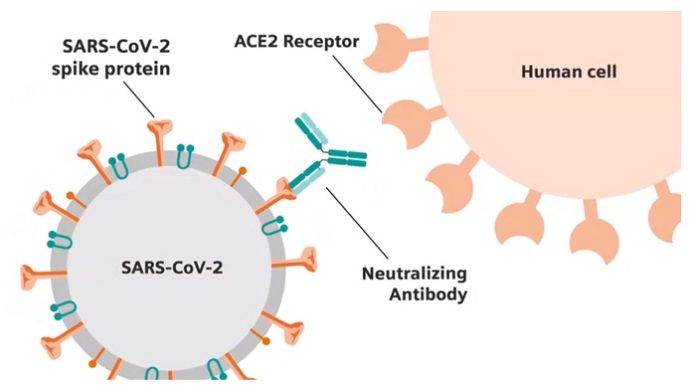
Siemens Healthineers’ collaboration with the CDC and the JRC will develop a novel process for standardizing SARS-CoV-2 assays by anchoring each protein to a neutralization antibody titerโ€”a level of antibody present to block virus from entering cells in laboratory experiments. The thresholds displayed in the standardized unit of measure for IgGโ€”arising either from natural infection or vaccinationโ€”may likely contribute to a standardized interpretation of immunity through test results.

One barrier to antibody test adoption is we don’t currently have an established process to determine immunity,” said Deepak Nath, PhD, President of Laboratory Diagnostics, Siemens Healthineers. “Different SARS-CoV-2 antibody targets produce different levels of neutralization. Our R&D team recognized that if you could define a level at which neutralization is conferred for different targets, you could create a common ground to standardize assaysโ€”not just on antibody production, but their ability to provide immunity. Our collaboration with the CDC and JRC will develop the framework that all antibody test manufacturers would be expected to adopt moving forward for greater benefit to patient care as the pandemic evolves.”

Developing a standardized process will define which concentration confers neutralization for different manufacturersโ€™ antigen targets. Each manufacturer currently standardizes their assays independently with internal standards that are not linked to a common reference. The results of this collaborative research project will support the JRC’s production of a reference material. This reference material with assigned concentrations of antibody specific to each viral protein will allow manufacturers to refer to standardized values.

With an international standard established and adopted by manufacturers, clinicians would be positioned to track their patients’ antibody concentrations, regardless of the test method or manufacturer used. This capability is expected to improve patient care by enabling long-term antibody level comparisonโ€”clinical information that is important for verifying natural immunity acquired by patientโ€™s infection with the virus, as well as for determining the effectiveness of vaccines.

Siemens Healthineers AG (listed in Frankfurt, Germany: SHL) is shaping the future of Healthcare. As a leading medical technology company headquartered in Erlangen, Germany, Siemens Healthineers enables healthcare providers worldwide through its regional companies to increase value by empowering them on their journey towards expanding precision medicine, transforming care delivery, improving the patient experience, and digitalizing healthcare. Siemens Healthineers is continuously developing its product and service portfolio, with AI-supported applications and digital offerings that play an increasingly important role in the next generation of medical technology. These new applications will enhance the companyโ€™s foundation in in-vitro diagnostic, image-guided therapy, and in-vivo diagnostics. Siemens Healthineers also provides a range of services and solutions to enhance healthcare providers ability to provide high-quality, efficient care to patients. In fiscal 2019, which ended on September 30, 2019, Siemens Healthineers, which has approximately 52,000 employees worldwide, generated revenue of โ‚ฌ14.5 billion and adjusted profit of โ‚ฌ2.5 billion.

Philips paves the way for faster lung cancer diagnosis and treatment with advanced 3D imaging and navigation platform

 Philips paves the way for faster lung cancer diagnosis and treatment with advanced 3D imaging and navigation platform

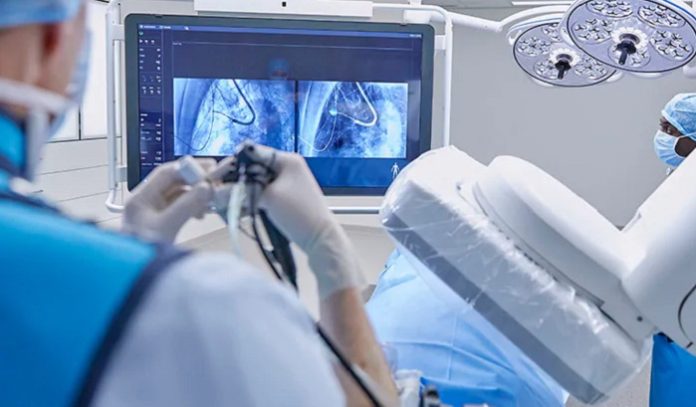
Royal Philips, a global leader in health technology, introduced Azurion Lung Edition, an advanced 3D imaging and navigation platform to accelerate the diagnosis and treatment of lung cancer. The suite combines CT-like 3D images acquired at the tableside (Cone Beam CT) with live X-ray guidance and advanced tools to support image-guided lung procedures. The system is designed specifically for bronchoscopy procedures, enabling clinicians to perform both minimally invasive endobronchial biopsies and lesion ablation during the same procedure. By speeding diagnosis and treatment, Azurion Lung Edition is helping to transform lung cancer care, contributing to dramatically improved outcomes and reduced costs.

ย Each year 1.7 million people die worldwide of lung cancer, making it the leading cause of cancer deaths globally [1] and accounting for more loss of life than breast, colon and prostate cancer combined. Today, over 60% of patients are diagnosed at a late stage, with a small chance of a surgical cure. But thanks to a rise in the number of lung cancer screening programs and increasing patient awareness, a growing proportion of patients have small peripheral lesions that are operable.ย 

ย In addition to early diagnosis, fast treatment is critical to ensure better outcomes and quality of life for lung cancer patients, with every week of delay resulting in a 5% increase in mortality [2]. Today, most patients face a long journey to a definitive diagnosis and they often undergo a painful recovery after open surgery. Cone Beam CT is seen as the gold standard for clinicians to both diagnose and treat lung cancer in one room, and even during the same procedure.

ย โ€œThis is a very exciting time in the world of interventional pulmonology and advanced bronchoscopy,โ€ said Dr. Michael Pritchett, pulmonary and critical care physician, Director, Chest Center of the Carolinas, FirstHealth Moore Regional Hospital, Pinehurst Medical Clinic, U.S. โ€œOne of the things that weโ€™re particularly excited about is being able to diagnose patients, stage their cancer and treat them, all in a single procedure. As a diagnostic bronchoscopist itโ€™s exciting and rewarding to be able not only to diagnose patients, but to go on to treat them as well.โ€

ย โ€œLung cancer is one of the most aggressive forms of cancer, and we need innovative technology to fight back,โ€ said Dr. Gustavo Cumbo-Nacheli, Director of Bronchoscopy and Interventional Pulmonology at Spectrum Health in Grand Rapids, Michigan, U.S. โ€œWithout a Cone Beam CT scan to confirm placement of the biopsy needle, repeat procedures are often necessary. And by combining Cone Beam CT with other technologies, including robotics, we will be able to go beyond biopsy and treat the patient.โ€

โ€œImage-guided minimally invasive procedures continue to expand into new treatment areas, enabled by sophisticated, procedure-oriented solutions like Azurion Lung Edition,โ€ said Dr. Gupta. โ€œWith lung cancer increasingly being detected at an earlier stage, new minimally invasive treatment strategies like ablation have the potential to significantly improve outcomes for patients.โ€ย 

ย Intuitive, integrated and efficient, the Azurion platform optimizes clinical and operational lab performance and expands the role of image-guided interventions in the treatment of patients. The platform has achieved rapid global adoption and has been used in well over two million procedures worldwide. ย 


About Royal Philips

Royal Philips is a leading health technology company focused on improving people’s health and enabling better outcomes across the health continuum from healthy living and prevention, to diagnosis, treatment and home care. Philips leverages advanced technology and deep clinical and consumer insights to deliver integrated solutions. Headquartered in the Netherlands, the company is a leader in diagnostic imaging, image-guided therapy, patient monitoring and health informatics, as well as in consumer health and home care. Philips generated 2019 sales of EUR 19.5 billion and employs approximately 81,000 employees with sales and services in more than 100 countries.

ย 

Teva’s two new digital inhalers complete Digihaler product line

Teva's two new digital inhalers complete Digihaler product line

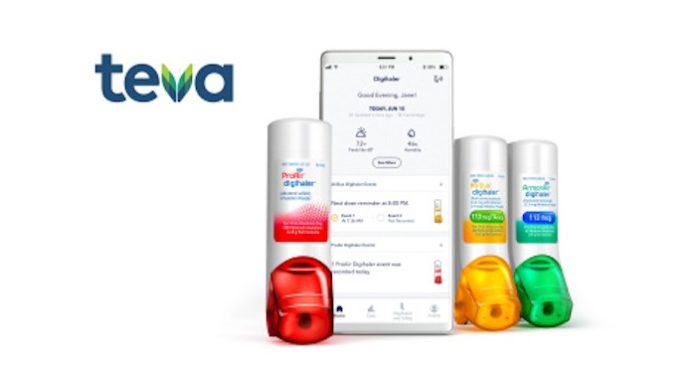
Teva Respiratory, an affiliate of Teva Pharmaceutical Industries, completed its digital inhaler portfolio today with the launch of two new products: the AirDuo Digihaler and the ArmonAir Digihaler.

Both of the new inhalers are prescription inhalation powders designed to treat people with asthma 12 years and older. The AirDuo can be used to control symptoms of asthma and to prevent symptoms such as wheezing, while the ArmonAir is designed for the long-term treatment of asthma.

Neither inhaler should not be used to relieve sudden breathing problems and wonโ€™t replace a rescue inhaler, Teva said.ย  The new inhalers join Tevaโ€™s ProAir DigiHaler to round out the companyโ€™s digital maintenance inhaler portfolio for treating people with asthma.

โ€œThe full Digihaler family is a major step forward for digital health technologies in helping to transform patient care, and we hope it will enable patients and their healthcare providers to better inform treatment decisions,โ€ said Sven Dethlefs, the executive vice president of global marketing and portfolio at Teva Pharmaceuticals, in a statement. โ€œFor Teva, the Digihaler launch is the starting point for new software-based innovations in respiratory, moving treatment options beyond new therapeutic entities.โ€

WHATโ€™S THE IMPACT?

The Digihaler line is equipped with Bluetooth wireless technology that automatically records inhaler-use data every time the cap is opened or a user inhales.

The data connects with a companion app that can remind users how often the device has been used, measure inspiratory flow rates, determine if the inhalation technique needs improvementย and share patient data with their doctor. The company is pitching this as a way to better keep track of this data.

โ€œUntil now, I have had to rely on my patientsโ€™ memory to share the details of their inhaler use habits with me โ€“ which, despite their best efforts, can be difficult and confusing,โ€ said Dr. J. Allen Meadows, a clinical faculty member at Alabama College of Osteopathic Medicine, in a statement. โ€œBeing able to see my patientsโ€™ rescue and maintenance inhaler use data can help me assess if they are using their inhalers as prescribed.โ€

The wholesale acquisition price of the AirDuo is between $399 and $449 depending on the dosage size. For the ArmonAir, the WAC is between $239 and $299.

THE LARGER TREND

Tevaโ€™s original digital inhaler, the ProAir, was launched in the U.S. in July. It is a digital rescue inhaler designed for people four years or older with reversible obstructive airway diseases such as asthma and COPD, as well as for the prevention of exercise-induced bronchospasm (EIB) among this same group.

Propeller Health has been a longtime figure in the digital inhaler space. This year, it received 510(k) clearance for a sensor and app to be used with AstraZenecaโ€™s Symbicort inhaler for asthma and COPD. Propeller also entered a new market in Japan this year through a partnership with Novartis.

AireHealth, another respiratory health company, recently acquired BreathResearch and its IP, research and patents. The merger supports the virtual care platform’s capabilities so that it can support the early detection of respiratory decline.

ON THE RECORD
โ€œBeing able to now offer AirDuo Digihaler and ArmonAir Digihaler to patients is an exciting step forward for Teva, and one that we are extremely proud of,โ€ said Brendan Oโ€™Grady, the executive vice president of North America commercial at Teva Pharmaceuticals, in a statement. โ€œWith the launch of these two maintenance products, weโ€™re now able to offer the full Digihaler portfolio to patients, potentially allowing them to gain an even deeper understanding of their overall asthma treatment regimen, due in part to the data collection capabilities of the Digihaler portfolio of products.โ€

RapidAI Receives $25 M To Expand AI-Enhanced Cerebrovascular Imaging Around The World

RapidAI Receives $25 M To Expand AI-Enhanced Cerebrovascular Imaging Around The World

RapidAI, a startup developing a Cerebrovascular Imaging Product using AI, recently closed a $25 million Series B funding round led by Lennertz & Co. Family Equity Fund. The company will use these funds towards strategic growth initiatives, licensing, and acquisitions.

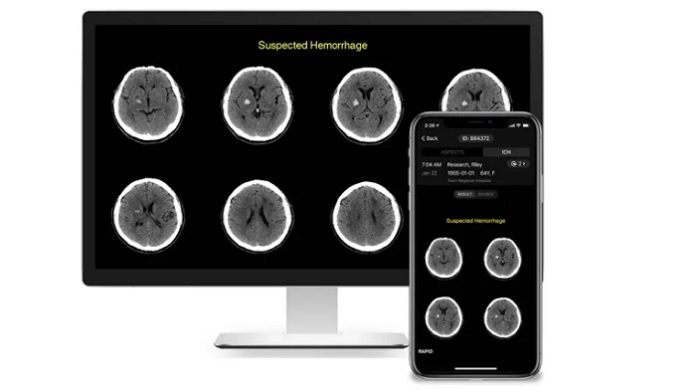
RapidAI claims to be the worldwide leader in advanced imaging for stroke. Its platform uses artificial intelligence to create high quality, advanced images from non-contrast CT, CT angiography, CT perfusion, and MRI diffusion and perfusion scans. The Rapid imaging platform includes Rapid CTA, Rapid LVO, Rapid ICH, Rapid ASPECTS, Rapid CTP, and Rapid MRI. RapidAI also offers a comprehensive aneurysm management platform called SurgicalPreview. All of these products feed into RapidAI Insights, which combines operational, clinical, and imaging data, offering reports on patient care decisions and treatment effectiveness through logs covering scan errors, processing times, patient volumes and demographics, logins by the user, training participation, and more.

RapidAI empowers clinicians to make faster, more accurate diagnostic and treatment decisions for stroke and aneurysm patients using clinically- proven, data-driven technology. Using their products developed by medical experts, they aim to improve patient care and outcomes every day. RapidAI claims to have analyzed over one million scans from over 1600 hospitals in over 50 countries. The companyโ€™s annual revenue is estimated to be between $25 million and $50 million.

Computer vision in medicine is gaining more and more popularity over time with many companies in the race. For example, Zebra Medical Vision uses a computer vision system for diagnosing breast cancer and cardiovascular diseases. MedyMatch is using AI for medical imaging scans from acute stroke victims. Googleโ€™s DeepMind, Google AI, and Arterys use AI to detect the presence of diseases like cancer or degenerative eye conditions, etc.

DeepMind is also trying to engineer an algorithm to search for early signs of blindness.

Ouva’s Hospital Intelligence Platform Uses NVIDIA Clara Guardian Framework to Monitor Patients in a Contact Free Environment

Ouva, a San Francisco-based startup, has created a solution using theย NVIDIA Clara Guardianย application framework. Their hospital intelligence platform monitors patient safety via optical sensors allowing many monitoring tasks without the need to touch anything. One such example includes the ability of the AI-based system to direct a safe and smooth path for assisting patients, visitors, and other hospital interactions.

One of the first use cases to deploy Ouva voice assistant is Medical City Healthcare in Dallas, for the smooth and contact-free functioning for their Heart and Spine facilities at the start of COVID-19.

Features of Ouva voice assistant:ย 

  • WayFinding Experience: Unlike the regular asking around for directions, patients and visitors will be guided by Ouva that displays 3D maps, prominent landmarks, and directions with visual representations.
  • Private Guidance by Design: Ouva will use the optical sensor installed in it to identify visitors and remember their questions for future reference. This information will be sent to all the stations around the facility so that the visitor can get the next set of instructions from any station without having to ask again.
  • Safe and Contact- free signage: The widespread infection of COVID-19 has instilled a fear of contracting anything. The interface is entirely touch-free, which eliminates the risk of infection.
  • It generates actionable insights with appropriate course corrections to improve the efficiency of care and patient satisfaction.
  • Any messaging, such as the hospitalโ€™s COVID-19 guidelines, can be displayed on stations to improve patient communication.
  • Personalized private messaging via EHR integration: Patients can send messages to Ouva assistant, including their queries.

At RWJBarnabas Health, EHR user experience tool helps reduce clinician burden

At RWJBarnabas Health, EHR user experience tool helps reduce clinician burden

RWJBarnabas Health is the largest health system in New Jersey.ย It servesย more than fiveย million patients annually across nine countiesย and employing 33,000 people โ€“ making it the stateโ€™s largest private employer. As a national health system leader, RWJBH recognizes clinician burnout as a complex workplace syndrome affecting not only physicians, nurses and staff who deliver care to patients, but also patients and their families.

THE PROBLEM

The health systemโ€™s clinicians are the lifeblood of the organization and help it deliver the best possible care to its patients.ย They should be empowered with the right tools and technologies that allow them to do their jobs as efficiently as possible.

But electronic health record systems require clinicians to click through dozens of screens to find the information they need to make treatment decisions for patients. Clinician burnout is a national problem, and the EHR has been shown in many studies to be a significant contributor.

PROPOSAL

โ€œEHR systems are largely static, displaying information in the same way to every healthcare provider for each patient,โ€ said Dr. Stephen Oโ€™Mahony, vice president and chief health information officer at RWJBarnabas Health. โ€œThis contributes to frustration and inefficiency, because users are required to search across many screens with numerous clicks to find the information they need.โ€

So the health system went with health IT vendor Wellsheet to help with the problem.

โ€œWellsheet is powered by an intelligence that knows who the provider is and the patient being treated, and is able to anticipate the most relevant information to display to the clinician,โ€ Oโ€™Mahony said. โ€œThese capabilities deliver a better experience for our physician users, reducing the burden of the EHR and increasing their productivity.โ€

Beyond efficiency and provider satisfaction, the ability to surface and highlight key information to providers at the point of care enables the health system to deploy key quality improvement initiatives. For example, the vendorโ€™s technology is able to mine key information from echocardiogram reports in order to highlight cardiovascular gaps in care that need to be addressed for patients. By making it easier for clinicians to do the right thing for patients, the health system can ensure the best quality of care possible, Oโ€™Mahony added.

MEETING THE CHALLENGE

Wellsheet is integrated directly into RWJBarnabas Healthโ€™s Cerner EHR to make it a seamless part of the clinician workflow. For clinicians, it feels like a feature within the EHR. Because the vendorโ€™s integration with Cerner is entirely API-based, it did not require a significant investment in time and resources by the health systemโ€™s technical team to integrate, and was ready for use by providers in production in less than six weeks.

โ€œItโ€™s really incredible how such a lightweight integration process was able to give Wellsheet access to all of the pertinent clinical information required to make informed treatment decisions for patients,โ€ Oโ€™Mahony remarked. โ€œWe initially deployed the technology into our inpatient setting, and it is now in active use by more than 1,000 physicians of many specialties across all seven of our Cerner hospitals.โ€

Some of the heaviest users of Wellsheet are hospitalists, cardiologists, pulmonologists and endocrinologists, to name a few. RWJBarnabas Health is now piloting the new technology in the outpatient setting.

RESULTS

โ€œWe studied Wellsheetโ€™s impact closely and the results are the reason we signed an enterprise contract to expand across the health system,โ€ Oโ€™Mahony stated. โ€œOur study involved both a quantitative data analysis from Cernerโ€™s reporting module, called Lights On, and a multiple hospital survey. Our analysis focused around three main dimensions of value.โ€

The first was provider satisfaction, which the health system gauged based on opt-in usage, which grew rapidly to more than 500 users in about eight months, as well as a survey based on the industry standard System Usability Scale. In this survey, on a five-point Likert scale, physicians rated the EHR with Wellsheet at an average of 4.55 compared to 3.27 before the introduction of Wellsheet.

โ€œThe second dimension of value that we studied was provider efficiency and productivity,โ€ Oโ€™Mahony recalled. โ€œFor this, we looked at the number of minutes per patient the physician needed to spend in the EHR, a number tracked by the Cerner EHR system itself. This dropped from approximately 24 minutes with the EHR alone to only approximately 13 minutes after the introduction of Wellsheet, an over 40% drop and meaningful time back for providers to spend with patients. We also saw the number of patients a provider was able to see grow by more than 20% as a result of these efficiency gains.โ€

The final dimension of value was quality of care. For study purposes, RWJBarnabas Health focused on the TAVR procedure. Wellsheet was able to uncover hundreds of patients who met criteria for this procedure based on unstructured text in echocardiogram reports and surface these candidates to the cardiology team to consider for further evaluation while they were still in the hospital.

ADVICE FOR OTHERS

โ€œWe are now able to integrate technology partners who are complementary to the EHR vendor for solving problems for their providers,โ€ Oโ€™Mahony noted. โ€œWith the API connectivity that the vendors have opened up, it is possible to deliver a better clinician experience when accessing clinical information without large integration, build and maintenance effort. Not only can this lead to improved quality of care, we can now use technology to contribute to wellness instead of adding to the burden.โ€

Ascom develops Critical Care Information system for Welsh Hospitals

 Ascom develops Critical Care Information system for Welsh Hospitals

Global solutions healthcare ICT provider, Ascom, will deliver its software solution, Digistat, for all 14 Welsh hospitals to develop a national Critical Care Information system.

Ascom will deliver the service for a period of seven years. The initial contract volume amounts to around GBP 13.0 million in total.

The long-term partnership will provide Digistat for 14 hospitals with 198 Intensive Care Unit (ICU) beds in total. Digistat for ICUs is designed to automate the documentation of patient care across the hospital’s intensive care units. Digistat can help clinicians and nurses to streamline care processes and improve efficiency.

Clinicians will have access to manually entered data and information acquired in real-time from connected medical devices and systems.

THE LARGER CONTEXT

Earlier this week, a launch date was announced for England and Walesโ€™ contact tracing app.

HealthcareITNews spoke to the director of technology, digital transformation, Welsh Government Health and Social Services, Ifan Evans, about the digital strategy that Wales has adopted during the pandemic.

ON THE RECORD

Jeannine Pilloud, Ascom CEO, said: โ€œWinning this extraordinary contract for the Wales National Health Service hospitals is an accomplishment we are very proud of. Not just because of the size of the deal, the national impact on the Welsh healthcare infrastructure and the strong competition weโ€™ve beaten in the process, but also because of the biggest ever roll out of our software solution Digistat. We are looking forward to having a strong long-term business relationship with NWIS.โ€

Vaughan Gething, Minister for Health and Social Services of the Welsh Government, said: โ€œOur Welsh intensive care services deliver extraordinary services helping people when they are critically ill. The introduction of this innovative technology will enhance the care patients receive and allow doctors and nurses to spend as much time as possible caring for patients. The use of technology to deliver a sustainable NHS is a key part of A Healthier Wales, our long-term strategy for health and social care in Wales.”

Homage announces strategic partnership with Infocom, one of Japan’s largest healthcare IT providers

Health Information System (HIS)

Homage, a Singapore-based caregiving and telehealth company, has taken a major step in its global expansion plan. The startup announced that it has received strategic investment from Infocom, the Japanese information and communications technology company that runs one of the largest healthcare IT businesses in the country. Infocomโ€™s solutions are used by more than 13,000 healthcare facilities in Japan.

During an interview with TechCrunch that will air as part of Disrupt tomorrow, Homage co-founder and chief executive Gillian Tee said โ€œJapan has one of the most aging populations in the world, and the problem is that we need to start building infrastructure to enable people to be able to access the kind of care services that they need.โ€ She added that Homage and Infocomโ€™s missions align because the latter is also building a platform for caregivers in Japan, in a bid to help solve the shortage of carers in the country.

Homage raised a Series B earlier this year with the goal of entering new Asian markets. The company, which currently operates in Singapore and Malaysia, focuses on patients who need long-term rehabilitation or care services, especially elderly people. This makes it a good match for Japan, where more than one in five of its population is currently aged 65 or over. In the next decade, that number is expected to increase to about one in three, making the need for caregiving services especially acute.

The deal includes a regional partnership that will enable Homage to launch its services into Japan, and Infocom to expand its reach in Southeast Asia. Homageโ€™s services include a caregiver-client matching platform and a home medical service that includes online consultations and house calls, while Infocomโ€™s technology covers a wide range of verticals, including digital healthcare, radiology, pharmaceuticals, medical imaging and hospital information management.

In a statement about the strategic investment, Mototaka Kuboi, Infocomโ€™s managing executive officer and head of its healthcare business division, said, โ€œWe see Homage as an ideal partner given the companyโ€™s unique cutting-edge technology and market leadership in the long-term care segment, and we aim to drive business growth not only in Homageโ€™s core and rapidly growing market in Southeast Asia, but also regionally.โ€

Mubadala Healthcare rolls out remote healthcare programme for senior patients

Mubadala Healthcare rolls out remote healthcare programme for senior patients

Abu Dhabiโ€™s Mubadala Healthcare is rolling-out a sustainable remote healthcare programme for senior citizens with chronic illnesses, it has been confirmed. This comes following a two-month trial that covered 4,351 patients aged 60 and above thatโ€™s now set to be extended to include approximately 12,000 patients in the emirate, who have conditions such as heart disease, diabetes, and cancer.

It also comes following the success of its remote care programme for COVID-19 patients in home isolation. This latest initiative is a collaboration between Mubadala Healthcare providers โ€“ which include Cleveland Clinic Abu Dhabi, Healthpoint, Imperial

College London Diabetes Centre (ICLDC), and Amana Healthcare โ€“ and the Department of Health (DoH) Abu Dhabi, which is serving as the custodian of the project. Services offered include home healthcare visits, medication delivery, specialist teleconsultations, and phlebotomy services.

โ€œThis partnership with Mubadala Healthcare has benefits for individuals and the Abu Dhabi population as a whole, as it has been designed to further develop the management and treatment of chronic diseases and to minimise the risk of complications,โ€ explained Jamal Mohammed Al Kaabi, Acting Under-Secretary of the DoH. โ€œThe remote care programme has the potential to improve population health overall, representing our unwavering determination to transform the way the healthcare services are delivered and take patient experience to the next level.

โ€œIt also reflects our efforts to provide easy access to integrated, innovative and high-quality healthcare to all members of the community and those who have difficulty in visiting facilities due to the nature of their illness. This is only possible with the support of our partners and the innovation-driven pathway that Abu Dhabi is taking.โ€

Omniyat Al Hajri, director of Community Health Division at the Abu Dhabi Public Health Center added that the platform โ€œfocuses on spreading awareness using high-quality video and audio conferencing sessions.โ€

She continued: โ€œThe remote healthcare programme limits the spread of COVID-19 by providing senior citizens and residents with remote healthcare services without the need to go to health facilities in order to ensure their safety.โ€

โ€œThe remote care programme for chronic illnesses will allow us to combine and leverage the strengths of our specialised facilities to ensure the highest standards of care,โ€ said Hasan Jasem Al Nowais, senior vice president of Mubadala Healthcare. โ€œThrough Amana Healthcare, we have well-established home care services, while Cleveland Clinic Abu Dhabi, Healthpoint, and ICLDC have Centres of Excellence in cardiology, musculoskeletal and diabetes.โ€

COVID-19: Singapore develops robot for swab tests

COVID-19: Singapore develops robot for swab tests

Singapore has developed a robot that carries out nasal swabbing to diagnose COVID-19, in a bid to reduce healthcare workers’ risk of exposure to the deadly coronavirus.

Clinicians from the National Cancer Centre Singapore (NCCS) and Singapore General Hospital (SGH) have partnered with Biobot Surgical, a firm specialising in medical robotics technology, to develop the SwabBot, Channel News Asia reported.

The self-administered robot, that automates the taking of COVID-19 swab tests, will help reduce healthcare workers’ risk of exposure to the coronavirus, it said.

The robot helps address the limitations of manual COVID-19 swab tests by reducing the need for trained manpower, standardising the consistency of the swabs taken and “providing greater throughput” of swab tests as the robot does not suffer from fatigue, the three groups said in a statement.

The SwabBot is a “self-administered” robot, meaning patients can activate and terminate the process at will. When a patient is ready, they can use their chin to activate the robot and start the swabbing process.

The robot then extends the swab through the nose to the back of the nasal cavity, which is typically about 10cm from the nostrils.

Even after many swabs, it retains the same gentle touch and precision as surgeons who perform very delicate procedures,” said Dr Luke Tay, a consultant with the Department of Vascular Surgery at SGH.

“Furthermore, the sample quality remains consistent even though nose structures can vary in size and shapes,” said Dr Tay.

Meanwhile, Singapore recorded 31 new COVID-19 cases on Monday, including nine imported infections, taking the country’s caseload to 57,607, the Ministry of Health said in its daily preliminary report.

All imported cases had been placed on stay-home notice (SHN) upon their arrival in Singapore, it said, adding that rest of the cases were migrant workers living in dormitories while there was no case from the community.

The four imported cases, reported on Sunday, came from the Philippines, Iran and Germany between September 8-15. They have been put under a 14-day SHN.

The Sunday’s sole case from the community, a foreigner on work permit, was detected during the rostered routine testing of workers in the construction, marine and process sectors who are staying outside the dormitories, and was picked up even though he was asymptomatic.

With 39 patients discharged from hospital on Sunday, 57,181 have fully recovered from the infection, said the health ministry.

Currently, 30 patients are in hospital and 338 at community facilities.

Translate ยป