Close
Digital Health & Ai Innovation summit 2026
Medical Taiwan 2026

Wales-based firm develops COVID-19 test companion app

Wales-based firm develops COVID-19 test companion app

Wales-based Bond Digital Health is part of a global consortium that is producing a rapid diagnostic test for COVID-19. The antigen test, produced by Canadian company Sona Nanotech, uses a nasal swab to provide a result in 15 minutes without the use of either laboratory equipment or a reader system.

The test can be used as a tool to rapidly identify patients infected with the virus. It is currently being assessed for approval by the Food and Drug Administration (FDA) and Health Canada for emergency use authorisation.

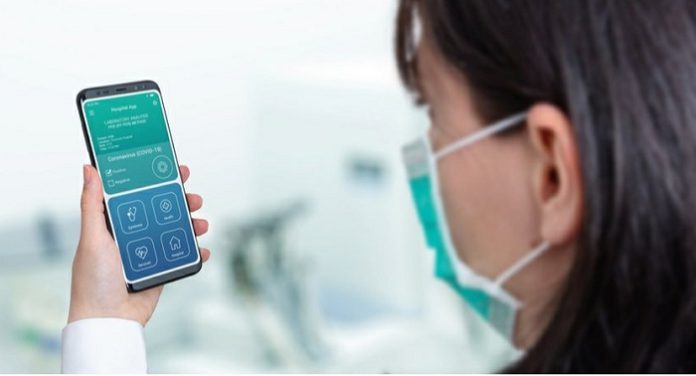
Bond developed a complete end-to-end system with a mobile app for test users and a web dashboard providing geo-mapped data analytics for health agencies. The system, called Sona Connect, is powered by Bondโ€™s Transform technology.

Sona Connect, which was launched this month on the Google Play store, allows users to capture the result and upload it along with a photo of the test and relevant epidemiological information like age and underlying health conditions. This creates a digital record that is instantly sent to a secure cloud for reference and analysis. In the web dashboard, relevant stakeholders can view and share the information and use it to map test results, monitor the spread and ultimately manage the outbreak.

Phil Groom, commercial director of Bond Digital Health, said: โ€œItโ€™s taken months of hard work from our team to deliver the first real-world application of our Transform technology in the market for an infectious disease.

โ€œWeโ€™re proud that our technology will supercharge Sona Nanotechโ€™s COVID-19 rapid antigen test with a user friendly, real-time data platform that will help us all return to normality safely and confidently.

โ€œThis is the first of many lateral flow tests that we are making better with data.โ€

Darren Rowles, president and chief scientific officer of Sona Nanotech, said: โ€œSona Connect, powered by Bondโ€™s Transform technology, adds value and functionality to Sonaโ€™s test across diagnostic, surveillance and reassurance testing use case scenarios, helping authorities detect, manage and control the spread of this outbreak.

โ€œWeโ€™ve been impressed at how quickly Bond has created this platform for us and at the quality of the final product, and we look forward to continuing our productive partnership.โ€

Earlier this year Bond was awarded more than ยฃ200,000 in government grants to help it develop Transform – ยฃ177,979 from the Welsh Government and ยฃ49,796 from Innovate UK.

QMS software platform launches new tool for closed-loop traceability

QMS software platform launches new tool for closed-loop traceability

Medical device professionals need to rely on tribal knowledge and manual processes across disconnected, siloโ€™d systems to understand the connective-tissue of traceability that holds their quality system together. Over time, as the complexity of the companyโ€™s quality system grows, this often leads to enormous personal stress for those managing the system, productivity loss, and can increase the likelihood of regulatory problems and recalls for the company.

Greenlight Guru Visualize provides a platform for users to achieve closed-loop traceability through a fully connected quality ecosystem. The machine learning capabilities allow medical device companies to see, understand, and interact with the relationships and connectedness of their quality system. This promotes a shift in focus from reactive, manual quality management to a proactive, data-driven approach that improves accuracy and efficiency of all decisions made throughout the medical device life cycle.

David DeRam, CEO of Greenlight Guru, said: โ€œToday, 45% of medical device professionals cannot demonstrate closed-loop traceability in their quality system, and of those that are able to, one in three still say it takes substantial effort to do so, which is astonishing considering the implications. Visualize allows medical device professionals to eliminate human error, uncover the downstream impacts of change, gain full visibility into quality data trends, and reduce the cost of poor quality by making better quality-driven decisions. Visualize is a new paradigm in how you see, explore, understand, and communicate the world of quality โ€” and itโ€™s only the beginning.โ€

These machine learning (ML) driven capabilities are now available to Greenlight Guru customers through Visualize:

  • ML-powered relationship creation and virtual linking of all related items within the QMS
  • A visual traceability pop-up map accessible on-demand to show all linked or related items and where used
  • Transparency into the bridging of relationships between items in the QMS, along with the type and directional relationship of the connected items
  • The ability to navigate deeper into the related items to see where else they are used in the QMS
  • Multi-tiered filtering capabilities to customise the userโ€™s view of QMS data most relevant to the userโ€™s search.

Humana Launches Two More Value-Based Program for Specialty Care

Humana Launches Two More Value-Based Program for Specialty Care

The Louisville-based health payer is looking to build on its success in transitioning providers and members to value-based care with the announcement of two new models and twelve inaugural participants.

The first is an episode-based model for heart bypass surgery known as Coronary Artery Bypass Grafting (CABG). The bundled payment initiative will focus on patient care from surgery through post-discharge with the goal of reducing redundant services and complications that could potentially lead to readmissions. The procedure addresses a form of coronary heart disease in which plaque buildup restricts or blocks blood flow by using a separate artery or vein.

โ€œHumana is proud to further diversify our value-based program offerings in support of clinicians who share our vision for the future of health care,โ€ said Humanaโ€™s Vice President of Value Based Strategies Oraida Roman said. โ€œItโ€™s particularly important that we focus on quality of care and health outcomes for our members in need of such a widely-performed and critical procedure as heart bypass surgery.โ€

Six healthcare organizations round out the initial participants in the CABG model:

Infirmary Health Cardio-Thoracic and Vascular Surgical Associates
Cardiothoracic and Vascular Surgical Associates
Ballad Health CVA Heart Institute
CHRISTUS Health
CHRISTUS Trinity Clinic
WVU Heart and Vascular Institute

The second value-based model, Total Shoulder Specialist Rewards Program, is the payer’s third orthopedic payment program. The existing programs focus on total hip and knee joint replacement surgeries and spinal fusion procedures.

โ€œWeโ€™re pleased to expand value-based orthopedic specialty care with Humanaโ€™s first model for shoulder replacement procedures,โ€ Humanaโ€™s Associate Vice President of Value Based Strategies Brent Stice noted. โ€œAs with replacements done for the knee or hip, the procedure can be a good option for our members suffering from chronic joint problems that have not resolved with more conservative therapy. Humana is pleased to commit our support to clinicians as they coordinate a more holistic approach to orthopedic care.โ€

Similar to the CABG model, six providers will participate in the orthopedic payment model:

Florida Orthopaedic Institute
OrthoCincy Orthopaedics & Sports Medicine
EmergeOrtho
OrthoCarolina
OrthoTennessee
Tennessee Orthopaedic Clinics

The program has two goals: improved health outcomes and lowered health costs. To achieve the second, the health plan will incentivize providers for selecting independent surgeons and ambulatory surgical centers when clinically appropriate to perform the procedures.

Alongside the Maternity Episode-Based Model and Oncology Model of Care, Humana now offers a total of six specialty-care payment models. According to the payer, more than 2.6 million individual Medicare Advantage (MA) and commercial members receive care by way of 1,000 value-based relationships across 43 states and Puerto Rico.

In its last value-based care annual report, Humana touted the success of its programs.

Two-thirds of its MA beneficiaries have a primary care physician with value-based agreements. In 2018, these value-based agreements were responsible for higher rates of preventive care and screenings compared to fee-for-service arrangements (+21% for certain regions); fewer hospital admissions (-5%) and emergency department visits (-7%); and higher overall HEDIS scores (+43%).

From a financial standpoint, providers in Humana MA value-based plans received an average of 15.5 cents for each dollar spent nationally on healthcare compared to 6.3 cents for those not participating in these programs. On average, Medicare pays 4.88 cents.

Specific to value-based care models, Humana physicians received an average of 167% of the Medicare fee schedule. The return was even more significant for physicians participating in a more advanced primary care model, receiving on average 250% of the Medicare fee schedule.

In March, theย Louisville-based organization unveiled the Social Determinants of Health Value-Based Program to help clinicians care for patients facing food insecurity, social isolation, loneliness, and housing instability. Last month, the companyย  donated $250 million to the Humana Foundation to address social determinants of health, critical socioeconomic factors impacting individuals’ ability to access and receive care.

Patent granted for tech used in cuff-based blood pressure devices

Patent granted for tech used in cuff-based blood pressure devices

CardieX Limited has announced that its subsidiary ATCOR was granted a new patent by the European Patent Office (EPO) for the companyโ€™s SphygmoCor technology used in cuff-based blood pressure devices.

EPO Patent Number EP2566387 further protects the companyโ€™s intellectual property in relation to the measurement of a central blood pressure (BP) waveform with cardiovascular features using a brachial cuff. Patent EP2566387 specifically covers non-invasively estimating the heartโ€™s pressure and pressure waveform related to cardiac function and arterial properties using a conventional BP cuff inflated to low pressure. The patent provides a simple tool to clinically diagnose and estimate the risk of heart disease.

Examining officers from the EPO referenced the substantial differences to existing patents when granting the new patent to ATCOR, demonstrating the unique nature of the technology. The granting of the European patent follows similar patents granted in the United States and Japan with the new European patent in force until 2034.

ATCOR currently sells the XCEL central blood pressure device and has a partnership with SunTech Medical for the Oscar 2 ABPM device, which both incorporate ATCORโ€™s SphygmoCor and brachial cuff technology. The company also recently announced a partnership with Andon for the development

of a home-based BP device with advanced cardiovascular vital signs features.

Covera Health Announces Approval of its Patient Safety Organization by the Agency for Healthcare Research and Quality

Covera Health Announces Approval of its Patient Safety Organization by the Agency for Healthcare Research and Quality

Covera Health, the countryโ€™s leading provider of clinical analytics solutions to reduce medical misdiagnoses and improve healthcare quality, announced approval of its certification as a patient safety organization (PSO) by the Agency for Healthcare Research and Quality (AHRQ), the lead agency charged with improving the quality and safety of Americaโ€™s healthcare system.

Covera Health collaborates with healthcare providers across the country in support of their efforts to better define, measure, and reduce misdiagnoses. AHRQโ€™s formal approval of the companyโ€™s certification as a PSO is a logical extension and validation of the companyโ€™s overall mission to improve quality of care. Covera Healthโ€™s PSO joins an exclusive roster of less than 100 PSOs nationally set up to study and implement quality and safety-forward initiatives to enhance delivery of care.

โ€œThe recognition of Coveraโ€™s PSO is a testament to our unwavering commitment to improved patient outcomes,โ€ said Covera Health CEO, Ron Vianu, โ€œThe entire north star of our company has been and continues to be centered around collaborating with physicians to help support their efforts to detect and reduce preventable medical errors. Forming and receiving approval as a certified PSO deepens our commitment and resolve to accomplish those goals.โ€

Medical misdiagnosis remains one of the most impactful and overlooked areas of the healthcare system. Covera Healthโ€™s data-driven approach to solving it is a critical lever in helping providers and payers improve patient outcomes.

โ€œSince inception, weโ€™ve made it our mission at Covera Health to support radiologists and the broader physician community in providing high-quality care for patients, above all else,โ€ said Richard Herzog, MD, FACR, Covera Healthโ€™s Chief Medical Officer and Director of Spinal Imaging at the Hospital for Special Surgery. โ€œThe Covera PSO allows us to further deepen our collaboration with these physicians, both to improve care for patients nationwide and to demonstrate the fundamental value of high-quality radiology in leading to better healthcare outcomes.โ€

โ€œWe congratulate Covera Health in taking the initiative to establish a PSO, and for gaining the inherent validation that comes with the certification,โ€ said Peggy Binzer, Executive Director of the Alliance for Quality Improvement and Patient Safety, the nationโ€™s leading professional association for PSOs. โ€œThe PSO designation signals forward-thinking leadership in quality and patient safety, and Covera Health is truly deserving of that designation.โ€

About Covera Health
Covera Health, a leading clinical analytics company, pioneers quality-based solutions for payers and providers that reduce medical misdiagnoses and the high costs associated with poor outcomes. Covera Healthโ€™s Radiology Centers of Excellence Program operates in all 50 states. For more information, visit www.coverahealth.com.

Teleorthodontic Company Grin Launches Remote Monitoring Platform

Teleorthodontic Company Grin Launches Remote Monitoring Platform

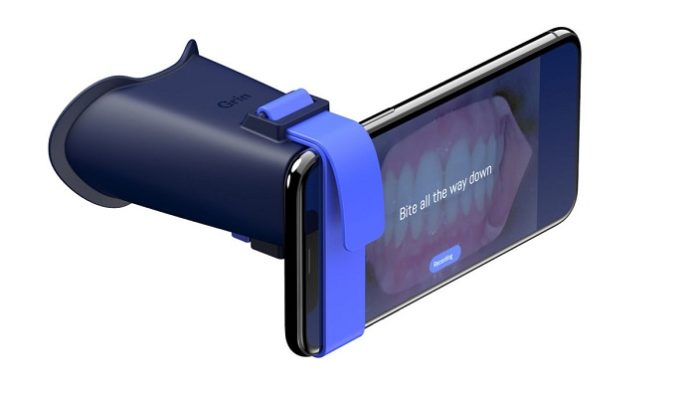
Grin, a comprehensive digital orthodontic platform that provides remote monitoring solutions in partnership with trusted local specialists, announced a strategic collaboration with the 3M Oral Care Solutions Division to enable orthodontists to monitor patient oral health from anywhere. The Grin experience consists of the Grin App and Grin Scope, which is an FDA listed medical device. Together, under the supervision of partner orthodontists, Grin will provide a suite of capabilities including the Grin Remote Monitoring Platform for teeth straightening.

The Oral Care Solutions Division of 3M, a leading manufacturer of innovative dental products, is the first nationwide distributor for thousands of Grin Scopes. The collaboration includes a COVID-19 initiative, where 3M will distribute complimentary Grin systems to assist orthodontists across the United States in need of remote monitoring solutions during the pandemic.

The Grin Scope is an orthodontist created, proprietary device that serves as an intraoral adapter. It is designed to retract the cheeks in order to allow a full view of a patientโ€™s mouth. After easily affixing the Grin Scope to any smartphone, patients self-scan their teeth using the guided Grin App experience to achieve an orthodontist-ready video. Once scanned, specialists assess a patient’s teeth straightening progress via their Grin online doctor portal. This virtual access makes following patient progress seamless, while ensuring the highest level of care from a distance. Practitioners can now reduce in-person office visit frequency and adhere to COVID-19 social distancing recommendations, all while maintaining treatment schedules and best in class observational care.

โ€œGrin gives patients maximum convenience and cost-effective remote monitoring solutions that keep orthodontists in the care loop,โ€ said Grin CEO Adam Schulhof, DMD. โ€œLast year, my team started creating the Grin experience and I first beta tested the platform in my own practice. When COVID-19 began to spread, Grin dramatically helped me to continue responsible patient treatment from anywhere. Weโ€™re thrilled to be collaborating with 3M to get our cutting-edge technology into as many orthodontist hands as possible.โ€

“With coronavirus, we recognize the need for our orthodontic practices to connect with patients remotely,” said Jay Issa, Orthodontic Global Business Director, 3M. “The Grin platform will fulfill this need for 3M on a trial basis, helping provide orthodontists with a valuable tool to monitor patient progress.โ€

About Grin

Grin is a comprehensive digital platform that provides orthodontic solutions for all types of teeth straightening needs. The Grin App and Grin Scope connect patients to real orthodontists in their community. Patients can access quality professional care from the convenience of their smart device. Doctors can remotely monitor patients via virtual check-ins for complete visibilityโ€”reducing chair time, increasing patient volume, and ensuring safety.

MEDITECH Launches Expanse Virtual Assistant through Strategic Conversational AI Collaboration with Nuance

MEDITECH Launches Expanse Virtual Assistant through Strategic Conversational AI Collaboration with Nuance

MEDITECH and Nuance Communications Inc. are re-imagining the way physicians interact with their Expanse EHR by introducing intuitive voice-driven navigation. Built upon the leading Nuance Dragonยฎ Medical solution already used by more than 550,000 physicians, the companies have partnered to launch the MEDITECH Expanse Virtual Assistant. Nuanceโ€™s deeply embedded virtual assistant technology and sophisticated conversational AI dialogue and skills will enable physicians to navigate their EHR hands-free and transform the way they practice and provide care. By simplifying routine tasks, physicians can save steps and time, freeing them up to focus on direct patient care.

โ€œMEDITECH continues to drive the industry forward by providing solutions that improve efficiency and reshape the patient experience,โ€ said MEDITECH Executive Vice President Helen Waters. โ€œIn partnership with Nuance, Virtual Assistant technology represents another leap forward in usability and efficiency, ushering in a new era of digital transformation. Physicians can simply ask for what they need from their Expanse EHR and get it.โ€

Using simple voice commands, physicians can leverage Expanse Virtual Assistant to navigate and search patient charts for key areas of information including lab results, medications, allergies, radiology images, and more. Users can simply ask โ€˜OK, MEDITECH, when was the last EKG?โ€™ It is a powerful tool that allows physicians to directly engage with their patients and quickly access and review key EHR data and images together.

The COVID-19 pandemic has furthered the demand for touchless technology as healthcare providers are asked to limit the physical touching of objects such as keyboards, phones, and screens. But this benefit extends well beyond the current pandemic. For example, in surgical settings, physicians can use the Expanse Virtual Assistant to access information without having to leave the sterile field in the operating room.

โ€œConversational AI is essential for eliminating the barriers to positive physician-patient interactions, reducing administrative burdens on clinicians and empowering providers to keep patients and successful healthcare outcomes their priority,โ€ said Peter Durlach, Senior Vice President of Strategy and New Business Development, Nuance Healthcare. โ€œWe are very excited to expand our decades long strategic partnership with MEDITECH and deliver this cutting-edge technology to Expanse. Our shared goal is to improve efficiency and increase clinician satisfaction for those who take care of all of us, and enhance the overall provider-patient experience.โ€


About Nuance Healthcare

Nuance provides intelligent systems that support a more natural and insightful approach to clinical documentation, freeing clinicians to spend more time caring for patients. Nuance healthcare solutions capture, improve, and communicate more than 300 million patient stories each year, helping more than 550,000 clinicians in 10,000 global healthcare organizations to drive meaningful clinical and financial outcomes. Nuance’s award-winning clinical speech recognition, medical transcription, CDI, coding, quality, and medical imaging solutions provide a more complete and accurate view of patient care.

About Nuance Communications, Inc.

Nuance Communications the pioneer and leader in conversational AI innovations that bring intelligence to everyday work and life. The company delivers solutions that understand, analyze, and respond to people โ€“ amplifying human intelligence to increase productivity and security. With decades of domain and AI expertise, Nuance works with thousands of organizations globally across healthcare, financial services, telecommunications, government, and retail โ€“ to empower a smarter, more connected world. For more information, please visit www.nuance.com.

Leeds and York Partnership NHS FT goes live with new EPR system

Leeds and York partnership NHS FT has gone live with a new Electronic Patient Record (EPR) system during the COVID-19 pandemic. They will be using cloud-based CareDirector from Advanced, formerly known as CareWorks which was acquired by Advanced in November 2019. The care provider has over 3,000 staff serving Leeds and York as well as the north of England.

WHY IT MATTERS

The new system has enabled 1,300 staff to work remotely and effectively from home, with all training delivered via Teams and Zoom during the pandemic. A 24/7 virtual support desk was created the week before going live, with ramped up capacity due to reduced floorwalkers.

The solution ensures all patientsโ€™ data can be recorded and accessed in one place, enabling clinicians and staff to access live health information and inform the care they deliver.

THE LARGER TREND

In June, Royal Surrey and Ashford and St Peter NHS FT implemented a joint EPR system, powered by Cerner Millennium. Also in June, Manchester University NHS FT signed a ยฃ181m contract with Epic to provide an EPR system aimed to simplify the process of providing patient information.

ON THE RECORD

Bill Fawcett, chief information officer at Leeds and York Partnership NHS FT, said: โ€œCareDirector has helped us to swiftly respond to COVID-19. We have been able to move our staff to working from home in just a few days, build real-time trust-wide dashboards of COVID-19 cases and redeploy staff while ensuring they rapidly have the access to information they would need for their new roles.

โ€œIn addition, we have reduced the revenue costs of the trustโ€™s core clinical records by 25% and integrated the system with four other key systems in the Cloud.โ€

Futuro Health to Launch Advanced Telehealth Coordinator Program to Meet Growing Demand for Virtual Care

Futuro Health to Launch Advanced Telehealth Coordinator Program to Meet Growing Demand for Virtual Care

The expanded use of telehealth to provide patient care, brought on by the global pandemic, is expected to continue well past COVID-19. To help meet the continued demand for virtual care, Futuro Health has teamed up with California Primary Care Association (CPCA) and the University of Delaware to launch the Advanced Telehealth Coordinator Certificate pilot program this month.

The 15-week fully online, self-paced program is well-suited for working adults. To be eligible for the program, applicants must have three or more years of experience in their role and/or in healthcare.

“This pandemic has shown how quickly the necessary skill sets for a job can change,” said Van Ton-Quinlivan, CEO of Futuro Health. “Employers and individuals are equally challenged to keep skills updated in a COVID-19 environment that is fast-changing. Our telehealth program will help provide relief for employers and workers delivering virtual care and at the same time help reach more patients in need of care from a distance.

Market research and consulting firm Frost & Sullivan forecasts a sevenfold growth in telehealth by 2025, and a study released in June by Doctor.com found that 83% of patients are likely to use telemedicine after COVID-19.

In addition, California Competes data show that while 93 percent of Californians have health insurance, 18 percent of communities are in a doctor’s office “desert,” limiting access to care. Telehealth holds exciting possibilities for addressing issues related to health care access in California, including providing access to critical care in areas where there is a shortage of providers. It also serves as an innovative way to meet the demands of an aging population, reduce the number of non-emergency visits to emergency rooms, prevent hospital re-admissions and bring care to the most appropriate setting.

“Community health centers provide comprehensive, quality health care to one in six Californians,” said Louise McCarthy, president and CEO of the Community Clinic Association of Los Angeles County. “Telehealth allows health centers to expand and enhance access to critically needed services for California’s most vulnerable. We are excited to partner with Futuro Health in expanding and improving telehealth in California.”

Among their duties, telehealth coordinators are in charge of an organization’s telehealth services, including scheduling and making sure planned programming is carried out, as well as assisting with outreach and developing recommendations for improving the program.

The Advanced Telehealth Coordinator pilot program commences Sept. 21 and runs through Dec. 28. Currently, the pilot is for individuals referred by Futuro Health partners and is tuition-free in 2020, with students paying only miscellaneous fees. Futuro Health currently is accepting applications for the next class, which begins in February.

Offered online through the University of Delaware, the program examines the practical, technical, and business aspects of telehealth, as well as the creative aspects of using technology to deliver health care. The telehealth coordinator role may be of interest to licensed vocational nurses, medical assistants, counselors, social workers, physical therapists, occupational therapists, speech therapists, respiratory therapists and other experienced health care workers looking to upskill into a new role within the health care field. The training may also be of value to those in IT and Quality Improvement- and Quality Assurance-related operational roles that intersect with the delivery of telehealth.

“Telehealth patient care is here to stay even when the pandemic recedes,” said Jane Garcia, CEO of La Clรญnica de La Raza, Inc., a community clinic in Oakland. “We appreciate the training resources being brought to our organization by Futuro Health for the future of care.”

About Futuro Health

Futuro Health improves the health and wealth of communities by growing the largest network of credentialed allied health workers in the nation starting in California. We believe investing in education and skills training and retraining results in better-paying jobs for workers, better service for patients and better workers for employers to hire. Kaiser Permanente and Service Employees International Union-United Healthcare Workers West (SEIU-UHW) partnered to establish Futuro Health in January 2020 with a $130 million commitment.

California Primary Care Association
In 1994, the California Primary Care Association (CPCA) was formed and has become the statewide leader and recognized voice representing the interests of California community health centers and their patients. CPCA represents more than 1,370 not-for-profit community health centers (CHCs) and Regional Clinic Associations who provide comprehensive, quality health care services, particularly for low-income, uninsured and underserved Californians, who might otherwise not have access to health care.


Ambient intelligence could transform hospitals and enhance patient care

Artificial intelligence (AI) has been tapped to revolutionize operations across industries. Researchers are using algorithms to more aptly predict wildfires across the western US. Earlier this year, an AI system identified an existing rheumatoid arthritis medication that could be repurposed to treat COVID-19 patients. In a recent paper, researchers illustrate various ways these technologies could be used to enhance patient care in the hospitals of tomorrow.

“We have the ability to build technologies into the physical spaces where health care is delivered to help cut the rate of fatal errors that occur today due to the sheer volume of patients and the complexity of their care,” said Arnold Milstein, a professor of medicine and director of Stanford’s Clinical Excellence Research Center (CERC) in a Stanford report.

SEE: TechRepublic Premium editorial calendar: IT policies, checklists, toolkits, and research for download (TechRepublic Premium)
AI systems, infrared sensors, and more

Earlier this month, Stanford’s Engineering school published an article analyzing the potential applications of “ambient intelligence” across hospitals to decrease potentially fatal medical accidents. The article focuses on a paper recently published in Nature co-authored by Milstein.

In one such scenario, hospital rooms could be equipped with AI systems and sensors to monitor proper hygiene measures. Other AI tools could be implemented to predict potential medical emergencies based on behavioral signs in patients. Combined, these solutions could help reduce pressure on hospital staff.

“We are in a foot race with the complexity of bedside care,” Milstein said in the report. “By one recent count, clinicians in a hospital’s neonatal intensive care unit took 600 bedside actions, per patient, per day. Without technology assistance, perfect execution of this volume of complex actions is well beyond what is reasonable to expect of even the most conscientious clinical teams.”
Imaging technology and timing: A tipping point for applications

In the article, graduate student and co-author of the paper, Albert Haque, says that the ability to implement these AI-enhanced systems is now possible due to the increased sophistication of machine learning models and the decreased cost of infrared sensors used in these monitoring systems. These infrared depth sensors are used to create in-essence “a light-based form of radar that maps the 3D outlines of a person or object.” In a hospital room, this 3D map could then be applied for myriad solutions.

In a Stanford experiment, infrared depth sensors were situated outside of individual rooms to monitor adherence to hand-washing protocols. If the system did not detect proper hand-washing before entering the room, an alert would be sent via a tablet positioned near the door, per the report. Currently, these systems are being tested to see if this approach decreases nosocomial infections in ICU patients, the report said.

In another infrared application, a passive detection system could leverage thermal sensors positioned above hospital beds. Then, the “governing AI” would be able to “detect twitching or writhing beneath the sheets, and alert clinical team members to impending health crises without constantly going from room to room.”

Monitoring systems and privacy issues

During the coronavirus pandemic, AI, thermal imaging, IoT sensors, and more have been used to mitigate the spread of COVID-19. The increased use of such systems comes with a slew of privacy concerns. The researchers have avoided using HD video sensing techniques “as capturing video imagery could unnecessarily intrude on the privacy of cliniciansatients,” according to the report.

Translate ยป