











Close
Digital Health & Ai Innovation summit 2026
Medical Taiwan 2026

SLAC scientists invent low-cost emergency ventilator and share the design for free

SLAC scientists invent low-cost emergency ventilator and share the design for free

Researchers at the Department of Energy’s SLAC National Accelerator Laboratory have invented an emergency ventilator that could help save the lives of patients suffering from COVID-19, the disease caused by novel coronavirus SARS-CoV-2.

Using standard parts that cost less than $400, the ventilator could be an affordable option when more sophisticated technology is not available, in short supply or too expensive.

“We wanted to build the simplest device that could be effective,” said Martin Breidenbach, professor emeritus of particle physics and astrophysics at SLAC and Stanford University, who led the project and hosted the initial studies in his home workshop. “Our acute shortage ventilator is exactly that, and we now want to get it into use as quickly as possible.”

While SLAC and Stanford do not produce or distribute this ventilator, they are offering the technology at no cost to others who want to build the ventilator and deploy it after having obtained regulatory approvals. The scientists described the device in a recent paper posted to the medRxiv preprint server.

A fancy version of the simplest technology

Ventilators provide air to patients who can’t breathe sufficiently on their own – a common problem for those severely affected by COVID-19.

A ventilator’s operating principle is simple: It compresses oxygen-rich air and pushes it through tubes into a patient’s lungs, expanding them and helping the patient take up oxygen. The lungs contract on their own, pushing the air back out. Then the cycle starts over.

In the simplest version, doctors squeeze a self-inflating bag by hand to pump air into the lungs. High-end automated versions compress the air in other ways and use complex electronics to control pressure, volume, air flow and other parameters.

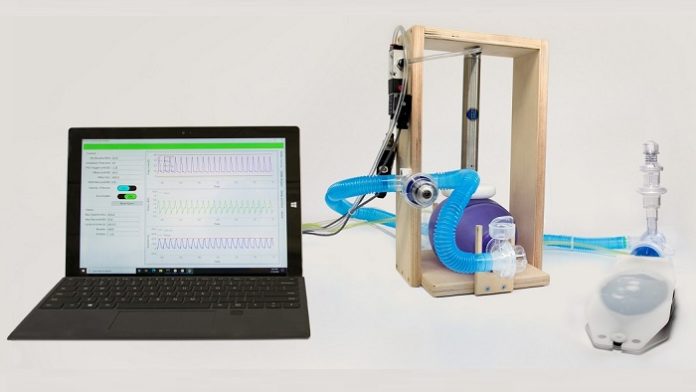
SLAC’s emergency ventilator is based on a simple model, but it adds a mechanism that automatically squeezes the self-inflating bag. The system also incorporates modern, inexpensive electronic pressure sensors and microcomputers with sophisticated software that precisely controls the squeeze. The microcomputers also drive a small control panel, and operators can control the system with that or with a laptop computer. The rest is standard hospital parts.

Other groups have developed emergency ventilators in recent months, often by simplifying fancier machines. “Our invention stands out for the opposite approach: We made a fancier version of the simplest ventilator design,” said SLAC project scientist Christina Ignarra, who helped build the device.

The simple design allowed the team to develop, build and test the device in about four months. It also made the ventilator very inexpensive ­– less than $400 per unit, compared to $20,000 or more for a professional-grade system with field support.

“These qualities should make the ventilator particularly helpful for mid- and low-income countries, where medical resources are scarce,” said Michael Bressack, a Bay Area pediatrician and ICU doctor, who has been on several medical missions in Asia, Africa and South America.

A team of physicists and doctors

Bressack actually started the project. In March, he had just returned from a mission in Bangladesh when COVID-19 hospitalizations were skyrocketing in New York and potential shortages of life-saving ventilators were a big concern. He started talking to his physicist friend, Breidenbach, to see if scientists and engineers at SLAC could lend their technical expertise to develop an affordable emergency solution.

The project quickly took off. Bressack pulled in respiratory therapists and ventilator experts, and Breidenbach brought in several of his colleagues, including Dan Akerib and Tom Shutt, co-leaders of the lab’s contributions to the LUX-ZEPLIN (LZ) dark matter experiment.

SLAC’s acute shortage ventilator project started in the home workshop of Martin Breidenbach, professor emeritus of particle physics and astrophysics at SLAC and Stanford. (Jacqueline Orrell/SLAC National Accelerator Laboratory)

Ignarra, who also works on LZ, said, “We quickly realized that the project was right up our alley. In our experiment, we work with tubes and valves to carefully control the flow of high-purity gases. So, in a way, building a ventilator was not that much different. And it was extremely gratifying to jump in and do something that might directly help in the coronavirus situation.”

To jumpstart the project without lab access due to the Bay Area’s shelter-in-place order, Breidenbach began building several prototypes in his home workshop. He used materials around the shop, ventilator parts bought out of pocket from high-tech distributors, and other components dropped off by team members at his home. He tested what he had built with a Michigan Instruments Lung Simulator that simulates the behavior of sick and healthy human lungs. With additional support from the DOE and Stanford, the project quickly expanded and the team set up four more prototypes at SLAC once the scientists were allowed to go back to the lab.

They also took the ventilator to the VA Palo Alto Health Care System for more advanced tests. In particular, they wanted to make sure their device fulfilled requirements from the Association for the Advancement of Medical Instrumentation for simplified ventilator designs.

SLAC’s acute shortage ventilator is tested at the VA Palo Alto Health Care System. (Sander Breur/SLAC National Accelerator Laboratory)
Available at no cost

The tests were successful, and the team is now giving their invention away for free. This is about saving lives, not about making money, they said.

“We’re soliciting proposals from companies that are willing to take the technology beyond the lab and deploy it in the field,” said Evan Elder from Stanford’s Office of Technology Licensing (OTL), who is helping with getting the word out. “When we find corporate partners that are a good fit, we’ll be offering royalty-free licenses for at least a year.” Based on the state of the pandemic, this approach will then be reevaluated.

Part of the project was supported by the DOE Office of Science through the National Virtual Biotechnology Laboratory, a consortium of DOE national laboratories focused on response to COVID-19, with funding provided by the Coronavirus CARES Act.
CB Insights Names LeanTaaS to 2020 Digital Health 150 List of Most Innovative Digital Health Startups

CB Insights Names LeanTaaS to 2020 Digital Health 150 List of Most Innovative Digital Health Startups

CB Insights named LeanTaaS to its second annual Digital Health 150 ranking, which showcases the 150 most promising private digital health companies in the world.

The 2020 Digital Health 150 cohort highlights startups that are reimagining the lines of the traditional healthcare experience across 12 categories, from virtual care delivery and clinical trials to drug discovery and specialty care. Countries represented this year include Canada, China, Israel, France, the United Kingdom and the United States, among others.

“This year’s Digital Health 150 is our most global ever, covering the best private healthcare companies from 17 countries. Beyond geographic diversity, these companies are innovating across the entire healthcare value chain, spanning technologies that benefit pharma and biotech companies, to payers, hospitals, insurers and more,” said CB Insights CEO Anand Sanwal. “Last year’s Digital Health 150 winners saw numerous exits and went on to raise nearly $5 billion in investor financing after being recognized. We look forward to seeing the success of this year’s class of the best in digital health.”

“We are honored to be listed among the most innovative digital health startups in the world,” said Mohan Giridharadas, founder and CEO of LeanTaaS. “We remain committed to helping hospitals and health systems digitally transform their core operational processes using predictive analytics and AI/ML. Our work with 300+ hospitals demonstrates the tangible impact that can be delivered to patients, providers and administrators.”

Through an evidence-based approach, the CB Insights research team selected the Digital Health 150 from hundreds of applications based on several factors including patent activity, investor quality, news sentiment analysis, proprietary Mosaic scores, market potential, partnerships, competitive landscape, team strength, and tech novelty. The Mosaic Score, based on CB Insights’ algorithm, measures the overall health and growth potential of private companies to help predict a company’s momentum.

LeanTaaS develops software that increases patient access to medical care and reduces the cost of healthcare delivery while improving the patient experience. The company’s iQueue platform helps hospitals and healthcare systems transform key operational processes (e.g., OR block allocation, infusion scheduling, and inpatient bed allocation) to improve the availability of constrained resources, lower costs, and reduce patient wait times. iQueue applies sophisticated algorithms to existing structured and unstructured data within hospital systems to mathematically match the demand for expensive, constrained resources – operating rooms, infusion chairs, imaging assets, inpatient beds, etc. – with supply. The iQueue suite of tools provide guidance to the front line staff, thereby helping them make smarter operational decisions in a fast-changing healthcare environment.

Quick Facts on the 2020 Digital Health 150

The 2020 Digital Health 150 startups have raised over $20 billion in funding across 600+ deals from 900+ unique investors.
The list includes 12 unicorns (companies that have reached a valuation over $1 billion) focused on a diverse range of digital health solutions, including telehealth, insurance, and robotic surgical systems.

Many have formed partnerships with key industry players like the American Heart Association, Cigna, and Mount Sinai Health System.

LeanTaaS joins a list that includes Bright Health, Doctor On Demand, Genome Medical, Komodo Health, Mindstrong, Oncology Analytics and others.

About CB Insights

At CB Insights, we believe the most complex strategic business questions are best answered with facts. We are a machine intelligence company that synthesizes, analyzes and visualizes millions of documents to give our clients fast, fact-based insights. Serving the majority of the Fortune 100, we give companies the power to make better decisions, take control of their own future, and capitalize on change.

About LeanTaaS

LeanTaaS provides software solutions that combine lean principles, predictive analytics, and machine learning to transform hospital operating room and infusion center operations. Approximately 100 health systems across the nation rely on the company’s iQueue cloud-based solutions to increase patient access, decrease wait times, reduce healthcare delivery costs, and improve revenue. LeanTaaS is based in Santa Clara, California, and Charlotte, North Carolina.

XPRIZE Pandemic Alliance and the New England Complex Systems Institute Announce COVID-19 CT Scan Collaborative

XPRIZE Pandemic Alliance and the New England Complex Systems Institute Announce COVID-19 CT Scan Collaborative

In an effort to save lives globally from the deadly COVID-19 pandemic, the XPRIZE Pandemic Alliance and the New England Complex Systems Institute announced the COVID-19 CT Scan Collaborative, a new joint effort to dramatically accelerate the use of CT scans for COVID-19 diagnoses and treatment.

Research teams that develop the most effective clinical protocol for the use of CT scans in fighting COVID-19 will be awarded prizes from the $1.8 million purse. The new COVID-19 CT Scan Collaborative includes Mount Sinai Hospital, the Open-QIC COVID Registry and the endcoronavirus.org network.

XPRIZE is the world’s leader in designing and operating incentive competitions to solve humanity’s grand challenges, and it recently announced a global XPRIZE Pandemic Alliance, which launched two major international competitions to address the COVID-19 pandemic: the XPRIZE NextGen Mask Challenge and XPRIZE Rapid COVID Testing. The COVID-19 CT Scan Collaborative will operate the prize, and the XPRIZE Pandemic Alliance will help develop best practices and convene teams for the competition.

CT scans with high detection capabilities have the potential to increase testing access, disease monitoring and identification of early and asymptomatic cases. As new radiology protocols typically take years to develop, this unprecedented, real-time collaboration will enable radiologists worldwide to view anonymized CT scans to improve their results.

“CT scans can be a real game-changer in our global battle to end coronavirus,” said Yaneer Bar-Yam, PhD, President and Founder of the New England Complex Systems Institute, an independent academic research and educational institution. “We need aggressive and bold actions to reduce transmission of COVID-19 to get ahead of the outbreak so that it is stopped. It will take the global community to accelerate how we meet these challenges. We are thrilled to launch the COVID-19 CT Scan Collaborative, working with the XPRIZE Pandemic Alliance to ensure we use the expertise of XPRIZE and its network to be most successful.”

“Facing the COVID-19 crisis is proving to be one of the world’s most critical challenges, as we currently rely on slow and invasive testing methods,” said Amir Banifatemi, chief innovation and growth officer at XPRIZE and lead of the XPRIZE Pandemic Alliance. “We can accelerate critical response efforts and identify breakthrough solutions using CT scans for earlier detection. We look forward to supporting the COVID-19 CT Scan Collaborative to find a more reliable, effective detection method for the virus using CT scan technology.”

The goal of the COVID-19 CT Scan Collaborative is to exponentially advance the development of CT scan clinical protocols for management of COVID-19 infections and increase the availability, ease and accuracy of diagnoses. Judging will be based on two different categories:

COVID-19 detection, which will be measured against reduction of transmission.
Diagnosis, prediction and management of the treatment of COVID-19, which will be measured by the reduction in the number of cases that progress from mild to severe.

Prizes will be awarded for the greatest impact on the outbreak, based upon improving case detection and management of treatment to prevent disease progression.

Teams must register to join the competition by November 1, 2020. Phase 2 of protocol development, feedback and improvement will run until November 15, 2020, followed by a testing and judging phase and the announcement of winners in January 2021. For more information and to register, visit endcoronavirus.org/xprize.

XPRIZE

XPRIZE, a 501(c)(3) nonprofit, is the global leader in designing and implementing innovative competition models to solve the world’s grandest challenges. Active competitions include the $20 Million NRG COSIA Carbon XPRIZE, the $10 Million Rainforest XPRIZE, the $10 Million ANA Avatar XPRIZE, the $5 Million IBM Watson AI XPRIZE, $5 Million XPRIZE Rapid Reskilling, $1 Million XPRIZE NextGen Mask Challenge and $5 Million XPRIZE Rapid COVID Testing. For more information, visit xprize.org.

ABOUT THE XPRIZE PANDEMIC ALLIANCE

The XPRIZE Pandemic Alliance is a global coalition that combines the power of collaboration, competition, innovation and radical thinking to accelerate solutions that can be applied to COVID-19 and future pandemics.

NEW ENGLAND COMPLEX SYSTEMS INSTITUTE

The New England Complex Systems Institute is an independent academic research and educational institution with students, postdoctoral fellows and faculty. In addition to the in-house research team, NECSI has co-faculty, students and affiliates from MIT, Harvard, Brandeis and other leading institutions.

ICM Brain and Spine Institute Selects Western Digital OpenFlex Solution to Speed up Time to Discovery of Critical Cures and Treatment Options

Western Digital announced that the Institut du Cerveau et de la Moelle Épinière (ICM Brain and Spine Institute), an international brain and spinal cord research center, selected Western Digital to update its storage infrastructure with the extremely fast, efficient and flexible OpenFlex open composable platform. Leveraging NVMe over Fabrics (NVMe-oF™), ICM has more extensive access to shared storage, which can be easily allocated to meet any researcher or department need. ICM also now has quicker access to critical data and the ability to resize and reallocate storage volumes on demand, assisting in the fight against neurological disorders.

Scientists at ICM need to capture and analyze patient data from an array of clinical imaging tools and across different labs. Researchers have been hampered by an aging data storage infrastructure that could not keep pace with their needs. The latest advanced microscopy instruments can generate up to two terabytes of data every hour, which is far more than each workstation’s local storage can accommodate. This has created long delays at each step in the analysis pipeline, where scientists had to wait on the storage infrastructure to continue their work.

ICM worked with its technology partner, 2CRSi, to identify a new storage innovation that could provide the perfect combination of performance and flexibility, selecting Western Digital’s OpenFlex Composable Disaggregated Infrastructure. OpenFlex provides ICM with ultra-fast storage performance within a more efficient and flexible architecture, allowing scientists to continually push their work forward without having to wait for storage. For ICM’s IT department, OpenFlex means no longer having to squeeze in local storage close to workstations, or manually move storage around campus as projects change. Instead, they can distribute storage capacity over ICM’s Ethernet network wherever and whenever it’s needed, without sacrificing performance.

Kurt Chan, vice president and general manager, Data Center Platforms at Western Digital said, “Today’s clinical workloads require fast, and highly reliable storage solutions to store massive amounts of research and patient data. As the clarity and resolution of clinical imaging increases, more bioimages need to be centrally stored to accelerate evaluations and diagnostics. Our OpenFlex open composable solution provides easy access to these large bioimaging files in near real-time, helping to speed up time to discovery of critical cures and treatment options.”

“Our scientists don’t want to worry about storage technology or IT infrastructure, and with OpenFlex, they don’t have to,” said Caroline Vidal, CTO at ICM. “We can provide fast, low-latency access to imaging data, in up to four times the resolution than researchers could work with before. The shared storage with NVMe-oF is just there when they need it, so they can focus on using the data and advancing their research.”

The benefits of Western Digital OpenFlex for ICM include:

Breakthrough performance comparable to locally attached storage: Researchers can now access high-performance storage in various capacities, at the maximum throughput that ICM’s 50-gigabit/second Ethernet links can deliver. The solution also assures the low latencies needed when working with high-resolution image files—ICM reported 34 microseconds or less for most storage operations.

Faster time to discovery: OpenFlex performance has a direct impact on ICM researchers’ lifesaving work, eliminating delays and interruptions in the analysis pipeline. ICM scientists can analyze and verify more clinical images per day, in up to 4x the resolution than was possible before, and quickly retrieve archived datasets when needed. As a result, they can advance their understanding of neurological disease processes and develop novel therapies more quickly.

Architectural flexibility: With OpenFlex, ICM’s IT team can quickly and easily allocate storage to meet any researcher’s need and resize and reallocate storage volumes on demand. This flexibility is essential as the institute adds more microscopes and other instruments in the coming years, continually driving up the resolutions and volumes of clinical imaging data.

Efficient, cost-effective operation: With storage centralized in the data center over a fabric, ICM’s IT team can manage the solution much more easily. Maintenance and software updates now take far less time and effort—a significant operational saving compared to managing dozens of storage servers distributed across the campus. Additionally, because storage is centralized, any new microscopes added can use the same pool of capacity, eliminating the ongoing capital expense of deploying more local storage for each new device.

Western Digital continuously innovates, pushing the boundaries of science and technology to deliver products that enable greater data infrastructure efficiency and productivity with best-in-class TCO. Its broad data center portfolio includes its family of Ultrastar® HDDs and SSDs; WD Gold™ HDDs and SSDs; OpenFlex NVMe-oF open composable infrastructure; Ultrastar storage platforms; RapidFlex™ NVMe-oF controllers; and the Ultrastar memory extension drive. Western Digital is also championing Zoned Storage, an open-source, standards-based initiative building upon the synergies of SMR HDDs and ZNS SSDs that enables data centers to scale efficiently.

About the ICM

Founded in 2010, the Brain and Spine Institute is a scientific and medical research center of international excellence, located in Paris at the heart of the Pitié-Salpêtrière Hospital. Its innovative model brings doctors, researchers, patients and entrepreneurs together in one place with a common objective: to understand the brain and accelerate the discovery of new treatments for diseases of the nervous system. The Institute thus includes a network of more than 700 researchers and clinicians, ten cutting-edge technological platforms, a clinical investigation center and 1,000m² intended for incubation of startups. Since 2017, the ICM has also been Station F’s first health partner; this establishment offers it a competitive advantage in the field of connected health. This year, the Institute celebrates its tenth anniversary.

About 2CRSI

Founded in Strasbourg (France), 2CRSi group develops, produces and sells high-performance customised and environmentally friendly servers. In the financial year 2019/2020, the Group achieved pro forma turnover of €144.6m. The Group today has 352 employees and markets its offer of innovative solutions (processing, storage and network) in more than 45 countries. 2CRSi has been listed since June 2018 on the regulated market of Euronext in Paris (ISIN Code: FR0013341781) and is included in the European Rising Tech label.

About Western Digital

Western Digital creates environments for data to thrive. As a leader in data infrastructure, the company is driving the innovation needed to help customers capture, preserve, access and transform an ever-increasing diversity of data. Everywhere data lives, from advanced data centers to mobile sensors to personal devices, our industry-leading solutions deliver the possibilities of data. Our data-centric solutions are comprised of the Western Digital®, G-Technology™, SanDisk®, and WD® brands.

© 2020 Western Digital Corporation or its affiliates. All rights reserved. Western Digital, the Western Digital logo, G-Technology, SanDisk, WD, OpenFlex, WD Gold and Ultrastar are registered trademarks or trademarks of Western Digital Corporation or its affiliates in the US and/or other countries. The NVMe and NVMe-oF word marks are trademarks of NVM Express, Inc. All other marks are the property of their respective owners.

Noninvasive Ventilator Obtains EUA from the FDA for At-Home Use for the Treatment of COVID-19

Noninvasive Ventilator Obtains EUA from the FDA for At-Home Use for the Treatment of COVID-19

Nanotronics Health, LLC, a subsidiary of Nanotronics, announced that it has obtained EUA from the U.S. FDA for its non-invasive ventilator, nHale™, for at-home use. Nanotronics Health, LLC, also received authorization for the nHale™ to be used with supplemental oxygen under a doctor’s prescription.

“This approval provides flexibility for home care solutions and treatment, especially in the COVID-SARS-2 era,” said Dr. Mathew Foley, Vice Chairman of Northwell Health, New York’s largest healthcare provider serving NYC, Long Island, and Westchester.

As knowledge of the disease progresses, medical professionals and the public have become aware of how crucial non-invasive ventilation is for COVID-19 patient care in the hospital and beyond. To meet this need, Nanotronics Health, LLC, leveraged Nanotronics’ deep in-house expertise, incorporating advanced AI, Intelligent Factory Control (IFC) and sophisticated engineering to conceive, design and manufacture the noninvasive ventilator in under 90 days.

nHale™ is accessible to patients at a fraction of the cost of other noninvasive ventilators. With a one-button approach, the device is designed for quality, comfort, and ease of use.

“We wanted to provide hospitals and consumers with an affordable respiratory option to promote healing and aid the treatment of COVID-19,” said Julie Orlando, President of Nanotronics Health, LLC. “An innovative manufacturing vision was essential for building and scaling this critical device quickly—to get it in the hands of those who need it most.”

Nanotronics Health, LLC, developed and designed nHale™ to assist spontaneously breathing adults suffering from COVID-19 disease. It is intended for use in non-life-threatening situations, such as a patient in need of breathing assistance but not in need of invasive ventilatory support based on standard medical protocols.

About Nanotronics Health, LLC

Nanotronics Health, LLC is a subsidiary of and powered by Nanotronics. The company uses Intelligent Factory Control (IFC) to build and scale medical devices that are affordable, accessible and well-designed. Our first product, nHale™, a non-invasive ventilator, was conceived, built, and obtained Emergency Use Authorization by the FDA within 90 days to treat patients suffering from COVID-19. After obtaining Emergency Use Authorization, Nanotronics immediately began producing and shipping devices.

About nHale™

The nHale™ is a bi-level positive air pressure device to support respiratory therapy of spontaneously breathing adults weighing over 30kg suffering from COVID-19 disease. It is a non-invasive ventilator designed to be used in non-life-threatening situations, for spontaneously breathing patients, such as a patient in need of breathing assistance but not in need of invasive ventilatory support based on standard medical protocols.

The machine is for use in traditional healthcare facilities (e.g., hospitals, assisted living facilities, nursing homes) as well as spaces converted for the care of large numbers of COVID-19 patients (e.g., convention centers, university dormitories, motels, etc.). The nHale™ is also intended for use in home settings with a doctor’s prescription.

Supplemental oxygen may be used with the nHale™ device to increase the oxygen concentration of the airflow being delivered to the patient only when prescribed and trained by a qualified medical professional. The warnings must be observed when using supplemental oxygen with the nHale™ device.

Nanotronics Health LLC, a subsidiary of Nanotronics, applied Nanotronics’ deep in-house expertise, incorporating advanced AI, Intelligent Factory Control (IFC), and sophisticated engineering to build a machine that is easily manufactured at scale and at a reduced cost to increase accessibility for all Americans. The nHale™ device is designed for comfort and ease-of-use with the simplicity of one button.

nHale™ has been authorized by FDA under an Emergency Use Authorization [EUA]; nHale™ is authorized only for the duration of the declaration that circumstances exist justifying the authorization of the emergency use of the device; nHale™ has not been FDA cleared or approved.

Rebuild, Re-emerge & Reimagine: A Guide for Health Systems in the Pandemic Era

Rebuild, Re-emerge & Reimagine: A Guide for Health Systems in the Pandemic Era

The COVID-19 pandemic is the global challenge of a lifetime for healthcare organizations, stressing their economic, strategic, and human dynamics in every way imaginable.

In April 2020, the median operating margin at U.S. hospitals stood at negative 29 percent. Inpatient and outpatient revenues were down 25 percent and 50 percent respectively from the year before, while expenses were rising.[i] At the same time, patient, provider and payor behaviors were rapidly changing. Seemingly overnight, for example, telemedicine moved from an interesting option to a reimbursable patient service that may permanently alter care delivery.

The task ahead for healthcare leaders is immense: to simultaneously solve for rebuilding revenue and business operations while radically reducing costs and reimagining the patient care portfolio to meet new expectations around safety and access—all at speed.

The potential to emerge stronger through transformative change is real. With a structured framework, an agile approach to change, and intense execution, healthcare leaders will advance their organizations to a new future.

Rebuild Framework: Optimizing Your Potential for Success

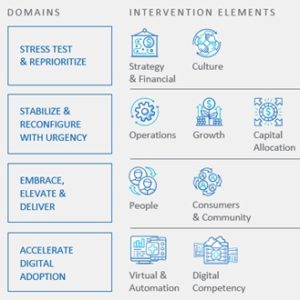
The process of recovery and rebuilding will be complex, dynamic and filled with uncertainty. GE Healthcare Partners has created a framework to help organize the efforts and align teams. The framework defines four domains that each focus on a set of specific interventions (Fig 1).

Stress Test & Reprioritize: Develop a business impact analysis and use tailored scenarios to stress-test the organization’s near-term financial performance, operations, and future enterprise strategy. This analysis will help create a blueprint to adapt and reposition the organization.  From a culture perspective, adopt mechanisms used in the crisis response—such as rapid problem solving and clear accountability—to reset expectations for a more agile organization.

Fig.1. Rebuild Framework
A structured plan to help hospitals and health systems rebuild revenue and reduce costs while reimagining the patient care portfolio.

Stabilize & Reconfigure with Urgency: Create an analytical, fact-based stabilization plan prioritizing “no regrets” actions along with near-, mid-, and long-term initiatives —and then fast track operational changes to rebuild revenue and reduce costs. It’s also critical to look for opportunities to play offense: revitalize the strategic growth portfolio with more focus on digital, virtual health, new ways to engage consumers and even potential M&A activity. Throughout this stage, avoid the impulse to “peanut butter spread” actions by equally allocating focus, capital, operating expense, and talent. Instead, examine the return on investment for proposed initiatives to help place key “bets.”

Embrace, Elevate & Deliver: Implement a fluid workforce strategy that emphasizes the physical and emotional well-being of team members and physicians, and calibrates policies, procedures, staffing patterns, and other variables to reflect new realities. Commit to a robust consumer strategy to anticipate evolving behaviors, pivot experiences and rebuild confidence.

Accelerate Digital Adoption: Use the momentum of the rapidly accelerated digital and technology adoption to facilitate new virtual care models and remote work that improve the patient experience, drive cost effectiveness, and improve employee and patient safety. Prioritize and advance the digital competencies of the organization, such as transitioning to a standard operating Command Center enabled by artificial intelligence and real-time analytics.

The Path Forward: Protect, Secure, Advance

The rebuild and recover process will span many months in a non-linear fashion for most healthcare organizations. An end-to-end plan will help to continuously guide the team with the critical steps needed to adapt for a new future.

1-3 MONTHS

PROTECT: Take immediate action to rebuild revenue and clinical/non-clinical operations

Providers are moving quickly to assess the new landscape and its impact on culture, consumers, workforces, operations and leadership. Virtually all organizations are now offering elective procedures in alignment with local and state guidelines, and we see strong energy around engaging with consumers about safety and regaining their confidence. Leadership teams are re-evaluating all projects with a strong emphasis on mission-critical needs or near-term ROI, within the next few quarters. In addition, many have implemented a renewed cost focus in this early stage, especially around the typical cost levers, such as capital freezes, contract labor, premium pay, supply chain, etc.

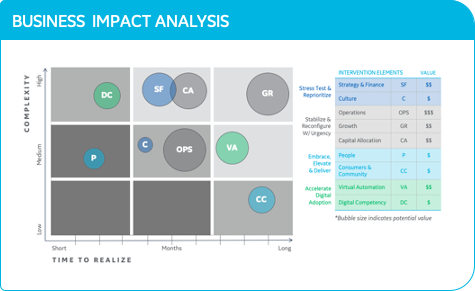
Fig. 2. Business Impact Analysis
Get a clear picture of the relative complexity and value of proposed activities.

In the Protect phase, we recommend:

  • Conducting a Business Impact Analysis to define the impact to cash flow, balance sheet, and income statement (Fig. 2).
  • Preparing a minimum of four tailored scenarios: base case, lockdowns return, best case, worst case.
  • Building a Stabilization Plan to establish a portfolio of actions, prioritized based on their ability to reduce per unit costs and protect the viability of the organization.
  • Engaging consumers with proactive, customized, and omnichannel communications.
  • Updating the enterprise strategy (short and long term) to reflect impact
  • Activating clear, routine communication for the workforce.
  • Crowdsourcing employees to build upon lessons learned during the crisis response and incorporate them into new operating mechanisms for efficiency and quality improvements

2-12 MONTHS

SECURE: Activate the stabilization plan and begin to play offense in terms of building revenue

At this stage in the rebuild process, the focus is activating the team, launching your slate of prioritized actions, and monitoring the execution. We recommend:

  • Establishing a governance structure and operating mechanisms to activate the rebuild plan.
  • Initiating a steering committee, executive sponsors, action leads, and dedicated PMO resources.
  • Transitioning the temporary Incident Command Center approach into a Rebuild Command Center to guide actions.
  • Activating the Stabilization Plan, with immediate focus on no-regret actions and high-impact areas.
  • Implementing growth initiatives to play offense, not just defense.
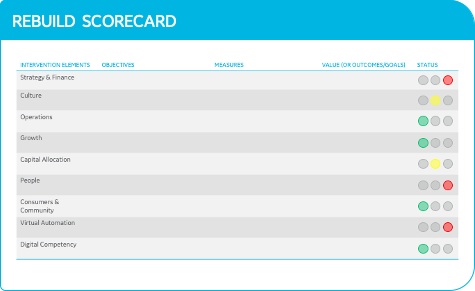
  • Building and implementing a Rebuild Scorecard to monitor actions and progress (Fig. 3).
  • Implementing Action Maps to clearly identify and track all actions, status, dependencies and risks.

Fig. 3. Rebuild Scorecard
Monitor actions and progress at the senior executive and Board of Directors levels.

6-12 MONTHS

ADVANCE: Redesign care delivery and push the organization to achieve a “better” normal

This stage is about ensuring value realization and evolving the organization through innovation, advanced technology, and new business and operating models. The disruption creates unique opportunities to capitalize on new patient expectations and implement more innovative and, in many cases, more cost-effective delivery processes.  Providers will be focused on:

  • Redesigning care delivery using advanced technology and virtual capabilities.
  • Daring to be bold: seeking out and scaling new business and operating models, such as expanding a virtual care and remote monitoring strategies into new areas, like labor and delivery, pharmacy, or radiology.
  • Elevating culture and workforce by resetting roles and expectations to achieve greater agility and empowerment.
  • Communicating frequently with consumers and staff, and soliciting their feedback.
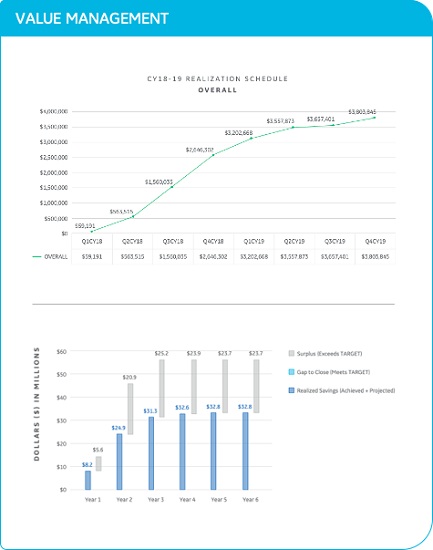
  • Establishing a robust value management committee to measure actions and results (Fig. 4).
  • Pushing the organization to continue to flex the innovation, selfless teamwork, rapid decision-making and implementation muscle.

Fig. 4. Value Management
Ensure value realization by monitoring results against the business impact analysis.

An unprecedented opportunity to evolve

The COVID-19 pandemic forced an industry-wide challenge to rethink and reshape healthcare for the better.  How will healthcare organizations adapt and evolve going forward?

Across GE Healthcare, we rapidly mobilized to drive innovation in response to the global pandemic. For example, to help hospitals manage critical capacity, GE Healthcare created two new COVID-19 Command Center Tiles, or apps—the first one ready in just 13 days and then deployed across 100 hospitals in less than 45 days. In addition, GE also announced research to test how AI can help predict COVID-19 severity with the University of Oxford and Paris hospitals. As the saying goes, “necessity is the mother of innovation” and there are other examples within GE and GE Healthcare and across many organizations that have risen to the challenge during these unprecedented times.

The commonalities among these initiatives — creative partnering, rapid product development and deployment globally, and flexible use of capacity—are all powerfully effective principles we hope to expand on in the future. In a similar vein, hospitals and health systems will have opportunities to move more aggressively into mutually beneficial partnerships and mergers that leverage individual strengths, enabling them to find your strengths, direct more capital investments toward intelligent health technologies that improve clinical and non-clinical outcomes, and rethink physical and virtual capacity in new ways to achieve cost-effective growth.

COVID-19 has highlighted the need to build, invest in and scale a modern digital infrastructure that enables an intelligence-based health system. The pandemic has created a new urgency to evolve, and the opportunity to make real progress is here.

For more information and to download the full COVID-19 rebuild guide

Click Here

About GE Healthcare Partners Consulting
True change occurs at the intersection of strategy, analytics, technology, and activation.

We’re committed to helping you realize a thriving future by:

  • Reducing the cost of care and improving financial performance
  • Evolving your business model to optimize value creation
  • Enhancing care delivery through digital transformation
  • Migrating to a care ecosystem strategy

As the advisory arm of GE Healthcare, we’re different. Healthcare is in our DNA and we live it every day, offering you the extensive platform and resources of a $17 billion global technology leader backed by 100+ years as a trusted industry partner.

Reference
[i] KaufmanHall (May 2020). National Hospital Flash Report. https://flashreports.kaufmanhall.com/executive-summary-may-2020?_lrsc=025a3645-a38a-4353-9e32-cb3f47b9970a&utm_source=linkedin&utm_medium=elevate

Providing Safer Environments within the Healthcare Industry

Providing Safer Environments within the Healthcare Industry

Providing safer environments for visitors, patients, and healthcare professionals within the healthcare industry is critically important. The term ‘healthcare facilities’ covers many different types including clinics, hospitals, care homes, and more. Here are some suggestions for how to keep people safer in various ways when working in or being interactive with other people within the healthcare industry.

Protective Shields in Public Spaces

The use of shields to separate one space from another protects against someone sneezing and accidentally conveying their germs across an open space.

What Are Shields Made From?

Plexiglass is a common material used for this purpose because it’s strong, durable, and transparent. This potent combination provides functional protection under a variety of different circumstances.

A product like Sneeze GuardEZ, which is made in the USA by a Veteran-owned business, provides the protection needed in public spaces where you don’t know what you might encounter.

Where Can Protective Shields Be Used?

Medical Offices – Where medical facility employees meet members of the public, it’s possible to create physical separation from one cubicle or desk to the next.

In-house Pharmacy Checkouts – The previously open lanes can be compartmentalized to limit the movement of air within a large in-house pharmacy. With social distancing adhered to by patients keeping a distance while waiting in line to get prescriptions filled, protection is ensured.

Adequate Supply of Personal Protection Gear

Front-facing medical staff must be supplied with high-grade face masks, face shields, medical gloves, and other protective gear. It has been found that there’s a direct relationship between lax protection being offered within the healthcare industry and possible exposure to dangerous pathogens. Not only does this added risk expose the medical staff to greater risk of contracting an illness, but a staff member being taken off rotation due to falling ill leaves one less pair of skilled hands to help those already being cared for.

Protection from Injury

Protection from bodily injury is a very real concern for people who work in hospitals, clinics, and care homes.

Risk of Bodily Injury by Lifting or Moving Patients

There is often a need to help move a patient. When they’re overweight or obese and unable to move under their power, then they need to be lifted. Doing so puts medical staff at risk of sustaining a serious back, hip, or leg injury when pushing themselves beyond their natural limits to complete the movement alone.

Additional Training Needed

Staff must be trained to not try to go it alone in situations where they need to lift a person. Getting help from colleagues and using straps and other assistive equipment to lighten the load significantly reduces the chances of sustaining an injury at work.

Other Factors

Other contributory factors include the need to maintain sterile or clean facilities. This can result in slippery floors that were recently mopped down but haven’t dried yet. Staff can sustain a variety of injuries from a bad fall as a result.

A safe place for people interacting in a healthcare environment covers a multitude of factors. While staying safe during Covid-19 is a real concern, avoiding staff injuries on-the-job is a worry that’s never too far away either.

University Hospitals awarded nearly $3 million to collaborate with St. Vincent Charity Medical Center on addiction care

University Hospitals awarded nearly $3 million to collaborate with St. Vincent Charity Medical Center on addiction care

University Hospitals announced the award of a $2.89 million grant from the Health Resources and Services Administration (HRSA) of the U.S. Department of Health and Human Services (HHS) to create, in collaboration with St. Vincent Charity Medical Center (SVCMC), the NE Ohio Center for Addiction Research, Prevention, and Education (“CARPE”) Collaborative. This grant, which will be provided over a period of five years, will expand and extend the Addiction Psychiatry Fellowship at University Hospitals Cleveland Medical Center in partnership with and alongside the long-standing SVCMC Addiction Medicine Fellowship. Funding will be used to increase the number of board-certified Addiction Psychiatrists and Addiction Medicine Physicians trained in Northeast Ohio.

NE Ohio has made improvement in reducing the loss of lives attributable to opioid use disorders since reaching peak levels in 2017. Collaboration among many stakeholders fueled this progress; however, overdose deaths recently spiked, underscoring the need to continue to press forward with meaningful solutions.

The CARPE Collaborative aims to improve quality of care for individuals with addictive disease (with and without mental health disorders); transform the addiction treatment workforce by targeting the needs of underserved communities; and expand telehealth services in rural counties in Northeast Ohio. The funding provided by the grant will more than double the Fellowship opportunities in Addiction Psychiatry and Addiction Medicine, greatly increasing the addiction treatment workforce in this region.

“UH and St. Vincent have collaborated since 1990 to train psychiatrists and primary care physicians in the compassionate and evidence-based care of patients and families with substance use disorders,” explained Christina M. Delos Reyes, MD, FASAM, Psychiatrist, UH Cleveland Medical Center and leader of UH’s system-wide strategy for addiction services. “The funding provided by this grant will dramatically increase the number of physicians being trained in Addiction Psychiatry and Addiction Medicine in Northeast Ohio, which will improve access to care for patients. This grant is designed as a workforce development program that also emphasizes expanding addiction care to rural areas and integrating addiction care into primary care offices.”

The CARPE Collaborative will be led by Dr. Delos Reyes and her team, in partnership with Theodore Parran, MD and Christopher Adelman, MD, directors of the accredited program at SVCMC.

“The CARPE Collaborative enables us to take the longstanding relationship between our two organizations to the next level,” said Theodore Parran, MD, FACP, FASAM, Co-Medical Director of Rosary Hall, SVCMC’s addiction medicine program. “This dovetails nicely with St. Vincent’s transformation of our Behavioral Health service line to provide an integrated health model that takes a person-centered approach to care, and expands our service continuum to better meet the needs of the complex population we serve. We will now be able to train doctors from multiple subspecialties such as psychiatry, internal medicine, family medicine, pediatrics, OB/GYN and emergency medicine to treat addiction. We believe this program will be a real game-changer because we will be able to provide a broader and richer training experience for both Addiction Psychiatry and Addiction Medicine Fellows.”

The CARPE Collaborative project is supported by the Health Resources and Services Administration of the U.S. Department of Health and Human Services as part of an award totaling $2.89 million over five years ($415,000 in year one), which is to be awarded annually and is subject to funds available through federal appropriations. The contents of this announcement are those of University Hospitals and St. Vincent and do not necessarily represent the official views of, nor an endorsement, by HRSA, HHS or the U.S. Government.

Philips and University Medical Center Utrecht partner to advance quantitative MR with MR-STAT

Philips and University Medical Center Utrecht partner to advance quantitative MR with MR-STAT

During ISMRM 2020, Philips and University Medical Center (UMC) Utrecht, a leading academic hospital in the Netherlands, today kicked off a research partnership to advance precision diagnosis through breakthrough quantitative MRI technology MR-STAT. The exclusive, multi-year research partnership will establish a global clinical research network with the aim of fully commercializing the technology, which has initially been developed at UMC Utrecht.

MR-STAT is a paradigm shift in MR, relying on a new smart acquisition scheme and machine-assisted reconstruction. MR-STAT delivers multiple quantitative MR parameters in a single fast scan, and represents a significant advance in MR tissue classification, fueling big data algorithms and AI-enabled integrated diagnostic solutions.

In today’s MR systems, quantitative parameters are only produced after the raw data have already been transposed into images. With MR-STAT, the quantitative parameters are reconstructed directly from the raw data. This approach, fueled by recent advances in computing and algorithm development, effectively maximizes the use of every data point collected and removes the need for prior knowledge such as signal dictionaries, opening a wealth of opportunities in standardizing quantitative MRI, at very short scan times that are very attractive for clinical practice.

“Based on the feedback from clinical research studies, we strongly believe that this technology can provide tremendous value in the clinic,” said Professor Nico van den Berg, chair of the Computational Imaging group at UMC Utrecht and one of the technique’s inventors. “We are very pleased with this partnership and look forward to accelerating this technology with more clinical partners in the near future.”

“At Philips we’re focused on supporting healthcare providers to realize first-time-right diagnosis through clinically relevant and intelligent diagnostics,” said Joland Rutgers, Research and Development Leader for MR at Philips. “With this fast quantitative and single acquisition technology, enhanced with AI, MR-STAT will play a pivotal role in delivering the best diagnostic outcome at an affordable cost, benefitting both healthcare providers and their patients.”

RWAM Insurance Administrators partners with telemedicine provider EQ Care

RWAM Insurance Administrators partners with telemedicine provider EQ Care

RWAM Insurance Administrators – one of Canada’s largest third-party administrators of group benefits – has formed a partnership with telemedicine provider EQ Care.

Through the partnership, RWAM’s members can access EQ Care’s virtual healthcare platform, which is available in both English and French. The platform hosts virtual healthcare services such as medical consultation sessions, medication prescribing, and triage.

In addition, EQ Care’s online platform will allow group benefits members to access mental health specialists. Services such as Virtual Cognitive Behavioural Therapy (vCBT) and Digital Cognitive Behavioural Therapy (dCBT) will be offered through the platform, and will be paired with interactive exercises in between counselling sessions.

“There is no doubt that virtual healthcare services are gaining significant attention at a time like this and could become a staple of any complete benefits suite. The focus on employee wellness and access to care continues to be at the forefront of benefit discussions, and may root as part of the new normal,” commented RWAM Insurance Administrators CEO Carole Yari.

“Gaining the confidence of Canadian ground-breakers in the third-party administration space is incredibly validating for our team as we work tirelessly to exceed expectations in the benefits industry,” said EQ Care CEO Daniel Martz. “RWAM Insurance’s history of innovation and commitment to personalized, superior service makes this partnership a logical fit, and one that will further help to relieve pressure on the public healthcare system at a critical time.”

Translate »