Close
Digital Health & Ai Innovation summit 2026
Medical Taiwan 2026

Axonics Receives FDA Approval for 3T Full-Body MRI Scans

Axonics Receives FDA Approval for 3T Full-Body MRI Scans

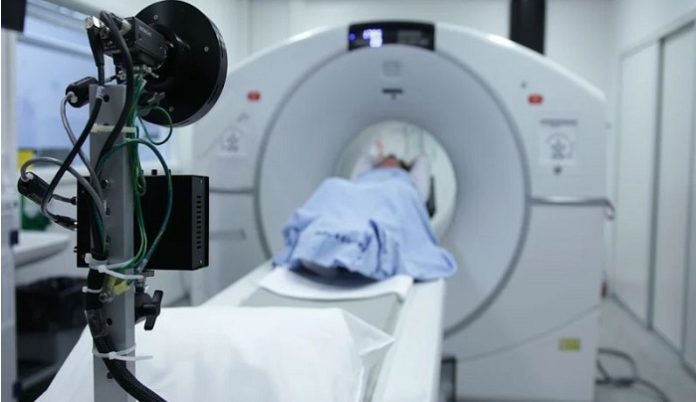
Axonics Modulation Technologies, Inc., a medical technology company that has developed and is commercializing novel implantable sacral neuromodulation (SNM) devices for the treatment of urinary and bowel dysfunction, today announced that it has received U.S. FDA approval under a premarket approval supplement for 3T full-body magnetic resonance imaging (MRI) conditional labeling for the Axonics r-SNM Systemยฎ.

In September 2019, the FDA approved the Axonics r-SNM System with full-body conditional labeling for 1.5T MRI scanners. With this incremental approval for 3T scans, the Axonics device continues to be the only SNM system available in the United States that is MRI compatible for both 1.5T and 3T full-body scans.

Raymond W. Cohen, CEO of Axonics, commented, โ€œThis FDA approval allows Axonics to provide healthcare professionals with more choices in selecting the optimal MR scanner for their patientsโ€™ imaging needs. The 3T MRI approval came several months earlier than expected and follows a number of recent FDA approvals, including our new wireless patient remote control with SmartMRIโ„ข technology and our next generation implantable neurostimulator that extends the interval between recharging to once per month.โ€

Mr. Cohen continued, โ€œThese approvals underscore Axonicsโ€™ commitment to providing best-in-class SNM solutions for patients, clinicians and the healthcare system. Since the introduction of the Axonics r-SNM System in late 2019, implanting physicians are telling us that more of their patients are saying โ€˜yesโ€™ to SNM therapy than ever before. We expect SNM to become the preferred therapy for patients suffering from overactive bladder and bowel dysfunction and we remain confident that our keen focus on innovation and increasing patient awareness will significantly expand the SNM market in the years ahead.โ€

About Axonics Modulation Technologies, Inc.

Axonics, based in Irvine, Calif., has developed and is commercializing novel implantable SNM devices for patients with urinary and bowel dysfunction. These conditions are caused by a miscommunication between the bladder and the brain and significantly impacts quality of life. Overactive bladder affects an estimated 87 million adults in the U.S. and Europe. Another estimated 40 million adults are reported to suffer from fecal incontinence/accidental bowel leakage. The Axonics SNM therapy, which has been clinically proven to reduce symptoms and restore pelvic floor function, is now being offered at hundreds of medical centers across the U.S. and in dozens of select hospitals in Western Europe. Reimbursement coverage is well established in the U.S. and is a covered service in most European countries. The Axonics System is the first long-lived rechargeable SNM system approved for sale in the world, and the first to gain full-body MRI conditional labeling.

Kindred Healthcare Completes Acquisition of Two Behavioral Health Hospitals in Texas

Kindred Healthcare to Expand Behavioral Health Services with Acquisition of Two Hospitals in Texas

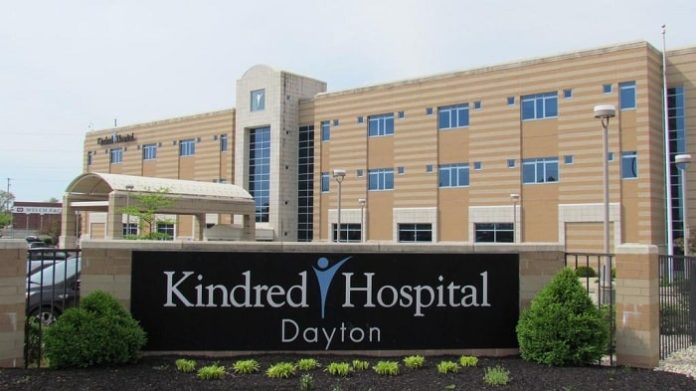
Kindred Healthcare, LLC announced it has completed its acquisition of the WellBridge Greater Dallas and WellBridge Fort Worth behavioral health hospitals.

WellBridge Greater Dallas and WellBridge Fort Worth provide a full continuum of inpatient and outpatient behavioral health services to senior and adult populations in the Dallas-Fort Worth metropolitan area and the greater North Texas region. Each hospital has 48 licensed beds and both are leaders in behavioral healthcare, with proven records of providing exceptional behavioral health services and superior clinical outcomes. Kindred plans to continue using the WellBridge name.

โ€œAcquiring these hospitals is an important milestone for Kindred, advancing our objective of expanding our behavioral health services,โ€ said Rob Marsh, Senior Vice President and Chief Operating Officer for Kindred Behavioral Health (โ€œKBHโ€). โ€œWe welcome WellBridgeโ€™s employees and look forward to working with them to provide leading, empathetic care to more patients with behavioral health issues.โ€

Kindred is dedicated to providing hope, healing and recovery for the most medically complex patients โ€“ a mission that naturally extends to those suffering from behavioral health illnesses. Through KBH, Kindred is focused on addressing the unmet need for high-quality, specialized and compassionate behavioral health services, including crisis stabilization for acute mental health and substance use disorders; detoxification from alcohol, opiates, cocaine and other drugs; suicidal thoughts or actions, anxiety, depression and post-traumatic stress disorder; and many other behavioral health illnesses.

About Kindred Healthcare

Kindred Healthcare, LLC is a healthcare services company based in Louisville, Kentucky with annual revenues of approximately $3.2 billion(1). At March 31, 2020, Kindred through its subsidiaries had approximately 31,800 employees providing healthcare services in 1,731 locations in 46 states, including 64 long-term acute care hospitals, 21 inpatient rehabilitation hospitals, 10 sub-acute units, 95 inpatient rehabilitation units (hospital-based), contract rehabilitation service businesses which served 1,541 non-affiliated sites of service, and behavioral health services. Ranked as one of Fortune magazineโ€™s Most Admired Healthcare Companies for nine years, Kindredโ€™s mission is to help our patients reach their highest potential for health and healing with intensive medical and rehabilitative care through a compassionate patient experience.

New VIRALERT 3 human body temperature screening system delivers COVID-19 protection for the healthcare sector

World-leading temperature monitoring expert, AMETEK Land, has launched a new human body temperature screening system to help prevent the spread of infectious diseases like COVID-19 in surgeries and healthcare facilities.

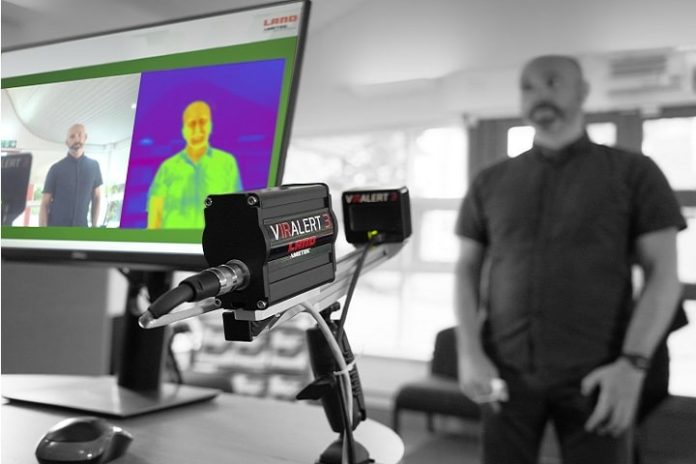
Developed over 10 years by AMETEK Land experts, the VIRALERT 3 provides real-time infrared thermal imaging from a safe social distance, scanning for elevated temperatures that could indicate infection.

VIRALERT 3 is the first of its kind, providing a camera and a temperature-controlled reference source on a single mounting. Using automatic face detection, it locates the best areas for temperature detection, taking a reading thatโ€™s accurate to within 0.5oC, then calculating core body temperature through a rapid test procedure of approximately two seconds.

It is designed to screen visitors at an entry point without slowing the flow of people, scanning temperatures without any person-to-person contact, keeping both parties safe from disease transmission.

The VIRALERT 3 is easy to use and can be left to operate automatically, with audible and visual alarms alerting when high temperatures are discovered.

To ensure the highest levels of accuracy and reliability, it has a blackbody calibration source fitted on the same platform as the integrated thermal imager/visual camera. This makes for a compact system that wonโ€™t get in the way of queueing people and can be easily wall-mounted.

The VIRALERT 3 builds on AMETEK Landโ€™s proven expertise in temperature technology. The company has been developing high-accuracy infrared measurement instruments since 1947 and has been creating human body temperature screening systems since responding to the SARS outbreak of 2003.

It provides an effective solution for scanning people entering hospitals, care homes and other healthcare facilities, while reducing the risk of anyone carrying an infection into critical care areas. The VIRALERT 3 can also be used for a wide range of other applications, including commercial areas; education facilities and public spaces; transportation entry points; offices and manufacturing locations; and sports and leisure sites.

Set-up is simple; with no complex software configuration required, the system can be up and running within 30 minutes of delivery.

About AMETEK LAND

AMETEK Land is the worldโ€™s leading manufacturer of monitors and analysers for industrial infrared non-contact temperature measurement, combustion efficiency and environmental pollutant emissions.

Founded in the UK in 1947, Land Instruments International Limited developed a reputation for producing innovative, resilient measurement technologies designed to operate in the most challenging conditions.

In 2006, it was acquired by the Process & Analytical Instruments Division of AMETEK, Inc., a leading global manufacturer of electronic instruments and electromechanical devices with annual sales of approximately $5 billion. Today, AMETEK Land is the premium supplier of product application solutions to world industries including steelmaking, glass making, minerals processing, hydrocarbon processing and thermal power generation.

In 2003, it developed the Human Body Temperature Measurement System (HBTMS) as a response to the SARS epidemic of that year. This was followed by the original VIRALERT system in 2009, which has been refreshed and refined through development over a decade to create the VIRALERT 3 in 2020.

AMETEK Land continues to develop award-winning technologies that push the limits demanded by the ever-increasing technical requirements of global industry and meeting the challenges of a wide range of applications.

Opening up the ‘great indoors’ through AI

Opening up the 'great indoors' through AI

In the last decade, there has been so much buzz around indoor location services, yet they remain scarce and expensive.  GPS may have solved the problem outdoors, yet indoors, the landscape is fragmented and unreliable โ€“ densely walked but mostly unchartered. But now, new developments in AI and mobile apps mean that we are on the cusp of turning a luxury into a true commodity.

Knowing is half the battle

Humans spend most of their time indoors (even aside from Covid-19 enforced lockdowns). Not just at home, but also, and more importantly, in their places of work. Yet teams often lack even basic awareness of their physical surroundings at work, and this has serious ramifications in terms of team safety, efficiency and overall welfare.

Why do teams need to know where their members are in the first place? The reasons are numerous. In a hospital, for example, healthcare professionals require the support from portering, cleaning, infection control, catering, and security teams. These diverse teams are spread over several buildings at any one time. Being able to get to the closest available person who can help can be life critical, particularly in periods when the health system is overloaded.

Packing, hospitality, facilities management, and even safety drills and emergency services are all other areas where knowledge of the location of team members is vital. When having an accurate picture of your working environment has become business-critical, itโ€™s no surprise that the capabilities of indoor location technology are starting to be explored in greater depth.

What are the current barriers to success?

There are three key reasons why indoor location technology has struggled to take off. I want to take a brief look at each and identify some solutions. They are hardware, surveys, and missing or โ€˜noisyโ€™ maps.

Why not hardware?
One of the most common methods of creating a location-enabled map, for example, is installing beacons around your place of work which trigger when someone passes one of them. This helps build an idea of footfall, and which places people tend to visit most frequently. Unfortunately, when installing beacons around a large building (such as a hospital), youโ€™ll need hundreds, if not thousands, to create an accurate map. At that point, the logistical issue of connecting a thousand units to the mains kicks in. Then, when you decide to be smart and go with battery-powered beacons, you face a daily challenge on monitoring which ones need their batteries changing, not to mention any that have been damaged or are experiencing other issues. On top of all this, the level of data isnโ€™t deep enough to draw actionable insight from; you know where people have been, but not necessarily where they are right now. Other types of infrastructure (e.g. UWB or acoustic)also incur considerable deployment and maintenance effort and are non-trivial to scale.

Why are surveys undesirable?
Another method, Wi-Fi-based location monitoring, doesnโ€™t have the problems of clunky infrastructure, but it does rely labor-intensive venue surveys to build and maintain up-to-date Wi-Fi maps. Youโ€™re prone to changes of the buildingโ€™s Wi-Fi infrastructure that will immediately degrade location accuracy.The magnetic field of the earth has characteristic distortions indoors, which can be used effectively in some places, such as narrow corridors. However, these magnetic signatures are tedious to collect and maintain, and their detection is unreliable in open spaces, or when the users change their way of carrying their phone as they move. Clearly, we need something more robust that does not require an army of people to maintain.

What is wrong with current maps?
Most location services today require reliable and up-to-date physical maps (floorplans) of the area your team is working in. Unfortunately, traditional maps and floorplans of buildings are difficult to collect and curate. In large venues, they rarely come in one piece. They can quickly become redundant in the face of renovations or new developments; and thatโ€™s presuming they were correct in the first place. Quite often a project which requires a map of the building will struggle because certain rooms, corridors, doors, and floor changing structures arenโ€™t recorded on the existing copy.

Thankfully, weโ€™re now learning more about how to cut through many of these issues and create value-adding live maps in short time frames.
Going the distance with AI

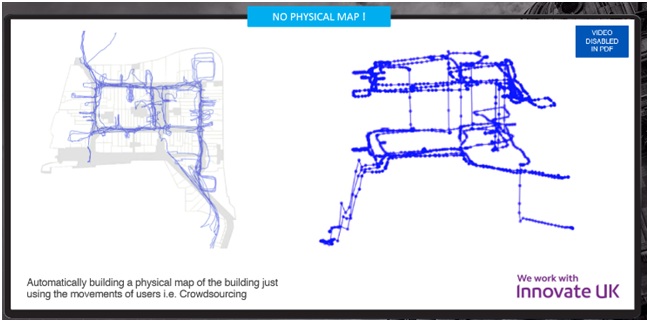
Everyone who uses a building follows routes, whether consciously or subconsciously. Janitors have their cleaning routes; porters move things from point A to point B down agreed paths. People go from their desk to the bathroom and back, or to the canteen, or outside to the smoking area. If you could map out one personโ€™s routes over a long enough period of time, youโ€™d get a pretty good idea of some paths in the building. A dozen people, and youโ€™d start to see the wider picture of common routes in the building. And if you get the majority of your workforce tracking where they go day to day, youโ€™ll see an accurate map generated within a very short space of time.

Truly scalable tech embraces the messiness of the real world, but is not hampered by it. AI-powered location tech removes the need for infrastructure, and crowdsourced signal mapping โ€“ using team members moving about to collect data โ€“ means manual efforts like surveying colleagues to create maps becomes redundant. The โ€˜messyโ€™ data that is generated by users is turned into a picture of their full trajectory. Taking another bold step forward, crowdsourced maps can completely remove the need for physical maps (floorplans) and open up opportunities for developing a new generation of map-less location services.

Driving simplicity for users

Taking away the real-world complexity of mapping requires investment in modeling and optimization, but the benefits are significant. Crowdsourced maps can accelerate the whole process and put teams in a unique position to transform their operational practices and create benefits for their members.

People who need to use a location-based service are now in a position to build it themselves. Teams can generate working, reliable, live maps of vital locations such as hospitals with no physical presence of expert surveyors, and without becoming surveyors themselves and being asked to mark locations. They can simply walk and a few hours later they can turn the location service on, in the same way that they can turn on the lights in the building. And the longer people use the location service the more accurate and reliable it will become.

Can location tech become a realistic commodity after all? By forging it to be truly user-driven, we are only a few steps away from turning the vision of effortless indoor positioning into reality.


Majority of Americans taking Blood Thinners indicate the fear of major bleeding.

Majority of Americans taking Blood Thinners indicate the fear of major bleeding.

A majority (55 percent) of Americans aged 18 and older currently prescribed anticoagulant medications (blood thinners) report that they very much or somewhat fear experiencing a life-threatening bleed and 73 percent say that they are more cautious about routine activities since being prescribed blood thinners, according to the results of a survey released by the National Blood Clot Alliance (NBCA). Among the 55 percent who said they fear major bleeding, nearly three-quarters (72 percent) say this concern has impacted their quality of life.

More than eight million people inย the United Statesย are currently taking a blood thinner medication. Blood thinners can save lives, helping to treat and prevent dangerous blood clots, but can also pose a potentially serious side effect: Bleeding. Since blood thinners slow the clotting of blood, unwanted and sometimes dangerous bleeding can occur with the use of these medications.

“More and more people are living longer, more active lives, well into retirement. Many of these same people, particularly as they age, are prescribed blood thinners โ€“ medications that save countless lives every year, but which can carry the potential risk of life-threatening bleeding,” saidย Michael B. Streiff, M.D., FACP, Johns Hopkins Medical Institutions. “The results of our survey demonstrate that people are making lifestyle decisions โ€“ possibly avoiding activities and hobbies they love โ€“ such as gardening or exercising โ€“ because they are afraid of experiencing serious or dangerous bleeding as a side effect of their blood thinning medication.”

While the survey results point to the fact that people prescribed blood thinners do have concerns about severe bleeding, the good news is that the survey results show they are talking to their doctor about their risks. A full 95 percent of survey respondents indicated they are having or have had at least one discussion with their physician about the risks and side effects of their medication, with 41 percent saying they have this discussion during every physician visit.

“I understand the benefit or importance of my blood thinning medication, but also recognize the bleeding risks associated with it,” saidย Caroline Bernal-Silva, who has been on a blood thinner medication for 11 years. “I discuss my lifestyle, my routines, and all my activities every time I visit my doctor. My doctor has been very helpful in providing information and tools to help me minimize my risk of bleeding, but I do remain concerned, particularly when I’m traveling or vacationing in remote places.”

The NBCA survey, fielded inย February 2020ย among 500 Americans who are currently prescribed a blood thinner, had several central findings:

  • Cautious about Routine Activities โ€“ย People surveyed who reported being more cautious about routine activities since being prescribed their blood thinner medication are more carefulย when:
    • Cooking or preparing food with knives or other sharp kitchen tools โ€“ 64ย percent
    • Shaving โ€“ 62 percent
    • Going barefoot โ€“ 53ย percent
    • Brushing teeth or flossing โ€“ 49ย percent
  • Cautious about Leisure Activitiesย – People surveyed who reported being more cautious about leisure activities since being prescribed their medication are more carefulย when:
    • Gardening โ€“ 62 percent
    • Working out at the gym or exercising โ€“ 43ย percent
    • Traveling โ€“ 39ย percent
    • Playing with children or grandchildren โ€“ 36ย percent
  • Trying New Activitiesย โ€“ 42 percent of those surveyed indicated that the risk of major bleeding has discouraged them from trying newย activities
  • Fearย โ€“ 55 percent of survey respondents indicated they live with a fear of a major bleeding incident and, of those people, nearly three-quarters (72 percent) have indicated that that fear has impacted theirย life
  • Travelย โ€“ A significant majority (89 percent) of those who indicated they would be more cautious about traveling since being prescribed blood thinners said they would be more likely to travel if they knew there were hospitals nearby that had medicines to stop or reverse a majorย bleed

“Our goal is always education and awareness. With this survey, our aim is to help people better understand and have confidence in the important treatment decisions that surround their care, and to stimulate important discussions with doctors, which we were particularly gratified to see are happening, because it is crucial that any unusual bruising or bleeding always be discussed with a doctor immediately,” said Dr. Streiff. “Make no mistake about it: Blood thinners save lives. But all medications have risks. What’s important is to understand the risks, and to really understand how, or if, any of the activities you love could increase your risk for serious bleeding. It’s also important to understand how, depending on the type of medication you are taking, a bleeding incident can be treated quickly.”

RESEARCH METHODOLOGY

The Bleeding Risk Awareness Survey was conducted online by Wakefield Research among 500 U.S. adults 18 and older prescribed a blood thinning medication,ย between February 10 and February 21. The margin of error was +/- 4.4%.

Digital platform to reduce the risk of infections during surgery

Digital platform to reduce the risk of infections during surgery

One in ten people in hospital care develops a healthcare-related infection. Together with Getinge, Semcon is developing a new digital platform to make it easier to identify where the risk of infections during surgery is greatest.ย ย 

In Sweden, infections are the most common form of injury as a result of treatment in hospitals โ€“ a problem that is also widespread globally. According to an estimate from the European Centre for Disease Prevention and Control, there are nearly 9 million cases of healthcare-related infections in European hospitals and long-term care every year.

โ€œThe digital platform we are currently developing with Getinge helps healthcare better understand a number of evidence-based risk factors. Based on data from the platform, we can develop solutions to reduce the risk of infections in surgical environments. This contributes to reduced human suffering and reduced healthcare costsโ€, says Johan Kristensson, Team Manager and business responsible connected products at Semcon.

Using a number of sensors in an operating theatre, the digital platform can collect different types of data, which can be displayed in real time as well as analysed afterwards. This creates a better understanding of what is happening in the operating theatre and how to make improvements to reduce healthcare-related infections.

โ€œAccording to the research, many endogenous and exogenous parameters have an impact, and we want this project to help us evaluate the impact of the environment in the operating theatre. Semcon has extensive experience in both product development and software development, as well as extensive knowledge in medical technology, which makes them a good partner in this projectโ€, says Jonas Andersson, Vice President Global Product Management in Infection Control at Getinge.

A prototype is due to be tested in an operating theatre atย a hospital. The project is based on a number of feasibility studies that Semcon has conducted together with Getinge, and Semcon is contributing to the project with excellence in embedded, sensing systems and UX.

Digital edition of CAREhab – Singapore Rehabilitation Conference 2020 postpones to 17 – 18 July 2020 in light of Singapore General Elections

Digital edition of CAREhab - Singapore Rehabilitation Conference 2020 postpones to 17 - 18 July 2020 in light of Singapore General Elections

The digital edition of Asiaโ€™s annual premier healthcare platform CAREhab 2020 and conference element 6th Singapore Rehabilitation Conference, previously announced to take place live via the CAREhab GO platform on 10 โ€“ 11 July 2020, has been postponed due to the Singapore General Elections.

The live virtual edition of CAREhab โ€“ Singapore Rehabilitation Conference 2020 will now be held on 17 โ€“ 18 July 2020, to ensure that more event participants will be able to attend, collaborate, cross-share and network.


CAREhab – Singapore Rehabilitation Conference 2020 goes digital this July

CAREhab - Singapore Rehabilitation Conference 2020 goes digital this July

Asia-Pacificโ€™s annual premier healthcare platform CAREhab and conference element 6th Singapore Rehabilitation Conference will be a fully digital edition this year, and will take place live online on 17-18 July 2020.

It was previously scheduled to take place at MAX Atria, Singapore EXPO on the same dates. Against the backdrop of the evolving Coronavirus Disease 2019 (COVID-19) situation, the decision to go online was taken by SingEx Exhibitions and the Society of Rehabilitation Medicine (Singapore) (SRMS), co-organisers of CAREhab โ€“ Singapore Rehabilitation Conference 2020, with the well-being and safety of all delegates and attendees, speakers, exhibitors and partners in mind.

The digital edition of the conference and exhibition will be live through a new platform titled โ€œCAREhab GOโ€: Details are listed in the Annex below. The user guide can be found here while programme details will be announced soon on the official CAREhab website.
James Boey, Executive Director of SingEx Exhibitions, said: โ€œCAREhab is a platform dedicated to Asia-Pacificโ€™s healthcare community who, like their counterparts around the world, are fighting important battles on the ground daily. Yet it is also during this time that collaboration and knowledge sharing have proven to be key enablers to emerge stronger.

We designed CAREhab GO in response to these community needs in the new environment: To provide busy healthcare professionals access to convenient learning, ongoing opportunities for collaboration and cross-sharing with one another, and further networking engagements with exhibitors and suppliers.
โ€œOur commitment to the community is providing them a safe and seamless experience where they can continue making meaningful connections equally, if not more, in the new virtual edition.โ€

Customised learning on demand
Event delegates and attendees will have the opportunity to learn best practices from industry experts through a comprehensive library of live streamed lectures, sandboxes and showcases on the CAREhab GO platform. All sessions will be recorded and available for delegates and attendees to view on demand from 17 July 2020 to February 2021, an added benefit for healthcare professionals with convenient learning needs.

CAREhab GOโ€™s artificial intelligence (AI)-built digital architecture will also help streamline learning priorities based on the indicated interests and fields of expertise, resulting in personalised dashboards for all participants. As with the physical event, doctors and nurses in Singapore remain eligible to earn CME (continuing medical education) and CPE (continuing professional education) points, respectively, at the digital edition of the CAREhab โ€“ Singapore Rehabilitation Conference 2020.

Enhanced Collaboration Opportunities
The unprecedented pandemic has shone the spotlight on the need for more industry collaboration and team-based care.
โ€œCOVID-19 has truly brought out the dedication, resourcefulness and interconnectivity of Singaporeโ€™s healthcare community, including those of us in the rehabilitation sector. Besides stepping up to perform duties beyond our usual scope, such as carrying out community screening procedures, we have also adapted our rehabilitation care according to the new stringent infection control requirements.

Despite the challenges, innovators among the community are pushing the boundaries by implementing telerehabilitation and other cutting edge technologies to continue providing care for our patients.

โ€œAs we continue the good fight against the pandemic day in day out, the digital edition of the conference provides us with the ideal platform to continue connecting, discuss the recent events that have happened and share best practices. In ensuring a resilient healthcare workforce, the organisers have worked hard to develop and curate new conference themes relevant to the current global crisis, delivering on our commitment to elevating Singaporeโ€™s and Asia-Pacificโ€™s healthcare standards,โ€ concluded Organising Chairperson of the 6th Singapore Rehabilitation Conference, Adj. Asst. Prof. Geoffrey S Samuel, Consultant at the Department of Rehabilitation Medicine at Singapore General Hospital.

To enable more like-minded individuals to join the conversation, CAREhab GO will also incorporate an online community platform where industry professionals exchange best practices pertinent to the care continuum, thereby elevating healthcare standards in the Asia-Pacific region.

A further boost to the networking component is the platformโ€™s CAREhab Connect feature which recommends individuals for attendees to connect with based on indicated interests, enabling participants to meet with like-minded peers at their convenience.

Finally, the platformโ€™s CAREhab Showcase feature will allow participants to witness the effective digital twinning of a physical exhibition where they can connect with a larger community of exhibitors, innovators and industry disruptors showcasing solutions designed to improve healthcare efficiency and daily practices โ€“ all via a safe, seamless and personalised experience.

About SingEx Exhibitions
SingEx Exhibitions is a subsidiary of SingEx Holdings which is wholly owned by Temasek Holdings, one of Singaporeโ€™s largest investment holding companies. The company harnesses insights and its strategic networks to organise and manage a series of marquee trade exhibitions and conferences in various sectors such as Industrial Transformation; Innovation and Technology; and Sustainability. These events aim to connect businesses in Asia with a reach to the global markets, facilitating business matching for new opportunities and to be a knowledge sharing platform. Headliners include Singapore FinTech Festival, the worldโ€™s largest of its kind, and Industrial Transformation ASIA-PACIFIC, Asia Pacificโ€™s leading trade event for Industry 4.0. Headquartered in Singapore, SingEx Exhibitions has a regional presence in key Asia markets, with offices in China, India and Indonesia.

About Society of Rehabilitation Medicine (Singapore)
The Society for Rehabilitation Medicine (Singapore) is a not-for profit medical organization established in 2006 that aims to improve education and research in all areas of Rehabilitation Medicine. This includes the treatment of strokes, traumatic brain injury, spinal cord injury, musculoskeletal injuries and post-amputation care.

About the Singapore Rehabilitation Conference
The Singapore Rehabilitation Conference is the largest regular General Rehabilitation Conference in the Southeast Asian Region. It brings together an interdisciplinary team including rehabilitation and general physicians, nursing, allied health specialists including physical, occupational and speech/language therapists, medical social workers, psychologists, music therapists, academics, scientists and health-systems administrators. The conference provides a platform for these professionals to showcase good practices and collaborate across the different institutes and regions.

Konica Minolta Works on Decreasing COVID-19 Infection Risks by Non-contact Surface Temperature Measurement

Konica Minolta Works on Decreasing COVID-19 Infection Risks by Non-contact Surface Temperature Measurement

Konica Minolta, Inc. extends its sincere condolences to those who passed away in the spread of the novel coronavirus worldwide, expresses heartfelt sympathy of the whole company to the affected people and prays for swift recovery. The company also expresses its sincere respect to the governments and local communities that work on the frontline to prevent the spread of infections, as well as healthcare professionals who are dedicated to diagnosing and treating people through the difficult time.

Konica Minolta is pleased to announce that the company, aiming at prevention of spread of COVID-19 infection, will start offering an application that can measure non-contact and real-time body surface temperature by using MOBOTIX network thermal camera. MOBOTIX, a Konica Minolta Group company, develops and manufactures network surveillance cameras and video management software.

MOBOTIX network cameras are available in a line of highly robust omnidirectional (fish-eye) cameras and thermal cameras capable of temperature monitoring, combined with these cameras for use in factories, construction sites, and infrastructural facilities in harsh environments.

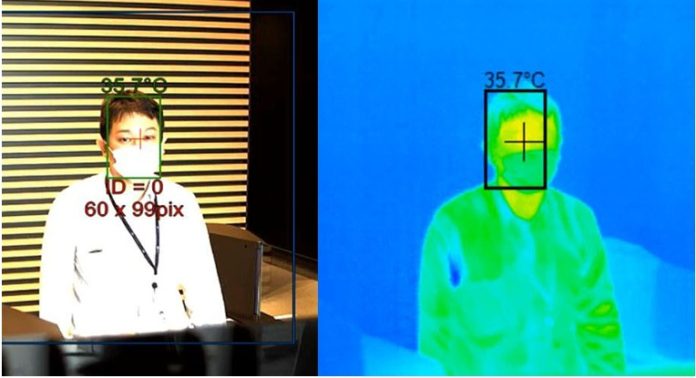
In addition, in order to realize efficient body surface temperature measurement for visitors to offices and various facilities as a means of preventing the spread of the new type of coronavirus, Konica Minolta has developed the MOBOTIX thermal camera application Temperature Screening App and will start its offering in multiple phases(*1). With the addition of this application, it is possible to identify and detect facial and skin areas and increase measurement accuracy compared with measurement with a thermal camera alone, contributing to shortening waiting time at entrances and in entry management, reducing close contact, and saving monitoring resources.
Features

Temperature Screening App detects the faces of moving human bodies that have entered the target area monitored by MOBOTIX thermal cameras in real time. If the temperature in the detected boundary exceeds a pre-set threshold, notifications can be made within the app. The beeper set in advance in conjunction with MOBOTIX thermal camera can be activated to notify a specified mail address. In the application screen, AI-analyzed facial images are displayed in real time along with body surface temperature measurement data. Introducing MOBOTIX thermal cameras and this application reduces resources required for security surveillance and the visitorsโ€™ waiting time, while also reducing the chance of close contact. This application is currently being used in Konica Minoltaโ€™s own facilities, and the company plans to provide an on-site operation guide based on its in-house practice.

Cooperation with face recognition technologies

Konica Minolta plans to link MOBOTIX thermal cameras with NEC Corporation’s face recognition technology, which has the world’s highest level of certification accuracy (*2). Testing has already begun in North America, South America, and Asia Pacific, and by combining face recognition and body surface temperature measurement, Konica Minolta is able to provide even higher value.

VUNO receives CE Mark approval for five AI-based medical solutions

VUNO receives CE Mark approval for five AI-based medical solutions

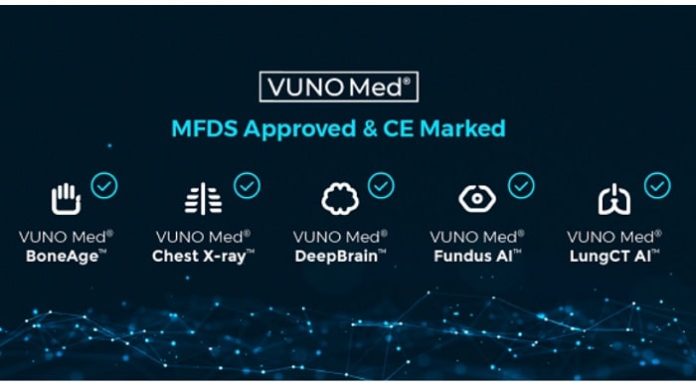
Medical artificial intelligence (AI) solution development company VUNO gained the Class IIa CE markings for five of their AI solutions.

The five CE marked solutions are: VUNO Medยฎ-BoneAgeโ„ข, VUNO Medยฎ-DeepBrainโ„ข, VUNO Medยฎ-Chest X-Rayโ„ข, VUNO Medยฎโ€“Fundus AIโ„ข, and VUNO Medยฎโ€“LungCT AIโ„ข. These products can now be commercialized and sold in 27 member states of the European Union, the Acceding countries as well as EFTA states. They can also make inroads into countries that recognize the European CE mark such as those in the Middle East, Asia, South and Central America, and Africa.

VUNO was assessed and deemed to meet EU safety and health protection requirements by a Notified Body based on a more stringent clinical validation standards and medical device guidelines. The efficacy and safety of those products demonstrated by a series of clinical research results and papers published in high impact journals and prestigious international seminars were of great help to satisfy the strict requirements.

Of the five MFDS (Ministry of Food and Drug Safety) approved products, four products (VUNO Medยฎ-Fundus AIโ„ข, VUNO Medยฎ-Chest X-rayโ„ข, and VUNO Medยฎ – BoneAgeโ„ข and VUNO Medยฎ Lung CT AIโ„ข) received regulatory approval based on the proven effectiveness of performance through clinical trials. With such a robust portfolio, it is anticipated that VUNO Med solutions are to be used as key diagnostic supporting tools across many different medical environments overseas.

Hyun-Jun Kim, CEO of VUNO explained that, “We have been taking proper measures to ensure that VUNO’s products obtain classification commensurate with their intended purposes as medical diagnostic supporting tools”. He also added that, “In this sense, obtaining CE certification for all five products holds a great significance, and this will be able to accelerate our push for much anticipated global supply of VUNO Med series all around the world.”

VUNO has been graining great traction at home and abroad with more than 100 active users of hospitals in Korea alone and is ready to deploy the CE marked products to international business partners and clients across different markets.

Translate ยป