











Close
Digital Health & Ai Innovation summit 2026
Medical Taiwan 2026

RSNA Launches International COVID-19 Open Radiology Database

 RSNA Launches International COVID-19 Open Radiology Database

RSNA and the RSNA COVID-19 AI Task Force announced the launch of the RSNA International COVID-19 Open Radiology Database (RICORD). RICORD is envisioned as the largest open database of anonymized COVID-19 medical images in the world. More than 200 institutions around the world have expressed their interest in participating.

The database will include supporting clinical information and expert annotations. It will be freely available to the global research and education communities.

โ€œThe strong positive reaction speaks to the determination of the global radiology community to contribute its resources and expertise to addressing the pandemic,โ€ said RSNA COVID-19 AI Task Force chair Matthew P. Lungren, MD, MPH, assistant professor of radiology at Stanford University and associate director of the Stanford Center for Artificial Intelligence in Medicine and Imaging. โ€œThis effort is the result of countless hours by volunteer task force members and a broad community of radiologist annotators led by our close partners at the Society of Thoracic Radiology.โ€

Shortly after the first news of the pandemic, scientists isolated the virus and quickly sequenced the genome. The sequenced genome was immediately made available to the entire worldwide research community and became the inspiration for RICORD.

โ€œThis unprecedented spirit of collaboration accelerated clinical testing, therapeutic drug discovery, epidemiologic tracking and vaccine development,โ€ Dr. Lungren said. โ€œAll of these advancements were completed in weeks to months, rather than the typical pace of months to years, and were catalyzed by this act of open-source scientific collaboration. This is perhaps one of the most dramatic examples of an open source research effort saving countless lives.โ€

Database Will Assist Radiologists Around the World With COVID-19 Research

RICORD aims to save lives via an open imaging database that can be used by the global research and education communities to gain new insights, apply new tools such as artificial intelligence and deep learning, and accelerate clinical recognition of this novel disease.

Radiologists and imaging departments in many countries have already found themselves on the front lines of this pandemic, particularly when other testing methods have fallen short or when clinicians seek imaging cues to guide therapy.

The RSNA COVID-19 AI Task Force hopes that RICORD will serve as a definitive source for COVID-19 imaging data by combining the contributions and experiences from radiologists around the world who have encountered the disease and gained invaluable clinical imaging experience that may also, if shared with others, save lives.

RSNA has also developed data sharing agreements and tools to organize, de-identify and transfer data. The RICORD data collection pathway enables radiology organizations to contribute data to RICORD safely and conveniently. It provides sites with guidance for data sharing and serves to standardize exam parameters, disease annotation terminology and clinical variables across these global efforts. In addition, it connects to sustainable storage infrastructure via the U.S. National Institutes of Health.

Substantial datasets have already been contributed to RICORD and are being used for education and research projects, including one that will develop a detailed annotation schema for COVID-19 imaging on CT.

RICORD v1.0 is the first annotated core dataset consisting of a subset of chest radiography and CT examinations in DICOM format with expert radiologist annotation labels. Over time, as data are ingested, curated and annotated, the RSNA COVID-19 AI Task Force will continue to update and expand both the volume and variety of data available in RICORD, including adding clinical variables and expanding to other imaging modalities.

โ€œMore than ever, this pandemic is showing us that we can rally together toward a common purpose,โ€ Dr. Lungren said. โ€œRather than siloing data and pursuing fractured efforts, we can instead choose to collaborate through efforts like RICORD to accelerate an end to this pandemic as a united global imaging community.โ€

Philips expands its remote clinical collaboration offering based on the Reacts platform

Philips expands its remote clinical collaboration offering based on the Reacts platform

Royal Philips, a global leader in health technology, announced that it is expanding its remote clinical collaboration and virtual training offerings across its portfolio, building on the IIT* (Innovative Imaging Technologies) Reacts collaborative platform. Leveraging innovative technologies, such as augmented reality, for remote virtual guidance, supervision and training, the platform provides unique interactive tools designed to meet the multi-faceted collaborative needs of healthcare professionals and patients.

โ€œIt is vital that we continue to advance our offering to help customers increase first-time-right diagnoses, by integrating innovations and technology that alleviate our customersโ€™ pain points and streamline workflows,โ€ said Bich Le, Business Leader Ultrasound at Philips. โ€œWith Reactsโ€™ unique interactive tools we can provide secure expert solutions, and the training and support, needed for physicians to make definitive diagnostic decisions effectively and efficiently. This will enable us to accelerate our commitment to the patients we serve today as well as expanding access to imaging for new users and new use cases.โ€

The Reacts platform has already been deployed in more than 80 countries, across various disciplines in both clinical and educational settings. It allows healthcare professionals to interact remotely and dynamically in a wide range of applications, from teleconsultations, secure messaging, remote wound care and tele-ultrasound, to interactive telesurgical assistance and remote procedure supervision.

โ€œReacts addresses the clear and pressing need for secure remote collaboration and communication between healthcare providers and patients,โ€ said Dr. Yanick Beaulieu, head of Clinical Science for Philips Ultrasound. โ€œBy deploying this interactive collaboration platform across Philipsโ€™ health technology solutions, we can change patient care models, expand telehealth capabilities, and accelerate technological developments in virtual collaboration globally.โ€

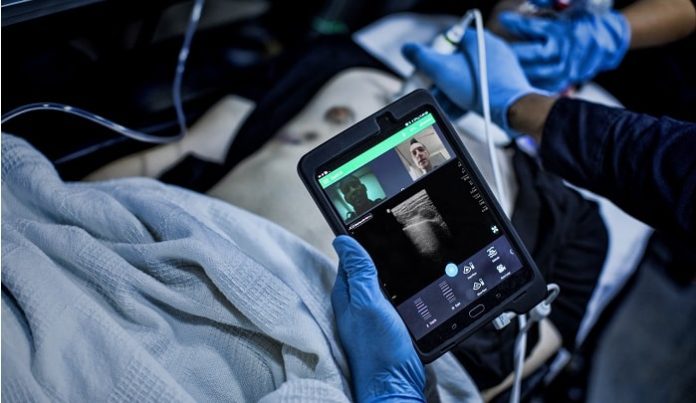
Since 2018, Reacts is integrated with the Philipsโ€™ Lumify point-of-care ultrasound solution, enabling users to share the live ultrasound stream from a Lumify device with a remote colleague on a mobile device, tablet or computer. This allows both parties to simultaneously view the live ultrasound image, as well as the webcam video stream, and provide real time feedback. Lumify with Reacts has proven to be a valuable tool for educational institutions, medical students and resident clinicians, EMS providers with long transit times, disaster relief providers, hospitals with satellite clinics, and clinicians seeking peer-to-peer collaboration for virtual guidance and training.

Lumify with Reacts can provide valuable diagnostic insight for front-line care providers to manage COVID-19-related lung and cardiac complications. Moreover, by enabling remote communication, Reacts reduces the need for physical interaction and can therefore help minimize the risk of virus transmission for medical teams. During the COVID-19 pandemic, Philips has also successfully piloted Reacts to provide case support during image-guided therapy procedures, remotely assisting clinicians as they diagnose and treat patients with coronary artery disease and other cardiovascular diseases. Philips will now further expand Reacts across its Diagnosis & Treatment portfolio.

GE Healthcare Launches New AI Suite to Detect Chest X-ray Abnormalities, Including Pneumonia Caused by COVID-19 & Tuberculosis

GE Healthcare Launches New AI Suite to Detect Chest X-ray Abnormalities, Including Pneumonia Caused by COVID-19 & Tuberculosis

GE Healthcare continues to provide tools to support clinicians in todayโ€™s COVID-19 environment; Thoracic Care Suite harnesses the power of AI to scan for eight chest x-ray abnormalities, including pneumonia indicative of COVID-19 โ€“ a key cause of mortality in patients who contract coronavirus; The AI suite, featuring Lunit Insight CXR, also includes an algorithm to detect tuberculosis, which affects approximately 10 million people every year.

GE Healthcare today introduced its Thoracic Care Suite, a collection of eight artificial intelligence (AI) algorithms from Lunit Insight CXR to help alleviate clinical strain due to COVID-19. The AI suite quickly analyzes chest x-ray findings and flags abnormalities to radiologists for review, including pneumonia, which may be indicative of COVID-19 as well as tuberculosis, lung nodules, and other radiological findings.

โ€œThe launch of our Thoracic Care Suite is a part of GE Healthcareโ€™s larger effort to help ensure clinicians and partners on the front lines have the equipment they need to quickly diagnose and effectively treat COVID-19 patients,โ€ says Kieran Murphy, President & CEO, GE Healthcare. โ€œThe pandemic has proven that data, analytics, AI and connectivity will only become more central to delivering care. For GE Healthcare, that means continuing to advance intelligent health and providing innovative technologies. This new offering is the latest example of how x-ray and AI can uphold the highest standard of patient care amidst the most modern of disease threats.โ€

To date, more than 8 million cases of COVID-19 have been confirmed worldwide โ€“ overwhelming radiologists, technologists, and physicians. As the spread of the virus stabilizes, clinicians continue to need tools to help manage new cases and complications caused by the virus โ€“ including pneumonia and acute respiratory distress โ€“ which have further increased pressure on radiologists to quickly read chest x-ray exams.

With approximately 1.44 billion chest x-ray exams taking place each year, radiologists are overwhelmed, especially as they may be looking for multiple indications per exam.

Thoracic Care Suite harnesses the power of AI to help alleviate these pressures by automatically analyzing images for the presence of eight abnormal radiologic findings, including suspected tuberculosis and pneumonia findings, which can be indicative of COVID-19. Upon reading the flagged report in picture archiving and communication systems (PACS), radiologists can quickly find the abnormality score for each of the eight possible abnormalities, an image overlay, and a written location description to help expedite diagnosis and treatment.

โ€œClinicians are looking for clinically proven methods to help identify symptoms early and determine which patients are at higher risk of complications and need to be actively monitored,โ€ explains Professor Fergus Gleeson, Consultant Radiologist, Professor of Radiology at the University of Oxford, and the 2020 President of the European Society of Thoracic Imaging. โ€œAI can help identify these distinctions and enable hospital resources to be targeted to those that will need them whilst in hospital and following discharge.โ€

Thoracic Care Suite provides much needed support to help quickly identify high-risk cases as well as monitor patients showing the progression and regression of mild respiratory symptoms. With 97-99% accuracy rate (Area Under the Curve – AUC), the powerful algorithms behind the AI suite have been trained to detect radiologic findings within seconds. In one study, results showed a 34% reduction in reading time per case.

In addition to detecting pneumonia, Thoracic Care Suite also supports tuberculosis, atelectasis, calcification, cardiomegaly, fibrosis, mediastinal widening, lung nodule, and pleural effusion detection.

Thoracic Care Suite is available to GE Healthcareโ€™s thousands of global fixed, mobile and R&F x-ray customers at point of sale, meaning the technology can more quickly be deployed in market and in hospital without the fear of annual fees โ€“ an important consideration if a second wave of COVID-19 were to occur. Furthermore, installation of the technology does not require customers to engage with any enterprise IT projects, helping to lower the barrier for entry in adopting AI.

โ€œTo have our AI made available with a market-leading vendor like GE Healthcare โ€“ especially as part of the Thoracic Care Suite โ€“ is a significant advancement in delivering solutions to various customers within GE Healthcareโ€™s install base and bringing us all one step closer to embracing AI as a part of todayโ€™s standard of care,โ€ says Brandon Suh, CEO of Lunit.

To provide this technology, GE Healthcare partnered with Lunit, a South Korean medical AI software company that develops AI-powered analysis of lung diseases via chest x-ray images. Founded in 2013, Lunit has been recognized for its advanced, state-of-the-art technology and medical imaging applications in international competitions โ€“ including ImageNet, TUPAC, and Camelyon โ€“ surpassing top companies like Google, IBM, and Microsoft.

The collaboration between GE Healthcare and Lunit is one of the first of its kind to bring commercially available AI products from a medical AI startup to an existing X-ray equipment manufacturer.

About GE Healthcare:
GE Healthcare is the $16.7 billion healthcare business of GE. As a leading global medical technology and digital solutions innovator, GE Healthcare enables clinicians to make faster, more informed decisions through intelligent devices, data analytics, applications and services, supported by its Edison intelligence platform. With over 100 years of healthcare industry experience and around 50,000 employees globally, the company operates at the center of an ecosystem working toward precision health, digitizing healthcare, helping drive productivity and improve outcomes for patients, providers, health systems and researchers around the world.

Penn State Health, Geisinger agree to transition of Holy Spirit Health System

Following approval by the Penn State Health, Geisinger and Holy Spirit Boards of Directors and the Penn State Board of Trustees, Penn State Health and Geisinger have reached a definitive agreement for Penn State Health to replace Geisinger as the sole corporate member of Holy Spirit Health System.

Formal agreements will be finalized in the coming days with Holy Spirit expected to transition into Penn State Health in October 2020. The acquisition will include Holy Spirit Hospital in Camp Hill, its affiliated outpatient practices and urgent care centers in Cumberland, Dauphin, Perry and York counties, as well as the Ortenzio Heart Center and the assets of West Shore EMS.

While the University Board of Trustees, Penn State Health, Holy Spirit and Geisinger have all approved the transaction, the completed acquisition is pending final regulatory approval by the Pennsylvania Attorney General and the Federal Trade Commission.

โ€œThe addition of Holy Spirit enhances Penn State Healthโ€™s ability to provide a robust network of clinical services in and around the greater Harrisburg region. Holy Spiritโ€™s hospital, employed medical group and strong community of independent practice physicians, working in collaboration with our Milton S. Hershey Medical Center, offers consumers a strong competitive alternative for healthcare services,โ€ said Penn State Health CEO Steve Massini. โ€œWeโ€™re pleased we could reach agreement with Geisinger to bring Holy Spirit into the Penn State Health family. We have tremendous respect for the physicians and staff of Holy Spirit and look forward to finding new ways to help them fulfill their healing mission, strengthen relationships with their patients and meet the needs of our community.โ€

Geisinger has invested more than $120 million at Holy Spirit, recruited nearly 100 new providers, and added or expanded important services including trauma, stroke and diabetes care since Holy Spirit joined Geisinger in October 2014. Additionally, Geisinger Holy Spirit and Penn State Health already collaborate on neurosurgery and cardiac surgery programs.

โ€œOur goal for Holy Spirit was always to find a way to preserve access to care and continuity of care in the Greater Harrisburg area, and we believe Penn State Health will continue to invest in and care for these communities,โ€ said Geisinger president and CEO Dr. Jaewon Ryu. โ€œThis agreement is an important next step toward maintaining healthcare choice for the areaโ€™s residents and continuing a longstanding tradition of quality, compassionate care in Cumberland County and beyond.โ€

Geisinger will remain active in the Harrisburg region through Geisinger Health Plan and continue to offer coverage options through its Medicare Advantage, CHIP, and commercial group and individual health insurance plans. The transaction has no impact on the coverage and benefits of current Geisinger Health Plan members in south central Pennsylvania.

Once the transition is complete, Holy Spirit Hospitalโ€™s name will change to Penn State Health Holy Spirit Medical Center. As with Penn State Healthโ€™s acquisition of Berks County-based St. Joseph Medical Center in 2015, Massini indicated that Penn State Health intends to maintain the Catholic identity and traditions of the hospital.

In addition to acquiring Holy Spirit, Penn State Health is on schedule to finish construction of its new Hampden Medical Center, a 108-bed adult hospital, in the fall of 2021. The health system will deploy a dual hospital strategy in Cumberland County with a compliment of services at each site.

Consistent with its commitment to partner with independent physicians and providers from the community, Penn State Health intends to have an open medical staff at Hampden Medical Center as well as maintain the current open medical staff model at Holy Spirit Hospital.

โ€œWe will welcome independent physicians to our medical staffs at both Hampden and Holy Spirit,โ€ Massini said. โ€œWe look forward to partnering with local physicians on this exciting new chapter for Penn State Health.โ€

The planned acquisition of Holy Spirit is Penn State Healthโ€™s latest step to further its commitment to expand access to high quality care in the Capital Region. Penn State Health is building a new primary care location at the intersection of Route 114 and Market Street in Upper Allen Township, just south of Mechanicsburg. The new, 10,000-square-foot Penn State Health Medical Group practice will include 12 exam rooms and additional clinical support space for a team of four primary care providers and around a dozen support staff.

In March, Penn State Health acquired Pulmonary and Critical Care Medicine Associates, which cares for more than 24,000 patients annually and includes 10 physicians, nine advance practice providers, and outpatient practices in Lemoyne and Carlisle.

About Penn State Health
Penn State Health is a multi-hospital health system serving patients and communities across 29 counties in central Pennsylvania. The system includes Penn State Health Milton S. Hershey Medical Center, Penn State Childrenโ€™s Hospital, and Penn State Cancer Institute based in Hershey, Pa.; Penn State Health St. Joseph Medical Center in Reading, Pa.; and more than 2,000 physicians and direct care providers at more than 100 medical office locations. Additionally, the system jointly operates various health care providers, including Penn State Health Rehabilitation Hospital, Hershey Outpatient Surgery Center, Hershey Endoscopy Center, Horizon Home Healthcare and Pennsylvania Psychiatric Institute. In December 2017, Penn State Health partnered with Highmark Health to facilitate creation of a value-based, community care network in the region. Penn State Health shares an integrated strategic plan and operations with Penn State College of Medicine, the Universityโ€™s medical school.

About Geisinger
Geisinger is committed to making better health easier for the more than 1.5 million consumers it serves. Founded more than 100 years ago by Abigail Geisinger, the system now includes 13 hospital campuses, a 600,000-member health plan, two research centers and the Geisinger Commonwealth School of Medicine. With 32,000 employees and 1,800 employed physicians, Geisinger boosts its hometown economies in Pennsylvania and New Jersey by billions of dollars annually.

Mayo Clinic launches imaging solution to enable digital pathology across the enterprise

 Mayo Clinic launches imaging solution to enable digital pathology across the enterprise

In support of Mayo Clinicโ€™s digital health and practice transformation initiatives, the Mayo Clinic Department of Laboratory Medicine and Pathology has initiated an enterprise-wide digital pathology implementation of the Sectra digital slide review and image storage and management system to enable digital pathology.

โ€œAs Mayo Clinic continues to lead the transformation of health care delivery and accessibility, the laboratories and pathology practice play an essential role,โ€ says William Morice, II, M.D., Ph.D., president of Mayo Clinic Laboratories and chair of the department. โ€œThis system implementation will elevate our pathology practice by enabling digital collaboration among pathologists throughout the Mayo Clinic system and, ultimately, Mayo Clinic Laboratories clients around the world. In the near future, our pathologists will be able to virtually collaborate with colleagues anywhere to provide answers to the most complex pathology cases in order to help our partners deliver the best patient care.โ€

In collaboration with Sectra, a digital slide review and image storage and management system has been implemented for the Mayo Clinic practice in Rochester for the first phase of the roll out. Once proof of concept, system testing, and configuration activities are complete, the digital pathology solution will be introduced gradually to Mayo Clinic departments throughout Rochester, Florida, and Arizona, as well as the Mayo Clinic Health System. The new digital intake process will be piloted with a domestic Mayo Clinic Laboratories client later this year.

โ€œWe are confident the Sectra digital pathology solution will positively impact patient care by improving access and availability of our patientsโ€™ pathology material in a digital form, and facilitating enterprise-wide collaboration and integration of innovative technologies,โ€ says Taofic Mounajjed, M.D., Mayo Clinic pathologist and one of the leaders of the digital pathology initiative. โ€œOur pathologists and allied staff are looking forward to the opportunities that digital pathology will bring in transforming our practice by improving operational efficiency.โ€

Last year, the Mayo Clinic Division of Anatomic Pathology performed nearly 200,000 pathology consultations in support of the Mayo Clinic practice and more than 1,100 health care organizations around the world. Specializing in rare and complex pathology cases across all medical subspecialties, the new solution will enable the pathology practice to enact additional operational efficiencies, leverage image sharing and collaboration features, and build a digital pathology image archive to advance educational, research, and artificial intelligence and machine learning initiatives.

โ€œWe look forward to working with Mayo Clinic as we understand the critical need of delivering a solution that will allow pathologists to easily review cases, collaborate, and make primary diagnoses, regardless of their geographic location, all in the best interests of patient care,โ€ says Mikael Anden, president of Sectra, Inc.

About the Department of Laboratory Medicine and Pathology and Mayo Clinic Laboratories
The Mayo Clinic Department of Laboratory Medicine and Pathology and its reference laboratory, Mayo Clinic Laboratories, provide advanced testing and pathology services to support 4,000 health care organizations around the world. Revenue from this testing supports medical education and research at Mayo Clinic, a nonprofit worldwide leader in medical care, research, and education. Complemented by collaborations with diagnostic and biotechnology companies, the department maintains a robust diagnostic test development program, launching more than 150 new tests each year.

About Sectra
With more than 30 years of innovation and approaching 2,000 installations worldwide, Sectra is a leading global provider of imaging IT solutions that support health care in achieving patient-centric care. Sectra offers an enterprise imaging solution comprising PACS for imaging-intense departments (radiology, pathology, cardiology, orthopedics), VNA, and share and collaborate solutions. Sectra received FDA approval for its digital pathology module in March 2020 and is leading the way in digital pathology with multiple fully digital installations throughout the world.

New SEMI-NBMC, GE Research Project to Advance Vital Signs Monitoring of Patients During Emergency Air Transport

Nano-Bio Materials Consortium (NBMC), a SEMI Strategic Association Partner, launched a project with GE Research to develop a medical-grade wireless patch that monitors the vital signs of medical patients during emergency air transport. The device promises to advance the state-of-the-art in medical care coordination, records management and patient outcomes in aeromedical evacuation but will also help drive advances in consumer-based telehealth.
semi logo

The 24-month project is funded at $4.22 million, with costs, research and development shared by NBMC, GE Research, the State of New York, State University of New York at Binghamton, DuPont, and UES, Inc. The SEMI-NBMC program is funded through a cooperative agreement with the Air Force Research Laboratory (AFRL) located in Dayton, Ohio. The product will be designed to ensure its reliable operation in austere environments and for single- or short term-use applications targeting the global healthcare monitoring market, which was estimated at $5.1 billion for 2019 according to MarketsandMarkets.

โ€œThis project marks a crucial advancement in aeromedical care, and accordingly, NBMC is funding another โ€˜dream teamโ€™ of researchers with the combined expertise, creativity and diligence to drive this initiative to successful completion,โ€ said Ajit Manocha, president and CEO of SEMI.

โ€œTime is of the essence as medical personnel continuously measures and monitors vital signs of patients during emergency air transport,โ€ said Melissa Grupen-Shemansky, CTO of SEMI and executive director of NBMC. โ€œThat critical data needs to be collected autonomously and wirelessly, communicated precisely when doctors and nurses need it, and delivered in an easy-to-use format. The monitoring patch will break new ground in the advancement of healthcare digital technology, helping to ensure that civilians and military personnel receive the highest level of urgent care and treatment.โ€

โ€œThe convergence of artificial intelligence (AI) and advanced wireless communication networks like 5G with advanced sensors and materials is spurring new applications in telehealth that will revolutionize patient monitoring and treatment,โ€ said Azar Alizadeh, Principal Scientist at GE Research and project leader.

โ€œOur vital signs patch will provide real-time data on a wide variety of key health indicators that will not only help clinicians treating patients in the air, but also enable medical staff on the ground to provide even better, more seamless care following transport,โ€ Alizadeh added. โ€œWeโ€™re proud to be partnering with SEMI-NBMC, the AFRL, the State of New York, Binghamton University, Dupont and UES, Inc. to assemble all the right technical pieces to develop this medical breakthrough.โ€

GE is taking the technical lead with overall device design, fabrication strategy, prototyping, testing and algorithm development. Binghamton University will contribute fabrication, electrical and mechanical characterization strategies. UES will oversee patch performance assessment in simulated aeromedical evacuation environments. And the AFRL will provide operational testing for aeromedical evacuation, patch efficacy and performance assessment in simulated environments.

The design goals will focus on accuracy, clinical reliability, ease of use and wear, manufacturability, and low cost while supporting integration with the U.S. Department of Defenseโ€™s electronic health records systems. The patch will support autonomous decision making, an imperative for Continuum of Care in medical treatment. The telehealth protocol is becoming more important in remote patient monitoring.

GE Research, SEMI-NBMC and AFRL representatives will offer more details at the upcoming Virtual Smart MedTech Workshop, Biomarker Sensing and Diagnostics for Telemedicine, Aug. 5, 12, 19 and 26, 10 a.m. to 12 p.m. PDT. Review the agenda and speakers.

About GE Research
GE Research is GEโ€™s innovation powerhouse where research meets reality. We are a world-class team of 1,000+ scientific, engineering and marketing minds (600+ Ph. Ds), working at the intersection of physics and markets, physical and digital technologies, and across a broad set of industries to deliver world-changing innovations and capabilities for our customers.

About NBMC
SEMI NBMC was founded to bring together scientists, engineers and business development professionals from industry, government and universities to collaboratively initiate research and development of electronic technologies to improve human performance monitoring and performance augmentation. The goal is to proactively build an ecosystem that can drive healthcare and medical electronics innovation towards products that serve society faster.

About SEMI
SEMIยฎ connects more than 2,400 member companies and 1.3 million professionals worldwide to advance the technology and business of electronics design and manufacturing. SEMI members are responsible for the innovations in materials, design, equipment, software, devices, and services that enable smarter, faster, more powerful, and more affordable electronic products. Electronic System Design Alliance (ESD Alliance), FlexTech, the Fab Owners Alliance (FOA) and the MEMS & Sensors Industry Group (MSIG) are SEMI Strategic Association Partners, defined communities within SEMI focused on specific technologies.

Apervita unveils tool to aid hospitals with interoperability requirements

Apervita unveils tool to aid hospitals with interoperability requirements

The platform can now be used to furnish encrypted patient data to third-party applications. Analytics-startup Apervita announced the launch of a tool to help health systems meet interoperability requirements.

The platform, which the company says supports more than 2,500 hospitals, can now be used to provide patient data to third-party applications as mandated by the Centers for Medicare and Medicaid Services and the Office of National Coordinator interoperability and patient access regulations.

“As an industry, weโ€™ve been working on interoperability for 25 years,” said Apervita CEO Kevin Hutchinson.

“Now itโ€™s the patientโ€™s turn โ€“ our turn โ€“ to get access to our own health record data. The ONC and CMS regulations leap our industry forward for patient record access in a time when pandemics, like COVID-19, elevated the need for fast patient record access,” Hutchinson continued.

WHY IT MATTERS

Apervita’s platform currently allows its users to upload quality-measure-related data for accreditation, and streamline performance management. Now, the company says it wants to use its technological infrastructure to help health systems with data-sharing requirements.

“Apervitaโ€™s platform was designed several years ago to support applications talking to other applications, applications talking to businesses, or even businesses talking to other businesses,” said Hutchinson. “This takes years to build the right way.”

Apervita says its initial set of modules include API build, management and compliance, patient authentication and access management, and transaction management and reporting.

“This is more than just providing a FHIR API. There is a lot to think through when providing this level of interoperability service,” said Hutchinson. Apervita’s health information encryption process, he said, involves “locking down that data to the field level and giving the encryption keys to the customer, so even Apervita canโ€™t see the data.”

THE LARGER TREND

Although health systems got some breathing room when it comes to implementing the changes necessitated by the ONC and CMS regulations, vendors are stepping up to help with the process.

Last month, for example, Innovaccer unveiled its FHIR-enabled Data Activation Platform, designed to ease the way toward interoperability and give healthcare organizations greater access to data.

When it comes to electronic patient-discharge notifications, also part of the CMS requirements, software company CarePort developed a tool to automate the process for hospitals.

ON THE RECORD

“As an industry, we have known for a long time the gaps that exist for true interoperability,” said Hutchinson. “COVID-19 exposed those to be larger than the Grand Canyon.

“The technology capabilities are not the problem,” he added. “Making a business case and spending the money to focus on it has been the larger problem. At one of my last healthcare companies, we connected the EMR industry to the pharmacy and PBM industry for e-prescribing and other transaction types. It took a few years to do, but it’s doable. Now, at Apervita, we are going to do a similar level of interoperability but this time for payers, providers, and HIT vendors.”

Cylera Announces Strategic Partnership with The AbedGraham Group to Extend Healthcare IoT Security Solution

Healthcare IoT Security Solution

Cylera, the leading healthcare IoT (HIoT) cybersecurity and intelligence company, announced a strategic partnership with The AbedGraham Group, a physician led global technology group, to integrate their innovative medical IoT security solutions and extend the combined offering across U.S. and global healthcare.

โ€œOur focus is on placing patient safety at the heart of cybersecurity and Cyleraโ€™s capabilities mean our clinical security analytics platform, [CCOMยฒ], can be powered by immensely rich device and vulnerability data,โ€ said Dr. Saif F. Abed, Partner & Director of Cybersecurity Advisory Services, The AbedGraham Group. โ€œWe are determined to support healthcare organizations of all sizes to reduce patient harm through real-time clinical analytics and this partnership will be key to detecting and defending against threats that create those types of risks.โ€

The integration of The AbedGraham Groupโ€™s first of its kind clinical security analytics platform, [CCOMยฒ], with Cyleraโ€™s HIoT platform means that both organizationsโ€™ customers can now access each solution seamlessly. Leveraging highly granular contextual asset and vulnerability data from Cylera, The AbedGraham Group can profile and rank devices and vulnerabilities based on quantifying risks they present to individual patient safety and clinical workflows across a healthcare organization.

โ€œThe AbedGraham Group offers Cylera the perfect opportunity to combine two innovative approaches to securing healthcare IoT devices, with the common goal of keeping patients safe,โ€ said Timur Ozekcin, Co-Founder & CEO of Cylera.

Cyleraโ€™s HIoT cybersecurity and analytics platform, MedCommandโ„ข, is purpose-built to solve the complex technological and operational challenges in securing, managing, and optimizing the entire HIoT environment, which includes medical devices, IoT, and operational technology. Allowing healthcare organizations to focus on delivering the best care to patients while ensuring their fleets of critical devices are secure and available for use.

ABOUT CYLERA

Cylera is a Healthcare IoT cybersecurity and intelligence company built in close partnership with healthcare providers. Cylera built a next-generation platform that leverages AI-driven technology to deliver the strongest, most advanced Healthcare IoT cybersecurity and analytics solutions for hospitals and health systems. Please contact Cylera at info@cylera.com.

ABOUT ABEDGRAHAM

The AbedGraham Group is a physician led, global technology and advisory services group supporting technology companies, healthcare providers and government agencies to achieve positive patient outcomes through cybersecurity. The AbedGraham Groupโ€™s first of its kind clinical security analytics platform [CCOMยฒ] is the companyโ€™s flagship solution and is actively integrated with a range of security products including IoT, vulnerability management, SIEM and SOAR platforms.

Community Health Systems Announces Definitive Agreement to Sell St. Petersburg, Florida Hospital

Wanda Group, UPMC to develop and co-manage network of international hospitals in China

Community Health Systems, Inc. announced that an affiliate of the Company has signed a definitive agreement to sell 480-bed Bayfront Health St. Petersburg in St. Petersburg, Florida, and its associated assets to a subsidiary of Orlando Health. Orlando Health will assume responsibility for the long-term lease and operations of the hospital. The lease transfer is subject to the consent of the St. Petersburg City Council.

The transaction is expected to close by the end of the third quarter this year, subject to regulatory approvals and closing conditions.

The hospital in this transaction is among the additional potential divestitures discussed on the Companyโ€™s first quarter 2020 earnings call.

About Community Health Systems, Inc.

Community Health Systems, Inc. is one of the largest publicly traded hospital companies in the United States and a leading operator of general acute care hospitals in communities across the country. The Company, through its subsidiary, owns, leases or operates 99 affiliated hospitals in 17 states with an aggregate of approximately 16,000 licensed beds. The Companyโ€™s headquarters are located in Franklin, Tennessee, a suburb south of Nashville. Shares in Community Health Systems, Inc. are traded on the New York Stock Exchange under the symbol โ€œCYH.โ€

UI Health, Chicago Medical Society and PhysIQ Collaborate to Protect High-Risk COVID-19 Patients with Advanced AI

UI Health, Chicago Medical Society and PhysIQ Collaborate to Protect High-Risk COVID-19 Patients with Advanced AI

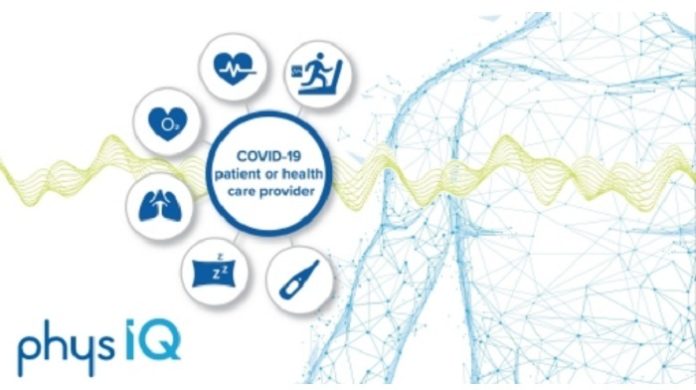
The University of Illinois Hospital and Health Sciences System (UI Health), Chicago Medical Society and AI healthcare tech pioneer physIQ announced that physIQโ€™s pinpointIQTM continuous remote patient monitoring (cRPM) system will monitor the vital signs of the health systemโ€™s frontline health care workers and high-risk patients with COVID-19 for early signs of disease exacerbation.

The pinpointIQ system is an FDA-cleared AI analytics platform that monitors the vital signs through a wearable biosensor detecting changes in physiologic indices of health status. The system then notifies clinicians charged with monitoring data produced by pinpointIQ for clinically-relevant changes in vital signs. This allows an early plan of care to be developed that may prevent complications or hospitalization.

โ€œOur top priority is protecting and promoting the health and safety of our patients and staff, and COVID-19 has created an urgent need for innovative, tech-driven solutions,โ€ said UICโ€™s Dr. Terry Vanden Hoek, Chief Medical Officer at UI Health and Head of the Department of Emergency Medicine at the College of Medicine. โ€œWe are excited to partner with the Chicago Medical Society and physIQ to offer home monitoring options to some patients and staff with COVID-19 that could help us detect physiologic changes of illness progression that may indicate a need for early follow up with their physician.โ€

Through this collaboration, the University of Illinois Hospital will have access to the technology and monitor certain staff and patients with COVID-19 with risk factors such as obesity and heart or lung conditions and who are isolating at home. โ€œContinuous monitoring of patients using physiological modeling with AI offers an opportunity to detect a virus exacerbation early. Early intervention may prevent the body from initiating the โ€˜cytokine stormโ€™ that we think causes the most severe complications of COVID-19,โ€ Vanden Hoek said. โ€œWe hope this technology will help us to closely follow the health of our staff โ€“ in partnership with their primary care providers โ€“ and patients while they are at home with COVID-19.โ€

The potential utility of pinpointIQTM for use with COVID-19 patients is supported by the work physIQ has done with USAID, the CDC and Scripps Health in patients with Ebola, as well as in clinical studies conducted with Veterans Affairs in patients with severe congestive heart failure.

The pinpointIQ system comprises a VitalConnect wearable biosensor, pulse oximeter and smartphone streaming of physiological data to a HIPAA compliant cloud-based server, which uses FDA-cleared analytics to produce clinically actionable insight. For homebound UI Health patients, the system will be prescribed by an emergency room physician and shipped directly to the patientโ€™s home without requiring direct physical contact from a clinician. For health care workers who choose to participate, the system will be deployed at the hospital, through UI Healthโ€™s employee health program.

โ€œTo make a life-changing impact, we need to be at the front line of health care,โ€ noted Gary Conkright, CEO of physIQ. โ€œWe are proud to support homebound healthcare workers and patients who are high risk for COVID-19 exacerbation with our remote physiologic monitoring technology. This opportunity also allows physIQ to support UI Health in its mission to reduce and eliminate the health disparities experienced by vulnerable communities, which have recently seen disproportionate rates of COVID-19 infection and death due to COVID-19 complications.โ€

โ€œPhysIQ is alone in offering deep analytics and AI to monitor the health of patients and their healthcare providers,โ€ said Ted Kanellakes, Executive Director for the Chicago Medical Society. โ€œThe Chicago Medical Society is proud to support this important collaboration. As a provider to underserved communities, UI Health and physIQ together will make a real difference to the people of Chicago.โ€

About the University of Illinois Hospital & Health Sciences System

The University of Illinois Hospital & Health Sciences System (UI Health) provides comprehensive care, education, and research to the people of Illinois and beyond. A part of the University of Illinois at Chicago (UIC), UI Health comprises a clinical enterprise that includes a 462-bed tertiary care hospital (the University of Illinois Hospital), 21 outpatient clinics, and 11 Mile Square Health Center facilities, which are Federally Qualified Health Centers. It also includes the seven UIC health science colleges: the College of Applied Health Sciences; the College of Dentistry; the School of Public Health; the Jane Addams College of Social Work; and the Colleges of Medicine, Pharmacy, and Nursing, including regional campuses in Peoria, Quad Cities, Rockford, Springfield, and Urbana. UI Health is dedicated to the pursuit of health equity.

About the Chicago Medical Society

Founded in 1850, the Chicago Medical Society is one of the oldest and largest medical societies in the United States. But our mission remains as vital as ever. In addition to improving public health locally, CMSโ€™ programs educate physicians of all specialty areas while encouraging professional interaction and unity. The Societyโ€™s grassroots advocacy benefits all 17,000 physicians in Cook County.

About physIQ

PhysIQ is a leading digital medicine company dedicated to generating unprecedented health insight using continuous wearable biosensor data and advanced analytics. Its enterprise-ready cloud platform continuously collects and processes data from any wearable biosensor using a deep portfolio of FDA-cleared analytics. The company has published one of the most rigorous clinical studies to date in digital medicine and are pioneers in developing, validating, and achieving regulatory approval of Artificial Intelligence-based analytics. With applications in both healthcare and clinical trial support, physIQ is transforming continuous physiological data into insight for health systems, payers, and pharmaceutical companies.

Translate ยป