











The modern healthcare landscape is inextricably linked to the intricate web of medical device manufacturing. From the simplest syringe to the most complex robotic surgical system, these devices are the lifeblood of clinical practice, enabling physicians to diagnose, treat, and monitor patients with increasing precision. However, the true story of this industry is not just about the devices themselves, but about the sophisticated systems of medical device manufacturing advancing global supply. In an era of rapid technological change and unpredictable global disruptions, the ability to design, produce, and distribute medical technologies at scale is a critical component of international public health. This evolution is being driven by a fusion of advanced materials science, precision engineering, and strategic manufacturing partnerships that ensure the right tools are available to the right clinicians at the right time.
At the core of medical device manufacturing advancing global supply is a shift toward more resilient and diversified supply chains. The vulnerabilities of the traditional global model were laid bare during recent years, as logistical bottlenecks and material shortages highlighted the risks of over-reliance on a single geographic region. Today, the industry is moving toward a multi-hub approach, where manufacturing capabilities are strategically distributed to mitigate risk and ensure a stable flow of essential medical goods. This trend is not about deglobalization, but about a more sophisticated form of resilient globalization, where medical device manufacturing advancing global supply is supported by a network of localized production centers that can rapidly scale or pivot in response to a crisis.
The Strategic Role of OEM Partnerships in MedTech
A significant portion of the innovation in this sector is driven by OEM (Original Equipment Manufacturer) partnerships. Many of the world’s leading medical device brands do not actually manufacture every component of their products. Instead, they rely on specialized OEM medical devices partners who possess the specific engineering and production expertise required for high-precision components. These partnerships are a cornerstone of medical device manufacturing advancing global supply, as they allow for a more agile and efficient use of resources. By outsourcing the production of specialized parts to an OEM partner, a medical technology company can focus its internal efforts on research, clinical trials, and regulatory compliance, effectively accelerating the time-to-market for new life-saving innovations.
These OEM relationships are built on a foundation of rigorous quality management and regulatory alignment. In the medical device industry, there is no margin for error. Every component, no matter how small, must meet the exacting standards of the FDA, EMA, and other international regulatory bodies. Therefore, the choice of a manufacturing partner is a strategic decision that goes far beyond cost. It is about finding an organization that shares a commitment to quality-by-design and possesses the necessary ISO certifications to operate in a highly regulated environment. This collaborative model is a primary engine of medtech production, ensuring that even the most complex devices can be manufactured at a scale that meets the needs of a global population.
Precision Engineering and Advanced Materials in Healthcare Manufacturing
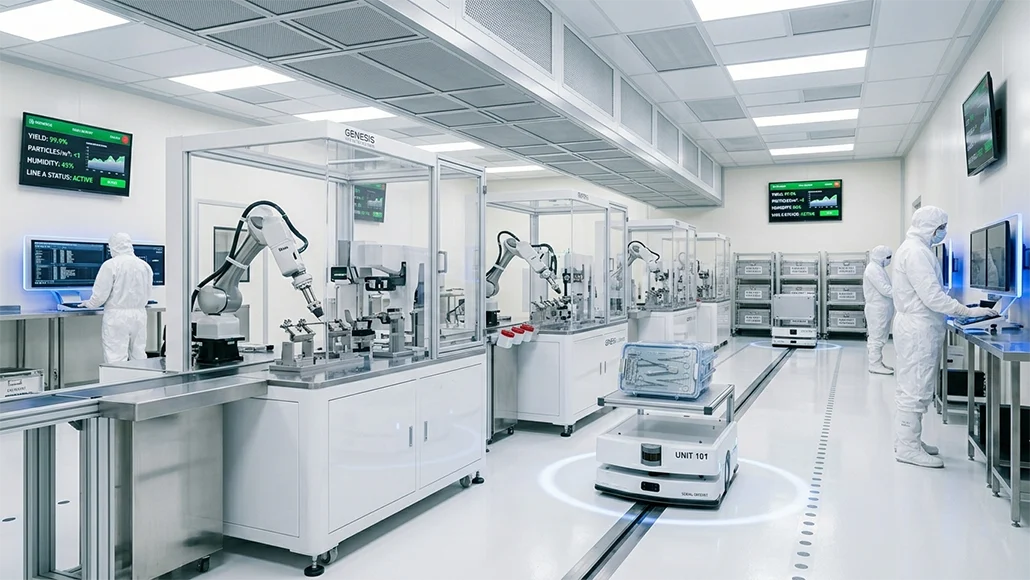
The physical reality of medical device manufacturing advancing global supply is defined by the incredible precision of modern engineering. We are now entering an age where devices are becoming smaller, more intelligent, and increasingly biocompatible. This requires a level of manufacturing expertise that was once the exclusive domain of the aerospace or semiconductor industries. For example, the production of micro-stents for cardiovascular surgery or ultra-thin electrodes for neural implants demands cleanroom environments and microscopic assembly techniques that are at the absolute cutting edge of human capability. This focus on device engineering is what allows for the creation of tools that are not only more effective but also less invasive, significantly improving the patient experience.
Furthermore, the use of advanced materials is a key driver of healthcare manufacturing. The development of new polymers, titanium alloys, and bio-absorbable materials is opening up new possibilities for long-term implants and wearable sensors. These materials must be processed with extreme care to ensure they do not trigger an immune response or degrade prematurely within the human body. By integrating these material sciences into the production process, medical device manufacturing advancing global supply is providing clinicians with more durable and reliable tools than ever before. This is particularly evident in the field of orthopedics, where 3D printing and additive manufacturing are now being used to create patient-specific implants that mimic the exact structure of a person’s bone, leading to better integration and faster healing times.
Scalable Production and Global Supply Chain Resilience
One of the greatest challenges in medical device manufacturing advancing global supply is the need for scalability. A medical breakthrough is only as good as our ability to produce it in sufficient quantities to help those in need. This requires a transition from the lab-scale prototype to a mass-scale production environment without any loss of quality or precision. This is where advanced automation and digital twin technology are playing a crucial role. By creating a virtual model of the production line, manufacturers can simulate and optimize the manufacturing process before a single physical part is ever made. This not only reduces waste but also ensures that the final production system is robust and capable of meeting global demand.
Moreover, the resilience of the global medical supply chain is being bolstered by better data integration. Manufacturers are increasingly using blockchain and real-time tracking to monitor the movement of raw materials and finished products from the factory floor to the hospital loading dock. This level of visibility is essential for medical device manufacturing advancing global supply, as it allows for a more proactive approach to inventory management. If a supplier in one part of the world experiences a delay, the manufacturer can quickly identify an alternative source, ensuring that there is no disruption in the availability of critical medical devices. This connected supply chain is a fundamental component of a more stable and equitable global healthcare system.
Regulatory Compliance and Quality-Driven Systems
The most critical factor in medical device manufacturing advancing global supply is, and always will be, patient safety. This is why every aspect of the manufacturing process is governed by a complex and ever-evolving web of regulations. Compliance is not just a legal requirement it is a moral obligation. High-quality medical device manufacturing is characterized by a culture of quality that permeates every level of the organization. From the initial design phase to the final inspection, every step is documented, verified, and audited to ensure that the device performs exactly as intended. This commitment to quality is what builds trust between the manufacturer, the clinician, and the patient.
As we look to the future, the harmonizing of international regulatory standards will be a key factor in further medical device manufacturing advancing global supply. Currently, manufacturers often have to navigate different sets of rules for the US, Europe, and Asia, which can slow down the distribution of new technologies. Efforts to create a more unified global regulatory framework will allow for a more rapid and efficient response to global health challenges. By continuing to innovate in both the engineering and the regulatory aspects of the industry, we can ensure that medical device manufacturing advancing global supply remains a robust and reliable pillar of the modern world, bringing the latest medical advancements to every corner of the globe.