








The Biological Signal in the Digital Stream
In the traditional medical model, clinical decisions were often based on “snapshots” a single blood pressure reading, a one-time blood draw, or a static imaging scan. While these snapshots are valuable, they often fail to capture the dynamic and fluctuating nature of human biology. The introduction of digital biomarkers enhancing continuous health assessment addresses this limitation by providing a constant stream of data that reflects the patient’s status in real-time. Digital biomarkers include everything from heart rate variability and gait patterns to sleep quality and even the subtle changes in voice or typing speed that can indicate neurological deterioration. By using advanced algorithms to filter the “noise” of daily life, healthcare sensors can extract the meaningful “signals” of health, providing a more comprehensive and accurate picture of the patient’s true physiological state.
This level of insight is particularly transformative for the management of chronic conditions, where subtle changes can indicate the early stages of an acute episode. For a patient with heart failure, a slight decrease in their daily activity level or a change in their respiratory rate during sleep captured by a digital biomarker can alert the clinical team days before the patient becomes symptomatic. This allows for an early intervention, such as a medication adjustment, that can prevent a costly and stressful hospital admission. This proactive monitoring is the hallmark of remote patient monitoring, where the goal is to keep the patient healthy and out of the hospital. By moving the “diagnostic eye” from the clinic into the home, digital biomarkers are fostering a more responsive and effective healthcare system that is built on the reality of the patient’s daily life.
Validation and the Science of Continuous Monitoring
While the potential of digital biomarkers is immense, their utility depends on their scientific validation and clinical relevance. Unlike traditional biomarkers, which have been studied for decades, digital biomarkers require a new framework for validation that accounts for the variability of the sensor technology and the environmental context of the data collection. This involves the use of high-fidelity clinical trials to prove that a specific digital signal such as a change in gait captured by a smartphone accelerometer directly correlates with a meaningful clinical outcome, such as the progression of Parkinson’s disease. This scientific rigor is a cornerstone of digital biomarkers enhancing continuous health assessment, ensuring that the technology provides genuine value to both the patient and the clinician. When a digital biomarker is validated, it becomes a powerful tool for precision medicine, providing a reliable and objective metric for tracking health.
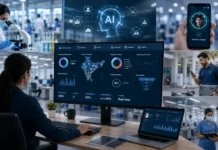
Furthermore, the integration of these biomarkers into the clinical workflow requires a sophisticated digital infrastructure that can process and present the data in an actionable format. Clinicians do not have the time to sift through thousands of data points; instead, they need intelligent dashboards that highlight the most significant trends and provide clear clinical insights. This is where digital health technology and AI become essential, using sophisticated machine learning to identify the “red flags” and to suggest potential interventions based on the data. This level of decision support ensures that the constant stream of data leads to better care rather than just more administrative burden. By building the science and the technology around the needs of the provider, we are ensuring that digital biomarkers are a practical and powerful addition to the modern diagnostic toolkit. The goal is to turn “data” into “knowledge” and “knowledge” into “healing.”
The Role of Sensors in Behavioral and Mental Health
Digital biomarkers are also opening up new frontiers in the assessment and treatment of mental and behavioral health conditions. For decades, the diagnosis of these conditions has relied heavily on subjective self-reporting and clinical observation, which can be prone to bias and recall error. Today, “digital phenotyping” the use of passive data from smartphones and wearables is providing a more objective view of a patient’s mental state. For example, changes in sleep patterns, social interaction frequency, and even the speed and rhythm of typing can be digital biomarkers for depression, anxiety, or bipolar disorder. This level of continuous health monitoring allows for the early detection of a relapse and for the delivery of “just-in-time” support, such as a virtual therapy session or a mindfulness prompt. This proactive approach is particularly important in mental health, where early intervention can significantly improve the long-term outcome.
Moreover, these digital tools are helping to reduce the stigma associated with mental health by framing it as a biological and data-driven discipline. When a patient can see the objective signals of their mental state on a digital dashboard, it can provide a deeper sense of understanding and agency over their own recovery. It also allows for a more personalized approach to treatment, where the therapy is tailored to the specific patterns of the individual’s daily life. Digital biomarkers enhancing continuous health assessment are thus a vital tool for the integration of physical and mental health, ensuring that every aspect of the person’s well-being is monitored and supported with the same level of precision and care. By breaking down the silos between different clinical disciplines, we are building a more holistic and human-centered healthcare system for all.
Remote Patient Monitoring and the Future of Care Delivery
The impact of digital biomarkers extends to the very structure of care delivery, moving the focus away from the traditional clinic toward a decentralized, home-based model. Remote patient monitoring (RPM) platforms are now being used to manage everything from postoperative recovery to high-risk pregnancies, providing a level of safety and convenience that was previously impossible. By utilizing digital biomarkers to monitor a patient’s vitals and activity levels in real-time, healthcare organizations can identify and address potential issues before they escalate, reducing the need for emergency visits and hospital stays. This shift is a key component of the broader healthcare transformation, ensuring that the system is as efficient and sustainable as it is effective. The digital biomarker is the “connective tissue” that makes this decentralized care model a reality, ensuring that the patient is never truly alone in their journey.
Furthermore, RPM platforms allow for a more collaborative relationship between the patient and their care team. By sharing the data from their digital biomarkers, patients can have a more informed and active conversation with their doctor about their health goals and progress. This level of engagement is a powerful driver of health outcomes, as it encourages the behaviors and choices that lead to long-term wellness. In this context, the technology is not just a monitoring tool; it is a catalyst for partnership and self-efficacy. By empowering the individual with the data they need to understand their own biology, we are building a healthcare system that is more resilient and more profoundly human. The future of care delivery is one of omnipresent support, where every digital signal is a step toward a healthier life.
Future Horizons: The Predictive and Preemptive Era
Looking toward the future, the next generation of digital biomarkers will move beyond monitoring toward a more predictive and preemptive model of health. Advanced AI algorithms will be able to analyze the interaction between different biomarkers such as heart rate, sleep, and environmental factors to predict a health event weeks or even months before it occurs. This “precision prevention” is the ultimate goal of the digital health movement, ensuring that we can intervene at the earliest possible stage to prevent the onset of disease altogether. For example, a digital biomarker for cognitive decline could allow for lifestyle interventions that delay the onset of Alzheimer’s by decades. This level of foresight is the primary promise of digital biomarkers enhancing continuous health assessment, moving medicine from a reactive “cure-based” discipline toward a proactive “prevention-based” science.
Moreover, the integration of digital biomarkers with genomic and proteomic data will lead to the rise of “personalized digital twins” virtual models of the individual that can simulate their response to different lifestyle choices and treatments in real-time. This would allow for a level of hyper-personalized care that is currently unimaginable, where every person has a custom roadmap for their lifelong health journey. As the technology continues to evolve, the distinction between “patient” and “healthy individual” will continue to blur, as we all use digital tools to manage our health in a continuous and proactive way. The legacy of this transformation will be a society that is not only healthier but also more deeply connected to the intricate and beautiful signals of our own biology. This is the promise of digital biomarkers, and it is a promise we are fulfilling one data point and one continuous assessment at a time.
Conclusion: Listening to the Digital Voice of the Body
The ongoing journey of digital biomarkers enhancing continuous health assessment is a testament to the power of human curiosity and the pursuit of clinical excellence. We have moved from a time of static, episodic care to an era of fluid and continuous diagnostics. By prioritizing sensor-generated data, scientific validation, and clinical integration, healthcare organizations are ensuring that their diagnostic processes are as sophisticated as the people they support. Digital biomarkers are not just a technological trend; they are a fundamental redefinition of how we listen to the body, ensuring that the healing process is supported by a system that is as intuitive and responsive as the modern world.
Ultimately, the success of digital biomarkers will be measured by their ability to improve the health of the population through early intervention and more personalized care. When the system works perfectly, it provides a seamless and supportive environment where every person feels empowered by their own health data. This is the ultimate goal of all our technical and administrative efforts. By investing in the highest levels of validation and professional standards, we are safeguarding the future of healthcare, ensuring that the healing process is supported by the best that modern science and technology have to offer. This is the promise of digital biomarkers, and it is a promise we are fulfilling every day, for every person. The predictive future is here, and it is a future we are building together, one digital signal and one healthier life at a time.