











The global healthcare supply chain is a marvel of modern engineering, yet it remains incredibly fragile, particularly when it comes to the transport of temperature-sensitive medications. From advanced biologics and cell therapies to life-saving vaccines, a significant portion of modern medicine requires strict thermal control to maintain its efficacy. Historically, this has been managed through passive cooling and periodic temperature logging, methods that often left logistical teams blind to potential breaches until it was too late. However, the implementation of cold chain visibility strengthening healthcare logistics is transforming this landscape. By integrating Internet of Things (IoT) sensors, real-time data transmission, and predictive analytics, healthcare organizations can now monitor the environmental conditions of their products at every step of the journey, ensuring that no patient ever receives a compromised dose.
The movement toward cold chain visibility strengthening healthcare logistics is driven by the increasing complexity of the pharmaceutical portfolio. Traditional “small molecule” drugs are relatively stable, but the new generation of precision medicines is often made of delicate proteins or living cells that can be denatured by even a brief exposure to ambient temperatures. A single “excursion” a deviation from the required temperature range can render an entire shipment of expensive medication worthless. Beyond the financial loss, the clinical impact is profound: a patient waiting for a critical oncology treatment or a community awaiting a vaccine shipment faces delays that can have life-altering consequences. Visibility is the antidote to this risk, providing the transparency needed to intervene before a shipment is ruined.
The Technological Foundation of Real-Time Thermal Monitoring
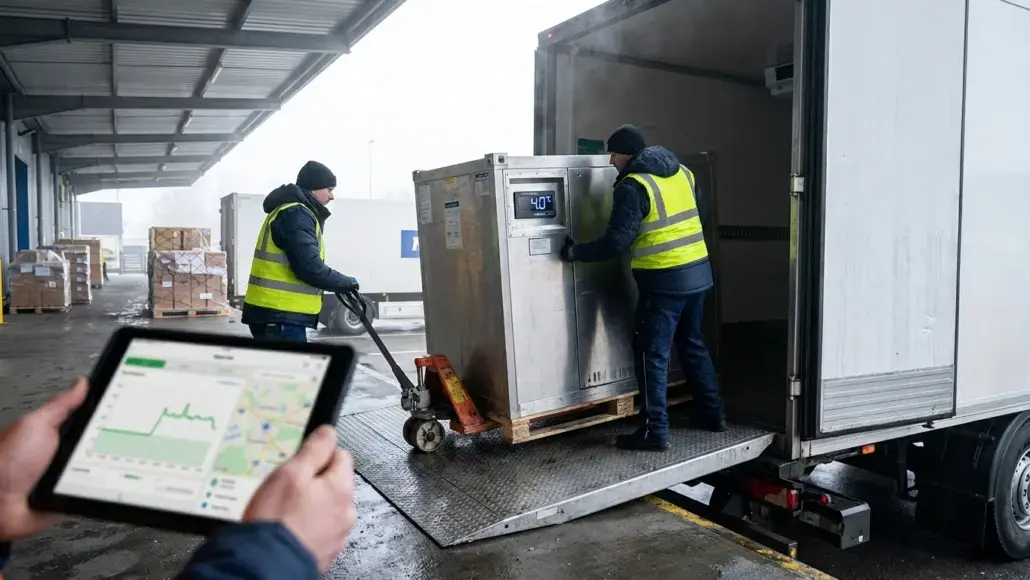
The core of cold chain visibility strengthening healthcare logistics is a network of smart sensors that accompany the product from the point of manufacture to the point of administration. These sensors do more than just record temperature they track humidity, light exposure, shock, and precise geographic location. Utilizing cellular, satellite, or Bluetooth Low Energy (BLE) connectivity, these devices transmit data to a centralized cloud platform in real-time. This continuous stream of information allows logistics managers to see exactly where a shipment is and, more importantly, exactly how it is “feeling.” If a refrigerated truck’s cooling unit fails on a highway, the system triggers an immediate alert, allowing the driver to take corrective action or for the cargo to be diverted to a nearby cold storage facility.
Furthermore, the data collected through cold chain visibility strengthening healthcare logistics is being used to build “digital twins” of the supply chain. By analyzing thousands of past shipments, machine learning models can predict which routes are most likely to experience delays or where external weather patterns might pose a threat to thermal integrity. This predictive capability allows for better lane validation and packaging selection. For instance, if a shipment is moving through a region experiencing an extreme heatwave, the system might recommend a more robust insulated container or a faster shipping method. This proactive approach to logistics visibility moves the industry from a reactive “detect and discard” model to a proactive “predict and prevent” strategy.
Improving Product Integrity and Patient Safety
The ultimate goal of cold chain visibility strengthening healthcare logistics is the absolute protection of patient safety. When a pharmacist or nurse receives a temperature-sensitive medication, they need a high degree of confidence that it has been handled correctly. Digital visibility provides an “unbroken chain of custody” that is documented and verifiable. By scanning a QR code on the packaging, the healthcare provider can access the entire thermal history of that specific unit. This transparency eliminates the guesswork and manual documentation that have traditionally slowed down the receiving process at hospitals and clinics. It ensures that the integrity of the product is proven by data, not just assumed by its arrival.
In the context of vaccine logistics, the impact of cold chain visibility strengthening healthcare logistics is particularly significant. Global immunization programs often require the transport of vaccines to remote or resource-constrained areas with unreliable power grids. Smart monitoring tools can identify “weak links” in the local cold chain, such as a malfunctioning refrigerator at a rural clinic. By identifying these issues in real-time, health authorities can provide targeted support and maintenance, ensuring that the vaccines remain potent until they reach the final patient. This level of granular visibility is essential for the success of large-scale public health initiatives and for building community trust in the healthcare system.
Compliance and Regulatory Readiness in Global Logistics
The pharmaceutical industry is one of the most heavily regulated sectors in the world, and compliance with Good Distribution Practices (GDP) is a non-negotiable requirement. Regulatory bodies such as the FDA and the EMA are increasingly demanding detailed evidence of temperature control throughout the supply chain. Cold chain visibility strengthening healthcare logistics simplifies this compliance burden by generating automated, tamper-proof audit trails. Instead of manually compiling temperature logs from multiple carriers and storage facilities, quality assurance teams can generate comprehensive reports at the touch of a button.
This digital readiness is also vital during regulatory audits. Being able to demonstrate a proactive approach to risk management and a high level of supply chain visibility positions a company as a leader in quality and safety. Moreover, cold chain visibility strengthening healthcare logistics helps in the event of a product recall. If a specific batch is found to have a defect, the system can quickly identify every location where that batch was sent and verify whether it was exposed to any additional environmental stressors. This precision allows for faster, more effective recalls, minimizing the impact on the market and ensuring that the most vulnerable patients are protected.
Scaling Visibility Across the Healthcare Supply Chain
While the benefits of cold chain visibility strengthening healthcare logistics are clear, achieving universal coverage requires collaboration across the entire ecosystem. This includes pharmaceutical manufacturers, third-party logistics (3PL) providers, airlines, and hospital systems. The challenge lies in data interoperability ensuring that information can flow seamlessly between different proprietary platforms. The industry is currently moving toward standardized data formats and open APIs, which will allow for a “control tower” view of the supply chain that transcends individual company boundaries.
As technology continues to evolve, we are seeing the integration of blockchain to further enhance the security and transparency of cold chain visibility strengthening healthcare logistics. By recording every temperature reading and change of custody on a decentralized ledger, the industry can create a single, immutable record of the product’s journey. This reduces the risk of data tampering and provides a higher level of trust for all stakeholders. Additionally, advancements in battery technology and energy harvesting are allowing for smaller, longer-lasting sensors that can monitor products for months or even years, which is essential for the long-term storage of certain specialized therapies.
Conclusion: A Resilient Future for Healthcare Logistics
The implementation of cold chain visibility strengthening healthcare logistics is a critical step in the evolution of modern medicine. As our therapeutic interventions become more sophisticated and more delicate, our logistical systems must keep pace. By turning the “black box” of the supply chain into a transparent and manageable data stream, we are ensuring that the promise of biotechnology is never compromised by the realities of transportation.
In the end, cold chain visibility is about more than just temperature it is about the integrity of the healthcare promise. It is the assurance that when a patient receives a life-saving treatment, it is as safe and effective as the day it left the laboratory. As we continue to innovate and expand the reach of our healthcare systems, the visibility provided by these smart technologies will be the foundation upon which a more resilient, efficient, and compassionate global supply chain is built. The future of healthcare logistics is clear, connected, and consistently cold, ensuring that the best possible care is always within reach of the patients who need it most.