












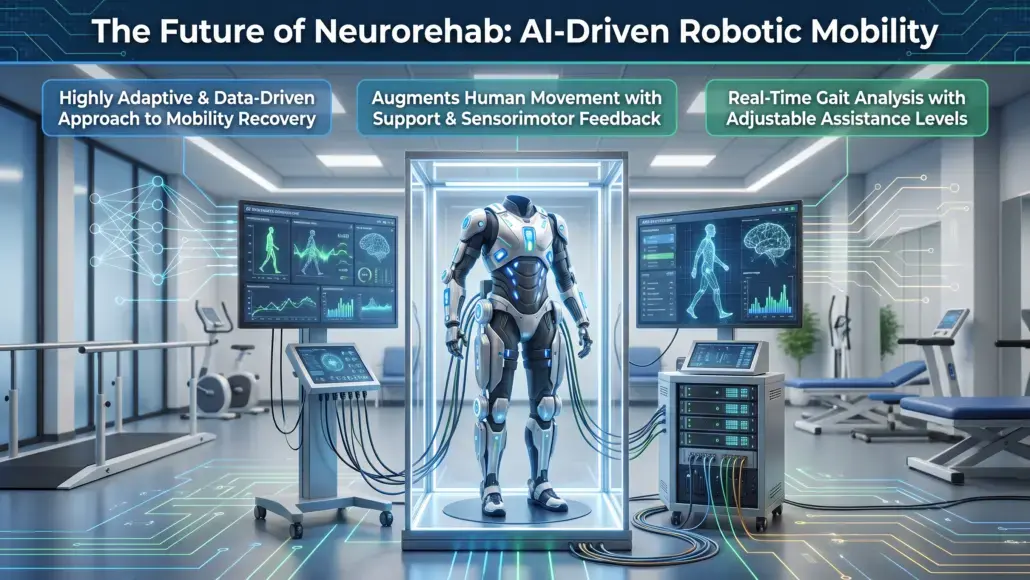
Physical therapists are seeing a paradigm shift in neurorehabilitation as AI-powered exoskeletons provide a highly adaptive and data-driven approach to mobility recovery. These robotic systems are designed to augment human movement, providing the mechanical support and sensorimotor feedback necessary to retrain the nervous system after a stroke or spinal cord injury. By incorporating artificial intelligence, these devices can analyze a patient’s gait in real-time, adjusting the level of assistance to match their specific needs and progress. This dynamic interaction is essential for promoting neuroplasticity, the brain’s ability to reorganize itself by forming new neural connections, which is the foundation of long-term functional recovery. The shift toward this technology is being driven by the clinical evidence showing that high-intensity, repetitive, and task-specific training leads to significantly better outcomes than traditional manual therapy alone.
The Role of Machine Learning in Adaptive Gait Assistance
The core innovation of AI-powered exoskeletons lies in their ability to interpret the user’s intent and provide assistance that is perfectly synchronized with their natural movement. This is achieved through the use of a variety of sensors, including electromyography (EMG) to measure muscle activity and inertial measurement units (IMUs) to track joint angles and limb acceleration. Machine learning algorithms process this data at high speeds, identifying the phase of the gait cycle and predicting the user’s next step. This allows the exoskeleton to transition from a passive support structure to an active participant in the walking process, providing the necessary torque at the hips and knees to facilitate a normal gait pattern. The precision of this timing is critical for ensuring that the assistance feels natural and does not interfere with the patient’s own effort, which is a key requirement for effective rehabilitation.
In addition, the intelligence of these systems allows for a personalized approach to therapy that can adapt as the patient’s condition changes over time. In the early stages of recovery, the exoskeleton can provide full support, allowing the patient to experience the sensation of walking even if they have minimal muscle control. As the patient gains strength and coordination, the system can gradually reduce the level of assistance, challenging them to take on more of the workload. This “assist-as-needed” philosophy is a fundamental principle of modern neurorehabilitation, ensuring that the patient is always working at the limit of their ability. The ability of AI-powered exoskeletons to quantify this progress through detailed kinematic data provides clinicians with a powerful tool for monitoring outcomes and adjusting the treatment plan based on objective evidence. The focus remains on maximizing the patient’s functional independence.
Enhancing Neuroplasticity through Targeted Sensorimotor Feedback
The effectiveness of robotic-assisted therapy is not just about the mechanical support provided but also about the quality of the sensorimotor feedback delivered to the nervous system. AI-powered exoskeletons provide a consistent and controlled environment for gait training, ensuring that every step is executed with a high degree of accuracy. This consistency is vital for reinforcing the neural pathways involved in walking, providing the brain with the clear and repetitive signals it needs to relearn the complex task of locomotion. Some advanced systems also incorporate biofeedback mechanisms, such as visual or auditory cues, to help patients improve their symmetry and balance. This multisensory approach further enhances the rehabilitation process, engaging the patient’s cognitive and sensory systems in the recovery of motor function.
The integration of artificial intelligence also allows for the identification of specific gait abnormalities that may be unique to an individual patient. For example, a patient with a specific type of hemiplegia may have difficulty with toe clearance or knee stability during the swing phase of walking. The AI can detect these subtle deviations and provide targeted assistance to correct them, preventing the development of compensatory movements that can lead to secondary musculoskeletal issues. This precision is a significant advantage over manual therapy, where it can be difficult for a therapist to provide the exact level of support needed for every phase of the gait cycle. By ensuring that the patient is practicing a correct and efficient movement pattern, AI-powered exoskeletons help to build a more solid foundation for long-term mobility. The goal is to translate the gains made in the clinic into improvements in daily life and community participation.
Clinical Economics and the Expansion of Rehabilitation Access
The adoption of AI-powered exoskeletons is also being influenced by the changing economic environment of healthcare, where there is an increasing emphasis on efficiency and value-based outcomes. While the initial cost of these systems is significant, their ability to increase the intensity and frequency of therapy can lead to faster recovery times and a reduction in the long-term cost of care. In a traditional rehabilitation setting, a single therapist can only work with one patient at a time, and the physical demands of gait training can limit the duration of each session. With the support of an exoskeleton, a therapist can manage a more intensive session with less physical strain, potentially allowing for a higher volume of patients to be treated. This improved productivity is a key factor in the financial case for investing in robotic technology.
In addition to clinic-based systems, the development of lightweight, portable AI-powered exoskeletons is expanding the possibilities for home-based rehabilitation. These devices allow patients to continue their therapy in a more natural environment, potentially increasing the total amount of practice they receive. This expansion of access is particularly important for individuals living in rural or underserved areas who may not have easy access to specialized rehabilitation centers. The data collected by these home-based systems can be transmitted to the clinical team, allowing for remote monitoring and consultation. This tele-rehabilitation model has the potential to significantly improve the long-term outcomes for patients with chronic mobility impairments, providing them with the tools and support they need to maintain their independence outside of the clinical setting. The focus remains on the democratization of high-quality rehabilitation through the use of advanced technology.
Addressing Regulatory Hurdles and Ensuring Patient Safety
As with any advanced medical technology, the widespread adoption of AI-powered exoskeletons requires a rigorous evaluation of their safety and efficacy. Regulatory bodies, such as the FDA and the EMA, have established specific pathways for the approval of robotic rehabilitation devices, requiring extensive clinical trial data to demonstrate their benefits. Ensuring the safety of the patient is paramount, particularly in the event of a system failure or a sudden change in the patient’s status. Exoskeletons are equipped with multiple redundant safety features, including mechanical stops and electronic sensors that can detect abnormal movements and automatically shut down the system. The training of physical therapists in the safe and effective use of these devices is also a critical component of the implementation process.
Ethical considerations regarding the use of AI in rehabilitation must also be addressed. While the technology provides valuable data and support, it should not replace the clinical judgment or the human connection that is essential for effective therapy. The role of the physical therapist remains central, as they are responsible for setting the goals of treatment, monitoring the patient’s progress, and providing the emotional support needed during the challenging recovery process. The relationship between the therapist and the exoskeleton is one of collaboration, where the technology serves as a powerful tool to enhance the therapist’s expertise. Transparency in how the AI makes decisions and how patient data is used is also essential for building trust among patients and clinicians. By addressing these challenges proactively, the rehabilitation industry can ensure that the benefits of AI-powered exoskeletons are realized in a safe and ethical manner.
Future Horizons in Wearable Robotics and Mobility Science
The future of neurorehabilitation will be defined by the continued evolution of wearable robotics and the deeper integration of artificial intelligence into mobility science. We are likely to see the development of even more sophisticated exoskeletons that are thinner, lighter, and more flexible, allowing them to be worn under clothing for extended periods. The integration of advanced brain-machine interfaces (BMIs) will also be a major area of research, potentially allowing patients to control their exoskeletons directly through their neural activity. This could provide a truly seamless and intuitive mobility solution for individuals with severe spinal cord injuries. The use of AI to analyze large-scale datasets from thousands of exoskeleton users will also lead to new insights into the mechanisms of recovery and the development of even more effective rehabilitation protocols.
The ultimate goal of AI-powered exoskeletons is to create a world where mobility impairment is no longer a barrier to a full and active life. By providing the support and feedback needed to retrain the nervous system, these devices are helping to redefine the possibilities for recovery after devastating neurological injuries. The journey toward this future will require ongoing collaboration between engineers, neuroscientists, clinicians, and patients, ensuring that the technology is designed to meet the real-world needs of the users. Through a commitment to innovation and excellence, the healthcare industry can realize the full potential of wearable robotics, creating a future where every individual has the opportunity to walk again. The focus remains steadfast on the potential of AI and robotics to enhance human capability and restore hope for those facing the challenges of mobility loss.