







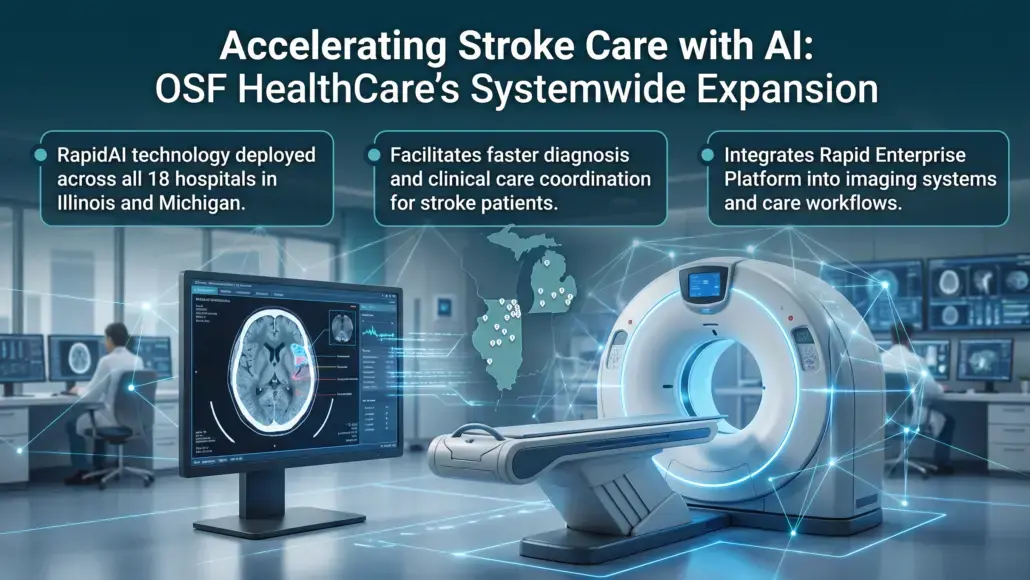

OSF HealthCare is expanding its deployment of advanced stroke care AI technology across all 18 of its hospitals in Illinois and Michigan to facilitate faster diagnosis and clinical care coordination. The health system announced the systemwide expansion in partnership with RapidAI, extending an implementation that originally began at select facilities.
The initiative integrates the Rapid Enterprise Platform into hospital imaging systems and care workflows across the health system’s regional network. The software connects directly with picture archiving and communication systems (PACS), electronic health records (EHRs), care-team tools, and clinical worklists to optimize hospital imaging protocols.
Systemwide Network Integration and Care Coordination
The implementation supports stroke imaging across multiple modalities, including non-contrast computed tomography (NCCT), computed tomography angiography (CTA), and computed tomography perfusion (CTP). By expanding the technology systemwide, OSF HealthCare aims to connect rural facilities with specialized expertise at its comprehensive stroke centers located at OSF HealthCare Saint Francis Medical Center in Peoria and OSF HealthCare Saint Anthony Medical Center in Rockford.
Initial use of the platform at select hospitals produced improvements in treatment times and provided more consistent identification of patients who could benefit from specialized stroke interventions. Time efficiency remains critical during acute events, as data from the American Stroke Association indicates that nearly 2 million brain cells die every minute a stroke goes untreated.
Clinical Workflow Software and Regulatory Clearance
“The sooner we can get these images,” Talkad said, “that can save minutes.” Arun Talkad, who directs stroke care at OSF HealthCare Saint Francis Medical Center in Peoria, emphasized that rapid access to high-quality stroke imaging helps reduce delays between initial evaluation and clinical decision-making.
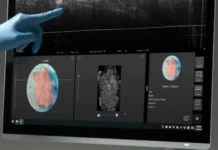
The RapidAI platform distributes image findings and automated analysis directly to medical teams through workstation, desktop, and mobile tools, enabling clinicians to review case images and communicate in real time across the care journey. The software serves as a triage support tool designed to assist care teams rather than replace physician judgment.
The U.S. Food and Drug Administration (FDA) cleared Rapid NCCT Stroke, a RapidAI product, as radiological computer-aided triage and notification software designed to analyze head CT scans and alert clinicians to suspected findings. This systemwide rollout demonstrates how regional healthcare providers are incorporating specialized stroke care AI into standardized clinical workflows to deliver consistent care across all facilities.