









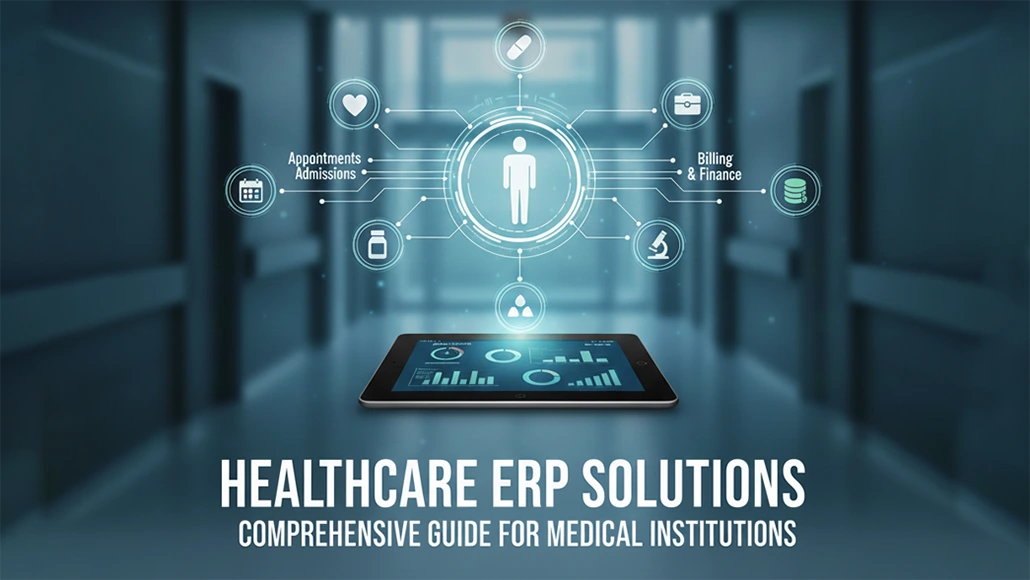

Do you want to develop a healthcare ERP solution and integrate it to your operations, but have no idea about it? Or are you looking for the key components of healthcare ERP solutions? Or do you want to know why these solutions are so important and what are their benefits? No need to worry. We have prepared a detailed blog that answers your questions. Let’s explore.
What is ERP?
ERP stands for Enterprise Resource Planning, which is a type of software solution that helps businesses in managing their daily business operations including human resources, accounting, risk management, procurement, compliance management, reporting, supply chain management and more.
Every business needs a custom and reliable ERP system to manage their operations and simplify it. A powerful ERP system makes it easier for organizations to plan, budget, and forecast cash flows. It also provides organizations’ performance reports.
What is Healthcare ERP?
We already know what ERP is, and when you integrate it into healthcare operations, it becomes healthcare ERP. It manages everything in the healthcare operations from doctors, patients, medical supplies, pharmacy, medical inventory, patient relationship, billing, payments, and staff management, revenue cycle, supply chain and so much more.
It automates various manual and repetitive tasks, boosting efficiency, and improving overall productivity of healthcare organizations. It ensures coherence between the different departments of the healthcare organizations improving overall business workflow. For a custom ERP that enhances your workflow, you should hire healthcare developers.
Importance of Healthcare ERP Solutions
Healthcare is an industry where everyone has to be on their toes from doctors and staff to the entire computational workflow, to ensure effective patient treatment without any delays, and this makes ERP solutions important for the healthcare industry. Let’s take a look at some points that show the importance of Healthcare ERP solutions.
Centralized Data Management
Centralized data management is one of the most crucial aspects of healthcare ERP solutions. It helps healthcare professionals quickly access patient details from the database which leads to faster diagnostics and treatment and fewer medical errors. This centralized data management eliminates manual data entry and repetitive paperwork.
Improved Operational Efficiency
Every healthcare organization wants to operate at its full efficiency, and healthcare ERP solutions make it possible. We already know that healthcare ERP systems offer centralized data management, but that’s not all, they also automate routine tasks, utilize resources optimally, and streamline department coordination.
Efficient Staff Management
Staff management is a complex task for any organization, but the complexity rises when it’s a healthcare organization. Such organizations have multiple departments that work in multiple shifts which make staff management really challenging. Healthcare ERP solutions centralize employee records, automate attendance tracking, and create balanced duty rosters to avoid staff shortages.
Enhanced Patient Care
Improving patient care is the sole goal of healthcare organizations and ERP solutions just boost this. Everything we read by far plays a crucial role in providing enhanced patient care. Healthcare ERP solutions integrate administrative, clinical and financial data into a centralized database giving healthcare professionals complete and accurate patients’ information all the time.
Key Components of Healthcare ERP Solutions
What makes Healthcare ERP solutions so important? Its key components. These key components play crucial roles throughout the workflow improving efficiency of all the operations boosting productivity. Let’s take a look at the key components of ERP solutions for healthcare.
Core Operational Modules
Core operational modules are among the most important components of healthcare ERP solutions. It includes patient management, financial management, and human resources. This component ensures proper registration, scheduling and tracking of patients and their history. It also manages accounting, billing, revenue cycle, payroll, benefits, employee data and more.
Healthcare-Specific Modules
Now comes another core component of healthcare ERP solutions which is none other than healthcare-specific modules. It includes clinical management, appointment scheduling, reporting and analytics and more. It ensures proper management of electronic health records, clinical workflows, real-time dashboards, tracking maintenance and medical device usage.
Compliance and Security
The next component in the line is compliance and security, this one should not be avoided at any cost when you are developing and integrating healthcare ERP solutions. With effective compliance and security you can encrypt data, ensure adherence to various regulations like HIPAA, and manage access controls.
Benefits of Healthcare ERP Solutions
Healthcare ERP solutions offer benefits that affect the entire healthcare operation of organizations helping them provide better patient care and personalized treatment. These benefits positively affect both healthcare professionals and patients. Let’s take a look at the benefits of healthcare ERP solutions.
Data Visibility and Analytics
Data visibility and analytics is one the best benefits that healthcare ERP solutions offer. It integrates data from various sources into one platform forming a centralized database allowing everyone in the organization to work on the same database.
Streamlined Operations
When you develop and integrate ERP systems into your healthcare organizations the first benefit you experience is streamlined operations. And we all know that streamlining operations is a necessity for healthcare organizations to provide personalized treatment and enhance patient care.
Improved Financial Management
The cashflow in the healthcare organization is constant and relies on four Cs which includes cash, cost, capital, and control. Finance is dictated by state and federal regulations. When you integrate ERP systems into your operations, it handles budgeting, planning, billing and invoicing, forecasting, claims and expense management that saves a lot of time and reduces errors to minimum.
Challenges of Healthcare ERP Solutions
We read about the importance, key components that make healthcare ERP solutions important and the benefits they offer. However, as we already know nothing is perfect, which means healthcare ERP solutions also have some drawbacks which you as an organization need to overcome. You can hire healthcare developers for your ERP solutions to ensure seamless development and integrations. Let’s take some key challenges that you have to face.
- Complex Integration – This is one of the biggest challenges that a healthcare organization faces, especially when your organization is operating on existing legacy systems.
- High Costs – Healthcare ERP systems offer significant reduction in cost in the long run, and what makes it a challenge is high development and integration costs. From software, and hardware to training and ongoing maintenance costs are high.
- Data Security and Compliance – Things just get complex and become a challenge, whenever the word security and compliance comes. Inefficient security will lead to vulnerable data which will invite more and more cyber attacks. Here you need to protect sensitive data about patients and organizations by meeting HIPAA and other security regulations.
- Data Migration: Healthcare organizations have a huge amount of data which needs to be properly managed and that is a challenge in legacy systems. But you know what is a bigger challenge? Migrating the entire data from legacy systems to new ERPs without misplacing any data or causing any error.
Conclusion
In the end we can say, ERP solutions are one of the best things ever happened to the healthcare industry along with AI. It does have some challenges that we need to overcome, but it also has a lot of components and benefits that makes it a go-to choice for healthcare organizations. These components streamline the healthcare workflow ensuring it remains seamless and enhances patient care. As we will progress the healthcare ERP solutions will improve and ultimately become a core and inseparable part of healthcare workflows.