















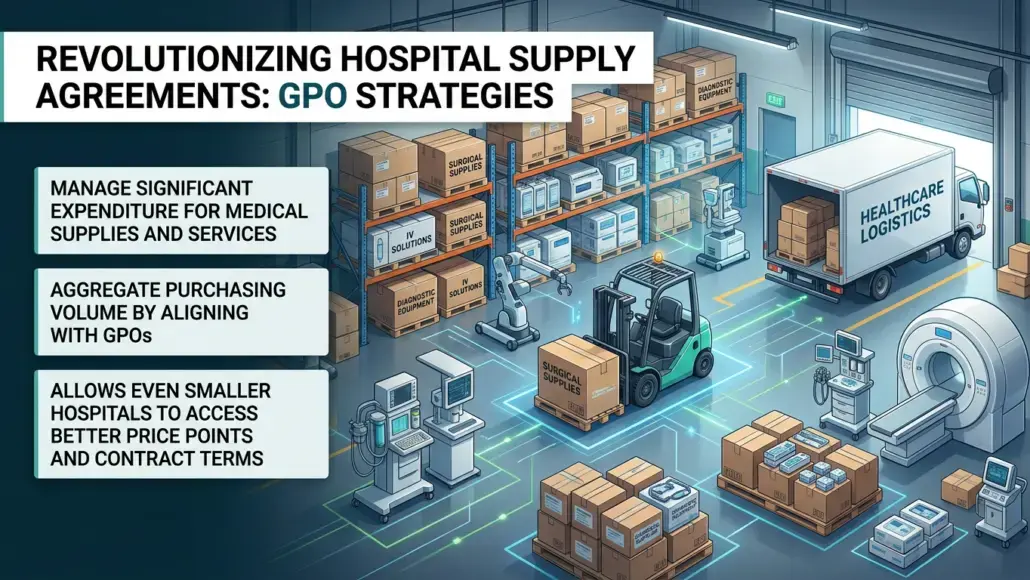

The procurement of medical supplies and services represents one of the largest expenditure categories for healthcare facilities, often second only to labour costs. To manage these significant financial requirements, many hospitals align themselves with group purchasing organisations to aggregate their purchasing volume. This collective approach allows even smaller community hospitals to access price points and contract terms that would typically be reserved for large academic medical centres. By pooling their resources, healthcare providers can secure more favourable agreements with manufacturers and distributors, effectively reducing the per-unit cost of essential clinical items. These entities act as intermediaries, negotiating thousands of contracts across diverse product categories, from high-volume commodities like gloves and syringes to specialised physician preference items. This aggregation of volume creates a powerful bargaining tool that can offset the rising costs of medical technology and pharmaceutical products.
The administrative burden of managing individual supplier relationships can be overwhelming for internal procurement teams. By utilizing the services of purchasing organisations, hospitals can delegate the complex tasks of market research, contract negotiation, and vendor vetting to experts who specialise in these functions. This allows hospital procurement staff to focus on more strategic initiatives, such as internal process improvement and clinical alignment. Specifically, these organisations provide access to a broad portfolio of pre-negotiated contracts, which simplifies the purchasing cycle and ensures that hospitals are always operating under current market standards. The result is a more streamlined procurement operation that can respond quickly to changes in clinical demand or budgetary constraints. Furthermore, the systematic review of contracts by these organisations ensures that hospitals are not only getting the best price but also the best terms for delivery, returns, and service support.
Beyond simple cost reduction, the strategic value of these organisations lies in their ability to provide comprehensive market intelligence. Procurement leaders gain access to data regarding supplier performance, product quality, and emerging market trends that would be difficult to gather independently. This information is critical for making informed decisions about long-term supply agreements and identifying potential risks in the market. The collaborative nature of these groups also fosters a community of practice among healthcare procurement professionals, allowing for the sharing of best practices and successful strategies. By participating in these networks, hospitals can stay at the forefront of procurement innovation and ensure that their operations are as efficient and effective as possible. Ultimately, the role of these organisations is to empower healthcare providers to focus on their primary mission of patient care by handling the complexities of the global supply market.
Supply Chain Stability and Risk Mitigation
Maintaining a continuous flow of medical supplies is critical for patient safety and clinical outcomes. Global supply chains are increasingly susceptible to disruptions caused by manufacturing delays, logistical bottlenecks, and raw material shortages. Within this context, purchasing organisations play a vital role in enhancing the resilience of hospital supply chains. By maintaining diverse portfolios of suppliers and alternative product options, these organisations help hospitals mitigate the risks associated with dependency on a single vendor. When shortages occur, these entities can facilitate the allocation of available stock across their member hospitals, ensuring that critical supplies reach the areas of greatest need. This proactive approach to risk management is essential for preventing clinical interruptions and maintaining the highest standards of care.

Effective supply chain management also requires deep visibility into the tiers of production and distribution. Purchasing organisations utilize advanced tracking technologies and data sharing protocols to monitor the health of the supply chain in real time. This information allows hospital administrators to identify potential vulnerabilities before they manifest as critical shortages. Additionally, these organisations often provide consulting services to help hospitals optimize their internal inventory management practices. By implementing best practices for storage, tracking, and consumption, hospitals can reduce waste and ensure that their procurement activities are as efficient as possible. The following points highlight the key benefits of this collaborative model:
- Access to proprietary market intelligence regarding supplier reliability and product quality.
- Simplified implementation of national standards for product identification and tracking.
- Enhanced ability to source emergency supplies during public health crises or natural disasters.
- Reduced administrative overhead through the use of standardised contract templates and electronic procurement tools.
- Continuous monitoring of supplier compliance with safety and ethical manufacturing standards.
- Improved visibility into the upstream supply chain to identify potential nodes of failure.
The integration of these risk mitigation strategies into the daily operations of a hospital provides a significant layer of security for clinical staff. Knowing that the supply chain is being monitored and managed by experts allows surgeons, nurses, and technicians to focus entirely on their patients. Furthermore, the ability of these organisations to negotiate for dedicated safety stock and priority delivery schedules for their members adds another level of protection against unforeseen events. This focus on reliability is a critical component of the value proposition offered by these entities. As global markets become increasingly volatile, the importance of robust and well-managed supply agreements will only continue to grow. By leveraging the expertise and resources of their group partners, hospitals can ensure they remain resilient in the face of any challenge.
Clinical Value Analysis and Product Selection
Selecting the right medical products is a complex process that involves balancing clinical efficacy, patient safety, and financial viability. Purchasing organisations support this process by facilitating clinical value analysis, which involves the rigorous evaluation of new technologies and products by multi-disciplinary teams of healthcare professionals. These evaluations provide hospital procurement officers with objective data regarding the comparative performance of different devices, allowing them to make informed decisions that align with the goals of their organisation. By involving clinicians in the selection process, hospitals can ensure that the products chosen meet the practical needs of those providing direct patient care. This clinical engagement is vital for ensuring that the procurement process is not seen as an administrative hurdle but as a partner in delivering excellence.
The standardisation of medical supplies across a hospital system is a primary goal for many procurement leaders. By reducing the number of different products used for similar clinical procedures, hospitals can simplify their training requirements and reduce the risk of clinical errors. Purchasing organisations facilitate this standardisation by offering narrow-network contracts that provide deeper discounts in exchange for higher levels of commitment to specific brands or product lines. This approach not only reduces costs but also strengthens the relationship between the hospital and its primary vendors. These partnerships often lead to collaborative initiatives aimed at improving product design and clinical workflows. Additionally, healthcare facilities can integrate these agreements into broader strategic sourcing models to achieve comprehensive operational improvements.
Furthermore, the clinical feedback loops established by these organisations provide manufacturers with valuable insights into the real-world performance of their products. This interaction leads to continuous improvement in medical technology and the development of new solutions that better meet the needs of the patient. The focus on value-based selection also ensures that hospitals are not just buying the newest or most expensive equipment, but the tools that will provide the best outcomes for their specific patient population. By utilizing the collective clinical expertise of their member facilities, these organisations can drive the market toward higher standards of performance and safety. Ultimately, this collaborative approach to product selection benefits everyone in the healthcare ecosystem, from the procurement officer to the patient on the operating table.
Ensuring Regulatory Compliance and Transparency
The healthcare industry is subject to stringent regulatory requirements governing the procurement and use of medical devices and pharmaceuticals. Purchasing organisations help hospitals maintain compliance by ensuring that all contracted vendors meet the necessary quality and safety standards. This includes verifying that suppliers possess the required certifications and adhere to ethical manufacturing practices. By maintaining detailed records of contract negotiations and supplier evaluations, these organisations provide a high degree of transparency that is essential for internal audits and external regulatory reviews. This accountability builds trust among stakeholders, including hospital boards, clinical staff, and the patient community. In an era of increased scrutiny, having a reliable partner to manage these compliance risks is invaluable for hospital leadership.
Transparency in procurement operations also extends to the management of financial incentives and administrative fees. Modern purchasing organisations operate under clear guidelines that define how fees are collected and distributed, ensuring that hospitals receive the full benefit of their collective bargaining power. This focus on ethical conduct is critical for maintaining the integrity of the healthcare supply chain. By providing hospitals with clear visibility into the financial aspects of their supply agreements, these organisations enable procurement leaders to demonstrate the value they bring to the organisation. This financial clarity is essential for long-term planning and for building support for new procurement initiatives within the executive leadership team. The commitment to ethical practices also ensures that the interests of the patient are always prioritised over financial gain.
Moreover, the regulatory expertise provided by these organisations allows hospitals to stay ahead of changes in legislation and industry standards. Whether it is a new requirement for product tracking or a change in the rules for pharmaceutical storage, these entities provide the guidance and tools needed to remain compliant. This proactive stance reduces the risk of costly legal issues and ensures that the hospital reputation for safety and integrity remains intact. By centralising these regulatory functions, the organisation can ensure a high level of consistency across all its facilities. This is particularly important for large health systems that operate across multiple jurisdictions with differing regulatory requirements. Ultimately, the role of these organisations in ensuring compliance and transparency is a cornerstone of a safe and efficient healthcare system.
Technology and the Future of Group Purchasing
As the healthcare sector becomes increasingly digital, the role of purchasing organisations is expanding to include the management of digital assets and software services. The future of group purchasing lies in the integration of advanced data analytics, artificial intelligence, and electronic procurement platforms that can provide even greater levels of efficiency and insight. These technologies will allow for more precise forecasting of clinical needs and the automation of routine procurement tasks, freeing up staff for higher-value activities. Specifically, the use of blockchain technology could revolutionize the tracking of medical supplies, providing an immutable record of a product journey from the factory to the patient. This level of security and transparency will be essential for preventing the entry of counterfeit products into the medical supply chain.
Furthermore, the focus on telehealth and remote patient monitoring is creating new opportunities for these organisations to negotiate contracts for digital health tools. By utilizing their collective volume, hospitals can secure more affordable access to the technologies needed to deliver care outside the traditional hospital setting. This shift toward a more patient-centered and distributed model of care will require new sourcing strategies and a deep understanding of the digital health market. The commitment to innovation in procurement will ensure that healthcare providers can continue to deliver high-quality care in an increasingly complex and technological world. The evolution of group purchasing will also involve a greater focus on environmental sustainability, with these organisations leading the charge for greener products and more sustainable supply chains.
In conclusion, the impact of these organisations on hospital supply agreements is profound and multifaceted. By providing strategic negotiation power, enhancing supply chain stability, and ensuring clinical alignment, they enable hospitals to deliver high-quality care more efficiently. As the healthcare industry continues to face new challenges, the importance of these collaborative partnerships will only grow. By embracing new technologies and focusing on value-based outcomes, healthcare procurement leaders can ensure their organisations remain at the forefront of clinical and operational excellence. The journey toward a more efficient and resilient healthcare supply chain is a collaborative one, and the role of these entities is to lead the way.