
















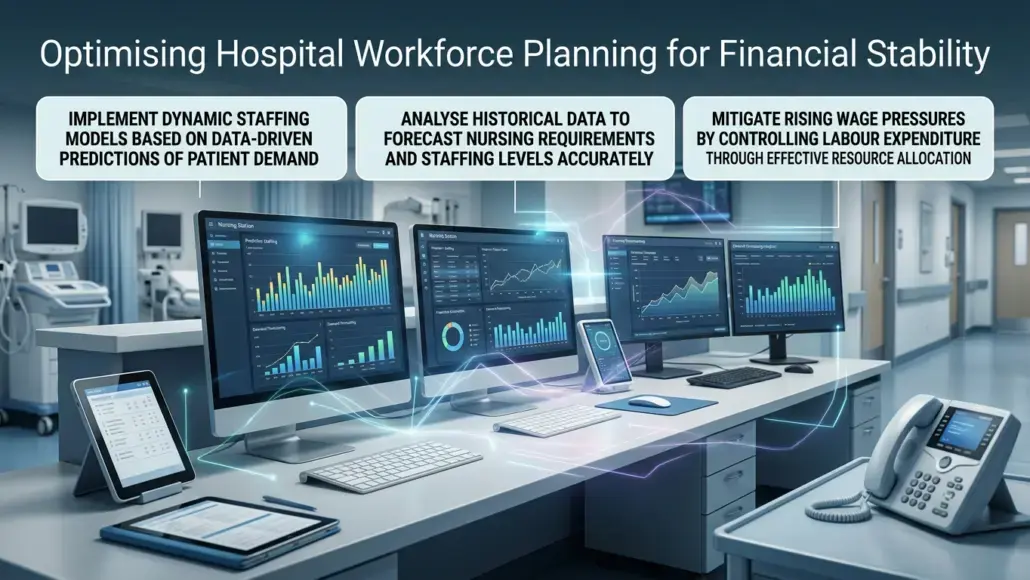

Labour costs represent the single largest expenditure for healthcare organisations, often accounting for more than half of the total operating budget. In an era of nursing shortages and rising wage pressures, effective healthcare workforce planning is a critical requirement for maintaining financial sustainability. This involves a shift away from static staffing models toward more dynamic, data-driven approaches that can predict patient demand with high precision. By analysing historical data on patient volumes, acuity levels, and seasonal trends, hospital leaders can develop staffing plans that ensure the right number of clinicians are on hand at all times, preventing both the costs of overstaffing and the safety risks of understaffing.
The integration of real-time census data with staffing software allows for more agile resource management. When a department experiences a sudden surge in patients, managers can quickly identify available staff from other units or adjust shift lengths to meet the need. This level of flexibility is a cornerstone of modern healthcare workforce planning, as it reduces the reliance on high-cost agency staff and overtime payments. Furthermore, by providing staff with more predictable and balanced workloads, hospitals can improve job satisfaction and reduce burnout, which are major drivers of turnover. A stable and engaged workforce is not only better for patient care but also more cost-effective for the organisation over the long term.
Analytical tools also allow for a more granular understanding of the relationship between staffing levels and clinical outcomes. By tracking metrics such as medication errors, patient falls, and infection rates alongside nursing hours, administrators can determine the optimal staffing ratio for different units. This evidence-based approach to healthcare workforce planning ensures that cost-reduction efforts do not compromise the quality of care. When clinicians are provided with the support they need to work effectively, the overall efficiency of the facility improves, leading to a more sustainable financial model that supports both staff well-being and patient safety.
Skill Mix Optimisation and Top of License Practice
Optimising the skill mix within a clinical team is a powerful strategy for controlling labour costs while maintaining high standards of care. This involves a careful evaluation of the tasks performed by different levels of staff, from registered nurses and licensed practical nurses to nursing assistants and medical technicians. Healthcare workforce planning focuses on ensuring that every member of the team is working at the top of their license, performing the highest-level tasks for which they are trained. By delegating more routine responsibilities to support staff, hospitals can free up more highly skilled clinicians to focus on complex patient care and clinical decision-making.
This shift toward more collaborative care models requires a commitment to ongoing training and professional development. When staff members have a clear understanding of their roles and are provided with the necessary support, they are more likely to work effectively together. Effective healthcare workforce planning involves the development of clear career pathways and the provision of opportunities for staff to gain new skills. This not only improves the overall capability of the clinical team but also enhances staff retention, as employees feel valued and see a future for themselves within the organisation. Reducing the cost of recruitment and onboarding is a major benefit of a well-planned workforce strategy.
The use of advanced practitioners, such as nurse practitioners and physician assistants, can also drive significant improvements in both clinical efficiency and financial performance. These clinicians can provide a high level of care for a wide range of patients, often at a lower cost than physicians. By integrating advanced practitioners more effectively into the care team, hospitals can improve access to care and reduce the strain on their medical staff. This strategic approach to healthcare workforce planning ensures that the organisation is making the best possible use of its human resources, leading to a more resilient and effective healthcare system.

Retention Strategies and Reducing Turnover Expenses
The cost of replacing a single registered nurse can be substantial, often exceeding $50,000 when factoring in recruitment, onboarding, and the loss of productivity during the transition. Therefore, staff retention is a major pillar of any effective healthcare workforce planning initiative. Hospitals must be proactive in creating a positive and supportive work environment that values the contributions of every staff member. This includes providing competitive compensation and benefits, as well as opportunities for professional growth and work-life balance. When employees are satisfied and feel a sense of belonging, they are much less likely to seek opportunities elsewhere.
Employee engagement programs and regular feedback sessions are essential for identifying and addressing issues before they lead to turnover. By listening to the concerns of their staff and taking concrete action to improve the work environment, hospital leaders can build a culture of trust and loyalty. Healthcare workforce planning should also include strategies for managing the physical and emotional toll of clinical work, such as providing access to mental health resources and implementing wellness programs. A healthy and resilient workforce is better able to meet the challenges of a busy hospital environment, leading to better outcomes for both staff and patients.
- Implementation of mentoring programs for new staff to provide support and guidance during their first year of employment.
- Development of flexible scheduling options, such as self-scheduling or remote work for administrative tasks, to improve work-life balance.
- Regular review of compensation and benefits to ensure that the hospital remains an employer of choice in the local market.
- Utilisation of stay interviews to understand why employees choose to remain with the organisation and what could be improved.
The use of data to track turnover rates and identify patterns is also vital for effective workforce management. By understanding which units or departments are experiencing the highest levels of turnover, administrators can implement targeted interventions to address the root causes. Healthcare workforce planning is an ongoing process that requires a commitment to continuous improvement and a willingness to adapt to the changing needs of the workforce. By maintaining a focus on staff retention, healthcare organisations can reduce their labour costs and build a more stable and effective clinical team.
Strategic Recruitment and Talent Pipeline Development
Building a strong talent pipeline is essential for ensuring the long term sustainability of the healthcare workforce. This involves the development of partnerships with local universities and nursing schools to attract high-quality candidates before they even graduate. By offering clinical rotations, internships, and scholarships, hospitals can build relationships with future clinicians and showcase the opportunities available within the organisation. This proactive approach to healthcare workforce planning reduces the time and expense associated with recruitment and ensures a steady supply of talent to meet future needs.
Recruitment strategies should also be data-driven, focusing on the specific skills and experience required for different roles. By using advanced recruitment technology to source and screen candidates, hospitals can improve the quality of their hires and reduce the time to fill vacant positions. Effective healthcare workforce planning involves a clear understanding of the organisation’s future needs, allowing for a more strategic approach to talent acquisition. This might include everything from recruiting international staff to developing programs to transition staff into new specialties where there is a greater need.
The role of the human resources department in healthcare is evolving from simple administrative support to strategic leadership in workforce transformation. By working closely with clinical leaders, HR can ensure that the organisation has the people it needs to achieve its long term goals. This collaboration is the engine behind effective healthcare workforce planning, providing the necessary data and expertise to build a strong and resilient workforce. Ultimately, a hospital that invests in its people is better equipped to fulfill its mission of providing exceptional care to its community, ensuring that high standards are maintained even in a challenging economic climate.
Leadership Governance and Workforce Accountability
The successful implementation of workforce planning strategies requires strong leadership and a clear vision for the future of the organisation. The board of directors and the executive team must be committed to building a culture of accountability where every staff member understands their role in achieving the organisation’s goals. This includes setting clear expectations for performance and providing the necessary resources for staff to succeed. Healthcare workforce planning is a top-down initiative that requires the support and engagement of everyone from the frontline clinicians to the administrative leadership.
Regular reporting and the use of key performance indicators (KPIs) are essential for tracking the progress of workforce initiatives. Metrics such as the turnover rate, the vacancy rate, and the cost per hire provide a clear view of the health of the organisation’s workforce. By sharing this data across all levels of the organisation, leaders can foster a culture of transparency and encourage a shared commitment to continuous improvement. Effective healthcare workforce planning requires a high level of collaboration and a willingness to embrace new ways of working to meet the challenges of a rapidly changing healthcare environment.
Additionally, many forward-thinking institutions recognise that capital investment planning strengthening hospital infrastructure is a key factor in improving the work environment, as modern facilities and technology can reduce the physical strain on clinicians and improve overall efficiency. The journey toward workforce excellence is ongoing, requiring a commitment to innovation and a willingness to adapt to new challenges. By maintaining a focus on healthcare workforce planning, healthcare leaders can ensure that their organisations remain resilient, sustainable, and capable of providing the highest level of care for generations to come. This commitment to the workforce is what defines the most successful healthcare organisations in the modern era, providing a path toward a more sustainable and effective healthcare system for everyone.
Finally, the continuous evolution of healthcare technology will provide new opportunities for improving workforce management. From the use of artificial intelligence for predictive staffing to the adoption of virtual reality for clinical training, the future of healthcare workforce planning is bright. By staying at the forefront of these developments, hospitals can continue to improve their operational performance and provide a better experience for their staff and patients. The future of healthcare is about the people who provide the care, and those organisations that embrace this reality today will be the leaders of tomorrow. This focus on people and excellence is what will drive the healthcare industry forward in the coming decade.