









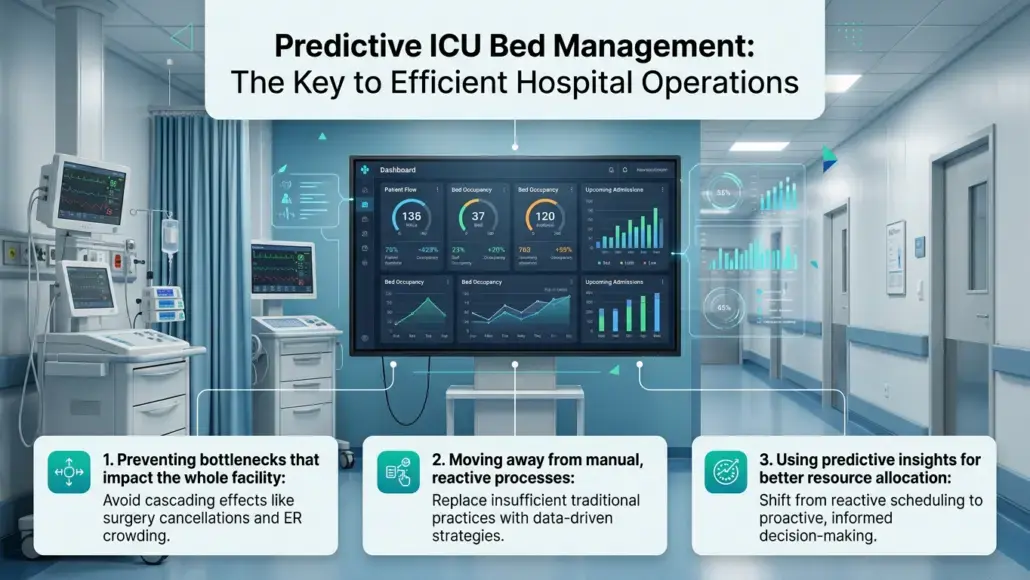

The effective management of intensive care capacity is one of the most pressing operational challenges in modern hospital management. A bottleneck in the ICU can have a cascading effect throughout the entire facility, leading to surgery cancellations, emergency department crowding, and delayed care for critically ill patients. Traditional bed management practices, which are often reactive and based on manual processes, are insufficient for the complexity of the current healthcare environment. Predictive systems represent a fundamental shift toward data-driven, proactive capacity planning, utilizing artificial intelligence and machine learning to forecast demand and optimize patient flow.
By analyzing historical data and real-time inputs, predictive models can anticipate the number of intensive care admissions and discharges with a high degree of accuracy. This foresight allows hospital leadership to make informed decisions about staffing, equipment allocation, and surgical scheduling days in advance. For example, if the system predicts a surge in demand due to an upcoming weather event or a spike in seasonal illnesses, the hospital can proactively open surge beds and adjust its critical care staffing models improving intensive care workforce allocation to ensure that sufficient personnel are available to provide safe and effective care.
The core of this system is its ability to identify the factors that drive patient throughput. By understanding the typical length of stay for different diagnoses and the impact of various clinical interventions, the hospital can more accurately forecast when a patient will be ready for transfer to a lower level of care. This reduces the time that beds sit empty and ensures that the ICU is always available for those who need it most. This level of precision is essential for maximizing the utilization of high-cost hospital resources and improving the overall financial performance of the organization.
Enhancing Patient Flow Through Real-Time Operational Visibility
One of the primary benefits of this technology is the real-time visibility it provides into the current state of the hospital’s capacity. Instead of relying on intermittent updates from different units, administrators have access to a live dashboard that shows bed occupancy, patient acuity, and the status of pending transfers. This “mission control” approach to hospital management allows for the rapid identification and resolution of bottlenecks. If the data shows that several patients in the emergency department are waiting for an ICU bed, the capacity management team can immediately prioritize discharges from the unit to create capacity.
The integration of this visibility with other hospital systems further enhances its effectiveness. When bed management is linked to the surgical scheduling system, the hospital can avoid scheduling complex procedures that require an ICU bed if no capacity is predicted to be available. This reduces the risk of last-minute cancellations, which are frustrating for patients and costly for the organization. By synchronizing the clinical and operational workflows, the hospital can achieve a higher level of efficiency and provide a more seamless experience for its patients.
Predictive systems support better communication between different clinical departments. When everyone is looking at the same data, the decision-making process becomes more transparent and collaborative. The bed management team can work closely with clinicians to identify patients who are ready for discharge and coordinate the necessary resources, such as transport or home care services, to ensure a smooth transition. This team-based approach to throughput coordination is essential for maintaining a high level of patient safety and satisfaction.
Utilizing Machine Learning for Accurate Capacity Forecasting
The success of these predictive tools depends on the quality and sophistication of the underlying analytical models. Machine learning algorithms are particularly well-suited for this task, as they can identify complex patterns in large datasets that are invisible to the human eye. These models can take into account a wide range of variables, including patient demographics, co-morbidities, laboratory results, and even external factors such as local disease prevalence. By continuously learning from new data, the system becomes increasingly accurate over time, providing hospital executives with a reliable tool for long-term planning.
The following elements are necessary for a successful predictive modeling program:
- A resilient data infrastructure that ensures the accuracy, completeness, and timeliness of the information being used.
- Interoperable systems that allow for the seamless exchange of data between the electronic health record and the predictive analytics platform.
- A multidisciplinary team of data scientists, clinicians, and operational leaders to develop, validate, and refine the models.
- A commitment to transparency and ethical data usage to ensure that the models are being used in a way that is fair and beneficial to all patients.
The transition toward more sophisticated forecasting tools represents a significant investment in technology and human expertise. The potential for improved patient outcomes and increased operational efficiency provides a compelling return on investment. By staying ahead of the curve in terms of capacity planning, hospitals can provide a higher standard of care and ensure that they are always prepared to meet the needs of their community.
Improving Clinician Satisfaction by Streamlining Patient Transitions
The stress of managing a crowded ICU can be a significant factor in clinician burnout. When nurses and physicians are constantly pressured to discharge patients prematurely to make room for new admissions, the quality of care and the safety of the patients can be compromised. Predictive bed management alleviates this pressure by providing a more structured and predictable environment. When capacity is managed effectively, clinicians can focus on the complex needs of their patients without being distracted by the logistical challenges of throughput coordination.
The system also provides a valuable tool for coordinating patient care across the entire continuum. By forecasting when patients will be ready for the next level of care, the hospital can ensure that the necessary resources are in place to support their recovery. This includes coordinating with physical therapy, pharmacy, and social work to ensure that all discharge requirements are met. By streamlining these transitions, the hospital can reduce the length of stay and minimize the risk of readmissions, which is essential for improving the overall value of the care being provided.
In addition, the data captured by these tools can be used for ongoing quality improvement. By analyzing the factors that lead to delays in patient flow, management can identify areas for improvement and develop more effective protocols. This data-driven approach to operational excellence ensures that the organization is always learning and evolving to meet the needs of its patients. By prioritizing the efficiency of its processes, the hospital can provide a better experience for both its staff and its patients.
Scaling Predictive Capabilities for Enterprise-Wide Management
As healthcare systems continue to consolidate, the need for enterprise-wide capacity management becomes increasingly important. Predictive systems provide a scalable solution that can be used to coordinate patient flow across multiple hospitals and clinics. By creating a unified view of the entire system’s capacity, management can ensure that resources are being used effectively and that patients are receiving care in the most appropriate location. This system-level approach to capacity oversight is essential for improving the overall efficiency and sustainability of the organization.
The future of capacity management will likely involve even more integration with other hospital systems and external data sources. The use of wearable devices and remote monitoring could allow hospitals to manage patient flow beyond their walls, providing a more comprehensive view of the patient population’s health and resource needs. By embracing these technological advancements, hospitals can create a more resilient and responsive care delivery model that is better equipped to handle the challenges of the future.
Strategic investment in capacity optimization technology allows hospitals to optimize their most critical assets. By reducing wait times and improving patient flow, the organization can increase its patient volume and improve its financial health. More importantly, it ensures that every patient has access to the life-saving care they need when they need it most. This commitment to operational excellence is the hallmark of a high-performing healthcare organization and is essential for providing the best possible care for the community.
Finally, the success of predictive management depends on a culture of data-driven decision-making. Hospital leadership must champion the use of analytics and ensure that the insights generated by the system are used to guide clinical and operational practice. By building a culture that values information and evidence, the hospital can achieve its goals and provide a higher standard of care for its patients.
The ethical considerations of using algorithms to manage hospital capacity must also be addressed. There is a risk that the data used to train the models could contain biases that lead to inequitable outcomes for certain patient populations. Hospitals must ensure that their predictive systems are transparent and that they are regularly audited for fairness and accuracy. This includes involving diverse stakeholders in the development and implementation process and providing clear explanations for the system’s recommendations. By maintaining a focus on equity and ethics, the organization can build trust with its community and provide a fairer and more effective care environment.
In addition, the role of human expertise in the decision-making process remains essential. While the predictive system can provide valuable insights, it cannot replace the clinical judgment of the bed management team and the clinical staff. The system should be viewed as a tool to support, rather than replace, human decision-making. This collaborative approach ensures that the most complex and nuanced factors are taken into account and that the final decisions are always in the best interest of the patients. The commitment to both technological innovation and human expertise is the hallmark of any successful hospital management strategy.
The long-term impact of predictive systems on the healthcare industry is likely to be significant. By improving the efficiency and effectiveness of hospital operations, these systems can help to reduce the overall cost of care and improve patient outcomes. As the technology continues to evolve, the capabilities of throughput coordination will only increase, providing hospitals with even more powerful tools for managing their most critical resources. By embracing these changes, healthcare organizations can position themselves at the forefront of operational innovation and provide the highest level of care for their patients.