













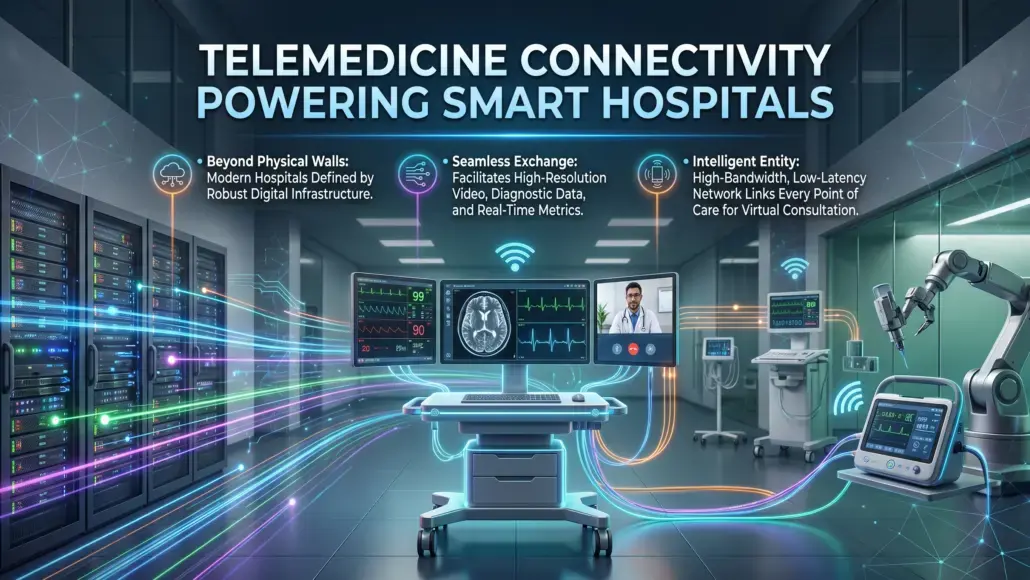

The modern smart hospital is no longer defined by its physical walls but by the strength and reliability of its digital infrastructure. At the core of this transformation is telemedicine connectivity, which facilitates the seamless exchange of high-resolution video, diagnostic data, and real-time patient metrics. For a hospital to truly function as an intelligent entity, every point of care must be linked by a high-bandwidth, low-latency network. This connectivity allows for virtual consultations between specialists located across the globe and primary care physicians at the bedside. It also supports the continuous monitoring of patients in their homes, extending the reach of the hospital’s clinical expertise far beyond the traditional inpatient setting.
Building this infrastructure requires a strategic approach to network design that prioritizes both security and performance. Hospitals must implement robust wireless networks that can support thousands of connected devices, from mobile tablets used by nurses to sophisticated medical equipment that transmits data directly to the electronic health record. The reliability of this connectivity is a critical safety issue; any disruption in the network can lead to delays in patient care or the loss of vital diagnostic information. Therefore, redundant systems and proactive network monitoring are essential components of the smart hospital strategy. By investing in a high-performance digital foundation, healthcare organizations can ensure that they are prepared for the next generation of clinical innovations.
Transforming Patient Experiences through Virtual Care Models
The implementation of advanced communication tools is fundamentally changing the way patients interact with their care teams. Through high-quality telemedicine connectivity, patients can access specialist care without the need for stressful and often expensive travel. This is particularly valuable for individuals with chronic conditions who require frequent follow-up appointments. Virtual visits allow clinicians to assess a patient’s progress in their home environment, providing insights that are often missed during a traditional office visit. This patient-centric approach not only improves the convenience of care but also leads to higher levels of patient engagement and satisfaction.
Furthermore, the use of virtual care models can significantly reduce the risk of hospital-acquired infections. By keeping stable patients at home and managing their care remotely, hospitals can decrease the number of unnecessary visits to the emergency department or the inpatient wards. This also frees up physical capacity for those who truly require intensive, hands-on intervention. The ability to provide continuous, remote oversight gives patients a greater sense of security, knowing that their clinical team is monitoring their status in real-time. This shift toward a more distributed care model is only possible with the support of a reliable and secure connectivity framework that ensures the integrity of every patient interaction.
Operational Efficiency and the Optimization of Clinical Talent
One of the most significant challenges facing hospital management today is the efficient allocation of clinical staff. The shortage of nursing and physician talent requires a new approach to how care is delivered and supervised. Telemedicine connectivity acts as a force multiplier for the existing workforce, allowing a single specialist to consult on multiple cases across different locations in a single afternoon. This reduces the time wasted on travel and administrative tasks, allowing clinicians to focus on direct patient interaction. In the inpatient setting, virtual nursing models are being used to handle routine administrative duties, such as admission assessments and discharge teaching, freeing up the bedside nurses to focus on complex clinical tasks.
This optimization of talent also extends to the management of hospital resources. By analyzing the data generated through remote monitoring systems, administrators can identify trends in patient acuity and adjust staffing levels accordingly. This data-driven approach ensures that the right number of clinicians is available at the right time, improving both patient safety and the bottom line. The ability to offer flexible and remote working options also makes the hospital a more attractive employer for highly skilled professionals. In an increasingly competitive labor market, the technological sophistication of an institution is a key factor in attracting and retaining top-tier clinical talent.
Enhancing Collaborative Care with Integrated Digital Tools
The success of the smart hospital depends on the ability of different clinical teams to work together in a coordinated and informed manner. Telemedicine connectivity provides the platform for this collaboration, enabling the real-time sharing of imaging results, laboratory reports, and clinical notes. Multi-disciplinary teams can conduct virtual rounds, where specialists from different departments contribute their expertise to the patient’s plan of care. This collaborative approach is essential for managing patients with complex, multi-system diseases, ensuring that all aspects of their health are considered. The integration of communication tools directly into the clinical workflow reduces the reliance on pager systems and informal verbal handoffs, which are frequent sources of medical errors.
For these tools to be effective, they must be easy to use and deeply integrated with the existing hospital information systems. A fragmented digital environment where clinicians must switch between multiple platforms to access information is a significant barrier to efficiency. Hospital leaders must prioritize the selection of interoperable solutions that provide a unified view of the patient’s journey. By streamlining the flow of information, organizations can reduce the cognitive load on their staff and create a more responsive and agile care environment. The goal is to create a digital ecosystem where every clinician has the information they need at their fingertips, regardless of their physical location within the hospital network.
Security and Scalability in a Hyper-Connected Healthcare System
As hospitals become increasingly dependent on digital connectivity, the importance of cybersecurity cannot be overstated. Patient health information is highly sensitive, and any breach in security can have devastating consequences for both the patient and the institution. A robust telemedicine connectivity strategy must include multi-layered security protocols, including encryption, multi-factor authentication, and regular security audits. Hospital IT departments must work closely with clinical leadership to ensure that security measures do not impede the clinical workflow. The challenge is to create a system that is both highly secure and highly accessible to authorized users.
Scalability is another key consideration. As new technologies like wearable sensors and AI-driven diagnostic tools are introduced, the demand on the hospital network will continue to grow. A smart hospital must be built with the future in mind, with a connectivity infrastructure that can be easily expanded and upgraded. This requires a commitment to open standards and a flexible architecture that can accommodate a wide range of devices and applications. By taking a proactive approach to security and scalability, hospital leaders can ensure that their digital infrastructure remains a reliable and productive asset for years to come. The transition to a smart hospital is a continuous journey, and a strong foundation in connectivity is the first and most important step.