










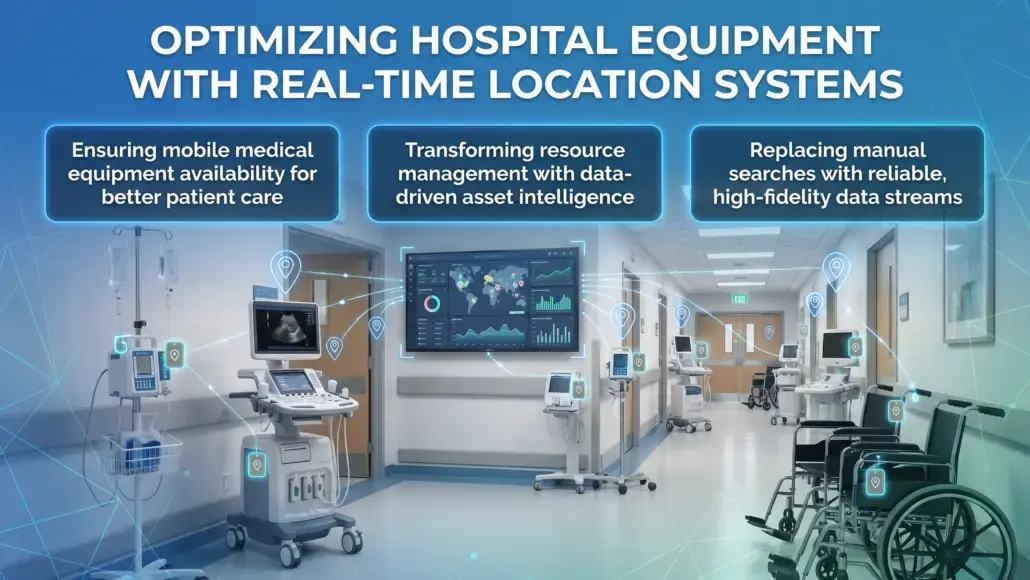

Modern healthcare facilities operate as highly complex ecosystems where the availability of mobile medical equipment directly dictates the quality of patient care. The implementation of real-time location systems (RTLS) provides a foundation for asset intelligence that fundamentally alters how clinical teams interact with their physical resources. Instead of relying on manual audits or anecdotal evidence regarding equipment location, administrators can now rely on high-fidelity data streams. This shift from reactive searching to proactive management is essential in high-acuity environments where minutes saved in locating a ventilator or an infusion pump can result in significant clinical improvements. The technical architecture of these systems typically involves active tags, sensory networks, and centralized software that translates raw location data into actionable insights. By establishing a digital twin of the hospital’s mobile inventory, management teams can identify bottlenecks in equipment flow that were previously invisible to the naked eye. This level of visibility ensures that nurses and technical staff spend less time on non-value-added activities, such as searching for misplaced assets, and more time on direct patient interaction.
The accumulation of historical movement data allows for a granular analysis of how different departments utilize their specific allocations. For instance, if asset intelligence reveals that a particular wing consistently hoards telemetry monitors while another suffers from a deficit, management can adjust procurement strategies without the need for additional capital expenditure. The objective is to maximize the utility of every existing device by ensuring it is where it needs to be at the exact moment a clinician requires it. This form of operational oversight extends beyond simple tracking, it encompasses the orchestration of equipment movement across the entire facility. When clinical staff realize that the system accurately reflects real-world availability, trust in the hospital’s internal logistics grows. This cultural shift is just as important as the technological deployment, as it encourages staff to return equipment to designated zones, knowing that the system will guide them to the next available unit when needed. The data gathered through these sensors provides a continuous loop of feedback that helps in refining the physical layout of storage rooms and clean utility areas to better suit the actual movement patterns of the workforce.
Optimizing Procurement Cycles Through Data-Driven Insights
One of the most significant financial burdens on hospital management is the unnecessary procurement of medical equipment due to perceived shortages. In many cases, these shortages are not the result of a lack of inventory but rather a lack of visibility. By utilizing asset intelligence, hospital leaders can gain a clear understanding of the actual utilization rates across their entire fleet. If the data shows that only sixty percent of a specific equipment class is in use at any given time, even during peak hours, the facility can defer new purchases and instead focus on redistributing existing stock. This analytical approach to capital budgeting allows for more strategic investments in other areas of patient care. additionally, having a centralized repository of usage data helps in negotiating service contracts with manufacturers. When a hospital can prove exactly how many hours a device has been in operation, they can move away from rigid, time-based maintenance schedules toward more flexible, usage-based models.
The relationship between asset intelligence and procurement is cyclical. As more data is gathered, the predictive capabilities of the management software improve, allowing for more accurate forecasting of future needs. During seasonal surges, such as the flu season, the system can predict which types of equipment will experience the highest demand based on previous years’ data. This allows the clinical engineering department to prepare and distribute assets in advance, preventing the frantic search for equipment that often plagues emergency departments. By reducing the reliance on rental equipment during these surges, the hospital can achieve substantial cost savings. The ability to track the entire lifecycle of an asset from procurement to decommissioning ensures that the hospital is always operating with a modern and efficient fleet. This lifecycle management is critical for maintaining compliance with health regulations and ensuring that patient safety is never compromised by the use of outdated or malfunctioning technology.
Enhancing Workflow Automation and Staff Productivity
The daily routine of a hospital nurse is often interrupted by the need to find specific tools for patient care. Studies have shown that a significant portion of a nursing shift can be lost to searching for mobile equipment. Integrating operational visibility into the daily workflow mitigates this issue by providing real-time maps and search functions accessible through mobile devices or centralized stations. When a nurse can instantly see that the nearest bladder scanner is in a specific clean utility room on the fourth floor, the cognitive load associated with equipment retrieval is significantly reduced. This improvement in workflow is not merely a convenience, it is a structural enhancement to the delivery of healthcare services. The reduction in staff frustration leads to higher job satisfaction and lower turnover rates, which are critical metrics for any hospital administration.
Beyond the individual clinician, the clinical engineering team also benefits from this increased visibility. Preventive maintenance becomes much easier to manage when the location of every device is known. Instead of spending hours scouring the hospital for pumps that are due for calibration, technicians can go directly to the equipment’s current coordinates. This efficiency allows the engineering department to maintain a higher compliance rate with less manpower. additionally, the system can be configured to send alerts when an asset enters a restricted area or if it has not been moved for an extended period, suggesting it might be lost or forgotten. These automated triggers allow for a “management by exception” approach, where staff only intervene when the data suggests a deviation from the standard operating procedure. The result is a more streamlined operation where human intervention is reserved for complex decision-making rather than routine monitoring.
Safety and Compliance Benefits of Real-Time Visibility
In the highly regulated environment of a hospital, maintaining strict compliance with safety standards is a non-negotiable requirement. operational visibility plays a pivotal role in this regard by providing a detailed audit trail for every piece of medical equipment. If a specific device is recalled by a manufacturer, the hospital can identify and isolate every unit in the facility within minutes. This rapid response capability is essential for mitigating risks to patient safety. Similarly, during an infection control outbreak, the system can track which pieces of equipment were in proximity to infected patients, allowing for targeted sterilization and preventing the further spread of pathogens. This level of traceability is simply impossible to achieve with manual tracking methods and provides a significant layer of protection for both patients and staff.
also, the data generated by these systems is invaluable during accreditation surveys and inspections. Being able to present detailed reports on equipment utilization, maintenance history, and location history demonstrates a high level of operational control. It shows that the hospital is proactive in managing its resources and committed to maintaining a safe environment. The system can also help in preventing the theft or unauthorized removal of expensive medical devices. By setting up virtual boundaries, or geofences, around the hospital exits, security can be alerted the moment a tagged asset leaves the premises. This deterrent effect, combined with the ability to recover stolen items, provides a clear return on investment. The integration of these safety features into the broader asset management strategy ensures that the hospital’s physical assets are protected as much as its human ones.
Future Perspectives on Intelligent Asset Orchestration
As hospital systems continue to evolve, the role of operational visibility will expand from simple tracking to complex orchestration. The next generation of these systems will likely incorporate machine learning algorithms to automate the redistribution of equipment across multiple facilities within a single healthcare network. Imagine a scenario where the system identifies a projected surge in patient admissions at a rural clinic and automatically triggers the dispatch of additional ventilators from a central warehouse or a neighboring hospital. This level of coordination would represent a significant leap forward in healthcare logistics. The goal is to create a self-healing supply chain where equipment shortages are identified and resolved before they ever impact patient care.
The convergence of operational visibility with other hospital systems, such as the electronic health record (EHR) and the building management system, will create an even more holistic view of the facility’s operations. For example, the system could correlate equipment usage with patient outcomes to identify which types of devices are most effective for specific treatments. It could also adjust the climate control in a storage room based on the number of temperature-sensitive devices currently located there. The possibilities for optimization are vast, and the foundation for all these future innovations is the accurate, real-time data provided by current tracking technologies. Hospital administrators who invest in these systems today are not just solving immediate logistical problems, they are building the infrastructure for the intelligent hospital of the future. The commitment to data-driven management is the hallmark of a forward-thinking healthcare organization that prioritizes both operational efficiency and clinical excellence. By embracing these technological advancements, hospitals can ensure they are well-positioned to meet the challenges of an increasingly complex and demanding healthcare environment. The focus remains steadfast on the ultimate goal: providing the best possible care to every patient, supported by the right equipment at the right time.
The integration of advanced data processing into the hospital environment represents a significant shift toward a more scientific approach to facility management. By establishing a culture that values empirical evidence over anecdotal observations, hospital leaders can ensure that their institutions are capable of meeting the demands of a growing and aging population. The ability to track and analyze the movement of physical assets is just the beginning of a larger journey toward a fully optimized healthcare system. As new technologies continue to emerge, the principles of operational visibility will remain a constant, providing the essential visibility required to manage complex clinical environments with confidence and precision. The commitment to continuous improvement and innovation is what ultimately defines a world-class healthcare organization. By investing in the right tools and strategies today, hospitals can build a legacy of excellence that will benefit patients and clinicians for generations to come. The future of healthcare is bright, and it is powered by the intelligent application of data to every aspect of the clinical operation. Every piece of equipment, every staff member, and every patient is part of a larger ecosystem that thrives on clarity and efficiency. The ongoing success of the institution depends on its ability to adapt and grow in an ever-changing environment, always keeping the needs of the patient at the center of everything it does.