

















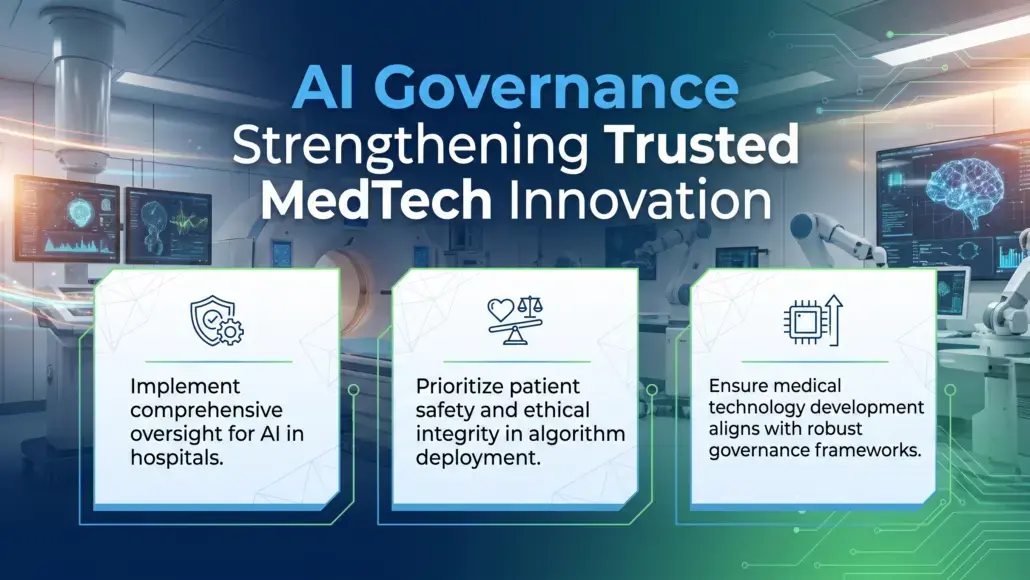

The rapid acceleration of artificial intelligence within the healthcare sector has created an urgent need for comprehensive oversight structures that prioritize patient safety and ethical integrity. As hospitals increasingly rely on machine learning algorithms for everything from diagnostic support to resource management, the importance of robust AI governance cannot be overstated. These frameworks are designed to ensure that the development and deployment of medical technology remain aligned with clinical standards and legal requirements. Without a clear set of guidelines, organizations risk introducing biases or inaccuracies into the care process that could have significant consequences for patient outcomes. A structured approach to governance provides the necessary transparency to build trust among clinicians and patients alike.
Ethical considerations in healthcare AI extend beyond simple accuracy metrics. They involve the careful evaluation of how data is sourced, how algorithms are trained, and how results are communicated to the end-user. For hospital leaders, this means establishing inter-disciplinary committees that include ethicists, clinicians, data scientists, and legal experts. This group is responsible for vetting every new AI tool before it is integrated into the clinical workflow, ensuring that it adheres to the principles of beneficence and non-maleficence. By taking a proactive stance on ethical oversight, hospitals can prevent the unintended consequences of automated decision-making and ensure that technology remains a supportive tool for human clinicians. This commitment to ethics is the foundation of a trusted and sustainable digital healthcare ecosystem.
Navigating Regulatory Compliance and the EU AI Act
The regulatory environment for medical technology is becoming increasingly complex, with new laws specifically targeting the use of artificial intelligence in high-risk sectors like healthcare. The European Union’s AI Act is a prime example of this trend, setting strict requirements for transparency, accountability, and risk management. For hospital administrators, maintaining compliance with these regulations requires a sophisticated AI governance strategy that tracks the lifecycle of every algorithm in use. This includes documenting the training datasets, recording the validation results, and establishing clear lines of responsibility for any issues that may arise. Organizations that fail to implement these controls risk significant legal penalties and damage to their professional reputation.
Furthermore, a well-defined governance framework simplifies the process of obtaining and maintaining certification for medical devices. Regulators are increasingly looking for evidence of continuous monitoring and performance evaluation throughout the lifetime of an AI product. A robust governance system provides this evidence by automatically logging system performance and flagging any deviations from expected behavior. This level of oversight ensures that the hospital remains ahead of the regulatory curve and can quickly adapt to new requirements as they emerge. By treating compliance as a continuous process rather than a one-time event, healthcare organizations can foster a culture of excellence and accountability that is essential for the long-term success of their digital initiatives.
Building Clinical Trust through Transparency and Validation
One of the primary barriers to the widespread adoption of AI in the hospital setting is the skepticism of clinical staff. Many physicians and nurses are wary of “black box” algorithms that provide recommendations without clear justification. To overcome this hurdle, AI governance must focus on providing transparency and clinical validation for every tool deployed. This involves ensuring that clinicians have access to the underlying logic of the AI system and understand the limitations of the data it was trained on. When the clinical team understands how an algorithm arrives at a conclusion, they are more likely to trust its output and incorporate it into their decision-making process.
Continuous validation is also a key component of building trust. An algorithm that performs well in a controlled laboratory setting may behave differently when exposed to the diverse and messy data of a real-world clinical environment. A strong governance framework includes protocols for ongoing performance monitoring and periodic re-validation. This ensures that the AI tool remains accurate as patient demographics change and new clinical practices are introduced. By demonstrating a commitment to rigorous validation, hospital management can reassure their staff that the technology is safe and effective. This trust is necessary for the successful integration of AI into the collaborative care team, where humans and machines work together to improve patient health.
Managing Risk and Liability in Automated Decision-Making
The use of artificial intelligence in critical care environments introduces new questions regarding liability and risk management. If an algorithm fails to identify a critical finding or provides an incorrect recommendation, who is responsible for the resulting harm? A comprehensive AI governance strategy must address these questions directly by establishing clear protocols for human oversight and intervention. The goal is to ensure that a human clinician always remains in the loop, especially for high-stakes decisions. This “human-in-the-loop” model is a core principle of responsible AI deployment, ensuring that the ultimate responsibility for patient care remains with the trained professional.
Risk management also involves the identification and mitigation of algorithmic bias. If a dataset used to train an AI model is not representative of the hospital’s patient population, the resulting algorithm may perform poorly for certain groups. A robust governance framework requires a thorough analysis of training data for potential biases and the implementation of correction strategies. This is not just a technical requirement but a moral one, as hospitals have a fundamental duty to provide equitable care to all patients. By identifying and addressing these risks early in the procurement process, healthcare organizations can minimize their exposure to liability and ensure that their technological investments contribute to better, more inclusive care for everyone.
Fostering a Culture of Continuous Improvement and Innovation
Ultimately, the goal of AI governance is not just to restrict the use of technology but to enable responsible innovation. By providing a clear and predictable framework for oversight, hospitals can encourage their staff to experiment with new tools and applications. This culture of innovation is essential for staying competitive in a rapidly changing healthcare market. When clinicians know that there is a robust system in place to evaluate and manage risk, they feel more empowered to explore the potential of AI to solve long-standing clinical and operational challenges. The governance framework acts as a bridge between the laboratory and the bedside, facilitating the safe and effective transition of new technologies into clinical practice.
As the field of artificial intelligence continues to evolve, the governance frameworks that support it must also remain flexible and adaptive. Hospital leaders must be prepared to update their policies and procedures in response to new research, technological breakthroughs, and regulatory changes. This requires a commitment to continuous learning and a willingness to engage with the broader medical and technical communities. By positioning themselves as leaders in responsible AI governance, hospitals can attract top-tier talent and forge powerful partnerships with technology innovators. The future of healthcare is undeniably digital, and a strong foundation in governance is the key to ensuring that this future is safe, ethical, and focused on the needs of the patient.