











The interval between a patient’s initial presentation and the delivery of a definitive diagnosis is one of the most critical windows in clinical medicine. Historically, this process has been delayed by the need to transport samples to a centralized laboratory and wait for the results to be processed and returned. This lag can lead to delayed treatment and inefficient use of hospital resources. However, the emergence of sophisticated diagnostic devices that can be used at the bedside is changing this dynamic. It is increasingly evident that point-of-care testing transforms the speed and accuracy with which clinical decisions are made.
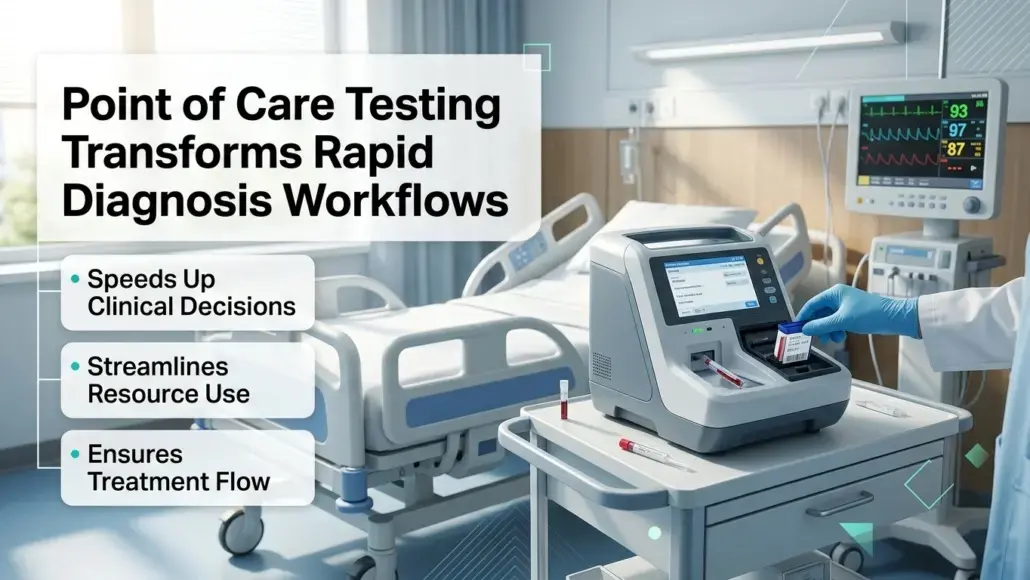
Point of care testing refers to medical testing performed near the patient at the time of care. This can include everything from simple blood glucose monitors to complex molecular diagnostics for infectious diseases. By eliminating the logistical hurdles associated with traditional laboratory testing, these tools allow for immediate results that can be used to guide therapy in real-time. This capability is vital in emergency departments and intensive care units where a rapid diagnosis can be the difference between a routine recovery and a serious complication.
Streamlining Clinical Diagnostics and Workflow
The integration of rapid diagnostics into the clinical workflow requires a rethinking of how patient care is delivered. Instead of waiting hours for a lab report, a physician can now obtain a full blood panel during the initial consultation. This allows for the immediate initiation of targeted therapy, which is a major component of modern patient care. The evidence shows that point-of-care testing transforms the diagnostic process from a series of disjointed steps into a continuous and streamlined experience for both the patient and the provider.
The technical evolution of these diagnostic devices has been remarkable. Modern handheld units are now capable of performing high-sensitivity assays that were previously only possible in a full-scale clinical laboratory. These devices often utilize microfluidic technology to provide lab-quality results from a single drop of blood. As healthcare technology continues to advance, we see the development of even more versatile platforms that can detect multiple biomarkers simultaneously, further enhancing the utility of testing at the site of care.
Operational Efficiency and Resource Management
For healthcare systems, the primary benefit of decentralized testing is the improvement in operational efficiency. When results are available immediately, patients can be triaged more effectively, reducing the length of stay in the emergency department. This optimization of the patient flow is essential for managing high volumes of patients. In this context, point-of-care testing transforms the economic profile of the diagnostic department by reducing the indirect costs associated with delay and clinical uncertainty.
The impact on public health is significant, especially in the management of infectious diseases. Rapid diagnostics at the point of care allow for the immediate identification and isolation of patients with contagious conditions. This fast response is a key strategy for preventing outbreaks within healthcare facilities. By providing real-time data on disease prevalence, these tools also help public health authorities to monitor trends and allocate resources more effectively.
Access Expansion and Digital Integration
Clinical diagnostics are also becoming more accessible in settings such as pharmacies, workplaces, and remote clinics. This expansion is a major step toward a more patient-centered health system. When a patient can receive a diagnostic test and a prescription in a single visit to a local pharmacy, the barriers to care are significantly reduced. This convenience factor is a powerful driver for the adoption of new testing technologies by consumers who are looking for faster health services.
The data generated by point of care devices can be integrated into the patient’s electronic health record, ensuring that the results are available to the entire care team. This digital integration is essential for maintaining care continuity. Modern healthcare technology platforms are designed to synchronize data automatically, reducing the risk of transcription errors and ensuring that the patient’s diagnostic history is complete and accurate.
Patient Experience and Future Perspectives
Quality control and regulatory compliance remain important considerations for the use of testing at the bedside. Healthcare organizations must implement rigorous training programs and standardized protocols to ensure results are reliable. Regular calibration of diagnostic devices is necessary to maintain clinical standards. While the decentralized nature of this testing can make oversight more challenging, the use of connected systems allows for the centralized monitoring of performance across multiple sites.
The patient experience is profoundly improved when the diagnostic process is accelerated. Being able to receive a diagnosis and a treatment plan in a single session reduces the psychological burden of waiting. This immediate feedback also strengthens the patient-provider relationship, as it demonstrates a commitment to efficient and responsive care. The way point-of-care testing transforms the emotional journey of the patient is as important as the clinical outcomes themselves.
The future of rapid diagnostics will likely involve the integration of artificial intelligence to assist in the interpretation of results. AI algorithms can help to identify patterns in diagnostic data that may be too subtle for the human eye, providing even greater precision. We may also see the development of wearable diagnostic devices that can provide continuous monitoring of key biomarkers. This ongoing innovation is set to redefine the boundaries of what is possible in clinical diagnostics.