











The evolution of medical data from isolated, tabular records to a richly interconnected web of knowledge represents a fundamental advancement in the field of clinical informatics. By mapping the complex relationships between diseases, treatments, patients, and biological markers, the medical community is moving toward a more nuanced and contextual understanding of human health. Unlike traditional databases that store information in rigid rows and columns, modern graph-based structures allow for the discovery of non-obvious patterns and correlations that are essential for high-level clinical decision-making. Healthcare knowledge graphs improving clinical intelligence is the primary engine of this transformation, providing a sophisticated layer of cognitive support that empowers clinicians with deeper, data-driven insights. This shift ensures that the massive volume of modern medical information is not just stored, but is actively utilized to provide a more accurate, personalized, and efficient standard of care for every patient.
The Shift from Tabular Data to Connected Knowledge
In the traditional medical model, clinical data was often trapped in fragmented systems, with lab results, imaging reports, and physician notes stored in separate, often incompatible, formats. This fragmentation created a “knowledge gap,” where clinicians were forced to manually piece together a patient’s medical history from a variety of disparate sources. Today, the integration of healthcare knowledge graphs improving clinical intelligence addresses this challenge by creating a unified, relational map of all clinical information. Instead of a static record, a knowledge graph is a dynamic network where every data point is an “entity” connected to others through meaningful “relationships.” For example, a specific medication entity can be linked to a disease entity it treats, a patient entity who is taking it, and a genetic marker entity that might influence its effectiveness. This interconnected view provides a level of context that is impossible to achieve with a traditional database.
Furthermore, knowledge graphs allow for the integration of unstructured data such as clinical narratives and research papers into the structured data environment. By using natural language processing to extract entities and relationships from free-text notes, healthcare systems can build a more comprehensive and accurate “clinical narrative” for every patient. This holistic perspective is vital for managing complex cases where multiple chronic conditions and treatments are involved. By uncovering the hidden connections between different aspects of a patient’s health, knowledge graphs enable a more precise and effective approach to care. This move toward connected healthcare data is the defining characteristic of modern health informatics, ensuring that the right information reaches the right clinician at exactly the right time, fully contextualized and ready for action.
The transition to graph-based data also facilitates a more intuitive way for clinicians to interact with information. Instead of searching for isolated keywords, they can explore the “contextual neighborhood” of a patient’s condition. They can see how a new symptom relates to a past treatment or a family history of illness, providing a deeper understanding of the patient’s current status. This relational view is essential for identifying rare conditions or complex comorbidities that might be overlooked in a fragmented record. By making the “meaning” of the data visible, knowledge graphs are helping to bridge the gap between information and insight. The technology serves as a digital assistant that understands the complex language of medicine, allowing the human expert to focus on the high-level reasoning and empathy that are central to healing.
Enhancing Healthcare Decision Support with Contextual Insights
The primary benefit of a graph-based knowledge architecture is the level of “reasoning” it provides for clinical decision support systems. Because the graph understands the relationships between different medical concepts, it can provide clinicians with more sophisticated and relevant suggestions. For instance, instead of a simple alert for a potential drug-drug interaction, a knowledge graph-powered system can explain why the interaction is a risk for a specific patient based on their genetic profile, their current comorbidities, and the latest clinical research. This level of “explainable intelligence” is essential for building trust between the clinician and the technology, as it provides a transparent and data-driven rationale for every suggestion. Healthcare knowledge graphs improving clinical intelligence is thus a vital tool for reducing diagnostic error and for optimizing therapeutic choices in a rapidly changing medical landscape.
Moreover, knowledge graphs are enabling a more proactive and predictive approach to clinical management. By analyzing the patterns of relationships across thousands of patient records, these systems can identify the “signatures” of health events before they occur. For example, a specific sequence of symptoms, lab values, and social factors might be identified as a precursor to a hospital readmission for heart failure. When the system identifies this pattern in a real-time graph of a current patient, it can trigger a proactive alert for the clinical team, allowing for an early intervention. This predictive capability is a significant advancement in clinical intelligence, ensuring that the hospital remains a step ahead of potential risks. By providing a “birds-eye view” of both the individual patient and the broader clinical environment, knowledge graphs are helping to create a safer and more responsive healthcare system for everyone.
The use of graphs also allows for the discovery of “unknown unknowns” relationships that were not previously hypothesized but are revealed by the data. This “exploratory” intelligence is essential for advancing our understanding of complex diseases like Alzheimer’s or cancer, where multiple biological and environmental factors are at play. By uncovering these hidden patterns, knowledge graphs are providing researchers with new leads for therapeutic development and diagnostic improvement. This synergy between clinical care and scientific discovery is a hallmark of the modern medical center, where every bit of data is a potential source of new knowledge. The graph becomes a living laboratory, where the clinical and research narratives are woven together into a single, powerful map of the human condition.
Semantic Interoperability and the Unified Medical Language
Achieving full data connectivity requires a common language that all systems can understand, and knowledge graphs are the key to this “semantic interoperability.” By mapping disparate terminologies and codes such as ICD-10, SNOMED CT, and LOINC to a unified, graph-based ontology, healthcare organizations can ensure that data from different sources is accurately integrated and interpreted. This means that a “diagnosis” in one system is recognized as the same concept in another, even if the underlying codes are different. This level of linguistic harmony is a cornerstone of healthcare knowledge graphs improving clinical intelligence, as it allows for the seamless flow of information across the entire healthcare ecosystem. When data is semantically enriched, its clinical value increases exponentially, as it can be easily shared and utilized for both individual care and large-scale population health research.
This unified language also allows for a more effective “knowledge discovery” process. Researchers can use graph-based queries to search for complex patterns across billions of data points, identifying new relationships between genes, diseases, and drugs that were previously hidden in the noise. For example, a graph query might reveal that a drug originally designed for one condition is also effective for another, based on shared molecular pathways identified in the graph. This “drug repurposing” is a prime example of the power of clinical intelligence, providing a faster and more cost-effective way to develop new treatments for rare and complex diseases. By providing a structured and searchable map of the world’s medical knowledge, graphs are accelerating the pace of scientific progress and ensuring that every clinical encounter contributes to a deeper understanding of human biology. The graph is not just a storage tool it is a discovery engine for the future of medicine.
The impact of semantic interoperability also reaches the patient directly. Through graph-powered portals, patients can see a more coherent and understandable view of their own medical history. They can see how their various symptoms and treatments are connected, providing them with a deeper sense of agency and understanding. This transparency is essential for building a more patient-centered healthcare system, where the individual is an active partner in their own care. By making the “meaning” of the medical record accessible to everyone, knowledge graphs are helping to democratize medical knowledge and to foster a more inclusive and supportive clinical environment. The goal is a world where information is not a barrier to care, but a catalyst for healing and empowerment for all.
Real-Time Data Integration and Clinical Context
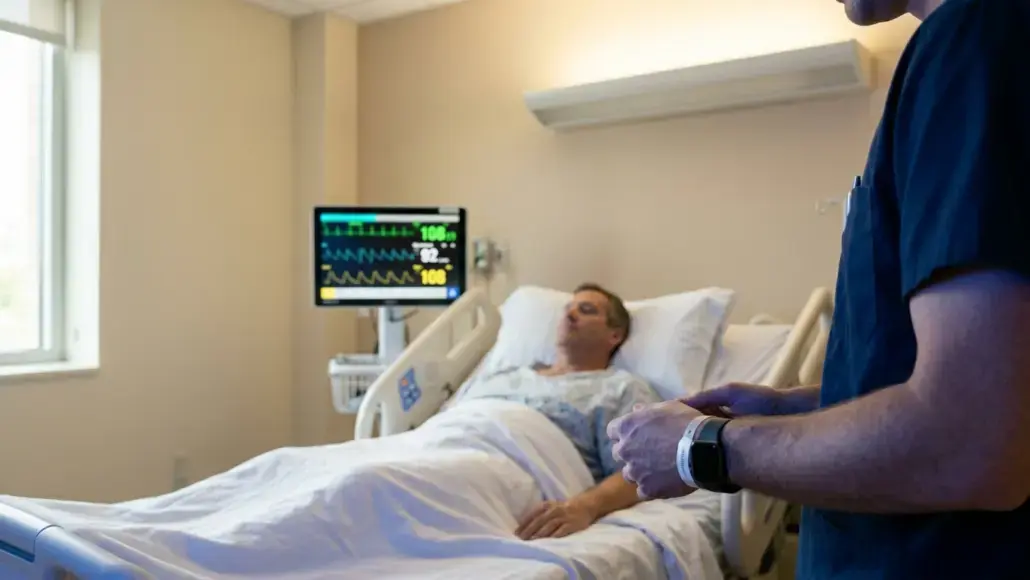
In the high-pressure environment of an emergency department or an intensive care unit, the ability to access and synthesize information in real-time is a matter of life and death. Healthcare knowledge graphs improving clinical intelligence are providing this real-time capability by acting as a “live” layer on top of traditional clinical systems. As new data is entered into the EHR such as a fresh lab result or a vitals update the knowledge graph is instantly updated, and its relationships are re-evaluated. This ensures that the clinician always has access to the most current and relevant clinical context, without having to manually search through multiple screens or tabs. By automating the integration of high-velocity data, knowledge graphs allow the clinical team to remain focused on the patient, knowing that the “intelligence layer” is constantly monitoring for critical changes and providing the necessary support.
Furthermore, this real-time context allows for a more “personalized” clinical experience. Because the graph understands the specific history and circumstances of the patient, it can tailor its suggestions to their unique needs. For example, a recommendation for a particular screening or treatment might be adjusted based on the patient’s recent travel history, their social support network, or their personal health goals all of which are nodes in the patient’s personal knowledge graph. This level of sensitivity is essential for the move toward “precision medicine,” where the goal is to provide the right care for the right person at exactly the right moment. By making the “human story” a central part of the digital narrative, knowledge graphs are helping to create a more empathetic and responsive healthcare system. The technology serves as a bridge, connecting the clinical evidence with the unique life of the individual.
This real-time capability also facilitates a more effective “team-based” approach to care. When every member of the clinical team is viewing the same real-time, relational map of the patient’s health, the risk of communication errors decreases significantly. Every specialist, nurse, and therapist is working from the same “clinical truth,” fully aware of how their interventions relate to the rest of the care plan. This level of coordination is vital for managing patients with complex needs who require a multidisciplinary approach. By providing a unified and dynamic view of the patient, knowledge graphs are ensuring that the healthcare system is more than just a collection of specialists it is a single, cohesive team dedicated to the patient’s recovery. This is the true impact of clinical intelligence: a system that is as unified and connected as the biology it aims to heal.
Future Horizons: The AI and Graph Synergy
Looking toward the future, the synergy between knowledge graphs and large language models (LLMs) will lead to a new era of “conversational clinical intelligence.” In this future, a clinician could simply ask a natural language question such as “What is the best treatment path for this patient given their recent lab trends and history of heart disease?” and the system would provide a detailed, graph-backed answer. The graph provides the “source of truth” and the clinical context, while the LLM provide the intuitive interface and the ability to summarize complex information. This partnership is the ultimate expression of healthcare knowledge graphs improving clinical intelligence, moving the technology from a background analytical tool to a proactive and conversational clinical partner. This will significantly reduce the time spent on administrative tasks and will provide a new level of support for training the next generation of medical professionals.
Moreover, we are moving toward a state of “global healthcare knowledge graphs,” where the clinical insights from thousands of institutions are integrated into a single, federated network. This would allow a clinician in a small rural clinic to benefit from the collective intelligence of the world’s leading research centers, ensuring that every patient receives the best possible care regardless of their location. This global connectivity is a vital part of the future of health informatics, as it ensures that the pursuit of health is a truly collaborative and global endeavor. By breaking down the geographic and institutional silos of the past, we are creating a more resilient and equitable healthcare system for all. The graph is the digital thread that binds the medical community together in its mission to heal. As we continue to build and refine these systems, the boundaries of what is possible in clinical intelligence will continue to expand, leading to a world where knowledge is as ubiquitous as care itself.
The ethical dimension of this synergy also cannot be ignored. As AI becomes more integrated with knowledge graphs, we must ensure that these systems are designed with clear principles of fairness, transparency, and accountability. The “explainability” provided by the graph is essential for ensuring that AI-driven decisions are not “black boxes” but are based on a sound and provable clinical rationale. By maintaining a strong human-in-the-loop oversight, the medical community can ensure that technology remains a force for good. The goal is to create a healthcare system that is as ethical as it is intelligent, providing every patient with the benefit of the best that modern science has to offer within a secure and supportive framework. This is the future we are building: a world where knowledge is shared, care is connected, and every patient’s story is respected and understood.
Conclusion: Building a Cognitive Infrastructure for Medicine
The ongoing journey of healthcare knowledge graphs improving clinical intelligence is a testament to the power of connection and the pursuit of a more intelligent and coordinated medical system. We have moved from a time of fragmented, tabular data to an era of rich, relational knowledge. By prioritizing connectivity, context, and semantic interoperability, healthcare organizations are ensuring that their clinical decision-making processes are as sophisticated as the science they support. The knowledge graph is no longer just a technical tool it is a fundamental part of the clinical infrastructure, providing the cognitive support that allows the human team to do their best work. This partnership between the human healer and the intelligent graph is saving lives, reducing error, and ensuring that every patient receives the benefit of the world’s collective medical knowledge.
Ultimately, the success of the knowledge graph will be measured by its ability to fade into the background, providing a seamless and supportive environment where the right clinical insights are delivered effortlessly. This is the ultimate goal of all our technical and administrative efforts. By investing in the highest levels of data integration and professional standards, we are safeguarding the future of healthcare, ensuring that the healing process is supported by the best that modern science and technology have to offer. This is the promise of healthcare knowledge graphs, and it is a promise we are fulfilling every day, for every patient and every provider. The connected future is here, and it is a future we are building together, one node and one relationship at a time. This is how we map the future of clinical excellence and ensure that every clinical interaction is informed by the totality of medical knowledge.