










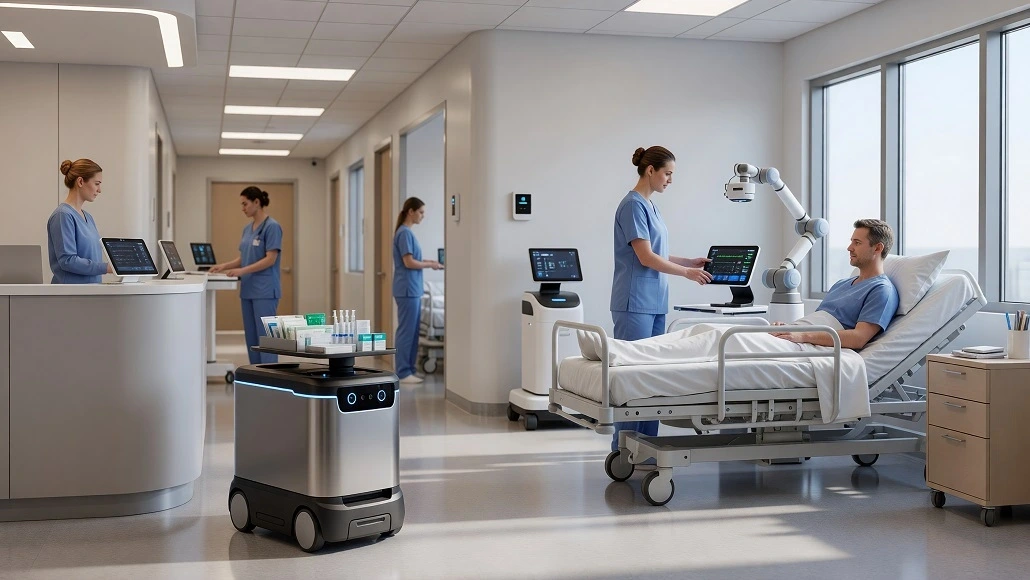
The modern healthcare landscape is currently undergoing a silent but profound transformation as mechanical precision begins to merge with the traditional bedside manner of clinical practice. Within the bustling corridors of contemporary medical centers, the integration of specialized machinery is no longer a futuristic concept but a present-day reality that is fundamentally altering how care is administered. When examining how robots patient care workflows hospitals are functioning today, it becomes clear that the primary objective is not the replacement of human touch but rather the augmentation of human capability. By delegating repetitive, strenuous, and high-frequency tasks to autonomous systems, hospitals are finding new ways to reclaim the time of their most valuable assets: the nurses and physicians who provide the emotional and clinical core of patient recovery. This shift is essential for creating a sustainable healthcare model that can meet the demands of an aging population and a growing global health burden.
The Evolution of Hospital Workflow Efficiency Through Automation
The introduction of hospital robots has historically been viewed through a lens of skepticism, yet the empirical evidence regarding hospital workflow efficiency suggests a drastic improvement in operational throughput. Traditional workflows often see highly trained nursing staff spending upwards of thirty percent of their shifts on non-clinical tasks such as fetching supplies, transporting laboratory samples, or documenting routine vitals. Through patient care automation, these logistical burdens are shifted to mobile robotic platforms. These units navigate hospital floors with sophisticated lidar and ultrasonic sensors, ensuring that the movement of materials remains constant without requiring human intervention. This shift allows clinical teams to remain at the bedside, focusing on the nuanced needs of those under their care rather than navigating service elevators and supply closets.
Implementing Robotic Healthcare Systems for Direct Monitoring
As we delve deeper into specific applications, robotic healthcare systems are increasingly being utilized for constant patient surveillance and basic diagnostic support. In critical care environments, where seconds can define outcomes, automated monitoring stations can track physiological changes with a level of granularity that exceeds intermittent human checks. These systems use advanced computer vision and sensor arrays to detect subtle shifts in patient posture or respiration patterns that might precede a fall or a respiratory distress event. By integrating these smart hospital solutions into the daily routine, facilities can create a safety net that operates in the background, alerting human staff only when specific thresholds are met. This selective alerting reduces alarm fatigue, a significant concern in modern medicine, ensuring that when a professional is called, the situation truly demands their expert attention.
Enhancing the Patient Experience with Supportive Robotics
The psychological impact of robotics in a clinical setting is a critical component of successful implementation. While one might assume that patients would find mechanical assistance cold or distancing, the reality is often the opposite. When robots patient care workflows hospitals integrate these tools effectively, patients often feel a sense of continuous support. For instance, telepresence robots allow specialists from across the globe to “walk” into a room and engage with a patient in real-time, providing expert consultations that would otherwise require days of travel. This immediate access to high-level expertise improves the perceived quality of care and fosters a sense of security among patients and their families. Furthermore, robotic assistance in physical therapy such as powered exoskeletons enables patients to begin mobilization earlier in their recovery process, which is a known factor in reducing hospital stays and preventing secondary complications like deep vein thrombosis.
In addition to physical rehabilitation, social robots are being trialed in pediatric and geriatric wards to provide emotional support and cognitive stimulation. For elderly patients suffering from dementia or isolation, these interactive machines can provide reminders for medication, facilitate video calls with family, and even engage in simple games that promote mental acuity. In pediatric settings, robots can act as playmates or procedural assistants, distracting children during stressful events like vaccinations or blood draws. By reducing the overall anxiety of the hospital environment, these systems contribute to a more holistic healing process that addresses the patient’s emotional well-being as much as their physical symptoms. This evolution toward patient-centered robotics demonstrates that technology, when applied with empathy, can significantly enhance the humanity of the clinical experience.
Case Studies in Workflow Optimization and Resource Allocation
Several leading medical institutions have already begun to publish data on the long-term impacts of their robotic investments. In one notable example, a large metropolitan hospital reported a twenty-percent reduction in average patient wait times for medication after implementing an autonomous delivery fleet. By analyzing the traffic patterns of these robots, administrators were able to identify “dead zones” in the facility where communication was slow or where physical barriers impeded movement. This led to a redesign of several nursing stations and supply hubs, creating a more circular and efficient flow of both people and materials. These real-world applications show that the value of robots patient care workflows hospitals is not just in the tasks they perform but in the operational data they provide, which can be used to continuously improve the facility’s performance.
Another case study focused on the use of robotic monitoring systems in post-operative recovery units. By providing continuous, non-invasive surveillance of vital signs, the system was able to alert the clinical team to potential complications such as post-surgical hemorrhage or respiratory depression up to thirty minutes earlier than traditional intermittent checks. This early warning window is critical for improving survival rates and reducing the intensity of interventions required to stabilize the patient. The economic benefit of such a system is clear: by preventing a single “code blue” event or a transfer back to the intensive care unit, a hospital can save thousands of dollars in emergency care costs. More importantly, the clinical benefit is immeasurable, as it directly contributes to a safer and more predictable recovery journey for the patient.
The Strategic Integration of Smart Hospital Solutions
The transition toward becoming a truly smart hospital requires more than just purchasing individual units; it demands a holistic redesign of the facility’s digital and physical architecture. Healthcare robotics must be able to communicate seamlessly with electronic health records and building management systems. When a robot is tasked with delivering medication, it should automatically update the inventory log and notify the receiving nurse’s handheld device upon arrival. This level of interconnectivity ensures that the data generated by these machines is utilized to further refine workflows over time. Analytical engines can process thousands of delivery cycles to identify bottlenecks in hospital corridors or suggest adjustments to staffing levels based on real-time demand. This data-driven approach transforms the hospital from a reactive environment into a proactive ecosystem capable of anticipating needs before they become crises.
Overcoming Challenges in Healthcare Robotics Adoption
Despite the clear benefits, the path to widespread adoption of robots patient care workflows hospitals is not without its hurdles. The initial capital investment required for high-end robotic healthcare systems remains a significant barrier for many public and community-funded institutions. Beyond the financial considerations, there is the essential task of staff training and cultural integration. Medical professionals must learn to trust these autonomous partners and understand the limitations of the technology. This trust is not built overnight but through consistent performance and clear demonstrations of safety and efficacy. There is also the critical issue of cybersecurity; as hospitals become more reliant on networked machines, the protection of patient data and the integrity of robotic control systems become paramount. Ensuring that these systems are resilient against digital threats is just as important as ensuring they are physically safe to operate around vulnerable patients.
Implementation Strategies and Overcoming Cultural Resistance
The widespread adoption of robots patient care workflows hospitals requires more than just technical deployment; it necessitates a cultural shift within the healthcare workforce. Resistance to new technology often stems from a fear of obsolescence or a lack of understanding regarding the system’s benefits. To address this, hospitals must involve clinical staff in the selection and design process, ensuring that the technology addresses their specific pain points. Training programs should focus on the collaborative nature of the technology, highlighting how it serves to augment rather than replace the human caregiver. When nurses see that a robot can reliably handle thirty percent of their non-clinical tasks, the initial skepticism often gives way to a sense of relief and professional empowerment.
Furthermore, leadership plays a pivotal role in this transition. Administrators must articulate a clear vision for how robotics will enhance the hospital’s mission and improve the quality of life for both staff and patients. This involves transparent communication regarding the timeline of implementation, the expected impact on job descriptions, and the resources available for ongoing support. By fostering an environment of continuous learning and open dialogue, healthcare institutions can transform potential resistance into a shared commitment to innovation. The success of these systems is ultimately measured by how well they are integrated into the social and professional fabric of the hospital, ensuring that technology serves as a bridge rather than a barrier to effective care.
The Economic Case for Integrated Hospital Robotics
From a financial perspective, the integration of robotic healthcare systems is increasingly seen as a sound investment rather than a luxury expense. While the upfront costs can be substantial, the long-term savings associated with increased operational efficiency, reduced workplace injuries, and shorter patient stays are significant. By automating material transport and basic monitoring, hospitals can optimize their labor costs and focus their human resources on high-value clinical activities. Furthermore, the data generated by these smart hospital solutions allows for more precise resource allocation and predictive maintenance, further reducing operational overhead and ensuring that the facility operates at peak capacity.
In addition to direct cost savings, the presence of advanced robotics can serve as a powerful differentiator in a competitive healthcare market. Patients are increasingly looking for facilities that utilize the latest technology to ensure their safety and comfort. A hospital that can demonstrate a commitment to innovation through the use of robotic systems is often perceived as providing a higher standard of care, which can lead to increased patient volumes and improved institutional reputation. This halo effect can attract top-tier medical talent and secure philanthropic support, further strengthening the hospital’s financial and clinical foundation.
Future Perspectives on Autonomous Clinical Support
Looking toward the horizon, the role of hospital robots is set to expand from logistics and monitoring into more complex clinical interventions. We are beginning to see the emergence of robotic systems capable of performing blood draws with higher first-stick accuracy than human practitioners, particularly in difficult-to-vein patients. Others are being designed to assist with patient hygiene and repositioning, tasks that are physically demanding for staff and often contribute to workplace injuries. As the technology matures, the synergy between human intuition and robotic precision will likely define the next era of medicine. The ultimate goal remains constant: creating an environment where the technology works so seamlessly in the background that the patient feels more cared for by the humans at their side, not less.
As we look even further ahead, the integration of nanotechnology and miniature robotics could allow for internal diagnostic and therapeutic interventions that were previously thought impossible. Imagine a swarm of micro-robots capable of repairing damaged tissues or delivering targeted chemotherapy directly to a tumor, all while being monitored and guided by a central hospital AI. While these concepts are still in the early stages of of innovation in robots patient care workflows hospitals suggests that the boundaries of what is possible are constantly shifting. By remaining at the forefront of this technological wave, medical facilities can ensure that they are prepared to meet the needs of a changing world with agility, compassion, and precision.
Conclusion: The Enduring Importance of the Human Element
In conclusion, the integration of robotics into patient care workflows is a transformative development that promises to reshape the landscape of modern medicine. By delegating routine and physically taxing tasks to autonomous systems, we are freeing healthcare professionals to engage in the deeply human work that brought them to the profession in the first place. The success of this transition depends on our ability to balance technical innovation with ethical considerations, ensuring that technology remains a tool for healing rather than an end in itself. As we move forward, the most successful hospitals will be those that embrace the synergy of human and machine, creating a future where the highest standards of clinical excellence are met with the greatest levels of empathy and care.