












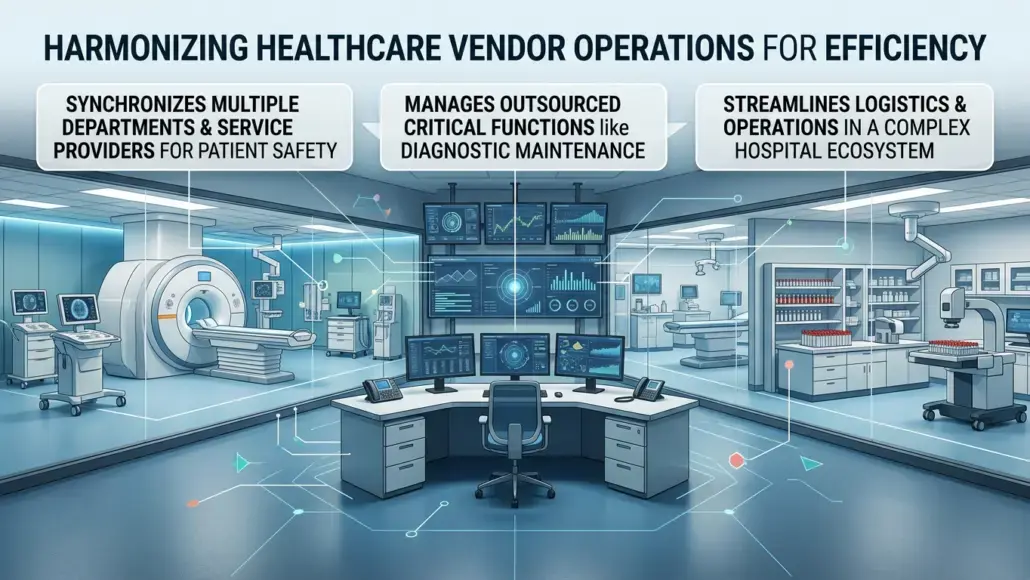

The modern hospital is a complex ecosystem where dozens of internal departments and external service providers must work in perfect harmony to ensure patient safety and operational efficiency. As hospitals increasingly outsource critical functions, from diagnostic imaging maintenance to complex laboratory logistics, the challenge of coordinating these diverse entities becomes more acute. To manage this complexity, healthcare leaders are adopting a centralized model of service management to act as the primary hub for all outsourced activities. This approach ensures that every vendor, regardless of their specific function, is aligned with the hospital’s overarching clinical priorities and that their work is integrated into the daily departmental workflows.
A centralized management model provides a single point of accountability for the hospital, reducing the administrative burden on clinical staff. Instead of nursing managers having to coordinate with multiple different vendors for equipment repairs or supply deliveries, they can interact with a dedicated service management team. This team is responsible for monitoring vendor performance, scheduling maintenance to minimize clinical disruption, and ensuring that all providers are adhering to the hospital’s safety protocols. This structural change allows clinical staff to focus more on their primary mission: providing high-quality care to patients. It also ensures that the hospital’s operational support is as reliable and predictable as its medical teams.
Furthermore, the coordination of these services allows for the identification of overlaps and synergies between different vendors. In a fragmented environment, it is common for two different providers to be performing similar tasks in isolation, leading to wasted resources and potential confusion. For example, a hospital’s IT vendor and its medical device maintenance partner might both be working on the same connected monitoring system without communicating with each other. By using an integrated service management framework, the hospital can facilitate better collaboration between these partners, ensuring that their efforts are complementary rather than duplicative. This holistic view of the service environment is essential for driving efficiency and for maintaining a stable clinical environment.
Enhancing Patient Care Through Seamless Workflow Integration
The ultimate measure of success for any hospital service is its impact on the patient journey. Every outsourced function, no matter how technical or administrative, must ultimately support the goal of better health outcomes. Service management ensures that external partners are not just providing a service “to” the hospital but are working “within” the clinical workflows of the institution. This means that a vendor’s delivery schedules, maintenance windows, and reporting processes must be designed around the needs of the patients and the medical staff. For instance, a pharmacy logistics provider must ensure that critical medications are delivered in a way that aligns with the hospital’s medication administration schedules.
Workflow integration requires a deep understanding of the hospital’s clinical environment and the unique challenges faced by its staff. The service management team acts as the bridge between the hospital’s medical culture and the vendor’s operational culture. They help vendors understand the clinical context of their work, ensuring that they prioritize the right tasks at the right times. This integration is particularly important in high-pressure areas like the operating room or the emergency department, where any delay or error can have immediate consequences. By embedding external partners into the hospital’s daily routines, administrators can create a more cohesive and responsive care environment.
To achieve this seamless integration, hospitals should focus on several key areas of coordination:
- Establishing a centralized digital platform for reporting service issues and tracking vendor response times in real-time.
- Integrating vendor schedules with the hospital’s master clinical calendar to prevent maintenance from occurring during peak patient volumes.
- Ensuring that all external providers have a clear understanding of the hospital’s emergency protocols and their specific roles during a crisis.
- Creating cross-functional teams that include both hospital staff and vendor representatives to address complex operational challenges.
- Regularly reviewing the “end-to-end” patient experience to identify areas where vendor coordination could be improved to reduce wait times or improve comfort.
By focusing on these practical details, the hospital ensures that its outsourcing strategy is a true contributor to clinical excellence. The data collected from these integrated workflows provides a clear record of how well the hospital’s partners are supporting its mission. This transparency encourages a sense of shared responsibility and motivates vendors to go above and beyond their basic contractual obligations. When every partner in the care chain is working toward the same patient-focused goal, the result is a safer and more efficient hospital for everyone.
Mitigating Operational Risks Through Unified Oversight
Outsourcing complex hospital functions introduces a range of risks, from technical failures to regulatory compliance issues. Managing these risks in a fragmented way is both difficult and dangerous. Service management provides a unified framework for oversight, ensuring that the hospital maintains a consistent level of control over its external environment. This oversight involves a rigorous process of documentation and verification that every vendor is meeting the required standards for safety, security, and quality. By centralizing this information, the hospital can more effectively identify and mitigate potential threats before they impact patient care.
Unified oversight is particularly important for maintaining compliance with healthcare regulations and accreditation standards. Organizations like The Joint Commission expect hospitals to have a clear and documented process for managing their third-party partners. By using a centralized system to track vendor credentials, safety training, and performance reviews, the hospital can provide immediate evidence of its governance. This level of preparation is also vital for the hospital’s risk assessment processes, as it ensures that the institution’s true risk exposure is always known and managed. This proactive stance protects the hospital from legal liabilities and ensures that its reputation for excellence is maintained.

Furthermore, a centralized management model allows for a more rapid and coordinated response to service disruptions. If a critical vendor faces a challenge, the hospital’s service management team can quickly assess the impact on the institution and activate the necessary contingency plans. This level of coordination is much more effective than individual departments trying to manage a crisis in isolation. It ensures that the hospital can maintain its essential functions even during a major provider failure. By building this resilience into the organizational structure, healthcare leaders can ensure that the hospital remains a stable and reliable resource for the community, regardless of the challenges faced by its partners.
Driving Strategic Innovation and Long-Term Institutional Growth
The benefits of integrated service management extend beyond daily operations and into the hospital’s long-term strategic growth. By having a clear and unified view of all outsourced services, healthcare leaders can make more informed decisions about where to invest their resources and how to evolve their delivery models. The data gained from a centralized management system provides a powerful foundation for identifying new opportunities for innovation. For instance, an analysis of the service data might suggest that the hospital could benefit from a new technology that integrates patient monitoring with its facility management systems. This kind of “big picture” innovation is only possible when there is a centralized authority overseeing the entire service landscape.
Innovation in a hospital setting is also driven by the quality of the relationships with its external partners. When vendors feel that they are part of a coordinated and professional management system, they are more likely to invest in their own improvements and to bring new ideas to the table. Service management fosters a culture of mutual respect and shared success, creating a collaborative environment where everyone is encouraged to excel. This partnership mindset is a key driver of long-term success in the healthcare industry, as it allows hospitals to tap into the latest best practices and technologies from a wide range of specialized providers.
Finally, the commitment to integrated management ensures that the hospital remains agile and responsive to the changing needs of the patient population. As the healthcare sector continues to evolve, with increasing emphasis on digital health and patient-centric care, the ability to coordinate complex service networks will be a defining characteristic of high-performing organizations. Service management provides the framework for this agility, allowing healthcare leaders to adapt their outsourcing strategies with confidence. By investing in the people, processes, and systems needed to coordinate their external partners, hospitals are building a stronger and more capable healthcare system for the future. This discipline is an investment in the hospital’s long-term excellence, providing a stable foundation for growth and innovation that will benefit generations of patients to come.