












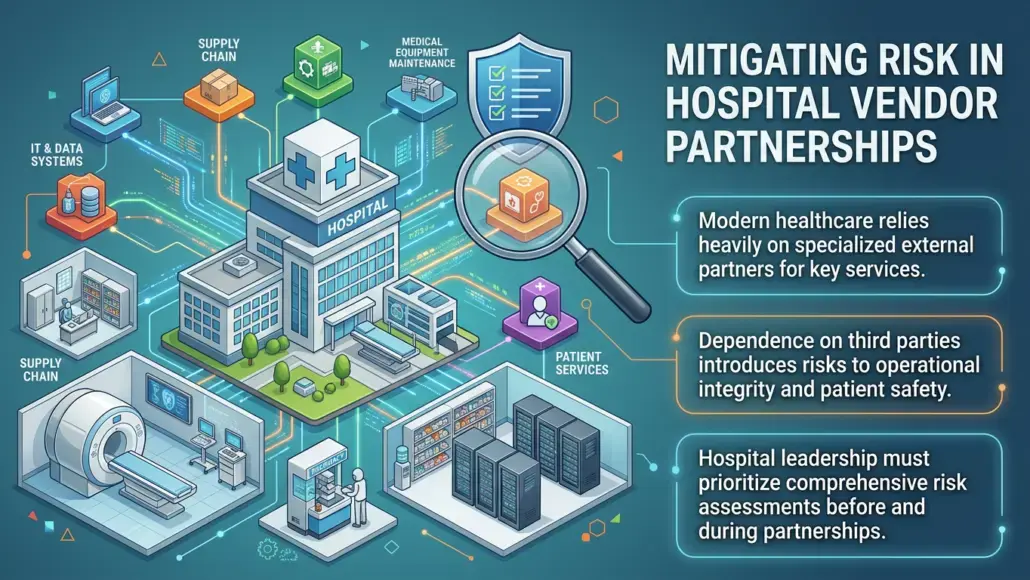

The complexity of modern healthcare delivery requires a vast network of external partners, each providing specialized services that are essential to patient care. However, this reliance on third parties introduces a range of risks that can compromise the hospital’s operational integrity and patient safety. To manage these challenges, hospital leadership must prioritize a comprehensive risk assessment of every vendor before and during the partnership. This process involves a detailed analysis of the provider’s financial stability, security protocols, and clinical track record. By identifying potential vulnerabilities before they manifest as crises, hospitals can protect themselves from service disruptions and regulatory failures. This proactive identification is the first step in building a resilient governance model that can withstand the demands of a high-pressure clinical environment.
A thorough assessment starts with the understanding that not all vendors pose the same level of risk. A provider managing the hospital’s landscaping services, while important for aesthetics, does not present the same threat as a company handling the hospital’s electronic health records or its sterile processing. Therefore, the risk assessment process must be tiered, allowing administrators to focus their most rigorous scrutiny on the “high-impact” vendors who have a direct line to patient safety or sensitive data. This strategic allocation of resources ensures that the governance team is not overwhelmed by trivial details but is instead laser-focused on the areas of greatest concern. This methodological approach allowed many hospitals to maintain their services during recent global supply chain fluctuations, as they had already identified and mitigated the risks associated with their primary suppliers.
Furthermore, the initial assessment must be followed by a commitment to ongoing monitoring. Risk is not a static property: it changes as the vendor’s business evolves, as new cybersecurity threats emerge, and as healthcare regulations become more stringent. A vendor who was considered low-risk three years ago might now pose a significant threat if they have failed to upgrade their data encryption or if they have experienced a high turnover of key technical staff. By integrating periodic health checks into the governance framework, the hospital ensures that its risk profile remains current. This continuous vigilance is necessary to maintain the trust of patients and the community, who expect the hospital to be a secure environment for their most personal information.
Protecting Patient Data and Information Security
In the digital age, one of the most critical risks facing any hospital is the threat of a data breach. Hospitals process an immense amount of sensitive information, from medical histories to financial details, making them a primary target for cybercriminals. When a hospital shares this data with third-party vendors for billing, analytics, or telehealth, the attack surface expands significantly. A robust risk assessment must therefore include a detailed audit of the vendor’s information technology infrastructure and security policies. The hospital must verify that the provider adheres to the highest standards of data protection, including encryption at rest and in transit, multi-factor authentication, and regular penetration testing.
The security of patient information is not just a technical issue: it is a fundamental component of the hospital’s ethical and legal responsibility. Regulations like HIPAA mandate that healthcare providers take every reasonable step to protect patient privacy, and this includes overseeing the security practices of their “business associates.” A failure in a vendor’s security is often seen by the public and regulators as a failure of the hospital itself. By conducting a systematic risk assessment, the hospital can filter out providers who do not meet these essential criteria. This process often uncovers hidden weaknesses, such as a vendor’s reliance on outdated software or their lack of an incident response plan. Addressing these issues before the contract is signed is much more effective than trying to manage a breach after it has occurred.
Moreover, the assessment should go beyond the vendor’s own practices and look at their “fourth-party” risks: the risks introduced by the vendor’s own subcontractors. In many healthcare partnerships, the primary vendor may outsource parts of their service to other specialized firms. If the hospital is not aware of these sub-relationships, it cannot accurately assess its true risk exposure. A comprehensive risk assessment program requires vendors to disclose their own outsourcing practices, providing the hospital with full visibility into the entire supply chain. This transparency is vital for maintaining a secure environment and for ensuring that the hospital’s governance extends to every entity that touches patient data.
Ensuring Clinical Safety and Regulatory Compliance
While data security is a high-profile concern, the physical safety of patients remains the hospital’s most important priority. Many outsourced services have a direct impact on the clinical environment, and any failure in these areas can have immediate and severe consequences. For example, the providers who maintain surgical robots, those who deliver medical gases, and the companies that manage specialized pharmacy compounding must be held to the highest possible standards. The risk assessment for these vendors must focus on their clinical competence, their adherence to safety protocols, and their history of regulatory compliance. This involves checking for any past sanctions, reviewing their internal quality control processes, and verifying the credentials of their technical staff.
The systematic oversight of these clinical vendors is a key element of the hospital’s broader governance strategy. By ensuring that every partner meets the same rigorous standards as internal staff, the hospital maintains a consistent quality of care. This is particularly important for maintaining the facility’s accreditation with organizations like The Joint Commission, which expects the hospital to have full control over its external service environment. The risk assessment acts as a gatekeeping mechanism, ensuring that only the most qualified and reliable partners are allowed to operate within the clinical space.
To maintain this high level of safety, the hospital’s assessment process should include:
- Regular reviews of the vendor’s adverse event logs and their processes for reporting and investigating errors.
- Verification of the vendor’s adherence to the hospital’s specific infection control and sterile field protocols.
- Audits of the vendor’s training records to ensure that all staff are up-to-date on the latest medical device safety alerts.
- Assessment of the vendor’s disaster recovery and business continuity plans, specifically for services that are critical to life-support systems.
- Periodic on-site inspections of the vendor’s facilities to verify that their manufacturing or processing environments meet healthcare standards.
By documenting these checks, the hospital creates a clear trail of accountability that protects the institution and its patients. The integration of this data into the broader vendor governance framework allows for a more holistic view of the provider’s performance. When the hospital combines the findings of its risk assessment with the results of its periodic service reviews, it can make more informed decisions about which partnerships to grow and which to terminate. This data-driven approach to safety is what allows high-performing hospitals to outsource complex functions without compromising their commitment to patient care.
Strengthening Institutional Resilience and Long-Term Stability
The ultimate benefit of a rigorous risk assessment program is the creation of a more resilient and stable organization. Hospitals are often at the center of community crises, and they must be able to function reliably even when the surrounding environment is in turmoil. By understanding and mitigating the risks in their supply chain, healthcare leaders can ensure that their institutions are not vulnerable to the failures of their partners. This resilience is a competitive advantage, as it allows the hospital to maintain a high level of service when others may be struggling. It also provides the financial stability needed to invest in new medical technologies and patient care initiatives.

A focus on risk also encourages a more strategic approach to vendor relationships. Instead of treating outsourcing as a purely cost-driven activity, hospitals begin to see it as a balance between value and exposure. This shift in perspective leads to better decision-making at every level of the organization. When the procurement team, the clinical heads, and the risk managers are all aligned on the hospital’s risk appetite, the institution can move forward with confidence. The risk assessment process provides the common ground for these different departments to collaborate, ensuring that everyone is working toward the same goal of a safe and efficient hospital.
In the final analysis, the discipline of assessing third-party risk is an essential part of the hospital’s duty to its patients and stakeholders. It is a recognition that in the interconnected world of modern medicine, no institution is an island. The success of the hospital is inextricably linked to the success and reliability of its partners. By maintaining a rigorous and transparent assessment process, healthcare leaders can ensure that these links are strong and that the hospital’s governance is capable of managing the complexities of the future. This commitment to risk-aware management is what allows hospitals to innovate and grow, providing the best possible care for the communities they serve.