Close
Digital Health & Ai Innovation summit 2026
Medical Taiwan 2026

IHH Healthcare partners Bharat Biotech to provide Covaxin at Gleneagles Global Hospitals

IHH Healthcare partners Bharat Biotech to provide Covaxin at Gleneagles Global Hospitals

Global healthcare provider IHH Healthcare has entered into a partnership with Bharat Biotech to provide Covaxin at its Gleneagles Global Hospitals in three locations in India.

“Three of the IHH Healthcare institutions in India – BGS Gleneagles Global Hospitals, Kengeri, Bengaluru; Gleneagles Global Health City, Chennai; and Gleneagles Global Hospitals, Hyderabad – will foray into this initiative and also widen the vaccination drive for the younger population,” IHH announced.

The vaccination drive for 18-44 years will extend to other hospitals within the network later in the month.

This partnership comes in the backdrop of the Government of India’s announcement of a liberalised and accelerated Phase 3 Strategy of Covid-19 vaccination drive from May.

The partnership between Gleneagles Global Hospitals and Bharat Biotech is a focussed approach to serve communities across Bengaluru, Chennai, Hyderabad, and the rest of the cities within the network of hospitals.

“Apart from the vaccination drive at our hospitals, our focus is also to include larger communities through our Corporate Vaccination Programme and camps at Residential Complexes. Even after the vaccination, it is important to follow all Covid related safety measures and protocols,” said Shriram Vijayakumar, CEO IHH Healthcare India in a release.

IHH Healthcare India-Gleneagles Global Hospitals will continue to provide Covid vaccine to people in the age group of 45-plus through the government-subsidised vaccination scheme.

Smith+Nephew launches ARIA Home PT – a remote physical therapy solution

Smith+Nephew launches ARIA Home PT - a remote physical therapy solution

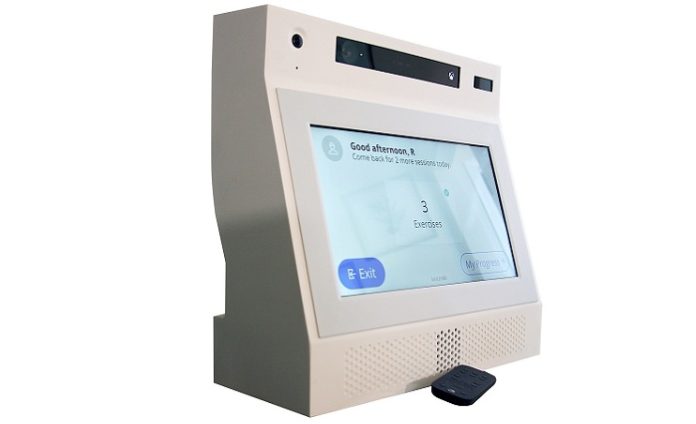
Smith+Nephew, the global medical technology business, announces the launch of ARIA Home PT, a remote physical therapy product as part of the ARIA suite of solutions.

ARIA Home PT offers a customized experience for patients on their time and in their home, while still providing relevant actionable data for clinicians, by leveraging advanced technology, telehealth solutions from licensed physical therapists (PTs) and digital avatar-based guidance. This allows orthopaedic surgeons and PTs responsible for the entire outpatient total joint replacement episode of care help drive better outcomes.

ARIA Home PT utilizes an interactive experience to deliver measurable improvements in patient adherence and cost reduction – an innovative approach shown to be as safe and effective as traditional physical therapy in a randomized control trial. ARIA Home PT reported decreased readmissions (60%), outpatient visits (86%), home health visits (95%), and urgent care or ER visits (30%), helping save an average of $2,745 per patient.1

ARIA Home PT features advanced technology that keeps patients actively engaged in their own care and recovery, and care teams fully informed of each patient’s progress. Utilizing a 3D motion tracking technology-based solution for use at a patient’s home, it educates, engages and guides the patient through their PT regimen and provides robust data for clinician and PT review including number, duration and quality of reps on twenty-five different joints. It further provides the built-in ability for tele-consultation between patients and their clinicians. As a result, ARIA Home PT has been shown to improve patient adherence by 35%1, and patients love it, with a Net Promoter Score of 90.3 (above 70 is considered world class.)2 Additionally, an aging population means greater demand for PT amid a forecast for an estimated shortage in licensed therapists by 2025 based on an attrition rate of >2.5%.3

The launch of ARIA Home PT reinforces our commitment to help patients live a life unlimited via a full suite of products for the entire clinical episode of care,” said Laura Rector, Vice President for Ambulatory Surgery Centers and Digital Health at Smith+Nephew. “Now more than ever, remote telehealth solutions are critical to the success of our customers and the care of their patients.”

About Smith+Nephew
Smith+Nephew is a portfolio medical technology business that exists to restore people’s bodies and their self-belief by using technology to take the limits off living. We call this purpose ‘Life Unlimited’. Our 18,000 employees deliver this mission every day, making a difference to patients’ lives through the excellence of our product portfolio, and the invention and application of new technologies across our three global franchises of Orthopaedics, Advanced Wound Management and Sports Medicine & ENT.

Founded in Hull, UK, in 1856, we now operate in more than 100 countries, and generated annual sales of $4.6 billion in 2020. Smith+Nephew is a constituent of the FTSE100 (LSE:SN,NYSE:SNN). The terms ‘Group’ and ‘Smith+Nephew’ are used to refer to Smith & Nephew plc and its consolidated subsidiaries, unless the context requires otherwise.

Asensus Surgical Recognized for Medical Device Innovation in 2021 MedTech Breakthrough Awards Program

Asensus Surgical Recognized for Medical Device Innovation in 2021 MedTech Breakthrough Awards Program

Asensus Surgical, Inc., a medical device company that is digitizing the interface between the surgeon and the patient to pioneer a new era of Performance-Guided Surgery™, announced that its Intelligent Surgical Unit™ (ISU™) has been selected as the winner of the “Best Overall Medical Device Product” award in the fifth annual MedTech Breakthrough Awards program conducted by MedTech Breakthrough, an independent market intelligence organization that recognizes the top companies, technologies and products in the global health and medical technology market.

Asensus Surgical’s new Intelligent Surgical Unit (ISU) enables computer vision capabilities in surgery for the first time. These technologies record an image and apply intelligent algorithms to enhance the surgeon’s ability to meaningfully use information from the surgical field in real-time.

By leveraging augmented intelligence and computer vision, Asensus’ ISU provides critical benefits to physicians and operating room staff. The surgeon now has a digital twin that does not experience fatigue, alleviates cognitive burden by assuming simple tasks, and provides a platform for real-time clinical analysis, helping with critical decision making during surgery.

“Why is it that you have more connectivity, access and functionality at your fingertips in your cell phone, than a surgeon has access to during surgery? Our ISU solution is closing this digital divide,” said Anthony Fernando, Asensus Surgical President and CEO. “The ISU adds $0 to per-procedure costs, but provides invaluable capability to the surgical team, helping make surgery less variable, more efficient, and available to all. We are thrilled to be recognized in the 2021 MedTech Breakthrough Awards program recognizing this achievement in the surgical space.”

The mission of the MedTech Breakthrough Awards is to honor excellence and recognize the innovation, hard work and success in a range of health and medical technology categories, including Robotics, Clinical Administration, Telehealth, Patient Engagement, Electronic Health Records (EHR), mHealth, Medical Devices, Medical Data and many more. This year’s program attracted more than 3,850 nominations from over 17 different countries throughout the world.

“Moving forward, augmented intelligence and computer vision will play an increasingly important role in reducing surgical variability,” said James Johnson, managing director, MedTech Breakthrough. “Asensus is at the forefront in this capacity, leveraging robotic-assisted technology coupled with augmented intelligence to help surgeons ensure the best outcome for every patient every time. We extend our sincere congratulations to Asensus Surgical for winning our ‘Best Overall Medical Device Product’ award.”

About Asensus Surgical, Inc.

Asensus Surgical, Inc. is digitizing the interface between the surgeon and patient to pioneer a new era of Performance-Guided Surgery by unlocking the Clinical Intelligence to enable consistently superior outcomes and a new standard of surgery. This builds upon the foundation of Digital Laparoscopy with the Senhance® Surgical System powered by the Intelligent Surgical Unit™ (ISU™) to increase surgeon control and reduce surgical variability. With the addition of machine vision, augmented intelligence, and deep learning capabilities throughout the surgical experience, we intend to holistically address the current clinical, cognitive and economic shortcomings that drive surgical outcomes and value-based healthcare. Learn more about Performance-Guided Surgery and Digital Laparoscopy with the Senhance Surgical System

About MedTech Breakthrough
Part of Tech Breakthrough, a leading market intelligence and recognition platform for global technology innovation and leadership, the MedTech Breakthrough Awards program is an independent program devoted to honoring excellence in medical and health related technology companies, products, services and people. The MedTech Breakthrough Awards provide a platform for public recognition around the achievements of breakthrough health and medical companies and products in categories that include Patient Engagement, mHealth, Health & Fitness, Clinical Administration, Healthcare IoT, Medical Data, Healthcare Cybersecurity and more.

Pros And Cons Of Medical Weight Loss Surgeries

Pros And Cons Of Medical Weight Loss Surgeries

Weight loss surgery may help you shed excess pounds in a more efficient manner. This option is especially helpful for those who’ve tried every trick in the book to manage their weight but haven’t had success with any of them.

Over the years, different weight loss surgeries such as gastric sleeve surgery have been established and refined. However, that particular type of surgery isn’t for everybody. If you’re thinking of going for it, it’s important to weigh the pros and cons first. Also, you’ll need to consult a doctor in order to better understand the effects of weight loss surgery.

Read on to learn more about the benefits and risks of getting a surgery for weight loss.

Pros Of Medical Weight Loss Surgeries

  1. Reduce The Risk Of Cardiovascular Diseases

Based on the data shown at the American Society for Metabolic Surgery meeting in 2018, those who undergo weight loss surgery experience a considerable decrease in the risk for coronary artery diseases. The participants in the study also reduced their risk for stroke, diabetes, and high blood pressure.

  1. Live Longer

Studies have shown that individuals who’ve undergone weight loss surgery live longer than those with the same pre-surgery body mass index (BMI), age, and sex who haven’t had the operation.

  1. Experience Fewer Joint-Related Issues And Address Sleep Apnea

Regardless of the method, weight loss is one of the well-documented remedies for sleep apnea. Patients who underwent weight loss surgery experienced a significant reduction in not only the frequency of sleep apnea but joint-related issues as well.

  1. Improve Quality Of Life

Aside from having increased mobility that will allow you to enjoy and accomplish more of your day-to-day activities, weight loss surgery may increase your self-esteem, sexual function, and social interaction. Moreover, it may lessen feelings of anxiety and depression since you don’t have to keep worrying about your health.

Cons Of Medical Weight Loss Surgeries

In general, weight loss surgeries are safe, but it’s worth mentioning that all surgeries may lead to infection as well as carry some risks associated with anesthesia. In order for you to make a good decision, you have to be aware of all the potential risks.

While some complications are inconvenient and unpleasant, others may bring discomfort or pain and require surgery to treat.

Short-Term Complications

  • Breathing issues
  • Wound infections
  • Excessive bleeding

Long-Term Complications

  • Malnutrition
  • Diarrhea
  • Vomiting
  • Nausea
  • Abdominal hernias

Aside from those mentioned above, you may encounter more serious complications. However, they’re relatively rare, happening only about three percent of the time. The following complications are considered life-threatening:

  • Heart attack
  • Blood clot to the lungs
  • Bleeding ulcers
  • Leakages in the new invasive gut connections

For those who are over 60, the risk is higher. In some instances, even after a successful surgery, problems like sagging skin that calls for body contouring surgery, gallstones, and vitamin deficiencies due to poor absorption of nutrients may occur. The good news is that getting weight loss surgery at medical centers like North Eastern Weight Loss Surgery that are staffed by experienced and reliable surgeons may help reduce the risks.

Is There Any Weight Requirement?

Not everyone who’s carrying extra pounds is automatically a candidate for weight loss surgery. Here are the common criteria that patients need to meet:

  • About 80 pounds overweight (35 to 40 BMI) and have heart disease, obstructive sleep apnea, asthma, a metabolic syndrome, or diabetes
  • 100 pounds overweight or a BMI of more than 40
  • BMI of 30 to 35 and dealing with a certain type of diabetes or a combination of other severe health problems known as metabolic syndrome

Final Pointers

If you think that weight loss surgery is for you, know that there are things you need to do before the operation. You must stop smoking or using any type of tobacco product at least four weeks before your surgery—it’s best to do this after your first consultation, and see to it that you don’t pick up the habit again. The operation will be canceled if you fail to follow this rule. Smoking may negatively affect the healing process and result of the surgery, and it may even increase the chances of pulmonary complications.

Don’t use aspirin and blood thinners a week before your surgery. If you truly need to use such medications, make sure to consult your prescribing doctor. Also, prior to the surgery, you’ll be placed on a high-protein and low-calorie diet for three weeks. This diet will reduce the fat in and around your liver in order for the surgery to be safer and go more smoothly.

7 Products Every Home Care Worker Should Have

7 Products Every Home Care Worker Should Have

Home care workers are the unsung heroes of the social care sector. Often working long hours at a minimum wage, home care workers take care of elderly and disabled patients in their own homes. It can be a difficult job, especially when your patient is frail and lonely, but you don’t have time in your schedule to sit and have a chat with them. However, it’s not all doom and gloom, and for the right person, the role of a home care aide can be hugely rewarding.

Read on to learn more about essential products and useful healthcare supplies for the elderly every home care worker needs.

Latex Gloves

Working as a home care aide means dealing with bodily fluids on a daily basis. Many elderly patients are incontinent. Some may drool because they have had a stroke and are partially paralyzed. You might also need to change wound dressings. As such, a pack of latex gloves is essential, as you will need to change your gloves each time you move on to a new client.

A Notepad and Pen

Always carry a small notepad and pen, so you can make notes when needed. For example, if a client asks you to call a relative, or pick up some groceries for them, without a note, there is a chance you might forget the details. An alternative to a notepad and pen is a notepad app on a smartphone, but bear in mind you’ll lose access to this if your phone battery dies.

Keep a few pens in your pocket or purse. You might have to fill in healthcare records at the patient’s home, so other carers know what’s been done and when.

Hand Sanitizer

Hand sanitizer is essential, especially in the Age of Covid. Wash and sanitize your hands as often as possible, to avoid transmitting germs from patient to patient.

Pen Torch

There will be times when you need to check on a patient at night. A small pen torch is useful if you have to read notes or find something in a darkened bedroom. Keep this in your bag at all times.

Watch

Some kind of watch is essential. Use it to monitor how much time you spend with each client and also your travel times if you are required to make a note of times and mileage. Many home care workers use fob watches, as they can be clipped to uniforms and don’t cause injury when maneuvering a patient in and out of bed or the bathtub.

Schedule Planner

These days, home care workers are often required to follow a schedule so they know where they need to be at all times. This can be a paper schedule or an electronic one; make sure you keep yours with you at all times.

Fully Charged Cell Phone

Lastly, always keep your cell phone fully charged, in case you need to summon assistance in the event of a health emergency or similar crisis.

World’s first fiber-optic ultrasonic imaging probe for future nanoscale disease diagnostics

University of Nottingham team develops new probe for disease diagnostics

Scientists at the University of Nottingham have developed an ultrasonic imaging system, which can be deployed on the tip of a hair-thin optical fibre, and will be insertable into the human body to visualise cell abnormalities in 3D.

The new technology produces microscopic and nanoscopic resolution images that will one day help clinicians to examine cells inhabiting hard-to-reach parts of the body, such as the gastrointestinal tract, and offer more effective diagnoses for diseases ranging from gastric cancer to bacterial meningitis.

The high level of performance the technology delivers is currently only possible in state-of-the-art research labs with large, scientific instruments – whereas this compact system has the potential to bring it into clinical settings to improve patient care.

The Engineering and Physical Sciences Research Council (EPSRC)-funded innovation also reduces the need for conventional fluorescent labels – chemicals used to examine cell biology under a microscope – which can be harmful to human cells in large doses.

The findings are being reported in a new paper, entitled ‘Phonon imaging in 3D with a fibre probe’ published in the Nature journal, Light: Science & Applications.

Paper author, Salvatore La Cavera, an EPSRC Doctoral Prize Fellow from the University of Nottingham Optics and Photonics Research Group, said of the ultrasonic imaging system: “We believe its ability to measure the stiffness of a specimen, its bio-compatibility, and its endoscopic-potential, all while accessing the nanoscale, are what set it apart. These features set the technology up for future measurements inside the body; towards the ultimate goal of minimally invasive point-of-care diagnostics.”

Currently at prototype stage, the non-invasive imaging tool, described by the researchers as a “phonon probe”, is capable of being inserted into a standard optical endoscope, which is a thin tube with a powerful light and camera at the end that is navigated into the body to find, analyse, and operate on cancerous lesions, among many other diseases. Combining optical and phonon technologies could be advantageous; speeding up the clinical workflow process and reducing the number of invasive test procedures for patients.

3D mapping capabilities

Just as a physician might conduct a physical examination to feel for abnormal ‘stiffness’ in tissue under the skin that could indicate tumours, the phonon probe will take this ‘3D mapping’ concept to a cellular level.

By scanning the ultrasonic probe in space, it can reproduce a three-dimensional map of stiffness and spatial features of microscopic structures at, and below, the surface of a specimen (e.g. tissue); it does this with the power to image small objects like a large-scale microscope, and the contrast to differentiate objects like an ultrasonic probe.

“Techniques capable of measuring if a tumour cell is stiff have been realised with laboratory microscopes, but these powerful tools are cumbersome, immobile, and unadaptable to patient-facing clinical settings. Nanoscale ultrasonic technology in an endoscopic capacity is poised to make that leap,” adds Salvatore La Cavera.

How it works

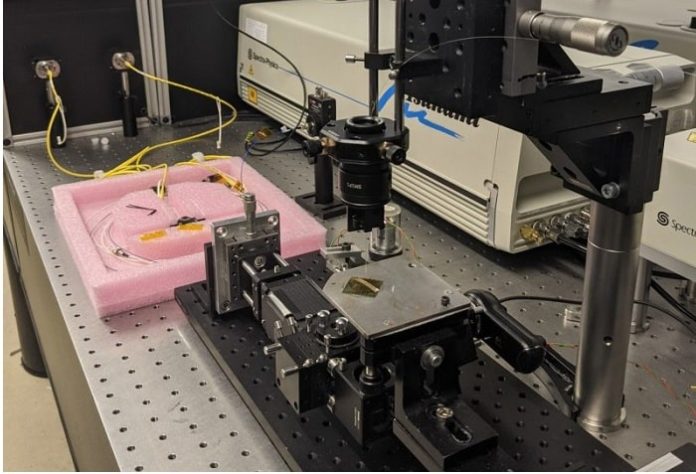
The new ultrasonic imaging system uses two lasers that emit short pulses of energy to stimulate and detect vibrations in a specimen. One of the laser pulses is absorbed by a layer of metal – a nano-transducer (which works by converting energy from one form to another) – fabricated on the tip of the fibre; a process which results in high-frequency phonons (sound particles) getting pumped into the specimen. Then a second laser pulse collides with the sound waves, a process known as Brillouin scattering. By detecting these “collided” laser pulses, the shape of the travelling sound wave can be recreated and displayed visually.

The detected sound wave encodes information about the stiffness of a material, and even its geometry. The Nottingham team was the first to demonstrate this dual-capability using pulsed lasers and optical fibres.

The power of an imaging device is typically measured by the smallest object that can be seen by the system, i.e. the resolution. In two dimensions the phonon probe can “resolve” objects on the order of 1 micrometre, similar to a microscope; but in the third dimension (height) it provides measurements on the scale of nanometres, which is unprecedented for a fibre-optic imaging system.

Future applications

In the paper, the researchers demonstrate that the technology is compatible with both a single optical fibre and the 10-20,000 fibres of an imaging bundle (1mm in diameter), as used in conventional endoscopes.

Consequently, superior spatial resolution and wide fields of view could routinely be achieved by collecting stiffness and spatial information from multiple different points on a sample, without needing to move the device – bringing a new class of phonon endoscopes within reach.

Beyond clinical healthcare, fields such as precision manufacturing and metrology could use this high-resolution tool for surface inspections and material characterisation; a complementary or replacement measurement for existing scientific instruments. Burgeoning technologies such as 3D bio-printing and tissue engineering could also use the phonon probe as an inline inspection tool by integrating it directly to the outer diameter of the print-needle.

Next, the team will be developing a series of biological cell and tissue imaging applications in collaboration with the Nottingham Digestive Diseases Centre and the Institute of Biophysics, Imaging and Optical Science at the University of Nottingham; with the aim to create a viable clinical tool in the coming years.

The University of Nottingham

The University of Nottingham is a research-intensive university with a proud heritage, consistently ranked among the world’s top 100. Studying at the University of Nottingham is a life-changing experience and we pride ourselves on unlocking the potential of our students. We have a pioneering spirit, expressed in the vision of our founder Sir Jesse Boot, which has seen us lead the way in establishing campuses in China and Malaysia – part of a globally connected network of education, research and industrial engagement. The University’s state-of-the-art facilities and inclusive and disability sport provision is reflected in its status as The Times and Sunday Times Good University Guide 2021 Sports University of the Year. We are ranked eighth for research power in the UK according to REF 2014. We have six beacons of research excellence helping to transform lives and change the world; we are also a major employer and industry partner – locally and globally. Alongside Nottingham Trent University, we lead the Universities for Nottingham initiative, a pioneering collaboration which brings together the combined strength and civic missions of Nottingham’s two world-class universities and is working with local communities and partners to aid recovery and renewal following the COVID-19 pandemic.


ONQ Enters Agreement to Use Aideo Technologies AI-Powered Medical Coding Tool

Aidéo Technologies – a leader in AI-enabled automation technology for the healthcare industry announced that ONQ will use and re-sell the company’s auto-coding tool Gemini AutoCode™ to automate Revenue Cycle Management (RCM) for healthcare providers nationwide.

Surpassing traditional Computer Assisted Coding (CAC) tools, Gemini AutoCode™ delivers a People Assisted Coding (PAC) solution that uses artificial intelligence and machine learning to continuously improve with each interaction and assign the correct codes without human intervention. Designed to provide production coding using technology, Gemini AutoCode™ easily integrates with electronic medical records and can accurately interpret and code more than 40,000 clinical encounters per hour.

“We’re committed to helping the healthcare industry through digital innovation, and Aidéo Technologies helps us deliver the most powerful solutions to providers,” said Jack McBride, CEO of ONQ. “Aidéo’s team has expertise in AI and a deep understanding of RCM; we are looking forward to making the most of this partnership.”

Gemini AutoCode™ uses AI, a proprietary Natural Language Processing engine and machine learning to interpret structured and unstructured clinical data, so unlike CAC solutions, Aidéo Technologies’ software application assigns the appropriate procedure and diagnosis codes based on free-form notes with accuracy that matches or exceeds human coders.

“Gemini AutoCode™ delivers measurable impact with seamless integration into any practice, so it’s a wonderful tool for ONQ’s clients,” said Rob Gontarek, President and CEO of Aidéo Technologies. “Our technology pairs well with theirs, and the results promise to be revolutionary for the healthcare billing industry.”

About Aidéo Technologies Aidéo Technologies (www.aideo-tech.com) provides software automation tools using artificial intelligence, robotics and machine learning to the healthcare industry. Established in 2009, the company has development centers in West Palm Beach, Fla., and Silicon Valley.

About ONQ: One of the fastest-growing businesses in the healthcare billing support industry, ONQ  provides automation solutions, global labor outsourcing and patient call center services from its facilities in Santiago, Panama.

University of Nottingham team develops new probe for disease diagnostics

Researchers at the University of Nottingham in the UK have created an ultrasonic imaging system, which can be inserted into the human body for three-dimensional visualisation of cell abnormalities.

Presently in prototype stage, the non-invasive imaging tool called ‘phonon probe’ will be positioned on the tip of a hair-thin optical fibre.

It could be inserted into a standard optical endoscope, a thin tube with a light and camera at the end. This can be steered into the body to detect, assess and operate on cancerous lesions, as well as several other diseases.

Delivering microscopic and nanoscopic resolution images, the technology can potentially aid doctors in assessing cells in hard-to-reach body parts, such as the gastrointestinal tract. It is also expected to provide better diagnoses for various diseases, including gastric cancer and bacterial meningitis.

Scientists noted that merging optical and phonon technologies could accelerate the clinical workflow process and cut down invasive test procedures for patients.

Funded by the Engineering and Physical Sciences Research Council, the phonon probe is a compact system with a performance level that is currently achievable only in research labs with large scientific instruments, the researchers said.

The probe can be deployed in clinical settings to enhance patient care and can lower the requirement of standard fluorescent labels.

Fluorescent labels, which are chemicals used for analysing cell biology under a microscope, can harm human cells in high doses.

University of Nottingham Engineering faculty Dr Salvatore La Cavera III said: “We believe the system’s ability to measure the stiffness of a specimen, its bio-compatibility, and its endoscopic potential, all while accessing the nanoscale, are what set it apart.

“These features set the technology up for future measurements inside the body; towards the ultimate goal of minimally invasive point-of-care diagnostics.”

The team now plans to work with the Nottingham Digestive Diseases Centre and the Institute of Biophysics, Imaging and Optical Science to design various biological cell and tissue imaging applications for the development of a viable clinical tool.

ADDING and REPLACING HeadworX Chooses VoxNeuro Innovation to Enhance Patient Care

How Compassionate Care Can Benefit The Patient

A leading neurophysiological testing facility has selected VoxNeuro’s innovative technology to provide its patients with more certainty in the diagnosis and treatment of brain conditions.

HeadworX, led by neurologist Dr. Abdel Kaleel, MD, M.Sc in Kitchener-Waterloo, is integrating VoxNeuro’s groundbreaking Cognitive Health Assessment™ into its clinical practice.

“Our ability to offer the VoxNeuro Cognitive Health Assessment™ will be an incredible extension to our clinical exam, allowing us to develop a more realistic and complete picture of the patient’s road to recovery,” said Dr. Kaleel.

Dr. John F. Connolly, Chief Science Officer and Co-Founder of VoxNeuro, said HeadworX is a much-needed leader in this area.

“Neurology as a profession has been deeply rooted in tradition,” he said. “Dr. Kaleel and his colleagues are future-focused and invested in adopting new and innovative technology that can improve his patient’s medical evaluation and outcomes.”

VoxNeuro’s breakthrough neurotechnology precisely scores cognitive performance by measuring biomarkers in the electrical activity of the brain, much like using a cardiogram to measure the health of the heart. VoxNeuro’s technology is positioned to globally change the way brain health is managed and treated with their rapid, precise scores of cognitive function including memory, information processing, attention and concentration.

This provides valuable data to the diagnostic process, enabling clinicians to make more accurate diagnoses faster. The data also helps to customize treatments and accurately track how well treatments are working overtime, thus helping to ensure the best possible outcomes for patients.

“We welcome the innovation of VoxNeuro because I have long believed that, as a field, we can do a better job of providing patients with the answers they deserve and a clear path to recovery,” says Dr. Kaleel. “With the addition of VoxNeuro, our patients can feel very comfortable that we have the most current means of giving them a true understanding of their condition and an ongoing way to ensure their treatment is working.”

Backed by more than 30 years of global, peer-reviewed scientific research, VoxNeuro’s assessment will also help to ease pressure on the healthcare system as a whole.

“With our growing community population, there is a widening gap for neurological services in Canada,” says Dr. Kaleel. “Many times, patients are over-treated and over-tested and this can place a substantial burden on our healthcare system and subject the patient to unnecessary harm. With the objective data provided by VoxNeuro, we will be better able to determine if a patient’s cognitive concerns warrant further investigations or management options.”

HeadworX serves patients across southwest Ontario, aged from teens to the elderly. The VoxNeuro assessment will augment the clinic’s current array of tools which includes Electromyography (EMG), Electro-encephalography (EEG), Transcranial Doppler (TCD) and Ambulatory Blood Pressure Monitor (ABP).

About VoxNeuro – Give your brain a voice

VoxNeuro is backed by more than 30 years of peer-reviewed scientific research and offers the only neurotechnology that scores multiple cognitive functions to support proactive brain health, informed clinical decision-making and customized care. By analyzing the electrical activity of the brain, VoxNeuro scores its cognitive performance in memory, information processing, attention & concentration.

VoxNeuro is headquartered at McMaster Innovation Park in Hamilton, ON, Canada. Appointments available at VoxNeuro Test Centers. To learn more, follow VoxNeuro on LinkedIn, Twitter, Instagram, Facebook and YouTube or visit www.voxneuro.com.

Ask us about being selected as 1 of 11 emerging growth Canadian Life Sciences Companies by the Government of Canada’s Trade Commissioner Service.

Benefits of Adjustable Hospital Beds

Benefits of Adjustable Hospital Beds

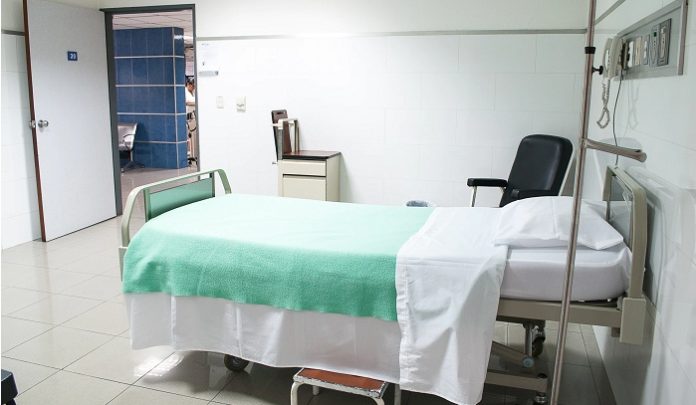
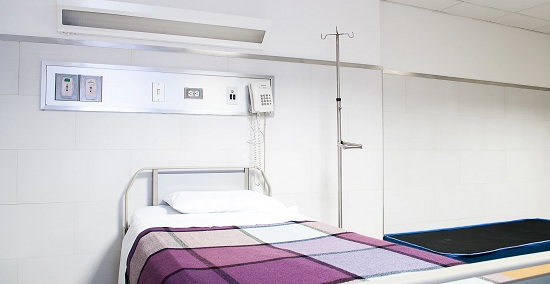
If you’ve been injured or are recovering from an illness, one of the things that your doctors will undoubtedly ask you to do is get a good night’s sleep. Quality sleep can help increase your recovery speed, and among the many ways you can improve your quality of sleep is by investing in a comfortable hospital bed.

Aside from serving as a great recuperative tool, an adjustable hospital bed can also be a handy tool for people with mobility disorders. This includes people suffering from conditions such as arthritis, paralysis, muscle and lung disorder, and more.

Read on to learn more about the advantages of adjustable hospital beds over regular beds.

Improved Circulation

Adjustable beds allow you to keep your feet elevated at an angle, which is highly beneficial for several reasons. If you have mobility issues and are sitting in the same position for hours, it can help reduce the swelling in your legs. It can also ease joint pain and tired feet and improve blood flow to your lower body.

Independence 

Individuals with mobility issues, especially those suffering from long-term illnesses or chronic conditions, can often find themselves lacking independence in many areas of their lives. Adjustable hospital beds allow them to keep at least one area of independence for as long as possible – these beds can be adjusted by remote control and do not require patients to depend on the help of others. This is especially beneficial for people who spend long periods in bed and may need constant adjustments to stay comfortable.

Better Sleep

Most people sleep lying flat on their back, which can cause several issues. This includes concerns such as snoring, sleep apnea, and other similar disorders. Adjustable hospital beds allow you to sleep with your head elevated at night, which helps increase oxygen flow around the body, and lets you breathe easier at night. This position is also beneficial for a number of other reasons and can help treat concerns such as shortness of breath, stuffiness of the head, symptoms of COPD, and more.

Convenience

For people spending a large amount of time in bed, convenience is of the utmost importance. That’s where adjustable hospital beds come in handy, as they allow users full control over positioning. No matter what they’re doing during the day – whether it be watching TV, doing work on their laptops, or reading – they can easily position themselves in the most comfortable position available. This helps avoid neck and back strain. If the bed is a dual-controlled one, it can even be used to allow one person to comfortably perform activities while their spouse sleeps on the other side of the bed.

Adjustable hospital beds can be installed in both the home and in hospital wards. If you’re looking for a bed for your home, you can even invest in a custom-designed bed created to best suit your unique needs, lifestyle, and the constraints of your home. By investing in an adjustable bed for your home, you ensure that you allow your body the opportunity to rest and heal as well as possible.

Translate »