Close
Digital Health & Ai Innovation summit 2026
Medical Taiwan 2026

Why robot assisted surgeries are the best option in pandemic times

Robotic Surgery

COVID-19 has changed the scenario of delivery of healthcare. Healthcare workers are at risk of contracting the infection and there is this intrinsic fear of patient contracting the infection from the health care staff in the operations theatre. Consequently, people have become apprehensive about getting any medical procedures done for fear of contracting the virus and developing further complications.

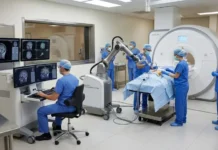
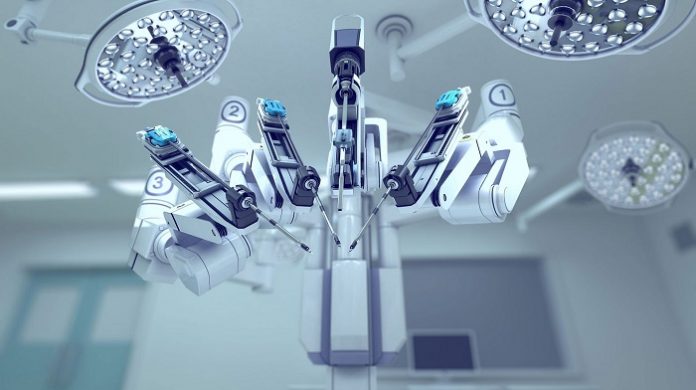
While social distancing is the new norm/necessity, robot assisted surgeries have proved to be a blessing in the field of surgical procedures. This technique of surgeries is characterised by shorter stays at the hospitals, minimal blood loss, practicing social distancing (the surgeon sits on a console and guides the procedure via robotic instruments) ensuring minimum contact between the patient and staff. Robot assisted surgeries have given surgeons immense control over the surgery, we can guide the entire procedure while on a computer operated console, through master controls for hand movements and precision-guided robotic arms.

Advantages in times of COVID-19

Robot assisted surgery keeps the surgeon and staff away from the patient and only the sterile tips of the robotic arms are inside the patientโ€™s mouth or any other site depending upon the type of surgery. Also use of special smoke evacuators to remove plume from patientโ€™s body makes it a safe surgery for all health care workers too.

Operation theatres for robot assisted surgeries have less personnel. With the advent of AI and robotics starting from history and physical examination until discharge direct physical contact is avoided. Certain hospitals in the world already have robots for performing tasks like temperature checking, drawing blood samples, for cleaning and lifting the patients and transporting them from the ward to the theatre etc. After robot assisted surgeries patients can go home early and there are no chances of infection as there is no direct handling of tissues.

In big corporate set ups where robotic suites are available strict protocols before surgery are also followed like RTPCR testing of every patient before admission and anaesthesia protocols specially designed during the pandemic. All these are followed to maintain safety. The number of robot assisted surgeries have gone up in this pandemic in all big hospitals across the country.

How it works

In a robotic/ robot assisted surgery the surgeon is seated at a console that displays a magnified 3D image of the surgical site. While working on a computer operated console, the surgeon uses master controls for hand movements. Through this they can perform several procedures with precision-guided robotic arms that hold and manipulate miniaturised instruments that are inserted through keyhole-sized incisions in the patients. A small video camera is inserted through a tiny incision , that helps the surgeons get a magnified 3D image of the operating site. This is used for surgery in the mouth, neck, chest and abdomen for cancerous and non-cancerous diseases. It is also used for bariatric surgery and complex hernia repairs.


HonorHealth Teams Up with OODA Health and Blue Cross to Expand Patient Access to Transformative Healthcare Billing Platform

Schneider Electric equips hospitals to effectively serve patients

OODA Health, a healthcare technology company focused on empowering patients and providers with real-time healthcare payments, announced a collaboration between HonorHealth, OODA Health, and Blue Cross Blue Shield of Arizona (BCBSAZ) to bring the popular OODAPay healthcare billing system to all BCBSAZ members receiving care from HonorHealth. HonorHealth is a leading healthcare system serving 1.6 million people in the greater Phoenix area.

Helping to eliminate the stress and complexity of healthcare billing for our members is a fundamental part of our mission here at BCBSAZ, and this collaboration addresses that challenge head on,โ€ said Pam Kehaly, president and CEO of Blue Cross Blue Shield of Arizona. โ€œOODAPay simplifies and streamlines the healthcare billing process so our members can focus on recovery, instead of worrying about how to decipher and manage multiple, complicated healthcare billing statements.โ€

โ€œWith this new collaboration, HonorHealth demonstrates that it is committed to investing in technologies and partnerships that sustainably improve the patient experience,โ€ said Giovanni Colella, M.D., chairman, co-CEO, and co-founder at OODA Health. โ€œBecause of the game-changing benefits it offers to patients, providers, and payers, OODAPay has been rapidly expanding in Arizona, and will soon become the default payment experience that patients expect.โ€

OODAPay addresses one of patientsโ€™ greatest pain pointsโ€”the billing experienceโ€”with a fast, simplified, and convenient approach to paying their medical bills. OODAPay accomplishes this by consolidating bills across providers into a single statement and deploying best-in-class payment tools. In a pilot program with Arizona patients earlier this year, 96% reported satisfaction with the OODAPay billing experience. Patients using the platform are especially delighted with the option to set zero-interest payment terms to make their healthcare costs more affordable and manageable.

โ€œThis collaboration underscores HonorHealthโ€™s mission to apply transformative technologies and payer-provider collaboration models in service of the patient experience,โ€ said Paul Briggs, senior vice president and CFO of HonorHealth. โ€œWe are pleased to work with innovative organizations such as OODA Health and Blue Cross Blue Shield of Arizona on this journey.โ€

More details on the implementation and rollout of services of OODAPay for Blue Cross Blue Shield of Arizona patients receiving care from HonorHealth will be announced in 2021.

OODA Health is an independent and separate company from Blue Cross Blue Shield of Arizona and HonorHealth.

About Blue Cross Blue Shield of Arizona

Blue Cross Blue Shield of Arizona (BCBSAZ) is committed to helping Arizonans get healthier faster and stay healthier longer. With a focus on connecting people with the care they need, BCBSAZ offers health insurance and related services to more than 1.7 million customers. Through advanced clinical programs and community outreach, BCBSAZ is inspiring health in Arizona. BCBSAZ, a not-for-profit company, is an independent licensee of the Blue Cross Blue Shield Association. The company, and its subsidiaries, employ more than 2,400 people in its Phoenix, Chandler, Flagstaff, and Tucson offices. To learn more, visit azblue.com.

About OODA Health

OODA Healthโ€™s mission is to transform healthcare administration by enabling real-time interactions between patients, providers and payers. Weโ€™re focused on eliminating the friction and delays in current payment processes that will save $400B of wasted spend, improve the member experience and inspire greater collaboration between providers and payers. Leveraging an innovative technology platform, OODA Health partners with leading health plans and providers including Anthem, Dignity Health, a part of CommonSpirit Health, Blue Cross Blue Shield of Massachusetts, Blue Cross Blue Shield of Arizona, Blue Shield of California, Hill Physicians Medical Group and others.


EHR Screener Can Assess Diet, Mitigate Cardiovascular Disease

EHR Software

All health systems may consider integrating a rapid diet screening tool into the EHR to boost dietary assessments and counseling, according to a study published in Circulation: Cardiovascular Quality and Outcomes, an American Heart Association journal.

Patient diets can impact cholesterol, blood pressure, diabetes, and weight gain. A healthy diet can not only improve outcomes, but it can also decrease the chances of cardiovascular disease.

Furthermore, poor dieting is the leading mortality risk factor, totaling over 11 million deaths and accounting for roughly half of the worldโ€™s cardiovascular disease.

โ€œDietary patterns and quality are not sufficiently prioritized when addressing modifiable risk factors during regular health care office visits. Given the evidence that diet contributes to disease and mortality, it is a risk factor worth screening for continuously,โ€ Maya Vadiveloo, PhD, assistant professor of nutrition and health sciences in the College of Health Science at the University of Rhode Island, said in a statement.

Although clinicians across the country know the importance of a healthy diet, the study authors said healthcare teams might not address diet quality during patient visits. They looked at a lack of training and knowledge on the topic, a lack of time during appointments, and a lack of integrated nutritional services in the EHR.

The study authors said an effective diet screening tool should include an evidence-based approach, the total dietary pattern, speed and efficiency, actionable steps to support patients, and the ability to track and monitor dietary change in real-time.

โ€œHowever, these barriers can be overcome,โ€ continued Vadiveloo. โ€œWe want a valid, reliable way to assess diet that reflects the best science, and most of the tools assessed take under 10 minutes to use.โ€

The research team analyzed 15 diet screening tools and found three that hit the greatest number of criteria to implement into an EHR system and utilize at a routine practice.

Researchers highlighted the Powell and Greenberg Screening Tool because it asked questions about fruit, vegetable, sugar, and juice consumption. Then, both the Rapid Eating Assessment for Participants-Shortened assessment and the Mediterranean Diet Adherence Screener focused on the major food groups, along with alcohol and processed food consumption.

โ€œThere are other tools beyond what was assessed, and additional tools could be developed,โ€ said Vadiveloo.

Although the research team did not recommend one specific tool, the group said clinicians, health IT specialists, dieticians, and lifestyle experts should come together to choose a specific one that fits their respective organization’s EHR system and area.

โ€œAn important component in addition to evaluating diet quality is targeting actionable changes – helping patients set achievable dietary goals – and then following up at the next visit,โ€ said Alice H. Lichtenstein, DSc, lead and senior scientist of the Cardiovascular Nutrition Team at the Jean Mayer USDA Human Nutrition Research Center on Aging at Tufts University.

Looking forward, the study authors want to look at testing further screening tools in diverse populations and special clinical populations, such as geriatrics and pediatrics.

According to the CDC, cardiovascular-related death rates are rising among people age 45 to 64. As a result, MedStar Health, a Maryland and Washington DC-based health system, developed a new EHR tool that calculates a patientโ€™s risk of having a heart attack or stroke.

Once implemented, MedStar patients can track their cardiology risk in a simple, easy to read format in their EHR. Using the tool, the calculator computes a 10-year cardiovascular risk assessment based on a patientโ€™s blood pressure, cholesterol, and history of diabetes.

After the patient is made aware of her potential cardiovascular risk, the tool customizes possible lifestyle changes, such as reducing cholesterol, weight loss tips, or quitting smoking.

LeanTaaS Raises $130 Million to Strengthen its Machine Learning Software Platform to Continue Helping Hospitals Achieve Operational Excellence

CB Insights Names LeanTaaS to 2020 Digital Health 150 List of Most Innovative Digital Health Startups

LeanTaaS, Inc., a Silicon Valley software innovator that increases patient access and transforms operational performance for healthcare providers, announced a $130 million Series D funding round led by Insight Partners with participation from Goldman Sachs. The funds will be used to invest in building out the existing suite of products (iQueue for Operating Rooms, iQueue for Infusion Centers and iQueue for Inpatient Beds) as well as scaling the engineering, product and GoToMarket teams, and expanding the iQueue platform to include new products.

โ€œLeanTaaS is uniquely positioned to help hospitals and health systems across the country face the mounting operational and financial pressures exacerbated by the coronavirus. This funding will allow us to continue to grow and expand our impact while helping healthcare organizations deliver better care at a lower cost,โ€ said Mohan Giridharadas, founder and CEO of LeanTaaS. โ€œOur company momentum over the past several years โ€“ including greater than 50% revenue growth in 2020 and negative churn despite a difficult macro environment โ€“ reflects the increasing demand for scalable predictive analytics solutions that optimize how health systems increase operational utilization and efficiency. It also highlights how weโ€™ve been able to develop and maintain deep partnerships with the 100+ health systems and 300+ hospitals in order to keep them resilient and agile in the face of uncertain demand and supply conditions.โ€

With this investment, LeanTaaS has raised more than $250 million in aggregate, including more than $150 million from Insight Partners. As part of the transaction, Insight Partnersโ€™ Jeff Horing and Jon Rosenbaum and Goldman Sachsโ€™ Antoine Munfa will join LeanTaaSโ€™ Board of Directors.

โ€œHealthcare operations in the U.S. are increasingly complex and under immense pressure to innovate; this has only been exacerbated by the prioritization of unique demands from the current pandemic,โ€ said Jeff Horing, co-founder and Managing Director at Insight Partners. โ€œEven under these unprecedented circumstances, LeanTaaS has demonstrated the effectiveness of its ML-driven platform in optimizing how hospitals and health systems manage expensive, scarce resources like infusion center chairs, operating rooms, and inpatient beds. After leading the companyโ€™s Series B and C rounds, we have formed a deep partnership with Mohan and team. We look forward to continuing to help LeanTaaS scale its market presence and customer impact.โ€

Although health systems across the country have invested in cutting-edge medical equipment and infrastructure, they cannot maximize the use of such assets and increase operational efficiencies to improve their bottom lines with human based scheduling or unsophisticated tools. LeanTaaS develops specialized software that increases patient access to medical care by optimizing how health systems schedule and allocate the use of expensive, constrained resources. By using LeanTaaSโ€™ product solutions, healthcare systems can harness the power of sophisticated, AI/ML-driven software to improve operational efficiencies, increase access, and reduce costs.

โ€œWe continue to be impressed by the LeanTaaS team. As hospitals and health systems begin to look toward a post-COVID-19 world, the agility and resilience LeanTaaSโ€™ solutions provide will be key to restoring and growing their operations,โ€ said Antoine Munfa, Managing Director of Goldman Sachs Growth.

LeanTaaSโ€™ solutions have now been deployed in more than 300 hospitals across the U.S., including five of the 10 largest health networks and 12 of the top 20 hospitals in the U.S according to U.S. News & World Report. These hospitals use the iQueue platform to optimize capacity utilization in infusion centers, operating rooms and inpatient beds. iQueue for Infusion Centers is used by 7,500+ chairs across 300+ infusion centers including seventy (70) percent of the National Comprehensive Cancer Network (NCCN) and more than 50 percent of National Cancer Institute (NCI) hospitals. iQueue for Operating Rooms is used by more than 1,750 ORs across 34 health systems to perform more surgical cases during business hours, increase competitiveness in the marketplace, and improve the patient experience.

โ€œI am excited about LeanTaaSโ€™s continued growth and market validation. As healthcare moves into the digital age, iQueue overcomes the inherent deficiencies in capacity planning and optimization found in EHRs. We are very excited to partner with LeanTaaS and implement iQueue for Operating Rooms,โ€ said Dr. Rob Ferguson, System Medical Director, Surgical Operations, Intermountain Healthcare.

Concurrent with the funding, LeanTaaS announced that Niloy Sanyal, the former CMO at Omnicell and GE Digital, would be joining as its new Chief Marketing Officer. Also, Sanjeev Agrawal has been designated as LeanTaaSโ€™ Chief Operating Officer in addition to his current role as the President. โ€œWe are excited to welcome Niloy to LeanTaaS. His breadth and depth of experience will help us accelerate our growth as the industry evolves to a more data driven way of making decisionsโ€ said Agrawal.

About LeanTaaS

LeanTaaS provides software solutions that combine lean principles, predictive analytics, and machine learning to transform hospital and infusion center operations. The companyโ€™s software is being used by over 100 health systems across the nation which all rely on the iQueue cloud-based solutions to increase patient access, decrease wait times, reduce healthcare delivery costs, and improve revenue. LeanTaaS is based in Santa Clara, California, and Charlotte, North Carolina. For more information about LeanTaaS, please visit https://leantaas.com/, and connect on Twitter, Facebook and LinkedIn.

About Insight Partners

Insight Partners is a leading global venture capital and private equity firm investing in high-growth technology and software ScaleUp companies that are driving transformative change in their industries. Founded in 1995, Insight Partners has invested in more than 400 companies worldwide and has raised through a series of funds more than $30 billion in capital commitments. Insightโ€™s mission is to find, fund, and work successfully with visionary executives, providing them with practical, hands-on software expertise to foster long-term success. Across its people and its portfolio, Insight encourages a culture around a belief that ScaleUp companies and growth create opportunity for all.

DispatchHealth Launches New Clinic Without Walls for Enhanced Virtual Visits to MultiCare Patients

DispatchHealth Launches New Clinic Without Walls for Enhanced Virtual Visits to MultiCare Patients

DispatchHealth, a provider of in-home high-acuity medical care, today announced the launch of Clinic Without Walls. The new service line expands access to care for vulnerable patients by offering enhanced virtual visits with hands-on support. Clinic Without Walls is initially being offered to MultiCare patients in the Tacoma and Spokane areas.

MultiCare identified DispatchHealthโ€™s hospital-at-home program as a means to alleviate hospital capacity during the current surge in COVID-19 cases. Qualifying patients are able to avoid an unnecessary stay at the hospital and instead receive daily rounding from DispatchHealthโ€™s clinical team, remote patient monitoring, nursing, durable medical equipment delivery, social intervention, physical therapy, and care coordination at home.

Patients are cared for by DispatchHealthโ€™s clinical team, which includes a board-certified hospitalist-trained internist, a team of advanced practice providers along with nurse care coordinators. Eligible patients are identified from MultiCare emergency rooms, ambulatory practices, and the existing DispatchHealth acute care delivery service, which currently operates in the area. DispatchHealth will contract with payers for the service in the state of Washington in addition to the recent Medicare waivers. These services will be available in the Tacoma Metro area with further expansion expected in Olympia and Seattle in 2021.

In addition to the launch of hospital-at-home services, DispatchHealth is launching a new service line with MultiCare, Clinic Without Walls. The offering expands access to care for vulnerable patients by providing enhanced virtual visits with hands-on support. DispatchHealthโ€™s new service line is initially being offered to MultiCare patients in the Tacoma and Spokane areas.

Meeting the Growing Needs of In-Home Medical Care Options

Telemedicine visits have become an increasingly popular option to help decrease a patientโ€™s risk of exposure to COVID-19, however, more advanced capabilities are often required for vulnerable patients who are facing chronic disease or require medically complex care. The Clinic Without Walls model offers these patients hands-on support from a DispatchHealth medical technician to help guide them through a telemedicine presentation and connect them with a physician.

How It Works

During a Clinic Without Walls visit, a DispatchHealth medical technician visits a patient where they live and assists them in virtually connecting with a MultiCare physician. They come equipped with a handheld, telehealth exam kit developed by TytoCare, manufacturer of the hand-held telehealth device DispatchHealth uses. The kit allows them to assist a guided medical exam including assessment of the lungs, ears, throat, skin, and abdomen. In addition, comprehensive vital signs, social determinants of health intervention, and coordination on additional lab work or imaging.

Clinical Without Models Care Model

DispatchHealthโ€™s Clinic Without Walls model complements the organizationโ€™s additional service lines, which include Advanced Care, Extended Care, and Acute Care. Combined, DispatchHealth is able to reduce avoidable ER visits, hospital admissions or a stay at a skilled nursing facility. The company has experienced a period of rapid expansion and record growth and has more than doubled its national footprint in 2020, with services available in 28 cities across the United States. DispatchHealth is open seven days a week, 365 days a year, including holidays.

CognitiveCare Launches World’s First AI Platform to Predict Early Signs of Maternal Health Risks

CognitiveCare Launches World's First AI Platform to Predict Early Signs of Maternal Health Risks

CognitiveCare, a bioinformatics company and pioneer in the early detection of diseases, announced the launch of an AI platform called MIHIC. It’s the only platform that can predict risks in maternal and infant health by leveraging neural networks and advanced computing capabilities to analyze trillions of data points.

According to the U.S. Department of Health and Human Services, adverse birth outcomes account for more than 20 percent of all infant deaths. Some of these outcomes can be prevented and, with proper prenatal care, many can be detected before birth. Brigham and Women’s Hospital in Boston, Massachusetts is directing the research study to test MIHIC, an AI-based solution to predict maternal, fetal and infant health risks.

“Early detection of maternal health risks can optimize care during pregnancy,” said Julian N. Robinson, MD, chief of Obstetrics, Brigham and Women’s Hospital. “It is important to learn how AI platforms such as MIHIC could potentially offer a deeper understanding of how to detect and manage these risks.”

“We are grateful at CognitiveCare to be able to collaborate with Brigham and Women’s Hospital on such an important and ground-breaking platform to advance maternal and infant health,” said Venkat N. Peri, Founder and CEO, CognitiveCare. “Healthy childbirth still eludes millions of women globally. Going through complicated pregnancies โ€“ the effects of which โ€“ continue to impact the long-term health of both the mothers and their babies, can now be prevented with early detection and intervention. We are fully equipped today to detect every maternal, fetal and infant health risk early, with simple, easy to use technological means to monitor their maternal health.”

The World Health Organization found, in 2019, an estimated 5.2 million children under 5 years old died mostly from preventable and treatable causes. CognitiveCare is the first to use AI in medicine and biology to analyze medical, clinical, genetic, radiological, lifestyle and social determinants to detect and assess risks early. These risks are quantified as MIHIC scores which can help caregivers, pregnant mothers, governments, and more to understand the extent and risk factors contributing to elevated risk levels.

About CognitiveCare:
CognitiveCare is a leading bioinformatics company that puts AI at the intersection of medicine and biology to detect diseases and their evolution early from gestation to geriatrics. CognitiveCare’s insights can empower all key constituents in the healthcare ecosystem: doctors and caregivers, payers, health-plans, governments, life-sciences, and individuals. CognitiveCare’s platform is built with patent-pending technologies and it seamlessly scales to manage trillions of data points. It is the only health tech start-up to have developed the world’s first AI platform to predict and quantify maternal and infant health risks as MIHIC scores using its MIHIC platform. CognitiveCare deploys in-depth world-class research in the areas of maternal and infant health, genetics, and computer science, as the company is on a mission to eradicate maternal and infant mortality. CognitiveCare’s Healthcare AI Consulting (HAIC) helps enterprises and governments with digital and analytics strategy and their successful implementation.

AI in healthcare: Helping assess risk of patients falling in wards, 3D holograms to assist doctors

AI in healthcare: Helping assess risk of patients falling in wards, 3D holograms to assist doctors

From a computer model that predicts how likely patients are to fall over to a device that creates 3D holograms to assist doctors, the healthcare of the future is looking towards artificial intelligence (AI).

These new developments were showcased last Friday (Dec 11) by the National University Health System (NUHS) at the Singapore Healthcare AI Expo.

“There is a digital transformation coming to the whole of society,” said Professor Yeoh Khay Guan, chief executive of NUHS. “Healthcare systems are transforming worldwide and we must be ready for that.”

Increasing efficiency is a goal of Dr Siti Zubaidah Mordiffii and her team. The assistant director of nursing at the National University Hospital (NUH) is working with collaborators to create an AI-enabled model that can analyse a multitude of data and produce a faster, more comprehensive and more accurate prediction for fall risks for patients in wards.

Assessing such risks is critical in preventing falls and fall-related injuries for hospital patients. Nurses perform evaluations daily, but there is only so much they can do.

“It is unimaginable to take into consideration all the factors that we need,” said Dr Siti. “Too many, and the nurses will get very confused and fatigued.”

Meanwhile, another arena being explored is the use of mixed reality (MR) in healthcare.

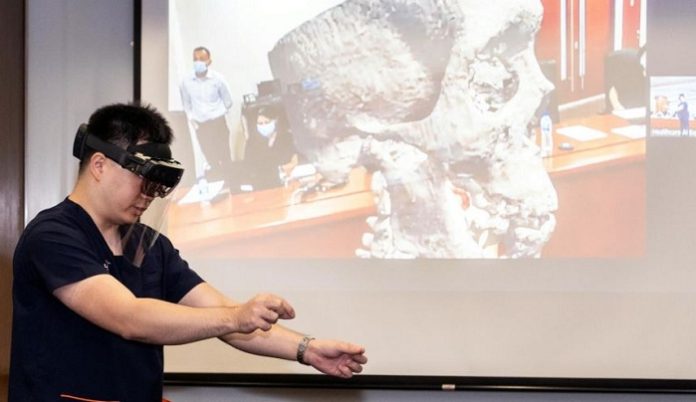
For the past year, NUHS has been working with Microsoft and German company apoQlar on using 3D holographic imaging for medical purposes.

Their aim is to synthesise many forms of data, such as from magnetic resonance imaging and CT scans, into a fully interactive 3D hologram, for example, of a patient’s skull or tissues.

This can be overlaid on the real world using HoloLens2, a MR device produced by Microsoft. It opens up different ways of improving healthcare, such as by increasing patient safety and operating efficiency.

“It offers the opportunity for us to streamline everything we do,” explained Dr Gao Yujia, programme lead of NUHS HoloMedicine. “Even on a trial basis… It is something that has endless possibilities.”

Professor Ngiam Kee Yuan, group chief technology officer at NUHS, said: “We designed this in a programmatic approach because we see more than one use for this… such as in administration and education.”

Prof Ngiam also leads a team of NUHS researchers as the only representatives for Singapore and Asia in 4CE, an international consortium studying the effects and epidemiology of Covid-19.

AI is also having an impact on cancer treatment. For over two years, NUHS has been working with China-based Ping An Health Technology on a clinical decision platform for managing gastroesophageal cancers.

Currently, the “gold standard” for cancer treatments is having a multidisciplinary team (MDT) with various specialists who discuss patient cases and decide on a treatment plan, said Professor Jimmy So, head of surgical oncology at the National University Cancer Institute.

“As you can see, this process is quite labour-intensive and resource-heavy,” Prof So added. “Unfortunately, this type of MDT is also not available for many smaller hospitals or clinics.”

With the new platform, the first of its kind in Singapore, oncologists can enter a patient’s information and receive updated treatment recommendations.

These will be based on evidence from the latest medical research, which will hopefully help health professionals strapped for time.


DSignage and Medrics Release Patient Mobile App in the U.S., Linking Patients to Services, Helping Reduces Costs

DSignage, a South Florida company that uses smart technology to enhance business communications, joins Medrics, a developer of interactive healthcare applications, on the release of a mobile app designed to improve patient experience and access to medical services.

The Medrics appโ€™s location and workflow technology uniquely benefit healthcare providers by reducing patient no-shows, increasing referrals and shortening outpatient wait times.

โ€œOur partnership with Medrics offers patients better control over their care. At the same time, it gives hospitals a better handle on reducing costs because of improved efficiency and communication,โ€ said Jose Diaz, CEO and founder of DSignage.

The app is already available at VA hospitals in Las Vegas and Orlando and at healthcare facilities in the United States, Romania, Turkey, Saudi Arabia and United Arab Emirates. It currently serves more than 350,000 users and has placed more than 15,000 appointments. The app features 47 customizable functions, including:

  • Smart appointment management;
  • Virtual doctor appointments;
  • Patient referral management;
  • Health-related videos and entertainment;
  • Access to medical records and results;
  • Manual and location-based messaging;
  • Wayfinding/location services;
  • Integration with provider EMR and CRM systems;
  • Zero-contact patient registration;
  • Smart patient surveys.

Medrics and DSignage leverage location intelligence technology to send users essential details, such as the fastest route to get to their appointments. It also lets the hospital know when patients are running late.

The app will link to DSignage digital displays in healthcare centers, allowing for personalized messages as patients walk by screens. Digital signs will dynamically refresh to display information relevant to the user. The app will even help patients navigate confusing healthcare facilities.

โ€œWeโ€™ll be able to trigger content on large screens and on their phones based on a userโ€™s location,โ€ Diaz said. โ€œWe can send them text messages, videos and emails to keep them informed with information essential to their health.โ€

More than 40 healthcare facilities in Europe, Asia and the Middle East use Medricsโ€™ interactive patient-care app, adding their brand and customizing user and multilanguage options to meet patientsโ€™ needs. Hospitals, physicians and healthcare staff credit the app with streamlining services, eliminating long patient waits and vastly reducing missed appointments, which cost the industry billions every year.

Hospital patient apps are at the forefront of the digital transformation of healthcare worldwide. COVID-19 accelerated the industryโ€™s need for change, prompting healthcare companies to invest millions in new technology to improve efficiency and ensure sustainability.

โ€œThe industry now understands that innovation and technology โ€” long used to treat and cure illnesses โ€” delivers benefits that improve services at every level,โ€ said Medrics Co-founder and CEO Altug Ozdamar. โ€œThe app enhances a providerโ€™s value-based care, and everyone benefits โ€“ from the administrators to the patients.โ€

The partnership with Medrics marks a significant milestone for DSignage, which uses digital tools like touchscreens and video displays to enhance communications with customers in the healthcare, corporation and retail industries. Using smartphones was a logical next step since itโ€™s the digital screen we all carry around.

โ€œLike it or not, everyone has a smartphone in their hands. Itโ€™s become an essential part of our lives,โ€ Diaz said. โ€œNow they give patients an edge when it comes to their health; it delivers tools that hospitals can bank on.โ€

About Medrics
The San Francisco-based Medrics develops integrated patient experience solutions to digitize the outpatient journey. Company uses location intelligence and mobile technologies to increase hospital KPIโ€™s resulting in increasing revenue and lowering cost of hospital operations. All solutions are white-labeled and customized, depending on priorities of clients.

About DSignage
Founded in 2005, DSignage is a South Florida-based tech company that develops smart technologies for businesses worldwide. The company uses technology to optimize the experience in large facilities such as hospitals, manufacturers and retailers. DSignage solutions range from mobile apps to touchscreens to video walls to better communicate with customers, patients and employees.

Role Of Digital Payments In Transforming Healthcare Industry

The Covid-19 pandemic has been a catalyst in accelerating digitisation of many sectors during the lockdown. However, a sector which has proven to be the most crucial during these tumultuous times is healthcare. With the rapid spread of Coronavirus, hospitals, pharmacies, diagnosticians, paramedics etc., had to instantaneously rethink their existing processes and alter it in a way to comply with the imposed instructions. One of the most important ways of doing this was digitising the processes almost entirely.

As social distancing became the norm, patients grew apprehensive of visiting hospitals or clinics and alternate ways saw a surge almost immediately. Many healthcare service providers began adopting digital modes of payments to minimise the risk of spread.

According to a report by Boston Consulting Group (BCG) and The Federation of Indian Chambers of Commerce & Industry (FICCI), there will be a main open digital ecosystem (ODE) that will unlock economic value worth over $200 billion by 2030. The ecosystem will become more efficient due to the adoption of standardised digital practices, creating $40-50 billion in savings.

This projection will hold true as during the lockdown, over 5 crore Indians accessed tele-consultation services across 2000 towns. This surge was supported because there was a strong digital infrastructure already in place. Needless to say, the sector was overwhelmed with changes such as elective procedures being cancelled, virtual interactions gaining momentum, remote working of staff, contactless medicine deliveries etc.

While most of these changes were driven by the pandemic, they are likely to continue in the future as well. Accelerated by demonetisaton, digital payments have enabled the healthcare sector in India to go truly contactless. Additionally, faster processing owing to streamlining of manual processes, digital invoices and minimising discrepancies are some key features of digital payments which will drive healthcare industryโ€™s transformation.

Growth of Indiaโ€™s online pharmacies

The lockdown restrictions gave a significant thrust to the already booming online pharmacy sector. As restrictions were imposed on movements of people, over-the-counter purchases saw a massive drop. However, essential medicines had to be purchased for patients with pre-existing medical conditions. These consumers immediately made the switch to online pharmacies. These pharmacies not only ensure convenience but also offer various value-added services such as discounts, rebates and lucrative cashback. Additionally, leading pharmacies such as 1mg, Pharmeasy, Netmeds and Medlife have looked to diversify their businesses with online lab testing, virtual doctor consultations, and insurance claims management services.

According to an industry report by FICCI, the number of households in India using e-pharmacy services during the nationwide pandemic-induced lockdown surged by about 2.5 times to 8.8 million. These numbers are a collective product of internet penetration, mobile availability and a strong digital infrastructure equipped with various modes of payments. As these 8.8 million households are already on a digital platform for months now, they are most likely to continue ordering their essentials digitally even post the pandemic.

Ease of billing

Itโ€™s no secret that healthcare incurs a lot of paperwork. However, with digital payments, the billing process becomes a cakewalk. Digital platforms and portals automate the process of bill generation and processing, thereby relieving the patients and their families of the unwanted hassle of billing. As patient information is stored on to digital platforms and medical portals, it results in reduction of time spent at billing counters, thereby increasing customer satisfaction.

Timely payments and settlements of claims

Just as you receive customised communication for the repayment of loans, agencies and policy providers share reminders of insurance payments owing to the data obtained using digital portals. These portals store information such as your name, payment dues and preferred mode of transaction and share the reminders accordingly. Upon receiving this, one is just a click away to clear the dues.

Similarly, settlements have seen shorter cycles as digital information is easily available to calculate and disburse the required amount.

Transparent ecosystem

A normal medical bill has numerous details and inclusions. At times, this baffles the patient or his/her family. With digital payments, every rupee spent is tracked and accounted for. There cannot be misappropriation of funds. As the patient is completely in agreement with the amount being billed, there is an immense sense of trust and confidence. In case of any discrepancies or misunderstandings, revisions can be made immediately and the same will reflect on a real-time basis.

Improved business proficiency

As processes go digital, manual intervention is minimised. Therefore, the chances of human error are close to zero. Removal of paper-based processes not only frees the staff from hours of tally but also aids them in channelizing their energies in providing better customer service. Also, digital payment platforms store tonnes of data securely and help in ease of forecasting, customisation and inventory management; all this within a few clicks!

For instance, as soon as the Government announced the nationwide lockdown, Dr Lal Pathlabs, one of Indiaโ€™s Top Diagnostic Chains, through their digital platform, seamlessly conducted its operations by allowing customers to interact, book tests and make payments digitally. Additionally, for patients who visited the centres, payment options were extended using Ongo PoS terminals to facilitate cash-less transactions. Solutions like these aid in reinstating customerโ€™s confidence in visiting labs and also simplify business processes by digitising them.

Enablement of telemedicine

While telemedicine and virtual consultations existed way before the pandemic, there has been a significant increase in the number of portals now. As per a report by Niti Ayog, all frontline healthcare workers are at a high risk of infection. Hence, the organisation is pushing for digital consultations during these times. With these virtual platforms, patients, especially ones in rural

areas, do not have to visit hospitals in metropolitan cities as their queries can be resolved remotely. Initially, one issue that hampered the growth of telemedicine was digital payments. Since most villages did not have power supply and there was a lack of digital literacy, consultation fee payment was an issue.

Now, with the increased mobile and internet penetration, patients can easily avail e-consultation and pay seamlessly using their preferred digital options such as UPI, wallets, cards etc.

Future

Healthcare sector has been immensely disrupted by digital payments. With all the data available, institutions can run loyalty programs, offers discounts on deliveries, tie-up with payment providers for rebates etc. This will not only aid customer retention but will also help in brand building.

Additionally, with the increasing number of consultation portals, online pharmacies, pathology labs, customers can compare the services and prices. This change will lead to the shift of power of choice to the customer, thereby, making the entire sector customer-centric. The increasing digital adoption will also lead to many service providers turn to holistic digital options that will not only cater to payments but also provide various value added services.

Disclaimer: The views expressed in the article above are those of the authors’ and do not necessarily represent or reflect the views of this publishing house. Unless otherwise noted, the author is writing in his/her personal capacity. They are not intended and should not be thought to represent official ideas, attitudes, or policies of any agency or institution.


ITRI Exhibits Innovations in AI, Robotics and e-Health at CES 2021

The Industrial Technology Research Institute (ITRI), Taiwan’s largest and one of the world’s leading high-tech applied research institutions, invites you to its event site for CES 2021 to view its innovations in artificial intelligence (AI), robotics and e-health.

Its highlight technologies include the Dual Arm Robot System (DARS);ย the Self-Learning Battery Management System (SL-BMS);ย the iCardioGuard wearable physiological and psychologicalย monitoring system; the Handheld Skin Quality Optical Coherence Tomographyย device for skin quality analysis; and the Sleep Learning Technology (SLT) for learning and memory improvement during sleep.

WHAT:

  • ITRI’s AI and robotics technologies at CES 2021 include:
    • The Dual Arm Robot System (DARS) is a human-like robot developed for multiple applications. With its two slim robotic arms and anthropomorphic hands, DARS can perform various tasks without using specifically designed tools. Advanced sensor technologies and machine learning algorithms enable its versatility.
    • The Self-Learning Battery Management System (SL-BMS) accurately estimates battery status in real time, including the remaining capacity, aging capacity, power-limited capacity and maximum power. For electrical vehicle applications, SL-BMS monitors energy consumption and transfers battery information into mileage information to eliminate range anxiety.
    • The UVC LED Water Sterilizer System HydroNovation provides immediate water sterilization by killing 99.9 percent of bacteria. It uses UV LED as its light source and reduces the module volume by one-third compared to a mercury lamp sterilizer. The system is ideal for emergency humanitarian assistance, disaster relief, and areas with poor sanitation.
  • ITRI’s e-health wearable technologies at CES 2021 include:
    • iCardioGuard is a wearable device for long-term real-time monitoring of physiological and psychological status for home and elder care. The device incorporates multi-sensing microwave and ECG technology and a cardio/psycho status analysis method for continuous cardiovascular monitoring and emotion/pressure/fatigue analysis.
    • The Heart Guardian is a non-invasive wearable device that monitors cardiac output, heart rate and stroke volume. With a miniature, high-sensitivity patch-type transducer, a low-power Doppler ultrasound signal processing chipset, and a mobile computing device, the Heart Guardian offers continuous real-time monitoring of patients with heart disease or a sleep disorder.
    • iSmartweaRย measures physiological conditions including heart rate and respiratory rate using fabric antenna sensing and non-contact nanosecond pulse near-field sensing (NPNS) technology. The system detects signals from up to 20 centimeters, different from existing smart clothing technologies requiring contact with the wearer’s skin. It has been verified for hospital night care with high accuracy. Medical workers can access the real-time information with a mobile app.
    • iDarlingWeaRย is a wearable innovation for infant healthcare featuring ITRI’s harmless low-power radar sensing technology. Caregivers need only attach the device to the baby’s blanket for continuous heartbeat and respiratory monitoring. iDarlingWeaR also detects whether the baby is asleep or awake and sends alerts if it detects abnormality.
  • ITRI’s e-health monitoring and inspection technologies at CES 2021 include:
    • The Handheld Skin Quality Optical Coherence Tomography analyzes skin quality by rapid high-resolution 3D imaging of skin structure. The device combines an opto-mechanical-electronics controller and an image processor to provide 3D optical biopsy using a broadband near-infrared light source.
    • Sleep Learning Technology (SLT)ย enhances memory and learning during sleep. It features a contactless solution for sleep phase detection and automatically adjusts light intensity for better sleep. In deep sleep, the device plays audio learning material to boost memory recall and consolidation and improve learning. Its technologies include recurrent neural network (RNN)-based Wi-Fi channel state information (CSI) sleep phase detection and comfortable sleep light technologies.
    • The Handheld Ultrasound System performs ultrasound exams anywhere, anytime, and saves critical time in emergency and intensive care. The 64-channel system supports changeable transducers and can process B-mode and color Doppler mode images. In the future, deep learning technology can be integrated to perform quantitative analysis for diagnosis of liver diseases.
    • The Measurement Technique for Lumbar Spine X-Ray Images uses deep learning modules and image processing algorithms to reduce time and labor for X-ray interpretation. It also provides X-ray imaging simulation and assists with surgical planning, clinical and auxiliary analysis.
    • The AI Decision Support Technology of Fundus Image in Diabetes Mellitus is the world’s first AI detection technology to locate, provide classification models and determine the severity of diabetic retinopathy (DR) lesions. It also uses AI to detect DR symptoms, provide decision support for ophthalmologist referrals, and optimal treatment timing for Clinical Significant Macular Edema (CSME).

About ITRI
Industrial Technology Research Institute (ITRI) is one of the world’s leading technology R&D institutions aiming to innovate a better future for society. Founded in 1973, ITRI has played a vital role in transforming Taiwan’s industries from labor-intensive into innovation-driven. To address market needs and global trends, it has launched its 2030 Technology Strategy & Roadmap and focuses on innovation development in Smart Living, Quality Health, and Sustainable Environment. It also strives to strengthen Intelligentization Enabling Technology to support diversified applications.

Over the years, ITRI is dedicated to incubating startups and spinoffs, including well-known names such as UMC and TSMC. In addition to its headquarters in Taiwan, ITRI has branch offices in the U.S., Europe, and Japan in an effort to extend its R&D scope and promote international cooperation across the globe.

Translate ยป