







Close
Digital Health & Ai Innovation summit 2026
Medical Taiwan 2026

UK hospital first to use AI cancer treatment tool

UK hospital first to use AI cancer treatment tool

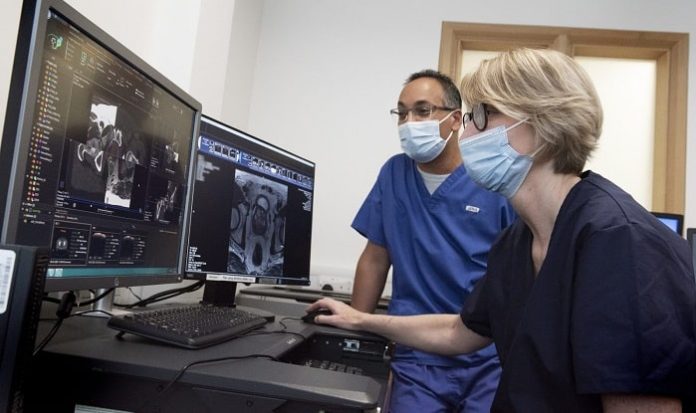
Addenbrooke’s Hospital in Cambridge is set to be the first hospital in the world to use InnerEye, an AI deep-learning tool from Microsoft Research Cambridge that accelerates the treatment of cancer patients. The technology computes hospital data to accurately identify tumours on patient scans, cutting CT processing times and treatment planning by up to 90%.

The toolkit could potentially reduce the waiting time for cancer treatment that has built up over the pandemic without compromising on the quality of care. Microsoft has also made the InnerEye software opensource and freely available in order to democratise care and ensure that as many people as possible can benefit from the tool.

When performed manually, a clinical oncologist or specialised technician must segment CT images obtained during a screening individually in a process called contouring. The medical professional outlines what are tumours and what are healthy organs on the scan, a process that can take several hours. The InnerEye toolkit processes these images 13 times faster than when done manually, utilising the hospitalโ€™s own data to improve accuracy and presenting the data to be carefully checked by the consultant oncologist.

Up to half of people in the UK will be diagnosed with cancer at some point in their life. According to Cancer Research, the pandemic has meant an estimated three million people in the UK have missed out on cancer screenings due to hospital restrictions, creating a severe backlog of patients waiting for treatment. The InnerEye toolkit, which is hosted securely on Microsoftโ€™s Azure cloud, enables clinicians to spend more time with more patients whilst ensuring their treatment plans are tailored to them individually.

AI and deep learning are becoming a growing presence in digital care in the UK, with the government recently announcing a ยฃ20 million injection of funds into AI research.

Dr Rajesh Jena, an oncologist at Addenbrookeโ€™s and co-lead of InnerEye, said: โ€œThe results from InnerEye are a game-changer. To be diagnosed with a tumour of any kind is an incredibly traumatic experience for patients. So as clinicians we want to start radiotherapy promptly to improve survival rates and reduce anxiety. Using machine learning tools can save time for busy clinicians and help get our patients into treatment as quickly as possible.โ€

โ€œThere is no doubt that InnerEye is saving me time,โ€ said Yvonne Rimmer, consultant clinical oncologist at Addenbrookeโ€™s. โ€œItโ€™s speeding up the process so I can concentrate on looking at a patientโ€™s diagnostic images and tailoring treatment to them. But itโ€™s important for patients to know that the AI is helping me in my professional role; itโ€™s not replacing me in the process. I double check everything the AI does and can change it if I need to. The key thing is that most of the time, I donโ€™t need to change anything.โ€

Javier Alvarez-Valle, principal research manager at Microsoft Research Cambridge, said: โ€œAI models trained with InnerEye are changing the way cancer is treated, speeding up the process to give patients greater peace of mind and empowering clinical oncologists with an AI assistant. The AI works in the background, so clinical oncologists just open up the scans on their computer and they can see what their AI model has highlighted. The clinical oncologist then decides what to do with that information.โ€

UAE government unveils e-complaint system to report healthcare malpractices

Your Dream to Earn CompTIA Network+ Certification Can Become a Reality โ€“ Just Take Practice Tests from Examsnap!

Medical malpractices and administrative errors conducted in private hospitals and clinics in the United Arab Emirates (UAE) can soon be reported via a centralised system, it has been revealed.

Unveiled by the Gulf countryโ€™s Ministry of Health and Prevention (MoHAP) during GITEX Technology Week 2020, the new e-complaint system is being launched to โ€œto ensure that medical and technical personnel are playing their role in accordance with the policies and regulations of the private health sector,โ€ MoHAP said in a statement.

The new system is part of MoHAPโ€™s โ€œefforts to upgrade the quality of the healthcare system, innovate smart solutions, adhere to the implementation of quality systems, and to actively take part in shaping public policies and strategies,โ€ said the assistant undersecretary of MoHAPโ€™s Public Health Policy and Licenses department, Amin Hussein Al Amiri.

It will reportedly work by logging the complaint and allowing the transfer of a patientโ€™s medical records to MoHAP โ€œwhile maintaining full confidentialityโ€.

Those who log a complaint will be able to track its status at all times until โ€œa final outcome is entered by a neutral medical committeeโ€ called the Medical Liability Committee. The committee would โ€œinvestigate the incident and hear both parties, as well as assess the medical procedures followed by the doctor,โ€ MoHAP continued.

ON THE RECORD

Hessa Mubarak, MoHAPโ€™s Director of Health Empowerment and Compliance added: โ€œThe new system is an important asset to the existing procedures, as it eases the handling of complaints for all stakeholders to achieve the health compliance of private medical facilities.

โ€œIt allows all individuals, whether residents or visitors, to file a complaint on private health facilities together with all the supporting evidence. A report, then, is submitted to the Medical Licensing Committee to take the appropriate action.โ€

U.K. Invests $330 Million To Lead The World In Healthcare AI

The year 2020 has undoubtedly provided those in healthcare and technology communities with multiple problems to solve. From enabling telemedicine at scale to creating and distributing an entirely new vaccine, the problems caused by the pandemic have required collaboration, investment and adoption at speed previously unseen in healthcare.

As well as solving the acute problems caused by the vaccine, healthcare organisations are now faced with the challenge of addressing a significant backlog. New NHS England figures show the number of patients waiting to start treatment at the end of October 2020 was 4.44 million and of those, 162,888 were waiting more than a full year. While we were dealing with the immediate issue, a lot of healthcare stopped, but the requirement for it certainly did not. A great deal now needs to be done.

Can A.I. help clear the healthcare backlog?

In September 2020, NHSX, the organisation driving the digital transformation of health and social care, announced that 42 tech companies will receive a share of over ยฃ50M ($66M) in phase one of its ยฃ140M ($186M) AI in Health and Care Award.

The award, part of the NHS AI Lab programme, is the latest actualisation of the NHS Long Term Plan and Simon Stevensโ€™ 2019 commitment of ยฃ250M ($330M) investment to enable collaboration and co-creation between government, health and care providers, academics and technology companies so they can address the existing barriers to development and deployment of AI systems in health and care. In doing so, the hope is to catalyse the adoption of AI in healthcare whilst creating an environment to develop the appropriate guidance and regulations to protect patients.

Many trying to innovate in healthcare still face jibes about the use of fax machines in hospitals, but this level of investment from a central NHS organisation into AI companies shows that there is a contradicting, simultaneous, high-tech strategy at play. And it looks to be for the long term. With a second competition closing last week, this commitment for continuation in the same vein and the blossoming relationship between innovative technology startups and the NHS shows early promise.

Cerner Simplifies Ordering and Monitoring of Digital Health Solutions

Cerner Simplifies Ordering and Monitoring of Digital Health Solutions

Cerner Corporation announced itโ€™s building on the recent collaboration with Xealth to offer health systems new centralized digital ordering and monitoring for clients. These capabilities are designed to help health systems choose, manage and deploy digital tools and applications while offering clinicians access to remote monitoring and more direct engagement with patients. Phoenix-based Banner Health, one of the countryโ€™s largest nonprofit hospital systems, is one of the first Cerner clients to use the new capabilities to benefit its clinicians and patients.

With the new capabilities, health systems can prescribe digital therapeutics, smart phones and internet applications to address areas such as chronic disease management, behavioral health, maternity care and surgery prep. This access to a more holistic view of the organizationโ€™s digital health solutions supports the clinical decisions doctors make every day and provides real opportunities to improve medical outcomes and enhance efficiency, meet increasing demand for telehealth and offer remote patient monitoring. For example, the new capabilities can help simplify how clinicians prescribe tools such as mobile mental health apps to monitor anxiety triggers or a glucose device to help trace blood sugar levels for diabetes patients.

โ€œAs digital tools are increasingly included in care plans, health systems seek a way to organize and oversee their use across the health system. We anticipate the emergence of digital and therapeutic committees to govern digital tool selection similar to how pharmacy and therapeutic committees have historically governed medication formularies,โ€ said David Bradshaw, senior vice president, Consumer and Employer Solutions, Cerner. โ€œDigital health has extraordinary potential to reshape the way we care for patients and, working with Xealth, we are answering the need and helping providers create more engaging and effective patient experiences.โ€

Digital health has great potential to make an immediate difference, especially as it relates to automating patient education, delivering virtual care, supporting telehealth and offering remote patient monitoring. Health systems with a digital health program and strategy in place have the ability to respond faster and more efficiently.

โ€œBanner Health is known for providing leadership and embracing technology to improve patient care in this rapidly transforming health care environment,โ€ said Scott Nordlund, chief strategy and growth officer, Banner Health. โ€œOur patients expect to be treated like consumers. Mindful of that expectation, we are utilizing new capabilities and expanding our formulary to make digital health easier for our doctors to deploy and monitor. We are pleased that Cerner and Xealth hold the same beliefs as key partners supporting both our care goals and our mission to make health care easier so life can be better.โ€

Digital solutions will be available in a single location in the electronic health record where health systems can use applications based on clinical and financial metrics. A wide array of digital health tools is integrated with Xealthโ€™s offering today and the list is ever-growing. Early examples of companies that have previously deployed in health systems using Xealth include Babyscripts, Glooko, SilverCloud Health, Welldoc, as well as Healthwise Inc., GetWellNetwork and ResMed that have existing relationships with Cerner.

โ€œNow, more than ever, extending care teams to meet patients where they are is critical,โ€ said Mike McSherry, CEO and co-founder, Xealth. โ€œAs digital health programs roll out, they should elevate both the patient and provider experience. Cerner building out a digital formulary, with Xealth at its core, is listening to its strong clinician base by delivering tools to enhance patient care, without adding additional steps for the care team.โ€

Sight Diagnostics Expands to the Gulf Region through a Distribution Partnership with Phoenix Capital

Sight Diagnostics Expands to the Gulf Region through a Distribution Partnership with Phoenix Capital

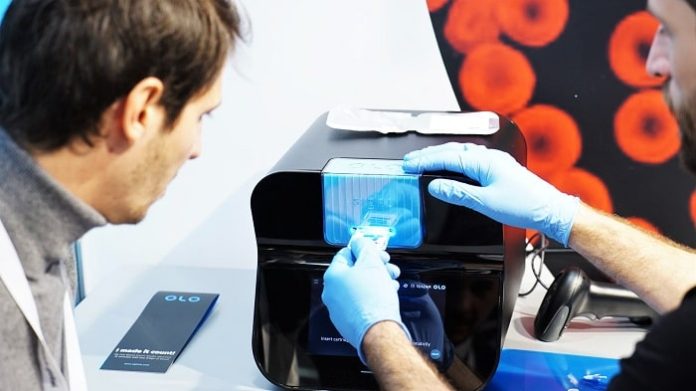
Sight Diagnostics, the company delivering lab-grade Complete Blood Count (CBC) results in minutes, announced a distribution partnership with Phoenix Capital to extend Sightโ€™s footprint in the Middle East. Through the partnership, Sight will provide OLO analyzers โ€“ the companyโ€™s decentralized, lab-quality diagnostic technology โ€“ to medical centers across the Middle East to help providers make quick and informed treatment decisions.

Most outpatient clinics in the United Arab Emirates are currently operating mini-labs with legacy diagnostic technologies like flow cytometry, which require large, expensive machines that arenโ€™t suited for point-of-care (POC) settings. As such, there is an increasing demand for modern POC diagnostics in the Middle East and Africa, with the market projected to reach $2.85 billion by 2024.

Sight OLO enables fast, accurate, convenient blood diagnostics by delivering CBC results in minutes right at the point-of-care*. About the size of a toaster oven, OLO is small, compact, and light-weight, allowing for quick, simple set-up wherever itโ€™s needed. Unlike traditional CBC analyzers, Sight OLO does not require reagents or manual quality control checks, making it easy for smaller clinics or independent practices to access and operate.

Abdullah Saeed Al Naboodah, Chairman of Phoenix Capital remarks, โ€œWe chose Sight OLO because it simply meets the needs of the clinics we distribute to. With the influx of patients due to COVID-19, having access to fast, accurate fingerprick diagnostics is essential to quickly and correctly triage and treat our clinicโ€™s patients.โ€

Phoenix Capital will first distribute Sight OLO to the nine medical centers it owns across the United Arab Emirates. Over the next year, Sight will work with Phoenix Capital to start expanding OLOโ€™s install base in the rest of the Gulf Cooperation Council region.

โ€œWeโ€™re determined to democratize access to rapid, accurate, and convenient diagnostics in countries around the world,โ€ says Yossi Pollak, CEO and Cofounder of Sight Diagnostics. โ€œWeโ€™re looking forward to expanding into this new market through our partnership with Phoenix Capital to help meet the needs of emergency rooms, clinics, hospitals, and other care facilities that have been impacted by COVID-19.โ€

This distribution partnership follows a recent investment partnership between Phoenix Capital and OurCrowd, one of Sightโ€™s longtime investors that recently participated in the diagnostic companyโ€™s $71 million Series D funding round. Notably, the news also follows a historic normalization agreement between Israel and the United Arab Emirates, signaling the countriesโ€™ progress in sharing resources and technology to improve healthcare together.

*Sight OLO received regulatory approval for use in the UAE and is CE Marked according to the IVD European directive at point of care settings. In the United States, Sight OLO is 510(k) cleared for use in moderate complexity laboratories; it has not yet been cleared for point-of-care use.

About Sight Diagnostics
Founded in 2011, Sight Diagnostics aims to transform health systems and patient outcomes through accurate and pain-free blood diagnostic testing. Sightโ€™s technology, developed over almost a decade of research, represents breakthrough innovations in diagnostic methodology. Sightโ€™s latest blood analyzer, Sight OLO, performs a Complete Blood Count, the most commonly ordered blood test, in minutes. Itโ€™s compact: designed to be used in a variety of settings. Sight OLO creates a digital version of a blood sample by capturing more than 1,000 highly detailed images from just two drops of blood obtained from a finger prick or venous sample. These images are then interpreted by proprietary and fully automated AI algorithms. Sightโ€™s first product, ParasightTM, has been used to detect malaria in almost 1 million tests across 24 countries. The company has rapidly growing offices in the UK, the US and Israel.

About Phoenix Capital
Phoenix Capital was established by Mr Abdullah Al Naboodah to help catalyze the growth of expansion-seeking entrepreneurs and businesses from around the globe and to help create a more developed and connected world. By leveraging experiences in a diverse array of industries, Phoenix Capitalโ€™s portfolio of sophisticated and wide-ranging clients and partners serve as a springboard for entities with ambition to penetrate the GCC (Gulf Cooperation Council).

Fitch Ratings upgrades not-for-profit hospital outlook to stable as facilities meet challenge of COVID-19

Fitch Ratings upgrades not-for-profit hospital outlook to stable as facilities meet challenge of COVID-19

Fitch Ratings upgraded its outlook for not-for-profit hospitals from negative to stable going into 2021 as hospitals get a better handle on treating COVID-19.

The ratings agency emphasized in a 2021 outlook report Wednesday that hospitals are still going to have a difficult 2021 as profit margins are likely to continue to be down. Hospital systems faced a financial crisis caused by the cancellation of elective procedures at the onset of the pandemic in March.

But Fitch doesnโ€™t predict that another nationwide shutdown of procedures is likely at this time, even as some systems have temporarily paused procedures with new surges of the virus.

โ€œElective procedures, even at a reduced clip, should not hit hospitals as hard financially as the nationwide shutdown that cut top line revenues by around 40% in Spring of 2020,” said Kevin Holloran, a senior director with Fitch, in a statement.

The reason is that hospitals have a better handle on treating COVID-19 infections and can shorten hospital stays, he said. But do not expect a major turnaround for hospitals, especially in the first half of 2021 as vaccines continue to be distributed. Hospitals will still have to pay extra for supplies and staff as they must continue to fight the virus.

โ€œProviders will need to secure a mini-stockpile of ventilators, masks, gowns, drugs and certain types of beds, though adequate staffing will be the most critical component,” Holloran said.

Some of the higher costs for staff come from hiring temporary workers, premium pay and supplemental benefits.

Fitch also said hospitals are likely to hold more debt on their books. โ€œAs the pandemic began to affect revenues, many providers exercised their ability to secure additional liquidity in the form of drawn commercial paper, establishing and/or drawing down lines of credit, or even issuing taxable debt for general purposes,โ€ the ratings agencyโ€™s outlook report said.

The agency added that a โ€œsignificant amountโ€ of this short-term debt will remain on hospitalsโ€™ balance sheets.

Some potential headwinds for the hospital sector include a worsening payer mix with fewer patients with commercial insurance and a larger amount of self-pay or Medicaid patients, which have a smaller reimbursement rate than commercial plans.

The change to this payer mix could depend on the economy of a certain area. โ€œWe would be especially concerned if the service area had been highly reliant on tourism or transportation, or oil production in some cases,โ€ Fitchโ€™s report said.

Smaller providers that cannot blunt the financial impact of the pandemic could also align with larger providers after the pandemic starts to subside, leading to a higher degree of deal activity in the latter half of the year.

โ€œFitch believes these factors may ultimately lead to additional merger and integration activity once the immediate crisis has passed,โ€ the report said.

Times Network launches a special mental health initiative

Mental Health Programs: How To Know Which Therapy Is Right For You

Times Network, Indiaโ€™s premium broadcast network, has launched a special mental health initiative, #ActNow, to spread awareness about the rising mental health crisis in India and drive the importance of urgently addressing the issues related to the crisis.

As part of the campaign, a film, Act Now, has been unveiled which can be accessed at https://youtu.be/_-duTzdnXQo. The initiative draws relevance from Times Networkโ€™s nationwide research done by Nielsen India on โ€˜How Urban India Perceives Mental Healthโ€™ – presents an in-depth analysis of the mental health landscape in the country.

Dismantling the taboo around mental health ailments, #ActNow takes an outside-in view of the problem and targets the โ€˜people aroundโ€™ to act, rather than the one living with mental health issues. The initiative launched on a special edition of Mirror NOWโ€™s Urban Debate.

Mirroring how societal structures treat a person living with a mental ailment with ignorance, pity, annoyance and utter disbelief, the film unravels the state of mind of someone who is besieged by misinterpreted advice of his near and dear ones as he fights a lone battle.

Times Networkโ€™s study done by Nielsen indicates that while awareness levels related to mental health ailments have gone up recently, there is a pressing need to disseminate the factual information to tackle the strong undercurrents of stigma and lack access to quality mental healthcare.

Daman digital healthcare company signs with Gilead to help more people with arthritis

Chronic Pain Management: A Helpful Guide

Daman, a digital healthcare company based in Denmark, has partnered with pharmaceutical firms Gilead Sciences and Galapagos to reach more people living with rheumatoid arthritis.

The chronic condition affects around 17.6 million people worldwide, and the WHO estimate that at least 50 per cent of people who develop it are unable to hold down a full-time job within 10 years.

Daman’s new agreement will include 15 global markets, with which they hope to reach more patients living with the illness. The partnership agreement runs until September 2021, with the possibility of extension.

Currently around 13,000 people use Daman’s RheumaBuddy app, which lets people rate their symptoms on a daily basis. The app summarises this info and then provides an overview to the patient and their doctor.

RheumaBuddy also encourages patients to engage with their treatment and speak to other people with the condition.

Over the next 6 months Daman will be adding new features that have been co-created with patients. These include My Plan & Goal, which will guide healthy habits towards improving quality of life; and a function to help patients collaborate more closely with rheumatologists.

Andreas Dam, CEO at Daman, said: “There is a huge unmet need among RA patients to give more holistic care offerings. The partnership enables us to take important steps in the direction โ€“ to the benefit of patients and society.โ€

As well as RheumaBuddy, Daman are the creators of HealthBuddy, a tool that collects patient data via a symptom tracker or diary, and uses machine learning to develop insights and personalised solutions.

https://www.healthcareglobal.com/digital-healthcare/medtech-startup-partners-gilead-and-galapagos

Healthily partners with online physio platform

Healthily partners with online physio platform

UK-based online physiotherapy clinic PhysioFastOnline has partnered with Healthily, a self-care app that helps people manage their healthcare, with the aim of providing virtual physiotherapy to more people.

Users of PhysioFastOnline with muscoloskeletal (MSK) issues like sprains, strains and bad backs answer a range of questions to find out what type of advice and treatment they need. They can then be offered virtual consultations with a qualified physiotherapist, which will generally be available on the same day.

Referrals to a specialist are also available if needed, including to personalised rehab programmes.

Online physiotherapists are accredited with both the Health and Care Professions Council and the Chartered Society of Physiotherapists. All have a minimum of five years’ experience of providing muscoloskeletal physiotherapy, whether in the National Health Service (NHS), private practice or sports therapy settings.

A recent survey commissioned by Healthily of 2,200 adults and 100 doctors from across the UK, found that over two-thirds (67 per cent) of doctors want their patients to take greater responsibility for their own health and relieve pressure on the NHS.

Additionally 1 in 4 adults in the UK are affected by a muscoloskeletal disorder, which is around 9.6 million people, accounting for 30 per cent of doctor visits.

Healthily provides information on hundreds of health conditions, including sexual health, colds and flu, and nutritional information, via a symptom tracker among other tools. The platform is registered as a Class 1 medical device, and is available on Android and iOS.

Matt West, Chief Commercial Officer at Healthily said: โ€œAt Healthily, weโ€™re on a mission to change the world by bringing informed, effective self-care to 1 billion people. This means working closely with likeminded companies such as PhysioFastOnline to provide a wide range of solutions.โ€


The role of air sterilisation in the fight against Covid-19

The role of air sterilisation in the fight against Covid-19

When trying to figure out what โ€˜bestโ€™ to do for the UK and globally in these unprecedented times, it is easy to become paralysed with indecision at the options. Do we prioritise the NHS while keeping the economy closed and people at home, or is it โ€˜bestโ€™ to open the economy and try to save jobs, knowingly increasing pressure on healthcare workers?

Add to this the threat of a โ€˜twindemicโ€™ with seasonal flu and that indecision deepens. The biggest challenge is people. People spread the pandemic, the pathogens, and the possibility of more problems, and no amount of cleaning, face masks, or hand sanitising can fully eliminate risk as long as people keep interacting. So, what should we do?

Air sterilisation might just be the unsung hero for this problem, both within and beyond the healthcare setting, and both as a short-and long-term solution to support the economy reopening without deepening the risk.

How long will people be prepared to wear masks in public or stick with the rule of six? Shouldnโ€™t we be looking ahead to see how we create long-term pathogen controls in public places and offices, not only to reduce the immediate risk and deliver infection control, but also to generally decrease infection risk and absenteeism within the economy?

This can then go hand in hand with the longer-term proactive measures like vaccine and medicine developments which will no doubt help to reduce and treat cases, minimising deaths in the coming years.

What is air sterilisation and how does it help?

Aside from the emergence of new, unseen pathogens like Covid-19, the biggest challenge in infection control stakes is the movement of people. An area is only โ€˜cleanโ€™ in the moments after it has been cleaned, before people make their way through it; coughing, spluttering, and touching, when aerosolised spores and pathogens start to resettle on surfaces.

Add to this the long-tail incubation period of Covid-19 and a single infected individual is unknowingly spreading the virus for days before they show any symptoms.

Current guidance for managing infection risk has three core focuses: cleaning, accurate record-keeping, and space adaptations such as Perspex screens. The question is whether these steps are enough, or whether they just create the perception of safety within an environment.

According to research by Kingโ€™s College London, who ran an antibody testing study, at least one in five people from the group didnโ€™t show any symptoms at all of Covid-19 despite having, or having had the virus. Meanwhile more than 25 per cent who did fall ill, did so without having any of the three core symptoms that commonly identify those with Covid-19. The average business cannot claim to be infection control experts, so how can we manage the real risk of infection effectively?

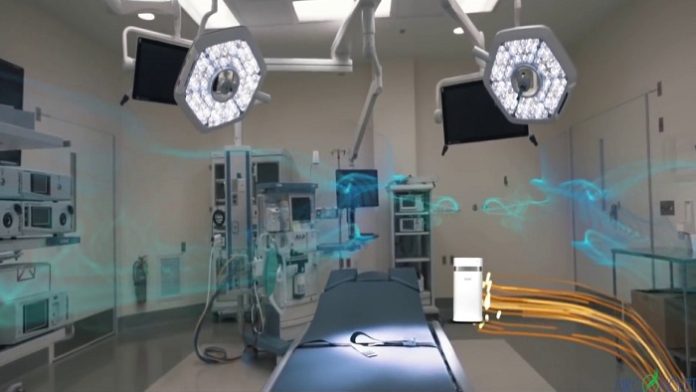
Air sterilisation is not actually a new solution, but it is in my opinion a severely underutilised one. It involves the installation of a discrete, standalone unit which works by using a series of air and surface purification technologies to help manage infection risk in a room.

Each brand varies slightly in terms of what techniques are used and how effective they are, but they will have a set purpose to neutralise microbes, bacteria, dust or even odours. We are the UK distributors for a brand called AIRsteril for example, which works both for air sterilisation and surface sterilisation by producing plasma quatro.

The AIRsteril technology specifically combines sterilising, cleaning, and purifying technologies, including germicidal UV light, dual UV operation, Photocatalytic Oxidation (PCO) and a purifying plasma of superoxide ions and optimal ozone. These techniques together kill up to 99.9 per cent of germs and viruses, before releasing the purified air back into the room as a plasma.

The plasma then kills airborne pathogens, viruses, bacteria, fungi, mould spores and allergens, and decomposes odours and harmful gases. Its effectiveness was tested by Leeds University and shows that airborne microorganisms were undetectable after just 60 minutes.

This is where things get really cool, as the process not only manages airborne infection risk, but also sanitises surfaces and the wider environment. The purified plasma breaks down microorganism cell walls, destroying the cells and preventing them from reproducing. As the plasma moves over surfaces โ€“ any surfaces including hard and soft materials โ€“ it also kills the germs which are left behind by touching, breathing and coughing or which have settled in the environment.

The core advantage is that it works constantly, so even if people move around and leave pathogens behind in between cleaning schedules, viruses and bacteria will likely be eliminated in a matter of minutes if not hours. To put this into context, AIRsteril was tested in a quantified NHS call centre environment, prior to the pandemic; constant air sterilisation resulted in a 42 per cent reduction in absenteeism, particularly for asthma, cold, cough, influenza, chest, and respiratory problems.

While the priority here was managing absenteeism, this model translates to significantly reduced infection transfer, and significantly reduced disruption through suspected Covid-19 cases.

For me, the solution isnโ€™t simple, but I genuinely believe that we can successfully minimise infection risk through a combined effort of public and private measures, medicine and vaccines, and with the addition of active technologies like air sterilisation to manage the overall risk.


Translate ยป