Close
Digital Health & Ai Innovation summit 2026
Medical Taiwan 2026

Johnson & Johnson to test single-shot coronavirus vaccine on 60,000 people in phase-3 trials

Johnson & Johnson to test single-shot coronavirus vaccine on 60,000 people in phase-3 trials

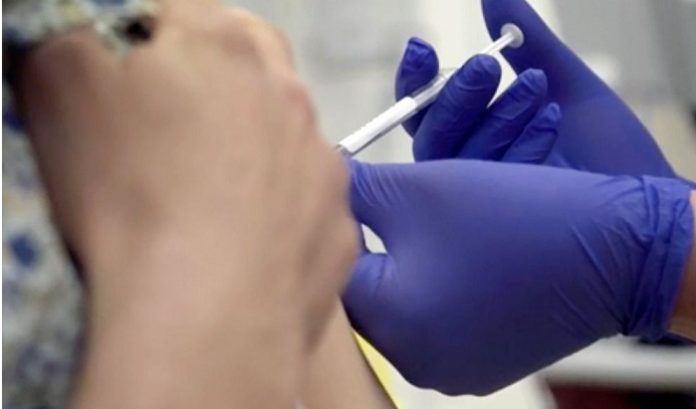
Pharmaceutical giant Johnson & Johnson (J&J) has begun the phase-three trials of its single-shot coronavirus vaccine candidate, the company announced on September 23.

The fourth experimental vaccine to enter the last stage of trials in the United States will recruit up to 60,000 adult volunteers in the US and other countries to determine its safety and effectiveness.

Unlike the three vaccines developed by Moderna, Pfizer and BioNTech, and AstraZeneca and the University of Oxford, that require a re-visit and second shot three to four weeks after the first one to trigger a protective immune response, J&J will be initially testing a single dose.

Besides, J&J vaccine can also be stored in liquid form at refrigerator temperatures for three months, whereas two of the front-runner candidates must be frozen or kept at ultracold temperatures for long-term storage.

โ€œA single-shot vaccine, if itโ€™s safe and effective, will have substantial logistic advantages for global pandemic control,โ€ said Dan Barouch, director of the Center for Virology and Vaccine Research at Beth Israel Deaconess Medical Center in Boston, who partnered with J&J to develop the vaccine told Washington Post.

InXite 360 Unveils the World’s First COVID-19 Smart Response Robot

InXite 360 Unveils the World's First COVID-19 Smart Response Robot

InXite 360, an innovative healthcare solutions company, in partnership with COVID-19 Global Supplies (C19GS), has announced the launch of a revolutionary smart response robot to combat the spread of COVID-19.

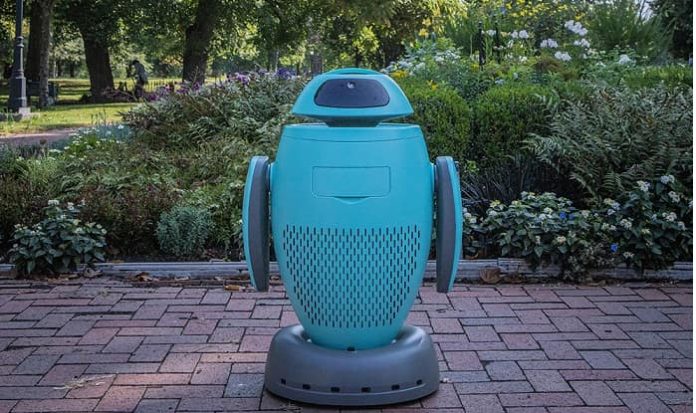
The robot, dubbed the iX360, is a fully autonomous, multifunctional robot that purifies air, eliminates germs and kills a host of bacteria and viruses, including COVID-19, MRSA, E. coli, influenza and more.

Industry-leading features

The iX360 creates a 99.9% sterile environment using a combination of filtered air, ultraviolet light and ozone properties that exceed cleaning and disinfection guidelines as set forth by the Centers for Disease Control (CDC). Other key components include:

  • Non-contact temperature screening
    The robot quickly screens and detects individuals with elevated temperaturesโ€”even in a crowd. And, because it uses non-contact thermal image technology, the chance of cross- infection is eliminated.
  • Hand sanitization
    With a wave in front of the robotโ€™s arm, the iX360 dispenses an exclusive antibacterial hand sanitizer that is perfect for use in high traffic areas.
  • Disinfection drawer and handheld UV lamp
    The robot comes complete with a convenient UV drawer and handheld UV lamp where users may disinfect phones, tablets, keys and more at the touch of a button.
  • Self-charging
    When the robotโ€™s battery begins to run low, it automatically returns to its station to recharge.
  • Easy-to-use app
    With the iX360 mobile app, users can remotely control the robot, view usage information and analyze critical data.

โ€œWhen it comes to making businesses, schools and our communities safe again, the iX360 is truly a game changer,โ€ said InXite Data and C19GS President and CEO James Paat. โ€œWeโ€™re talking significant pandemic control and disinfection efficiency while reducing the risk of exposure. And, because the robot is completely autonomous, it can work โ€™round the clock without human interventionโ€”saving organizations thousands of payroll dollars annually.

โ€œAlthough many businesses have already implemented a cleaning and disinfection regimen in response to the COVID-19 pandemic, the addition of the iX360 robot will give employees and customers that additional peace of mind that their facility is safe and in strict compliance,โ€ said Paat.

About InXite 360

InXite 360 is an innovative healthcare solutions company that offers a fully comprehensive suite of solutions, products and services to help businesses become COVID-Safe.

About COVID-19 Global Supplies

COVID-19 Global Supplies connects suppliers with purchasers of critically needed COVID-19 healthcare products through a global online marketplace. We serve nations, communities, hospitals, businesses, health systems and retailers to provide them with access to COVID-19 products such as masks, test kits, protective clothing, face shields, thermometers, gloves and more.

Nationwide Study Shows Consumers ‘Insecure’ in Re-engaging with the U.S. Healthcare System, whether In-person or Remotely

Nationwide Study Shows Consumers 'Insecure' in Re-engaging with the U.S. Healthcare System, whether In-person or Remotely

With the stickiness of telemedicine in a post-pandemic landscape weighing on the minds of healthcare providers, telehealth company executives and insurers alike, a newly released study shows significant levels of consumer insecurity on both sides of the remote versus in-person delivery fence. The nationwide study, published by global market research firm Martec and the healthcare marketing division of The Motion Agency, documents a dramatic 45 percent increase in consumersโ€™ concern over being in a hospital or doctorโ€™s office since the onset of COVID-19, juxtaposed against largely ambivalent feelings toward telemedicine.

โ€œThere are clearly tradeoffs with remote healthcare,โ€ said study co-author Jim Durkin, Founding Partner, Martec. โ€œWhile 40 percent of respondents indicated missing the structure of in-person visits with their physicians, the lure of no wait times and easily getting appointments could balance that out.โ€

More than half of all consumers have now experienced a remote visit with a healthcare provider, according to the study findings, up from 31 percent in February. Among those who havenโ€™t yet engaged in a virtual visit, a third say theyโ€™re highly likely to consider one.

โ€œThe challenge,โ€ Durkin said, โ€œis that the largest percentage of both groups โ€“ 46 percent of telehealth users and 53 percent of non-users โ€“ are neutral about future engagement. Theyโ€™re intrigued, but they still need to be won over.โ€

This new study explores data collected from a June 2020 survey of 1,000 respondents across the United States, representing a cross-section of residents from states with major, moderate and minor COVID-19 stay-at-home and social distancing restrictions.

Being positioned as one of the most in-depth explorations to-date of the attitudes, behaviors and emotions of U.S. consumers during the COVID-19 pandemic, it utilizes Martecโ€™s proprietary Emotion Intelligence methodology to move beyond participantsโ€™ conscious responses to unearth decision-driving nonconscious feelings.
Emotion Intelligence

โ€œResearch shows that 95 percent of cognitive activity takes place on the nonconscious โ€˜fast track,โ€™ as opposed to the slow, logical plain of conscious thought,โ€ said Chuck Bean, Partner and Chief Marketing Officer, Martec. โ€œAnd when it comes to making decisions, people really do go with their gut.โ€

The Martec Emotion Intelligence process maps respondentsโ€™ words to 32 different emotion channels, ranging from the most positive (loyalty, kindness, acceptance, interest) to the most negative (contempt, anger, rejection, disinterest). A layered questioning approach categorizes chosen emotion words and their relative intensity to drill below the surface of conscious into nonconscious reactions, often presenting a telling disconnect between what people say and what they feel.

In this study, when addressing reengaging with healthcare providers in-person, 59 percent of conscious emotions expressed were positive (security, worth, serenity, confidence, joy), while only 38 percent of nonconscious emotions detected fell on the positive side of the spectrum. Among the 62 percent of negative nonconscious emotions identified were insecurity (which ranked number-one among both conscious and nonconscious emotions), fear and hesitation.

Interestingly, insecurity was also the top-ranking nonconscious emotion when respondents were asked about reengaging with healthcare providers remotely after the pandemic, despite security being the number-one conscious emotion expressed.

Overall, 67 percent of conscious emotions expressed about engaging with providers remotely were positive, in contrast to only 43 percent of nonconscious emotions. In other words, consumers have mixed emotions about telehealth, especially at a nonconscious level.

Consumer Segmentation

The study identified four unique consumer segments with significantly varying viewpoints on reengaging with the healthcare ecosystem:

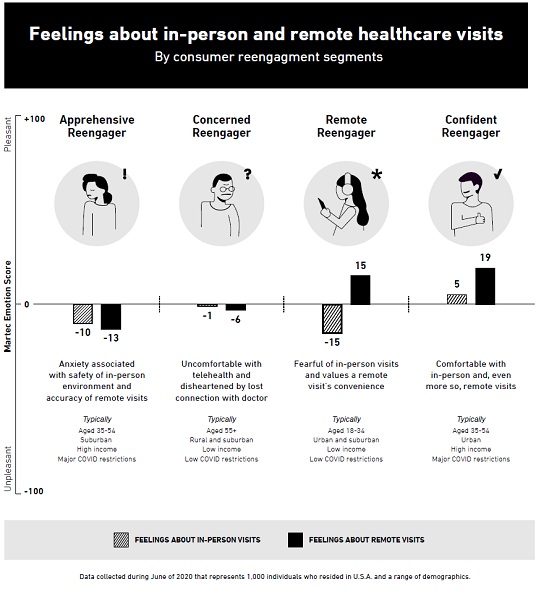
The Apprehensive Reengager โ€“ Primarily Caucasian and married, these 35- to 54-year-old suburbanites represent the lowest incidence of telehealth experience among the identified consumer segments, both prior to and during COVID, and the highest level of concern about being in a hospital or doctorโ€™s office. They simultaneously expressed concern about the accuracy of telemedicine and skepticism about healthcare facilitiesโ€™ sanitization and PPE protocols โ€“ a dichotomy borne out by the groupโ€™s Martec Emotion Scores (MES)* showing comparable levels of anxiety with both remote (-13) and in-person (-10) visits. Reporting the biggest drop in mental and emotional health of any segment, a high percentage of โ€œapprehensive reengagersโ€ live in states with major COVID-19 restrictions. They are college educated with annual incomes ranging from $50,000 to $150,000.

The Concerned Reengager โ€“ The oldest (55-plus) group among the segments, these individuals are predominately Caucasian and live in mostly rural or suburban areas with low COVID-19 restrictions. They reported a low incidence of remote visit experience, both prior to and during COVID-19, and although expressing a high level of concern about being in a hospital or doctorโ€™s office, the groupโ€™s MES showed slightly more concern surrounding telehealth (-6) than in-person (-1) visits.

Specifically, they said they view in-person doctor visits as more productive than remote visits and expressed anxiety about telehealth technology. โ€œConcerned reengagersโ€ had the lowest annual income (under $50,000) and education levels (high school or trade school) among the consumer segments and reported little change in their overall mental or emotional health during the pandemic.

The Remote Reengager โ€“ These young (18 to 34) largely-singles live in primarily urban and suburban areas with low COVID-19 restrictions. They indicated high adoption of telehealth services, both prior to and during the pandemic, and while categorizing their concern about being in a hospital or physicianโ€™s office as low, their MES showed a significant difference between concern for in-person (-15) visits and confidence in telehealth (+15). Representing mixed ethnicities, the โ€œremote reengagersโ€ said they view virtual healthcare as safer than in-person visits, at least until a working vaccine is widely available, and like the freedom and control remote visits offer. They reported little change in their mental or emotional health during COVID-19 and fall in the $50,000 to $75,000 annual income range with a bachelorโ€™s degree or high school education.

The Confident Reengager โ€“ These primarily urban 35- to 54-year-olds live in states with major COVID-19 restrictions and, according to their MES, are confident in engaging with the healthcare system in-person (+5) and, even

more so, remotely (+19). Among all segments, they represent the highest incidence of telehealth experience, both before and during COVID, the lowest level of concern about being in a hospital or doctorโ€™s office, and the lowest overall drop in their mental

and emotional health during the pandemic. Mostly married and of mixed ethnicities, โ€œconfident reengagersโ€ enjoy the personal nature of in-person visits with their physicians while appreciating the convenience of telehealth. This group was the most highly educated (bachelorโ€™s degree or more) and reported the highest annual income ($75,000-plus).

Implications for Healthcare Providers

โ€œThereโ€™s no one-size-fits-all solution here,โ€ said study co-author Carol McCarthy, Executive Vice President, Healthcare, The Motion Agency. โ€œTo succeed in getting more patients to return and continue utilizing healthcare services, providers need to customize their outreach to each of these four consumer segments, meeting patients at their preferred form, or forms, of reengagement.โ€

McCarthy advises that providers establish more frequent touchpoints with patients, as they work through their insecurities about reengaging with the healthcare system. Particularly critical is addressing safety concerns revolving around utilization of emergency rooms and urgent care, as study findings showed consumers especially reluctant to return to these facilities per fear of exposure to individuals with the virus.

On the remote side of the equation, McCarthy notes that the rapid adoption of telehealth during the early stages of COVID-19 afforded no time to educate consumers about when and how to best use virtual care. โ€œNow, providers have the

opportunity to take a step back and help patients identify those use cases in which virtual visits can provide a valuable adjunct to in-person treatment.โ€

Patient experience is paramount. Prior to the pandemic, patients expressed extreme frustration with in-office appointment scheduling, waiting times and cost transparency. Addressing patient experience dissatisfaction at this critical junction is imperative to mitigating loss of patient visits, procedures, and revenue. Successful providers will accelerate the redesign of the patient experience โ€“ both in-person and remote โ€“ to ensure offerings center on patient convenience, not their own.

Medtronic receives FDA “breakthrough device designation” for Tyrx Driveline Wrap device

research_insight - 10891-medronic-medical-technology.jpg

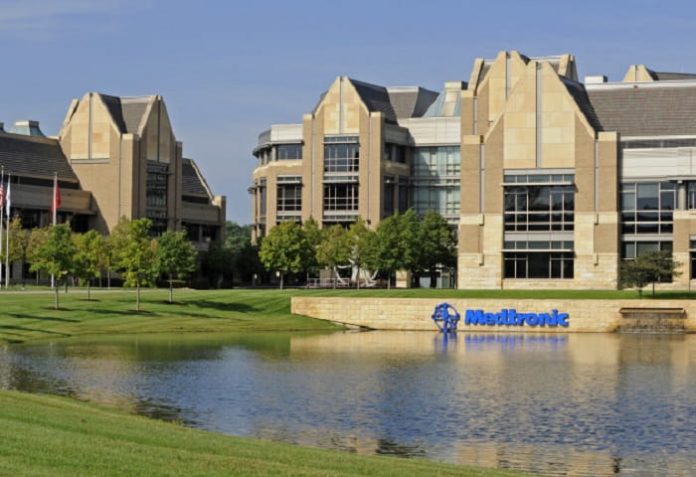
Medtronic plc, the global leader in medical technology, has received Breakthrough Device Designation status from the U.S. Food and Drug Administration (FDA) for the TYRXโ„ข Absorbable Antibacterial Driveline Wrap, which is intended to securely hold a percutaneous driveline in patients receiving a ventricular assist device (VAD).

A vital component of VAD systems, the driveline connects the implanted heart pump to an external controller that is powered by an AC or DC adapter, or external batteries. The pump increases the amount of blood that circulates through the body in patients with advanced heart failure. Because the driveline extends outside the body, it is susceptible to infection. To help reduce driveline complications, Medtronic will leverage its TYRXโ„ข technology platform, currently utilized in the TYRXโ„ข Absorbable Antibacterial Envelope, which is constructed from a multifilament, knitted absorbable mesh, and releases antimicrobial agents, minocycline and rifampin, over a minimum of seven days.1 It is fully absorbed by the body approximately nine weeks after implantation,1,2 and stabilizes a cardiac implantable electronic device (CIED) such as a pacemaker or implantable defibrillator, or an implanted neurostimulator.

The FDA Breakthrough Device Program is intended to help patients receive more timely access to breakthrough technologies that have the potential to provide more effective treatment or diagnosis for life-threatening or irreversibly debilitating diseases or conditions. Under the program, the FDA will provide Medtronic with priority review and interactive communication regarding device development, through to commercialization decisions. The Medtronic TYRX Driveline (DL) Wrap device is in early-stage research and development, and is not available for sale anywhere in the world.

In collaboration with leading clinicians, researchers and scientists worldwide, Medtronic offers the broadest range of innovative medical technology for the interventional and surgical treatment of cardiovascular disease and cardiac arrhythmias. The company strives to offer products and services of the highest quality that deliver clinical and economic value to healthcare consumers and providers around the world.

About Medtronic

Medtronic plc, headquartered in Dublin, Ireland, is among the world’s largest medical technology, services and solutions companies – alleviating pain, restoring health and extending life for millions of people around the world. Medtronic employs more than 90,000 people worldwide, serving physicians, hospitals and patients in more than 150 countries. The company is focused on collaborating with stakeholders around the world to take healthcare Further, Together.

Lumenis, Inc. Unveils Its First-ever U.S. Tour With Launch Of LuMobile — A Mobile Outdoor Tradeshow Booth

Lumenis, Inc. Unveils Its First-ever U.S. Tour With Launch Of LuMobile  -- A Mobile Outdoor Tradeshow Booth

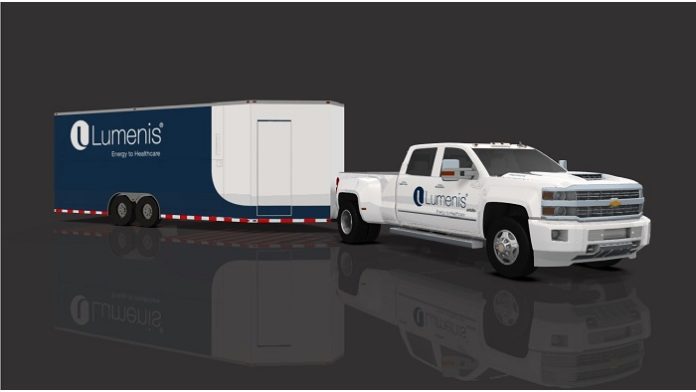
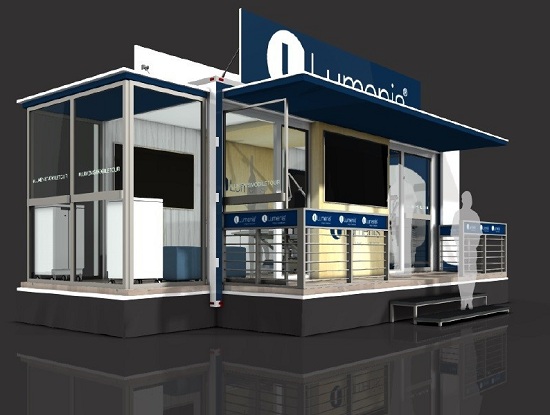
Lumenis Inc., the world’s largest energy-based medical device company for aesthetic, surgical and ophthalmic applications, is proud to announce its first-ever mobile tour (LuMobile), September 28ththrough April 2021. The company will bring its flagship devices to practitioners in a safe environment aboard the new LuMobile outdoor trade show exhibit. The 20-city mobile tour will kick off in Chicago and make its way to New York, Los Angeles, Miami, Detroit, San Francisco and many more major cities around the country.

Lumenis conceived the LuMobile in response to the COVID-19 pandemic, which has limited opportunities for physicians and other practitioners to get in-person experiences with new technologies. To fill the void, the LuMobile will take the newest and most popular Lumenis technologies across the country, including the new Stellar M22 for aesthetics, the newly launched MOSES 2.0 surgical platform, and the Select a DUET and Optima IPL ophthalmic devices. When the LuMobileโ€™s super-sleek, glass-encased mobile trade show booth rolls into town, professionals will watch livedemos, talk with Lumenis representatives, and experience the devices for themselves. Attendees will also find fun red carpet events, ribbon-cutting ceremonies, food trucks and more.


โ€œWhen all educational meetings and trade shows came to a halt this year, we started thinking of new ways to safely bring physicians together in a professional venue to continue to advance education, patient care and new breakthroughs in medical technology,โ€ said Brad Oliver, Regional President of The Americas. โ€œBy providing an outdoor, social-distanced trade show environment, we are providing a safe setting to continue to advance education on recent medical innovations. Attendees can enjoy themselves, while safely learning about new break throughs in medical technologies. Itโ€™s important we continue to advance medicine and share ideas collectively, especially during these challenging times. We believe our mobile, outdoor trade show creates that environment. I look forward to greeting our customers, friends, and colleagues with smiles, masks and elbow handshakes.โ€

โ€œAs a medical professional, itโ€™s important to be in-the-know about the latest innovations in medical devices, but with limited in-office interaction due to the pandemic, this has become much more difficult,โ€ said Dr. Quenby Erickson of Erickson Dermatology in Chicago. โ€œThatโ€™s why the LuMobile roadshow is such a beneficial idea right now โ€“ it safely helps us to stay informed and ensures weโ€™re offering our patients state-of-the-art care. There is truly no better way to make equipment purchase decisions than to see and learn about new devices in person. Iโ€™m proud to be part of the kick-off event in Chicago, to help inform other professionals about the amazing innovations Lumenis has to offer.โ€

Dr. Amy E. Krambeck, an urologist at Indiana University School of Medicine in Indianapolis who helped develop the Lumenis MOSES 2.0 holmium laser, welcomes the opportunity to share the technology with colleagues around the country. โ€œThe next-generation technology allows us to treat enlarged prostates so efficiently and with so little bleeding that we can release patients the same day without a catheter โ€“ a model thatโ€™s especially welcome during the COVID-19 pandemic. It also has a comfortable learning curve for both prostate and stone surgeries, so itโ€™s a welcome change for many surgeons.โ€

About Lumenis
Lumenis is a global leader in the field of minimally-invasive clinical solutions for the Surgical, Ophthalmology, and Aesthetic markets, and is a world-renowned expert in developing and commercializing innovative energy-based technologies, including Laser, Intense Pulsed Light (IPL) and Radio-Frequency (RF). For over 50 years, Lumenis’ ground-breaking products have redefined medical treatments and have set numerous technological and clinical gold-standards. Lumenis has successfully created solutions for previously untreatable conditions, as well as designed advanced technologies that have revolutionized existing treatment methods. Lumenis is a portfolio company of Baring Private Equity Asia.

German hospitals to get โ‚ฌ3 billion funding boost for digitalisation

German hospitals to get โ‚ฌ3 billion funding boost for digitalisation

German health minister Jens Spahn has announced โ‚ฌ3 billion for hospitals to invest in modern emergency capacities, digitisation and IT security.

The funding for projects to modernise the hospital system will be provided under the hospital future fund (KHZF), from the health fundโ€™s liquidity reserve. This will cover 70% of projects and 30% will be funded by the federal states/ hospital operators, which will raise a further โ‚ฌ1.3 billion.

Projects eligible for funding are set out in the draft Hospital Future Act (KHZG), which was passed by the Bundestag on September 18 and is expected to come into force next month. They include patient portals, electronic documentation of care and treatment services, digital medication management, IT security measures and cross-sector telemedical network structures. The funding can also be used to introduce or improve telemedicine, robotics and high-tech medicine.

Hospital operators have been able to start implementing projects from the start of this month and can submit funding applications until 31st December 2021. The digitalisation status of hospitals will be evaluated in June 2021 and 2023.

WHY IT MATTERS

Despite having the worldโ€™s second largest healthcare market after the US, Germany has lagged behind when it comes to digitisation. The COVID-19 pandemic has further highlighted the importance of digital health and the need to modernise the countryโ€™s hospital system.

THE LARGER CONTEXT

Spahn has been an outspoken supporter of transforming healthcare through digital technology, since coming into office in March 2018.

Last year he introduced the Digital Supply Act which allowed to be reimbursed doctors for prescribing digital health apps and providing online consultations to patients. It also aims to phase out the use of paper by promoting e-prescriptions and incentivising doctors for sending electronic medical letters rather than faxes.

Earlier this year, the draft Patient Data Protection Act was raised, which is intended to regulate access rights to patient data in the EHR and digital health apps.

Germany aims to bring in electronic health records (EHRs) for its 73 million patients with statutory insurance by 2021.

ON THE RECORD

Spahn, said: โ€œWe are sending the clear signal: Germany’s hospitals should remain strong. We are investing in their digital future – because we have just learned during the pandemic how important well-equipped and functioning hospitals are.

โ€œWe are also extending our protective shield for the clinics, because we know that some hospitals are still suffering from the financial consequences of the pandemic. This is how we will improve patient care and ensure greater safety.โ€

TeleHealth Services Helps Yale New Haven Health System Connect Community to Share Support for Isolated Patients

TeleHealth Services Helps Yale New Haven Health System Connect Community to Share Support for Isolated Patients

Hospitals across the nation have limited visitation policies with patients during the COVID-19 pandemic. In response to these restrictions, the Yale New Haven Health System (YNHHS) developed a program with TeleHealth Services using cards of support and compassion from the local community presented on patient televisions and other public digital displays throughout the systemโ€™s hospitals.

Yale New Haven Health is Connecticutโ€™s leading healthcare system with more than 26,000 employees and ranked among the best nationally for clinical care and use of technology. Schoolchildren and others in surrounding communities are sharing support for patients and gratitude for hospital staff across the six-hospital system. The entire process is digital and was first implemented when no patient visitors were allowed and deliveries to patients, including cards and flowers, were banned for safety purposes.

โ€œWe know this is a time of loneliness and isolation for many patients and family members,โ€ said Yale New Haven Health Medical Director of Patient Experience Brittany Branson. โ€œThe Cards from the Community program, first implemented this past spring, continues to share cards from local school children and community organizations expressing hope, appreciation and well wishes for patients and staff.โ€

Teachers and principals at schools were invited to have students make cards. Photographs of the cards have been collected and digitally displayed on a rotational basis on the TVs accompanied by uplifting background music using a system developed by TeleHealth Services. TeleHealth Services is the nationโ€™s leading provider of interactive patient experience solutions that integrate patient televisions, audiovisual systems, entertainment and relaxation content for hospitals and clinics throughout the nation.

TeleHealth Services is working with additional hospitals to rollout Cards from the Community programs. In addition, TeleHealth Services has been supplying relaxation videos and music for patients through patient room televisions, and virtual nurse visit systems throughout the COVID-19 pandemic. The virtual care system enables nursing staff to safely conduct care visits with isolated patients through centralized workstations within the hospital or from remote locations.

โ€œThe Client Outcomes Team and our entire company are focused on helping hospitals engage with patients and keep patients and staff safe,โ€ said TeleHealth Services General Manager Kevin Colores. โ€œWe always have been dedicated to facilitating patient engagement while we realize this pandemic has necessitated stringent visitor restrictions and limited bedside contact. The Cards from the Community Program is one creative way hospitals can engage patients, staff and entire communities to show support, caring and thanksgiving from our hearts to theirs.โ€

TeleHealth Services NY Area Client Outcomes Manager Jim Stratos added, โ€œIโ€™ve heard countless stories that demonstrate the true resiliency, grit and creativity of healthcareโ€™s frontline workers. They share a calling that helps unite them toward a common goal โ€“ caring for and supporting people who find themselves in a very difficult situation. It takes great compassion to connect with each patient on a personal level, and we are dedicated to working with hospitals in supporting their patient care initiatives that address COVID-19 related challenges.โ€

Colores added, โ€œWe are proud of our Outcomes Team and the commitment to partner with hospitals to find creative solutions for us all to navigate through this crisis.โ€

About TeleHealth Services

TeleHealth Services is driven to enhance the patient experience and positively impact health outcomes using innovative patient engagement and audiovisual technologies. With 60 years of patient-centered expertise and 2,500+ healthcare clients, the company designs and delivers turnkey solutions that increase patient satisfaction, improve quality of care, and maximize clinical and operational efficiencies.

Chapman Freeborn delivers mobile hospital to aid COVID-19 relief efforts in Guinea, West Africa

Chapman Freeborn delivers mobile hospital to aid COVID-19 relief efforts in Guinea, West Africa

Throughout 2020 Chapman Freeborn has been on the front line to help aid the global fight against COVID-19, working tirelessly to arrange cargo operations for PPE and medical supplies all over the world. Our cargo team recently completed an operation to transport vital Covid-19 medical equipment from Johannesburg, South Africa (JNB) to Conakry, Guinea (CKY).

A mobile hospital explicitly designed for the Covid-19 pandemic was loaded on to a B747F aircraft at O.R. Tambo International Airport. The hospital, which included generators, tents, HEPA filters and medical equipment, can facilitate up to 200 people to receive potential lifesaving treatment.

With nearly three months of precise planning and collaboration, the team worked alongside BDJ Freight International, airlines, airports and freight forwarders to make this operation successful. It was a necessity that communications which spanned across three regions (United Kingdom, South Africa and United Arab Emirates) were meticulous to ensure the consignment was safely delivered.

Divan Hamman, General Manager, BDJ Freight International says:

โ€œWe are pleased that we can do our part as a freight forwarding and logistics solutions provider to support the global community by transporting these products to countries where the virus is still prevalent and are in desperate need of medical facilities. Assisting the client to deliver the facility within 3 weeks, from production to delivery at final destination, was a challenge, but something we looked forward to and succeeded in managingโ€

Gerhard Coetzee, Chapman Freeborn Cargo Charter Manager, South Africa says:

โ€œHaving been involved with multiple charters during the current pandemic, this wasย  definitely an interesting project to be a part of โ€“ย  and it wouldnโ€™t have been possible without all the parties involved. Being involved from day one, as the project evolved and then successfully flew, is a proud achievement.

The team at Chapman Freeborn are dedicated and passionate, and this showcases how well they work in tandem to deliver the customersโ€™ expectations and ensure first class excellence.โ€

When the flight successfully took off from Johannesburg, the handling went smoothly with no complications, and the cargo delivered seamlessly to Conakry. The client reported back and was delighted with the perfectly planned operation โ€“ a superb effort from everyone involved and a fantastic example of multiple offices working in synergy.

Kindred Healthcare and Community Health Network Announce Plans to Build Third Inpatient Rehabilitation Hospital in the Indianapolis Area

 Kindred Healthcare and Community Health Network Announce Plans to Build Third Inpatient Rehabilitation Hospital in the Indianapolis Area

Kindred Healthcare, LLC and Community Health Network announced a joint venture to build and operate their third inpatient rehabilitation hospital in the Indianapolis, Indiana, metro area.

Kindred and Community operate Community Rehabilitation Hospital North in Northeast Indianapolis, which opened in June 2013, and Community Rehabilitation Hospital South in Greenwood, a suburb of Indianapolis, which opened in August 2018. This third hospital will be located in the western part of the Indianapolis metro area to help address the growing need for inpatient rehabilitation services in the Indianapolis market.

The new 40-bed inpatient rehabilitation hospital will have all private rooms and focus on acute rehabilitation for patients who suffer from stroke, traumatic brain injury, spinal cord injury, complex neurological disorders, orthopedic conditions, multiple trauma, amputation and other injuries or disorders. The 50,000-square-foot, two-story rehabilitation facility will also feature large multidisciplinary therapy gymnasiums outfitted with the latest therapeutic technologies, including augmented reality balance training, therapy bionics and a full body exoskeleton. The hospital will also include a therapeutic courtyard with exterior amenities to support patient care and help patients return to daily living activities.

โ€œWe are excited to build on our relationship with Community Health โ€“ one of the nationโ€™s leading health care providers โ€“ to offer the Indianapolis community increased access to high-quality inpatient rehabilitation services,โ€ said Russ Bailey, Chief Operating Officer of Kindred Rehabilitation Hospitals. โ€œAs with our two existing hospitals that we operate with Community, this new hospital will be dedicated to passionately advocating for and providing hope, healing and recovery to patients in its care.โ€

โ€œThe Community Rehabilitation hospitals in Indianapolis have provided high-quality and compassionate rehabilitative care, exceeding the national benchmark for patients discharged to their home or community,โ€ said Jim Ransom, Division Vice President โ€“ East, Kindred Hospital Rehabilitation Services. โ€œThe communityโ€™s response has demonstrated the need for additional rehabilitation services in the Indianapolis area, and we are eager to meet that need.โ€

โ€œAs we consider the needs of patients and how we can best align our resources to meet those needs, we realized patient-focused, specialized rehabilitation services in our west region made sense,โ€ said Community Chief Operating Officer Jason Fahrlander. โ€œOur goal in everything we do is to deliver exceptional care where and when patients need it. We are happy to have a partnership that allows us to build on that promise in the Indianapolis market.โ€

About Kindred Healthcare

Kindred Healthcare, LLC is a healthcare services company based in Louisville, Kentucky with annual revenues of approximately $3.1 billion(1). At June 30, 2020, Kindred through its subsidiaries had approximately 32,000 employees providing healthcare services in 1,731 locations in 46 states, including 64 long-term acute care hospitals, 22 inpatient rehabilitation hospitals, 10 sub-acute units, 94 inpatient rehabilitation units (hospital-based), contract rehabilitation service businesses which served 1,541 non-affiliated sites of service, and behavioral health services. Ranked as one of Fortune magazineโ€™s Most Admired Healthcare Companies for nine years, Kindredโ€™s mission is to help our patients reach their highest potential for health and healing with intensive medical and rehabilitative care through a compassionate patient experience.

About Community Health Network

Headquartered in Indianapolis, Community Health Network has been deeply committed to the communities it serves since opening its first hospital, Community Hospital East, in 1956. Community Health Network puts patients first while offering a full continuum of healthcare services, world-class innovations and a new focus on population health management. Exceptional care, simply delivered, is what sets Community Health Network apart and what makes it a leading not-for-profit healthcare destination in central Indiana.

TWO WINDS: Next-generation blockchain technology lands in healthcare

TWO WINDS: Next-generation blockchain technology lands in healthcare

TWO WINDS, a next-generation healthcare and blockchain company, will enter into the Chinese market in the second half of 2020. According to a research report, the market size of China’s healthcare products industry has been maintaining a double-digit growth rate in the past few years. In 2019, the market size was about 222.7 billion yuan, while the market size is expected to exceed 330 billion yuan in 2021.

With the rapid development of the healthcare products industry, the current healthcare products industry also faces various crises and challenges. For example, the lack of a regulatory system, uneven enterprises, the proliferation of fake drugs and so on. This has greatly undermined consumers’ trust in the health products industry and become a key factor hindering the development of China’s health products industry. The reason can be traced back to the early stage of the health products market, where a large number of enterprises flooded into the market due to low entry barriers and low technical requirements, laying the groundwork for today’s mixed status quo.

In recent years, the emerging Internet economy, overseas purchase, live-streaming of goods, etc. have brought a lot of trust issues to consumers in the digital age. For a long time, due to the industry’s lack of transparency, information asymmetry and other factors, the downstream channels of the industry chain struggled to obtain high profits. Singapore’s blockchain technology company TWO WINDS through blockchain innovation to solve this problem, making information open and transparent.

TWO WINDS has also co-developed a new gout treatment with Japanese pharmaceutical R&D company Chemiterace. From upstream raw material manufacturers, midstream brand manufacturers and operators, to downstream channel partners, TWO WINDS has a complete industrial chain.

TWO WINDS has built its drug distribution system on the blockchain and launched a business model for purchasing drugs via tokens. Its original business model and supply and distribution system connects the production, transaction, capital, flow and other cooperative elements in the drug circulation, realizing the process information can not be tampered with, thus reducing the mutual trust cost of each link, accelerating the digitization of the health care industry and creating the first open collaborative ecology based on digital trust mechanisms in the pharmaceutical industry.

TWO WINDS will enter the Chinese market in the second half of 2020, and is expected to cooperate with cutting-edge enterprises in the domestic healthcare industry to use blockchain technology to change the industry status quo in China’s healthcare market and build a sustainable ecosystem. At the same time TWO WINDS has entered into a partnership with LBANK, a leading exchange in the blockchain industry. The LBANK 101 program will be launched on September 25, 2020.

Translate ยป