













Close
Digital Health & Ai Innovation summit 2026
Medical Taiwan 2026

IBM Watson Health, OrbitalRX Launches Solution to Combat U.S. Drug Shortage

IBM Watson Health, OrbitalRX Launches Solution to Combat U.S. Drug Shortage

IBM Watson Health and OrbitalRX announced a strategic collaboration that aims to help address the emerging U.S. drug shortage crisis. The companies are combining OrbitalRXโ€™s Drug Shortage Management Platform and IBMยฎ Micromedexยฎ into one unified solution called โ€œOrbitalRX and Micromedex,โ€ designed to create a single source for healthcare providers and pharmacy teams to access evidence-based treatment information alongside a hospitalโ€™s current drug inventory status and drug sourcing options. This one solution aims to quickly analyze the supply chain and identify clinical alternatives for drugs that are in short supply.

COVID-19 Underscores Global Drug Shortage

The global drug shortage crisis has accelerated at an alarming rate during the COVID-19 crisis. According to the American Society of Health-Systems Pharmacists (ASHP), close to 200 drugs are currently on the drug shortage list in the U.S. alone. Management of these shortages is further complicated by the fact that shortages vary by drug and location, as noted by the American Medical Association (AMA).

The new solution, OrbitalRX, and Micromedex, will be designed to evaluate important drug information, clinical evidence, and comparative efficacy, alongside the hospitalโ€™s drug inventory, purchase history, and utilization data, enabling hospital providers, pharmacists, and pharmacy technicians to proactively manage drug shortages.

IBM Micromedex is one of the largest online reference databases for medication information. It is used by more than 4,500 hospitals and health systems worldwide to help support decision-making in medication therapy management, disease and condition management, toxicology, alternative medicine, and patient education. OrbitalRX is the only platform designed by hospital pharmacists, for hospital pharmacists, to unify supply chain and clinical utilization to manage drug shortages and deliver the power of real-time situational awareness in hospital pharmacy workflows.


Immune Thrombocytopenia (ITP) Market Expected to Grow at CAGR of 5.78%

Immune thrombocytopenia (ITP) is an autoimmune disorder characterized by improper clotting of blood. ITP can cause excessive bruising and bleeding owing to the unusually low levels of platelets or thrombocytes in the blood. ITP can occur in both children and adults. ITP can be classified as primary, i.e., occurring on its own, or secondary, occurring alongside another condition. Autoimmune diseases, chronic infections, medications, pregnancy, and certain cancers are common secondary triggers of ITP. The increasing prevalence of ITP is expected to contribute to the growth of the market over the forecast period.

The global immune thrombocytopenia (ITP) market was valued at USD 1,670.9 million in 2017 and is expected to register a CAGR of 5.78% during the forecast period from 2018 to 2023.

Key Players

Some of the key players in the global immune thrombocytopenia (ITP) market are Amgen Inc., CSL Limited, Dova Pharmaceuticals, Jiangsu Hengrui Pharmaceutical Co., Ltd., Kyowa Hakko Kirin Co., Ltd, Ligand Pharmaceuticals, Inc, Novartis AG, Rigel Pharmaceuticals, Inc, Shire, and Shionogi Inc.

The global immune thrombocytopenia (ITP) market has been segmented, by type, treatment, and end user.

Based on type, the global immune thrombocytopenia (ITP) market has been categorized as acute immune thrombocytopenia and chronic immune thrombocytopenia.
On the basis of treatment, the global immune thrombocytopenia (ITP) market is further sub-segmented into corticosteroids, thrombopoietin receptor agonists, and intravenous immunoglobulins (IVIG).
Based on end user, the market has been classified as hospitals and clinics, specialty centers, and research and academic institutes.

Key Findings

• The global immune thrombocytopenia (ITP) market is expected to reach USD 2,361.2 million by 2023 at a CAGR of 5.78% from 2018 to 2023

• Based on type, the chronic immune thrombocytopenia segment holds the largest market share and is expected to reach USD 2,036.9 million by 2023 at a CAGR of 5.94% from 2018 to 2023

• The market in the Americas is expected to account for the largest share of the global immune thrombocytopenia (ITP) market and is projected to reach USD 1,069.8 million by 2023

• The immune thrombocytopenia (ITP) market in Asia-Pacific is projected to be the fastest-growing at a CAGR of 4.40% from 2018 to 2023

About InForGrowth:

At InForGrowth, Understand Research requirements and help a client in taking informed business critical decisions. Given the complexities and interdependencies of market-intelligence, there is always more than one source to explore and arrive at the right answer. Through our smart search feature and our reliable and trusted publishing partners, we are paving way for a more simplified and relevant research.

Medallia Zingle achieved HIPAA compliance for the healthcare and life sciences industries

Medallia Zingle achieved HIPAA compliance for the healthcare and life sciences industries.

Medallia, Inc., the global leader in experience management, announced that Medallia Zingle has achieved HIPAA compliance for the healthcare and life sciences industries. With Zingleโ€™s mobile-messaging platform, pharmaceutical and medical device companies and healthcare payers and providers can engage in live-time, patient, member and employee experiences allowing them to minimize patient friction, simplify staff workflows and create a scalable approach to personalized patient communication.

Medallia Zingle now enables pharmaceutical companies to more easily communicate with individual patients about prescriptions, or quickly reach segments of their customers with important information. Providers have the ability to engage in two-way conversation with members or automate replies to common questions via SMS texting and popular messaging apps instead of more costly channels. Payers can proactively address issues with chronic condition populations before they become critical.

โ€œThere is no better time than the present to engage in contactless communications with patients, employees and members. Hesitation around in-person office visits is creating a boom in telehealth, and call centers are operating at an all time high. The ability to connect contactless, in real-time, about billing questions, prescriptions, clinical trials, symptoms, appointment or hospital check-ins and stays are of tremendous value right now,โ€ said Ford Blakely, senior vice president and general manager of Medallia Zingle.

As employee experience plays an important role in optimizing patient and member experiences, Medallia Zingle improves staff recruitment, onboarding and communication with physicians and staff about company events and announcements from human resources departments in place of traditional, and often unread emails. Pharmaceutical and medical device companies can engage directly with patients and healthcare providers to ensure patients are getting access to therapies and have a direct line to drug manufacturers.

University of Pennsylvania Researchers to Develop Healthcare Artificial Intelligence, IoT

The team will build artificial intelligence and IoT solutions for healthcare challenges in critical care, diabetes, mental health, and other areas.

The School of Engineering and Applied Scienceโ€™s PRECISE Center and the School of Nursing at the University of Pennsylvania are partnering with Hillrom to develop artificial intelligence and Internet of Things (IoT) solutions for a range of healthcare issues.

The partnership will accelerate the adoption of new technologies by providers via unobtrusive, frictionless sensors that will seamlessly fit into clinical workflows.

PRECISE, or Penn Research In Embedded Computing and Integrated Systems Engineering, aims to provide verifiably safe solutions that leverage data, machine learning, and formal analysis. These solutions help establish the foundations for safe, autonomous medical systems that integrate medical devices, patients, clinicians, and personalized automation to improve health outcomes.

โ€œBy closely collaborating with industry partners, such as Hillrom, we hope to transition our technologies and solutions into mainstream clinical care to revolutionize healthcare in the future,โ€ said PRECISE Center Director Insup Lee, Cecilia Fitler Moore Professor in Penn Engineeringโ€™s departments of Computer and Information Science and Electrical and Systems Engineering.

PRECISE is focused on the idea of Safe AI, which ensures that electronic systems used in healthcare are fundamentally reliable and lead to clinically sound decision-making.

โ€œPRECISE researchers are at the forefront of ensuring that modern technologiesโ€™ embedded systems are safe and secure,โ€ said Vijay Kumar, Nemirovsky Family Dean of Penn Engineering. โ€œWorking directly with partners in the healthcare industry is crucial for enabling their expertise to benefit as many people as possible.โ€

By collaborating with Penn Nursing and Hillrom, PRECISE researchers will better understand the unique challenges of the medical industry. In addition to helping define the scope of problems that can be handled autonomously, Safe AI research can show how to best present critical information for problems that require human clinicians.

โ€œThis is a unique opportunity to redesign the future of clinical care by fostering interdisciplinary collaboration and generating patient and family centered solutions,โ€ said George Demiris, a Penn Integrates Knowledge University Professor with appointments in Penn Nursing and Pennโ€™s Perelman School of Medicine.

The partnership with PRECISE and the School of Nursing will accelerate Hillromโ€™s plan to consolidate EHR data, various Hillrom devices, and new sensors to provide actionable clinical information at the point of care.

The gathering and synthesis of this information is poised to be a powerful tool in protecting patients against particularly egregious medical errors, such as mismatching blood types.

โ€œThrough this partnership, we will demonstrate that Hillrom smart beds, vital signs devices and other Hillrom products can be platforms for advanced sensing and algorithm development to help prevent never-events in hospitals,โ€ said John Groetelaars, president and CEO, Hillrom. โ€œWe appreciate the opportunity to collaborate with PRECISE and look forward to helping strengthen our industryโ€™s AI capabilities.โ€

The new partnership will combine the interdisciplinary strength of an institution like Penn with advanced engineering and deep insights from Hillromโ€™s clinical and innovation experts. The combination of clinical, business, and engineering disciplines on one campus is a major strength of Penn through the PRECISE Center, which works to break down siloes and facilitate collaboration with industry.

โ€œWe are thrilled to be partners in this exciting new venture. The inclusion of Penn Nursing ensures important perspectives at the point of care that can best improve patient outcomes,โ€ said Antonia Villarruel, dean of Penn Nursing.

Researchers have built a dog-like robot nurse to remotely measure patients vital signs

Researchers have built a dog-like robot nurse to remotely measure patients vital signs

Testing a patient for Covid-19 can be an unnerving experience for health care workers, but researchers from the Massachusetts Institute of Technology and Brigham and Women’s Hospital in Boston are hoping to use robots to change that.

Operating robots with a handheld device, medical workers may soon be able to talk with patients about their symptoms while measuring vitals — all from another room.

The researchers have been using a robot on healthy volunteers and are making plans to use it to test people who show Covid-19 symptoms in a hospital setting, the university said in a news release.

“In robotics, one of our goals is to use automation and robotic technology to remove people from dangerous jobs,” MIT postdoc Henwei Huang said, according to the release. “We thought it should be possible for us to use a robot to remove the health care worker from the risk of directly exposing themselves to the patient.”

A tablet mounted to the “head” of Boston Dynamics’ dog-like robot, Spot, allows communication with patients. The robot also is equipped with an infrared camera, along with three monochrome cameras that are capable of filtering different wavelengths of light, the release states.

These four cameras can measure skin temperature, breathing rate, pulse rate and blood oxygen saturation from as far as 6 1/2 feet (2 meters) away.

“We didn’t really develop new technology to do the measurements,” Huang says. “What we did is integrate them together very specifically for the Covid application, to analyze different vital signs at the same time.”
The researchers expect to focus on triage applications in the short term, with the goal of ultimately deploying robots like this to patients’ hospital rooms to continuously monitor them and let doctors to check in on them without ever having to step into the room.

Biofourmis Lands $100M to Expand AI-Powered Digital Therapeutics Platform

Biofourmis Lands $100M to Expand AI-Powered Digital Therapeutics Platform

Biofourmis, a fast-growing global leader in digital therapeutics that powers personalized predictive care, has announced the completion of a $100 million Series C financing round led by SoftBank Vision Fund 2, with participation by existing investors Openspace Ventures, MassMutual Ventures, Sequoia Capital, and EDBI. This brings Biofourmisโ€™ total funding to $145 million, including the $100 million Series C, a $35 million Series B in May 2019, and $10 million Series A + seed/angel investments.

In addition, Biofourmis will use the funding for developing, validating, and commercializing several released and unreleased digital therapeutics solutions across cardiology, respiratory, oncology, and pain, with a focus on the United States and key Asian markets, including Asia Pacific, China, and Japan.

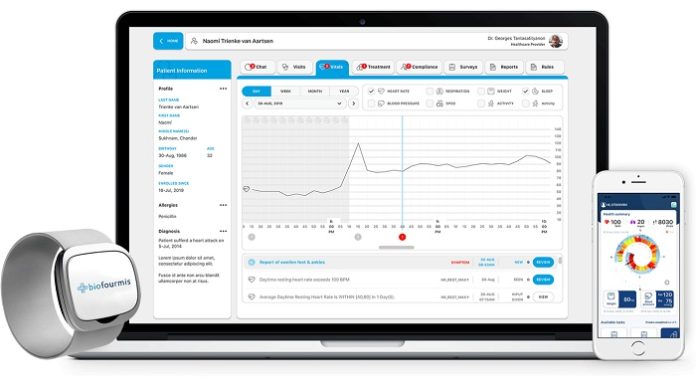
Predict and prevent costly medical events with a modular, user-friendly platform.

Founded in 2015, Biofourmis discovers, develops, and delivers clinically validated software-based therapeutics to provide better outcomes for patients, advanced tools for clinicians to deliver personalized care, technology to demonstrate the value of and complement pharmacotherapy, and cost-effective solutions for payers.

BiovitalsHF: prescription software to enable early detection of heart failure exacerbation and augment guideline-directed use of heart failure medications.

RhythmAnalytics: cloud-based software for automated detection of over 15 types of cardiac arrhythmias

Biovitals Sentinel: allows for the continuous remote monitoring of critical biovitals and patient reported symptoms using Everion, an innovative new multi-sensor armband wearable.

Painfocus: augments pain management by objective assessment of pain to guide personalized therapeutic decision-making

Biovitals Research: modularized digital trial platform empowers patients and drives engagement while capturing real-time study data anytime, anywhere, from dynamic apps and connected devices

Launch of New Business Structure

In conjunction with the Series C financing announcement, Biofourmis has announced an alignment of its internal operations to enable deeper integration with clients and partners and to support ongoing innovation. The new business structure will include two verticals:

Biofourmis Therapeutics: Focuses on pioneering an entirely new category of medicine, by developing clinically validated software-based therapeutics to treat and manage patients with unmet clinical needs. These digital therapies work independently or in conjunction with pharmacotherapiesโ€”thereby augmenting drug efficacy, reducing costs and resulting in better patient outcomes.

With Biofourmis Therapeuticsโ€™ โ€œbeyond the pillโ€ model, pharmaceutical companies prescribe the companyโ€™s digital therapeutics solution as a companion therapeutic with high-value drugs to improve efficacy and to better manage and treat patients with complex chronic conditions.

Biofourmis Health: Focuses on virtual care models to manage patients remotely as they transition from acute to post-acute care. The companyโ€™s AI-based Biovitalsยฎ Platform is layered with personalized care pathways to manage patients with heart failure, coronary artery disease, respiratory illnesses and cancer, especially those undergoing chemo/radiation therapy or CAR-T treatment.

Biofourmis Healthโ€™s โ€œhome hospitalโ€ initiative leverages the companyโ€™s AI-based remote monitoring to lower healthcare costsโ€”through reductions in length of stay, readmissions and emergency department visits, among other measuresโ€”and to improve patient outcomes by enabling clinicians to remotely monitor patients and intervene up to 21 hours in advance of when a medical crisis would have otherwise occurred.

Carrum Health Adds Mayo Clinic to COE Platform for Cost-Effective Surgical Care

Carrum Health Adds Mayo Clinic to COE Platform for Cost-Effective Surgical Care

Carrum HeaCarrum Health Adds Mayo Clinic to COE Platform for Cost-Effective Surgical Carelth, the first digital health company connecting employers and employees to Centers of Excellence (COEs) through a consumer-driven platform for better, more cost-effective healthcare, has expanded its national reach with Mayo Clinic, one of the top hospital systems in the nation. Carrum Health patients will have access to high-quality joint and spine surgical care at Mayo Clinic locations in Jacksonville, Fla.; Phoenix, Ariz.; and Rochester, Minn., and Scottsdale, Ariz.

Carrum Health has built a regionalized provider network in partnership with COEs across the country, using a rigorous and proprietary quality methodology that evaluates clinical performance at both the facility and surgeon level. Carrum Health chooses hospitals and surgical centers that are ranked at or near the top in their specialties, then directly connects them to patients needing the best possible care.

Self-insured employers, including several Fortune 500 companies, leverage Carrum Healthโ€™s technology-powered COE platform to avoid variation in the cost and quality of surgery and to deliver a superior patient experience. The platform enables employers to take advantage of transparent and predictable surgery pricing for an entire episode of care, like a hip or knee replacement and works with providers to deliver high-quality and efficient care under a value-based care model. Employees and covered dependents at companies offering the Carrum Health surgery benefit have better access to world-class care through top institutions, such as Mayo Clinic. Carrum Health patients also often save thousands of dollars on their surgery because copays and coinsurance are 100 percent waived.

โ€œMayo Clinic is renowned for its commitment to expert, compassionate care and patient-centered values. These are the same values that Carrum Health looks for in its COE partners to ensure that employers and employees have access to the best possible care,โ€ said Sach Jain, CEO and founder of Carrum Health. โ€œWe are excited to welcome Mayo Clinic to our network, and look forward to recognizing its outstanding providers on our platform.โ€

Private Group RLS (USA) Inc. Acquires GE Healthcare’s U.S. Radiopharmacy Network

Private Group RLS (USA) Inc. Acquires GE Healthcare's U.S. Radiopharmacy Network

RLS (USA) Inc., (Radioisotope Life Sciences) has purchased General Electricโ€™s (GE) U.S. radiopharmacy network, making it the largest pure molecular imaging focused firm in the United States. Capitor, a boutique global financial advisory firm, structured and brought the deal to investors, playing a critical part in the years-long negotiation and collaboration between the parties. Financial terms were not disclosed.

The radiopharmacies will continue to supply GE Healthcare molecular imaging products, with RLS leveraging a 10-year distribution partnership agreement. The now privately-owned radiopharmacy network includes a minority ownership by Perceptive Advisors, a $7 billion healthcare specialist investment firm based in New York.

The executive team of RLS is comprised of Chief Executive Officer Werner Gruner, Chief Investment Officer Jaco van Niekerk and Chief Operations Officer Shane Cobb. Mr. Gruner, who has served as executive in various roles within the international financial industry, including the founding of Capitor, comments that โ€œI was intrigued and excited about the possibilities of this healthcare acquisition, beyond the financial aspects of the transaction. I have spent my career providing white-glove investment advisory services to global clients and always believed that customers, no matter the industry, not only deserve, but have a right to demand personalized, timely, high-end service,โ€ adding, โ€œthat is why we focus on service, quality and disruptive technology as key factors in our investment strategy.โ€

The radiopharmacy network includes 31 pharmacies across 18 states, including its current headquarters in Tampa, Florida. Under the direction of Mr. van Niekerk, RLS aims to invest $2 billion over the next decade in expanding its footprint of pharmacies, while continuously investing in cutting-edge scientific and technological advancements. โ€œWe invested considerable efforts to ensure a seamless transition precisely because of our service-centric philosophy, including retaining key executive staff, such as Shane Cobb who has more than 30 years of experience in the industry,โ€ stated Mr. van Niekerk, concluding that โ€œRLS is committed to delivering life-saving quality diagnostics and treatment to patients across the nation. To that end, and in light of what we are uncovering regarding the potential long-term effects of organ damage caused by COVID-19, we have instituted a special task force focused on accommodating what could be a surge in demand for specialized diagnostic services.โ€

Almost five-hundred former GE employees across the country are now part of the RLS family. The company is expected to relocate its headquarters to the east coast of Florida in the near future and is in conversations with various economic development councils as well as municipalities.

CancerCare Manitoba is consolidating patient care from six sites to four in Winnipeg

 CancerCare Manitoba is consolidating patient care from six sites to four in Winnipeg

The changes are set to take effect in December 2020 and will provide outpatient services at 675 McDermot Avenue (CancerCareโ€™s provincial hub) and the CCMB sites at St. Boniface, Victoria and Grace Hospitals.

โ€œAs part of CCMBโ€™s continued commitment to providing high-quality care, an independent review of cancer services has highlighted the benefits to access and quality of care that would come from clinical consolidation across four Winnipeg sites,โ€ said Dr. Sri Navaratnam, president and CEO of CancerCare Manitoba.

โ€œWe are confident these changes will allow for enhanced high-quality cancer services to be delivered safely and effectively at these sites, particularly as Manitobaโ€™s population ages and changes.โ€

Outpatient cancer patients currently accessing services at CancerCare sites at Concordia Hospital and Seven Oaks General Hospital are being notified of the change over the next few weeks.

Staff at the affected CancerCare sites have been informed and there is no reduction in staffing associated with the transition.

Any patient with questions can contact the patient representative at (204) 787-2065.
Nursesโ€™ union critical of consolidation

โ€œNurses are deeply concerned about the announced CancerCare program transfers,โ€ said Manitoba Nursesโ€™ Union president Darlene Jackson in a statement.

โ€œThis will not only affect CancerCare staff, including several nurses at the Concordia and Seven Oaks hospitals, but also the patients from the surrounding catchment areas, including rural communities.โ€

Jackson went on say: โ€œProtecting CancerCare services at these community hospitals is important for ensuring accessibility, improving care, and reducing burdens for CancerCare patients. Nurses at these facilities develop close relationships with patients and their loved ones, and understand the importance of providing care for patients in or near their communities in localized settings. Unfortunately, the Pallister government appears to be rushing through further consolidation in the WRHA in the midst of a global pandemic, when many patients are already experiencing heightened stress while accessing health care services. Yet again, this move appears to be more about saving money, rather than whatโ€™s in the best interest of patients.โ€

CMS Completes Home Health Compare Overhaul, Launches New Medicare Tool

CMS Completes Home Health Compare Overhaul, Launches New Medicare Tool

The U.S. Centers for Medicare & Medicaid Services (CMS) has launched Care Compare, a consumer-facing database of provider quality information.

CMS originally announced its plan to merge Home Health Compare with the seven other Compare sites in January. Agency officials said the goal was to create one tool that would feature data about providers across the continuum, streamlining information for Medicare beneficiaries and their family members.

Prior to Thursdayโ€™s launch, CMS maintained eight separate Compare tools on Medicare.gov for the following settings: hospitals, nursing homes, home health agencies, dialysis facilities, long-term care hospitals (LTCHs), in-patient rehabilitation facilities (IRFs), physician offices and hospice agencies.

โ€œCurrently, someone who is planning to have bypass surgery would need to visit Hospital Compare, Nursing Home Compare and Home Health Compare individually to research providers for the different phases of their surgery and rehabilitation,โ€ CMS noted in its announcement. โ€œNow, those patients can start their search at Care Compare to find and compare providers that meet their health care needs that includes information about quality measures presented similarly and clearly across all provider types and care settings.โ€

Broadly, Care Compare will allow users to have access to health care cost, quality and volume of services data.

Moving forward, the new tool will be instrumental in helping users make โ€œinformed decisionsโ€ about their care options, according to CMS Administrator Seema Verma. Thatโ€™s something that hasnโ€™t always happened in the past, as previous studies have found Medicare beneficiaries often do not choose the highest-quality home health provider thatโ€™s also nearest to them.

โ€œBy aggregating all eight of CMSโ€™ quality tools into a single interface, patients can easily research different providers and facilities before they entrust themselves to their care,โ€ Verma said in a statement. โ€œTodayโ€™s launch of Care Compare is the next step in fulfilling our eMedicare promise. Our administration is committed to ensuring our tools are robust and beneficial to patients.โ€

The launch of Care Compare is part of the Trump administrationโ€™s 2018 eMedicare initiative, a multi-year plan to update the way beneficiaries get information about Medicare. As part of the eMedicare initiative, CMS also revamped the Medicare Plan Finder Tool, launched a price transparency tool and created an interactive online decision support system.

Additionally, CMS made enhancements to other CMS data tools, including the Procedure Price Look Up (PPL) and Provider Data Catalog (PDC).

For now, users will still be able to access the original eight compare tools while CMS continues to make updates and collect feedback about the new tool.

Translate ยป