










Close
Digital Health & Ai Innovation summit 2026
Medical Taiwan 2026

PRI.MED Medical Products Announces New Medical PPE Manufacturing Facility in Laos

PRI.MED Medical Products Announces New Medical PPE Manufacturing Facility in Laos

Edmonton-based PRI·MED Medical Products, a worldwide leader in manufacturing single-use medical personal protective equipment (PPE) including face masks, gowns and examination gloves – has announced the development of a new manufacturing facility in Vientiane, Laos. The new location broke ground in February 2020 and is expected to be operational in the first half of 2021. The development and construction is wholly-owned by PRI·MED. When complete, it will employ an estimated 300+ people in a 95,000 square foot facility.

“The Government of Canada is pleased to see another substantial, long-term investment in Laos by a reputable Canadian firm with a successful track record,” said Dr. Sarah Taylor, Ambassador of Canada to Laos. “With its manufacturing know-how and socially responsible business practices, PRI·MED is exactly the kind of quality investor Laos has been seeking to diversify its export production and tap into global value chains.”

PRI·MED has successfully operated Wholly Owned Foreign Enterprises (WOFEs) in China since 2007, employing close to 900 workers and providing high-quality medical products to their global customer base. In recent years, due in part to its membership in the ASEAN Economic Community, Laos has emerged as one of the fastest-growing locations for foreign-operated manufacturing, primarily in exports of electronics, telecommunication and electrical equipment. The value of manufacturing exports nearly tripled in the five years between 2013 and 2017 from USD $270 million to USD $780 million.

“Our new Laos manufacturing facility affirms PRI·MED’s commitment to our continued global leadership in the manufacturing and supply of high-quality face masks and isolation gowns,” said David Welsh, President and CEO of PRI·MED. “COVID-19 is reaffirming the significance of a diversified supply chain. Vertical integration of key input materials and expanding our manufacturing footprint are important strategies in strengthening PRI·MED’s supply chain continuity.”

Founded in 1995, PRI·MED has established itself as the leading supplier of personal protective equipment (PPE) in Canada. The company’s products are found in nearly every hospital in Canada as well as hundreds throughout the United States, Europe, Asia, South Africa, Australia and New Zealand. For three years running (2018, 2019, 2020), PRI·MED was recognized by professional services network Deloitte as one of “Canada’s Best Managed Companies.” It was also selected in 2018 and 2019 as one of “Alberta’s Top 75 Employers” by Mediacorp Canada.

About PRI·MED Medical Products:

PRI·MED Medical Products (PRI·MED) is a dynamic, global medical product manufacturer specializing in high-quality personal protective apparel. On a mission to protect people from harmful substances and infectious disease, PRI·MED is a leading Canadian provider to hospitals, clinics, labs and long-term care facilities, and offers branded, co-branded and private label products and services to its customers and international partners.


CorTechs Labs and Subtle Medical Announce Distribution Partnership

acquired

CorTechs Labs and Subtle Medical join together to increase global access to medical imaging solutions. The non-exclusive business development agreement expands Subtle Medical’s automated image reconstruction solutions to CorTechs Labs’ global customer base via its internal sales and marketing teams.

Subtle Medical’s software solutions, SubtleMR™ and SubtlePET™, are the first FDA-cleared AI-powered software applications approved for medical imaging enhancement. SubtleMR applies two methods of image enhancement—denoising and increasing image sharpness—to improve image quality, while SubtlePET denoises scans that were conducted in 25% of the original scan duration. Both software solutions allow centers to provide a better patient experience and increase throughput by maintaining the superior image quality of a site’s accelerated scan protocols.

Subtle’s solutions complement the CorTechs Labs quantitative volumetric analysis software portfolio and can be combined to increase radiology efficiency while enhancing clinical findings and analysis. The software integrates seamlessly with any PET or MRI scanner and PACS to enhance images during acquisition without any alteration to existing workflows.

CorTechs Labs’ flagship product, NeuroQuant®, uses machine learning to provide automatic segmentation overlays and quantification of brain structures and lesions from MRI, revealing the presence of various biomarkers. Values are compared to a unique normative database of patients of the same age and sex to aid physicians in making clinical decisions regarding neurodegenerative diseases.

PETQuant™ is a research-specific component of NeuroQuant that provides physicians with a cutting-edge analysis tool in the study of dementia and Alzheimer’s disease. It allows for automated and fast analysis of PET brain studies by segmenting brain structures and quantifying subregional tracer binding in native patient brain space.

In a recent abstract submission to the American Society of Neuroradiology’s annual meeting titled, “Deep Learning Enables Accurate Quantitative Volumetric Brain MRI with 2x Faster Scan Times”, co-authored by Dr. Suzie Bash, a prominent neuroradiologist with RadNet, the largest US outpatient radiology network, the companies found that the NeuroQuant segmentation and volumetric outputs between the SubtleMR acquired series and the standard scan series were quantitatively similar, indicating that SubtleMR can enable accurate segmentation and volumetric measurements using NeuroQuant in half the amount of time. In a period when imaging facilities are slowed due to COVID-19 sanitation procedures, the time gained via SubtleMR is a major workflow improvement. Facilities can reduce scan time without sacrificing critical volumetric analysis that may otherwise not allow for shorter imaging sequences.

“RadNet’s recent research demonstrated that deep learning reconstruction of brain MR imaging with SubtleMR effectuates enhanced image quality, as well as greater efficiency with significant scan time reduction,” said Dr. Suzie Bash, Neuroradiologist, RadNet. “It also maintained high volumetric quantification accuracy with NeuroQuant, which suggests promise for reliability, consistency, and utility of both applications in routine clinical practice.”

“By joining forces with CorTechs Labs, we can work together to provide increased clinical value to radiologists and neurologists while improving the radiology workflow and patient experience at the same time,” said Enhao Gong, Founder and CEO of Subtle Medical. “We are excited about taking this step to transform care delivery.”

“I am very excited to partner with Subtle Medical to expand the clinical utility of our radiology imaging solutions in the worldwide market,” said Dr. Chris Airriess, CEO of CorTechs Labs. “The reduced acquisition time of Subtle’s scans that perform equivalently, from a quantitative perspective, to native acquisitions will greatly benefit the workflow efficiency of our clinical partners and allow advanced volumetric imaging solutions to be deployed more widely across our customer base, leading ultimately to better patient care.”

Miracor Medical’s PiCSO Impulse System Earns CE Mark

Miracor Medical's PiCSO Impulse System Earns CE Mark

Miracor Medical SA has announced the award of the CE Mark forits latest generation of PiCSO Impulse Catheter and PiCSO Impulse Console, which is indicatedfor the treatment of anterior STEMI patients.The new system features improvements in ease of use.

PiCSO therapy is delivered by interventional cardiologists during the primaryP CI (Percutaneous Coronary Intervention) procedure in patients experiencing anterior ST-elevated myocardial infarction (STEMI). Despite all improvements and widespread use of reperfusion strategies and adjuvant pharmacological therapies1the one-year mortality rate for STEMI has plateaued at14%and heart failure occurs inup to 28% of patients within the first 90 days2. However, viaits unique mechanism of action, the PiCSOImpulse System reduces the infarct size by intermittently occluding the coronary sinus outflow leading to improved microcirculatory function.

Infarct size is strongly associated with reductions in heart failure hospitalizations and reduced mortality3.The CE Mark file was supported by clinical data from both the PiCSO in ACS4study, which was recently published,and the OxAMI-PiCSO5study, confirming that the use of the PiCSO Impulse System is associated with statistically significant infarct size reduction. Furthermore, OxAMI PICSO showed improvement of coronary microvascular function post PiCSO treatment by accelerating the coronary micro circulation recovery resulting in significantly lower IMR (Index of Microcirculatory Resistance) at 24to48 hours when compared to controls,also leading to overall infarct size reduction.

“We are very excited to have CE Mark for the next-generation PiCSO Impulse System.This was an intense effort by everyone at Miracor and I wish to congratulate the Miracor team, our physician partners and clinical steering committee members for this achievement! The CE Mark is a great milestone and our market access strategies over thenext 12-18 months will generate new clinical data and facilitate the commercial roll-out in the second half of 2021.” said Olivier Delporte, CEO.Miracoris currently recruiting patients in a landmark European randomized controlled trial, PiCSO-AMI-I, to further demonstrate the benefits of PiCSO therapy as compared with conventional PCI for the treatment of anterior STEMI patients.The development of Miracor’s PiCSO technology is supported by a reimbursable cash advance from the Walloon Region since August 2017. This financial grant covers 55% of the technical and clinical research for the product.

About MiracorMedical
Miracor Medical, located in Awans, Belgium, provides innovative solutions for the treatment of severe cardiac diseases, aiming to improve short and long-term clinical outcomes and reduce associated cost.Miracor Medical has developed the PiCSO Impulse System, the first and only coronary sinus intervention designed to reduce infarct size,improve cardiac function by clearing 2microcirculationand potentially reduce the on set of heart failure following acute myocardial infarction.

Masimo Announces FDA Clearance of Centroid wearable patient sensor

Masimo Announces FDA Clearance of Centroid wearable patient sensor

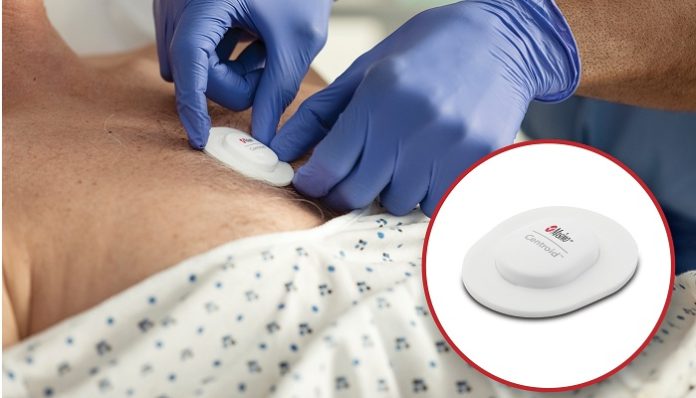
Masimo announced that Centroid™, a wearable, wireless patient orientation, activity, and respiration rate sensor, has received FDA clearance. Centroid helps clinicians monitor patient position to avoid preventable pressure ulcers, and can alert clinicians to sudden movements such as fall-like events. In addition, Centroid detects chest movements to continuously provide respiration rate, assisting clinicians with additional data that may inform care decisions.

Centroid pairs with the Root® Patient Monitoring and Connectivity Platform using Bluetooth® to track a patient’s posture, orientation, and activity, providing the ability to monitor patient position and detect changes in position. The data transmitted by Centroid can be displayed in various formats on Root, giving clinicians multiple ways to assess adherence to protocols regarding tissue stress and to tailor care to the specific needs of each patient.

Pressure sores affect nearly 2.5 million patients per year in U.S. hospitals alone, and approximately 60,000 of those patients die as a direct result.1 Centroid is indicated for the orientation monitoring of patients who may be susceptible to pressure ulcers, by tracking patient movement and activity using an accelerometer and gyroscope. Centroid can identify a patient’s position and orientation to the nearest degree, with alerts based on the duration in a static position to help clinicians adhere to hospital patient turn protocols. Centroid also features customizable alarm zones to help avoid patient positions that could negatively impact recovery time. Unlike simple time-based rotation protocols, Centroid uses the cumulative time spent in each position, as well as existing sore data, to calculate relative risk, displayed on the Root screen using color-coded markers, helping clinicians identify the potential severity of tissue stress for each position—and ultimately, helping to guide clinical decisions about the most appropriate, least risky positions for each patient.

In addition, because Centroid can identify whether a patient is lying down, standing, sitting upright, walking, or may have fallen, it can notify clinicians of a sudden change in position that might provide early warning of a potential fall, by alerting them when clinician-defined movement thresholds are crossed. Its respiration rate performance, validated against manually scored capnogram respiratory measurements, is accurate to within 3 respirations per minute (rpm) in the range of 8 to 35 rpm.

The Centroid single-patient-use sensor is ergonomically designed for application on the chest using flexible, lightweight material for patient comfort, with a gentle adhesive that supports continuous use during daily activities. Each battery-operated sensor is designed to last four days, minimizing the need for frequent replacement.

Joe Kiani, Founder and CEO of Masimo, said, “We are committed to using our expertise in signal processing and sensor design to develop new ways to provide the highest quality, most relevant data to clinicians in the most intuitive, useful formats, and Centroid, coupled with Root’s rich high-resolution display, is a great example of this. We hope that by helping to automate the process of tracking and making decisions about patient position, we can help clinicians reduce the frequency and severity of pressure ulcers, and ultimately improve patient outcomes.”

When Can You File a Lawsuit for Personal Injury?

When Can You File a Lawsuit for Personal Injury?

If you suffer a personal injury, then that means it was caused by the negligence of someone else. When that happens, you are entitled to file a personal injury claim or even a personal injury lawsuit against the guilty party. This is necessary if you need to cover any expenses caused by the injury without having to pay them out of pocket. Expenses like medical bills, repair bills, and lost wages are all covered.

While you can file a lawsuit, you might not know when you should do so. Fortunately, a personal injury attorney can help to clear things up for you and offer you advice on when— or even if— you should file a lawsuit. If you do decide to file a lawsuit, then your attorney will be an important ally during that procedure. You can learn more at fasigbrooks.com/orlando.

Should You File a Personal Injury Claim or a Personal Injury Lawsuit?

Technically you can file a personal injury lawsuit anytime after the accident occurred. However, you might not need to immediately jump to that option because a lawsuit should ideally be a last resort. Once you retain a personal injury attorney to help you, they will likely advise you to first pursue a personal injury claim rather than a lawsuit. Both a claim and a lawsuit are methods of getting the compensation you need but a claim is a far less messy and complicated option.

Personal Injury Claims

With most personal injury claims, you contact the at-fault party who then turns the matter over to their insurance company. You and your attorney will then be dealing with the insurance company for the rest of the process. You need to let the insurance company of the responsible party know that you intend to file a claim as soon as possible after the accident. Once you do file a claim, the insurance company will generate a claim number for your case and hand it over to a claims adjuster.

The adjuster will examine your case and come up with a settlement offer. The claims adjuster will need to find proof that the accident was caused by the party you hold responsible, that said party was negligent, and that your injuries are serious enough to qualify for a settlement. Meanwhile your attorney will have calculated their own settlement offer for your case. Once they inform the insurance company of their offer, the two sides will negotiate with the insurance company countering with the amount their claims adjuster came up with.

If the two sides agree to a settlement amount, then the claims process concludes and the insurance company will give you a release form and a check. Once you sign the release, the case is over and you cannot receive any further compensation. If the two parties disagree, then they can continue to negotiate until they agree to a settlement; if the two sides cannot reach an agreement, then you will have to file a lawsuit against the at-fault party.

Personal Injury Lawsuits

A lawsuit only becomes necessary when both parties cannot agree to a resolution. It is an unwanted outcome because it could lead to a trial which is expensive and time-consuming for both parties. Plus the results are unpredictable, which means that all of that time and money could be for nothing. Even if you are victorious, the expense of a trial may be higher than the reward.

That is why arbitration, aka mediation, is recommended instead. This is a process where a neutral third party called an arbiter or mediator, oversees negotiations between the two parties. It is like court but without all of the time and expense involved. The arbiter listens to the arguments from both sides and makes a decision that is final and cannot be appealed. An arbitration is a great alternative to a trial because it is shorter and less expensive, plus there are some types of arbitration where you are guaranteed to get some amount of money.

The Statute of Limitations

One big factor in when to file a claim or a lawsuit is the statute of limitations. This is the time limit you have to file after the accident has occurred. If you try to file after the statute of limitations has passed, then the court will reject your case. Each state has its own set of statutes for different kinds of cases, so you should find out for yourself, or ask your attorney, how long you have to file a claim or lawsuit. In Florida, the statute of limitations for personal injury cases is four years from when the accident happened.

Contact an Attorney For Help With Your Personal Injury Claim or Lawsuit

Whether you are filing a personal injury claim or a personal injury lawsuit, an attorney can be invaluable in helping you with your case. They can negotiate with the insurance company to make sure that you get a fair settlement that will cover all of your expenses and they will make sure that you file your claim on time before the statute of limitations expires. That is why you should contact a personal injury attorney as soon as possible after you have been in an accident that was caused by the negligence of another.

5 Tips for Heavy People to Get Better Sleep

5 Tips for Heavy People to Get Better Sleep

Rest and sleep have a significant influence on your daily mood and productivity. Inadequate or poor sleep quality often causes you to be cranky, jumpy, or on edge the following day.

Noise, lights, and temperature are a few things that can disturb our sleep. However, the sleep battle is a lot more difficult for heavy people because they are faced with different medical conditions and sleep posture problems that make sleeping better almost impossible.

We say almost because, well, it’s possible, but only if you follow a few sleep tips. To know what these are, keep on reading!

5 Sleep Tips for Heavy People

Here are a few things heavier people can try to improve the quality of their sleep:

1. Find a high-quality mattress.

We cannot emphasize the importance of a good bed. Your mattress plays a big role in your comfort while you sleep. Generic beds may not have enough support and durability to provide for large bodies.

The heavier you are, the more support your mattress should have. Mattresses for heavy people are firmer and can deliver the level of support you need. These can also designed to withstand pressure and keep its shape for a long time.

2. Go for durable bed frames.

Aside from upping your comfort level, bed frames are also used to promote durability. Heavy people must make sure that you choose a bed frame that provides supports the bed well. You must also make sure that it won’t cave in or squeak when you lie on the bed.

Steel frames are a good choice. Check out the frame’s maximum weight capacity to make sure it can accommodate your weight. Steel frames may not be stylish, but they are highly reliable. You could always DIY some headboard and footboard to make it look better.

3. Avoid eating a few hours before bedtime.

If you have acid reflux, eating a few hours before bed is not a good idea as it can aggravate your condition. Lying on bed delays food movement and digestion. It also increases the chances that the food will reflux and go back up the esophagus. This will cause a burning sensation in the esophagus, chest, and stomach that you would surely not want to experience.

Bonus tip: A higher pillow can help prevent the acid from regurgitating while you sleep. This is also a good intervention for if you are experiencing sleep apnea.

4. Use the right pillow according to your preferred sleeping position.

For heavy sleepers, adequate support is essential for better sleep, and you can also get that from a pillow. To choose the pillow that will provide you the support you need, you should consider your sleeping position.

Side sleepers need about 5-7 inch tall pillows to accommodate the gap between the head and the shoulders. Back sleepers would find pillows between round 4 inches high to be more comfortable and keep the spine aligned.

Sleeping on your stomach is not encourage, especially if you are on the heavier side. But if you’re used to this sleeping position, the best thing that you can do is use thin pillows.

Your pillow must help you keep your spine aligned and parallel to your bed, whatever your position is.

5. Choose fabrics that are comfortable for you.

Heavier people are at risk of sleeping hot. Fortunately, this can be minimized by choosing bedding made of breathable materials. Some of the materials designed to help you sleep cooler are gel-infused memory foam mattress, bamboo pillow cover, and latex mattresses.

Final Thoughts

Heavy people may experience more sleep problems than other people. Luckily, all these issues can be addressed or prevented through simple sleep hacks. Apply our sleep tips, and you can surely enjoy a night of restful and peaceful sleep!

How Not To Fall Victim Of Medical Insurance Scams Or Medicare Fraud

How Not To Fall Victim Of Medical Insurance Scams Or Medicare Fraud

Healthcare or medical fraud translates into reduced coverage and benefits, higher insurance premiums, and more expenses for consumers. On the other hand, government and private employers tend to experience increased business operational costs due to healthcare fraud.

The National Health Care Anti-Fraud Association or NHCAA reveals that insurance fraud causes an estimated total loss of 300 billion dollars or 10 percent of the yearly health outlay. With financial losses and other detrimental effects of healthcare fraud, you should know how not to become a victim of insurance scams.

In this post, you’ll learn effective ways to avoid being a victim of medical insurance scams or Medicare fraud.

What Is Healthcare Fraud?

Healthcare fraud may come in various terms, such as medical fraud, pharmaceutical fraud, Medicare fraud, private insurance fraud, and medical insurance scams, among others. A fraud constitutes falsifying information to usually obtain monetary benefits, as outlined in the False Claims Act.

What Is False Claims Act?

The False Claims Act or FCA imposes liability on individuals and companies (federal contractors) defrauding governmental programs, including Medicare. It’s the primary litigation tool of the federal government to combat fraud. An FCA claim includes the following elements: the defendant submits an FCA claim, the claim is false, and the defendant knows that the claim is false.

However, there are some cases filed that don’t fall under the False Claims Act, which you’ll learn when understanding the AseraCare case and medical necessity, helping you determine how to win such a case.

Check out these examples of false claims:

  • Knowingly Presenting A False Claim: The contractor, like a healthcare provider, knowingly presents a fraudulent claim to an insurance company.
  • False Certification: An example of expressed false certification is when a healthcare provider approves a charge to be paid or reimbursed by an insurance company for a medical procedure or healthcare service not given to a patient.
  • Promissory Fraud: This is a case of showing omission, misrepresentation, or false statement, like exaggerating the severity of an infectious disease to induce the government to enter a contract, like buying expensive vaccines or medical supplies to contain the infection.

What Are Medical Insurance Scams

Medical insurance scams involve lucrative marketing schemes wherein fake insurance agents collect high premiums, but won’t actually pay out claims. Scammers also use discount plans and cards to lure consumers into thinking that they are low-cost insurance policies.

While some discount cards and plans are legitimate, the National Association of Insurance Commissioners or NAIC warns the public to be careful because they won’t pay medical claims. Instead of giving out information over the phone, hang up the phone and contact the insurance company yourself using the phone number as shown on their official website or request an official mailer to be sent to you.

What Is Medicare Fraud?

Medicare is a government-funded health insurance, which scammers also take advantage of by slipping fraudulent claims (otherwise called as the Obamacare Fraud). Fake claims could go undetected because Medicare is difficult to navigate, thus making it a high-risk fraud program.

The common time scammers steal personal data from Medicare is when users are usually called to make changes in their plan and receive phone calls to verify their Medicare info or during the open enrollment season.

Here are some examples of Medicare fraud:

  • An insurance agent impostor selling a fake Medicare health insurance plan
  • A medical provider billing a patient incorrectly for unreceived health services
  • A scammer calls to verify personal data for a Medicare plan and uses the info to steal your identity

How To Protect Yourself From Medical Insurance Scams

  1. Know Your Rights

    Make sure that you know your rights as a consumer before purchasing an insurance plan.

    Here are your rights as a consumer when it comes to handling health insurance matters:

  • Remember that you’re entitled to a free, trained insurance advisor who can provide expert advice on coverage.
  • It’s also your right not to divulge any personal information over the phone. You can request the agent or company to send an official letter to you via snail mail.
  • It is your right to know the details in your medical file so that you can track the healthcare services that the hospital is charging or the insurance company is paying under your policy. Make sure to have a personal copy of all files.
  • Every year, you have the right to get a free copy of “accounting of disclosures” of your medical providers, which lists all entities to which your insurance provider sends your insurance and medical information.
  1. Choose And Identify Trusted Health Insurance Companies

    Protect yourself from healthcare scams by knowing how to identify trusted health insurance companies. Also, being aware of consumer rights and being mindful when dealing with insurance agents are important to protect your identity.

    Check out these ways to know if a health insurance company is reputable or not:

  • Know The Warning Signs: Some of the warning signs of fraudulent insurance companies include offering high-pressure sales pitches, pushing low-cost plans, or offering special rates, luring consumers to sign up right away. Also, some fake insurance providers claim that their insurance plans are licensed by the Employee Retirement Income Security Act or ERISA.
  • Validate Information: Confirm if you’re dealing with a licensed insurance company with your state insurance commissioner. Gather more information about the union or association named in an insurance pitch. Check the street address and contact number, as well as other evidence of activities besides selling health insurance. Directly check an unfamiliar company if they claim that they’re selling plans through a major insurer.
  • Check With NHCAA: Check if the insurance provider is licensed in your state by visiting the site of the National Health Care Anti-Fraud Association (NHCAA).
  1. Check The Health Insurance Plan Offerings

    Always compare premiums and rates, including comprehensive coverage far lower than others or “too good to be true” deals. Insist on seeing a complete copy of the health insurance policy or a statement of benefits. Ask specific questions about health insurance plans and medical discount plans to know what you’re actually getting.

  1. Be Careful When Validating Information Over The Phone

    Always be on the lookout for unsolicited phone calls. You might fall under the trap of fake insurance agents or providers, giving them the opportunity to use your information to commit medical fraud.Here’s how to deal with suspicious phone calls from fake insurance companies or agents:

  • Remember that insurance companies never contact people directly to solicit personal information, such as your social security number or credit card number.
  • If someone contacts you about health insurance coverage claims and says that the agent is from the government, put the phone down right away. Never entertain such an inquiry because no government representative sells health insurance.
  1. Determine If You’ve Been Defrauded

    The Federal Trade Commission or FTC lists warning signs that would help you determine if you have become a victim of medical insurance fraud. It’s crucial to report the fraudster to concerned agencies immediately once you have noticed or experienced these warning signs.Here are some warning signs that you’ve been defrauded:

  • You receive a bill for a healthcare service or medical equipment that you never received.
  • You are called about a medical debt that you’re unaware of.
  • Suspicious medical charges appear on your credit report.
  • Discrepancies show on the services and the explanation of benefits from the insurance agent or company.
  • You suddenly maximize out your insurance benefits.
  • You got denied of insurance coverage due to false medical conditions.
  1. Know How To Protect Your Identity

    By preventing personal data leakage, you reduce your risk of being a victim of medical insurance scams or Medicare fraud. Aside from never divulging personal information via an email or phone call, check out the following tips to help you further protect your identity:

  • It helps only accessing secure websites when you need to fill out health forms online.
  • Check the browser URL and make sure that it bears encrypted security features, such as having an “HTTPS” URL instead of “HTTP”.
  • Remove labels from your prescription bottles.
  • Shredding any forms that contain personal information, like healthcare statements and bills, will also help protect your identity.
  1. Report Medical Insurance Fraud

    You can contact the fraud reporting department of the health insurance company if you suspect that you’ve been a victim of fraud. When reporting Medicare fraud, you can contact 1-800-447-8477 or 1-800-HHS-TIPS. Also, you can report Medicare fraud online at Medicare.gov. Also, you can file a complaint with the fraud bureau or medical board of your state.If someone attempts to steal your personal information, report the identity theft online via the online complaint assistant of FTC. You may as well call your local police department to report the incident so that you can have it properly documented and obtain evidence when the need arises.

  2. Hire a Medical Fraud Lawyer

    When a person commits fraud in the healthcare industry, it is known as “healthcare fraud.” This type of fraud can take many different forms, from billing for services that were never rendered to providing false or misleading information in order to receive some sort of financial benefit.

    A healthcare fraud attorney is someone who has expertise in both the legal and healthcare industries. This type of lawyer dedicates time to not only preparing and filing court documents, but also negotiating with all parties involved.

Conclusion

By following the tips on how to avoid falling victim to medical insurance scams or healthcare fraud, you protect yourself from major problems in the future, such as losing your benefits due to previously filed false claims. It’s crucial to know your rights as a consumer, compare insurance plans and rates, and to be mindful when giving out personal information over the phone. Make sure that you’re dealing with a reputable insurance provider only and to always keep track of all healthcare services you avail every year.

UK first – Glenfield Hospital implants the world’s smallest leadless pacemaker into a patient’s heart

UK first - Glenfield Hospital implants the world's smallest leadless pacemaker into a patient's heart

Glenfield Hospital has become the first hospital in the UK and Ireland to implant the world’s smallest, wireless pacemaker – the size of a large vitamin – into a patient’s heart.

Managed service and maintenance provider Althea provided the device for the ground-breaking procedure, which took place at Glenfield Hospital, part of University Hospitals of Leicester NHS Trust.

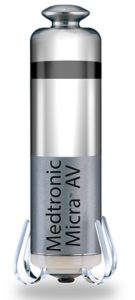
Manufactured by Medtronic, the Micra™ AV Transcatheter Pacing System (TPS) is only an inch long and treats AV block, a condition in which the electrical signals between the chambers of the heart (the atria and the ventricle) are impaired.

AV Block can cause light-headedness, fainting, and palpitations with severe cases leading to loss of consciousness, sudden cardiac arrest and can even worsen pre-existing conditions, such as heart failure. AV synchrony means the electrical activity of the atrium and ventricle are coordinated. When the atrium and ventricles are synchronized, patients are healthier and have decreased likelihood of pacemaker syndrome, improved quality of life, and increased blood flow from the left ventricle.

Micra AV, an innovative device that can detect the mechanical movement of a beat in one chamber of the heart – the atrium – and then pace another chamber where Micra AV is implanted – the ventricle – so the atrium and ventricle beat in synchrony, was purchased and managed by Althea through their Consumable Management Service (CMS).

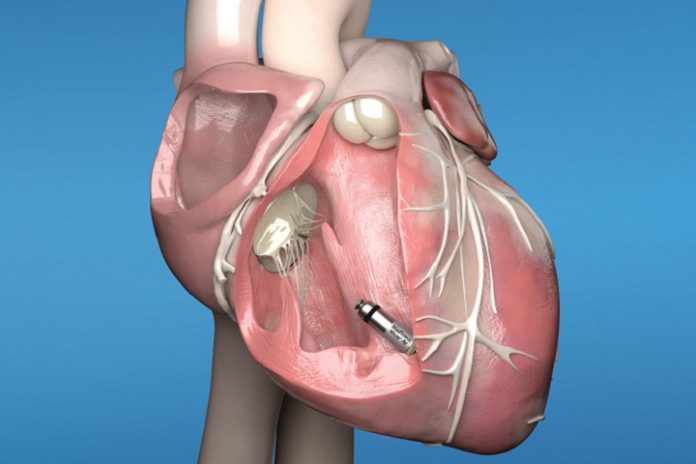
One-tenth the size of a conventional pacemaker, the Micra™ AV is delivered directly into the heart through a catheter inserted in the femoral vein (in the leg). Once positioned, the pacemaker is securely attached to the inside of the heart wall and can be repositioned if needed.

The miniature device does not require the use of wires, known as “leads,” to connect to the heart. Instead it is attached to the heart via small tines and delivers electrical impulses that pace the heart through an electrode at the end of the device.

It is the first time this procedure using the Mirca AV has been carried out in a UK hospital and Consultant Cardiologists involved Dr Somani, Dr Pathmanathan and Dr Chelliah have revealed the procedure was a huge success. Further procedures using the innovative device are planned to take place in the coming weeks.

Dr Riyaz Somani, Consultant Cardiologist at University Hospitals of Leicester NHS Trust, said: “It’s not just the size of the device that’s impressive but the technology inside is far more sophisticated than previous versions and will undoubtedly improve the lives of many local people with heart rhythm problems”.

“I’m proud to have implanted the first one in the UK and Ireland at Glenfield Hospital in Leicester.”

A person’s heartbeat is controlled by electrical signals that travel from the upper chambers in your heart (the atria) to the lower chambers (the ventricles), making them contract and pump blood around your body. With AV block these electrical signals are slowed down or blocked as they travel through the heart. There are no medications available to treat AV block so until now, patients have been treated with traditional dual-chamber pacemakers which are implanted in the upper chest, under the skin below the collar bone, and connected to the heart using two thin wires called “leads.”

Justine McDonagh, CMS Business Manager at Althea said: “It is a real achievement for Glenfield Hospital to be the first in the UK and we are delighted to work with the hospital and clinicians to make this a reality for patients.”

Althea’s Consumable Management Service (CMS) offers clinicians in Cardiology, Radiology, Endoscopy and Electrophysiology suites access to the highest quality clinical consumables and devices in the right quantities at the right time. This enables Leicester’s Hospitals clinical teams to deliver compliant, sustainable and patient centric services.

Being entirely vendor-independent ensures Althea is not tied to any one manufacturer and can offer hospitals the most clinically effective and cost efficient service for their clinical needs.

About Althea – Althea delivers managed services and multi-vendor maintenance services to public and private hospitals in the UK and Ireland, designed to improve Radiology, Cardiology, Endoscopy and Biomed equipment availability whilst minimising costs under one service contract. Being vendor-independent means Althea’s customers can choose equipment and clinical consumables from any manufacturer as well as select the most-appropriate blend of maintenance providers including our ISO13485-certificated, in-house engineering workforce.

About Medtronic – headquartered in Dublin, Ireland, is among the world’s largest medical technology, services and solutions companies – alleviating pain, restoring health and extending life for millions of people around the world. Medtronic employs more than 90,000 people worldwide, serving physicians, hospitals and patients in more than 150 countries. The company is focused on collaborating with stakeholders around the world to take healthcare Further, Together.

Why Telemedicine is Needed Now, More Than Ever

Why Telemedicine is Needed Now, More Than Ever

Ed Garner is the only doctor serving an 11,000-square-mile area of western Texas near the town of Van Horn. Everyone from elderly inpatients and pregnant mothers to ER visitors has access to only one full-time physician. The result is a medical desert roughly the size of Maryland.

Van Horn’s plight underscores the lack of adequate healthcare common in certain rural areas of the U.S. That problem is only likely to worsen as doctors like the 68-year-old Garner age out of the profession and the population as a whole lives longer and longer.

According to United Nations statistics, the average life expectancy in the U.S. is currently 78.9. That is slightly higher than in 2010 (78.5) and significantly higher than in 2000 (76.8) and 1990 (75.2). As of 2017, the average 65-year-old man and woman could expect to live another 19 and 21.5 years, respectively. Twenty-five percent of those in that age cohort could even be expected to survive past the age of 90.

At the same time, it has been estimated that seniors require two to three times as many medical services as their younger counterparts. But who will provide them? According to a 2019 CNBC report, one-third of the doctors currently practicing will be 65 or older in the next decade. By 2032, there will be a shortage of between 46,900 and 121,900 physicians.

The problem is exacerbated in rural areas like the one Garner serves. Bisbee, Arizona is another town facing the same problem. The former copper-mining town features a 14-bed hospital but it is the only one for miles around. The situation in Bisbee is emblematic of the various factors that come into play in these areas: a declining population, a scarcity of hospitals, and few new doctors who want to practice there.

Specialists in Short Supply

Garner once diagnosed a trucker with two bulging disks in his back and told the man he needed the care of a specialist. Alas, the nearest one was in El Paso over two hours away.

According to data from the U.S. Commerce Department, 99% of the nation’s job and population growth between 2008 and 2017 came from metropolitan areas. As a result, hospitals in rural locales like Van Horn started feeling a financial pinch. It reached a point where 121 of them shut their doors between 2010 and the early weeks of 2020.

As a result, one in four Americans living in rural areas does not have access to sufficient healthcare. As physicians age and hospitals close in these places, it doesn’t appear that the cavalry is going to be riding to the rescue anytime soon. Just 1% of the students in their final year of medical school want to live in towns smaller than 10,000 people.

Telemedicine Can Help

Telemedicine can help ease the problem. Such technology is actually already in use in the hospital in Bisbee, giving far-flung residents access to the type of care they might not otherwise receive. But telemedicine has been found to be of great convenience to patients in busier settings too. The Allure Group, for example, uses a telemedicine platform known as Telehealth Solutions to treat residents across the greater New York area.

Telemedicine has even been integral in the battle against the coronavirus, allowing high-risk patients to seek medical attention without exposing themselves to the virus. It’s also been a godsend for clinicians who are finding their time, resources, and personal protective equipment in dangerously short supply.

Even so, telemedicine adoption has historically been slow. A study undertaken by the American Medical Association in 2016 showed that just 15.4% of physicians worked in a practice that used telemedicine platforms to interact with patients. Just 11.2% used the technology to interact with other doctors.

The arguments in favor of telemedicine are nonetheless compelling. Besides increased access and convenience, telemedicine can also save on rising healthcare costs. In 2017 for example, Americans spent 3.5 trillion in that space, or an average of nearly $11,000 per person. It has been estimated however, that as much as 25% of yearly healthcare outlays are wasted. Telemedicine can alleviate some of that waste by making doctor visits more efficient and eliminating unnecessary ER visits.

The technology is obviously not perfect. There is often no replacement for face-to-face interaction with a physician and telemedicine requires specialized physician training and equipment. But its implementation would help alleviate overworked doctors like Ed Garner, provide badly needed medical services in rural areas, and even lower healthcare costs that burden the entire system. The technological and regulatory hurdles to get there are large but surmountable, and the benefits are worth fighting for.

Inspiration Healthcare acquire SLE to become global leader in neonatal intensive care

Inspiration Healthcare acquire SLE to become global leader in neonatal intensive care

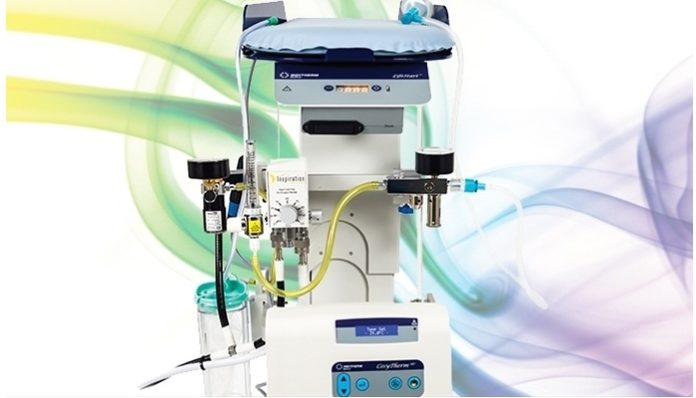
Inspiration Healthcare, a global provider of medical technology, are to acquire SLE – a specialist provider of neonatal ventilation products – for the sum of £18m following a successful fundraising round.

Every year, an estimated 15 million babies are born preterm, and that number is rising. The global market for neonatal medical equipment is set to reach $9.09bn by 2024.

With products that support new-borns in the first minutes of their lives, to respiratory products that support adults in intensive care, Inspiration Healthcare’s innovative solutions are used and distributed to more than 50 countries around the world. Most recently, the firm has received £5m of adult ventilator orders from the NHS and a US Patent for a product that could help more than one million babies every year.

Inspiration Healthcare is set to become a global leader in neonatal intensive care equipment and is targeting £100m revenue through organic growth and acquisitions. This deal doubles the number of staff overnight, increases Inspiration Healthcare’s revenue to £34m, enables the firm to take on additional manufacturing capability, and increase its global distribution network to cover the Middle East and Asia/Pacific.

This news comes following the successful acquisition of Viomedex – a manufacturer of disposable respiratory products in September 2019.

Neil Campbell, Chief Executive at Inspiration Healthcare, said: “We are delighted to have received such strong support for the Fundraising to drive our growth strategy and the acquisition of S.L.E. Limited, a leading designer and manufacturer of ventilators and capital equipment used in neonatal intensive care. Bringing the two companies together will significantly enhance our position as a leader in the global neonatal intensive care sector and deliver a number of benefits that include broadening the Group’s product portfolio, an enlarged global distribution network, added manufacturing facilities and significantly increasing revenues and earnings.”

Bernard Nelligan, Managing Director at SLE, added: “Improving the wellbeing of the tiniest of patients has been close to our hearts for the last 60 years and I have no doubt that under the ownership of Inspiration Healthcare that this will continue.

“Inspiration Healthcare is a fantastic business run by experienced experts in the neonatal field. This acquisition brings many future opportunities and enables the organisation to continue to innovate and develop life-saving products. With our key management team staying with the business long term, I am certain that we are in very safe hands and will go on to achieve great things.”

Both firms have previously been awarded the Queen’s Award for Enterprise: International Trade and have played a significant role in the UK Government’s Ventilator Challenge as a result of Covid-19.

About Inspiration Healthcare

Inspiration Healthcare is a global provider of medical technology for use in critical care & operating theatres. The Company provides high quality innovative products to patients around the world which help to improve patient outcomes and it actively invests in innovative product opportunities and disruptive technologies.

Through investment in research and development the Company has 6 key own brand products that can be used within the first 6 hours of life to help premature and sick babies; helping with assessment, resuscitation, stabilisation as well as preventing brain damage. Additionally the Company has its own range of products for maintaining normothermia pre- during and post-surgery.

With product availability extending to over 50 countries through a distribution network, Inspiration Healthcare’s success has been built on continuous innovation, excellent customer service and an inherent commitment to improving patient outcomes, working in close collaboration with key opinion leaders across the globe. In the UK and Ireland the Company has a direct sales team selling Inspiration Branded and complementary products from third parties, with an additional range of home healthcare products. This is supported by Technical Support for planned preventative maintenance and emergency assistance. Further information on Inspiration Healthcare can be seen at www.inspiration-healthcare.com

Translate »