Close
Digital Health & Ai Innovation summit 2026
Medical Taiwan 2026

Covid-19 threat to healthcare workers and the desperate scramble for ways to protect them

Covid-19 threat to healthcare workers and the desperate scramble for ways to protect them

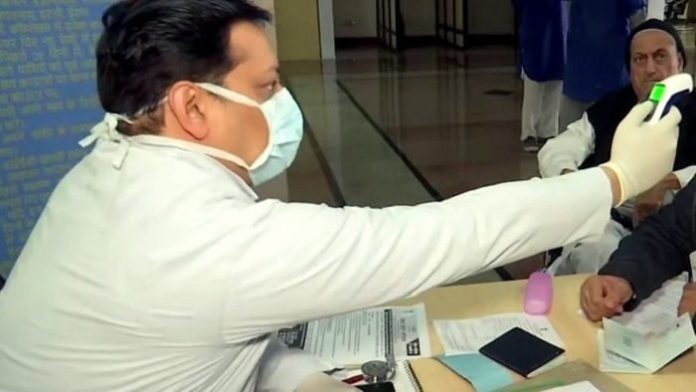
Healthcare workers are the most exposed to Covid-19 and are constantly being exposed to large concentrations of the virus. They work overtime and in high levels of stress, which decreases their immunity. They are crucial elements in the battle against the novel coronavirus and everything must be done to protect them.
State of healthcare workers

When the virus began in China, in the first six weeks only 13 health workers were infected by Covid-19. By 14 February, approximately two months later, 1,716 healthcare workers were infected — more than those infected by SARS in 2003. Six days later, the number increased to 2,055 and then by 3 March, 3,200 medical personnel had been infected. In Italy, the scenario has been much worse, 8.5 per cent of all people infected have been healthcare personnel. Further, twenty per cent of Italy’s entire medical personnel has been infected by Covid-19.

Many healthcare workers have also died of the coronavirus. The first fatality was Li Wenliang, a young ophthalmologist — not a profession normally considered high-risk. His colleague Mei Zhongming, who died the following month, was also an ophthalmologist. The third was a thyroid and breast surgeon. The fourth, a neurosurgeon and hospital director and in Britain, two ear, nose, and throat specialists are in critical condition. These doctors aren’t supposed to be dealing with Covid-19, but due to excess pressure, their help is needed.

Large economies, like the US, have been struggling to protect their healthcare workers. India will find it even more difficult if the virus starts spreading rapidly. And to tackle such a scenario, Prime Minister Narendra Modi has announced Rs 15,000 crores for health facilities.


Preclinical imaging technology now driving cancer research

Preclinical imaging technology now driving cancer research

Over the last decade, equivalent multi-modal diagnostic imaging technologies routinely used in most hospitals and specialist clinics have become established as a significant part of a researcherโ€™s analytical toolbox in oncology.

A key part of preclinical research is the construction and testing of small animal models that allow scientists to gain a deeper understanding of human disease development and the efficacy and safety of potential treatments.

Today, the widely accepted goal to be able to offer patients more personalized cancer treatments is driving advances in preclinical oncology research โ€“ and imaging technologies, such as positron emission tomography (PET) have emerged as a vital tool in this work.

With numerous different types of tumors โ€“ including those not yet well characterized โ€“ and their varying responses to treatment, the search for new effective cancer therapies is incredibly challenging. Using technologies such as PET enables researchers to better understand the course of tumor progression and visualize cancer-related processes in real-time.

Importantly, by linking PET with other imaging modalities, such as computed tomography (CT) and single-photon emission computed tomography (SPECT), structural and functional imaging can both be generated in one experiment. So called โ€˜multi-modal PET/SPECT/CT systemsโ€™ are able to provide quantitative 3D images of radiotracers, bone, and soft tissue, furthering the growing knowledge of underlying cancer biology.

How it works

In simple terms, PET is able to picture metabolic processes in the body. It is able to provide information on the expression of receptors, energy metabolism, and other biomarkers of tumors, by imaging an intravenously injected radiotracer โ€“ a radioisotope, commonly fluorine-18 (18F), that is attached to a molecular probe targeting a specific molecule or metabolic pathway โ€“ and monitoring its uptake by tumor cells. In parallel, a CT scan makes use of computer-processed combinations of many X-ray measurements taken from different angles to produce cross-sectional images of specific areas of a scanned object, allowing the user to see inside the object without cutting it. The resulting co-registered PET/CT images provide essential knowledge at the boundary between research and clinical decision making.

Imaging insight

Much of the work being done in preclinical PET oncology research is concentrated in three key areas; understanding the biology of tumor development from molecular to organ level, predicting and monitoring responses to cancer treatments, and recognizing mechanisms of drug toxicity. Imaging technologies such as PET/CT have been successfully used in many areas of study. For example, it is well known that many cancers are associated with a higher metabolic turnover than normal cells so, using PET and an injected radiolabeled glucose analogue tracer, such as 18F-fludeoxyglucose (18F-FDG), glucose uptake can be quantified, and tumor burdens detected.

More specific PET agents that are capable of targeting the expression of one molecule or gene product have the potential to help researchers better understand and assess tumor biology and therapy responses. For example, the PET radiopharmaceutical 68Ga-PSMAhas revolutionized prostate cancer imaging in recent years. The Prostate-Specific Membrane Antigenfound in cell membranes is highly expressed in the prostate and in particular prostate cancer cells, making 68Ga-PSMA very effective in imaging.

In addition, PET/CT is used to determine the accumulation regions of 18F-FDG, to obtain a semiquantitative standardized uptake value (SUV) that assists in the diagnosis of tumor malignancy. Blood flow is another important marker, as tumor vascularization can potentially discriminate between nonneoplastic and neoplastic lesions.

Developing new imaging biomarkers

The development and characterization of imaging biomarkers to inform and guide cancer treatment management for individual patients is the focus of novel cancer therapy research. For example, the study of predictive imaging biomarkers and biomarkers that help to assess drug resistance and tumor response to drugs, as well as the development of specific imaging probes, could potentially guide innovative therapy plans and rapidly identify potential responders.

In one recent study, epidermal growth factor tyrosine kinase receptor (EGFR)-specific radioligands were used to measure EGFR expression in mice with head and neck squamous cell cancer (HNSCC). The aim was to define a predictive biomarker to stratify patients for treatment. Cetuximab is currently the only approved anti-EGFR monoclonal antibody(mAb) used for the treatment of HNSCC. This work is important because the ability to monitor and assess the drugโ€™s efficacy and any cetuximab-mediated changes in receptor expression could help inform appropriate dosing with anti-EGFR antibodies.Data was acquired on a tri-modal small-animal PET/SPECT/CT system (Bruker Albira II, Bruker Biospin GmbH) and the results highlighted the potential for using EGFR imaging as a tool for assessing cetruximab efficacy based on receptor level, rather than relying purely on anatomical imaging, and provide image-guided therapeutic strategies for the clinic(figure 1) [2].
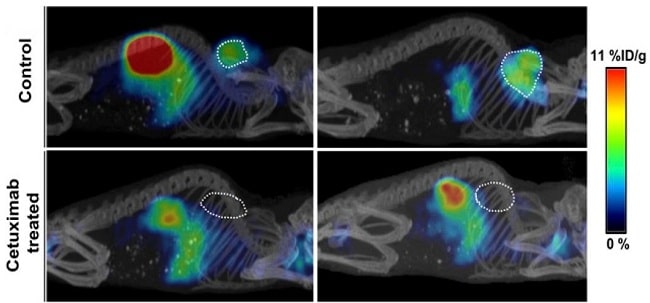
Figure 1: Representative sagittal whole-body PET/CT images of mice bearing HN5 tumors (outlined on image) with or without treatment with cetuximab. This research was originally published in JNM. Burley et al. J Nucl Med. 2019;60:353-361. ยฉ SNMMI and is reproduced in accordance with the Creative Commons Attribution License https://creativecommons.org/licenses/by/4.0/.

Investigating combination therapy

Cancers are often targeted with combination drug therapies. These regimens can address multiple molecular targets and reduce the chance of drug resistance. One study used preclinical PET/CT imaging to monitor 18F-FDG tumor uptake in an animal model for different treatment combinations: radiotherapy (Rad) alone, Rad + Temozolamide (Tmz), Rad + Mifepristone (Mife), and Rad + Mife + Tmz [3].

A multi-animal transport system on a tri-modal small-animal PET/SPECT/CT system(multi-
animal transport system โ€“ MATS โ€“ and Bruker Albira II, Bruker Biospin GmbH) was used to image the experimental subjects.

Rad+ Tmz is the typical treatment regimen for glioblastoma, but the study found that using Mife as a priming agent suppressed tumor growth more than the other treatment combinations (figure 2). The mechanism of this chemo-radio-sensitizing effect of Mife is yet to be fully characterized, but studies such as this help researchers make important steps towards improving available cancer treatments.
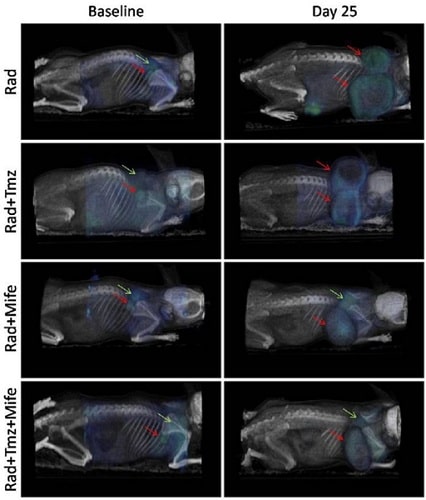
Figure 2: PET/CT images showing 18F-FDG tumor uptake, in four treatment combinations, at the beginning of treatment and 25 days later. Red arrows indicate tumor location at baseline and day 25, green arrows show sites of typical 18F-FDG uptake in brown adipose tissue (BAT). Reproduced from reference [3] in accordance with the Creative Commons License (https://creativecommons.org/licenses/by/2.0/).

Summary
Nuclear molecular imaging technology that has been established for clinical diagnostics is now being applied further back in the healthcare chain as researchers explore its benefits for investigating tumor biology and cancer treatment. The ongoing development of multi-modal PET technology specifically for preclinical applications looks set to continue this drive, and the benefits are already changing the way cancer is treated, moving towards the goal of a more personalized medicine approach.

About the Author
Todd Sasser, Ph.D is a Head of Applications for Bruker Preclinical Imaging. Dr Sasser studied at The University of Liverpool and The University of Hawaii and was a visiting scholar at The University of Notre Dame.

References
1. Jones T and Townsend D (2017) History and future technical innovation in positron emission tomography. J Med Imaging (Bellingham). 4(1):011013. doi:10.1117/1.JMI.4.1.011013.
2. Burley TA, Pieve CD, Martins CD, Ciobota DM, Allott L, O WJG, Harrington KJ, Smith G and Kramer-Marek G (2019) Affibody-Based PET Imaging to Guide EGFR-Targeted Cancer Therapy in Head and Neck Squamous Cell Cancer Models, J Nucl Med, 60:353-361.
3. Llaguno-Munive M, Medina LA, Jurado R, Romero-Piรฑa M, Garcia-Lopez P (2013) Mifepristone improves chemo-radiation response in glioblastoma xenografts. Cancer Cell International. 13:29. https://doi.org/10.1186/1475-2867-13-29.

For more information on Brukerโ€™s PET/CT imaging solutions for preclinical oncology research, please visit https://www.bruker.com/applications/preclinical-imaging/oncology.html.


The Power of Artificial Intelligence in Cancer Treatment: How the Democratization of Advanced New Treatment Options Benefits Patients, Doctors and Big Pharma

The Power of Artificial Intelligence in Cancer Treatment: How the Democratization of Advanced New Treatment Options Benefits Patients, Doctors and Big Pharma

Cancer today impacts everyone.

As the second leading cause of death in the U.S., cancer will cause over 600,000 deaths in the country this year, with nearly 2 million new cases being diagnosed at the same time. The personal, professional, financial, psychological and emotional toll that cancer has on patients and their caregivers can be overwhelming and crippling, and related pressures on both physicians and pharmaceutical companies put the industry in dire need of groundbreaking innovations that change the status quo.

While the advent of the Internet has revolutionized nearly every major industry to date โ€“ bringing different kinds of information and unlimited options directly to the people โ€“ the world of cancer treatment has lagged behind. Now, with the help of artificial intelligence and machine learning, democratization in the cancer care industry is finally possible.

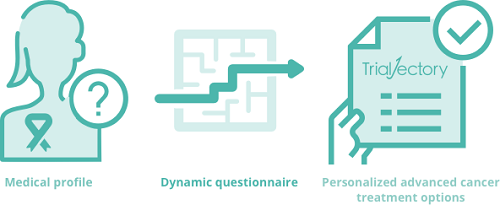
Enter TrialJectory: a decision-support platform that leverages the power of AI to match cancer patients with the right clinical trials for their exact diagnosis. Not only does TrialJectory empower patients to take back control of their health and own their cancer journey, but it also allows oncologists to access the right clinical trials for their patients within minutes. This unique access enables patients and doctors to make informed decisions while knowing all of the treatment options. Pharmaceutical companies are also able to bring better drugs to market sooner by addressing the obstacles of clinical trial recruitment and retention.

Hereโ€™s how it all works and why it matters.

For Patients

Seventy percent of adult cancer patients are willing to participate in clinical trials, yet less than 5 percent of these patients actually enroll. Why? Because one of the biggest obstacles that patients face in cancer treatment today is not having accessibility to find the right clinical trials for them. This is a massive problem, because clinical trials are often proven to be better alternatives and result in better outcomes compared with the standard of care.

It is vital that patients are presented with all of their options so that they can partner with their oncologists to figure out the best plan of attack. Today, only a small fraction of the cancer patient population is presented with advanced, lifesaving treatment options, as most patients are treated in community settings with limited resources and accessibility. It is unethical that factors like socioeconomic status, race and geographic location prohibit a person from receiving the best cancer treatment possible.

The sheer volume and complexity of the trials, as well as the medical jargon thatโ€™s used in their descriptions, all make it hard for patients to identify which trials are right for them. TrialJectory mimics the mind of an oncologist, classifying all unstructured treatment criteria in clinical trial protocols, and then matching the information with a patientโ€™s self-reported medical data. The platform reaches patients at multiple different points along their journeys โ€“ i.e., after a patientโ€™s initial diagnosis or after he or she fails other lines of treatment.

By giving patients the smart tools that are needed to make all relevant information accessible at the right time, TrialJectory enables them to take a more active, direct role in their health. Best of all, AI finds clinical trial options in a matter of minutes โ€“ at no expense to the patient โ€“ and allows the process to begin with the patient, as opposed to the oncologist dictating the treatment plan.

For Doctors

Cancer research is evolving at such a rapid pace that it no longer makes sense for the oncologist to be the gatekeeper of treatment options. Through no fault of their own, oncologists have become a bottleneck in how patients obtain access to the most advanced treatments in the clinic. Whatโ€™s more, there is no way for a single oncologist to know about every treatment option that is available to patients today. In the U.S., there are over 110,000 trials in oncology alone, with over 19,000 that are recruiting.

Whether a doctor practices at MD Anderson or in a community setting, TrialJectory enables all oncologists to get their patients quick, easy access to all available clinical trials. This not only allows them to offer better outcomes for their patients, but it also deepens their relationships with patients as a result. By making aoll relevant information accessible and easy to understand, patients can sit as an equal in front of their oncologist โ€“ the key to having a productive, hopeful patient-doctor discussion that ultimately leads to important decision-making.

Lastly, it is important to remember that, as the technology is not making any actual decisions, the AI platform will never replace doctors. It simply filters, analyzes and processes all available information so that doctors can help their patients to make the right decisions for their unique situation.

For Big Pharma

Pharmaceutical companies invest billions of dollars in the clinical development of new drugs. In fact, almost 80 percent of clinical trials fail to finish on time due to the difficulty in finding eligible patients. This translates into roughly $2 billion of revenue loss for a new oncology drug.

By helping to find the right patients for the right trials, TrialJectory is bolstering recruitment efforts for Big (and small) Pharma. Overcoming these issues also has the potential to greatly reduce a drugโ€™s time to market, as well as lead to reduced operational costs and other inefficiencies that directly result from the inability to recruit and retain the right patients for clinical trials.

TrialJectory also provides pharmaceutical companies, for the first time, insight into the patientโ€™s mindset and data, such as which eligibility criteria eliminates the majority of patients, why patients who are eligible decide not to enroll and potential patient location.

As the number of cancer deaths is projected to grow to 16.3 million by 2040, the bottom line is that we need to do better. Until now, patients were excluded from the discussion between the pharmaceutical companies, hospitals and oncologists, but if we want to improve access to advanced treatment options for all patients โ€“ without biases โ€“ we must include them in their treatment.

We must advocate for the democratization of cancer care, as peopleโ€™s lives are at stake every day. AI is the way to get us there.

Medovate to bring life-saving upper GI therapy device to market

Medovate to bring life-saving upper GI therapy device to market

Medovate, an innovative medical device company, has secured the exclusive rights to bring to market a pioneering endoscopic surgical device. The new device, ENDOVAC, has the potential to dramatically improve survival of patients with life threatening infection following a leak from their the upper gastrointestinal (GI) tract whilst significantly enhancing current treatment methods.

Developed by a team led by Mr Andrew Hindmarsh, Consultant Oesophagogastric Surgeon at Cambridge University Hospitals NHS Foundation Trust, ENDOVAC is also backed by a ยฃ1.2m grant from the National Institute for Health Research, which has a number of regional specialist partners including the Hospital, the Cambridge Clinical Trials Unit, Health Enterprise East and Suffolk-based JEB Technologies Ltd. Medovateโ€™s role is to attain regulatory approval and commercialise this technology, with a view to beginning clinical evaluation as early as 2021 and market launch thereafter.

Each year, around 2,800 people in the UK get a hole in their upper GI tract. These holes may occur on their own; arise from problems such as stomach ulcers; or be caused through surgery or other medical interventions. The presence of a hole allows leakage of gastrointestinal contents into the body which quickly leads to infection around vital organs such as the heart and lungs, a serious medical emergency that is fatal if not treated successfully.

In the past, the standard treatment for these holes has been surgery, but this was often unsuccessful. More recently surgeons have developed an alternative treatment strategy for this problem called Endoluminal Vacuum Therapy (EVT). However, this treatment still needs improvement as it requires multiple technically difficult procedures under general anaesthesia in an operating theatre to be successful.

ENDOVAC is a ground-breaking progression of EVT. This novel technology allows easier delivery of treatment without the need for general anaesthesia, meaning the procedure does not need to be performed in an operating theatre. ENDOVAC makes EVT safer, quicker, easier and cheaper, and importantly is far less traumatic for patients. It will also enable patients to be mobile during treatment, unlike standard EVT, where patients are often confined to their hospital beds.



Robert Donald, New Business Manager at Medovate, commented: โ€œENDOVAC offers a deceptively simple solution to a complex problem that has sadly claimed many lives over the years. The team at Cambridge University Hospitals NHS Foundation Trust have come up with a straightforward yet effective device that presents a compelling proposition in terms of both patient outcomes and potentially significant cost-savings to the NHS.

โ€œENDOVAC is a natural addition to the Medovate portfolio of innovations in the fields of surgery, anaesthesia and intensive care. We are excited to be working with Mr Andrew Hindmarsh and his colleagues to bring such a ground-breaking product to market, and we fully expect to see ENDOVAC in use in our hospitals in the not-too-distant future.โ€

About Medovate
Medovate is a dynamic medical device company dedicated to the development and commercialisation of innovative medical technologies created within the NHS and beyond to improve patient care. Medovate identifies and works with high potential medtech innovations, providing the specialist management and technical resources, along with finance required to lead innovation development through clinical trials and regulatory approval. By providing funding and support at a crucial point in the development of innovative medical technologies, Medovate accelerates innovations to market in order to benefit patient care and healthcare delivery.

Medovate directly benefits the NHS by:

Providing access to funding, support and expertise to enable innovations created within the NHS to reach the market
Delivering commercial returns to the NHS organisations and inventors that created the technologies

Bonafide Medical Group Releases Outbreak Management Tool in Midst of COVID-19 Pandemic

Bonafide Medical Group Releases Outbreak Management Tool in Midst of COVID-19 Pandemic

Bonafide Medical Group announced the release of its Outbreak Management Tool in the midst of the COVID-19 pandemic to assist in tracking and preventing infection outbreak within acute and post-acute facilities.

Bonafideโ€™s Outbreak Management Tool will be added to the companyโ€™s existing Bac-Track software platform. This will allow facilities to make the invisible, visible by effectively tracking infections on a digital platform. In addition to its floorplan and tile feature, contamination analytics are displayed by facility, department, and room on an easy-to-use dashboard. The Outbreak Management Tool assists your facility to meet and exceed CMS and CDC guidelines and regulations, including CMS 483.80. This tool not only help you save lives and prevent infection outbreaks, but also reduce financial and administrative burdens.

In the midst of the coronavirus outbreak, the Bac-Track software with Bonafideโ€™s Outbreak Management Tool will be more accessible for facilities to implement over the next 90 days. This offer is exclusively available for acute and post-acute facilities in order to reduce burdens while providing the means to prevent and manage outbreak and keep patients safe.

As humans, we fear the unknown. This is especially true in healthcare. It has been Bonafideโ€™s mission to bring visibility to the invisible and eliminate the unknown with infection prevention tools in the acute and post-acute spaces,โ€ stated Scott McDaniel, President and CCO of Bonafide. โ€œIt is crucial that facilities get in front of the problem and implement software and tools that improve infection tracking and prevention. We want our technology to be a valuable tool to combat the COVID-19 and other future threats to patients and those we know and care for.โ€

To receive access to your Bac-Track platform and Outbreak Management Tool visit Bonafide.com/Solution-Infection-Prevention.

โ€œAs humans, we fear the unknown. This is especially true in healthcare. It has been Bonafideโ€™s mission to bring visibility to the invisible and eliminate the unknown with infection prevention tools in the acute and post-acute spaces,โ€ stated Scott McDaniel, President and CCO of Bonafide. โ€œIt is crucial that facilities get in front of the problem and implement software and tools that improve infection tracking and prevention. We want our technology to be a valuable tool to combat the COVID-19 and other future threats to patients and those we know and care for.โ€

The IP4 Program is a start-to-finish solution:

Test: Bac-Trackโ€™s ATP system is one of the CDCโ€™s approved measures for testing cleanliness on surfaces.
Treat: After testing surfaces for cleanliness and the presence of hazardous germs and bacteria, EMistโ€™s electrostatic disinfectant sprayer can be added to the program to be used to treat all contaminated surfaces to eliminate the risk of infectious diseases and viruses.
Track: Bac-Trackโ€™s ATP system is seamlessly integrated and uploaded into Bonafideโ€™s Outbreak Management Tool to track, manage, contain, and mitigate the risk of further outbreaks.
Train: Bonafide includes interactive training for the Outbreak Management software, the Bac-Track ATP system and its implementation, and EMistโ€™s disinfectant sprayer.

Once integrated, the IP4 Program provides comprehensive infection prevention capabilities on a single, easy-to-use dashboard dedicated to monitor one, or all, of your facilities.

About Bonafide Medical Group

Bonafide Medical Group is a cloud-based healthcare information technology company. With 40 years of experience in healthcare, Bonafide provides enterprise resource planning platforms that provide comprehensive management solutions in the acute and post-acute care settings. For more information about Bonafide, visit Bonafide.com.

Life Spine and Gizmo Medical Announce Production of Surgical Masks and Gowns to Meet Growing Demand

Life Spine, a medical device company that designs, develops, manufactures and markets products for the surgical treatment of spinal disorders, announced that in partnership with Gizmo Medical they are currently working on a production quantity of surgical masks and gowns and identifying ways to scale other medical equipment to meet the growing and urgent demand in the United States.

โ€œLife Spine and Gizmo have moved to leverage our long-standing relationship and come together to help meet an imminent need for personal protective equipment and medical equipment,โ€ said Michael Butler, President and CEO of Life Spine. โ€œProduction is underway and we look forward to supporting those who are on the front lines and faced with potential shortages.โ€

About Life Spine

Life Spine is dedicated to improving the quality of life for spinal patients by increasing procedural efficiency and efficacy through innovative design, uncompromising quality standards, and the most technologically advanced manufacturing platforms. Life Spine, which is privately held, is based in Huntley, Illinois.

The London Clinic announces support for the NHS as it fights the coronavirus pandemic

The London Clinic announces support for the NHS as it fights the coronavirus pandemic

The London Clinic announces support for the NHS. From Monday 23rd March 2020, along with other independent hospitals, The London Clinic will be backing up the NHS while it focuses on supporting and treating everyone impacted by COVID-19.

This will include access to our pioneering cancer care unit, 13-bed advanced intensive care unit, 10 theatres and over 230 beds. Our healthcare team, including over 450 expert nurses and close to 900 leading consultants, will provide care 24/7, for as long they are needed.

Al Russell, The London Clinicโ€™s Chief Executive, added:

โ€œWe face an unprecedented situation, one that becomes more challenging and complex as each day passes. Our colleagues in the NHS are working tirelessly, day-and-night, to support everyone impacted in extreme circumstances. The independent sector is stepping up to support, and The London Clinic, as one of the UKโ€™s largest independent hospitals as well as a charity, is no different. We are determined to support this effort with all the energy and capability we can musterโ€

About the London Clinic
The London Clinic is an independent, charitable hospital in Harley Street, the heart of Londonโ€™s medical district. As a pioneering hospital, The London Clinicโ€™s cutting-edge technologies and world-renowned consultants attract thousands of patients every year from
global destinations. Our 600 consultants specialise in cancer care, digestive diseases, orthopaedics (including hips, knees, shoulders and fingers with on-site physiotherapy rehabilitation), neurology, cosmetic surgery, liver services, gastroenterology, urology, endoscopy, diabetes, haematology and endocrinology.

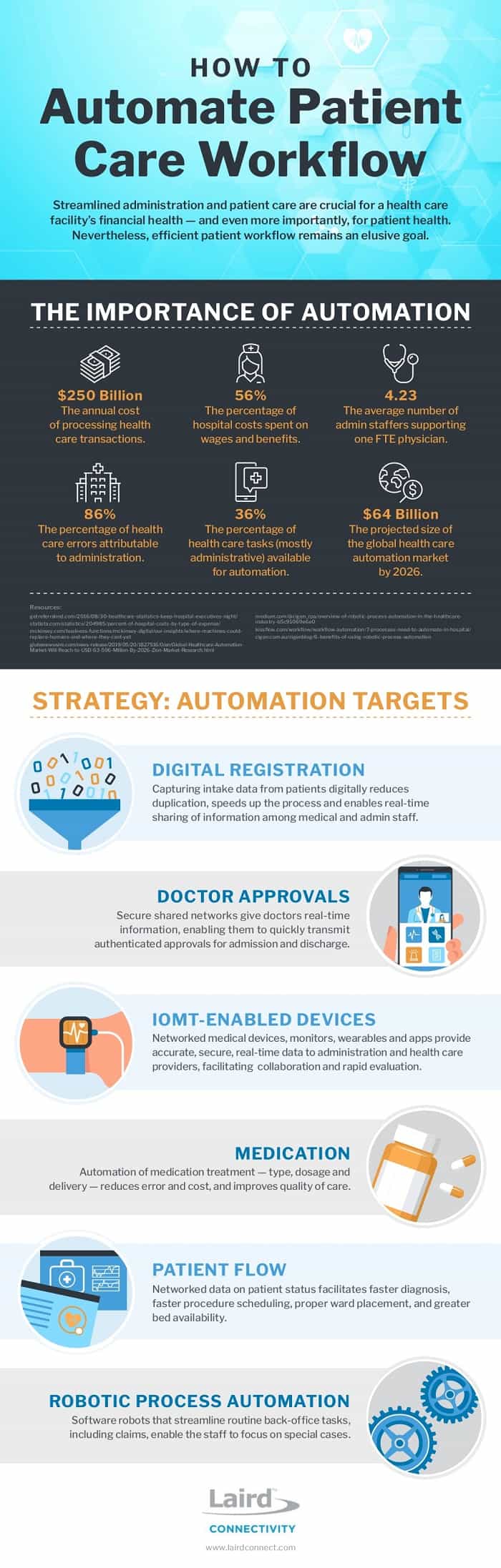
How to Automate Patient Care Workflow

STRATEGY:
AUTOMATION TARGETS THE IMPORTANCE OF AUTOMATION DIGITAL REGISTRATION
Capturing intake data from patients digitally reduces duplication, speeds up the process and enables real-time sharing of information among medical and admin staff.

IOMT-ENABLED DEVICES Networked medical devices, monitors, wearables and apps provide accurate, secure, real-time data to administration and health care providers, facilitating collaboration and rapid evaluation.

PATIENT FLOW Networked data on patient status facilitates faster diagnosis, faster procedure scheduling, proper ward placement, and greater bed availability.

DOCTOR APPROVALS Secure shared networks give doctors real-time information, enabling them to quickly transmit authenticated approvals for admission and discharge.

MEDICATION Automation of medication treatment โ€” type, dosage and delivery โ€” reduces error and cost, and improves quality of care.

ROBOTIC PROCESS AUTOMATION Software robots that streamline routine back-office tasks, including claims, enable the staff to focus on special cases.

Masimo and University Hospitals Jointly Announce Masimo SafetyNet , a New Remote Patient Management Solution Designed to Aid COVID-19 Response Efforts

Masimo and University Hospitals (UH), one of the largest health systems in Northeast Ohio, jointly announced Masimo SafetyNet, an innovative, economically scalable patient management system designed to help clinicians care for patients remotely.

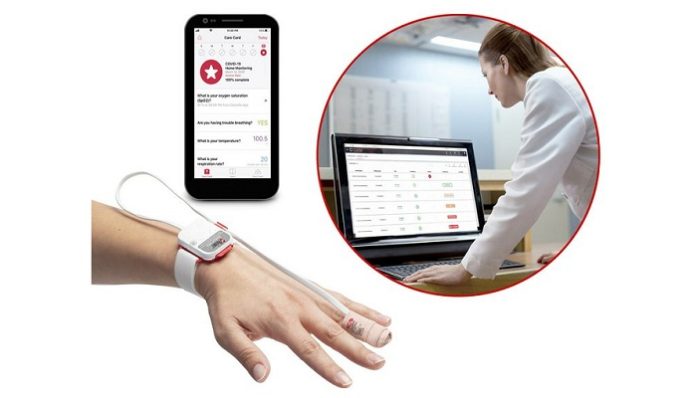
The telehealth solution combines tetherless Radius PPG pulse oximetry, driven by breakthough Masimo SETยฎ Measure-through Motion and Low Perfusionโ„ข technology, with Doctellaโ„ข, a secure, home-based, remote patient surveillance platform accessible from a patientโ€™s iOS or Android smartphone or smart device.

The COVID-19 health emergency has significantly increased the demand for remote monitoring and patient engagement solutions in multiple settings. To proactively prepare for a surge in COVID-19 patients while maintaining the safety of other patients and providers, this new solution allows UH and other hospitals to expand patient monitoring to the home or to other facility locations set up temporarily to care for the increased demand. Current WHO guidelines recommend the monitoring of suspected or confirmed COVID-19 patientsโ€™ oxygen saturation (SpO2), respiration rate (RR), and temperature, and Masimo and UH are meeting this increased demand by adapting existing technology to deliver a secure remote solution.

Masimo SafetyNet offers care teams a single-platform solution that couples a secure, cloud-based surveillance platform with clinically proven SETยฎ pulse oximetry, estimated to be used on more than 200 million patients each year.1 In addition to SpO2, Radius PPG is capable of continuously monitoring pulse rate (PR), perfusion index, PViยฎ, and RRpยฎ, respiration rate from the photoplethysmograph.

Patients can be sent home with a multi-day supply of single-patient-use Radius PPG sensors and access to the Doctella mobile app, designed for easy, intuitive patient use via a digital home-care plan, or CareProgram, that aligns with expert guidance on COVID-19. Radius PPG shares its SpO2, PR, and RRp data with Doctella using secure Bluetoothยฎ wireless technology. In addition, Doctella can manually collect other physiological data, such as temperature. Twice daily, or as directed, the Doctella CareProgram actively notifies patients to answer questions such as, โ€œare you having trouble breathing?โ€ and โ€œwhat is your temperature?โ€, and securely pushes these responses along with physiological monitoring data to hospital-based clinicians for evaluation. The Doctella clinician portal allows providers to easily track patient compliance, helping them identify when intervention may be needed, as well as providing insight to help providers prioritize patients. CarePrograms are fully customizable to accommodate each institutionโ€™s protocols, each patientโ€™s needs, and any changes in COVID-19 guidanceโ€”and can be updated through the cloud by providers even after being deployed, for maximum flexibility as situations evolve.

โ€œWe appreciate Masimoโ€™s immediate collaboration to stand up this innovative platform that will significantly aid in our ability to scale up remote monitoring and meet the demand for patient care while addressing capacity and safety issues,โ€ explained Peter Pronovost, MD, UH Chief Clinical Transformation Officer. โ€œFor our patients with congestive heart failure or chronic obstructive pulmonary disease (COPD), we can provide them with this remote monitoring capability so they do not risk a COVID-19 infection by being near potentially infected patients. Similarly, for patients with a confirmed COVID-19 diagnosis, we can appropriately isolate them from other patients while ensuring they have the access to state-of-the-art care for managing their health through the recovery process.โ€

Joe Kiani, Founder and CEO of Masimo, said, โ€œWe thank the nurses and doctors who are bravely toiling in hospitals taking care of us all during this pandemic. We are delighted that we can help them triage and effectively take care of COVID-19 patients the best they can with Masimo SafetyNet. It has been a delight to work with UH to bring this technology to the health care industry to help them address the challenges they face during this unprecedented time.โ€

โ€œThis alliance demonstrates UHโ€™s strategy to drive improvements in population health,โ€ said Daniel I. Simon, MD, UH Chief Clinical & Scientific Officer and President, UH Cleveland Medical Center. โ€œBy deploying โ€˜outside-inโ€™ tactics and forming this partnership with Masimo, our patients receive cutting edge treatment approaches while we help enhance the product for future users and industry transformation.โ€

Biostage Announces IND Approval from FDA for its Lead Product Candidate Cellspan Esophageal Implant

Biostage Announces IND Approval from FDA for its Lead Product Candidate Cellspan Esophageal Implant

Biostage, Inc , a bioengineering company developing next-generation esophageal implants, announced that the U.S. FDA has approved the Company’s Investigational New Drug application (IND) for the Cellspan Esophageal Implant (CEI) to treat patients with end-stage esophageal disease that require a segmental surgical resection to repair the diseased tissue. The FDA notified the Company that it removed the clinical hold and that the Company may proceed with its study.

“FDA’s approval of Biostage’s first IND is an extremely important milestone for Biostage as it will transition Biostage into a clinical stage company. In addition, establishing a safety profile for the CEI in adults will facilitate and support the use of the CEI in Esophageal Atresia patients. Esophageal Atresia (EA) is a congenital condition in infants who are born with an incomplete esophagus and are unable to receive oral nutrition. We believe the CEI will be a significant advancement for EA and will provide a treatment option that will hopefully change the standard of care for these infants,” said Jason Jing Chen, Biostage’s Chairman. “Further, this IND approval is a very vital corporate milestone and a critical step forward to achieving a strategic partnering arrangement and/or capital funding. We are confident that the industry will recognize the tremendous value and the advancement in tissue engineering and cell-based therapies that the CEI product represents. I would especially thank Dr. William Fodor, our CSO and the Biostage team who managed the interactions with the FDA and the substantial and timely responses to the Agency. The team dedicated themselves to accomplishing this goal. Many long hours and weekends went into this IND submission to ensure that the FDA received the highest quality document possible.”

The approved IND will investigate the safety and feasibility of the CEI in adult patients. The study will be an unblinded single arm study in patients that require surgical resection of the esophagus. The CEI will be implanted into the resected esophagus vs. complete esophagectomy, which essentially removes the entire esophagus and replaces it with either a section of the colon or with a portion of the stomach that has been reconstructed. “The use of the CEI is an organ sparing approach that preserves the esophagus while treating conditions that would otherwise require the use of other organs to repair the diseased tissue,” commented Dr. William Fodor, Chief Scientific Officer of Biostage.

“Our next goal is focused on ‘clinical readiness’ and to build upon our expertise in the clinical application of tissue engineered and cell-based products”‘ stated Dr. Fodor. ‘This is an exciting time for Biostage to establish itself as a leader in the clinical application of regenerative medicinal products, such as the CEI, where the product provides the stimulus and the foundation for the body to heal itself.”

We wish to acknowledge all the help and support of our Scientific Advisory Board, our clinical advisors and our regulatory/clinical consultants, Avania (formerly Boston Biomedical Associates), who assisted with the construction of the IND modules and our interactions with the FDA.

About Biostage, Inc.

Biostage is a bioengineering company that is developing next-generation esophageal implants. The Company’s Cellspan technology combines a proprietary, biocompatible scaffold with a patient’s own cells to create an esophageal implant that could potentially be used to treat pediatric esophageal atresia and other conditions that affect the esophagus. The Company’s esophageal implant leverages the body’s inherent capacity to heal itself as it is a “living tube” that facilitates regeneration of esophageal tissue and triggers a positive host response resulting in a tissue-engineered neo-conduit that restores continuity of the esophagus. These implants have the potential to dramatically improve the quality of life for children and adults. At Biostage, we believe the future of medicine has been inside us all along.

Translate ยป