









Close
Digital Health & Ai Innovation summit 2026
Medical Taiwan 2026

COVID-19 is Here. What Impact Should We Expect on U.S. Healthcare Supply Chains?

COVID-19 is now solidly impacting the U.S. healthcare system. As the strategy shifts from containment to mitigation when dealing with the virus, what can we expect as the stress increases on healthcare supply chains? What can healthcare systems (particularly small rural organizations that might not have as much priority or focus in the national strategy) do to ensure that they continue to receive the supply they need to deliver quality care?

To answer that question, letโ€™s first examine the situation as it exists today. We are seeing major backorders in Personal Protective Equipment (PPE). According to WHO Director-General Tedros Adhanom Ghebreyesus:โ€œThe world is facing severe disruption in the market for personal protective equipment. Demand is up to 100 times higher than normal, and prices are up to 20 times higher. This situation has been exacerbated by widespread inappropriate use of PPE outside patient care.โ€ In addition to skyrocketing demand, production capability in China, a major producer of PPE products, is severely limited due to a combination of quarantine restrictions and the coincidental timing of the Chinese New Year.

In response to potential shortages, Massachusetts General Hospital has stockpiled an entire warehouse of supplies. Small rural hospitals are deciding to buy protective face masks from hardware stores and utilize gowns from dentists and veterinary offices as suppliers allocate resources to those healthcare organizations that must directly respond to COVID-19. According to Stephanie Kennan, a member of the federal public affairs group for McGuireWoods Consulting, hospitals may have to institute cutbacks if shortages become widespread.

What we can expect in the near future
With the shortage of all types of PPE items, we can expect to see stockpiling continue to increase. This will drive demand for these products even further, increase shortages even more acutely and, in return, we can expect to see sharp increases in cost for personal protective equipment. Based on supplier pricing across southeast Asia, we here at ASP Global have already witnessed substantial increases in cost from manufacturers worldwide due to greater demand, as well as rising freight costs to transport goods as available space on ships and routes narrows.

A silver lining over the long-term
There might be a lesson in these shortages and, if healthcare organizations in the U.S. take this lesson to heart, we might see an overall improvement in healthcare supply chains in the long-term future. We believe that one of the core issues of this problem, single sourcing for PPE and other essential products, will be reduced as a risk factor as more health systems and vendors expand their sourcing across the globe. Often, single sourcing and keeping low โ€˜just-in-timeโ€™ inventories are seen as beneficial for minimizing costs. A narrow supply chain does not accommodate for any external issues with sourcing though. This is especially true when major supply availability shifts occur because of disasters like floods, hurricanes or pandemics.

We expect to see manufacturers outside of China diversify their product offerings, as they see an opportunity to meet new healthcare system demand for products sourced from a wider geographical ecosystem. We believe that sourcing partnerships will evolve, with direct sourcing through various channels increasing in importance as the flexibility of these relationships will become a tool for agility when health systems face any future crisis. We would like to see US health systems change their patterns of warehousing PPE products if they determine that their stockpiles were too lean during the current crisis.

Whatโ€™s important to remember is that the challenges we are facing today will help us learn how to build a more robust healthcare supply chain. Itโ€™s critical to understand lessons from these episodes to better prepare our healthcare supply chains for sudden stress and ultimately ensure our ability to protect the quality of care even when facing the necessity to deliver extremely high volumes of care. Itโ€™s one way to make the impact of each public health emergency a little less stressful to our system overall than the event preceding it.

About Bill Fallon

Bill Fallon joined ASP Global in June 2017 as Senior Vice President, bringing more than 30 years of experience within the medical device, GPO and distribution field. Bill serves on the Board of Trustees for South Shore Hospital and Health System in Massachusetts. You can learn more about Bill here.


WHO Health Alert brings COVID-19 facts to billions via WhatsApp

WHO Health Alert brings COVID-19 facts to billions via WhatsApp

WHO has launched a dedicated messaging services in Arabic, English, French and Spanish with partners WhatsApp and Facebook to keep people safe from coronavirus. This easy-to-use messaging service has the potential to reach 2 billion people and enables WHO to get information directly into the hands of the people that need it.

From government leaders to health workers and family and friends, this messaging service provides the latest news and information on coronavirus including details on symptoms and how people can protect themselves and others. It also provides the latest situation reports and numbers in real-time to help government decision-makers protect the health of their populations.

The service can be accessed by a link that opens a conversation on WhatsApp. Users can simply type โ€œhiโ€, “hola”, โ€œsalutโ€ or “ู…ุฑุญุจุง” to activate the conversation, prompting a menu of options that can help answer their questions about COVID-19.

The WHO Health Alert was developed in collaboration with Praekelt.Org, using Turn machine learning technology.

Join WHO’s Health Alert on WhatsApp:

Arabic
Send “ู…ุฑุญุจุง” to +41 22 501 70 23 on WhatsApp
wa.me/41225017023?text=ู…ุฑุญุจุง

French
Send “salut” to +41 22 501 72 98 on WhatsApp
wa.me/41225017298?text=salut

Spanish
Send “hola” to +41 22 501 76 90 on WhatsApp
wa.me/41225017690?text=hola

English
Send “hi” to +41 79 893 18 92 on WhatsApp
wa.me/41798931892?text=hi

Distributed by APO Group on behalf of World Health Organization (WHO).

SOURCE
World Health Organization (WHO)

Corona Virus – MedFlyt Training

Skedulo Introduces the Industry’s First Deskless Productivity Cloud

Skedulo Introduces the Industry's First Deskless Productivity Cloud

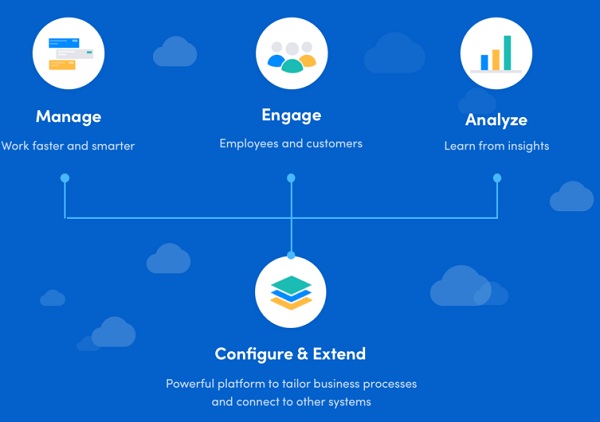
Skedulo, the leader in deskless productivity software, announced the release of its Deskless Productivity Cloud, the industryโ€™s first dedicated, cloud-based solution empowering organizations to manage, engage and analyze their deskless workforce, whether they are mobile or in a fixed location.

Powered by the Skedulo platform and coupled with new capabilities to boost the productivity of deskless workers, the Deskless Productivity Cloud streamlines work while delivering a best-in-class experience for deskless employees, schedulers, business owners and customers alike.

The Deskless Productivity Cloud allows organizations to:

  • Manage work and organize the schedules of hundreds of deskless workers
  • Engage employees and customers through the Skedulo web and mobile applications to encourage collaboration, deliver satisfying experiences and drive impactful work
  • Analyze work results and scheduling patterns to intelligently improve service delivery
  • Configure a flexible solution tailored to existing business workstreams
  • Extend the deskless environment to interoperate seamlessly with the surrounding technology ecosystem

Eighty percent of the global workforce, or 2.7 billion people, is deskless. Despite the compelling numbers, this segment has historically been underserved by technology vendors. As enterprises rapidly embrace digital transformation for their entire workforce, a new category of deskless productivity software is emerging, particularly in high-touch service industries such as healthcare, solar sales and service, nonprofit and retail.

โ€œOrganizations are paying more attention to their frontline workforce โ€“ i.e., those who deal directly with customers or are closely involved in the production process. These workers have traditionally remained outside the scope of IT and business communications, but increasingly organizations are prioritizing their role to improve business agility.โ€ said Raul Castanon-Martinez, senior analyst, workforce productivity and collaboration at 451 Research, part of S&P Global Market Intelligence. โ€œWe expect digital transformation initiatives to expand in 2020 where frontline workers will more directly drive business outcomes.โ€

Additional features include:

  • Shifts and Rosters: Handle complex scheduling requirements for shift workers and mobile workers by easily setting up rosters, creating work based on resource requirements, communicating work offers and managing check in/check outs, saving valuable time and driving operational efficiency.
  • Analytics: Capture and report on deskless workforce productivity, utilization, and scheduling by connecting disparate data and information. Simplify administration and compliance and unlock insights to improve operational efficiency and gain a competitive edge.
  • Dynamic Messaging (in early preview): Enables deskless workers to communicate with schedulers, customers and other resources necessary to execute their job effectively. Real-time connection between the field and headquarters increases visibility about a particular job, resulting in both satisfied employees and customers.
  • Powerful Integrations:
  • Skeduloโ€™s partnership with Boomi, a Dell Technologies company, makes it faster, simpler and more efficient to integrate key systems within your organization with The Deskless Productivity Cloud. Boomi supports over 1,500+ application endpoints, allowing businesses to customize Skedulo to fit their existing business workflows.
  • Skeduloโ€™s partnership with Bridge Connector integrates Skeduloโ€™s intelligent scheduling engine with leading electronic health record (EHR) solutions and healthcare technologies through Bridge Connectorโ€™s comprehensive library of connectors, which includes Epic, Point Click Care and Athena, to name a few.

Before standardizing on Skedulo for deskless productivity, Sunrun, a leading U.S.-based provider of home solar and batteries, used a variety of manual, ad-hoc scheduling methods, including Excel, Google sheets and email to manage scheduling.

โ€œFrom a leadership perspective, we didnโ€™t have visibility into what was going on in the field โ€” what stores we were staffing that day, who was supposed to be there, or whether they were showing up,โ€ said Tim Haines, senior product manager at Sunrun.

Today, Sunrun is able to manage their retail operations at scale. Skedulo also helps the solar electricity provider understand its mobile employee performance at a more detailed level.

โ€œWith Skedulo, now we can dial into a specific solar advisor at a specific store and compare their hours worked and performance against the rest of the team,โ€ Haines said. โ€œWe can have a better understanding of the best fit for the right person at the right store at the right time.โ€

Bridge Connector founder and CEO, David Wenger, added, โ€œAs a partner of Skedulo, we see the Deskless Productivity Cloud as a huge step forward for the billions of deskless workers worldwide, particularly in the healthcare industry, where care is increasingly being delivered outside the four walls of a traditional hospital setting. When coupled with powerful integrations with EHRs and other platforms, Skeduloโ€™s Deskless Productivity Cloud not only provides more seamless caregiver management solutions for healthcare employers but can also enable better continuity of care for patients.โ€

Patent for AI-powered safety monitoring of medical devices granted in Indonesia

Patent for AI-powered safety monitoring of medical devices granted in Indonesia

Brighter has been granted its patent for computer driven supervision of the health of portable medical devices in Indonesia. The patent has previously been granted in South Korea and parts of Europe.

The patent ensures rights to a system that enables AI-powered supervision of the functionality of mobile medical equipment with injection apparatus, such as the company’s diabetes management device Actiste, to decide whether the device needs to be repaired, serviced or replaced.

โ€œFor patient-safety reasons, it is of great importance that injection devices work in a correct and reliable manner. At the same time such devices, which usually are carried by the users at all times, are likely to be exposed to a number of external stress factors such as temperature changes, humidity or chock if the user drops the device, which can cause damage. Furthermore, daily use causes general wear. Itโ€™s important for us to be able to monitor this remotely, optimally through advanced AI technology, so that we can quickly identify a potential problem and repair or replace the product in case the user hasn’t noticed and reported it,โ€ says Truls Sjรถstedt, Brighter’s founder and innovator, and Chairman of the Board.

Brighter has offices in Jakarta and a team dedicated to introducing Actisteยฎ Diabetes Management as a Service in the region.

โ€œIn a country like Indonesia, where 270 million people are scattered across 17,500 islands, there are great benefits in building a digital and connected community. The country and its economy is moving forward rapidly in a positive direction, but unfortunately there is a widespread health problem in the form of diabetes. As few as 2,100 qualified doctors are to support the treatment of over 10 million people with diabetes. In such a scenario, connected diabetes care that is independent of geographical proximity to health clinics, with a focus on collecting medical information and facilitating digital feedback, can create immense benefits,โ€ says Henrik Norstrรถm, Brighter’s CEO.

About Brighter AB (publ)
Brighter is a health-tech company from Sweden with a vision of a world where managing chronic diseases is no longer a struggle. We believe a data-centric approach is key to provide smarter care for chronic conditions. Our daily-care solutions facilitate the flow of real-life treatment data between chronic-disease patients, their loved ones and their care providers โ€“ improving quality of life, easing the burden on healthcare systems, and opening new opportunities for data-driven research. Brighter is certified under ISO 13485. In 2019 the company won the Swecare Rising Stars Award.

Latest Update on Coronavirus, Visa Restrictions and Traveling to the USA

Latest Update on Coronavirus, Visa Restrictions and Traveling to the USA

Today, Coronavirus has taken over headlines and has proven to be something we cannot ignore. It has already created a sense of panic amongst us to the point of some countries calling for a state of emergency. With no doubt, it is one of the hardest things to handle with many people losing their lives and leaving many others in distress.

The challenge with this killer disease, no one is sure of the impact it might create in the near future or how bad things might turn out to be. Many directives have been issued concerning the disease on control measures and travel restrictions. To learn more about it, detailed below is a basic guide to the coronavirus epidemic.

Travel Measures to Curb Coronavirus

According to the latest advisory by the World Health Organization (WHO), one of the measures they have taken to combat COVID-19 is avoiding unnecessary travels. This has seen many states calling for bans on flight travels from different states as they are the main agent of spreading this killer disease. The first ban was experienced in the U.K. on 17th March, but since then, border closures and other travel restrictions have continued to increase globally.

Other than putting measures to curb flights from foreign states, countries have also been working hard to restrict and prevent flights from leaving their countries. In a bid to ensure the safety of its people, they have been advising their people who have been locked out in the ban to stay in their residences overseas and follow the advisory from the local authorities in the countries they are in. To learn more about visa restrictions and traveling to the USA below is a detailed report.

Visa Restrictions and Traveling to USA Updates

Just as in other states, the USA has been at the forefront of issuing updates on visa restrictions and traveling to their country. According to the circular dated 18th March of 2020, they term the announcement as a response to the worldwide challenges to the outbreak of Coronavirus. According to the document titled, Department of State suspending travel in most countries and routine visa services, the following can be noted.

The U.S. Embassies and Consulates will suspend the issuance of visa appointments to both immigrant and non-immigrant. According to the directions given, the services would resume on a later date when the situation is under control.

Despite the cancellation of the visa services, the document noted the embassies and consulates would continue to offer only emergency visa services. Applicants with urgent issues and needs to travel immediately would also be attended to. U.S. citizens would, however, continue to be served despite these restrictions.

Travel Directive On Those Who Want to Leave the U.S

With the ban directive having been implemented, what is happening to those who wish to travel home from the U.S.? Through the air travel ban, international travel has, in a huge way, become difficult. However, a statement from the same circular, shows that the U.S. government is working hard with airlines to ensure routes are open to enable people to return home.

Despite this direction, those with permanent resident overseas have been advised to stay there and follow the advice and directives from their local authorities.

Another common question that people have been asking is what happens if you manage to get a flight to the U.S. since commercial flights are open for citizens who want to go home? To this question, if one manages to catch a flight to the U.S. or any other part of the globe, there are stringent measures that have been put in place that they should follow to minimize exposure or spread of the disease.

Some of these notable measures include:

  • Self-isolation in a hotel room for not less than 14 days.
  • Being moved to quarantine facilities.
  • Being tested for COVID-19.
  • Hospitalization if found positive.

Final Words

Other than the flights’ control, bans have also been issued to control entry through land ports and borders. This shows governments are ready to protect their citizens by ensuring they contain the people in their jurisdiction without putting them into more risks of exposure.
Entries have only been limited to special cases such as those of military travels and individuals traveling for medical issues.

With the above measures, will it be possible to combat COVID 19?
Yes, it is already proven. By abiding by the above visa restrictions and traveling directives, we will be sure to reduce cases of exposure which is key to combating this deadly disease.

COVID-19 frontline healthcare workers at risk of mental health problems

COVID-19 frontline healthcare workers at risk of mental health problems

Mental health of nearly 1,300 healthcare workers in China who dealt with COVID-19 patients. The research looked at symptoms of depression, anxiety, insomnia, and distress.

Jianbo Lai, from the department of psychiatry at the First Affiliated Hospital of Zhejiang University School of Medicine in Hangzhou, China, is the first author of the study, which appears in the journal JAMA Network Open.

Lai and colleagues set out to examine the mental health outcomes of healthcare professionals who treated patients with COVID-19 in China.

Namely, they looked at healthcare professionals who worked in 34 hospitals that had fever clinics or wards for COVID-19 patients.

Stay informed with live updates on the current COVID-19 outbreak and visit our coronavirus hub for more advice on prevention and treatment.

Frontline healthcare professionals โ€œwho are directly involved in the diagnosis, treatment, and careโ€ of people with COVID-19 were at the heart of the researchersโ€™ interest.

These workers may be at a heightened risk of psychological distress and other mental health problems, write the authors, due to the ever increasing number of COVID-19 cases, the overwhelming workload, an information overload, and insufficient personal protective equipment and drugs.

Furthermore, the authors note, existing studies show that in similar situations, healthcare workers experience stigmatization, as well as fear of infection for themselves and their families.
Studying 1,257 healthcare workers

Lai and team โ€œcollected demographic data and mental health measurements from 1,257 healthcare workers in 34 hospitals from January 29, 2020, to February 3, 2020.โ€ Only hospitals with COVID-19 wards and fever clinics were eligible.

To assess the severity of symptoms of depression, anxiety, insomnia, and distress, the researchers used the Chinese versions of the โ€œnine-item Patient Health Questionnaire, the seven-item Generalized Anxiety Disorder scale, the seven-item Insomnia Severity Index, and the 22-item Impact of Event Scale-Revised.โ€

The researchers applied multivariable logistic regression analysis to find the factors that are associated with mental health problems.

The participation rate for the survey was 68.7%. More than 64% of the respondents were between the ages of 26 and 40 years, and over 76% of them were women.

More than 60% of the respondents were nurses, while physicians accounted for just over 39%. Frontline healthcare workers made up 41.5% of the respondents.

BioTeam, NVIDIA, Globus, And More Offer Free Tools To Support Coronavirus Research

BioTeam, NVIDIA, Globus, And More Offer Free Tools To Support Coronavirus Research

Groups across the Bio-IT World community are offering their services and tools for free to teams working on coronavirus diagnostics and treatments.

BioTeam, a high-performance consulting practice dedicated to delivering objective, technology agnostic solutions to life science researchers, announced today that it is offering up to 40 hours of services at no charge in the areas of scientific computing, cloud, IT, and strategic consulting services to any laboratory or data science group that is directly developing antiviral therapies or vaccines specifically targeting COVID-19.

โ€œBioTeam is largely a science company,โ€ BioTeam CEO Ari Berman told Bio-IT World. โ€œWhat we try to do is really empower science and get scientists clear of IT roadblocks so that they can make discoveries and move forward with their science with a great efficiency. The coronavirus pandemic is a new, novel, and very challenging problem given the speed with which it spread.โ€

The companyโ€™s offering came as BioTeam staff membersโ€”many Ph.D.-trained scientists in molecular biology, genetics, and microbiologyโ€”were looking for opportunities to help amid the current climate. Berman, for example, has a Ph.D. in molecular biology.

Labs are stretched thin racing to deliver results and finding cures, the company believes. BioTeam has many areas of expertise that could be helpful to organizations that are currently racing to find a solution to this problem.

โ€œWhat weโ€™re really looking to do is work directly with people who are doing this research or the diagnostics development,โ€ Berman said. For example, BioTeam could help create temporary computational environments or help develop strategies and optimize data science pipelines.

โ€œOur entire vision is to have a positive impact on science and human health, and what better opportunity for us to lend our expertise to the community than to try to help with the current issue going on,โ€ Berman said. ?

Any researchers struggling with issues related to strategic solutions development, high-speed data movement, HPC, data optimization, cloud computing, optimizing workflows and pipelines, data visualization, or complex data management with respect to COVID-19 research, please contact BioTeam for more information at coronavirus@bioteam.net.

Tools For Free

BioTeam isnโ€™t the only group who has recognized the need and stepped in to help. At the Broad Institute, the Terra team is working quickly to make data and tools for COVID-19 analysis available in Terra as quickly as possible. Earlier this week, Anton Kovalsky shared a landing page for COVID-19-related public workspaces as well as the educational materials to help you learn how to use them and a Broad blog post details the resources further.

NVIDIA announced yesterday that it will provide a free 90-day license to Parabricks to any researcher in the worldwide effort to fight the novel coronavirus. Based on GATK, Parabricks uses GPUs to accelerate by as much as 50x the analysis of sequence data.

“These are unprecedented times, and like everyone, NVIDIA is switching gears to focus on efforts to help understand and fight novel coronavirus.โ€ said Kimberly Powell, VP of Healthcare at NVIDIA, in an email to Bio-IT World. โ€œOffering free and immediate access to Parabricks, a time machine for genomics analysis, was something we felt could make a direct impact to researchers working around the clock to understand the virus. Our goal now is to get the word out. ”

In the blog announcing the free license, Powell note that the situation is evolving, and the license length could be extended. She also issued a challenge to others in the space to get involved as well.

โ€œNVIDIA is inviting our family of partners to join us in matching this urgent effort to assist the research community,โ€ she wrote. โ€œWeโ€™re in discussions with cloud service providers and supercomputing centers to provide compute resources and access to Parabricks on their platforms.โ€

Big Compute

In cooperation with Google Cloud and Microsoft Azure, Rescale yesterday announced a new program that immediately offers high performance computing resources (HPC) at no cost to teams working to develop test kits and vaccines for COVID-19.

Those working on coronavirus vaccines and testing who would benefit from HPC in the cloud at no cost should contact support@techagainstcovid.com. Researchers can rapidly run simulations in the cloud without setup time or IT teams using Rescale’s turnkey platform combined with cloud computing resources from Google Cloud Platform and Microsoft Azure.

Sharing Service

To facilitate data sharing, Globus, a non-profit service of the University of Chicago that provides secure, reliable research data management tools, announced earlier this week that it is offering access to all Globus features to move and share data at no cost to every institution engaged in COVID-19 research.

Globus is generally offered as a โ€œfreemiumโ€ service, Vas Vasiliadis, Chief Customer Officer at Globus, told Bio-IT World. But the file sharing capability, in particular, is part of the paid model that will now be available for free to anyone working on?nCoV-2019 research.

โ€œThereโ€™s already a need for a lot of data sharing across institutions all around the world to try to get this thing under control and figure out drugs. We figured weโ€™d make all those other features available to anyone whoโ€™s engaged in related research at no cost,โ€ Vasiliadis said. โ€œAt minimum they can use that as a way to securely share data with their collaborators; they can use it as a way to put data on storage endpoints… Itโ€™s an easy way to distribute data; itโ€™ll make reference data more widely accessible.โ€

Updates and More

Veeva Systems is providing free licenses of Veeva CRM Engage to customers affected by coronavirus so field teams can compliantly meet with doctors virtually and deliver valuable information about new treatments so HCPs can deliver the best quality patient care. More than 100,000 reps across dozens of companies have started using the remote engagement technology since the program was announced with thousands more being added every day. For more information, email pr@veeva.com.
Elemental Machines is offering free remote 24/7 lab monitoring for companies that need to limit staff due to coronavirus distancing. Last week the company announced that it would donate two months of free lab monitoring to Massachusetts’ healthcare community members, and the offer is available on the Elemental Machines website.

Covid-19 threat to healthcare workers and the desperate scramble for ways to protect them

Covid-19 threat to healthcare workers and the desperate scramble for ways to protect them

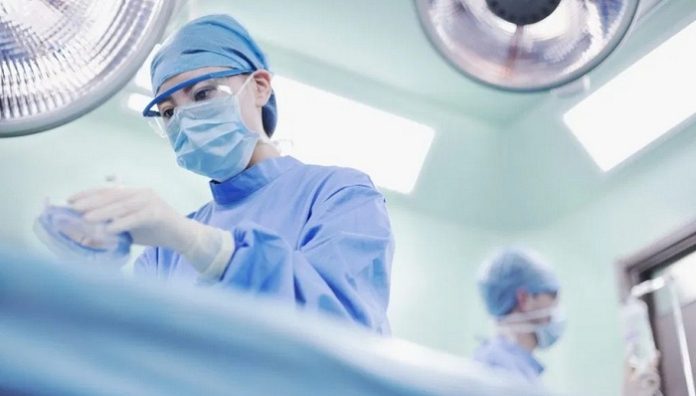
Healthcare workers are the most exposed to Covid-19 and are constantly being exposed to large concentrations of the virus. They work overtime and in high levels of stress, which decreases their immunity. They are crucial elements in the battle against the novel coronavirus and everything must be done to protect them.
State of healthcare workers

When the virus began in China, in the first six weeks only 13 health workers were infected by Covid-19. By 14 February, approximately two months later, 1,716 healthcare workers were infected — more than those infected by SARS in 2003. Six days later, the number increased to 2,055 and then by 3 March, 3,200 medical personnel had been infected. In Italy, the scenario has been much worse, 8.5 per cent of all people infected have been healthcare personnel. Further, twenty per cent of Italy’s entire medical personnel has been infected by Covid-19.

Many healthcare workers have also died of the coronavirus. The first fatality was Li Wenliang, a young ophthalmologist — not a profession normally considered high-risk. His colleague Mei Zhongming, who died the following month, was also an ophthalmologist. The third was a thyroid and breast surgeon. The fourth, a neurosurgeon and hospital director and in Britain, two ear, nose, and throat specialists are in critical condition. These doctors aren’t supposed to be dealing with Covid-19, but due to excess pressure, their help is needed.

Large economies, like the US, have been struggling to protect their healthcare workers. India will find it even more difficult if the virus starts spreading rapidly. And to tackle such a scenario, Prime Minister Narendra Modi has announced Rs 15,000 crores for health facilities.


Adaptive Biotechnologies, Microsoft Launch Immune Response Trial For COVID-19

Adaptive Biotechnologies, Microsoft Launch Immune Response Trial For COVID-19

Adaptive Biotechnologies and Microsoft announced they will leverage their existing partnership mapping population-wide adaptive immune responses to diseases at scale to study COVID-19. Finding the relevant immune response signature may advance solutions to diagnose, treat, and prevent the disease, augmenting existing research efforts that primarily focus on the biology of the virus. These data will be made freely available to any researcher, public health official or organization around the world via an open data access portal.

โ€œWe can improve our collective understanding of COVID-19 by decoding the immune systemโ€™s response to the virus and the disease patterns that can be inferred from studying these data at the population level,โ€ said Chad Robins, CEO and co-founder of Adaptive Biotechnologies, in a press release. โ€œImmune response data may enable detection of the virus in infected people not showing symptoms and improve triaging of newly diagnosed patients, potentially solving two of the challenges we are facing in the current diagnostic paradigm.โ€

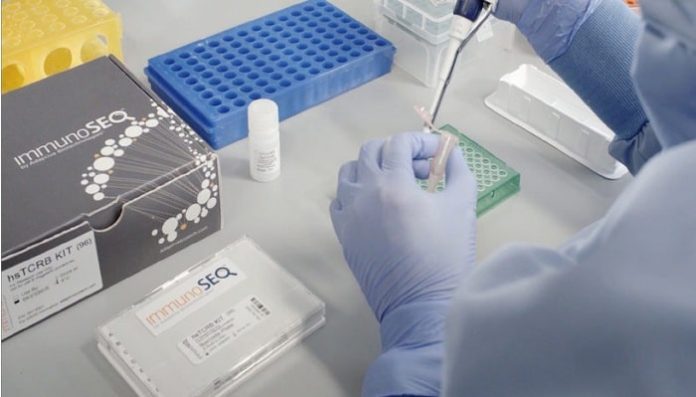
To generate immune response data, Adaptive will open enrollment in April to collect de-identified blood samples, using a LabCorp-enabled mobile phlebotomy service, from individuals diagnosed with or recovered from COVID-19 in a virtual clinical trial managed by Covance.

Immune cell receptors from these blood samples will be sequenced using Illumina platform technology and mapped to SARS-CoV-2-specific antigens that will have been confirmed by Adaptiveโ€™s proprietary immune medicine platform to induce an immune response. The immune response signature found from the initial discovery work and the initial set of samples will be uploaded to the open data access portal. Leveraging Microsoftโ€™s hyperscale machine learning capabilities and the Azure cloud platform, the accuracy of the immune response signature will be continuously improved and updated online in real time as more trial samples are sequenced from the study.

To expedite the development and relevance of the immune response signature across the global population, the companies are seeking additional participation from institutions and research groups around the world to contribute blood samples to this open data initiative. Providence, a large health system with 51 hospitals, including the one near Seattle that treated the first U.S. COVID-19 patient, is an initial clinical collaborator.

โ€œThe solution to COVID-19 is not likely going to come from one person, one company or one country. This is a global issue, and it will be a global effort to solve it,โ€ said Peter Lee, corporate vice president, AI and Research, Microsoft, in the statement. โ€œMaking critical information about the immune response accessible to the broader research community will help advance ongoing and new efforts to solve this global public health crisis, and we can accomplish this goal through our proven TCR-Antigen mapping partnership with Adaptive.โ€

Translate ยป