









Close
Digital Health & Ai Innovation summit 2026
Medical Taiwan 2026

EHR interoperability, connectivity a big challenge around globe new study finds

Note* - All images used are for editorial and illustrative purposes only and may not originate from the original news provider or associated company.

Subscribe

- Never miss a story with notifications

- Gain full access to our premium content

- Browse free from any location or device.

Media Packs

Expand Your Reach With Our Customized Solutions Empowering Your Campaigns To Maximize Your Reach & Drive Real Results!

โ€“ Access the Media PackNow

โ€“ Book a Conference Call

โ€“ Leave Message for Us to Get Back

Related stories

Laboratory Automation Advancing Diagnostic Workflows

The modern clinical laboratory is undergoing a profound evolution as manual processes give way to sophisticated robotic systems. By streamlining testing procedures and integrating high-throughput technologies, facilities are achieving unprecedented levels of precision and speed. This shift towards automated solutions is not only reducing human error but also enabling medical professionals to handle increasing sample volumes with greater reliability, ultimately leading to faster and more accurate patient results.

Telemedicine Platforms Expanding Access to Remote...

Modern healthcare systems are undergoing a radical transformation as digital infrastructure bridges the gap between urban specialists and rural patients. Through virtual consultations and digital triage, providers are overcoming geographical barriers, ensuring that high-quality medical expertise is no longer restricted by physical location. This evolution in care delivery prioritizes accessibility and efficiency, reshaping the patient experience across the globe.

Point of Care Devices Accelerating Clinical...

Clinical environments are undergoing a significant transformation as the shift from centralized laboratory testing to immediate bedside diagnostics gains momentum. By bringing sophisticated analysis directly to the patient, healthcare providers can drastically reduce wait times for critical results, enabling faster intervention and more personalized care pathways. This evolution not only optimizes hospital workflows but also improves outcomes in emergency and remote settings where time is of the essence.

Black Book also predicted a coming shift away from silo electronic health records systems to regional care coordination and information exchange in other countries.

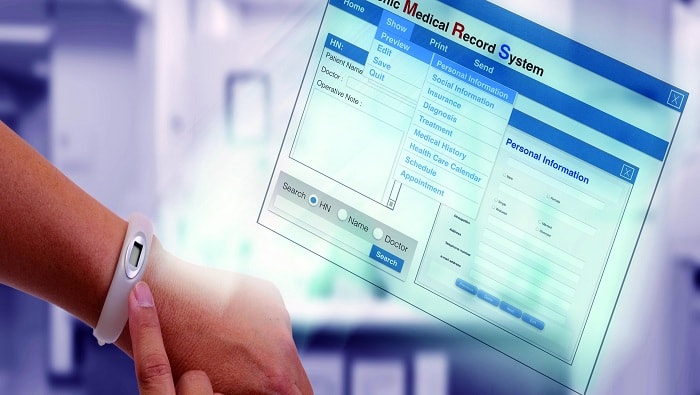
Ninety percent of healthcare professionals participating in a new survey confessed to being confused about what makes a highly interoperable EHR. Black Book Research, in fact, surveyed 11,838 doctors, healthcare administrators, technology managers and clinical leaders around the world.

Whatโ€™s more, 72 percent stated that their preferred strategy for EHRs is to link disparate systems through messaging, APIs, web services and clinical portals — but only seven percent of all international EHR survey respondents described their regional HIT system as having meaningful connectivity with other providers.

Thatโ€™s at least part of the reason why Black Book in its new โ€œState of the Global EHR Industry, 2018โ€ report predicted a pending shift from silo EHR systems toward regions of healthcare delivery organizations in Europe, the Middle East and South Asia. Respondents to the survey anticipate a move to enterprise-wide electronic health records systems with data exchange and care coordination capabilities similar to the global offerings of current U.S.-based vendors by 2023.

“A number of countries have launched national initiatives to develop ICT-based health solutions including EHR systems and have progressed well, despite several hurdles,” Black Book managing partner Doug Brown said in a statement. “As the obstacles are clearing with technological and non-technological interventions, approved standards and regulatory frameworks, funding and health-tech guidelines, the growth opportunities for U.S.-based global EHR vendors magnify as well.”

Eighty-three percent of EHR users in Europe outside the United Kingdom indicated frustration with country-specific and local vendors that typically serve only one country with limited components, such as coding, scheduling and results reporting.

Of those clients, 72 percent said system limitations would prompt them to replace their local or country-specific EHR with a global vendor product.

“The global healthcare sector is undergoing a wave of transformation, with digitization being the core focus area,” Brown added. Healthcare IT products, services and systems are in high demand in nations significantly upgrading their healthcare infrastructures such as Singapore, Israel, Japan and Italy, as well as infrastructure-generating nations of India, China, Brazil, Qatar and Indonesia.

This investment on technology infrastructure for healthcare is expected to spark the double-digit growth of the EHR market spend in these specific regions through 2026, according to Brown, while spending on EHRs is expected to top $25.1 billion U.S. in 2017 and continue to grow to more than $30.2 billion by 2020.

MEDICAL FAIR ASIA 2026
MEDICAL FAIR CHINA

Latest stories

Related stories

Laboratory Automation Advancing Diagnostic Workflows

The modern clinical laboratory is undergoing a profound evolution as manual processes give way to sophisticated robotic systems. By streamlining testing procedures and integrating high-throughput technologies, facilities are achieving unprecedented levels of precision and speed. This shift towards automated solutions is not only reducing human error but also enabling medical professionals to handle increasing sample volumes with greater reliability, ultimately leading to faster and more accurate patient results.

Telemedicine Platforms Expanding Access to Remote Care

Modern healthcare systems are undergoing a radical transformation as digital infrastructure bridges the gap between urban specialists and rural patients. Through virtual consultations and digital triage, providers are overcoming geographical barriers, ensuring that high-quality medical expertise is no longer restricted by physical location. This evolution in care delivery prioritizes accessibility and efficiency, reshaping the patient experience across the globe.

Point of Care Devices Accelerating Clinical Decisions

Clinical environments are undergoing a significant transformation as the shift from centralized laboratory testing to immediate bedside diagnostics gains momentum. By bringing sophisticated analysis directly to the patient, healthcare providers can drastically reduce wait times for critical results, enabling faster intervention and more personalized care pathways. This evolution not only optimizes hospital workflows but also improves outcomes in emergency and remote settings where time is of the essence.

Medical Imaging Innovations Enhancing Diagnostic Precision

Modern radiology is undergoing a profound evolution driven by the integration of artificial intelligence and high-resolution imaging modalities. These advancements allow clinicians to visualize internal structures with unprecedented clarity, leading to earlier detection of diseases and more tailored treatment strategies. By bridging the gap between raw data and clinical insight, new imaging technologies are setting a higher standard for diagnostic accuracy across the global healthcare landscape.

Subscribe

- Never miss a story with notifications

- Gain full access to our premium content

- Browse free from any location or device.

Media Packs

Expand Your Reach With Our Customized Solutions Empowering Your Campaigns To Maximize Your Reach & Drive Real Results!

โ€“ Access the Media Pack Now

โ€“ Book a Conference Call

โ€“ Leave Message for Us to Get Back

Translate ยป