















The fundamental transition from a reactive, episodic healthcare model to a proactive, continuous care paradigm is perhaps the most significant shift in modern medicine. Traditionally, a patient’s health status was assessed during discrete, often infrequent clinical visits where vital signs and symptoms were captured as a momentary “snapshot.” This approach, while necessary, often misses the critical, subtle physiological changes and fluctuations that occur during the 99% of the time a patient is away from the hospital or clinic. Today, medical sensors enhancing real time health monitoring are closing this gap, providing an uninterrupted stream of high-fidelity data that allows for the immediate detection of anomalies and the optimization of treatment plans. These sophisticated devices, ranging from non-invasive wearables to biocompatible implants, are capable of tracking a vast array of metrics from heart rate variability and blood oxygen saturation to interstitial glucose concentrations and neural activity fundamentally transforming how we manage chronic diseases, acute recovery, and overall wellness.
The explosive growth and proliferation of these sensors are driven by remarkable advancements in micro-electromechanical systems (MEMS), low-power wireless communication protocols, and sophisticated material science. These technological leaps have allowed for the creation of sensors that are small, lightweight, and energy-efficient enough to be worn comfortably for extended periods, or in some cases, integrated directly into the human body with minimal rejection risk. By leveraging the power of the Internet of Medical Things (IoMT), these devices transmit encrypted data to secure cloud-based platforms where advanced algorithms and artificial intelligence can analyze the information in real-time. This 24/7 connectivity ensures that both patients and their clinical teams are informed of the patient’s health status at all times, fostering a sense of security and enabling timely, data-driven medical interventions that can prevent emergency hospitalizations and improve long-term outcomes.
The Evolutionary Impact of Biosensors on Chronic Disease Management
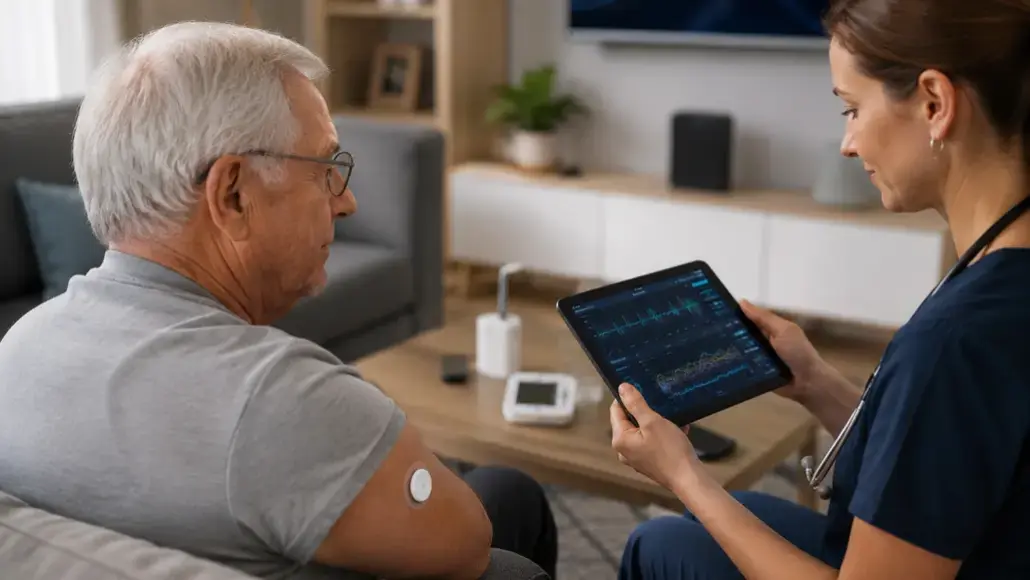
For millions of patients living with chronic conditions such as diabetes, cardiovascular disease, or respiratory disorders, medical sensors enhancing real time health monitoring are nothing short of life-altering. Consider the profound impact of Continuous Glucose Monitors (CGMs) on the management of diabetes. These devices have largely replaced the painful and inconvenient traditional “finger-stick” method of blood sugar testing, providing patients with a real-time, visual trend of how their diet, physical activity, and medication affect their glucose levels throughout the day and night. By seeing these trends as they happen, patients can make immediate, informed adjustments to their behavior, significantly reducing the risk of dangerous hypoglycemic episodes and the devastating long-term complications associated with poorly controlled diabetes.
In the critical realm of cardiology, wearable ECG sensors and consumer smartwatches with clinical-grade rhythm detection capabilities are identifying cases of atrial fibrillation (AFib) and other arrhythmias that would have otherwise gone undiagnosed for years. These medical sensors are capable of capturing sporadic, paroxysmal irregularities that a traditional 10-second ECG in a doctor’s office might easily miss. By providing a longitudinal, real-world view of a patient’s heart rhythm, physicians can tailor treatment plans—including anticoagulation and ablation therapies with a much higher degree of precision and confidence. The same principle is being applied to heart failure patients, where implantable or wearable sensors can detect subtle changes in thoracic impedance or fluid accumulation days or even weeks before the patient experiences physical symptoms, allowing for early, remote adjustment of medication and preventing costly hospital readmissions.
Precision Tracking and the Power of Integrated Clinical Data
The true, transformative value of medical sensors enhancing real time health monitoring lies not just in the raw data they collect, but in how that data is intelligently integrated into the broader clinical workflow. When continuous sensor data is combined with a patient’s historical electronic health records (EHRs), it provides a truly holistic, 360-degree view of the patient’s health journey. Machine learning models can then process this massive, multi-dimensional dataset to identify subtle patterns and correlations that are invisible to even the most experienced human eye. For instance, a specific combination of slight changes in sleep architecture, heart rate variability, and daily step counts might predict an impending flare-up of a chronic inflammatory condition or a depressive episode in a psychiatric patient, allowing for a preemptive “nudge” or clinical check-in.
Precision tracking also extends deep into the inpatient setting, where medical sensors are increasingly used to monitor high-risk patients who are not in the Intensive Care Unit (ICU). “Smart” hospital beds and wearable biosensor patches can monitor vital signs continuously, alerting the rapid response team at the very first sign of clinical deterioration, such as a drop in oxygen saturation or an increase in respiratory rate. This effectively eliminates the dangerous “monitoring gap” that occurs between routine nursing checks, which can sometimes be hours apart. By automating the data collection and alerting process, sensors also free up valuable clinical staff to focus on direct, hands-on patient care, reducing the administrative burden and improving the overall operational efficiency and safety of the modern hospital.
Navigating the Challenges of Accuracy, Security, and Clinical Adoption
Despite the immense and undeniable potential of medical sensors enhancing real time health monitoring, several significant hurdles must still be overcome to achieve universal adoption. The first and most critical is the issue of data accuracy and rigorous clinical validation. While consumer-grade wearables have become popular, they often lack the precision and reliability required for formal medical decision-making. Developing sensors that can maintain medical-grade accuracy in the “noisy” and unpredictable environment of daily life where movement artifacts, ambient temperature changes, and sensor displacement can easily affect readings is a significant and ongoing engineering challenge. Global regulatory bodies like the FDA and CE play a crucial role here, ensuring that only devices that meet stringent performance and safety standards are cleared for clinical use.
Security and data privacy are equally critical in an era of increasing cyber threats. The transmission of highly sensitive, personally identifiable health data over wireless networks creates vulnerabilities that must be addressed through robust, end-to-end encryption and multi-factor authentication protocols. Patients and providers must be absolutely confident that their data is being used ethically, stored securely, and protected from unauthorized access or misuse. Furthermore, the sheer volume of data generated by continuous monitoring can be overwhelming for busy clinicians. To be truly effective, the data must be intelligently filtered and synthesized into actionable, high-level insights rather than just more “digital noise.” This requires the development of sophisticated clinical decision support systems that only alert the physician when a significant, clinically relevant threshold has been crossed, preventing “alarm fatigue.”
Connected Systems and the Strategic Move Toward the “Hospital at Home”
The ultimate, long-term goal of medical sensors enhancing real time health monitoring is the full realization of the “hospital at home” model of care. This revolutionary concept envisions a future where patients can receive high-level, complex medical care in the comfort and familiarity of their own homes, supported by a network of connected medical devices and remote clinical monitoring teams. This approach is not only more cost-effective for the healthcare system but is also strongly preferred by patients, as it significantly reduces the risk of hospital-acquired infections (HAIs) and allows them to remain in a supportive, low-stress environment with their families. Medical sensors are the essential technological backbone of this model, providing the constant “eyes and ears” for clinicians who may be many miles away.
In a modern home-based recovery program after major surgery, for example, a patient might wear a smart patch that monitors their surgical incision for early signs of infection (by measuring local temperature and pH) while a wearable monitor tracks their mobilization levels and vital signs. If any parameter falls outside of the expected recovery range, a high-definition telehealth consultation can be triggered immediately, or a home-health nurse can be dispatched. This level of continuous connectivity ensures that the patient is never “lost” in the system after discharge, providing a continuous, invisible safety net that extends far beyond the traditional hospital walls. As we continue to refine these technologies and the reimbursement models that support them, the boundaries of what can be safely and effectively treated at home will continue to expand.
Future Horizons: Miniaturization, Biocompatibility, and AI-Driven Automation
The future of medical sensors enhancing real time health monitoring is characterized by even further miniaturization and the development of “invisible” or “seamless” sensing technologies. Researchers are currently working on flexible, ultra-thin sensors that can be woven directly into everyday clothing, integrated into jewelry, or even printed onto the skin as electronic “tattoos.” These devices will be so unobtrusive that patients will eventually forget they are even wearing them, leading to higher long-term compliance and more natural, representative data collection. At the same time, the development of sophisticated biochemical sensors that can detect specific biomarkers in sweat, tears, or saliva will open up entirely new frontiers in non-invasive, continuous monitoring for conditions like cancer, stress, and nutritional deficiencies.
We are also rapidly moving toward “closed-loop” therapeutic systems, where the sensor not only monitors a condition but also automatically triggers a precise therapeutic response. The artificial pancreas system, which combines a continuous glucose sensor with an automated insulin pump, is a prime and successful example of this. In the future, we may see similar “sense-and-respond” systems for blood pressure control, chronic pain management via targeted neurostimulation, or the automated delivery of life-saving medications during a cardiac event. By closing the loop between sensing and treatment, we can achieve a level of medical precision and automation that was once considered science fiction. In conclusion, medical sensors are not just tools for observation; they are the essential catalysts for a new era of personalized, continuous, and highly effective medicine that will improve the lives of billions.