












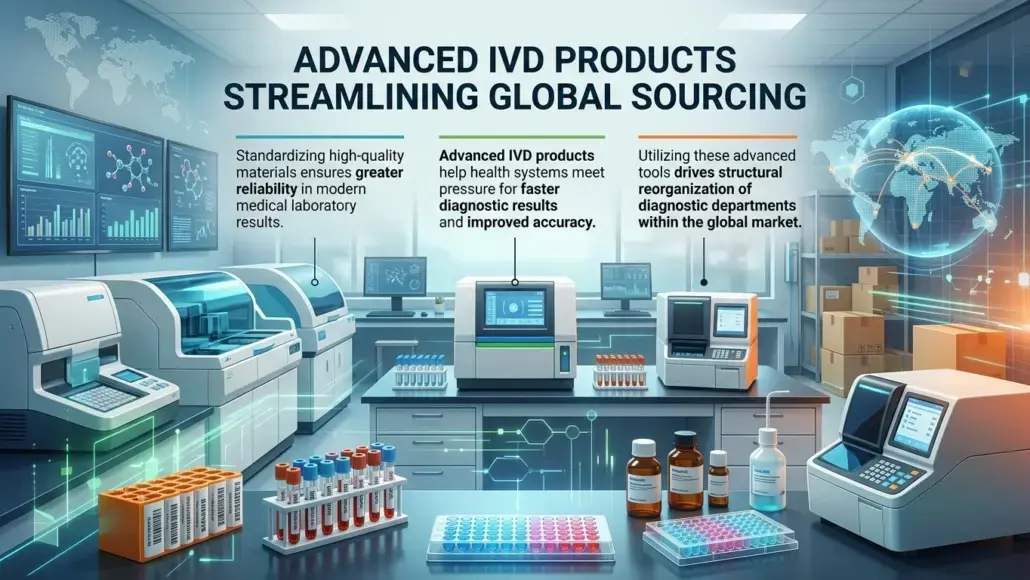
The structural efficiency of a modern medical laboratory depends heavily on the reliability and accessibility of high-quality testing materials. As health systems face increasing pressure to deliver faster results with greater accuracy, the focus on procurement strategies has intensified. The transition toward utilising advanced IVD products is no longer a localized trend but a fundamental reorganization of how diagnostic departments operate within the global market. By standardizing the quality of diagnostic kits and ensuring a steady flow of reagent manufacturing, these products allow laboratories to mitigate the risks associated with supply chain volatility while maintaining high clinical standards.
Global sourcing in the diagnostics sector requires a sophisticated understanding of both technical specifications and logistical constraints. For procurement professionals, the challenge is to secure a supply chain that can withstand geopolitical shifts and manufacturing delays without compromising patient care. The availability of standardised advanced IVD products provides a common denominator for quality that simplifies the evaluation of international suppliers. This consistency ensures that a test performed in one region yields results comparable to those in another, which is essential for large-scale clinical trials and international health monitoring programs. The focus is on creating a reliable and transparent procurement environment that supports the long-term goals of the institution.
Managing Supply Chain Volatility and Procurement Risks
The reliance on a narrow base of suppliers has historically been a significant vulnerability for many healthcare organizations. When a single manufacturer faces a disruption, the impact cascades through the laboratory, leading to delays in diagnosis and treatment. The adoption of advanced IVD products allows for a more diversified sourcing strategy, as these products often adhere to international benchmarks that facilitate the use of alternative vendors. This flexibility is a vital component of modern risk management, ensuring that a medical laboratory remains operational even during periods of intense market pressure. The ability to switch between verified suppliers without a loss in testing quality is a major operational advantage.
Financial predictability is another area where standardized diagnostics provide significant benefits. By utilising advanced IVD products, organizations can achieve better economies of scale and more stable pricing structures. The predictability of the supply chain allows for more accurate budgeting and reduces the need for expensive, last-minute emergency orders. For hospital executives and laboratory directors, the shift toward these advanced solutions represents a strategic move toward financial sustainability. The reduction in procurement overhead and the optimization of inventory levels contribute to a healthier bottom line for the entire organization.
Enhancing Laboratory Efficiency and Diagnostic Precision
The technical performance of advanced IVD products is directly linked to the operational throughput of the laboratory. High-precision diagnostic kits reduce the frequency of repeat testing, which is one of the primary drivers of inefficiency and waste in clinical settings. When a test works correctly the first time, the lab can process more samples per shift, reducing the wait time for patients and physicians. This improvement in efficiency is essential for meeting the growing demand for diagnostic services in an aging global population. The precision of the reagents also ensures that clinicians can make decisions based on high-quality data, leading to better patient outcomes.
The integration of these products into automated laboratory systems is a key factor in streamlining operations. Advanced IVD products are designed to work within the high-throughput environments of modern medical centers, featuring standardized packaging and digital tracking capabilities. This alignment with automation reduces the manual labor required for sample preparation and reagent management, allowing laboratory staff to focus on more complex tasks. The move toward a more integrated and automated diagnostic workflow is a hallmark of the modern healthcare sector, and the choice of testing materials is a critical part of this evolution.
Strategic Value of Reagent Manufacturing and Quality Assurance
The stability and quality of reagent manufacturing are the foundations upon which all diagnostic testing is built. Without reliable reagents, even the most advanced instrumentation cannot produce accurate results. Advanced IVD products utilise manufacturing processes that are subject to rigorous quality control and environmental monitoring. This ensures that every batch of testing material meets the required specifications for sensitivity and specificity. For laboratory directors, the assurance that their reagents will perform consistently is a major factor in maintaining the trust of the clinical staff and the patients they serve.
Quality assurance also extends into the regulatory domain, where advanced IVD products help organizations stay compliant with evolving international standards. As regulations regarding diagnostic testing become more stringent, the use of verified and standardized products simplifies the audit process and reduces the risk of non-compliance. The documentation provided by reputable manufacturers serves as a vital record of the quality and the provenance of the testing materials. This transparency is essential for satisfying the requirements of both internal quality committees and external regulatory bodies. The commitment to high-quality sourcing is therefore a fundamental part of the professional identity of the modern laboratory.
Future Trends in Global Sourcing and Diagnostic Innovation
The continued evolution of the diagnostics market will likely lead to an even greater emphasis on the sustainability and the resilience of the supply chain. We are seeing a move toward more localized manufacturing of advanced IVD Products to reduce the carbon footprint of transport and to provide a more responsive service to local markets. This shift toward a more distributed production model is a natural response to the lessons learned during recent global disruptions. The focus remains on maintaining high standards of quality while improving the speed and the reliability of the delivery system.
In the coming years, the integration of digital tools with the physical supply chain will provide even greater visibility into the status of diagnostic orders. Real-time tracking of reagent shipments and automated inventory management will become the standard of care for every major medical laboratory. The role of advanced IVD products in supporting this digital transformation is indisputable, as they provide the standardized data points necessary for effective system-wide monitoring. The ongoing innovation in diagnostic technology will continue to drive the evolution of global sourcing, ensuring that healthcare providers have the tools they need to deliver excellent patient care.
The transition toward a more integrated and professionalized procurement strategy is a defining characteristic of the modern healthcare industry. By prioritizing the use of advanced IVD products, laboratories can achieve levels of efficiency and reliability that were once considered unattainable. The benefits of this approach extend beyond the walls of the lab, contributing to a more responsive and resilient health system that is better equipped to handle the challenges of the future. The commitment to data-driven sourcing and high-quality diagnostics is what will define the leaders of the industry in the decades to come.
As the industry moves forward, the focus will remain on the refinement of the supply chain and the continued improvement of diagnostic precision. The ability to handle the increasing complexity of new testing modalities will remain a key challenge for laboratory professionals. The ongoing evolution of advanced IVD products is a testament to the power of technical innovation in the service of human health, ensuring that the next generation of diagnostics is both reliable and accessible to patients around the world.