







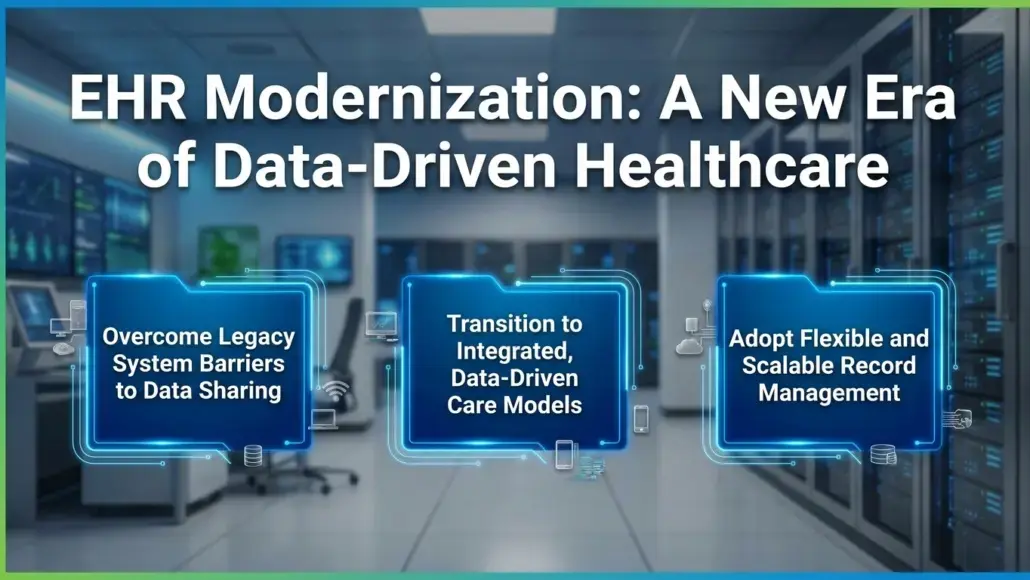
The modernization of electronic health record systems has historically been one of the most complex and resource intensive challenges facing healthcare organizations. Legacy systems, often built on rigid and proprietary architectures, create significant barriers to data sharing, clinical innovation, and operational agility. As the industry moves toward more integrated and data driven models of care, the need for a more flexible and scalable approach to record management has never been greater. Metadata-driven healthcare platforms are emerging as a vital solution to this problem by separating the technical implementation of data storage from the logical representation of clinical concepts. By using metadata to define how data is structured, accessed, and used, these platforms allow organizations to modernize their EHR environments without the need for high risk, all at once system replacements.
The core advantage of this metadata-centric approach is its ability to abstract the complexities of underlying data structures. In traditional EHR systems, changing a clinical workflow or adding a new data field often requires extensive modifications to the hard coded application logic. This rigidity slows down innovation and increases the cost of maintaining the system. In contrast, metadata-driven healthcare platforms allow administrators to define clinical concepts and workflows using a high level metadata layer. This makes it possible to update the system quickly and easily in response to changing clinical needs or regulatory requirements. By providing a more agile and adaptable foundation for health data management, these platforms enable healthcare organizations to continuously evolve their digital capabilities and deliver better care to their patients.
Abstracting Technical Complexity for Clinical Flexibility
One of the primary goals of EHR modernization is to provide clinicians with tools that better support their daily workflows. Metadata-driven healthcare platforms achieve this by providing a flexible framework for building and customizing clinical interfaces. Because the system’s behavior is defined by metadata rather than hard coded logic, organizations can create specialized views and tools for different clinical roles and specialties. For example, a cardiologist and a pediatrician can have entirely different interfaces that highlight the most relevant data for their specific needs, all while drawing from the same underlying data repository. This level of customization improves clinician satisfaction and reduces the cognitive load associated with navigating complex EHR menus.
Additionally, the abstraction provided by these platforms simplifies the process of integrating new clinical technologies. When a new digital health tool is introduced, it can be integrated with the metadata layer rather than with each individual data silo. This “write once, use many” approach drastically reduces the time and effort required to deploy new innovations across the enterprise. It also ensures that the data collected by these tools is captured in a standardized and consistent manner, facilitating more accurate analysis and reporting. By decoupling the clinical tools from the underlying technical infrastructure, metadata-driven healthcare platforms allow organizations to focus on delivering clinical value rather than managing technical debt. This shift in focus is essential for creating a more responsive and patient centered healthcare system.
Enhancing Data Governance and Semantic Interoperability
As healthcare organizations manage increasing volumes of data from a growing number of sources, maintaining data quality and consistency becomes a significant challenge. these specialized systems address this issue by providing a centralized framework for data governance. By defining the meaning and context of every data element in the metadata layer, these platforms ensure that clinical concepts are represented consistently across the entire organization. This semantic interoperability is critical for accurate reporting, clinical research, and population health management. For example, the platform can ensure that a “heart rate” observation is captured and interpreted in the same way, regardless of whether it was generated by a hospital bedside monitor or a patient’s wearable device.
The use of metadata also simplifies the process of complying with evolving regulatory standards. When new reporting requirements are introduced, administrators can simply update the metadata definitions to ensure that the necessary data is being captured and formatted correctly. This eliminates the need for expensive and time consuming software updates and reduces the risk of non compliance. in addition, the metadata layer provides a clear and transparent view of the organization’s data estate, making it easier to monitor data access and ensure patient privacy. By centralizing the management of data definitions and policies, these specialized systems help organizations build a powerful foundation for data trust and security. This is a critical component of any successful EHR modernization initiative and is essential for realizing the full potential of a data driven healthcare ecosystem.
Scaling Health Information Systems with Model-Driven Architectures
Scaling healthcare information systems to support large, multi site organizations requires an architecture that can handle increasing complexity without a proportional increase in management overhead. these specialized systems utilize model-driven architectures to achieve this scalability. By using metadata models to define the relationships between different clinical entities, the platform can automatically manage the underlying data storage and retrieval processes. This allows the system to scale efficiently as the volume of data and the number of users grow. It also ensures that the system remains performant even in the most demanding clinical environments.
In addition to technical scalability, these platforms also support organizational scalability by allowing different facilities within a large system to maintain their local workflows while still contributing to a unified enterprise data record. The metadata layer can be configured to support local variations in clinical practice while maintaining a core set of standardized data definitions for enterprise wide analysis. This balance between local flexibility and global consistency is essential for the success of large scale healthcare mergers and acquisitions. By providing a common data framework that can adapt to diverse organizational needs, these specialized systems simplify the process of integrating new facilities and ensure that the entire enterprise is working from a single source of truth. This unified view of the organization’s clinical and operational performance is vital for driving continuous improvement and achieving the benefits of scale.
Future-Proofing the Healthcare Enterprise through Data Agility
The rapid pace of technological change in healthcare means that organizations must be prepared to incorporate new data types and clinical methods as they emerge. these specialized systems provide the data agility needed to future-proof the enterprise. Because the system is built on a flexible metadata foundation, it can easily adapt to incorporate new data sources, such as genomic information, social determinants of health, or real time telemetry from internet of things devices. This ability to integrate and analyze new types of data is essential for the advancement of precision medicine and the development of more effective population health strategies.
In addition, the separation of the metadata layer from the physical storage layer allows organizations to migrate to new technologies without disrupting their clinical workflows. For example, if an organization decides to move its data from an on-premises database to a modern cloud based repository, it can do so by updating the metadata mapping rather than rewriting the entire application. This significantly reduces the risk and cost of technical transitions and ensures that the organization can always utilize the best available technology. By providing a flexible and adaptable foundation for health data management, these specialized systems ensure that healthcare organizations are ready for whatever the future of medicine may bring. The investment in these platforms is not just about solving today’s EHR challenges but about building a resilient and agile digital infrastructure that will support clinical innovation for years to come.
Navigating the Cultural and Strategic Shift to Metadata-Centric Management
Transitioning to a metadata-driven approach requires more than just technical changes; it also involves a fundamental shift in how organizations think about and manage their data. Healthcare leaders must foster a culture of data literacy and ensure that both clinical and IT teams understand the value of metadata in driving agility and innovation. This requires ongoing education and collaboration to ensure that the metadata definitions accurately reflect the clinical reality and meet the needs of all stakeholders. Strategic planning is also essential to identify the high value areas where a metadata-driven approach will provide the most immediate benefits, such as improving data quality for clinical research or streamlining regulatory reporting.
Success in this transition also depends on the selection of the right platform and the development of internal expertise in metadata modeling and management. Organizations should look for platforms that support industry standards and provide powerful tools for defining and managing metadata. By focusing on building a strong foundation of metadata expertise, healthcare organizations can ensure that they are able to maximize the value of their platform and continuously improve their digital capabilities. As the industry continues to move toward more collaborative and data driven care models, the adoption of these specialized systems will be a defining factor in an organization’s ability to remain competitive and deliver high quality care. The shift toward metadata-centric management represents a commitment to a future where health information is no longer a static record but a dynamic and agile asset that drives clinical and operational excellence across the entire enterprise.