
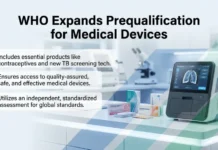










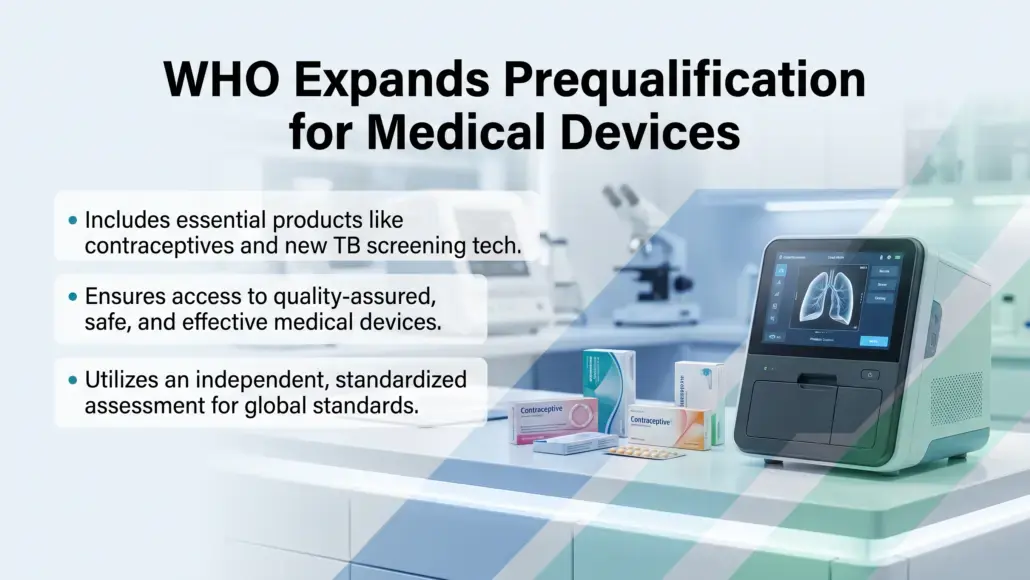

The World Health Organization (WHO) has announced a major expansion of its prequalification programme for medical devices to include a wider range of essential health products, such as contraceptives and innovative tuberculosis (TB) screening technologies. This expansion broadens the scope of quality-assured, safe, and effective products covered by the initiative, which previously focused on in vitro diagnostics and male circumcision devices. The programme employs an independent, standardized, and transparent process to assess medical devices against international standards for quality, safety, and performance, providing trusted guidance for United Nations agencies, procurement organizations, and national authorities worldwide.
The expansion is particularly critical for the estimated 70% of countries that report weak or inadequate regulatory systems for health products. By broadening the prequalification programme for medical devices, WHO aims to improve equitable access to technologies such as male and female condoms, intrauterine devices (IUDs), and computer-aided detection software for tuberculosis (CAD-TB). As part of this transition, the prequalification of condoms and IUDs has been transferred from the United Nations Population Fund (UNFPA) to WHO. Additionally, male circumcision devices have been integrated into this broader framework to support voluntary medical services that can reduce the risk of HIV acquisition in men by approximately 60%.
Dr. Sylvie Briand, WHO Chief Scientist and Assistant Director-General a.i. for Health Systems, Access and Data, stated: “Everyone, everywhere, should be able to rely on medical devices that are safe, effective and meet high standards of quality. By expanding WHO prequalification, we are strengthening confidence in these essential health products and helping countries expand equitable access to the technologies people need to protect and improve their health.” The inclusion of CAD-TB software also introduces artificial intelligence-driven digital health technology into the programme, facilitating earlier detection and treatment in high-burden countries.