
















Modern healthcare systems are facing unprecedented financial pressures as the medical cost trend is projected to reach significant highs in the coming years. Achieving a sustainable balance between high-quality patient care and fiscal responsibility requires a sophisticated approach to hospital cost optimisation. This involves more than simple budget cuts: it necessitates a comprehensive evaluation of how resources are deployed across clinical and administrative functions. By implementing data-driven benchmarking, hospital administrators can identify specific areas where inefficiencies persist, such as redundant diagnostic testing or prolonged patient stays that do not contribute to improved outcomes.
The integration of advanced analytics into daily operations allows management teams to monitor supply usage and staffing patterns in real time. This level of oversight is essential for identifying variances from established clinical pathways. When a facility adopts hospital cost optimisation, the focus shifts toward high-value activities that directly enhance the patient experience while eliminating waste. For instance, reducing the variation in surgical supplies used across similar procedures can lead to substantial savings without compromising surgical success rates. This analytical rigour ensures that every dollar spent is directed toward interventions that provide the highest clinical return.
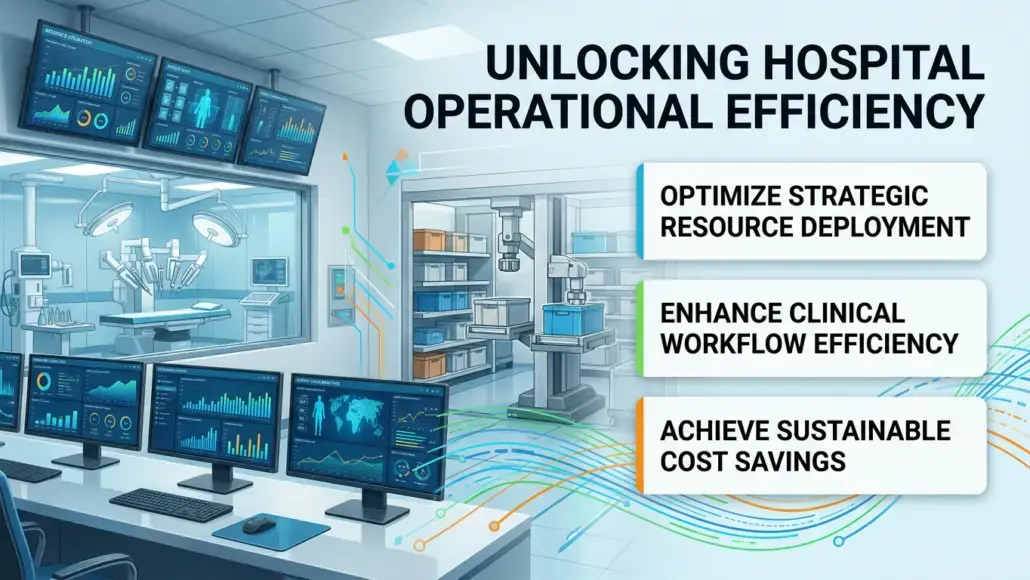
Operational efficiency is inextricably linked to the ability of a healthcare organisation to manage its fixed and variable costs effectively. As hospital operating margins remain narrow, often hovering around the one per cent mark, the margin for error in financial planning is minimal. Effective hospital cost optimisation strategies involve a shift toward proactive maintenance of medical equipment to prevent costly emergency repairs and downtime. Furthermore, energy-efficient building management systems can significantly reduce the overhead associated with large-scale facility operations, allowing more capital to be allocated toward frontline clinical staffing and technology.
Process Refinement and Lean Methodology in Acute Care
The application of lean methodologies within the hospital environment offers a structured framework for continuous improvement and waste reduction. By mapping out patient journeys from admission to discharge, administrators can pinpoint bottlenecks that lead to delays and increased operational expenses. Hospital cost optimisation through process refinement focuses on removing non-value-added steps, such as excessive paperwork or redundant handoffs between departments. This not only lowers the cost per patient encounter but also improves the overall flow of the facility, enabling it to serve more patients with the same level of resources.
Standardising clinical protocols is another pillar of successful efficiency initiatives. When medical teams follow evidence-based guidelines, the likelihood of adverse events and readmissions decreases, both of which are significant drivers of unnecessary expenditure. Strategic hospital cost optimisation efforts must involve the clinical leadership to ensure that changes are grounded in medical necessity. Collaborative workshops between surgeons, nurses, and financial analysts can lead to the discovery of more cost-effective pharmaceutical alternatives or medical devices that offer comparable efficacy at a lower price point.
Digital transformation plays a critical role in streamlining administrative workflows. Automated scheduling systems and electronic health record optimisations reduce the time spent by clinical staff on documentation, thereby increasing the hours available for direct patient contact. This transition to digital-first operations is a cornerstone of hospital cost optimisation in the modern era. By leveraging integrated data platforms, facilities can predict patient volumes more accurately, allowing for more precise staffing adjustments that avoid both understaffing and the excessive use of high-cost agency personnel.

Supply Chain Resilience and Inventory Management Systems
The healthcare supply chain represents one of the largest areas of controllable expense within a hospital budget. Implementing a robust inventory management system that uses radio-frequency identification or advanced barcoding can provide granular visibility into stock levels and expiration dates. This visibility is vital for hospital cost optimisation as it prevents the over-ordering of supplies and reduces the volume of medical products that must be discarded due to shelf-life expiration. A more agile supply chain also allows the hospital to respond more effectively to sudden fluctuations in demand, such as those seen during seasonal health crises.
Strategic sourcing and group purchasing arrangements enable hospitals to benefit from economies of scale. By consolidating volume with a smaller number of preferred vendors, healthcare organisations can negotiate better pricing and more favourable contract terms. However, hospital cost optimisation in the supply chain also requires a focus on total cost of ownership rather than just the initial purchase price. Factors such as the longevity of a device, the cost of associated consumables, and the requirements for clinical training must all be considered during the procurement process to ensure long term value.
- Implementation of just-in-time inventory systems to reduce carrying costs and storage space requirements.
- Utilisation of predictive analytics to forecast supply needs based on scheduled surgical volumes and historical data.
- Development of a centralised distribution model to streamline the delivery of supplies to various wards and departments.
- Establishment of a value analysis committee to evaluate new products for both clinical efficacy and financial impact.
The reduction of clinical waste is also a major component of supply chain efficiency. This includes everything from the proper segregation of hazardous waste to the reprocessing of certain single-use medical devices where permitted by regulation. Engaging frontline staff in these initiatives is crucial, as they are best positioned to identify waste at the point of care. Successful hospital cost optimisation programs often include incentives for departments that meet their waste reduction targets, fostering a culture of accountability and resourcefulness across the entire workforce.
Financial Oversight and Revenue Preservation Metrics
Maintaining financial sustainability in a complex healthcare environment requires constant vigilance over revenue streams and expense categories. Detailed financial reporting and the use of key performance indicators (KPIs) allow hospital boards to track the progress of their cost-saving initiatives. A critical metric in this context is the cost per adjusted patient day, which provides a standardised view of operational efficiency across different service lines. By comparing this metric against peer institutions, leaders can determine whether their hospital cost optimisation efforts are yielding competitive results.
Revenue preservation is equally important, as any leaks in the billing process can negate the savings achieved through operational improvements. Ensuring that all services are accurately coded and billed is a fundamental requirement for a healthy financial position. Additionally, value-based healthcare models are increasingly influencing how hospitals are reimbursed, making it essential to align cost-reduction efforts with quality metrics. If a hospital reduces costs but suffers a decline in patient satisfaction or clinical outcomes, it may face financial penalties that outweigh the initial savings.
The role of the chief financial officer has evolved from simple accounting to strategic leadership in operational transformation. By working closely with the chief operating officer, the finance team can ensure that capital investments are aligned with the long term goals of the organisation. This collaboration is the engine behind effective hospital cost optimisation, providing the necessary data to justify investments in new technologies that will drive future efficiencies. Ultimately, a financially healthy hospital is better equipped to fulfill its mission of providing exceptional care to its community, ensuring that high standards are maintained even in a challenging economic climate.
Long Term Infrastructure and Technology Integration
As healthcare continues to move toward more technologically advanced models of care, the integration of new systems must be handled with a focus on long term ROI. Telehealth platforms and remote patient monitoring tools can reduce the need for in-person visits and hospital admissions, significantly lowering the overall cost of care. These technologies are integral to hospital cost optimisation because they shift the focus toward preventative management and early intervention. By keeping patients healthy and out of the hospital, organisations can reduce the strain on their acute care facilities and focus resources on those with the most complex needs.
Investment in energy-efficient infrastructure is another area where long term savings can be realised. Modern HVAC systems and LED lighting not only reduce utility bills but also create a more comfortable environment for patients and staff. When planning facility upgrades, hospital cost optimisation should be a primary consideration, ensuring that new designs facilitate efficient workflows and reduce the time spent by staff walking between locations. A well-designed facility can improve staff productivity and reduce the physical toll on clinicians, leading to higher retention rates and lower recruitment costs.
In the coming decade, the use of artificial intelligence and machine learning will further refine how hospitals manage their operations. These tools can identify patterns in data that are invisible to the human eye, suggesting new ways to optimise everything from patient scheduling to pharmaceutical procurement. The journey toward total operational efficiency is ongoing, requiring a commitment to innovation and a willingness to adapt to new challenges. By maintaining a focus on hospital cost optimisation, healthcare leaders can ensure that their organisations remain resilient, sustainable, and capable of providing the highest level of care for generations to come.
Additionally, many institutions are finding that capital investment planning strengthening hospital infrastructure is the best way to secure future savings by incorporating modern, energy-efficient technologies from the outset.
In the coming years, the strategic importance of hospital cost optimisation will only increase as global healthcare systems face escalating pressures from an aging population and the rising cost of complex medical treatments. Organisations that can master the art of balancing clinical excellence with rigorous financial discipline will be the ones that thrive. This requires not just a one-time effort but a continuous commitment to operational improvement and waste reduction. By building a culture that values efficiency as a companion to quality, healthcare leaders can ensure that their facilities remain accessible and effective for all who need them. This long term vision is the ultimate goal of every cost-reduction initiative in the modern hospital environment.