








The global healthcare landscape is currently undergoing a profound structural shift driven by the dual pressures of rapid technological advancement and tightening fiscal constraints. For decades, the acquisition of high-value medical assets like MRI scanners, robotic surgical systems, and linear accelerators followed a rigid capital expenditure (CAPEX) model. Hospitals and healthcare systems would commit massive upfront sums to own these assets, often tethering themselves to technologies that might become obsolete within a few years. However, the emergence of equipment as a service has fundamentally altered this paradigm, offering a more agile, subscription-based approach that mirrors the “as-a-service” revolution seen in the software industry. By shifting financial responsibility from capital budgets to operational expenditure (OPEX), healthcare organizations can align their spending with actual utilization and clinical outcomes.
The Economic Imperative for Financial Flexibility
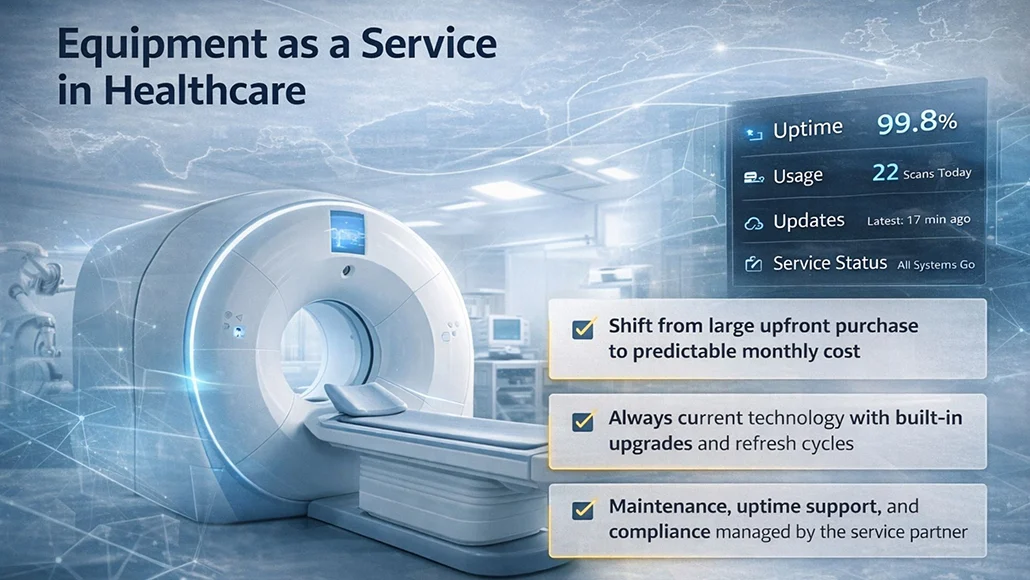
Traditional procurement methods often force healthcare administrators into difficult choices between maintaining a healthy balance sheet and providing clinicians with the latest diagnostic tools. When a facility chooses a CAPEX approach, it locks up liquidity in a depreciating asset. This frozen capital cannot be easily redeployed for urgent operational needs or emergency upgrades. In contrast, equipment as a service allows for a pay-per-use or monthly subscription model. This ensures that cash flow remains predictable and manageable, reflecting the actual revenue generated by the equipment. This synchronization of cost and revenue is particularly vital for private clinics and community hospitals that operate on thin margins and require high levels of fiscal transparency.
The transition to an OPEX-centric model also simplifies the accounting complexities associated with asset depreciation and tax implications. Under many equipment as a service agreements, the service provider retains ownership and responsibility for the asset’s lifecycle. This means the healthcare provider does not have to worry about the declining value of the machine or the eventual costs of decommissioning and disposal. Instead, they focus on the clinical value delivered. This shift essentially transforms a lumpy, unpredictable capital expense into a smooth, recurring operational cost that is much easier to forecast and justify to stakeholders and boards of directors.
Technological Agility and the Battle Against Obsolescence
One of the most significant risks in healthcare technology management is the speed of innovation. A state-of-the-art imaging system purchased today might be surpassed by a more precise, faster model in three years. In a CAPEX world, the hospital is stuck with the older machine until it is fully depreciated or until a new capital cycle begins. Equipment as a service mitigates this “obsolescence trap” by building technology refreshes into the service contract. Since the provider owns the fleet, they are incentivized to keep the equipment updated to ensure peak performance and customer satisfaction. This ensures that patients always have access to the highest standards of care without the hospital needing to initiate a new procurement battle every few years.
Streamlining Maintenance and Operational Uptime
Beyond the financial and procurement advantages, equipment as a service integrates maintenance, repairs, and software updates into a single comprehensive package. In the old model, a machine breakdown often triggered a sequence of bureaucratic hurdles: getting quotes, securing approvals, and then waiting for parts. When equipment is delivered as a service, the provider is typically bound by strict service level agreements (SLAs) that guarantee a certain percentage of uptime. This places the burden of reliability squarely on the shoulders of the manufacturer or service partner. They are motivated to perform proactive maintenance and use remote monitoring to prevent failures before they occur, as their revenue is often tied to the machine’s availability.
Data-Driven Insights and Utilization Tracking
The “as-a-service” model naturally lends itself to deeper data integration. Providers of equipment as a service often include sophisticated tracking and analytics tools that monitor how frequently a machine is used and for which types of procedures. This data provides healthcare administrators with invaluable insights into clinical workflows and asset utilization. If a particular piece of equipment is underutilized, the contract might allow for it to be swapped for a different asset or for the service level to be adjusted. This level of granular control was previously impossible under ownership models, where an idle machine simply sat as a “sunk cost” on the balance sheet.
Risk Mitigation and Lifecycle Management
The lifecycle of medical equipment involves more than just purchase and use it includes rigorous regulatory compliance, cybersecurity updates, and ethical disposal. Managing these aspects in-house requires a significant amount of specialized expertise and administrative overhead. By leveraging equipment as a service, hospitals effectively outsource these risks to specialists. The service provider ensures that the equipment remains compliant with the latest healthcare regulations and that all data security protocols are strictly followed. This is especially critical in an era where medical devices are increasingly interconnected and vulnerable to cyber threats. The provider’s expertise in device security becomes a protective layer for the hospital’s overall network.
Furthermore, HHM Global notes that the environmental impact of medical waste is a growing concern. Professional equipment as a service providers usually have established “circular economy” practices for the end-of-life stage of their products. They can refurbish, recycle, or ethically dispose of old units far more efficiently than an individual hospital could. This not only supports the healthcare facility’s sustainability goals but also ensures that no hazardous materials or sensitive patient data are left on decommissioned hardware.
The Future of Procurement in Modern Healthcare Systems
As healthcare systems continue to consolidate and seek greater efficiencies, the adoption of equipment as a service is likely to accelerate. We are moving toward a future where hospitals see themselves as providers of care rather than owners of hardware. This “asset-light” strategy allows for greater focus on patient outcomes and staff satisfaction. Clinicians benefit from always having the most modern tools at their disposal, while administrators benefit from a financial model that is resilient to market volatility and technological disruption. The shift from CAPEX to OPEX is not merely an accounting trick it is a strategic repositioning that prepares healthcare organizations for the complexities of the 21st century.
In conclusion, the rise of equipment as a service represents a milestone in the maturity of the healthcare industry. It acknowledges that the value of medical technology lies in its use, not its ownership. By embracing this model, healthcare facilities can ensure they remain at the forefront of clinical excellence, maintain robust financial health, and offer the best possible care to their communities. The transition requires a change in mindset, moving away from the pride of ownership toward the efficiency of partnership, but the rewards in terms of flexibility, reliability, and innovation are well worth the effort.