











The reliability of biomedical equipment is a cornerstone of modern healthcare delivery. From life-sustaining ventilators and infusion pumps to complex diagnostic tools like MRI and CT scanners, the seamless operation of these devices is directly linked to patient outcomes and hospital efficiency. Historically, the maintenance of such systems followed two primary models: reactive maintenance, where repairs occur after a failure, and preventive maintenance, which involves scheduled servicing based on time intervals or usage metrics. While both have their place, they are increasingly being superseded by the more sophisticated paradigm of predictive maintenance. This data-centric approach uses advanced sensors, the Internet of Things (IoT), and machine learning to monitor the real-time health of medical devices, identifying potential issues before they manifest as critical failures.
The Limitations of Traditional Maintenance Strategies
Reactive maintenance is perhaps the most disruptive and costly approach in a clinical setting. When a vital piece of equipment fails unexpectedly, it can lead to canceled procedures, emergency repair costs, and, most importantly, compromised patient care. Preventive maintenance, while an improvement, often leads to “over-maintenance” or “under-maintenance.” Servicing a machine simply because a calendar date has arrived can result in unnecessary downtime and the premature replacement of perfectly functional components. Conversely, a machine that is heavily used might develop a fault between scheduled services, leading to a breakdown that preventive schedules failed to catch. Predictive maintenance addresses these inefficiencies by basing maintenance actions on the actual condition and performance of the equipment.
The Technological Engine: IoT and Data Analytics
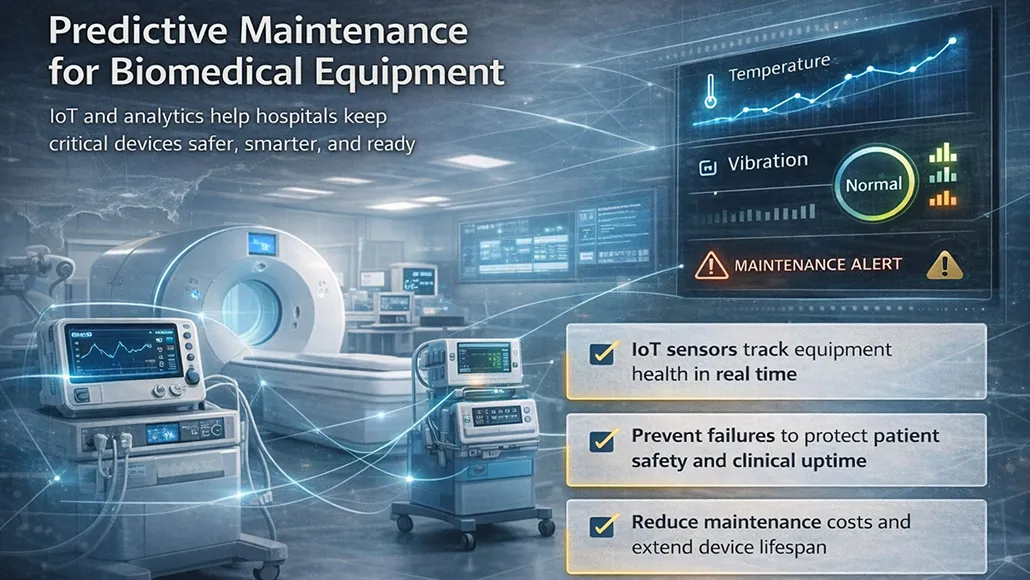
At the heart of any predictive maintenance strategy is the continuous flow of data from the equipment to a central monitoring system. Modern biomedical devices are increasingly “smart,” equipped with internal sensors that track everything from temperature and vibration to power consumption and duty cycles. By integrating these devices into a hospital-wide IoT network, clinical engineers can gain a holistic view of the entire asset fleet. Data analytics platforms then process this information, using historical performance data to establish a “normal” baseline for each device. When the system detects a subtle deviation from this baseline such as a slight increase in operating temperature or a minor change in a motor’s vibration pattern it can flag the device for inspection long before a human operator would notice a problem.
Enhancing Patient Safety and Clinical Uptime
The most compelling argument for adopting predictive maintenance in healthcare is its direct impact on patient safety. In high-stakes environments like intensive care units or operating rooms, equipment failure is not just an inconvenience it is a life-threatening risk. By anticipating failures, hospitals can ensure that backup units are ready or that repairs are conducted during low-usage periods, such as overnight or between scheduled surgeries. This level of foresight eliminates the chaos associated with emergency repairs and allows clinical teams to focus entirely on patient care with full confidence in their technology. Moreover, predictive maintenance ensures that devices are always operating at their peak calibrated performance, which is essential for accurate diagnostics and effective treatment.
Cost Optimization and Asset Lifecycle Extension
From a financial perspective, predictive maintenance offers significant advantages over traditional models. By intervening only when necessary, hospitals can reduce the labor and parts costs associated with unnecessary preventive servicing. Additionally, because the system catches minor issues before they escalate into major mechanical failures, the overall cost of repairs is typically lower. Over the long term, this proactive care extends the useful life of the asset. A well-monitored machine that never experiences a catastrophic failure will naturally last longer and provide a better return on investment than one that is subject to the stresses of repeated breakdowns and emergency fixes. This optimization of the maintenance cycle allows for more strategic capital planning and better budget allocation across the biomedical department.
Integration with Hospital Information Systems
To be truly effective, predictive maintenance data should not exist in a silo. Integrating these insights with broader Hospital Information Systems (HIS) and Computerized Maintenance Management Systems (CMMS) creates a powerful ecosystem for healthcare management. When a predictive alert is triggered, the system can automatically generate a work order, check the inventory for necessary spare parts, and even look at the clinical schedule to suggest the best time for the technician to access the device. This level of automation reduces the administrative burden on clinical engineers and ensures that maintenance activities are perfectly aligned with the hospital’s operational flow.
Challenges in Implementing Data-Driven Maintenance Models
Despite its clear benefits, the transition to predictive maintenance is not without obstacles. One of the primary challenges is data interoperability. Hospitals often have a diverse mix of equipment from different manufacturers, many of which use proprietary data formats. Creating a unified platform that can ingest and analyze data from multiple sources requires significant technical expertise and investment. Furthermore, there is the human element: clinical engineering teams must be trained to work with data analytics and AI-driven alerts. Moving from a “wrench-turning” culture to a “data-interpreting” culture requires a shift in mindset and ongoing professional development.
HHM Global observes that security is another critical concern. As biomedical devices become more connected, they also become potential entry points for cyberattacks. A predictive maintenance system must be built on a secure foundation, with robust encryption and strict access controls to protect both the equipment’s operational integrity and any patient data that might be associated with the device’s usage logs. Ensuring that the pursuit of maintenance efficiency does not compromise the hospital’s cybersecurity posture is a paramount responsibility for IT and biomedical leadership.
The Role of Artificial Intelligence and Future Trends
As artificial intelligence (AI) and machine learning (ML) continue to evolve, the capabilities of predictive maintenance will only grow. Future systems will likely move beyond simple threshold-based alerts to complex “prescriptive” analytics. Not only will the system predict a failure, but it will also recommend the specific repair steps and provide a probability score for different outcomes. We may also see the rise of “digital twins,” where a virtual model of a physical piece of equipment is maintained in the cloud. This digital twin can be used to simulate different usage scenarios and stress-test the equipment without taking the physical unit out of service. This level of sophistication will make biomedical equipment management more precise and predictable than ever before.
In conclusion, the adoption of predictive maintenance represents a fundamental shift in how we manage the lifeblood of modern medicine. By moving away from the limitations of the past and embracing the data-driven possibilities of the future, healthcare organizations can create a more resilient, efficient, and safer environment for both staff and patients. The journey toward a fully predictive clinical environment requires investment in technology and people, but the results higher uptime, lower costs, and better care make it an essential path for any forward-looking healthcare system. The era of waiting for things to break is over the era of knowing they might break and stopping it before it happens has begun.