











Key Takeaways:
- Digital health technologies are revolutionizing healthcare by improving accessibility, efficiency, and personalization.
- Telehealth platforms and virtual care models expand access to medical expertise and reduce geographical barriers.
- EHR integration streamlines data management, enhances communication, and supports informed clinical decision-making.
- Remote patient monitoring empowers continuous oversight, enabling early intervention and proactive management of chronic conditions.
- These technologies are critical drivers of clinical workflow optimization and the broader healthcare digital transformation, fostering patient-centered care.
In an era defined by rapid technological advancement, the healthcare landscape is undergoing a profound metamorphosis. Traditional models of care, often constrained by geography, time, and resources, are steadily being augmented, and in some cases, redefined by a suite of innovative digital solutions. The impact of digital health technologies enhancing care delivery is no longer a futuristic concept but a present-day reality, fundamentally reshaping how medical services are accessed, managed, and experienced by patients and providers alike. This isn’t merely about incremental improvements; it represents a significant healthcare digital transformation, paving the way for more efficient, accessible, and ultimately, more human-centric care. At HHM Global, we recognize that digital health technologies are no longer optional enhancements but essential enablers of modern healthcare delivery. As healthcare systems worldwide accelerate their digital transformation journeys, the focus is shifting toward scalable, patient-centric solutions that improve access, efficiency, and clinical outcomes.
The Dawn of Virtual Care: Telehealth Platforms Redefining Access
Perhaps one of the most visible and widely adopted manifestations of digital health technologies enhancing care delivery has been the explosive growth of telehealth platforms. What began as a niche solution for remote consultations has evolved into a comprehensive ecosystem of virtual care delivery. Patients can now connect with specialists across vast distances, receive routine follow-ups without the need for travel, and even manage chronic conditions from the comfort of their homes. This paradigm shift has not only democratized access to medical expertise, particularly in underserved rural areas, but has also significantly reduced the logistical burdens associated with traditional in-person visits. The convenience offered by these platforms encourages proactive engagement with healthcare, ensuring that minor concerns can be addressed before escalating into more serious conditions, thereby fostering a culture of continuous wellness. The flexibility of scheduling and the ability to conduct consultations from virtually anywhere empower patients, making healthcare a more integrated part of their daily lives rather than an inconvenient disruption.
Expanding Horizons with Remote Consultations and Virtual Triage
The versatility of telehealth extends far beyond simple video calls. It encompasses a spectrum of services, including secure messaging, virtual triage systems, and even remote diagnostic assistance. For instance, a patient experiencing a non-emergency symptom can engage with an AI-powered chatbot for initial assessment, guiding them towards self-care, a virtual consultation, or an in-person visit. This intelligent routing ensures that resources are allocated efficiently, reducing the strain on emergency departments and primary care offices. Furthermore, mental health services have seen a particular boom through virtual delivery, breaking down stigmas and geographical barriers that often impede access to crucial psychological support. The ability to connect with therapists and psychiatrists virtually has made mental wellness support more approachable and less intimidating for many individuals.
Seamless Integration: EHR and the Backbone of Coordinated Care
Central to the vision of digital health technologies enhancing care delivery is the sophisticated integration of Electronic Health Records (EHR) systems. Moving past paper charts, modern EHR systems are powerful care delivery solutions that serve as the digital backbone of a patient’s medical journey. They consolidate comprehensive health information – from past diagnoses and treatments to medications, allergies, and lab results – into a single, accessible, and secure digital file. This singular source of truth is transformative, allowing different healthcare providers involved in a patient’s care to access real-time, accurate information instantly, regardless of their location. This eliminates redundant tests, reduces the risk of medical errors due to incomplete information, and ensures that every clinical decision is informed by a holistic view of the patient’s health.
Streamlining Information Flow and Enhancing Clinical Decision-Making
The value of robust EHR integration cannot be overstated. It facilitates seamless communication between various departments, specialists, and even external healthcare facilities. For instance, a primary care physician referring a patient to a cardiologist can instantly share relevant records, allowing the specialist to prepare thoroughly before the patient’s arrival. Beyond mere information sharing, advanced EHR systems often incorporate clinical decision support tools. These tools leverage vast datasets to provide physicians with evidence-based recommendations, alert them to potential drug interactions, or flag abnormal lab results, thereby significantly improving clinical accuracy and patient safety. This level of coordinated care, driven by digital insights, ensures that patients receive timely and appropriate interventions, enhancing overall treatment effectiveness.
Proactive Management: Remote Patient Monitoring for Continuous Oversight
Another cornerstone of digital health technologies enhancing care delivery is remote patient monitoring (RPM). This technology represents a proactive shift from episodic care to continuous, data-driven oversight, especially vital for managing chronic conditions like diabetes, hypertension, and heart disease. RPM devices, ranging from smart blood pressure cuffs and glucose meters to wearable sensors, passively collect vital physiological data from patients in their home environments. This data is then securely transmitted to healthcare providers, who can monitor trends, detect early warning signs of deterioration, and intervene swiftly if necessary.
Empowering Patients and Preventing Crises Through Continuous Data
The benefits of remote patient monitoring are multifaceted. For patients, it offers a sense of security and empowerment, knowing their health is continuously tracked, and allows them to actively participate in their care management. For providers, it offers an unprecedented window into a patient’s daily health, far beyond what can be gleaned from periodic office visits. This continuous stream of data enables personalized treatment adjustments, helps prevent acute exacerbations, and reduces the need for emergency room visits or hospital readmissions. It’s a prime example of how digital health technologies are moving beyond reactive treatment to proactive prevention and management, fundamentally enhancing long-term health outcomes. The insights derived from RPM data contribute significantly to the broader goal of patient-centered care, as treatment plans can be tailored with remarkable precision to individual physiological responses and lifestyle patterns.
Optimizing Workflows: The Engine of Healthcare Efficiency
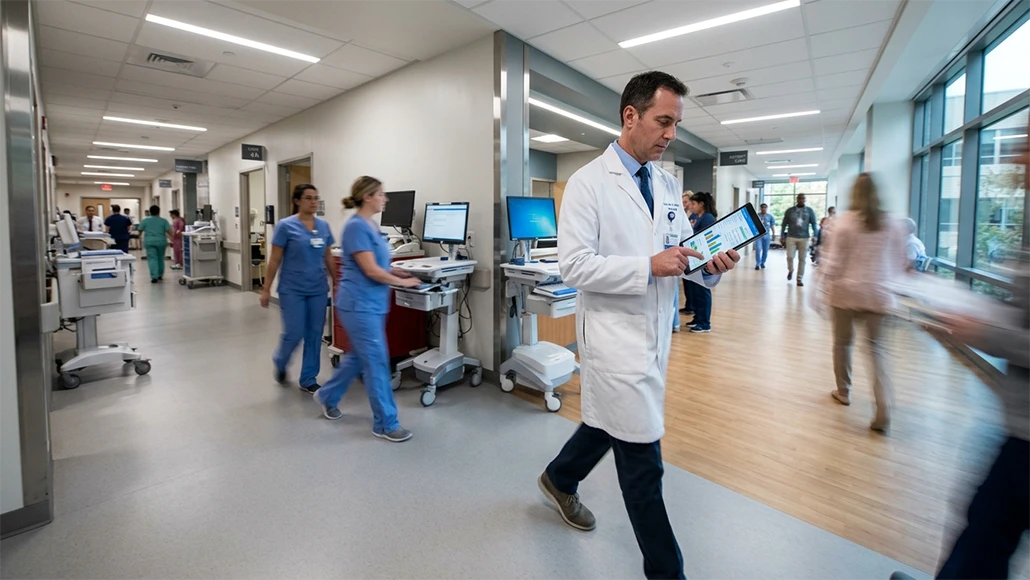
The efficiency gains brought about by digital health technologies enhancing care delivery are transformative for healthcare operations. Beyond direct patient interactions, these technologies are pivotal in clinical workflow optimization. Manual processes, once bottlenecks that consumed valuable time and resources, are now automated, streamlined, or entirely eliminated. This includes everything from appointment scheduling and prescription refills to inventory management and administrative reporting.
Reducing Administrative Burdens and Enhancing Staff Productivity
Consider the impact on nursing staff, who traditionally spent significant time on documentation and administrative tasks. With digital charting, voice-to-text transcription, and integrated communication platforms, nurses can dedicate more of their time to direct patient care. Physicians benefit from faster access to patient histories, simplified ordering of tests and medications, and reduced paperwork. The automation of routine tasks through robotic process automation (RPA) or intelligent scheduling algorithms means that healthcare professionals can focus on higher-value activities that require their expertise and empathy. This reduction in administrative burden not only boosts staff productivity but also contributes to reduced burnout, a critical issue in the modern healthcare environment. Ultimately, these operational improvements translate into faster patient throughput, shorter wait times, and a more positive experience for everyone involved in the care continuum.
Patient-Centered Care in the Digital Age: A New Paradigm
Patient-centricity is the defining principle of digital health innovation from HHM Global’s viewpoint. Technologies are increasingly being designed not just to streamline operations but to empower individuals with greater control, transparency, and engagement in their healthcare journeys. At the heart of the healthcare digital transformation is a renewed focus on patient-centered care. Digital health technologies enhancing care delivery are not just about efficiency; they are fundamentally about empowering patients and tailoring services to their individual needs and preferences. Through patient portals, individuals can access their health records, schedule appointments, request prescription refills, and communicate securely with their care team. This transparency and ease of access foster greater patient engagement and shared decision-making.
Personalized Health Journeys and Empowered Patients
Wearable devices and health apps, while distinct from traditional medical devices, also contribute significantly by enabling individuals to track their own health metrics, set wellness goals, and gain insights into their lifestyle choices. This self-monitoring capability helps educate patients and motivates them to take a more active role in managing their health, moving beyond a passive recipient of care to an active participant in their own well-being journey. The data collected from these personal devices can often be integrated into broader care delivery solutions, providing a more comprehensive picture for clinicians. This shift towards an informed, engaged patient is a hallmark of truly effective modern healthcare.
Navigating the Challenges and Embracing the Future
While the promise of digital health technologies enhancing care delivery is immense, their implementation is not without challenges. Issues such as data security and privacy, the need for robust interoperability between disparate systems, and ensuring equitable access across socioeconomic divides must be rigorously addressed. The digital divide, which can exclude vulnerable populations from accessing these advanced services, remains a significant concern requiring thoughtful policy and infrastructure development. However, these challenges are being actively tackled through continuous innovation, regulatory frameworks, and collaborative industry efforts.
The trajectory of healthcare is undeniably digital. As these technologies mature and become more integrated, we can anticipate an even more seamless, predictive, and personalized experience for patients. The future will likely see even greater integration of AI and machine learning for predictive analytics, further development of virtual reality for therapy and training, and the widespread adoption of blockchain for secure health data management. The continued evolution of digital health technologies enhancing care delivery promises a future where healthcare is not just reactive but profoundly proactive, preventative, and ultimately, more effective for all.