








Close
Digital Health & Ai Innovation summit 2026
Medical Taiwan 2026

New Cardiac Echocardiography Analysis Software to meet unmet needs in clinical trials

Note* - All images used are for editorial and illustrative purposes only and may not originate from the original news provider or associated company.

Subscribe

- Never miss a story with notifications

- Gain full access to our premium content

- Browse free from any location or device.

Media Packs

Expand Your Reach With Our Customized Solutions Empowering Your Campaigns To Maximize Your Reach & Drive Real Results!

– Access the Media PackNow

– Book a Conference Call

Leave Message for Us to Get Back

Related stories

Healthcare Financing Models Supporting Modern Care...

The transformation of the economic foundations of medicine from a volume-based to a value-based model represents the most significant shift in clinical administration in over a generation. In an era of rising costs and an aging population, the traditional "fee-for-service" approach is being replaced by sophisticated financial structures that incentivize high-quality outcomes and long-term health maintenance. By integrating insurance innovation, sustainable investment strategies, and data-driven cost optimization, healthcare financing models supporting modern care delivery are becoming the primary driver of clinical sustainability and innovation. This evolution ensures that financial resources are allocated where they have the most impact improving the lives of patients and ensuring that the healthcare system remains resilient and accessible for every member of society.

Regulatory Compliance in Healthcare Technology Advancements

The rapid integration of sophisticated digital tools into clinical practice requires a robust and adaptive oversight framework to ensure that innovation never comes at the expense of patient safety or data integrity. As medical technologies evolve from simple mechanical devices to complex, AI-driven diagnostic and therapeutic systems, the role of governmental and professional standards becomes increasingly critical. By establishing clear certification processes and rigorous risk management protocols, regulatory compliance in healthcare technology advancements is becoming the primary guardian of quality in the modern medical landscape. This commitment to oversight ensures that the benefits of high-tech medicine such as improved accuracy and more personalized treatments are delivered within a secure and ethically sound environment, effectively bridging the gap between scientific discovery and safe clinical application.

Healthcare Interoperability Enabling Connected Care Systems

The ability of disparate digital platforms to seamlessly exchange and interpret clinical information represents the critical infrastructure upon which modern medicine is built. In a complex care environment where patients often interact with multiple specialists, pharmacists, and community health providers, the lack of data connectivity can lead to fragmented care and significant safety risks. By establishing a unified framework for data exchange and electronic health records integration, healthcare interoperability enabling connected care systems is becoming the primary driver of clinical coordination and efficiency. This transformation ensures that the right information reaches the right provider at the right time, creating a comprehensive "clinical narrative" that supports better decision-making and a more patient-centered approach to healing.
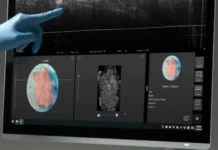
ICON plc, a global provider of outsourced development services to the pharmaceutical, biotechnology and medical device industries, announced that its Medical Imaging division has launched a new cardiac echocardiography analysis software solution. The software, MIRA-ECHO, enables cardiac echocardiography (ECHO) images to be viewed, measured and interpreted in clinical trials and is the latest addition to ICON Medical Imaging’s proprietary MIRATM (Medical Imaging Review and Analysis) platform.

ICON plc, a global provider of outsourced development services to the pharmaceutical, biotechnology and medical device industries, announced that its Medical Imaging division has launched a new cardiac echocardiography analysis software solution. The software, MIRA-ECHO, enables cardiac echocardiography (ECHO) images to be viewed, measured and interpreted in clinical trials and is the latest addition to ICON Medical Imaging’s proprietary MIRATM (Medical Imaging Review and Analysis) platform.

Dr. Jonathan Goldman MD, Chief Medical Officer at ICON Medical Imaging, and a recognised expert in echocardiography commented: MIRA-ECHO satisfies an important unmet need in clinical trials that involve ECHO. For the first time we have a solution that allows us to adjust and fine-tune traced cardiac measurements stored in the eCRF against a moving source image, whilst maintaining regulatory compliance and an audit trail. Combining MIRA-ECHO to the existing MIRA-QCA module for quantitative coronary angiography allows us to offer clients unparalleled capabilities for cardiovascular assessments.

ECHO is a widely used clinical method for assessment of heart structure and function. It is playing an increasingly important role in clinical trials as both a marker of cardiac safety and as a measurement of the therapeutic effects of drugs and devices being evaluated in patients with heart failure. Currently available ECHO software is limited by the inability of the interpreting physician to fine-tune tracings of measurements of the borders of the heart wall against the full motion image of the heart. This fine-tuning can optimise the accuracy of an important marker of heart performance – the left ventricular ejection fraction.

MIRA-ECHO is a digital DICOM (Digital Imaging and Communications in Medicine) image viewer and analysis software module that is integrated with an eCRF (Electronic Case Report Form). It displays links from the traced images back to the measured moving heart image, and also to the numerical measurements captured in the eCRF. Functionality embedded within the eCRF allows a physician to adjust preliminary measurements, while maintaining compliance with 21 CFR Part 11 regulations. MIRA-ECHO also enables measurement and assessment of the full complement of ECHO parameters.

About ICON Medical Imaging

Located in Warrington, PA, ICON Medical Imaging, a division of ICON plc, is the leading provider of Medical Imaging core laboratory services to pharmaceutical, biotech and life science clients globally. The team’s extensive experience and expert guidance enables clients to maximise the success of their medical imaging endpoints, supporting their current research and development capabilities. ICON Medical Imaging has managed over 260 imaging trials in oncology, cardiovascular, CNS, medical devices and imaging agents.

Further information is available at http://www.iconmedicalimaging.com

About ICON plc

ICON plc is a global provider of outsourced development services to the pharmaceutical, biotechnology and medical device industries. The company specializes in the strategic development, management and analysis of programs that support clinical development – from compound selection to Phase I-IV clinical studies. ICON teams have successfully conducted over 5500 development projects and consultancy engagements across all major therapeutic areas. ICON currently has over 6500 employees, operating from 71 locations in 38 countries.

Further information is available at http://www.iconplc.com

MEDICAL FAIR ASIA 2026

Latest stories

Related stories

Healthcare Financing Models Supporting Modern Care Delivery

The transformation of the economic foundations of medicine from a volume-based to a value-based model represents the most significant shift in clinical administration in over a generation. In an era of rising costs and an aging population, the traditional "fee-for-service" approach is being replaced by sophisticated financial structures that incentivize high-quality outcomes and long-term health maintenance. By integrating insurance innovation, sustainable investment strategies, and data-driven cost optimization, healthcare financing models supporting modern care delivery are becoming the primary driver of clinical sustainability and innovation. This evolution ensures that financial resources are allocated where they have the most impact improving the lives of patients and ensuring that the healthcare system remains resilient and accessible for every member of society.

Regulatory Compliance in Healthcare Technology Advancements

The rapid integration of sophisticated digital tools into clinical practice requires a robust and adaptive oversight framework to ensure that innovation never comes at the expense of patient safety or data integrity. As medical technologies evolve from simple mechanical devices to complex, AI-driven diagnostic and therapeutic systems, the role of governmental and professional standards becomes increasingly critical. By establishing clear certification processes and rigorous risk management protocols, regulatory compliance in healthcare technology advancements is becoming the primary guardian of quality in the modern medical landscape. This commitment to oversight ensures that the benefits of high-tech medicine such as improved accuracy and more personalized treatments are delivered within a secure and ethically sound environment, effectively bridging the gap between scientific discovery and safe clinical application.

Healthcare Interoperability Enabling Connected Care Systems

The ability of disparate digital platforms to seamlessly exchange and interpret clinical information represents the critical infrastructure upon which modern medicine is built. In a complex care environment where patients often interact with multiple specialists, pharmacists, and community health providers, the lack of data connectivity can lead to fragmented care and significant safety risks. By establishing a unified framework for data exchange and electronic health records integration, healthcare interoperability enabling connected care systems is becoming the primary driver of clinical coordination and efficiency. This transformation ensures that the right information reaches the right provider at the right time, creating a comprehensive "clinical narrative" that supports better decision-making and a more patient-centered approach to healing.

Patient Engagement Technologies Enhancing Care Experience

The evolution of clinical care from a provider-centric model to one that actively involves the individual represents a profound shift in the modern medical landscape. By integrating digital communication tools, comprehensive patient portals, and intuitive mobile health applications, healthcare institutions are empowering individuals to take a leading role in their own wellness journeys. This transformation is not merely about the introduction of new software; it is about fostering a collaborative environment where information flows freely and the patient-provider relationship is built on a foundation of mutual transparency and respect. As these systems become more sophisticated, patient engagement technologies enhancing care experience are becoming the primary catalyst for improved health outcomes and a more personalized standard of care.

Subscribe

- Never miss a story with notifications

- Gain full access to our premium content

- Browse free from any location or device.

Media Packs

Expand Your Reach With Our Customized Solutions Empowering Your Campaigns To Maximize Your Reach & Drive Real Results!

– Access the Media Pack Now

– Book a Conference Call

Leave Message for Us to Get Back

Translate »