




Close
Digital Health & Ai Innovation summit 2026
LiGHT26

Solaris Hospital takes pioneering strides with introduction of path-breaking Neuro- Navigation technology for Brain and Spine Surgeries

Solaris Hospital takes pioneering strides with introduction of path-breaking Neuro- Navigation technology for Brain and Spine Surgeries

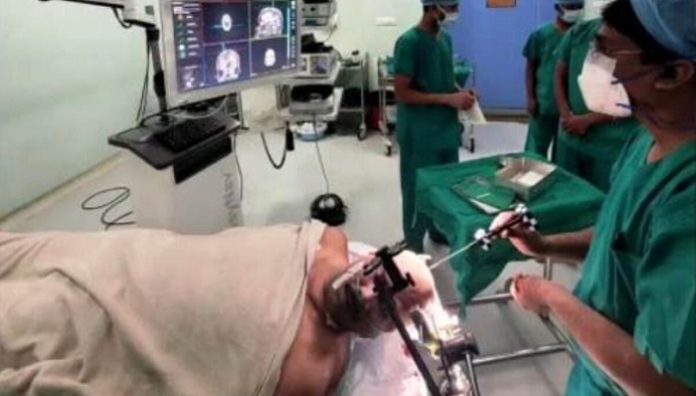
Solaris hospital, Thane has carved a niche in Navigation Guided Brain and Spine Surgeries by introducing artificial intelligence (AI) driven Neuro- Navigation technology for the first time in Thane. Through this technology, Magnetic Resonance Imaging (MRI) or Computerized Tomography (CT) scans of patients can guide intraoperatively in real time for brain and spine surgeries towards effective clinical outcomes, safety and medical management. โ€œNeuro- Navigation technology is today playing a pivotal role in medical management with such newer advances.

Just like Navigation helps pilot to find its path in dark sky in real-time, Neuro Navigation guides the Neurosurgeon for exact location of tumor, size, and extent, limitation of critical structures and also to minimize the size of craniotomy for Minimally Access Surgeries (MAS), informs Dr. Amit Aiwale, Neurosurgeon, Solaris Hospital, Thane. Solaris Hospital and Dr. Amit Aiwale is the first in Thane to introduce this technology in spine surgeries where CT guided Navigation is used for putting screws and implants in the spine.

This improves accuracy and precision of the surgeon. Dr Amit Aiwale further explains that Neuro Navigation is the future wherein precision surgeries are in demand. Latest technologies like Neuro Navigation by the surgeons should be adapted for better patient outcome and satisfaction. โ€œThe benefits of computer Navigation Guided Brain and Spine Surgery include increased precision, enhanced safety, improved visualization, minimized radiation exposure and enhanced training and education,โ€ Dr Amit Aiwale explains about the USP of the technology. Increased precision implies that the technology allows for highly accurate targeting and placement of surgical instruments, minimizing the risk of damage to critical structures and improving surgical outcomes.

Enhanced safety implies that the surgeons can navigate through complex anatomical structures with confidence, reducing the potential for complications and minimizing the invasiveness of the procedure. Improved visualization implies that the 3D virtual models and real-time imaging provide detailed and comprehensive visualization of the surgical site, aiding the surgeon’s decision-making process. Minimized radiation exposure implies that the computer navigation reduces the need for intraoperative imaging, reducing radiation exposure for both the patient and surgical team. The technology can be used for training purposes, allowing surgeons to simulate procedures and develop their skills in a controlled environment.

However, it is to be noted that computer navigation guided surgery is a tool that complements the surgeon’s expertise and does not replace their judgment and skill. The surgeon remains in control of the procedure, using the navigation system as a valuable aid to improve surgical accuracy and patient outcomes. How computer navigation guided brain and spine surgery works in a step by step manner is illustrated below. Preoperative Imaging: Before the surgery, the patient undergoes imaging scans such as MRI or CT scans. These scans provide detailed images of the patient’s brain or spine, allowing the surgeon to identify the target area and any abnormalities that need to be addressed.

Key Highlights
Image Registration: The imaging data is then loaded into the computer navigation system. The software matches the patient’s actual anatomy with the images from the scans, creating a three-dimensional (3D) virtual model of the patient’s brain or spine.

Reference Frame/ Point Placement: To establish a reference point, a frame with reflective markers or a specialized device is attached to the patient’s head or spine. These markers allow the computer system to track the patient’s movements during the surgery and accurately correlate them with the preoperative images.

Real-Time Tracking: Once the surgery begins, the computer navigation system tracks the position and movement of surgical instruments and the patient’s anatomy in real-time. Specialized tools, such as infrared cameras or electromagnetic tracking systems, are used to monitor the position and orientation of instruments relative to the patient’s anatomy.

Surgical Guidance: The surgeon can visualize the patient’s anatomy, including the target area, surrounding structures, and critical landmarks, on a computer screen or a head-mounted display. This visualization helps the surgeon navigate precisely and avoid vital structures during the procedure.

Intraoperative Updates: During the surgery, the navigation system continuously updates the virtual model based on the tracked movements and instruments’ positions. This ensures that the surgeon has up-to-date information about the current state of the patient’s anatomy, even if there are minor changes or shifts during the procedure.

Verification and Validation: Throughout the surgery, the surgeon can validate the accuracy of their instrument’s position and orientation by referencing the virtual model and comparing it to the real-time imaging provided by the navigation system. This verification step ensures that the surgical plan is followed accurately.


How Medical Expertise Elevates Aesthetic Treatments in Leading Clinics

How Medical Expertise Elevates Aesthetic Treatments in Leading Clinics

Do you wish to look your best, but desire a more professional and reputable approach than what is available at most spa services? Medical aesthetic treatments offer the safest, most tailored results when done in expert hands. By combining highly advanced medical knowledge with cutting-edge equipment and techniques, leading medical clinics can offer elevated standards of care for any number of aesthetic concerns. From sun damage to skin irregularities or facial wrinkles, discover how top-rated clinics elevate the level of service for each client’s individual needs!

Personalized Treatment Plans

If you’re looking for a personalized treatment plan, you may want to consider visiting an aesthetic clinic. These clinics employ highly trained medical professionals who understand that each client has unique needs. They will take the time to listen to your concerns and develop a personalized treatment plan that addresses your specific needs.

Do you own an aesthetic treatment clinic yourself and want to have the right products at hand when a customer requests a custom treatment? Well, for people who are looking to stimulate natural collagen production, for example, you might want to offer treatments such as dermal fillers. In this case, you can buy Sculptra online, as well as other brands, for your clinic and ensure that you’re always stocked with the latest and most effective products. Overall, these plans ensure that clients receive optimal results, so it’s worth considering when looking for an effective solution to aesthetic concerns.

Usage of State-of-the-art Tools and Techniques

Keeping up with the latest technology and techniques is crucial for any successful medical aesthetic clinic. The top clinics in the industry know this and are always looking for ways to improve and innovate. Not to mention, they are able to provide their clients with the best possible results. Whether it’s a laser treatment or a new facial technique, these clinics are constantly researching and updating their methods to ensure that their clients receive optimal outcomes.

The use of state-of-the-art equipment and procedures ensures that the treatment is safe and effective. With technology advancing at a rapid pace, it’s essential for medical aesthetic clinics to stay ahead of the game and provide clients with the latest and most advanced treatments.

Expertise in Handling Medical Complications

Many people turn to medical aesthetic clinics that have licensed medical professionals on staff. These clinics are equipped to handle any medical complications that may arise during or after a treatment, giving clients peace of mind knowing that they are in good hands.

The experts working at these clinics have years of experience and extensive knowledge, allowing them to quickly address any issues and ensure a safe and successful outcome for their clients. So, if you’re looking for a beauty treatment but want the assurance of safety, a medical aesthetic clinic might be just what you need.

Extensive Training and Education

Medical aesthetic professionals are some of the most highly trained and educated individuals in the healthcare industry. These professionals undergo extensive training to achieve the necessary skills and knowledge to carry out treatments safely and effectively. They are well-versed in the latest research, techniques, and products in the field of medical aesthetics, ensuring that they are always up-to-date with the latest advancements.

Through their dedication to their craft, medical aesthetic professionals have become highly skilled at providing a range of treatments that help patients look and feel their best. Without their extensive education and training, the field of medical aesthetics would not be able to provide the same level of care and expertise that is so essential to patient satisfaction.

Focus on Health and Safety

In an era of advanced technology, medical aesthetic clinics have become increasingly popular. But what really sets these clinics apart from others is their commitment to the health and safety of their clients. Rather than solely focusing on aesthetics, these clinics prioritize ensuring their clients are not put at risk of any infections or adverse reactions. This is achieved by strictly adhering to regulations and guidelines governing the sanitation and sterilization of all equipment used during treatments. By doing so, medical aesthetic clinics instill confidence in their clients and demonstrate their commitment to providing a safe and healthy environment.

Holistic Approach

At leading medical aesthetic clinics, the focus is not just on physical appearance but on overall well-being. These clinics take a holistic approach to treatments, recognizing that good health goes beyond just the surface level. As such, they offer a range of services aimed at improving the health and wellness of their clients.

In addition to traditional aesthetic treatments, these clinics also provide nutrition counseling and stress management techniques to ensure their clients are taking care of their bodies both inside and out. A holistic approach to healthcare is key, and these clinics are leading the way in prioritizing comprehensive well-being for their clients.

Medical aesthetic treatments in a professional clinical setting offer a higher standard of care, compared to traditional spa services. These clinics set themselves apart with their personalized treatment plans, use of advanced technology, capacity to handle medical complications, commitment to continuous professional education, prioritization of health and safety, and a holistic approach to patient well-being.

When seeking aesthetic treatments, consider these factors and choose a top-tier medical clinic that can ensure you receive the safest, most effective, and most satisfying results. The difference lies in the fusion of high-level medical expertise with aesthetic sensibilities, creating a superior patient experience.

Zi.Care Partners with InterSystems to Accelerate Deployment of Digital Healthcare Solutions in Indonesia

Electronic medical record (EMR) systems provider, Zi.Care, plans to bolster its solutions through the use of InterSystems IRIS for Health โ€“ Indonesia Edition to accelerate its business growth.

JAKARTA, Indonesia, October 20, 2023 โ€“ย InterSystems, a creative data technology provider dedicated to helping customers solve the most critical scalability, interoperability, and speed problems, today announced a partnership with Indonesian electronic medical record (EMR) systems provider Zi.Care to provide expert services via theย InterSystems IRIS for Healthโ„ข โ€“ Indonesia Editiondata platform.

As part of the partnership, Zi.Care will sell the InterSystems IRIS for Health โ€“ Indonesia Edition data platform, named Zi.Care HUB and provide expert services to assist healthcare providers map, transform, and cleanse their electronic medical record (EMR) data for routing to the governmentโ€™s SATUSEHAT national integrated health data platform.

Zi.Care also plans to migrate its Zi.Care HIS EMR system to the InterSystems IRIS for Health data platform to accelerate product innovation. The company plans to create a premium Zi.Care HIS with advanced features such as medical device connectivity and data interoperability to centralise and streamline the healthcare provider and patient experience. It also plans to expand the patient engagement capabilities of its Zi.Care Mobile App.

With InterSystems IRIS for Health, Zi.Care will ease SATUSEHAT compliance for healthcare providers and give them aย repository of clean, normalized HL7ยฎ FHIRยฎ data for advanced analytics. Healthcare providers can connect the FHIR repository to medical devices, smart watches, mobile apps, insurance systems, and other data sources. Using data analytics, they can gain actionable insights to improve patient care, experience, engagement and streamline operations.

โ€œOur agreement with InterSystems will help Indonesia achieve the next digitization phase for all of our healthcare facilities,โ€ said Jessy Abdurrahman, CEO of Zi.Care. โ€œI believe it will be a game changer for the industry.โ€

โ€œWe need solutions like InterSystems IRIS for Health that can be deployed quickly and give back quickly,โ€ he said. โ€œCurrently, hospitals struggle to move to the next digitization phase and with InterSystems IRIS for Health, we can facilitate this transition and simultaneously deploy data analytics โ€“ such as bed occupation rates, average length of stay, and medications used โ€“ so they can see the benefits.โ€

By partnering with InterSystems, Zi.Care will be able to execute its business strategy more quickly. This includes adding another 170 hospitals to its 130-strong customer base this year. With the InterSystems IRIS for Health data platform, Zi.Care plans to better use its development resources and avoid interoperability and performance roadblocks that would otherwise slow its growth.

โ€œIt will make interoperability much easier,โ€ said Mr. Abdurrahman. โ€œConnecting with medical devices or health insurersโ€™ APIs one at a time would be resource and time-intensive. InterSystems IRIS for Health will preserve our development resources through integration with Zi.Care HIS.โ€

โ€œIn three to six months, we expect to offer more detailed clinical analytics and support in Zi.Care HIS using InterSystems IRIS for Health,โ€ he said. โ€œFor example, we could integrate our EMR data with genomics studies to unlock their full value.โ€

โ€œInterSystems is proud to partner with a dynamic EMR systems company like Zi.Care to accelerate its growth and help Indonesia achieve its health technology goals,โ€ said Luciano Brustia, Regional Managing Director, Asia Pacific at InterSystems. โ€œZi.Care has built an impressive customer base for its healthcare solutions, and we look forward to supporting the companyโ€™s rapid expansion.โ€

Learn more atย https://www.intersystems.com/sg/iris-satusehat/

High Global Reach Of Medical Drone Delivery Anticipated

The healthcare industry is experiencing prominent changes because of the rapid advancement of tech. Artificial intelligence- AI is already playing a pivotal role in drug delivery and is also utilised across the manufacturing sector. Digital health has quickly emerged as an essential part of the provision when it comes to specific medications and healthcare, particularly in light of the pandemic.

The ability of researchers to quickly and also affordably sequence genes has opened up potential of treatments for a wide range of illnesses that before had no prospect of improvement.

Although medicine delivery may look like a less exciting field for the application of technology, it is important to recognise that efficient transportation of treatments can indeed be a matter of life or death. The advent of drone delivery could have a significant impact onย particular regions across world, especially in areas where having medical treatments is hampered by the issues of reachingย regions that are remote as well as unconnected. Drones have the capacity to offer ease whileย delivering treatments and also enhance efficiency by means of automation, particularly in more prosperous nations.

Reaching out

The roll-out of drone delivery for drugs happens to be in a nascent stage. There is no doubt that today’s technology is not advanced enough to be the main method of transporting goods through major cities. However, once the technology is sufficiently capable, the demand for an delivery improvement will be met.

One clear example of a pressing need is the connection of regions, towns, as well as countries where it is impractical or too slow to reach rural areas using traditional methods of transportation. One notable step in this field is the work of a company that values itself as the world’s largest autonomous delivery system. It has effectively utilised its drone technology to deliver medical supplies in hard-to-reach regions across Africa.

This company recently collaborated with one of the biggest COVID-19 vaccine manufacturers to transport the COVID-19 jab to remote areas of Ghana. One of the biggest obstacles to the introduction of new vaccines across Africa is reaching rural areas. The challenges in facilities and distribution, majorly when a cold chain process is necessary to preserve the effectiveness of vaccines, largely contribute to this situation. The partnership enabled both the companies to conduct a comprehensive test of the entire supply chain, starting from a manufacturing facility in Europe and extending all through to a health post located in Ghana.

The process included transporting the vaccine on thermal shippers by air from Belgium to Ghana. Once in Ghana, the vaccines were sent to the remote centres of the company. After being logged and placed in ultra-low-temperature freezers, the company had the capability to deliver vaccines to the most remote health clinics in the country by way of autonomous planes. These aircraft come with thermal packaging to ensure the vaccines remain at the required temperature all through the delivery process.

The testing

The benefits of using drone delivery are not limited to countries with remote, rural areas. The world’s largest companies are keenly interested in effectively implementing drone delivery because of the significant practical simplicity it offers. One of the drone delivery service companiesย has recently entered into a partnership to establish a medical drone delivery operation in Ireland. The partnership plans to begin collaboration with healthcare facilities and other care providers in the latter part of 2023.

The objective is to collaborate with healthcare and pharmacy partners in South Dublin to establish a rapid medical delivery network that will integrate one company’s aircraft and automation technology with the healthcare logistics expertise of the other company, resulting in a fully automated and on-demand delivery system.

As per one of the partner companies, Ireland has been a favourable location for drone technology in Europe, serving as a thriving hub for future innovations and that they sincerely appreciate the collaboration they have had with regulators and are eagerly anticipating the upcoming steps in South Dublin.

There were several advantages that the partnership would bring. Firstly, the medical drone delivery service would help with reducing emissions by utilising electric planes. Additionally, it would skip ground traffic, ensuring quicker and better delivery. The implementation of automation would enable cost-effective delivery of small items. Lastly, patients would benefit from reduced wait times, improving their overall experience.

Worldwide drone delivery network

The rapid expansion of drone delivery is currently taking place on a global scale. Last year, an announcement was made that cancer drugs would be transported by air from Portsmouth, UK, to St. Mary’s Hospital on the Isle of Wight, which is located across the water from Ireland. The Isle of Wight is not connected to mainland England by a bridge, which makes it much faster to transport treatments using drones instead of conventional techniques. According to the company that provided the drones for the tests, the time frame for delivery would be decreased from four hours to just 30 minutes.

It is well to be noted that there is an influx of funding going towards start-ups in this particular field. This is in contrast to the overall trend where capital has been scarce in other start-up sectors like biotech. Given the evident funding and benefits associated with drone delivery, the issue at hand is not whether this method of shipment will be adopted but rather when it will be formally implemented.

Continuing Medical Education Online: The Role of Online Platforms in Continuing Medical Education for Physicians

Introduction

Continuing medical education (CME) refers to ongoing training and development opportunities that allow practicing physicians and other clinical professionals to maintain and enhance their knowledge and skills. CME is required for clinicians to keep their licenses current and stay up-to-date on the latest advancements in their field.ย 

With the rapid pace of change in healthcare, CME has become increasingly important for ensuring physicians provide quality patient care based on current standards, guidelines, and evidence-based practices.ย 

Traditionally, CME took place through in-person conferences, seminars, workshops, and courses. However, online CME offerings have proliferated with the advancement of technology and telemedicine. Interactive online platforms are now playing a major role in delivering more flexible, cost-effective CME options to clinicians. This has expanded access and removed geographical barriers that previously limited CME participation.

This article will provide an overview of the relevance and effectiveness of online platforms for continuing medical education. Key topics covered include the role of telemedicine, interactive online CME, e-learning, accredited CE, and strategies for designing impactful online CME programs. The goal is to summarize current trends and evidence on how online platforms can enhance ongoing learning and development for physicians through CME.

The Relevance of Telemedicine in Continuing Medical Education

Telemedicine refers to the use of electronic communications and software to provide clinical care and services remotely. It allows physicians to evaluate, diagnose, and treat patients using technology like video conferencing, digital imaging, and wireless tools. Telemedicine has become especially relevant for continuing medical education (CME) in recent years.ย 

For example, Advanced Cardiovascular Life Support (ACLS) courses are now commonly offered online. ACLS covers advanced emergency procedures for patients experiencing cardiac arrest or other cardiovascular emergencies. Taking ACLS renewal courses regularly is an important CME requirement for physicians. Online and blended ACLS learning options give clinicians more flexibility to maintain this critical certification.

Other telemedicine technologies like remote monitoring and electronic consults are also transforming CME delivery. They enable specialized training and mentoring that transcends geographical boundaries. However, some disadvantages include tech challenges and reduced personal interactions. Overall, telemedicine provides more accessible and affordable CME opportunities to improve public health.

Interactive Online Continuing Medical Education

Interactive online CME refers to learning activities and programs delivered through technology that allows for active participation and engagement. This facilitates dynamic learning through practices like question prompts, case-based exercises, simulations, and discussions. Studies show interactive online CME courses lead to better outcomes like improved knowledge, skills, and practice behavior changes among clinicians compared to static online learning

Despite the advantages, physician perceptions of online CME have been mixed. While some appreciate the convenience and flexibility, others express doubts about the depth and impact.ย 

However, research indicates that interactive online CME can be just as effective as in-person delivery. In one study, emergency physicians who completed an online course retained knowledge and skills for tracheal intubation equally well as those who were trained in person. Further, learners tend to report high satisfaction levels with well-designed interactive online CME.

The Effectiveness of E-Learning in Continuing Medical Educationย 

E-learning refers to education delivered electronically through web-based courses, digital content, and virtual instructor-led training. It provides an alternative to traditional classroom CME activities. Studies show e-learning can improve knowledge retention and lead to positive changes in clinical practice.

For example, a randomized trial published in JAMA found that a web-based continuing education course significantly improved family physicians’ knowledge and clinical practice related to chronic pain management. Remote learning was equally as effective as on-site training.

Other benefits of e-learning include flexibility, scalability, and cost savings. Clinicians can access online CME on their own time, across geographies, and individually or in groups. However, challenges like technical issues, hidden costs, and difficulty evaluating impact remain. Overall, e-learning allows broader and more consistent access to CME, leading to improved patient care.

Accredited Continuing Education (CE) and Online Platforms

Accredited CE refers to CME activities that are reviewed and approved by accrediting bodies, indicating they meet certain educational standards. Accreditation aims to promote high-quality, evidenced-based education for clinicians. CE credits are tied to licensure and certification requirements.ย 

Online platforms have made accredited CE more accessible by delivering certified courses directly to clinicians. This expands opportunities for ongoing learning and professional development from anywhere. Over 60% of college students now take accredited courses online.

However, strategies are needed to ensure online CE offers equivalent rigor and effectiveness as in-person instruction. Careful instructional design, interactive elements, learner assessments, and user feedback help. But coordinated efforts between accreditors, education providers, and regulators are also key to upholding standards.ย ย 

Overall, online platforms allow broader access to accredited CE and instill a lifelong learning mindset. But work is still needed to optimize their educational quality and impact.

Designing Effective Online CME Programs

Several key steps are involved in developing impactful online CME programs:

Needs Assessment – Assessing learners’ knowledge gaps and practice-based needs is crucial for identifying relevant learning objectives. This can be done through surveys, interviews, focus groups, and reviewing performance data.

Targeted Learning Objectives – Objectives should be specific, measurable, achievable, relevant, and time-bound. Aligning them with identified needs promotes meaningful outcomes.

Instructional Design – Applying evidence-based principles like active learning, spaced repetition, and varied formats enhances engagement and retention.

User Experience – The platform interface, navigation, media use, and accessibility require testing and refinement.ย 

Evaluation – Pre/post-tests, feedback surveys, analytics, and qualitative insights should be used to gauge program effectiveness and areas for improvement.

Following proven design and evaluation methods is key to creating online CME that bridges clinical knowledge and performance gaps efficiently.

Conclusion

Online platforms are transforming continuing medical education for physicians and other clinicians. Telemedicine, interactive online courses, e-learning, and accredited CE delivered digitally provide more flexible access to impactful CME activities.

Research shows online CME offerings can be as effective as traditional in-person instruction for improving knowledge, skills, and practice. However, careful instructional design and implementation based on adult learning principles are crucial to ensure quality outcomes.ย 

While some clinicians have reservations, studies indicate high satisfaction and engagement among many users of online CME. Going forward, technology and education leaders must continue collaborating to enhance platform capabilities, data security, and user experience.

Overall, online CME facilitated through innovative platforms has enormous potential to help physicians keep pace with changes in healthcare and strengthen delivery of evidence-based care. But maintaining rigorous standards and educational efficacy will be imperative as these technologies continue evolving.

Why Is Data Governance in Healthcare Important?

Access to digital information plays a significant role in decision-making. This is true in many industries, including healthcare. Healthcare organizations that use their information strategically can create a competitive edge in the marketplace. Strategic objectives include improving operational efficiency, reducing costs, or enhancing the safety and quality of patient care. The common thread among these initiatives is data collection, comprehensive analytics, and meaningful insights. This all adds up to the need for data governanceโ€”the implementation of any process, standard, or protocol meant to keep data secure, accurate, and useable.

Data governance in healthcare

Data governance in healthcare requires an organization-wide commitment to establishing a framework to properly manage protected health information throughout its lifecycle, for instance, from the moment the patientโ€™s information is entered into the database until after they have been discharged. Effective data governance represents a unifying process that allows healthcare organizations to maintain complete control of the data they collect from their clients and patients. The goal is to extract the most significant information from the data while minimizing the inherent risks of storing personal information within internal and external databases.

According to the American Health Information Management Association (AHIMA), another key purpose of data governance is to establish an organizational culture that ensures data security, reliability, and availability to those with access to it. Despite its importance, data governance remains challenging for many organizations to implement and achieve as the use of electronic health records (EHRs) increases, according to AHIMA.

The direct and indirect benefits of supporting a governance program are evident. They include consumer data protection, standardized methods for collecting, processing, and storing data, and the elimination of data redundancies and duplicated data through formalized policies. Data governance also can increase data quality, security, and compliance and reduce costs to manage data.

The data governance process

Taking a calculated approach to developing protocols is the best way to achieve the various benefits of a governance strategy. To optimize success from the start, itโ€™s important to decide the roles and responsibilities of all stakeholders across the organization and to communicate how data will be shared and disseminated.

AHIMA suggests that the first step in any healthcare data governance plan or program is to explain the scope of data and its governance. The basic framework for the collection, retention, use, accessibility, and sharing of healthcare data should be decided by a management team tasked with overseeing data governance in conjunction with an appointed chief data officer (or similar professional) and chief medical information officer.

To foster an environment based on best practices, organizations can:

  • Identify who will โ€œownโ€ collected data. Itโ€™s essential for organizations to determine who will be granted access to data and be authorized to put it to use. Lack of accountability in data ownership and an absence of training on specific data governance processes leads to inconsistent procedures and poor data quality. Other implementation obstacles to avoid include having too many data stewards and inconsistent governance regulations across the organization.
  • Begin with a smaller amount of collectible data. By focusing on smaller datasets, organizations gain more meaningful insights and ultimately produce data thatโ€™s more likely to be of higher quality. To put that notion into perspective, AHIMA defines data quality and integrity as โ€œthe extent to which healthcare data are complete, accurate, consistent, and timely throughout its lifecycle, including collection, application (including aggregation), warehousing, and analysis.โ€
  • Measure the programโ€™s success. AHIMA also suggests a 10-point list of traits to assess a governance program, including accuracy, accessibility, consistency, granularity, relevancy, and timeliness.

Legal and regulatory considerations

Not coincidentally, as the amount of new data created daily increases, data management becomes more challenging. According to Earthweb.com, a publication that specializes in data privacy, virtual private networks, statistics, gaming, social media, and cryptocurrency, โ€œ3.5 quintillion bytes of data is created every day.โ€ In addition to an organizationโ€™s internal data governance policies, companies must adhere to various data collection regulations. Examples of such regulations include those covered within the Health Insurance Portability and Accountability Act, the Federal Risk and Authorization Management Program, and the Childrenโ€™s Online Privacy and Protection Act.

The future of data governance in healthcare

According to Armon Petrossian, chief executive officer and co-founder of the data processing tool Coalesce, data transformation remains largely siloed within most companies. There are a number of warning signs that should lead organizations to implement changes to philosophy. When IT teams donโ€™t fully understand the needs of individual departments within the organization for which they are collecting and transforming data, it can result in the creation of โ€œrogueโ€ data pipelines or transformation processes that interfere with governance policies. An additional challenge is poor visibility of various data-related projects organization-wide. To avoid this situation, Petrossian suggests that all organizational data be stored and transformed on the same consistent platform. Finally, distinct teams should be provided with specific details of the data warehouse that are relevant to their work to allow for security concerns to be carefully monitored.

Consider these strategies to gauge how best to implement the data governance process in an organization. Petrossian urges for a more collaborative and transparent approach across industries to build a bridge between the gap between the validity of data and the tools available to maximize the value of data. When conducted appropriately, data governance can provide a formal structure for data management so that organizations can extract clinical and business value, giving caregivers and leadership vital access to the most accurate information. When performed at the right time and in the correct format, data governance can improve the effectiveness of patient care, help providers deliver more patient-centric care, and assist healthcare organizations in preparing for an uncertain future.

Singapore Sets Digital Platform For Mental Health Inclusion

The Ministry of Health Office for Healthcare Transformation in Singapore is as of now coming up withย a digital platform. This platform aims to enhance the incorporation of mental health support services offered by more thanย 450 health and social service agencies across the country.

The Digital Mental Health Connect- DMHC platform will help with the seamless referral of patients or clients between clinicians as well as counsellors across various health and social care settings. It is well worth noting that individuals will be directed to the best-suited services according to their requirements, choices, as well as the level of risk.

The objective of this platform is to seamlessly integrate with current social and health case management systems, permitting easier care integration, cooperation, and, of course, data sharing.

The wider context

The setting up of the DMHC happens to be a component of larger projects and initiatives that were described in Singapore’s recently published National Mental Health and Well-being Strategy. The strategy that has been developed by the Inter-agency Taskforce on Mental Health and Well-Being has the final objective of creating an enabling mental health ecosystem.ย 

This ecosystem would allow individuals with mental health needs so as to seek help early without facing stigma and make sure that they receive the appropriate assistance for their recuperation.

The strategy focuses on four main parts so asย to support and also elevateย the mental health and wellbeing of the population.ย 

Singapore is executing a tiered care model as part of its strategy to improve mental health services. The approach aims to efficiently organise these services depending on the severity of individuals’ mental health requirements, which span throughout the health as well as social sectors. There are plans to develop a common IT platform and set up guidelines for offering mental health data in order to offer the required support in this area.

Furthermore, the forthcoming National Mental Health Office will be responsible for overseeing the execution of the plan. As part of this role, they will create a framework for evaluating existing as well as emerging digital mental health solutions. This will go on to assist the office in approving and regulating appropriate solutions, taking into account their affordability, safety, and long-term viability elements.

On Record

The National Mental Health and Well-Being Strategy aims to address mental health issues fully and inclusively. It will focus on preventative as well as curativeย approaches, aimed at schools, communities, along with workplaces. The Singapore Ministry of Health defined in a statement that a comprehensive approach involving all sectors of society must be taken to address mental health issues while improving the mental well-being of theย population.

GE HealthCare gets $44M to create AI for mass casualty event preparedness

GE HealthCare gets $44M to create AI for mass casualty event preparedness

GE HealthCare announced it signed a $44 million contract ย with the Biomedical Advanced Research and Development Authority (BARDA)โ€”part of the Administration for Strategic Preparedness and Response (ASPR) within the U.S. Department of Health and Human Services (HHS)โ€”to develop and obtain regulatory clearance for next-generation advanced point-of-care ultrasound technology with new artificial intelligence (AI) applications. Technology resulting from this jointly funded program will help healthcare professionals at all skill levels rapidly diagnose and provide timely treatment for patients with lung pathologies and traumatic injuries to the abdomen, chest and head.

Trauma is a leading cause of death in the United Statesย ย posing an enormous burden to healthcare systems and society. Trauma patientsโ€™ survival is dependent on receiving timely and appropriate care. Injury detection and triage of trauma patients play key roles in successful patient care and resource management, both in everyday situations and in mass casualty events. Technologies that expedite care, including detection, evaluation, and decision-assist capabilities, potentially increase patientsโ€™ chances of survival.

โ€œPoint-of-care ultrasound is an essential tool in emergency situations to help clinicians quickly get the answers they need when treating patients,โ€ said Roland Rott, President and CEO, Ultrasound, GE HealthCare. โ€œWe are grateful and excited for the opportunity to partner with BARDA to contribute our expertise in ultrasound and AI applications to develop innovative solutions for identifying a range of traumatic injuries and lung pathologies. Our collaboration has the potential to enhance the ability of clinicians to provide timely care for trauma patients even in the most dire scenarios.โ€

As part of the collaboration with BARDA, GE HealthCare will build new technology to expedite trauma triage and treatment, potentially transforming the standard of care. GE HealthCare will build upon its existing point-of-care ultrasound technology portfolio to develop an advanced probe and ultrasound system together with novel AI technology to ease acquisition and interpretation of ultrasound exams for users of all skill levels, thereby increasing the number of capable users and making delivery of care more efficient. The proposed devices will cover indications for multiple injury types: blunt and penetrating trauma, head trauma, lung injuries (including blast lung), as well as multiple lung pathologies encountered outside trauma care such as those seen in infectious diseases.

โ€œGE HealthCare has been a leader to bring ultrasound to the emergency department and has a strong presence at the point of care with both traditional and handheld ultrasound systems,โ€ said Dietmar Seifriedsberger, Global General Manager, Point of Care and Handheld Ultrasound, GE HealthCare. โ€œWorking with BARDA is another step toward realizing the enormous potential of ultrasound technology to help hospitals increase preparedness for mass casualty events, including a range of traumatic injuries and lung pathologies, as well as help improve treatment decision-making and enhance patient care.โ€

GE HealthCare will develop technology and AI applications to be compatible with select point-of-care ultrasound systems from its product portfolio to facilitate rapid assessment of patients across a wide range of environments and care settings.

Google Cloud Debuts Industry Specific Generative AI for Manufacturing, Healthcare

Connecting two of the hottest trends in the enterprise-tech world, Google Cloud is rolling out industry-specific generative artificial intelligence (GenAI) solutions for healthcare and for manufacturing to help customers not only boost productivity but also transform themselves for the digital age.

Claiming that โ€œ82% of organizations considering or currently using gen AI believe it will either significantly change or transform their industry,โ€ Google Cloud offered five use cases that can help manufacturing companies transform themselves to meet the demands of a turbulent and increasingly digital marketplace.

GenAI Use Cases in Manufacturing
Machine-generated events monitoring. Hereโ€™s the key excerpt from the Google Cloud blog post: โ€œGen AI can play a key role in transforming maintenance workflows and staying one step ahead with predictive maintenance. It helps manufacturers optimize operations by interpreting telemetry from equipment and machines to reduce unplanned downtime, gain operating efficiencies, and maximize utilization. If a problem is identified, gen AI can also recommend potential solutions and a service plan to help maintenance teams rectify the issue.โ€

Customer-service automation. Google Cloud says that manufacturers are finding that GenAI โ€œprovides a helpful, value-added customer service experience that automates and accelerates time-to-resolution for common interactions like product troubleshooting, ordering replacement parts, scheduling service, product information, and product operation.โ€

Document search and synthesis. โ€œGen AI can quickly sift through generations of documents throughout the product lifecycle, extracting and summarizing the information needed by sales teams and technicians,โ€ the blog post says. โ€œAnd it can synthesize purchase orders and quickly provide customers a quote, eliminating the need for sales teams to manually cross-reference emails with inventory availability.โ€

Product/content catalog discovery. Highlights from the blog post: โ€œGen AI-enabled sales applications can provide sales recommendations based on historical sales data, in-stock data, master data, and moreโ€ฆ. Results could be combined with more descriptive statistics on sales data joined with meta-information that is uploaded by sales agents, giving a clear visibility into the buying process.โ€

Supply-chain advisor. โ€œGen AI can act as a supply chain advisor, providing greater visibility across complex networks and delivering recommendations for best-suited suppliers based on relevant criteria โ€” such as bill of materials specifications, raw material availability and delivery schedules, or sustainability metrics,โ€ according to the blog post. โ€œAdept at extracting provisions using natural-language processing from legal and contractual documents, it can deliver real-time insights into supply chain performance to help improve decision-making.โ€

Healthcare: AI Helping Reimagine Worldโ€™s Largest Industry
A separate Google Cloud blog post about its healthcare innovations gets right to the point about the incredibly strategic role GenAI has assumed in the largest industry on Earth: โ€œIn healthcare, AI is the most exciting technology we are working on today,โ€ says the opening line. โ€œFrom assisting clinicians with documentation, to streamlining operations, to accelerating medical research, to helping doctors detect diseases earlier, this remarkable technology holds the potential to reshape our world and promote healthier, more fulfilling lives.โ€

Industry-specific search for healthcare. Google Cloud has launched Vertex AI Search for healthcare because workers at all levels in that field โ€œoften struggle to find insights in clinical data across structured and unstructured data stores. Unstructured data such as patient notes and scanned documents, is particularly hard to search, and itโ€™s easy to miss critical information. Moreover, you need expert clinical knowledge to know what data is even pertinent. These challenges make it hard to connect the dots and get the information necessary for quality patient care. What if technology could quickly bring all of the most relevant information and insights to clinicians?โ€

Who wouldnโ€™t love a tailored and elegant โ€œhealthcare experienceโ€? While the capabilities of modern healthcare organizations are remarkable, that level of quality rarely translates over to what we might call the customer experience or, more precisely the โ€œpatient experience.โ€ So Google Cloud customer Highmark Health set out to deliver healthcare experiences โ€œmore like what youโ€™d expect from a retailer, with a seamless, frictionless customer journey across online, mobile, and in-person experiences.โ€ Called Living Health, the new model from Highmark Health โ€œis exploring ways to adopt the technology to increase internal productivity and proficiency, make information more easily accessible to users, and improve the experience for clinicians and members.โ€ Key technologies so far are Vertex AI, large language models, and other GenAI tools to personalize the experience for patients.

WELL Launches AI Decision Support for Improved Disease Diagnosis and Health Prevention

WELL Health Technologies Corp. a digital health company focused on tech-enabling healthcare providers, and its investee company, HEALWELL AI, are pleased to announce the launch of “WELL AI Decision Support”,ย a groundbreaking new service for healthcare providers. ย This partnership is the first major collaborative initiative between the two companies since the announcement of the Strategic Alliance Agreement onย October 3, 2023. Both companies view this as the beginning of a long-term, mutually beneficial partnership, with a shared vision and commitment to ongoing innovation.

Hamed Shahbazi, Founder and CEO of WELL commented, “We firmly believe the physician experience of the not-too-distant future will involve a number of safe, secure and helpful digital diagnostic tools that will better support healthcare providers in detecting acute and chronic diseases earlier.ย  The launch of ‘WELL AI Decision Support’ perfectly aligns with our core strategy to empower healthcare providers with transformative technology, enhancing their capacity to improve patient outcomes and promote preventative health.”

Dr.ย Michael Frankel, Chief Medical Officer of WELL, added, “The arrival of ‘WELL AI Decision Support’ marks more than just technological advancement; it’s a watershed moment in our pursuit of superior patient care. By harnessing AI’s potential, we are equipping healthcare professionals with tools that refine and elevate their practice. Each patient deserves individualized attention and precision in care, and this module is a step forward in realizing that vision.”

Dr.ย Alexander Dobranowski, CEO of HEALWELL AI, said, ” Our partnership with WELL is a strategic imperative in healthcare. The alignment between HEALWELL’s pioneering data science and WELL’s expansive clinical network underscores the strength of our collaboration. Together, with WELL’s robust healthcare software solutions, we are creating a synergy poised to redefine healthcare standards. This partnership amplifies our combined commitment to leveraging data science for healthcare applications, ultimately benefiting patients and healthcare providers alike.”

The ‘WELL AI Decision Support’ module is a groundbreaking solution that bridges a critical gap in healthcare diagnostics and patient care, heralding a new era of precision in healthcare delivery. WELL AI Decision Support leverages artificial intelligence (AI) technologies to enable the earlier diagnosis, treatment and improved quality of life for the patient. The technology behind WELL AI Decision Support has been meticulously developed by HEALWELL, in close collaboration with dedicated physicians, leading researchers, data privacy professionals, pharmaceutical companies, and other domain experts. This rigorous process of development and refinement has led to its validation in both Canadian and U.S. healthcare systems. WELL AI Decision Support is also a highly modular service that will be expanded with time.ย  Initially, the service enables healthcare providers to accurately identify over 110 complex or rare diseases often overlooked by traditional methods, providing hope to thousands of patients acrossย Canada.

‘WELL AI Decision Support’ is the second significant product release under the WELLHealth.ai program, following the successful “WELL AI Voice” module, and further exemplifies WELL’s unwavering commitment and leadership in delivering effective AI solutions in healthcare. WELL AI Decision Support is featured on apps.health, WELL’s premium digital marketplace for EMR tools and applications.

Rare and complex diseases affect over 300 million patients worldwide, and inย Canada, 1 in 12 individuals lives with a rare disorder. What’s even more alarming is the substantial number of people who remain undiagnosed and unaware of their underlying conditions. For those who do exhibit symptoms, the journey to a correct diagnosis is an arduous one. On average, they consult 8 physicians, endure 2-3 misdiagnoses over a span of 4.8yrs before receiving an accurate diagnosis.

This partnership represents a significant win for HEALWELL, granting expansive channel access to healthcare providers. The launch of ‘WELL AI Decision Support’ module underscores the trust and validation of HEALWELL’s expertise within the industry. Both WELL and HEALWELL plan to continue to collaborate to combine their expertise and capabilities for more groundbreaking developments in the future.

Translate ยป