Close
Digital Health & Ai Innovation summit 2026
LiGHT26

GE Healthcare FDA Clearance For Allia Moveo Imaging System

GE HealthCare FDA clearance

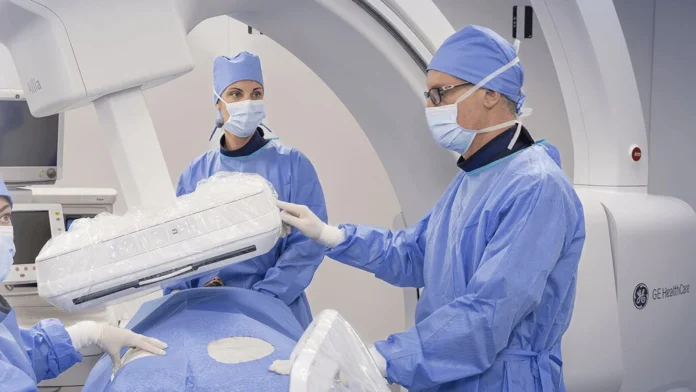
GE HealthCare FDA clearance marks a key regulatory milestone for the companyโ€™s Allia Moveo interventional imaging system, which has received both U.S. Food and Drug Administration 510(k) clearance and CE Marking. The approvals support wider clinical adoption of the mobile platform across interventional and surgical environments.

Allia Moveo is the latest member of GE HealthCareโ€™s Allia line and was announced at the Radiological Society of North Americaโ€™s 2025 annual meeting. Created for cardio, vascular, nonvascular, interventional, and surgical procedures, Allia Moveo merges a small form factor, cable-free C-arm with AI-assisted imaging and guidance technology.

GE HealthCare said that the system will free up space in interventional suites with its portability, quiet mobility system, and intuitive controls. These benefits aim to simplify workflows during minimally invasive procedures, which can involve numerous clinicians and imaging equipment.

The first global installation was completed at Hรดpital Marie-Lannelongue, a national reference center for complex aortic disease. The hospital plans to use the system for vascular and cardiology procedures, including cone-beam computed tomography imaging. Its wide-bore design and flexible table movement are designed to accommodate patients of varying body size and weight while improving access for care teams.

โ€œWith Allia Moveo, we had this opportunity to position the system very quickly in any working position that will adapt the best to us,โ€ said Stephan Haulon, head of the Aortic Center and Vascular Surgery at Hรดpital Marie-Lannelongue. โ€œOne of the major milestones of this new system is having access to the reconstruction of the cone beam CT with CleaRecon DL, which is AI driven and gives you much better image quality.โ€

GE HealthCare stated that the system was developed through close collaboration with clinicians as procedures become more complex and interventional suite space becomes more limited.

โ€œWith Allia Moveo, weโ€™re elevating the clinician experience, removing complexity, accelerating workflow, and enabling greater control during procedures,โ€ said Arnaud Marie, general manager of interventional solutions at GE HealthCare. โ€œWe are excited to collaborate with leading experts at Hรดpital Marie-Lannelongue on the first installation of this system, which is a defining step forward for care in the interventional suite, and a testament to our shared commitment to advancing meaningful innovation with the goal of supporting better outcomes for care teams and the patients they treat.โ€

Following the initial installation in France, Baylor St. Lukeโ€™s Medical Center became the first U.S. hospital to deploy the platform, extending GE HealthCare FDA clearance into clinical practice in the United States.

โ€œWe are honored to be the first hospital in the United States to install Allia Moveo, and proud to help advance the next generation of interventional care,โ€ said Brad Lembke, president of Baylor St. Lukeโ€™s Medical Center. โ€œThis innovative platform enhances how our clinicians navigate complex minimally invasive procedures by improving mobility, image clarity, and workflow efficiency. It strengthens our ability to deliver precise, patient-centered care while supporting our teams with technology designed for the evolving demands of modern interventional medicine.โ€

India-EU Free Trade Agreement Reshapes the MedTech Trade

IndiaEU Free Trade Agreement

India-EU Free Trade Agreement marks a major shift for pharmaceuticals and medical devices, reshaping trade flows, tariff structures, and long-term MedTech collaboration between India and the European Union. The deal expands access to healthcare products on both sides while setting the stage for deeper integration across global supply chains.

The deal opens access to the European Unionโ€™s USD 572.3 billion pharmaceuticals and medical devices market, giving Indian companies preferential or zero-tariff entry, while EU firms benefit from Indiaโ€™s tariff reductions on imported medical equipment.

Together, India and the EU represent close to a quarter of global GDP and serve a combined population of nearly two billion people. Announcing the deal, European Commission President Ursula von der Leyen said, โ€œWe did it, we delivered the mother of all deals,โ€ while Prime Minister Narendra Modi described the agreement as โ€œhistoricโ€.

Under the India-EU Free Trade Agreement, India will reduce or eliminate customs duties on around 90% of medical and surgical equipment categories. Tariffs that currently reach as high as 27.5% will gradually fall to zero, easing the cost burden on imported European technologies.

The moves will likely reduce the price of purchasing these advanced imaging devices such as CT scanners, MRI machines and ultrasounds along with critical-care gear and high-end diagnostics. These items already constitute a major portion of imports into India of medical technology products, especially those used in tertiary and quaternary care.

Hospitals and diagnostic networks are likely to see improved access to advanced equipment, while patients may benefit from wider availability of cutting-edge technologies and reduced capital expenditure pressures across healthcare systems.

At the same time, Indian manufacturers gain improved access to European markets. Tariffs of up to 6.7% on medical instruments, devices, and related products are set to be removed across more than 99% of applicable lines, strengthening the export outlook for Indian MedTech companies.

Rajiv Nath, Forum Coordinator, AiMeD, said, โ€œThe India-EU FTA must ensure a level playing field for India’s medical device manufacturers. With fair regulatory alignment and safeguards against predatory imports (especially from 3rd countries), this agreement can unlock high-value collaboration, boost domestic manufacturing, and support India’s ambition to become a top-five global MedTech hub. The goal should be mutual growth anchored in quality, transparency, and patient safety under an MRA(mutual recognition agreement) based on common ISO standards. We look forward to reviewing the fine print and the follow-on cooperation discussions.โ€

Pavan Choudary, Chairman, Medical Technology Association of India (MTaI), added, โ€œWe congratulate India and the European Union on concluding this landmark agreement, which is expected to open a new chapter in healthcare cooperation – where success will be measured not only in GDP, but in lives improved and savedโ€ฆ Most importantly for patients, any eventual tariff reductions on medical devices should help improve affordability and access to advanced therapies, making this agreement a potential example of how ethical and equitable trade can reinforce health systems on both sides.โ€

Signals from the industry and policy makers suggest new openings for Indian-made medical devices, consumables, lenses, spectacles and in-vitro diagnostics produced at hubs located in Gujarat, Maharashtra, Karnataka and Andhra Pradesh. Lowering the costs for in-vitro diagnostics firms, zero tariff access will make them more competitive in Europe if companies adhere to stringent EU regulations.

Siemens Healthineers Opens New โ‚ฌ10M R&D Centre in Ireland

Siemens Healthineers Opens New 10M RD Centre in Ireland

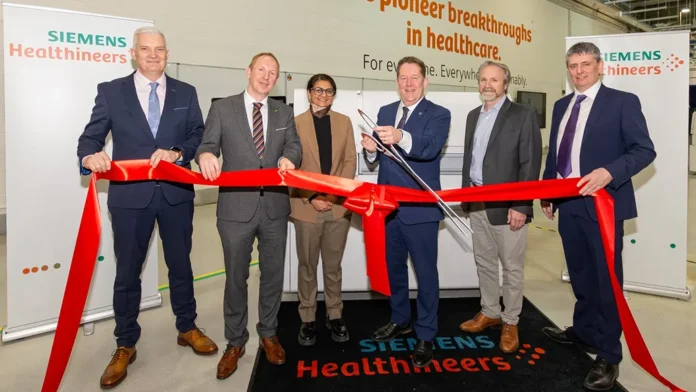
Siemens Healthineers opens new โ‚ฌ10M R&D centre in Ireland with the official launch of a new Centre of Excellence for Immunoassay Instrument Research and Development in Swords. The facility was formally opened by Darragh Oโ€™Brien, Minister for Transport, Climate, Environment and Energy, alongside Michael Lohan, CEO of IDA Ireland. More than โ‚ฌ10 million has been invested so far, with further funding planned to advance research activity and sustainability initiatives.

The new centre will focus on the creation of advanced laboratory devices used in the diagnosis of infectious diseases, cancer and blood disorders. It completes a number of years investment programme that commenced in 2023. The investment was supported by the Irish Government through IDA Ireland. The new purpose built site adjacent to existing manufacturing facilities further cements Irelandโ€™s position as a hub of global innovation in medtech and life sciences.

Since opening, the R&D centre has created more than 65 highly skilled engineering roles across software engineering, hardware design, bioscience, data science, systems engineering, and artificial intelligence. Teams based in Swords collaborate with global R&D colleagues, using advanced digital manufacturing tools and automation to meet growing demand for high-volume diagnostic testing.

A central focus of the work carried out under Siemens Healthineers opens new โ‚ฌ10M R&D centre in Ireland is the continued development of the Atellica family of instruments. These immunoassay and chemistry analysers are designed to improve flexibility, throughput, and precision in clinical laboratories, enabling faster turnaround times and more reliable diagnostic performance worldwide.

In addition to research activity Siemens Healthineers has also been granted a training and development award from IDA Ireland. The organisation will be implementing a multi-million euro upskilling programme over the course of the next three to five years. The scheme aims to enhance skills in advanced engineering, operations and leadership throughout the company.

Minister for Climate, Energy and the Environment, Darragh Oโ€™Brien TD, said: โ€œI am delighted to join Siemens Healthineers in unveiling this state-of-the-art R&D centre. The innovations and products developed here in Ireland will have a truly global reach, reflecting the strong culture of collaboration between industry, research and talent that we are proud to support.โ€™โ€™

โ€œThe completion of this new Centre of Excellence in Swords by Siemens Healthineers marks a significant milestone for Irelandโ€™s medtech sector,โ€ states Michael Lohan, CEO of IDA Ireland. โ€œThis state-of-the-art facility reinforces our position as a global hub for innovation in diagnostics and life sciences. IDA Ireland is proud to support this strategic investment, which brings high-value employment and cutting-edge research to the region, while strengthening Irelandโ€™s reputation for excellence in advanced manufacturing and R&D.โ€

โ€œFor nearly 60 years, this site has delivered world-class diagnostic instruments to hospitals and laboratories globally,โ€ states Patrick Grimes, global head of hardware engineering R&D for Siemens Healthineers Diagnostics. โ€œNow, by aligning research and development with production under one roof, we are accelerating the pace of discovery and delivery. This centre is a symbol of our commitment to shaping the future of diagnostics where science, technology, and human ingenuity come together to improve lives globally.โ€

Siemens Healthineers Wins FDA Clearance for PET/MR Scanner

FDA Clearance for PETMR Scanner

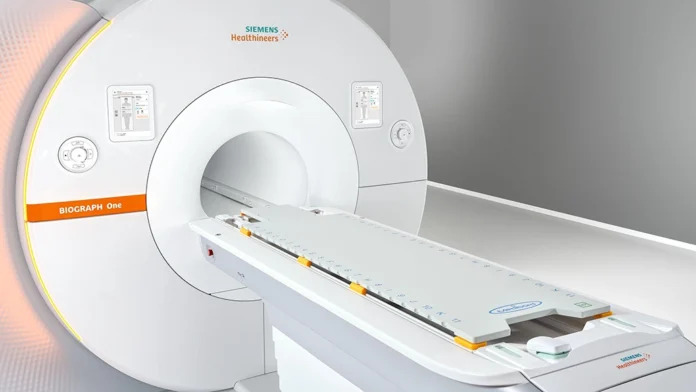
Siemens Healthineers FDA clearance for PET/MR scanner marks a significant step in advanced hybrid imaging, with the company receiving regulatory approval for its second-generation Biograph One PET/MR system.

The newly cleared PET/MR scanner enables simultaneous imaging of organ structure, function, and cellular metabolism. According to Siemens Healthineers FDA clearance for PET/MR scanner documentation, this dual-modality approach can support more precise tumour localisation, metabolic assessment, and treatment response monitoring, strengthening theranostics in personalised oncology care.

Siemens Healthineers said studies also suggest PET/MR could play a growing role in neurodegenerative disease assessment. Emerging drug therapies for conditions such as Alzheimerโ€™s disease rely on PET imaging for diagnostic confirmation, while MR imaging is used to monitor therapy-related side effects.

Biograph One builds on the companyโ€™s first PET/MR platform, Biograph mMR, introduced in 2011. The second-generation system delivers faster image acquisition and more efficient workflows compared with earlier PET/MR scanners, while reducing patient scan times by up to 50 percent.

The system integrates PET and MR into a single workflow, addressing operational challenges associated with hybrid imaging. Siemens Healthineers said whole-body PET/MR exams, which traditionally exceed 60 minutes, can now be completed in under 30 minutes, enabling radiology departments to support twice as many patients.

The PET component is derived from the Biograph Vision PET/CT platform, using lutetium oxyorthosilicate detectors and a 35 cm axial field of view to reduce bed positions and accelerate whole-body imaging. MR technology is based on the Magnetom Vida 3 Tesla system, supporting high spatial resolution and flexible dose administration.

Several AI-driven features are embedded into the platform. The MyExam Companion interface automates scanning workflows for technologists, while Deep Resolve Boost image reconstruction accelerates acquisition, reduces noise, and improves image sharpness. BioMatrix Contour XL coils and an integrated BioMatrix Position Sensor further reduce setup time and technologist exposure.

โ€œOver the past few years, we have seen a fundamental shift in personalized medicine. This shift has been driven by new drug developments, theranostics, and advances in technology, accompanied by a surge in the diagnosis of cancer and neurological diseases, especially Alzheimerโ€™s disease,โ€ said Katie Grant, head of Magnetic Resonance at Siemens Healthineers North America. โ€œPatients experience a long, arduous pathway to answers and treatment. The Biograph One is the culmination of over a decade of experience in harnessing the diagnostic power of these two imaging worlds into one single modality, resulting in one truly patient-centric pathway for every single patient.โ€

Why Dual Licensing Matters in Mental Health: Trish Schnabelโ€™s Insights

Dual licensing in mental health

As the need for more comprehensive, accessible, and efficient mental health care continues to grow, dual licensing is emerging as a strategic way to meet these demands. Mental health professionals who obtain more than one license are uniquely positioned to offer broader, more integrated services to their clients. As highlighted by Trish Schnabel, the advantages extend beyond individual sessionsโ€”rural communities, overburdened health systems, and collaborative treatment environments all benefit from professionals who bring a versatile, cross-disciplinary skill set.

Dual Licensing in Mental Health

Dual licensing in mental health refers to a professional holding two separate licenses that allow them to practice in more than one area of mental health care. This can include combinations like a marriage and family therapist who is also a licensed clinical social worker or a substance use counselor who is also a psychologist. These credentials enable professionals to address a broader range of mental health concerns.

These dual credentials are focused on individual practitioners, not facilities or organizations. Someone with dual licensing has met the requirements for education, experience, and examination in multiple specialties, which means they are qualified to work across different treatment settings.

How Dual Licensing Expands Provider Capabilities

When a mental health professional holds more than one license, their ability to meet various client needs is boosted immensely. A dual-licensed clinician can assess and treat a wider spectrum of psychological and behavioral issues, making them especially effective with clients experiencing co-occurring conditions.

A psychologist who is also licensed in substance use counseling, such as those working in dual-diagnosis clinics, can support someone navigating anxiety and opioid dependence without needing to refer them elsewhere. This broader scope of practice helps streamline care. Rather than coordinating between two or more providers, clients can work with someone who understands the full context of their challenges.

Benefits for Clients and Communities

Clients benefit most when they can access care that meets all their needs in one place. A dual-licensed mental health professional can offer that, reducing the burden of juggling appointments with different specialists. This is especially helpful in situations where mental health symptoms are closely tied to substance use, trauma, or family dynamics. The ability to address interconnected issues in a unified manner can also lead to improved treatment adherence.

In many rural areas, there are fewer providers available, and waitlists for specialized services can be long. Dual-licensed professionals help close that gap by bringing multiple skill sets to one role. Through telehealth, they can also reach clients in remote regions who might otherwise go without care. This versatility doesnโ€™t just help individualsโ€”it strengthens the entire community by expanding access to timely and appropriate mental health support.

Educational and Training Pathways

Pursuing dual licensure requires a considerable investment of time and effort. A professional might complete two separate graduate programs or a single program that meets the requirements for both credentials. Each license typically involves passing national or state-level exams, as well as fulfilling a set number of supervised clinical hours. Those hours must often be documented and verified by supervisors who hold the same or similar credentials.

The path to dual licensing isnโ€™t always straightforward. Some professionals choose to gain experience in one field before returning to school or completing additional training to qualify for another. Others may discover a passion for a second specialty while working in multidisciplinary teams.

Legal and Ethical Responsibilities

Holding multiple licenses also means being accountable to more than one regulatory body. Each licensing board has its own set of rules, renewal requirements, and ethical standards. Professionals must stay informed about updates to laws and practice guidelines in both fields to remain in compliance. Neglecting to do so can result in disciplinary action, which may affect licenses simultaneously.

Ethical dilemmas can become more complex when navigating dual codes. A therapist licensed in mental health counseling and family therapy might face conflicting expectations about confidentiality or documentation. Balancing those responsibilities requires ongoing training, consultation, and a commitment to ethical decision-making. In some situations, it also involves seeking legal counsel to avoid liability.

Broader Impacts on the Mental Health System

Dual licensing supports a more integrated approach to mental health care. In team-based settings like community clinics or hospital settings, professionals with multiple licenses can bridge gaps between specialties and contribute to more cohesive care plans. Their diverse training allows them to collaborate more effectively with colleagues from different backgrounds.

This kind of professional versatility also reflects a deep commitment to learning and growth. It signals that a provider has gone beyond minimum qualifications in order to better serve clients with complex needs. As more professionals pursue dual licensing, the mental health system becomes stronger, more efficient, and better prepared to meet the evolving demands of the people it serves.

Richard Pestell Highlights The Role of Philanthropy in Advancing Cancer Research

Cancer research

As Richard Pestell notes, cancer research has seen remarkable progress in recent decades, thanks in large part to the growing role of philanthropy. While government funding remains vital, private contributions have become a powerful force. These funds allow researchers to pursue bold ideas, accelerate clinical trials, and explore treatments that may not be immediately profitable but hold immense potential.

In the medical field, philanthropic funding has enabled groundbreaking research into rare cancers and innovative treatments that might otherwise be overlooked. Institutions such as Memorial Sloan Kettering and MD Anderson have long relied on private donors to support pilot projects, modernize facilities, and invest in emerging technologies.

Key Sources of Philanthropic Support

Philanthropic support comes from a wide range of contributors, each playing a unique role in driving cancer research forward. Individual donors, whether through one-time gifts, legacy donations, or community fundraisers, often provide the seed money needed to launch new initiatives.

Nonprofit organizations and family foundations are another major source of funding for cancer research. Groups like the Leukemia & Lymphoma Society and the Susan G. Komen Foundation channel millions of dollars annually into targeted research programs. Their structured grantmaking supports researchers in pursuing innovative projects with a clear path to patient impact. Some of these foundations also provide mentorship and networking opportunities that connect researchers across institutions and fields.

Corporations have also become more active. Through matching gift programs, employee-driven campaigns, and partnerships, companies are aligning their social goals with meaningful contributions to cancer research. Some companies even invest in proprietary cancer research initiatives, bridging the gap between philanthropy and private-sector R&D.

Advancing Innovation Through Private Funding

Private funding often acts as a catalyst for innovation, especially in areas where traditional grants fall short. Early-stage studies that explore novel treatment approaches or employ emerging technologies such as AI-driven diagnostics frequently attract philanthropic interest due to their high potential but uncertain outcomes.

In several cases, major breakthroughs have been enabled by unrestricted gifts, which have allowed researchers to pivot quickly or explore unconventional ideas. A notable example is the development of immunotherapy treatments, in which early philanthropic support helped validate approaches that are now widely adopted in cancer care.

This kind of support also extends outside the lab. Donations support the development of specialized research centers, train the next generation of oncologists, and fund clinical trials that bring experimental therapies to patients more quickly than would otherwise be possible.

Ethical and Strategic Challenges

Balancing the interests of donors with the needs of the broader scientific community remains a delicate task. Donors may wish to fund specific types of cancer or particular researchers, but this can inadvertently steer attention away from underfunded areas that are equally deserving. Thereโ€™s a fine line between targeted giving and narrowing the scope of inquiry.

Unequal distribution of resources is an ongoing concern, particularly in cases where rare or less-publicized cancers receive minimal attention. Ensuring that philanthropy enhances equity rather than exacerbating disparities requires intentional planning and open dialogue.

Research institutions must also navigate how much influence donors should have in shaping scientific agendas. While input is valuable, maintaining the integrity and objectivity of the research process is critical to preserving public trust.

Building a Stronger Philanthropic Future

New avenues like crowdfunding platforms and donor-advised funds are making it easier for individuals to contribute. These lower the barrier to entry and allow more people to participate in shaping the future of cancer research. Micro-donations collected at scale are beginning to rival traditional fundraising methods.

Raising awareness through digital campaigns, patient advocate networks, and storytelling has also inspired a broader base of supporters. As more people understand the direct impact of their donations, engagement tends to growโ€”creating a ripple effect that benefits both researchers and patients.

Looking ahead, a sustained culture will be key to expanding the reach of cancer research. Encouraging innovation in how funds are raised and allocated will help ensure that promising discoveries continue to move from bench to bedside.

Finding the Right Course on cprcertificationnow.com: A Helpful Guide

CPR and First Aid certification courses online

Introduction

Choosing the right CPR and First Aid certification course can feel overwhelming. Many people know training is important, but they may not know where to start. With so many options available online, it helps to have a clear guide to walk you through your choices. For many learners, cprcertificationnow.com has become a trusted place to find accessible, effective courses. This platform offers training that fits different schedules, skill levels, and professional needs. In this article, we will help you understand how to choose the course that matches your goals. By the end, you should feel confident making the right decision for your training journey.

Why Choosing the Right Course Matters

When it comes to life saving skills, proper training is not optional. Being certified in CPR and First Aid means you know how to respond in emergencies with confidence. Not all courses are created equal. Some focus only on basic steps, while others include more detailed emergency response techniques.

Choosing the right course helps you:

  • Learn Essential Skills: The right training ensures you understand CPR, First Aid, and emergency response in real situations.
  • Meet Requirements: Certain jobs need specific certifications for safety compliance.
  • Build Confidence: The more complete your training, the more prepared you will feel to take action.

Now letโ€™s explore how to find the right course on cprcertificationnow.com so you get the best learning experience possible.

Understanding Your Training Needs

Before you visit cprcertificationnow.com, stop and think about why you need a course. Your purpose for training will help you choose the right option.

Here are some common reasons people seek CPR and First Aid training:

  • Job Requirement: Many healthcare workers, teachers, and childcare professionals must hold valid certifications.
  • Personal Preparation: Some learners want to be prepared to help family members or others in emergencies.
  • Volunteer Work: People who work with community groups or youth organizations often need lifesaving skills.

Once you know your goal, it becomes easier to decide whether you need basic training, advanced instruction, or additional modules for child or infant care.

Exploring Courses on cprcertificationnow.com

When you visit Cpr certification now , you will find a clear list of CPR and First Aid courses designed for different learners. Each course focuses on key lifesaving techniques, but the structure and depth can vary.

Hereโ€™s how to explore the courses:

  • Start with the Main Menu: Look for course categories, such as adult CPR, child CPR, or full First Aid instruction.
  • Read Descriptions: Each course has a short description that explains what is covered and why it might be useful.
  • Check Certification Type: Some courses focus only on certification renewal, while others provide full initial training.

Take your time to compare the options. If youโ€™re unsure what you need, a course with broader coverage may be more valuable in the long run.

Key Features to Look For in a CPR Course

Not all online courses are equal in quality. To make sure you get the most out of your training, look for the following features on Cpr certification now :

  • Upโ€‘toโ€‘Date Content: Emergency response guidelines change over time. Choose courses that follow current training standards.
  • Interactive Lessons: Courses that include videos, scenarios, and quizzes help reinforce what you learn.
  • Clear Instructions: Lessons should be easy to understand, with step by step guidance.

When a course includes these features, it increases your ability to remember what you learn and apply it with confidence.

Comparing Course Levels and Focus Areas

Some people only need basic CPR certification, while others may seek more advanced training. Cpr certification now offers different levels of instruction to fit learner needs.

Hereโ€™s a simple breakdown of common course focus areas:

  • Basic Adult CPR: This course teaches how to perform CPR on adults, including chest compressions and rescue breaths.
  • Child and Infant CPR: These courses cover special techniques for younger patients who have different needs.
  • First Aid Basics: First Aid training focuses on wound care, shock management, and how to handle injuries until professional help arrives.

If your job requires caring for children or you work in a setting with families, choosing courses that include child and infant CPR is important. If your focus is workplace safety, then full First Aid instruction adds valuable skills.

How to Use Course Reviews and Ratings

Before choosing a course, it helps to read reviews and ratings from other learners. Reviews offer insight into how people felt about the material, how easy it was to complete, and whether the course met their needs.

When reviewing feedback, pay attention to:

  • Clarity of Instruction: Did learners feel the lessons were easy to follow?
  • Certification Acceptance: Were certificates recognized by employers or institutions?
  • Overall Satisfaction: Did learners feel confident after finishing the training?

These insights help you decide which course is best for your learning style and goals.

Understanding Certification and Renewal

When you complete a course on Cpr certification now, you will receive a certificate that shows you are trained in CPR and First Aid. These certificates often have an expiration date, typically two years from the completion date.

Hereโ€™s what you should know:

  • Certification Validity: Most certificates are valid across a wide range of workplaces and organizations.
  • Expiration and Renewal: When your certification nears expiration, you may choose a renewal course to stay current.

Keeping your certification up to date is essential, especially if you work in healthcare, education, or safetyโ€‘related fields.

Tips for Successful Online CPR Training

Taking an online course can be very effective, but you need to approach it with intention. Here are some tips to help you get the most out of the experience:

  • Set Aside Time: Treat your course like a class. Schedule specific times to focus and learn.
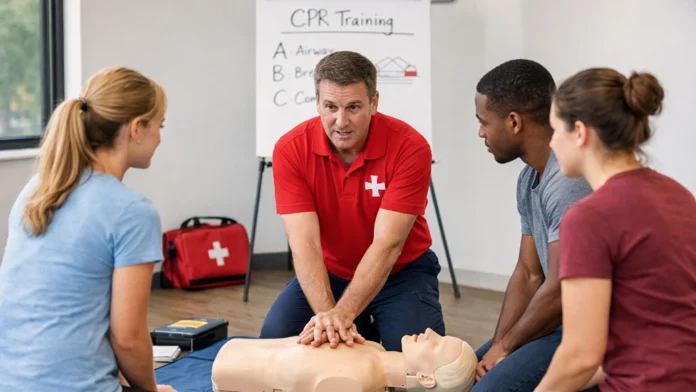
  • Practice Skills: Practice physical skills like chest compressions even after watching the training videos.
  • Review Often: Go back to material you find challenging to build confidence.

By investing time and effort, you will feel more prepared and comfortable applying your new skills.

How Group or Team Training Works

Some workplaces or teams choose group training on Cpr certification now to certify multiple people at once. This can be especially useful for organizations that want everyone trained in lifesaving skills.

Group training offers benefits such as:

  • Team Preparedness: Everyone learns the same skills and can support one another in emergencies.
  • Coordinated Learning: Teams often find it easier to complete training together and stay motivated.
  • Shared Responsibility: A trained group increases the chances that someone will be ready to act when it matters most.

Whether for a small team or a large group, online training options make it easier to coordinate learning without disrupting daily work.

Conclusion

Finding the right CPR and First Aid course does not have to be confusing. By understanding your needs first, exploring course options, and using the features of Cpr certification now, you can choose training that fits your goals and lifestyle. Remember to look for upโ€‘toโ€‘date content, clear instruction, and interactive learning to get the best results. With proper training, you gain not only a certificate but also confidence in your ability to respond in emergency situations. Whether you are training for work, personal preparation, or community involvement, choosing the right course is the first step toward being ready to help when it matters most.


KORU Medical Gains FreedomEDGE Infusion System FDA Clearance

FreedomEDGE Infusion System FDA Clearance

KORU Medical Systems has received FreedomEDGE infusion system FDA clearance from the US Food and Drug Administration, allowing the device to be used for administering Rystiggo (rozanolixizumab-noli), a therapy commercialised globally by UCB.

The FreedomEDGE infusion system FDA clearance expands the systemโ€™s approved use to healthcare professionals in clinical settings, increasing treatment options for patients living with generalised myasthenia gravis. The system is now approved for nine subcutaneous drugs and is used across more than 30 countries.

KORU Medicalโ€™s portfolio includes the Freedom60 and FreedomEDGE syringe infusion drivers, precision flow rate tubing, and HigH-Flo subcutaneous safety needle sets. The Freedom Infusion System is used in both home and ambulatory infusion centre environments, following its initial FDA authorisation in 1994.

โ€œWith this new FDA clearance, we are proud to further our leadership in the rapidly growing large-volume subcutaneous infusion market, with our ninth subcutaneous drug clearance.

โ€œExpanding from home administration into clinic-based care highlights the versatility of our Freedom Infusion System to deliver life-changing therapies wherever patients are treated. This clearance aligns with our strategy to extend the Freedom platform to more drug therapies, more settings, and more patients.โ€

In December 2025, KORU Medical submitted a 510(k) premarket notification to the FDA seeking approval for the FreedomEDGE infusion system, which has now been granted.

InterSystems Payer Connector debuts on the Epic Showroom

Health plan data integration

New solution establishes a governed integration engine to accelerate data exchange between Health Plans and Epic Payer Platform

InterSystems, a creative data technology provider powering more than 1 billion health records worldwide, today announced the launch of InterSystems Payer Connector, a new product offering designed to help health plans rapidly and reliably integrate Epic Payer Platform with their broader application ecosystem.

Epic Payer Platform creates strong provider-workflow connections to health plans through information exchange; impact comes when those exchanges reliably drive health plan decisions inside core applications.

InterSystems Payer Connector complements Epic Payer Platform with a governed hub that transforms and routes data to and from core health plan systems – accelerating high-value use cases, reducing custom integration work, and ensuring reliable data streaming into workflows.

Using a set of prebuilt Epic-aware schemas and orchestrations, InterSystems Payer Connector connects Epic Payer Platform to a health planโ€™s internal systems to retrieve and process data and transform it for downstream use across care management, utilization management, claims, and quality programs. This bidirectional approach helps health plans eliminate custom integration work, accelerate Epic Payer Platform investment returns, and improve clinical, operational, and business performance.

InterSystems Payer Connector enables key health plan workflows within the Epic Payer Platform, including:

  • Loading health plan member enrollment rosters to support the receipt of clinical data for active members.
  • Routing ADT notifications from the Epic Payer Platform to health plan systems to support care management and utilization management workflows.
  • Retrieving CCDA and clinical and analytics summary documents from the Epic Payer Platform and delivering them to health plan systems.
  • Pushing claims data and coding gaps into the Epic Health Plan Clinical Summary.

โ€œWith health plan adoption of Epic Payer Platform continuing to grow, InterSystems Payer Connector fills a critical gap in this ecosystem,โ€ said Don Woodlock, President of InterSystems. โ€œBy enabling data to flow seamlessly to and from health plan systems, this solution helps organizations act on information faster, improving the member experience and reducing gaps in care.โ€

For more information, visitย www.InterSystems.com/PayerConnector.

Why ESG Compliance Is Critical for Chemical Workplace Safety

Chemical Workplace

Safety first has always been a mantra in chemical manufacturing and other environments that handle potentially toxic chemicals. In recent years, though, the worldโ€™s perception of safety has expanded from physical to intangible assets, most notably, environmental, social, and governance (ESG) initiatives.

ESG frameworks comprise standards that ensure companies protect the environment, respect the people, and maintain strong governance practices. If youโ€™re working in or around chemicals, ESG compliance is key to workplace safety. This article explains why.

Environmental Compliance Prevents Major Accidents ย 

Chemicals can be volatile and environmentally damaging. Thatโ€™s why ESG regulations push companies to adopt eco-friendly methods that often overlap with safer handling methods.

In the chemical industry, this involves managing energy use, carbon emissions, and waste. Some companies are switching to renewable energy sources, while others are enhancing their waste management practices. To reduce the environmental impact of PVOH (polyvinyl alcohol), for example, companies may include natural additives speed up the degradation process. Others are turning chemical waste into new raw materials.

Regardless, sustainable waste management doesnโ€™t just reduce carbon footprint. It also minimizes the risk of hazardous leaks that could harm the workers and nearby communities. The result is an inherently cleaner and less volatile workspace.

Social Responsibility and Human-Centered Operations ย 

This component focuses on the human element and the firmโ€™s social impact. Adhering to ESG and state-level regulations requires companies to implement strong safety protocols and invest in workersโ€™ well-being. Safety culture thrives when companies treat their people as their most valuable asset. When workers feel valued and heard, theyโ€™re more likely to stay engaged and adhere to the rules.

In chemical workplaces, workers must have full access to functional protective equipment and learn how to handle incidents proactively. Note that ESG reporting standards require transparency regarding Serious Injury and Fatality (SIF) prevention when evaluating operational risks and safety management practices.

As chemical handling requires a high mental and physical load, firms must have mental health support programs, too. Some tech-forward companies reduce safety risks by tapping artificial intelligence (AI) platforms in monitoring and preventing leaks.

ESG compliance likewise demands rigorous and documented training in safety and other relevant topics. Your team must understand what theyโ€™re handling and how to minimize risks. Other firms conduct regular human rights training with their supply chain management teams to ensure ethical raw material sourcing.

Governance Is the Foundation for Accountability

Company leadership and corporate accountability are the core aspects of governance. This aspect examines a wide range of internal processes and controls to continuously improve risk management and maintain ethical conduct. That said, governance is the backbone of workplace safety. Without it, you canโ€™t execute your environmental goals and social initiatives effectively.

Chemical firms practice corporate governance by incorporating these key principles into their workflows. Regular and independent audits are mandatory to ensure that the integrity of critical parts isnโ€™t left to chance. Even so, an operator should have a pre-defined set of procedures to follow when a safety sensor rings at 2 AM.

Apart from crafting clear policies and accountability mechanisms, regulatory adherence involves transparent reporting. An ESG-compliant firm encourages stakeholder engagement through sharing non-financial information with the public. They must clearly communicate chemical safety data, as regulatory bodies are banning specific substances due to sustainability and safety issues.

Put simply, governance provides the checks and balances necessary to prevent catastrophic failure. It institutionalizes risk management and accountability and shows that the management prioritizes the community and workersโ€™ safety over revenues.

Chemical-Workplace

ESG Reporting May Soon Become Mandatory Across the Board

Environment, social, and governance isnโ€™t just a fancy term that counters climate change or lowers greenhouse gas emissions. It has turned from a voluntary ethical choice into a standard metric that investors use to assess a company.

The global adoption of ESG is getting more expansive. The European Union is leading the way with its Corporate Sustainability Reporting Directive (CSRD), which mandates detailed disclosures of ESG metrics that illustrate the companyโ€™s impact on people and the environment. ESG reporting is likewise obligatory for companies listed on the Hong Kong and Singapore stock exchanges. China, the United States, and Canada are shifting from voluntary to mandatory disclosures as well.

Many firms rely on the Global Reporting Initiative (GRI), which provides the international standards for ESG reporting. The organization allows companies to communicate their sustainability efforts effectively. You can use this framework alongside others, such as those set by the International Sustainability Standards Board and the Sustainability Accounting Standards Board, to paint a broader picture and improve your ESG performance.

Another non-profit organization, the Carbon Disclosure Project, provides ESG data to investors seeking to evaluate a companyโ€™s sustainability efforts. Itโ€™s the gold standard for environmental reporting and aligns with other compliance frameworks, including the Task Force on Climate-related Financial Disclosures (TCFD) and the European Sustainability Reporting Standards.

Integrating these pillars into your business systems helps your organization become more resilient. Moreover, obtaining ESG certifications meets investor expectations in a sustainability-focused market while enhancing consumersโ€™ perception of the brand.

Final Thoughts

Your facilityโ€™s performance and worker safety donโ€™t just rely on protective gear and emergency exits. They also depend on the systems and values that shape how you operate.

Incorporating ESG efforts into your systems weaves environmental responsibility, social care, and integrity into a safe working environment. To master compliance, you must develop an organization that values and protects its people while building public trust. Consider this sustainability framework a shield that keeps you secure and empowered.

Translate ยป