Close
Digital Health & Ai Innovation summit 2026
Medical Taiwan 2026

SII Halts COVID Vaccine Production Due To 200M Unused Doses

SII Halts COVID Vaccine Production Due To 200M Unused Doses

As worldwide demand dwindles, around 200 million doses of COVID-19 vaccine are rusting away in the world’s largest vaccine manufacturer’s warehouses.

As per Bloomberg, Serum Institute of India (SII) CEO Adar Poonawalla revealed at the India Economic Conclave that they had ceased producing fresh COVID-19 vaccine doses in December. According to him, the company now has a reserve of 200 million medicines. He has even offered free donations to anyone who wants them, Poonawalla said, raising concerns over potential waste.

SII’s condition reflects diminishing demand as the global sense of desperation for vaccination seems to be fading. Manufacturers like SII, which hastened to expand capacity in the face of an initial scarcity, are now bearing the brunt of the slowdown.

The impetus of the past that took us so far is lost, says Adar. 

According to the chief executive, the poor uptake is due to rising vaccine weariness among the public as well as the Indian government’s inability to act on authorizations for shorter dose periods and for young kids.

Demand for COVID vaccines has tailed off considerably since the impression is that omicron is less likely to lead to serious infection, and the vaccines aren’t doing a great job at infection prevention while still providing substantial security against severe illness, Eurasia Group’s Scott Rosenstein told Bloomberg independently. SII assists AstraZeneca in the development of Covishield, a shot developed in collaboration with Oxford University. It’s a key provider for the worldwide COVAX effort, which aims to make COVID vaccinations more broadly accessible. Because it has a lower temperature requirement than mRNA shots from Pfizer-BioNTech and Moderna, the AZ shot was originally the principal form of vaccine given to middle-and low-income countries.

However, poorer countries are increasingly refusing SII’s AZ injection, as per Reuters. A representative for Gavi, which helped start COVAX, told the news wire that a limited shelf life was listed as a factor. As per Reuters, throughout the six months from April to September, those countries only sought roughly half a million Covishield dosages and around 16 million doses of the dual Vaxzevria injectable made in Europe. SII is also partnering with Novavax on a recombinant protein vaccine which will be licenced for use in India as an emergency vaccination.

The downturn in COVID revenues isn’t limited to SII and AstraZeneca. Due to a considerable decline in demand, Johnson & Johnson has also stopped estimating income for their single-shot alternative. The J&J shot earned $457 million in the first quarter, significantly less than the $785 million predicted by Wall Street. According to Cantor Fitzgerald analysts, Pfizer and BioNTech’s Comirnaty, the world’s finest COVID injectable, may underperform in the first quarter. After looking into distribution figures, the team estimated that Comirnaty’s sales in the United States for the first three months of the year would likely be under $2 billion. In early May, Pfizer will publish its first-quarter earnings.

Online Medication Safety Guidelines for Consumers

Online Medication Safety Guidelines for Consumers

The past two years grounded everyone to their homes. Availability of even basic necessities became tricky. But as humans always do; we adapted and came up with alternatives for everything. Groceries could be received on the door, work and education shifted to being online; basically, everything turned digital.

Doctors were in high demand, to treat the severe patients and mild ones too. This was when online medicine gained popularity. The mild sufferers could be treated at home, through digital consultation.

The advantages and feasibility that online medication offered, appealed to both; the doctors and patients and now it has become a very common practice.

Online medication offers several benefits, a few of which include- Accessibility to people with physical limitations, to people from remote areas, approachability, affordable and convenient treatment and providing the same results.

Though online medication is very safe, safety violations are a concern everywhere you go. Online medication is no exception. Swindles can occur anywhere; therefore, some guidelines should be observed to ensure you get safe treatment.

Here are a few tips that will ensure a smooth and non-risky treatment-

A] Inquire if the health service organization is registered

None of us is ignorant of the widespread online fraud. Money loss still can be dealt with, but health is no joke. Mis-diagnosis or ill-treatment can put you into grave trouble and sometimes even be life-threatening. Hence, researching about the online medical health provider, the reviews, if they are registered, their qualification all becomes very necessary. It is always a good idea to avail of these services after taking a recommendation from someone you trust. If your family doctor provides the same services then there is nothing like it.

B] Ask about how the service works

Being aware of the procedure can help you understand the authenticity and prepare you for the treatment. Read and understand the terms and conditions of the service thoroughly. Ask if you will be getting a local treatment too if you need it. Insurance companies may not always cover your online treatment charges, hence interrogating if your fees will be covered by insurance; if not, get a rough estimate of the costs that will be involved and evaluate if it is affordable.

Asking the about the medication reviews

C] Give Accurate Answers

Hiding your health condition from the doctor, or understating it, is like jumping into a well. Better the health care provider knows you, the better the treatment you receive, and the better the recovery will be. You need to precisely answer all the questions asked and never lie about your health.

D] Written Record

A written document is highly crucial wherever you go. It implies the medical health provider is ready to take responsibility for the prescribed drugs and depicts his confidence. Sometimes when a medical malfunction occurs, you can hold them responsible and ask for compensation. Therefore, make sure you get a signed and written report from the health care provider.

E] Demand for Documents

The health care provider might ask for your consent to share the details of your condition with other professionals to ensure you receive safe care. This does not hold true for sexual treatments, however.

The doctor may ask for proof of identity to verify that it is you who is accessing the medicines and treatment and not a child or vulnerable person. It could be very inappropriate and dangerous for them.

F] Check on the aftercare received

Ask about what aftercare you will be receiving. Make sure your follow up questions wonโ€™t be unanswered and your recovery will be monitored, and in case of any side effects, the doctor is approachable.

G] Transparency

The medical health provider shouldnโ€™t keep you in the dark. They need to provide you advice that is easy to comprehend, they should put forth the alternatives you can consider and they should also warn you of side effects associated with the treatment if any. After being briefed on everything, you can either go for the treatment or deny it.

Online medication is a newfound luxury. Getting medication review, sitting right at your home offers comfort and reduces the anxiety that comes with visiting a clinical setting. Regular checkups can easily be conducted. You might have to buy a few instruments or collect data of your blood report or diabetes count etc. if asked to do so. Some online applications provide certain details too but the accuracy of this cannot be relied upon. If your family doctor provides a digital consultation, then you are saved from all the trouble. But if you look up on the internet and choose a service for you, make sure you research well and take all the above-mentioned points into consideration. If you notice something even slightly suspicious, back out. Your health cannot be mishandled, that is the last thing you want.

How to automate medical billing processes and increase the effectiveness of operations?

How to automate medical billing processes and increase the effectiveness of operations?

Billing is the basis of any company in the healthcare industry. But, for most parts, medical billing automation remains a complicated and work-heavy operation with a lot of repetitive processes.

Billing providers across the industry are constantly looking for solutions that can help them streamline these operations, optimize costs and fight the challenges. A great example of such a solution is Robotic Process Automation (RPA).

RPA technology consists of bots, or software robots, that mimic a human to perform repetitive, high-volume tasks faster and with greater accuracy. For example, the bots can read and input text, assign item categories, retrieve data, perform queries, and maintain records. The advent of this technology and the incredible time saving that can be achieved has ledย  many business owners, large and small to either pursue power apps training for their employees or hire uipath developersย In order to optimize their automation

RPA can fully automate complex tasks and get them done in a second. With the 0% margin of error and being able to run 24/7, this technology can unlock the productivity of your team, letting them focus on tasks that matter.

What in billing can be automated with RPA to improve revenue management?

Manually processing medical billing operations like payment posting, Electronic Health Records (EHR), claims administration, and others takes time. Robotic Process Automation streamlines and automates these operations, enhancing revenue cycle management for medical billing companies’ bottom lines.ย  Letโ€™s take a look at the billing processes that can be automated with RPA.

โ€Payment Posting: Automated payment posting boosts productivity and eliminates the need for human insurance payment processing. Users may define as many bespoke and detailed rules as they like with this bot. Organizations may educate the bot to post payments in the same manner as they would a new employee. These bots may also highlight unpaid claims for more labor and appropriately submit refunds or takebacks.

EHR Automation: RPA bots fill in EHR forms and replicate essential data across multiple systems, decreasing human error and allowing doctors to spend more time with their patients. You can automate sending data between one EHR and another, as well as pull the data from your existing EHR to your CRM etc.

Claims Administration & Submission Process: Human mistake is a common cause of first claim denials in claims administration. RPA bots automate a variety of claims administration operations, including charge entry in medical billing, payer rule checks, and submission.

Boost Patient Communication: RPA bots create an email that summarizes information about the pricing of a service or other consumer inquiries mentioned during a phone conversation. Reminders can also be triggered via bots (I.e., emails & SMSs)

Cost Estimation: RPA bots help healthcare businesses automate benefit retrieval and cost estimation operations by simply linking the patientโ€™s profile with the medical services provided and calculating the cost using the price list already available in the database.

Manual Data Entry: RPA bots aggregate data from many systems and send it into a single patient accounting system, reducing the need for manual data entry. OCR is also used to extract data from images & PDFs in an efficient and error-free method to be plugged-into the system automatically.

Claim Denials: Bots can automatically address any simple errors and then resubmit the claim. For more complex errors, the denial can be passed to a human but will provide detailed patient information and denial information, greatly speeding the rework time. As RPA bots take responsibility of denial management in a step-by-step procedure, staff may focus on more complicated denials.

Pre-Authorizations process: The revenue cycle of robotic process automation allows healthcare businesses to get data from different websites and systems and integrate it directly into the Hospital Information System (HIS). In some situations, it also applies for pre-approvals.

Consumer Experience: Healthcare firms are increasing consumer experience by utilizing RPA-driven internet chatbots to answer simple questions. Except for managing the chat bots, RPA is able to improve the speed and quality of response on other sources.

What value does medical billing process automation bring to your company?

1. Reductions in processing costs

For implementing RPA at a hospital, for instance, is required to boost its operational control, we can see that this actually can improve the patientโ€™s experience. By automating revenue cycle tasks like claims and billing, for example, the cost and/or time needed per claim will be significantly reduced.

2. A more efficient billing cycle

RPA can automate accounts payable and data digitization operations, resulting in increased billing efficiency. Healthcare organizations may save considerable labor and financial resources by improving administrative operations.

3. Reductions in the cost of human labor

Healthcare practitioners save time by delegating labor-intensive activities to robots. They can put these extra time resources to better use, such as focusing on more fine-grained patient attendance rather than monotonous data input, allowing them to improve their clinical training.

4. Improved employee satisfaction

This is a side effect of the prior advantage. And the good effect causal chain doesn’t end there! Pioneers in the transformation of healthcare to a digital business claim that a higher degree of job satisfaction among healthcare professionals is strongly connected not just to better patient care, but also to higher corporate ROI.

5. High-quality healthcare

Automation enhances patient satisfaction by reducing time, removing the possibility of human mistakes, and allowing staff to focus on more meaningful, patient-centered tasks.

Increased operational efficiency may also broaden the scope of healthcare’s usefulness. As a result, the healthcare system might better meet the requirements of a larger number of individuals. The prospect of sufficient treatment for an increasing number of individuals elevates RPA in healthcare beyond a simple option.

Summary โ€“ what’s next?

From employees to patients, a lot of people benefit from employing Robotic Process Automation.

Having a streamlined and optimized workflow gives room for less hectic work experience. Automated claims, scheduling, and every repetitive process in medical billing help healthcare providers significantly reduce human-related mistakes and process claims accurately.

At Flobotics, as RPA consultancy agency we are all about optimizing RPA processes to enhance efficiency. We have worked with several companies from the healthcare and medical industry, successfully improving their processes and boosting ROI.

Want to know if your accounting processes are eligible for automation? Reach out to us, schedule a free consultation and get your first trial automation set for free (if you don’t like it – you won’t pay a dime).

About Karl Mielnicki

Author Img

An expert in automation and Robotic Process Automation development. UiPath certified developer with a proven track record of healthcare processes automation. CTO of Flobotics โ€“ an automation development agency focused on automating processes in the healthcare industry.

Author Img

CDC Issues Health Warning On Acute Hepatitis In Youngsters

CDC Offers Additional Clinical Findings On Hepatitis In Kids

 Cases of acute hepatitis with unclear origins among kids who had adenovirus infections are still being investigated. The US Centers for Disease Control and Prevention issued a health advisory on April 21, 2022, alerting healthcare professionals and public agencies to the investigation and recommending that when the cause of hepatitis is unknown, providers take into account adenovirus testing in children with hepatitis, adding that testing pretty much the entire blood rather than just blood plasma may be more sensitive.

A probable link between paediatric hepatitis and adenovirus infection is now under study, according to the advisory. Public health experts in the United States and the United Kingdom stated last week that they were looking into cases of serious acute hepatitis in children. The World Health Organization had detected 74 cases of hepatitis in children across the United Kingdom at the time, and Alabama health officials had found nine cases of hepatitis in children aged one to six who had also screened positive for adenovirus since October. COVID-19 was not present in any of the kids.

The CDC requested that medical providers or state public health professionals inform the agency if any child under the age of 10 has been diagnosed with hepatitis for an unexplained reason since October.

Five paediatric patients with substantial liver impairment, especially three with acute liver failure, were notified to the CDC in November 2021 by physicians at a large children’s hospital in Alabama, who also screened positive for adenovirus. All of the children had earlier been in good health, officials from the CDC wrote. Case-finding efforts at this facility found four more paediatric patients with hepatitis and viral illnesses, for a total of nine patients hospitalised from October 2021 to February 2022; all five kids that were analysed had an adenovirus type 41 infection. Hepatitis is an infection that affects the liver, a critical organ that processes food, cleanses the blood, and aids in the fight against diseases. When the liver is inflamed or damaged, its function may be compromised.

Hepatitis is usually caused by viruses, and adenoviruses are a prevalent type of virus that can cause a variety of mild to severe illnesses when passed from person to person. However, in healthy people, these viruses aren’t very often found to be the cause of acute hepatitis. While there have been reported cases of hepatitis in immunocompromised children with adenovirus type 41 infection, the CDC added in the advisory that adenovirus type 41 is not recognised to be a source of hepatitis in otherwise healthy children.

Dr. Ashlesha Kaushik, a representative for the American Academy of Pediatrics, said that it is not a common presentation at all. This is pretty unexpected. Symptoms like that, such as diarrhoea and vomiting, should be monitored by children’s caregivers. A doctor should be contacted if a kid experiences abdominal pain, fever, fatigue, or muscle pain. Jaundice is a physical symptom of a liver issue that includes yellow eyes, dark urine, and light-colored faeces.

To avoid the adenovirus, Kaushik advises parents to teach their children to wash their hands often and properly. Adenovirus vaccines are not available for children. She claims that adenoviruses tend to remain on surfaces and that alcohol-based hand sanitizers are ineffective against them.

The best thing is to wash hands with soap and water, Kaushik advises. Keep a safe distance from anyone coughing or sneezing, and educate kids to sneeze or cough into their sleeve. To prevent COVID-19, she said, people should keep up with all of the positive practises they’ve acquired.

Because adenovirus can cause gastrointestinal problems, she also recommends that families and adults at day-care facilities wash their hands thoroughly after changing diapers.

First Malaria Vaccine Protects Around A Million African Kids

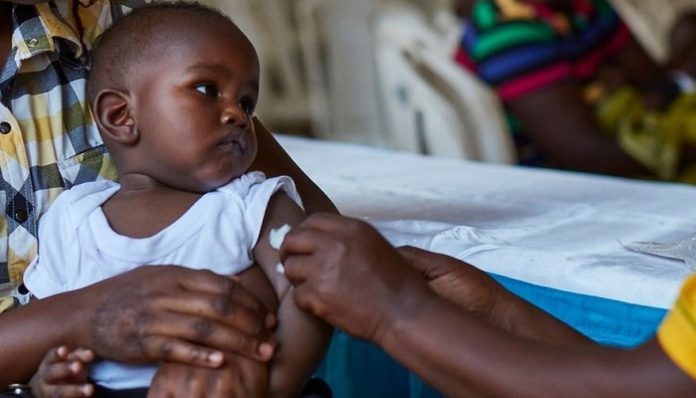
More than a million children in Ghana, Kenya, and Malawi have been given one or more doses of the world’s first malaria vaccine, owing to a pilot programme supervised by WHO, as World Malaria Day approaches this year. The RTS,S/AS01 (RTS,S) vaccine is feasible and safe to deliver, and it significantly reduces lethal severe malaria, as per the malaria vaccine pilots, which were first launched by the Malawian government in April 2019.

These findings helped pave the way for the historic WHO recommendation in October 2021 to expand the use of RTS,S in children residing in neighbourhoods where malaria transmission is relatively high. WHO believes that if the vaccine is widely used, it will save the lives of an estimated 40 000 to 80 000 African children per year.

Gavi, the Vaccine Alliance, has pledged more than US $155 million to support the launch, acquisition, and distribution of the malaria vaccine in Gavi-eligible nations in Sub-Saharan Africa. Countries can get advice from WHO on whether and how to use RTS,S as a supplementary tool to reduce malaria-related illness and mortality in children. As a malaria researcher in his early career, he dreamt of the day humanity would have an effective vaccine against such a dreadful illness, said WHO Director-General Dr Tedros Adhanom Ghebreyesus. This vaccination isn’t only a scientific triumph; it’s a game-changer for African families. It exemplifies the importance of science and advancement in the field of health. Nonetheless, new and better instruments are urgently needed to save lives and enhance performance toward a malaria-free future.

New intervention possibilities

RTS,S is a first-generation vaccine that may be supplemented by additional vaccines with similar or higher efficacy in the future. The World Health Organization praises the progress made in the area of R21/Matrix-M as well as other malaria vaccine alternatives in treatment trials. Clinical studies for these vaccines must be successfully conducted in order to determine their safety and effectiveness characteristics. WHO also praises BioNTech’s announcement that it plans to create a malaria vaccine using mRNA technology. BioNTech is the maker of the Pfizer-BioNTech COVID-19 vaccine.

A variety of novel instruments and methods in the realm of vector control have been presented to WHO for review. If they prove successful at managing chronic diseases, WHO will issue new recommendations or change current ones to boost their use. New forms of insecticide-treated netting, spatial insect repellents, gene-drive techniques, and sugar baits to lure and kill Anopheles mosquitoes are just a few examples.

In addition, there are other novel drugs in the works. WHO commends the Australian Therapeutic Goods Administration’s recent clearance of dispersible single-dose tafenoquine tablets for the control of P. vivax malaria in children. The US Food and Drug Administration, as well as drug regulatory agencies in other countries such as Brazil, Peru, and Thailand, have all authorised tafenoquine for use in adults. Tafenoquine is predicted to ensure better adherence to therapy when given as a single dosage. A 7-to-14-day course of medicine is the normal version of therapy.

For the treatment of simple and serious malaria, a variety of additional antimalarial drugs with new mechanisms of action are being developed. The first non-artemisinin combination medication, Ganaplacide-Lumefantrine, is currently in a Phase II clinical trial and could be useful in the fight against drug-resistant malaria in Africa. In addition to drug resistance, WHO has identified other serious threats to malaria control, which include insecticide-resistant mosquitos, an invasive malaria vector that thrives in both urban and rural locales, and the rise and scatter of mutated P. falciparum parasites that are compromising the accuracy of rapid diagnostic tests. To fight these threats, new tools and methods will need to be used, with a more strategic use of existing tools.

More funds are needed

Global progress in lowering malaria incidence and fatalities has slowed or stagnated in recent years, as per 2021 World Malaria Report, specifically in countries hardest afflicted by the disease. The report highlights the importance of continuing innovation in research into new instruments if the world is to reach the WHO malaria strategy’s 2030 targets.

In 2020, funding for malaria research and development was just over US $619 million. In the decade 2021โ€“2030, an average annual R & D investment of US $851 million will be required.

Getting the most out of what we have, already

To meet global malaria targets, innovative methods for the use of already existing instruments will be required. Nations hit hardest by malaria have been gathering and processing malaria data to better understand the disease’s geographical spread thanks to WHO and the RBM Partnership to End Malaria’s “High Burden, High Impact” approach, which was launched in 2018 by WHO and the RBM Partnership to Wrap Up Malaria.

They are investigating the potential impact of customised bundles of treatments guided by local data and the local disease situation, rather than taking the same strategy for malaria control everywhere. These studies will enable governments to make more effective, efficient, and equitable use of available money.

RTS,S malaria vaccine and pilot programme

Countries can now get WHO recommendations on whether and how to incorporate the RTS,S vaccine into their malaria control plans. The vaccine has recently been added to WHO’s unified malaria recommendations, and WHO has also released an amended policy statement on the vaccination. The vaccine has been favourably received by African communities in routine usage to date. The current vaccine manufacturing capacity is capped at 15 million doses per year, but demand is expected to surpass 80 million doses per year.

Increased manufacturing capacity of RTS,S and acceleration of the production of other first-generation and next-generation malaria vaccines are two ways WHO is working with partners to improve supply. WHO is coordinating the creation of a framework for the allocation of limited malaria supply to guide where initial doses of the vaccine will be deployed; the goal is to prioritise areas of high need and greatest malaria burden until supply matches demand.

The RTS,S pilot programme is made possible by unparalleled partnerships between in-country and foreign organizations, including the Ministries of Health of Ghana, Kenya, as well as Malawi; in-country evaluation partners such as PATH, GSK, UNICEF, and others; and Gavi, the Global Fund, and Unitaid funding bodies.

GSK spent 30 years researching and developing the RTS,S malaria vaccine, which was made possible by cooperation with PATH and a chain of African research institutes.

NHS COVID Vaccine Volunteers Choose To Stay In Health Field

5 Million 5-11 Year Olds Get COVID-19 Vaccine By The NHS

In a move that ought to be applauded, citizens who participated in the NHS COVID-19 immunisation programme have elected to continue working in the health service in different capacities, resulting in a significant increase in the workforce. Amanda Pritchard, the NHS chief executive, too,ย has welcomed theย news that more than 11,000 (11,483 to be exact) people who enrolled in the NHS COVID-19 immunisation programme have decided to remain on in the healthcare system in other roles, resulting in a significant increase in the workforce.

People from all around the UK volunteered to help with the NHS COVID-19 vaccination campaign, and with the knowledge and skills they gained during the pandemic, they have gone on to engage withย supporting medical teams, improve patient experience, and even prepare for clinical careers. As services resume across the country, the additional workforce will assist the NHS in addressing the elective backlog and ensuring that patients receive the best possible care as quickly as practicable.

Karen, 57, a former dance instructor who was furloughed during the outbreak, now works as a ward clerk at Bedford Hospital, supporting new mothers and newborns. Karen said she was excited to be a part of something that made a real difference when she took a job in the immunisation program.

Tamryn, 45, from Cambridgeshire, worked as a cabin crew for more than a decade but thought it was time to start a new job after being suspended. She opted to enrol for a degree in therapeutic radiography in addition to signing up to help with the immunisation campaign, and she said she cherished the fact that working for the NHS enables one to make a meaningful difference in people’s lives every day.

The NHS has placed a strong emphasis on workforce retention, ensuring that those who offered to help with the largest vaccination campaign in NHS history are supported and encouraged to continue in new roles. Kazeem, who formerly worked as a gym manager in London, nowadaysย works as an assistant service manager at Guy’s and St. Thomas, one of England’s finest hospitals. He says he enjoys meeting people from different countries and origins whileย being a part of a team that has been making history.

Karen Dear, a ward clerk at Bedford Hospital’s maternity unit who worked for the vaccine programme since being furloughed from her job as a dance teacher, said that when she was willing to take up something to assist and, therefore,ย joined the NHS vaccination programme last January and absolutely loved being part of something that made a real difference.

After a year, sheย decided sheย wanted to work in the NHS for a lot longer, so sheย completed herย Care Certificate and spoke to the local retention team, who presented her with various roles and opportunities available across the health service โ€“ she is nowย working as a full-time ward clerk at aย local maternity unit, which sheย loves.

He hasย always loved helping people, so the vaccinator role just seemedย like a good fit, and although heย did notย have any medical skills, heย received training and was able to use the leadership talent and excellent customer service that heย had learned from hisย previous job, saysย Kazeem Reaves Odunsi, who worked as a gym supervisor before being a vaccinator and is currentlyย an assistant service manager at Guys and St Thomas’ NHS Foundation Trust.

He added that heย believed heย was attempting to improve someone’s quality of life and put a stop to the pandemic by giving people the vaccine. He was truly inspired to stay on and start a new career in the NHS after being a part of the team that was breaking records and getting to meet people from all walks of life as well cultures.

Tamryn Saby, who supported the vaccine programme in Cambridge after being furloughed, said that sheย had spent 11 years jetting around the globe with an airline, and after being grounded, she gave time to herself to reconsider her career path and enrolled for a therapeutic radiography degree, along with working on the vaccine programme.

Sheย believed that by getting involved, things would return to normalย sooner, and being a part of the vaccine roll-out really helped build herย confidence for a career in health, and demonstrated that working for the NHS allows her to make a meaningful impact on people’s lives every day.

During the first months of the pandemic, sheย lost aย vast majority of herย customers and was unable to resumeย work. That’s when sheย decided to take the plunge and support theย local vaccination programme in an admin role,ย said Chloe Radley, who was a make-up artist prior to joining the vaccine driveย and has now becomeย a patient pathway coordinator at Barking, Havering & Redbridge University Hospitals NHS Trust.

She says sheย fell in love with the job and the team straight away, so when her manager advised sheย apply for another position in the health system, sheย leaped at the chance. She isย now a patient pathway coordinator and enjoys what she does.ย 

Sheย joined the vaccination hub as soon as it opened in December 2020, as her mother had moved over from Ukraine and was able to takeย care of her children,ย said Inga Zamolynska, who happens to beย a patient experience coordinator at Barking, Havering & Redbridge University Hospitals NHS Trust.

Sheย was so taken with it that sheย decided to stay with the foundation and isย now working asย a patient experience coordinator โ€” it’s a dream come true, she adds.ย 

He had been looking to return to full-time work after recovering from a stem cell transplant for non-lymphoma Hodgkin’s and saw a temporary administrator role with the local vaccine programme on Facebook,ย said Steve Cox, who decided to join the vaccine programme and is now working for Devon CCG in a new role.

Heย eventually moved to a role overseeing vaccine supplies, which confirmed his desire to continue working for the NHS, and he now has aย new career with Devon CCG outside of the vaccine programme. He has had a lot of support from the NHS staff, and has also gone on to make a lot of excellent friends there.

He had worked for British Airways for 22 years, but then everything changed when the pandemic hit, saysย Stephen May, who stepped up to support the vaccine effort after being laid off and has become a patient access coordinator at Guy’s and St Thomas’ NHS Foundation Trust. Because of COVID-19, heย lost his job, but was able to turn it around by heading to the front lines and becoming a vaccinator.

Being a vaccinator was the ideal job for someone who had previously worked in cabin crew โ€“ actively communicating, reassuring people, acting peacefully, and being prepared to describe things to different people were all things heย did as a vaccinator and alsoย on an aircraft, and now he hasย been able to apply those skills to hisย new role with the NHS.

Not only did these employees help implement the most effective NHS vaccination programme in record time, protecting citizens against the virus at speed,ย NHS chief executive Amanda Pritchard said,ย but they are now continuing to provide careย for others in various jobs around the country.

Thousands took up the offer to get jabs in arms in their local communities, from new beginnings to retirees, and it’s terrific that over 11,000 individuals have chosen to stay with the NHSย in another role, taking on one of the many exciting positions across the health service. With over 350 different roles within the NHS, there is a position for everyone, so please check NHS careers today if one wants to join, says Amanda.ย 

Notably, since December 2020, the NHS has hired over 71,000 people to take part in the NHS COVID-19 vaccination programme, leading to the delivery of over 120 million doses to people of all ages, including over 32 million booster dosesย and over 1.4 million spring boosters.

With the help of professional staff, the NHS’s inoculation programme has benefited from the help of millions of volunteers. There have been more than 2.5 million volunteer hours recorded since Margaret Keenan got the world’s first jab in December 2020.


How Valuable And Useful Is AI In Healthcare? Find Out Here

How Valuable And Useful Is AI In Healthcare? Find Out Here

Artificial intelligence has been making waves in various industries, and healthcare is no exception. Many believe that AI can be used to improve patient care, make the diagnosis process more efficient, and even help reduce costs. In this blog post, we will take a closer look at the role of AI in healthcare and discuss its potential benefits. Stay tuned!

What is AI?

Artificial intelligence (AI) can be defined as the ability of computers to perform tasks that ordinarily require human intelligence, such as visual perception, natural language understanding, and decision making. One of the main concerns is โ€œ How much does AI cost? โ€œ andย  โ€œ What are the benefits of AI in Healthcare? AI is being used or developed for a variety of purposes, including disease diagnosis, treatment recommendations, patient monitoring, and drug development.

The Price of AI

The price of AI technology has been declining steadily over the past few years, making it more accessible to healthcare organizations. However, there are still some challenges that need to be addressed, such as the lack of data and the need for more training data. In addition, there is a need for more AI experts who can develop and deploy these systems.

The Benefits of AI in Healthcare

One of the potential benefits of AI in healthcare is that it can help to improve patient care. For example, by using AI-powered chatbots, patients can receive 24/hour access to medical advice and support. Additionally, AI can be used to monitor patientsโ€™ vital signs and provide early warnings of potential health problems. Another benefit of AI is that it has the potential to make the diagnosis process more efficient. For instance, by using machine learning algorithms, doctors can sift through large amounts of data more quickly and identify patterns that might otherwise be missed. Additionally, AI can be used to develop new treatments for diseases. For example, Googleโ€™s DeepMind Health is using AI to develop new methods for early detection of breast cancer.

What Are The Risks Of AI In Healthcare?

Like any new technology, AI in healthcare also has its risks. One of the main concerns is that AI might lead to the development of โ€œsuperbugsโ€ โ€“ bacteria that are resistant to all known antibiotics. These superbugs are a major threat to global health, and AI could potentially make them more difficult to detect and treat. Additionally, there is a risk that AI might be used to exploit patient data. For example, if a hospital uses AI to identify which patients are more likely to develop certain diseases, insurance companies could use this information to raise premiums or deny coverage. Another worry is that AI-based systems might make errors in diagnosis and treatment recommendations. For instance, if a machine learning algorithm is trained on data from a biased sample, it might make inaccurate predictions. Finally, there is a risk that AI might be used to replace human doctors and nurses. While this might improve efficiency and cost-effectiveness, it could also lead to a loss of human connection and empathy in the healthcare setting. However, it is important to note that AI is still in its early stages of development and its potential risks are not yet fully known.

Is AI Valuable in Healthcare?

The potential value of AI in healthcare is vast. By providing doctors with more accurate and faster diagnosis, AI can help to improve patient care. This can be done by providing early warnings of potential health problems and by developing new treatments for diseases. In addition, AI-based decision support tools can assist doctors in making treatment recommendations. Imagine a future where your doctor is able to catch a disease in its early stages, before it has a chance to cause serious harm. This is the power of AI in healthcare. Moreover, AI can be used to develop new drugs and personalized treatments based on a patientโ€™s individual genetic profile. This means that AI has the potential to greatly improve patient outcomes and quality of life. However, it is important to remember that AI is still in its early stages of development and its potential risks are not yet fully known. In the future, AI might become an indispensable tool in healthcare, but for now, we need to be cautious and monitor its development closely.

How Can We Improve AI In Healthcare?

There are a few ways we can improve AI in healthcare. First, we need to develop better algorithms that can more accurately identify patterns in data. Second, we need to increase the amount of data that is available to train AI systems. Third, we need to create better ways to evaluate and assess AI-based decision support tools. Another thing that can be done is to create a more diverse set of AI experts. Currently, the majority of AI experts are white and male. By increasing diversity, we can bring in different perspectives and ideas that can help to improve AI in healthcare. Finally, we need to ensure that AI systems are developed with transparency and accountability in mind. This means that AI systems should be designed in a way that allows for explainability and audit ability. For instance,ย  Googleโ€™s DeepMind Health has developed an AI platform called Verifiable Data Audit (VDA), which allows for the audit and verification of data used by AI systems.

AI has the potential to revolutionize healthcare. By providing more accurate and faster diagnosis, AI can help to improve patient care. In addition, AI-based decision support tools can assist doctors in making treatment recommendations. Moreover, AI can be used to develop new drugs and personalized treatments based on a patientโ€™s individual genetic profile. However, there are also risks associated with AI in healthcare. One of the main concerns is that AI might lead to the development of โ€œsuperbugsโ€ โ€“ bacteria that are resistant to all known antibiotics. Another worry is that AI-based systems might make errors in diagnosis and treatment recommendations. However, it is important to note that AI is still in its early stages of development and its potential risks are not yet fully known.

Kings College London Uses COVID-19 Tech As Heart Attack Cure

FDA Approves Next-Generation ZOLL TherOx System for Widowmaker Heart Attack Patients

King’s College London, a public research university, is using messenger RNA (mRNA) technology to battle the physiological effects of cardiac arrest in the hopes of developing the world’s first heart attack treatment. The technology has the ability to reverse cardiac damage to a large extent.

Such has been the devastating effect of COVID-19 that the NHS has launched a new life-saving campaign in the hopes of preventing any unforeseen and terrible events such as chest tightness, excessive fatigue, and uneasiness, all of which point to a heart-related issue. 

mRNAs are biological codes that result in the production of proteins containing genetic information. King’s College University’s mRNA technology creates proteins that stimulate the formation of healthy new heart cells and can be administered straight to the heart muscle following an attack. The proteins produced by the technology can help the heart muscle regenerate cells. This revolutionary response has yet to be included in any cardiac drugs or post-episode treatments.

If we talk about the US in particular, one out of every four Americans has heart problems that have developed due to a COVID-19 history. Since the beginning of the pandemic, 41% of Americans have had at least one cardiac problem.

People are all born with a specific number of muscle cells in their hearts, and they are exactly the same ones they will die with, says professor of cardiovascular sciences at King’s College’s School of Cardiovascular Medicine and Sciences, Mauro Giacca. The goal has been to develop a way to persuade surviving cells to multiply. He added that they are injecting micro RNAs into the heart using the same technique as Pfizer and Moderna vaccines, targeting living heart cells and boosting their multiplication.

The level of cardiac treatment might be dramatically enhanced, and the lives of millions of people throughout the world could be extended, if the technology progresses to regulatory approval with guidelines for heart attack patients.

As a result of the research, proteins that may be delivered to heart attack patients in the rear of an ambulance to protect heart cells from dying have also been discovered.

India Health Link Joins Hand with U GRO Capital

India Health Link Joins Hand with U GRO Capital

India Health Link (IHL), a digital health and medical device start-up, has announced the signing of a Memorandum of Understanding (MoU) with U GRO Capital, a listed MSME lending fintech platform to expand the deployment of their first-of-its-kind human-centric phygital healthcare ecosystem, and to strengthen the human-centric preventive health screening ecosystem and to expand its footprint in India.

India Health Link (IHL), being a human-centric platform, wishes to reach out to every Indian patient through hospitals and doctorsโ€™ network and make its Health Pod and IHL Care available to ensure their continuous wellness via preventive screening. However, at the initial stage, the challenge lies in the scalability of their Health Pod solutions. Therefore, IHL has collaborated with U GRO Capital to ease the adoption of its integrated healthcare screening ecosystem under the RBI lending programme so that the doctors and hospitals donโ€™t have to upfront the entire cost. Owing to this lending facility, preventive healthcare delivery will reach the maximum number of people who are deprived of the accessibility of primary and preventive care in the remotest part of India.

The healthcare sector has been one of the prominent sectors for U GRO Capitalโ€™s credit offerings. Its doctor loan service is exclusively designed for doctors and offers collateral-free loans up to โ‚น 25 lacs, with minimum documentation and the quickest approvals. It also provides small business loans up to โ‚น20 lacs for healthcare sectors covering profiles like pharmacies, imaging centres, and pathology labs, among others. U GRO has received Term Lending support from State Bank of India, Indian Overseas Bank & Canara Bank for onward lending under this scheme of RBI.

Speaking on U GRO and IHL partnership,ย Mr Shachindra Nath, Executive Chairman & Managing Director, U GRO Capital, said, โ€œIt gives us immense pleasure to collaborate with India Health Link as this is instrumental in providing maximum people with the accessibility of preventive screening. We are also thankful to our lending banks for providing Term Lending support. Through this sort of partnership, we would continue to provide innovative, affordable and effective healthcare credit solutions in the country. We intend to continue enhancing our credit outreach in the healthcare sector and leverage relationships like this to extend our financing solutions to institutions and establishments and empower them to reach out to maximum individuals with novel healthcare offerings.โ€ย 

Dr Satyender Goel, Founder & CEO, India Health Link, said, โ€œThis collaboration will be instrumental in enabling small clinics with one-of-a-kind self-screening health Pod and IHL Care platform. Our goal is to have every 18+ Indian screened for basic vitals, promote preventive care culture, and reduce the NCD burden in India. We want to do it from the grass-root level by providing health & wellness education and awareness via a trusted ecosystem of doctors. This initiative will accelerate the adoption and help us achieve 100+ deployments in the next three months.โ€

Normal
0

false
false
false

EN-US
X-NONE
X-NONE

/* Style Definitions */
table.MsoNormalTable
{mso-style-name:”Table Normal”;
mso-tstyle-rowband-size:0;
mso-tstyle-colband-size:0;
mso-style-noshow:yes;
mso-style-priority:99;
mso-style-parent:””;
mso-padding-alt:0in 5.4pt 0in 5.4pt;
mso-para-margin-top:0in;
mso-para-margin-right:0in;
mso-para-margin-bottom:10.0pt;
mso-para-margin-left:0in;
line-height:115%;
mso-pagination:widow-orphan;
font-size:11.0pt;
font-family:”Calibri”,sans-serif;
mso-ascii-font-family:Calibri;
mso-ascii-theme-font:minor-latin;
mso-hansi-font-family:Calibri;
mso-hansi-theme-font:minor-latin;
mso-bidi-font-family:”Times New Roman”;
mso-bidi-theme-font:minor-bidi;}

Things to Know Before Opting for a Healthcare Management Degree

Things to Know Before Opting for a Healthcare Management Degree

A hospital or clinic functions through the efforts of doctors and teams of qualified personnel from various departments and positions. To ensure a hospital set-up functions without any obstacles, healthcare management, also known as healthcare administration, supervises all the aspects.

Healthcare management does everything from overseeing the budget to improving facilities for both the hospital and practitioners. If you are trying to or are interested in opting for a degree in healthcare management, here are a few things you should know before enrolling:

Duties of a Healthcare Manager

A healthcare manager has to be diligent and professional in what they do. These personnel work in teams throughout different departments to coordinate the essential processes that help a hospital remain stable. Some of the tasks that involve a healthcare administrator include:

  • Recruiting and supervising hospital staff
  • Creating work schedules for the working staff and providers
  • Overseeing the budget and dealing with fee structures and paychecks
  • Ensuring patients’ health records are appropriately stored and kept secure
  • Arranging training sessions and various certification programs offered by various organizations like Newcastle Training to improve healthcare providers’ skills
  • Keeping the hospital’s maintenance in check and arranging renovations for the infrastructure when needed
  • Staying up to date with the latest medical technologies to enhance the hospital care quality
  • Creating legal policies and implementing them
  • Dealing with billings and health insurance companies

Standard Courses Included in a Healthcare Management Degree

There are various courses that are included in a healthcare management degree. While an undergraduate degree covers the basics, a postgraduate healthcare administration degree delves deeper into the working of a healthcare facility. In order to develop skills and knowledge, most healthcare management degrees require students to learn and complete courses such as:

  • Medical terminologies
  • Public health
  • Epidemiology
  • Healthcare finance and accounting
  • Human resources management
  • Operations management
  • Medical ethics
  • Global health care
  • Marketing and information technology

These courses are a few common ones found throughout degrees from various universities worldwide. Even though the names might differ, the structure is usually similar. There may also be other courses offered varying among different countries and with the level of the degree.

Pros of a Healthcare Management Degree

With the rise in demand for quality health care, health care management is also becoming popular. Getting a bachelor’s or postgraduate degree in healthcare management has its benefits. Since this degree involves the study of both medical and business-related courses, it opens doors to different job opportunities while aiding professional growth.

This degree also helps in attaining a better understanding of the entire working of hospital settings and builds skills for tackling situations competently. Landing a job in healthcare administration through this degree also promises a good salary in many countries. This is evident by the fact that the average annual salary for healthcare managers as of 2022 in the United States is about $72,855 per year.

Endnote

Healthcare management is an essential component for the proper functioning of a hospital, clinic, or any other healthcare facility. Opting for a healthcare management degree opens doors to many career opportunities.

However, before getting enrolled in a healthcare administration degree program or any other degree, it is better to gain an understanding of what that field is about. There are different courses that are related to medicine and business involved in this degree.

Completing a program in healthcare management develops knowledge in both fields while enabling you to apply it in an actual hospital or clinical setting.

Translate ยป