







Close
Digital Health & Ai Innovation summit 2026
Medical Taiwan 2026

Scores Detected With Cancer Early Due To NHS Lung Screenings

Scores Detected With Cancer Early Due To NHS Lung Screenings

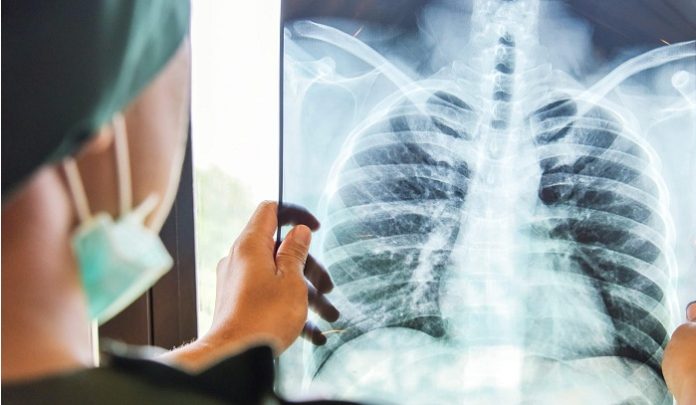
Numerous individuals have been diagnosed with lung cancer sooner thanks to NHS mobile trucks, which are part of the largest ever initiative to improve early lung cancer diagnosis. At least 600 people have been diagnosed earlier thanks to NHS staff who are making it even easier for people to receive a lung MOT in moving trucks visiting different regions around the UK.

As a result of the community initiative, which is part of the NHS Targeted Lung Health Check Project, more than three-quarters (77 percent) of malignancies were detected at stage one or two, giving patients a significantly better chance of beating the disease. In 2018, less than a third of malignancies were detected at stage one or two.

People with lung cancer who are diagnosed early are about 20 times more likely to live for 5 years than those who are diagnosed later. Mobile trucks are screening those most at risk of lung cancer, especially current and former smokers, and asking them to have their lungs inspected as well as get a chest scan on the spot for those who are most at risk.

To help even more individuals benefit from early detection, NHS cancer officials are pushing those who are most at risk for cancer to step forward as soon as they are contacted for a life-saving checkup. New numbers show that only a third of people (35%) go to their lung checkups when the NHS asks them to.

A further 20 NHS lung truck sites are set to open soon, with the capacity to screen 750,000 more people at high risk, allowing thousands more malignancies to be detected sooner.

Each month, the 23 current truck sites send out up to 25,000 invitations. The NHS will boost capacity to deliver about 17 million screening procedures over a three-year period, as stated in the NHS acute recovery plan released earlier this year. These lung checks can save lives: by reaching out into communities, they uncover additional people who may not have otherwise known about having lung cancer โ€“ with scores already detected and hundreds of thousands due to be invited, said Dame Cally Palmer, NHS cancer director.

The trucks are ideally positioned to make them easy to reach, and it is critical that people accept the invitation and step forward towards these potentially life-saving checks as soon as possible.The launch of the Targeted Lung Health Check Programme is a significant step in achieving the NHS Long Term Plan goal of detecting thousands more malignancies at an earlier stage, when they are easier to treat.

The NHS lung trucks, which are being rolled out as part of the NHS Long Term Plan, will visit convenient community sites such as supermarket carparks, sports and shopping centres to conduct targeted lung health checks in areas of the country with some of the highest lung cancer death rates as part of a massive drive to catch more cancers earlier and thus save lives.

The lung trucks not only scan for cancer, but they’ve also detected thousands of people with undiagnosed diseases, including respiratory and cardiac problems, allowing them to get the care they need sooner and avoid hospitalisation. During the outbreak, there were a lot of backlogs and long waits for care. The recovery plan came up with a way to deal with both.

By 2024/25, up to 1.5 million people in the UK would have been asked for a lung checkup, with an expected 7,700 instances discovered earlier under the NHS Long Term Plan. Lung cancer can be difficult to diagnose at an early stage, but these inspections, which are close to people’s homes, highlight how well the NHS is taking action to find more cancer victims, said NHS clinical director for cancer, Professor Peter Johnson.

When cancers are detected early and far more people are referred for tests, lives are saved, which is why the NHS has focused so much attention on early diagnosis in recent years. They understand that some individuals were hesitant to seek care during the pandemic, but if one has a concerning symptom or even has coughed for three weeks or more, then see a doctor and get checked out. Current and former smokers aged 55 to 74 are being urged to consult with a healthcare expert and may be offered a lung scan if they have a higher risk of developing lung cancer.

Trucks move around each town to target the most vulnerable, with one in the Northwestern shifting between Blackburn Rovers and a sports club in Blackpool, while closer to the capital, in Luton and Thurrock, they have been providing more people with the opportunity to obtain a necessary check.

Those who attend will also receive advice on how to quit smoking. In the United Kingdom, smoking is responsible for more than seven out of 10 instances of lung cancer. CT screening has been proven in previous studies to lower lung cancer fatalities by 26% in males and between 39% and 61% in women.

Anyone who is experiencing symptoms of lung cancer should see their doctor immediately rather than wait for a lung check-up.

The Health and Social Care Secretary, Sajid Javid, said he is determined to significantly improve outcomes for cancer patients across the UK, and the 10-Year Cancer Strategy will set out how they will lead the world in cancer treatment. They are also assisting the NHS in addressing the backlog with innovations like community diagnostic centres, that are providing millions of more tests whilst decreasing demand on some other facilities and allowing individuals to be seen more promptly.

This community programme is precisely what one needs to ensure that hundreds of people receive an early diagnosis and the care they require as soon as possible. They received an invitation letter and are very thankful that they took the decision to go forward with the lung health check, Christine and Danny, a couple who both went through the test and gave up smoking after Danny was diagnosed with lung cancer, said. Unfortunately, the CT scan revealed a problem with Danny’s lung, and they were at Castle Hill Hospital within days, obtaining a lung cancer diagnosis.

Danny had no indications besides a cough, which they assumed was caused by smoking, and the couple was surprised to see that the growth was so substantial. They were extremely fortunate that the lung health check identified it just in time, and the incredible cancer team at Castle Hill Hospital was able to operate and eliminate the cancer sans the use of chemo or radiotherapy.

Danny is now cancer-free, but he wouldn’t be here today if it weren’t for the lung health check. Christine said she is eternally grateful to the incredible team that saved her husband’s life, and that she encourages everyone who is offered the opportunity to accept it.

He got a call from a nurse asking him to the lung health check, and he figured he might as well go, said Bill Simpson of Nottingham, who participated in the Targeted Lung Health Check programme. He was informed he required a CT scan and, subsequently, a PET scan at his first consultation. He had lung cancer, he was told at that point. However, it was isolated, affecting just a tiny amount, and it had not spread. One minute you’re sentenced to death, the next you’re granted a pardon, and it all happens in two phrases.

The entire process took around six weeks, from the preliminary tests through the operation and discharge from the hospital. One will be operated on, and will be able to return home in a few days. According to the physicians, it really has given him an extra ten years of life. He has everything to live for, everything just to anticipate. The important thing is that if they locate it, people can be fixed.

Normal
0

false
false
false

EN-US
X-NONE
X-NONE

/* Style Definitions */
table.MsoNormalTable
{mso-style-name:”Table Normal”;
mso-tstyle-rowband-size:0;
mso-tstyle-colband-size:0;
mso-style-noshow:yes;
mso-style-priority:99;
mso-style-qformat:yes;
mso-style-parent:””;
mso-padding-alt:0in 5.4pt 0in 5.4pt;
mso-para-margin-top:0in;
mso-para-margin-right:0in;
mso-para-margin-bottom:8.0pt;
mso-para-margin-left:0in;
line-height:107%;
mso-pagination:widow-orphan;
font-size:11.0pt;
font-family:”Calibri”,”sans-serif”;
mso-ascii-font-family:Calibri;
mso-ascii-theme-font:minor-latin;
mso-fareast-font-family:”Times New Roman”;
mso-fareast-theme-font:minor-fareast;
mso-hansi-font-family:Calibri;
mso-hansi-theme-font:minor-latin;
mso-bidi-font-family:”Times New Roman”;
mso-bidi-theme-font:minor-bidi;}

5 Types Of Brain Injury And Damage … And How They Affect People

5 Types Of Brain Injury And Damage ... And How They Affect People

A brain injury is any injury to your brain, skull, or scalp, ranging from bumps to traumatic brain injuries. Brain injuries and damage are often traumatic, meaning that it is caused by significant blunt force to the head, for example, being hit with a lead pipe or a bullet penetrating the skull.ย 

There are typically two types of brain injuries: those caused by blows to the head and those caused by shaking. The latter is common in infants and children but can occur anytime there is violent shaking. The former is more common in adults and is caused by car accidents, sports injuries, and assault.ย 

The following are the various types of brain injury and how they affect people:ย 

Hematoma

A hematoma refers to the collection or clotting of blood in the brain or its surface. It happens when blood leaves the blood vessels in the brain. Hematomas can occur anywhere in the parts of the brain, including if there is damage to the amygdala. There are two main types of hematomas.ย 

The first is an epidural hematoma which happens when blood collects between the skull and the protective covering of the brain. The other is a subdural hematoma and occurs when blood collects between the dura mater and the arachnoid layer.ย 

A hematoma can lead to loss of consciousness and cranial pressure due to the buildup of blood. If the pressure is not released immediately, it can cause permanent damage or death.

Hemorrhage

A hemorrhage refers to excessive bleeding in the brain. However, there can also be subarachnoid hemorrhage which is bleeding in the space between your brain and your skull. If it is your brain tissue bleeding, it is called intracerebral hemorrhage.

Subarachnoid hemorrhaging often occurs during a traumatic brain injury and usually leads to vomiting and headaches. Intracerebral hemorrhaging has many effects, but it will depend on how much bleeding happens. Over time, it can cause a buildup of blood in the brain, leading to death if the bleeding does not stop.

Concussion

One of the most common forms of brain injury is a concussion. A concussion happens when there is enough blunt force to the head to cause a severe brain injury. A concussion is a traumatic brain injury caused by the brain hitting the walls of your skull or due to rapid acceleration and deceleration of the brain in the skull.ย 

A concussion leads to a temporary loss of function, including memory loss, speech impediment, and the loss of motor skills. On the other hand, repeated concussions can lead to permanent brain damage.ย 

Skull Fractures

The human skull is made of the same material as bones, but without the marrow, so it is so strong and difficult to crack and break. However, with enough blunt force, it can crack or fracture.ย 

Skull fractures can lead to damage to the brain as such blunt force often causes brain movement. The damage will be worse if part of the skull penetrates the brain. Fractures to the base of the skull can damage the nerves and arteries.

Contusions

A cerebral contusion refers to the bruising of brain matter and is similar to the bruising of tissues in other body parts. A contusion will consist of swollen brain matter mixed with blood from damaged blood vessels, including arteries, veins, and capillaries.ย 

Bruises typically occur at the base of the brain, but they can affect any brain part depending on the source of the trauma. Contusions can lead to permanent brain damage if not addressed urgently.ย 

Many types of brain injury and damage often occur due to trauma to the head. Contusions, skull fractures, hemorrhages, hematomas, and concussions are only the most common. Brain injuries affect people differently, but they can lead to death in worst-case scenarios.

To achieve clinical benefits, remote health monitoring data must be integrated

To achieve clinical benefits, remote health monitoring data must be integrated

If we ever needed proof that our healthcare systems have a sustainability problem, COVID-19 provided it. As healthcare organizations struggle with resourcing issues, frontline staff are under enormous pressure, waiting lists for surgery are growing, and health screening appointments are being missed.

But the pandemic has provided a silver lining at least with the increased use of remote monitoring technology. As we discover new ways for remote monitoring to support the sustainability of our healthcare systems, its importance will only grow.

For example, in Singapore, COVID-19 patients are being treated remotely using smartphones, tablets and Bluetooth-connected thermometers, oximeters and blood pressure meters.

Mater Health in Queensland has also deployed monitoring devices to care for COVID-19 patients living in their homes. And in New Zealand, remote monitoring technology like ECG devices and pulse oximeters are being used to design a virtual consult service to assist vulnerable populations in South Auckland.

Such approaches have been proven to work. A study at Brigham and Womenโ€™s Hospital in Boston, Massachusetts, found that remote monitoring technology improved outcomes and reduced costs by 40%. Patients were also 70% less likely to be readmitted.

According to David Hancock, Healthcare Executive Advisor at InterSystems, โ€œThe value of remote monitoring demonstrated during the pandemic has spotlighted that we are on the cusp of something great.โ€

However, there is a long way to go before remote technologies fully deliver on this promise, says Hancock. Medical device manufacturers and healthcare start-up companies need to learn key lessons to promote the take-up of new remote care solutions.

Address the concerns of clinicians

Clinicians have understandable concerns about becoming overwhelmed by the volume of data generated by remote devices. Data needs to be integrated back into their clinical systems, to retain oversight of the patient. If clinicians cannot easily maintain the doctor-patient relationship, risks will be introduced, and new technology benefits could be lost.

To avoid overwhelming clinicians with raw data, information from remote devices needs to be managed by exception. Rather than interpreting streams of data, the technology can provide notifications to clinicians or recommend interventions for them to consider.

Standards-based interoperability support

Manufacturers and start-ups also need to think about integrating devices with existing data infrastructure using standards-based interoperability support. Many remote monitoring devices currently require their own infrastructure. Because of the cost involved, this is a considerable barrier to approving business cases.

If products include standards-based interoperability ,they can leverage existing infrastructure to make them easier and more cost-effective to deploy. A modern interoperability standard like HL7 FHIR, which works securely via the internet, could make a real difference to a productโ€™s viability, whether itโ€™s a medical-grade or consumer device.

Electronic medical record integration

Electronic medical record (EMR) systems represent the most essential data infrastructure devices must integrate with. While the EMR is the most useful place for clinicians to consume remote monitoring data, there are issues. How EMRs consume data from third-party systems must be carefully managed. It can be difficult to update data into the EMR, make the source of information clear so it can be safely used for clinical decision making, or verify its accuracy.

One approach to addressing these issues is for device manufacturers and start-ups to work on integration with EMR vendors individually. Covering all vendors in the market, however, is a tall order. On the other hand, SMART (Substitutable Medical Applications and Reusable Technologies) on FHIR, offers a more innovative approach.

With SMART on FHIR, remote monitoring software can easily authenticate and integrate with other SMART enabled systems. Major EMR systems already support the standard. If you can aggregate remote data for a patient into one SMART enabled EMR, it should work seamlessly with others. That makes it a win for healthcare providers, who can choose from a range of systems, and a win for developers, who gain access to a broader market.

If medical device manufacturers and start-up companies learn these lessons, it will accelerate the take-up of remote monitoring devices and make the data they capture easily usable for clinical decision making. This will ensure they play an increasingly important role in modernizing how care is provided, improving outcomes, and creating efficiencies to make our healthcare systems more sustainable.

How To Stay Healthy With Type-2 Diabetes?

How To Stay Healthy With Type-2 Diabetes?

When you have any type of chronic health condition, the trick to managing it and making sure that you can live as normal and fulfilling a life as possible is staying healthy. When you are healthy, you are better able to manage the symptoms of your condition.

For people who have diabetes, this is very much the case, and with type 2 diabetes, in particular, making an effort to stay healthy outside of the issues with your blood sugar levels can help massively.

If you have recently received a diagnosis of type 2 diabetes and are looking for help with staying healthy to boost your chances of living a long and happy life, then you have definitely come to the right place!

Here are some of the best tips from doctors and health care professionals for staying as healthy as possible with type diabetes, starting with a brief description of the condition itself.

What Is Type 2 Diabetes?

Type 2 diabetes is a common health condition that causes a personโ€™s sugar level in the blood (blood glucose) to become too high. It is a lifelong condition that can cause problems in your everyday life if left untreated and unaddressed.

Some of the main symptoms of type 2 diabetes are being excessively thirsty, needing to visit the bathroom to urinate very frequently, and a feeling of increased and unexplained tiredness. In more serious cases, type 2 diabetes can start to cause further, more severe problems with eyesight, nerves, and heart.

Unlike type 1 diabetes which is a congenital or an acquired genetic condition, type 2 diabetes is a problem with blood sugar that is brought on by lifestyle factors. The failure of the body to properly manufacture enough insulin to keep it healthy is often linked to issues like being overweight/obese and inactive. Although it can develop at any age, it occurs most often in middle age.

Health Tips for Type 2 Diabetes

  1. Change Your Diet

A healthy balanced diet is the most essential management tool in the fight against type II diabetes. It is recommended that obese/overweight diabetics reduce weight on a calorie-deficit diet and then follow a healthy, nutritious diet to maintain a good weight. This will decrease your risk of serious problems like heart disease, high cholesterol, imbalanced blood sugar, and high blood pressure.

Junk food and overeating can be very hard habits to break, but meal planning can be very helpful because you have a set plan that you can keep referring back to.

Learn how to build a healthy plate. You need to make sure that every meal you consume features a healthy balance of fruits, vegetables, proteins, fats, and starches. Things to avoid are excess sodium, sugar, fat and refined carbohydrates. A simple way to achieve this is by switching to whole grain and low-fat options. Choose lean cuts of meat, try to eat more fish, and avoid heavily processed foods.

  1. Maintain An Exercise Regime

Alongside a good diet, the best way to improve heart health and reverse type 2 diabetes is to get into good old-fashioned exercise. The Center for Disease Control and Prevention recommendation is that a person should be doing at least 2 and a half hoursโ€™ worth of moderate-intensity exercise every week.

Split across seven days, this kind of exercise is very achievable even for a beginner. Moderate exercise includes things like cycling, brisk walking, and even gardening. Anything that can even slightly get the heart rate elevated above normal levels is appropriate.

When partaking in your chosen exercise, it is important to make sure that you incorporate all of the important muscle groups from arms to legs to hips to the chest to shoulders to abs to back.

  1. Keep An Eye On Your Levels

Type 2 diabetes is generally associated with imbalanced levels of important body factors like cholesterol, blood sugar, and blood pressure. To keep tabs on the state of your condition, it is strongly advised that you monitor these problematic levels closely and regularly.

Of course, it will be your doctor’s job to check these professionally, but that doesnโ€™t mean that you canโ€™t invest in some apparatus that can help you check at home. It is a good idea to have a blood pressure machine at home, along with a gadget that is able to assess your blood sugar levels. You can get apps to perform these functions.

Doing these checks at home means that you can monitor how your body is doing day by day, week by week. It makes it much more challenging to lapse into old bad habits.

  1. Try To Manage Your Stress

When blood pressure is involved, one of the main things that you need to be trying to control is your stress level. High blood pressure is more common in diabetes patients, and it can increase your risk of developing heart disease or even having a stroke.

If you are constantly anxious and stressed out, it might be a good idea to look into various mindfulness techniques that can help reduce those feelings. Things like deep breathing, meditation, and even muscle relaxation exercises can all be really beneficial.

  1. Stop Smoking

You donโ€™t need us to tell you just how unhealthy smoking is, even for somebody who does not have type 2 diabetes. The combination of both, however, can be deadly. The chemicals in nicotine can cause significant damage to your heart and your blood vessels. With diabetes in the mix, too, it can have an even greater negative impact on your kidneys, your nerves, and even your eyesight.

If you had tried to quit smoking before on your own but didnโ€™t manage to succeed, you should consult with your doctor about getting some more professional help. With your diabetes status in mind, your doctor will be able to support and guide you through.

These tips will help you live a much healthier life and may even reverse your type 2 diabetes.

Understand The Importance Of Proper Early Life Mental Development

Understand The Importance Of Proper Early Life Mental Development

It is important to understand how early life mental development affects children and what can happen if it is not properly cared for. One of the most significant aspects of this issue is that many times parents don’t know, or are unaware, that their child may need additional support. There are some measures you can take as an individual parent to ensure your child’s mental health remains strong: from reading more often with them to playing games together or even simply talking about their day at school. These types of activities promote cognitive development and help them learn new skills like problem-solving and critical thinking. If you suspect there might be something wrong then talk with your pediatrician about screening tools they might recommend before seeking out any type of specialist.

In this article, we will discuss what elements are important for proper early life mental development. We will also go over what can happen if this development is not properly cared for and what parents can do to help their children.

Neurolinguistic programming and children

Neurolinguistic programming is when you help other people. You talk to them and make sure they are okay. When children learn, they learn how to talk and how to read books. They also learn how to do things that are hard for their body like walking or running. If a child does not have proper neurolinguistic programming, they will not be able to do these things when they are older. Once you start to understand what exactly is NLP and how it can affect your relationship with the world surrounding you (including your children) it can be pretty easy to see how this could be used to improve their development. For example, if you are constantly negatively talking to your child then they will likely start to believe that the world is a scary and dangerous place. This can lead to all sorts of problems later on down the road. On the other hand, if you use NLP techniques to reframe these conversations in a more positive light then your child will be more likely to see the world as a safe and happy place. This, in turn, will help them to develop into well-rounded and confident adults.

Expand their knowledge

There are several things that you can do as a parent to help support your child’s neurolinguistic programming. One of the most important things is to make sure that you are regularly reading with them. This helps them to learn new vocabulary words and understand the different grammar rules that they need to follow to communicate properly. Additionally, playing games together is also a great way to help them develop these skills. Games that require them to use critical thinking and problem-solving skills can be particularly helpful. Finally, simply talking with your child about their day-to-day experiences can also help them to develop their neurolinguistic programming skills. By listening to them and talking about what they did during the day, you can help them to process these experiences and learn from them.

What can happen if you ignore this?

There are a few things that can happen if early-life mental development is not properly cared for. One of the most common problems is that children may have difficulty forming attachments with other people. This can lead to social problems and difficulties in school. Additionally, children who do not have proper early life mental development may also have difficulty regulating their emotions. This can lead to problems with anxiety and depression. Because of that, they may also be more likely to engage in risky behaviors. This could include drug use, alcohol use, and unprotected sex.

Let the child explore

The world is an awe-inspiring, beautiful place. It’s also a dangerous and sometimes scary one too. There are dangers that children may not be aware of until they grow up. For example, when you’re young your parents tell you not to touch the stove because it will burn your hand; but once you have experience with heat then this no longer applies to you. That’s why kids need to explore their environment and learn about the consequences so they can make smart decisions in their lives later on down the road

One thing that has been shown by research is that people who have had more opportunities for exploration as a child tend to be smarter than those who haven’t. This is because they’ve had more chances to learn about the world and how it works. When children can explore their environment, they’re able to learn about cause and effect. They can also develop important skills like problem-solving and critical thinking. Additionally, exploration can also help children to develop a sense of competence and self-efficacy. This is when they believe that they can do things and that they are capable of handling whatever comes their way. All of these things are important for proper early life mental development.

By taking the time to understand the importance of proper early life mental development, you can help to ensure that your child has a bright future ahead of them. There are many things that you can do as a parent to support this process. Be open to learning from experts and fuel it with unconditional love.

Is Compensation Culture Still Alive And Well?

Is Compensation Culture Still Alive And Well?

After a personal injury or an accident, people tend to fall into one of three camps. First, there are those who are just concerned about getting better โ€“ a personal injury claim couldn’t be further from their minds.

Then there are angry people who want to find that person or organization and make them pay for what they have done. This can often be fueled more by family and loved ones than by the victim themselves.

And then there are those who are reluctant to make what could be a rightful and very genuine claim because they don’t want to be perceived as part of the compensation culture.

What is Compensation Culture?

Shiny offices in this glorious ocean-fronting location present a positive and upmarket image with no whiff of the compensation culture.

Like those at Boynton Beach personal injury lawyers, certain lawyers buck the trend that claiming a personal injury or accident is somehow an underhand and grubby situation with people trying to make a quick buck.

Compensation culture was a term coined in the 1990s in the US following the landmark case of Stella Liebeck, who, in 1992, scalded her legs with a hot coffee from MacDonalds and was awarded $2.9m in damages.

Compensation culture really doesn’t have that much to do with personal injury. It’s more about a sea change that we should all be entitled to some sort of recompense or financial sticking plaster when something goes wrong.

Compensation culture replaces a former more relaxed view of life which was generally quite fatalistic and built around the premise that “these things happen.”

The Impact of Compensation Culture

A right to legal action gives people control and lifts the stigma of being a victim.

However, some people find the concept of compensation culture unpalatable, which can deter them from taking action that could be totally justified and in their best interests.

The fear of compensation claims places an ever-growing burden on organizations and businesses with onerous Health & Safety requirements and restrictions on activities that used to be deemed quite acceptable and safe.

Where children are concerned, protecting them from risk and accidents while still allowing them to be children is often cited as ‘compensation culture gone mad.’

Take, for instance, the English school which insisted catering staff must stop baking triangular flapjacks after a pupil was struck in the face. Only squares and rectangles are allowed on the baking tray now.

Suppose compensation culture has curtailed the activities of adults and children. In that case, it certainly hasn’t’ affected the burgeoning personal injury market in the US, which is estimated to be $41 billion in size in 2021 and still growing.

Conclusion

There are always two sides to every story, and, somewhat ironically, compensation culture may make the world a safer place. Accident rates in the US are declining year on year, and with the advent of technology like self-drive vehiclesand AI, some sectors may see injury rates decline even further.

Is It At All Possible To Build Herd Immunity To COVID-19?

Is It At All Possible To Build Herd Immunity To COVID-19?

The fresh, new, astonishingly efficient COVID-19 vaccines were rolling out across the US this time last year, injecting a strong note of confidence into the country’s formerly stumbling pandemic response.

Hundreds of thousands of people were queuing up every day to get their vaccinations. Researchers were monitoring a new number: the proportion of Americans who had been vaccinated, rather than the regular drumbeat of cases, hospitalizations, and deaths. One believed that this number represented the best chance of surviving the infection.

The United States was caught up in a hallucination of achieving herd immunity, a point at which people who are vulnerable, such as those who were too young to be vaccinated or who didn’t respond well to vaccines, might well be shielded anyway, since, as a society, we might well stitch a hidden safety net around them.

If someone is infected with a virus, they will be surrounded by enough others who are immune to transmission that the virus will have nowhere to go. It is unable to spread. The country has achieved this point in its fight against several formidable diseases, such as measles and rubella. With COVID-19, it felt like the nation would be able to get there. However, we were most likely mistaken. In an interview with CNN, Dr. Anthony Fauci, head of the National Institute of Allergy and Infectious Diseases, said the concept of conventional herd immunity may well not apply to COVID-19.

And it means one won’t go on without having SARS-CoV-2 in the community for a long time, as per Fauci, who lately co-authored a report in the Archives of Infectious Diseases on herd immunity.

How did we get rid of the measles?

The measles, like the virus that causes COVID-19, spreads through the air. According to the CDC, it is so infectious that if a single person has it, 9 out of 10 people in their immediate vicinity will contract it because they’re not immune. According to a few researchers, the Omicron viruses are as infectious as measles.

Because of three factors, the United States has successfully eliminated measles transmission and has kept the virus from circulating in the country: an extremely effective vaccine; a virus that does not change or mutate in substantial ways over the years; and a successful childhood vaccination campaign.

As per the CDC, the measles vaccine is 97 percent effective in preventing the disease. Studies have shown that once a person is vaccinated, individuals are protected for the rest of their lives.

Many states in the US had formerly set the lofty aim of vaccinating more than 90% of their children against the illness by the time they entered kindergarten. For more than two decades, this significant concentration of vaccination coverage, the vaccine’s durability and efficiency, and the virus’s relative stability have allowed the United States to avoid severe outbreaks of the disease.

Herd immunity, however, must extend beyond the United States’ boundaries. Each year, a certain number of instances develop when tourists bring it into the country, but as the country has community-level protection against it, it has never recovered a stronghold and has continued to circulate.

Virus eradication isn’t always successful. Because of vaccine hesitancy in the United States, herd immunity from measles is diminishing in many parts of the countryโ€”and indeed, the world. As more people refuse vaccinations, the World Health Organization cautioned in 2019 that measles might become prevalent again around the world.

Keeping COVID In Check

Unfortunately, COVID-19 does not follow the same set of regulations.

The bad news is that the coronavirus that causes COVID-19 evolves a lot and in substantial ways, Fauci said. They have already had five different variations over the course of two years: Alpha, Beta, Delta, and Omicron and then BA.2 from Omicron, he remarked.

Another piece of bad news is that safe and effective vaccines are not widely accepted, Fauci stated. Simply said, not enough individuals have been immunised.

As per Dr. Adam Kucharski, co-director of the London School of Hygiene and Tropical Medicine’s Center for Epidemic Preparedness and Response, the more contagious a virus is, the more individuals must be vaccinated to prevent it from spreading across a community. Kucharski addressed how assumptions around herd immunity must adjust as viruses become more infectious in a July 2021 Twitter discussion and a latest talk with CNN.

If the vaccines currently available could prevent 85 percent of virus transmission, Kucharski predicted that 98 percent of the population would need to be inoculated for a virus as virulent as the Delta strain. He believes that if vaccines didn’t block transmission to that amount, herd immunity would be impossible to achieve with the current doses.

Kucharski and his co-authors explain in a paper published in the journal Eurosurveillance in May 2021 that a large part of herd immunity is dependent on how successfully vaccines inhibit transmission, the process of a sick person transferring the virus to someone else.

Sterilizing immunity is thought to be conferred by vaccines that impede transmission. The measles vaccine gives people sterile immunity. The COVID-19 vaccinations, on the other hand, do not. Although vaccination diminishes the risk of passing COVID-19 to others, contact tracing investigations have revealed that it still happens.

Kucharski wrote in the article that we may not be able to achieve herd immunity for COVID-19 until enough people have developed immunity after getting the infection if not enough people get vaccinated, which must be pretty much the entire population for highly contagious variants, or if the vaccines we have don’t stop nearly all transmission.

There are many other elements to consider, such as the longevity of resistance throughout time. Not only is vaccine-induced immunity not permanent, but infection-induced immunity is not forever, Fauci explained, implying that one needs to be exposed to vaccines or infections on a regular basis to keep their defences up to date.

Keeping our fingers crossed

However, some people aren’t ready to entirely abandon the idea. Barry Bloom is a Harvard University emeritus professor of public health. Making better vaccines, he believes, is one way to get there.

Companies are developing vaccinations that would target the virus’s more stable parts, such as the spike protein’s stem, which does not appear to evolve as often. This could lead to stronger, longer-lasting immunity that can withstand the virus’s shape-shifting variations.

Nasal spray vaccinations are also promising as they may aid in the development of antibodies in the nose and throat. It is hoped that these vaccines will cause resistance in the parts of the body where it is most needed, resulting in the kind of sterilising immunity that stops transmission.

If not a vaccination in a nasal spray, why not monoclonal antigens in a spray that might be used daily before leaving the house to prevent virus transmission, according to Bloom? And the concern is, will they be able to eradicate it before it spreads asymptomatically? Is this going to be a never-ending game for us to deal with?

Or, as Bloom suggests, perhaps the best one can hope for is evolution’s help. He claims that the virus is evolving to be more infectious over time, but that this does not necessarily mean that it will cause more serious illness. In the end, taking a life does little to help the virus. It requires hosts. It would be preferable if the virus evolved to be as contagious as possible but with a lower tendency to cause serious sickness.

Bloom believes that this is what occurred to the coronaviruses that cause common colds today. He is of an opinion that they began as ferocious predators before evolving into pests over time.

That way, not only do they have a chance to survive, but so do we too.

More Shanghai COVID Cases Lead To Stricter Restrictions

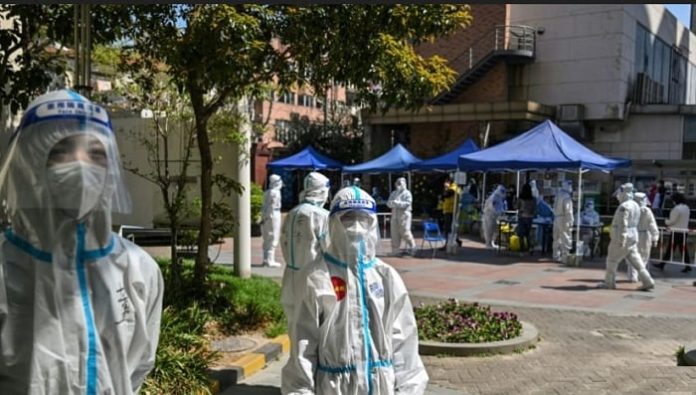
On April 16th, Shanghai reported a new high for symptomatic COVID-19 cases, while other cities throughout China tightened controls as the country continued its “dynamic clearing” strategy to eradicate the highly communicable Omicron form.

A day before, the Zhengzhou Airport Economic Zone, one of the central Chinese manufacturing areas where Apple Inc. supplier Foxconn is located, issued a 14-day lockdown “to be adjusted according to the pandemic scenario.”

Following hundreds of COVID-19 infections this month, the city of Xian in northwest China recommended citizens avoid needless visits beyond their residential complexes and urged businesses to have staff work from home or live at their job on Friday. In response to citizens’ fears about possible food shortages, a Xian government official stated on Saturday that the declaration did not represent a lockdown and also that the city would not enforce one.

On Saturday, the mayor of Suzhou, near Shanghai, said that all employees who are able to work from home must do so, and that residential complexes and business campuses should avoid allowing individuals and cars to enter without permission. In its most major outbreak, it has recorded more than 500 infections. Shanghai, which has been at the epicentre of China’s ongoing COVID outbreak since early March, reported a new high of 3,590 symptomatic cases and 19,923 asymptomatic cases on Saturday. The number of asymptomatic cases increased marginally from 19,872 the day before. Despite the fact that most of the city’s 25 million citizens are still under lockdown, its case total accounts for the great majority of cases nationwide. China’s “dynamic clearing” programme tries to contain rare outbreaks as rapidly as possible. The method has been the optimal choice at this moment based on China’s existing epidemic condition.

However, in a letter posted on the consulate’s website on Saturday, Japan’s consul general in Shanghai urged the local authorities to address the concerns of Japanese firms.

In recent weeks, domestic support for a zero-COVID policy has eroded as virus-related restrictions have resulted in food shortages, family separations, lost income, and economic hardship.

Disruptions In The Supply Chain

According to analysts, widespread risks are likely to cause delays in shipments from companies such as Apple this year, putting a strain on the country’s economic growth rate.

The amount of cash that banks must maintain as reserves was slashed by China’s central bank on Friday evening, attempting to cushion a steep slowdown in growth, albeit the drop was smaller than widely predicted. Analysts at Goldman Sachs advocated more policy easing. Policymakers may lean toward deploying additional fiscal measures (such as accelerating the development of large infrastructure projects) and focused monetary stimulus (like relending & rediscounting) as the key policy levers going forward, Goldman Sachs wrote in a note.

Only personnel with valid passes, health codes, and proof of negative COVID tests will be allowed to leave the Zhengzhou economic zone during the two-week period, local councils said in a post on an official WeChat instant messaging account, though “special vehicles” will be free to travel normally for work reasons.

On April 15, China had 24,791 new cases of coronavirus, with 3,896 of them being symptomatic and 20,895 of them not, according to the National Health Commission.

Based On WHO Findings, FDA Halts Covaxin Second Phase Trial

Based On WHO Findings, FDA Halts Covaxin Second Phase Trial

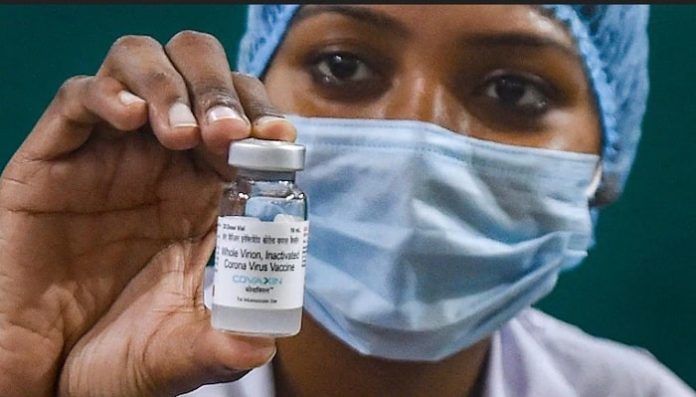
The phase 2/3 clinical trials for Bharat Biotech’s COVID-19 vaccine, Covaxin, in the United States have been halted by the US Food and Drug Administration. As per a press release from Ocugen Inc., Bharat Biotech’s partner for Covaxin in the United States and Canada, the FDA’s decision was based on the US firm’s decision to willfully enforce a temporary pause in dosing participants after the World Health Organization’s findings on Covaxin manufacturing plants in India. This is because Ocugen decided to put a pause on dosing participants of OCU-002 while it looks into statements made by the World Health Organization after they visited the manufacturing plant of Bharat Biotech International Limited (BBIL).

WHO had already stopped buying Covaxin from US procurement agencies because its inspectors found problems with GMP (good manufacturing practises) at the Bharat Biotech plant where the drug is made. The Hyderabad-based firm, on the other hand, said that it had not given the Covid vaccine to any UN agency and that the suspension would not have any effect on them. In Ocugen’s Phase 3 immuno-bridging study of Covaxin, the number OCU-002 stands for the number of the study.

The company said that it would work with the FDA to answer any questions that came up. In February, the FDA lifted its clinical hold on Ocugen’s IND to study the Covaxin drug. A WHO inspector came to Bharat Biotech’s plant, and the company said it was temporarily halting production of Covaxin because it had already met its supply obligations to procurement agencies and thought there would be less demand for the drug in the future.

It said that after the WHO’s recent post-Emergency Use Listing (EUL) inspection, the company is working on even more improvements and upgrades to make sure that the production of Covaxin keeps up with ever more strict global regulations.

Stroke Rehabilitation: Best Hospitals and Their Approach

Stroke Rehabilitation: Best Hospitals and Their App

After a stroke, the recovery period is supervised by qualified neurologists, physical therapy instructors, massage therapists, and psychologists in specialized hospitals. An individual stroke rehabilitation program is designed for each patient, considering the severity of the health condition. This approach allows for the creation of the most effective rehabilitation course.

How to choose a rehabilitation hospital?

Before choosing a hospital, you need to find reliable information about the level of the hospital, its certification and success rates, equipment and facilities, pricing policy, as well as evaluate patients’ reviews.

The best rehabilitation hospitals for stroke are:

  • Bundeswehr Academic Hospital Berlin
  • University Hospital of Ludwig Maximillian University of Munich
  • University Hospital Frankfurt-am-Main
  • Vivantes Neukรถlln Hospital Berlin
  • Catholic Clinic Koblenz-Montabaur

Among thousands of medical institutions, the mentioned hospitals provide patients with everything that is necessary for recovery, including qualified healthcare professionals, high-tech equipment, a comforting atmosphere, and a wide range of medical and rehabilitation methods. These hospitals provide care for patients with strokes of varying localization and severity.

You can find more information about the best rehabilitation hospitals for stroke on the Booking Health website.

Techniques of stroke rehabilitation

The rehabilitation program after a stroke is elaborated based on the level of brain damage. Due to a stroke, speech skills, hearing, and motor activity may become impaired. In addition, vision and memory can be impaired, as well. In severe cases, patients are unable to walk. A rehabilitation complex is chosen in accordance with the occurred changes. It should be systematic, consistent, and holistic.

Specialists at the rehabilitation centers set the following goals for the early rehabilitation period:

  • Activate the patient’s motor functions
  • Normalize the increased muscle tone
  • Speed up the recovery of swallowing function
  • Return the lost skills of walking
  • Improve cognitive functions and eliminate speech disorders
  • Facilitate psychological recovery

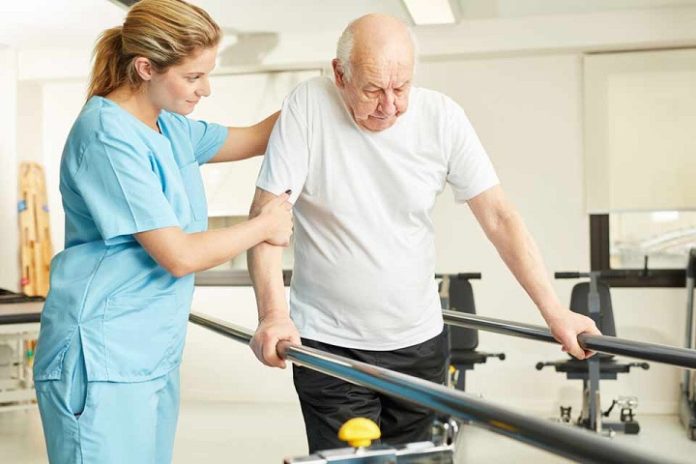
Physical therapy begins as early as the first days after a stroke. First, it includes passive exercises in bed. Its task is to prepare the body and limbs to restore movements gradually. Most patients require performing rotations, bending and unbending arms and legs. It is not the patient who performs the movements but the physical therapy instructor. Later the exercises become more complicated; the patient begins to sit up and then is taught to get out of bed. Some patients begin to get up from 3 to 5 days after the stroke; in other cases, it takes 2-3 weeks or more to regain this skill.

Stroke rehabilitation of patients with speech disorders is carried out using unique stimulating and disinhibiting methods that contribute to the first reproduction of individual words. Then coherent situational speech and out-of-situational utterances become possible. Pictures are used with the help of which patients are taught to name objects or actions and repeat individual sounds, words, and make up phrases.

Undergoing rehabilitation after stroke during a lockdown

Rehabilitation should not be neglected as it is vital for recovering from a stroke. The best hospitals abroad offer their most advanced programs for people recovering from a stroke.

If organizing rehabilitation abroad seems challenging for you during a lockdown, Booking Health can help you undergo the necessary treatment.

Booking Health is the certified international medical tourism provider. The company offers services like assistance in choosing a rehabilitation center, translating medical reports and managing paperwork, booking appointments, helping to get a medical visa even if there are issues during the process due to the COVID-19 pandemic, booking airline tickets and accommodation, and basically helping you with everything you need or find challenging to handle on your own.

Feel free to leave a request on the Booking Health website if you need any help with undergoing rehabilitation after a stroke abroad.

Translate ยป