











Close
Digital Health & Ai Innovation summit 2026
Medical Taiwan 2026

How Medical Entrepreneurs are Changing the Healthcare Industry

How Medical Entrepreneurs are Changing the Healthcare Industry

Healthcare systems all over the world have been put to the test this year. Parallel to the stress and limitations of capacity, however, the pandemic has shown that there is a need and a willingness to innovate procedures within the healthcare industry. As a result, many trained doctors and medical staff have taken the initiative to leave their practices in favor of business, building solutions for problems they themselves experienced while working in healthcare.

Medi- or Doctorpreneurs

Many might wonder how medical training and business go together. In order to be successful in either of them, however, a great deal of passion for the cause, perseverance despite setbacks, and an urge to contribute to a better world are necessary. Diagnosing a problem and finding a solution for it are central in both worlds. With insight into the mechanisms of the healthcare industry and awareness of its lacks and needs, who would be better suited to introducing innovation than medical professionals themselves?

Safe Accessibility

Many healthcare startups and innovations are focusing on improving communication in healthcare. While the tools these startups create might come at these improvements from different anglesโ€”facilitating collaboration between staff members; improving patient access to medical expertise; or, booking appointmentsโ€”many of them serve the main goal of making processes within and access to the healthcare systems easier and more affordable.

Another goal of medi- and doctorpreneurs is to create networks that pool expertise. Having access to a network of colleagues who are experts in their fields affords medical staffโ€”and eventually their patientsโ€”the opportunity to benefit from focused insight into topics of interest without having to browse myriad websites or platforms.

Keep it Safe

Thanks to increasing digitalization, the healthcare industry also sees itself faced with the complicated necessity of keeping patient data safe. In order to reduce the risk of exposing their patients, some medi- and doctorpreneurs have made it their mission to focus on creating software engineered to keep patient data safe and ensuring that other existing platforms used by hospitals and clinics have access to it. These tools can include secure portal platforms, messenger services, and encrypted verification processes to guarantee peoplesโ€™ identities.

The Perfect Combination

Ideally, all solutions that attempt to improve communication between healthcare professionals are also being built to honor the security of the data exchanged on their platforms. Siilo, a secure messenger app for modern healthcare professionals, does exactly that. Its co-founder, Joost Bruggeman, recognized the lack of intuitive digital communication tools that also ensured data safety when training as a surgeon. He then took this experience and built a messenger designed specifically for healthcare professionals, incorporating security features such as two-factor authentication, PIN code protection, and end-to-end encryption to safeguard data sent via the app. This has led to over a quarter-million users actively using Siilo to connect with colleagues and contact experts for advice on patient cases.

With the combination of clear insight into healthcare industry needs and their desire to provide care to the world, medical professionals are perfectly positioned to drive change in healthcare. Letโ€™s look forward to 2021โ€™s innovations as medi- and doctorpreneurs seek to improve the lives of their former colleagues and patients alike.


 

Korea’s bio-healthcare industry to leap forward in 2021

Hospital & Healthcare Management Interview: Virtual Hospitals & VitalTech

The COVID-19 outbreak appeared to help the growth of Korean bio companies in 2020 as they succeeded in attracting investors by swiftly launching diagnostic kits for the novel coronavirus and securing drug and vaccine-making contracts from overseas biopharmaceutical firms.

Industry analysts have forecast the upward trend in the local bio-healthcare industry will continue through 2021 given demand for diagnostic kits will remain stable as the risk of multiple waves of the pandemic still hangs over most countries.

With global biopharmaceutical companies rushing to launch vaccines and treatments for COVID-19, they also anticipate the country’s contract-based drug manufacturers will get many drug production deals.

In addition, makers of newly developed drugs utilizing microbiomes will gain attention as the growing convergence of DNA sequencing and gene therapies with artificial intelligence technology will accelerate their use to develop new treatments for diseases such as cancer and diabetes.

“Due to the pandemic, attention toward the bio industry was greatly enhanced throughout 2020,” Chae Su-chan, vice president at KAIST and director of the university’s Center for Bio-Healthcare Innovation and Policy, told The Korea Times.

“Forecasting the industry’s future in 2021 โ€• demand for medical equipment including diagnostic kits, drugs and vaccines โ€• and medical services will continue to increase,” he said.

In contract-based drug manufacturing, Samsung Biologics is expected to sign multiple deals this year โ€• the company has already secured two contracts to manufacture COVID-19 treatments for global biopharmaceutical companies.

The company currently operates three plants in Incheon, west of Seoul, with the third one being the largest manufacturing plant in the world with an 180,000-liter capacity. The company is investing 1.74 trillion won ($1.6 billion) to construct a fourth plant.

“In 2021, we will try to make sure there are no issues in constructing the fourth plant. When it is completed, our manufacturing complex will have a combined capacity of 650,000 liters, which accounts for about 30 percent of global contract manufacturing facilities,” a company official said.

Makers of diagnostic kits will also enjoy stable demand for COVID-19 test kits, given the virus’s uncontrolled spread around the world.

Seegene, a local molecular diagnosis company, became one of the world’s leading diagnostic firms in 2020 with its COVID-19 test kits. The company rolled out the testing kits just three weeks after it started to develop them as it used advanced technology to quickly analyze a vast amount of virus data and the classification of patients.

Seegene recently achieved a sales milestone of 1 trillion won, due to it winning the trust of customers with its quality molecular diagnostic reagents. The company plans to increase test kit production capacity to meet the growing demand, estimated to be worth 5 trillion won in the first quarter of 2021, up from the current 2 trillion won. Proving that officials have confidence in the company’s future growth potential, 26 senior executives purchased 16,299 treasury stocks on Dec. 29.

Major investors are recently betting big on local genomics firms as they are expected to have strong returns over the next few years, according to stock market analysts.

Genome & Company is one firm receiving attention from investors. Founded in 2015, the company develops innovative therapeutics in immuno-oncology, mainly utilizing microbiomes. The company aims for its microbiome therapeutics to be used in cancer and diabetes. The firm also plans to develop other business models using microbes and probiotics, advancing into the cosmetics and dietary supplements markets.

The company is set to secure more funding opportunities as JPMorgan invited its leaders to make a presentation at the 39th Annual JPMorgan Healthcare Conference, which will run from Jan. 11 to 14.

“Genome & Company will explore chances for strategic partnerships through various one-on-one meetings with top-level institutional investors who will attend the event. Specifically, we will introduce the specifics of a product pipeline being developed and also we are seeing progress in discussions of possible licensing agreements,” the company said.

Gov’t urged to draw up long-term plan

Despite the strong performance of local bio-healthcare players in 2020, industry analysts stressed they are being left behind global biopharma giants in terms of developing new drugs and vaccines.

To help them succeed in developing new drugs, which requires an enormous amount of money and time, they have called on the government to deliver proper measures to support their long-term research projects.

They said the COVID-19 outbreak was a chance to confirm the local bio industry’s technological capability as several companies agilely rolled out coronavirus test kits and the government’s healthcare and quarantine measures worked properly in a timely manner.

But at the same time, the virus pandemic also proved their lack of capability in new drug and vaccine development, lagging way behind overseas biopharma giants in terms of launching treatments or a vaccine for COVID-19.

“After the virus outbreak, Korean companies gave promise of potential to become noteworthy players in the global bio industry. But the virus crisis also showed there was a great gap between them and foreign bio firms in terms of drug and vaccine development capabilities,” Chae said.

“This stems from the government policy, which pushed local companies to come up with tangible results in a short time. Given that new drug development requires an enormous amount of time and money โ€• more than 1 trillion won and a decade for development โ€• the government is urged to come up with a long-term support plan to help local companies with their drug-making activities,” the KAIST vice president added.

Investment in AI and nanotech surges in wake of COVID-19

The healthcare technology revolution: AI-assisted doctors

The fallout from COVID-19 is driving huge investment within AI and nanotechnology, with healthcare investment expected to grow at a rate of nearly 50% more a year towards a market set to be worth $1.333 trillion by 2027, according to Vector Innovation Fund.

The acceleration highlights wide recognition that the world cannot afford the human and economic cost of another pandemic, it says. At present, 70% of global healthcare provision is spent on providing care for the last few months of our lives.

It is further accepted that the pandemic has shown the inefficiency of the worlds centralised healthcare model and its poor outcomes, with far reaching economic effects and negative impacts on treating cancers, mental health, cardio-vascular conditions, and the emerging challenge from Long COVID.

But observers say this will now trigger the greatest transformation of investment in advanced healthcare technologies since World War II.

These include sophisticated nanotechnology-based diagnostics, biomarkers, vaccines, novel therapies, highly targeted nanomedicines and AI, allowing us to move to a more sustainable, digitised, decentralised and democratised point-of-care environment.

“With dynamic investment these will free our economies and future-proof us from infectious diseases as well as develop solutions to antibiotic resistance, another global healthcare challenge that only technology can solve,” VIF says.

“Investors are already switching to this accelerated model, away from traditional healthcare infrastructure and onto point of care and precision medicine.

“This delivers sustainable healthcare economics as well as improving life and longevity. Such investment is expected to bring transformational impact and returns over the next decade and beyond.”

This trend was apparent before COVID-19 but investment in healthcare technology in the second half of 2020 has already reached record levels and is set to climb significantly over the next decade.

One particular investment group has developed a unique gateway fund to innovative and disruptive technologies, targeting current and future pandemics, as well as transforming global healthcare.

This international investment platform operated by Vector Innovation Fund G-P Srl, is registered and regulated as an Alternative International Investment Fund, domiciled in Luxembourg due to the country’s world class reputation for tax efficiency and regulatory standards. This highly innovative fund is attractive and available only to sophisticated international, UHNW, family office, sovereign wealth, and other institutional investors.

Vector Innovation Fund (VIF) has now launched a $300 million sub-fund for pandemic protection and future healthcare, aiding and supporting precision medicine, highly advanced point of care and AI technologies to support the global economy, sustainable healthcare, and life longevity.

Paul Stannard, chairman and general partner of VIF, says, “Politicians are always forced to defend our old, centralised healthcare model but the pandemic has proved beyond doubt its not fit for purpose.

“A new approach to emerging technologies is vital,” he says. We have brought together some of the worlds leading figures in biomedicine, advanced diagnostics, nano biomarkers, telemedicine, AI and machine learning to accelerate these transformational technologies into the markets, backed by sophisticated and institutional investors creating one of the most dynamic international investment structures,” Stannard explains.

“Globally, we have had to deal with Ebola, Zika Virus, Bird Flu, and now COVID-19 in one decade, but the economy must adapt to a new future, where prevention and early intervention as well as using AI to drive more sustainable models for healthcare and investment.”

One example of this is the profound change in telemedicine in just a few months. These technology solutions for GPs and patients, have allowed us to monitor and support many more patients during this pandemic the start of an unstoppable transformation.

Stannard says previous investment criteria were holding back innovation and only reinforcing the broken property-focused and centralised models for healthcare. Innovators have proved that they can develop and commercialise novel technologies and have some approved within months, not years, and this trend will advance beyond the current crisis, which is creating this groundswell of pent-up investment in advanced technologies.

“Our team have an excellent track record in industry, healthcare, technology and investment, with 21 exits and a total value creation of $2.4 billion, including two successful IPOs,” he says.

A recent report by KPMG and HFS Research highlighted how companies and governments need to make smart investments in emerging technologies if they are to prevail against future pandemics: 65% of 900 global executives polled said: We don’t have a choice or we risk threatening our very existence.

Paul Sheedy, founder of The World Nano Foundation, an international not-for-profit organisation for the commercialisation of nanoscale technologies, adds, “Nanomedicine and the decoding of the genome have been enhancing healthcare for a number of years, but the pandemic has catapulted healthcare investment creating a hockey stick effect for investors.

“This includes vastly improved home testing and advanced diagnostics where we know outcomes are significantly improved through early intervention,” he says.

Added to this, highly targeted precision medicines or therapies are going to transform all forms of healthcare, allowing us to work in parallel with and then ultimately move away from the current archaic centralised healthcare system delivery.

Nanotechnology is forecast to more than double from $54.2 billion this year to $126.8 billion by 2027 and will create a positive force for change when combined with AI and machine learning, forecast on its own to soar 22.5% a year through to 2027 from a $284.38 billion market in 2019.

“We are going to see these twin forces of innovation transform how we live, work, and manage our health in real time as well as develop sustainable models for everything from food production and energy to transport and pollution, all of which improve health and well-being.

“The world of philanthropy and impact investing is also undergoing significant change as we realise that we must advance everything from healthcare for all with more affordable point of care to climate change, improved biodiversity, and reversing pollution.”

Naz Bashir, trustee of global technology charity World Science Aid, says, “The world has suddenly woken up to the fact that the global challenges of healthcare, pollution and climate change must now be tackled head on.

“The pandemic has proved that money has no value without sustainable life and a stable economy. The world has reinforced the mistakes of supporting tired funding models for too long, and one positive outcome from the current global crisis is recognition that we now need to invest for the future, and these new technologies can right some of the wrongs of the past.

“For instance, two billion of the worlds seven billion people still do not have access to clean water or simple point of care technology,” says Bashir. “The next generation deserve and demand a better future that these enabling technologies can offer our governments and investors towards building a better post-pandemic future.”

COVID-19 vaccine dry run held at 285 session sites across 125 districts in India

COVID-19 vaccine dry run held at 285 session sites across 125 districts in India

Health minister assures that countryโ€™s cold chain infrastructure has been sufficiently upgraded to ensure last mile delivery and that adequate supplies of syringes and other logistics have also been made

A day after the CDSCOโ€™s Subject Expert Committee (SEC) on COVID-19 recommended an emergency use authorisation (EUA) for Oxford University-Astrazenecaโ€™s COVID-19 vaccine candidate Covishield, the Ministry of Health & Family Welfare today conducted a nationwide mock drill at 285 session sites to test the end-to-end planned operations and the mechanism that has been set up to ensure smooth conduct of the COVID-19 vaccination that is expected to begin soon.

As per the health ministry, the dry run was conducted across 125 districts covering all States/UTs having adequate representation of urban and rural districts along with hard-to-reach areas.

The Union Minister for Health and Family Welfare Dr Harsh Vardhan also visited two mock vaccination sites in Delhi to review the dry run drill, first visiting the GTB Hospital in Shahdara and later an Urban Primary Health Centre (UPHC) in Daryaganj.

Dr Harsh Vardhan said that the digital platform, Co-WIN, repurposed from the e-VIN platform will provide real time information of vaccine stocks, their storage temperature and individualised tracking of beneficiaries of the COVID-19 vaccine. This platform will assist programme managers across all levels through automated session allocation for pre-registered beneficiaries, their verification and for generating a digital certificate upon successful completion of the vaccine schedule. More than 75 lakh beneficiaries have been registered on Co-WIN platform till date, he said.

Speaking on the preparedness for ensuring that the vaccine reaches even the remotest corner of the country, Dr Vardhan said that the countryโ€™s cold chain infrastructure has been sufficiently upgraded to ensure last mile delivery. Adequate supplies of syringes and other logistics have also been provided for.

He also warned the citizens against falling prey to rumours and disinformation campaigns regarding the safety and efficacy of the COVID-19 vaccine and rubbished rumours being propagated on social media which are raising doubts in the mind of the public regarding the vaccine side-effects. He urged the media to exercise caution and to behave responsibly and check all facts before publishing or broadcasting any reports.

Dispelling doubts regarding the countryโ€™s capability to undertake such a massive vaccination drive, Dr Harsh Vardhan noted that India has been applauded by the world for its robust Universal Immunisation Programmes. He said India has conducted several successful immunisation drives with respect to polio, rubella and measles. He narrated his personal experience from the early nineties of having galvanised efforts of millions of Indians which eventually led to the eradication of Polio from the country.

โ€œIt is as a result of our steadfastness and dedication, that India was declared polio-free in 2014. Our rich learning from the earlier immunisation drives including the Polio vaccination campaign is being used to guide our present countrywide COVID-19 vaccination campaignโ€, he stated.

The Minister said that the entire operational planning and IT platform had been field tested in four states on December 28-29, 2020; and on the basis of feedback received, certain enhancements have been made in the system. All the State and District officials have been thoroughly trained for conducting this dry-run that is aimed at testing the laid-out mechanisms for COVID-19 vaccine roll-out. This dry run will end with review meetings at district and state level to discuss the issues and challenges encountered during the exercise. States/UTs have been requested to share the feedback with MoHFW which will be analysed for ironing out any glitches in the final execution and further refinement of the operational procedures.

Rinac produces mobile ICU facilities for COVID-19 relief with BASF’s Elastopir solutions

Rinac produces mobile ICU facilities for COVID-19 relief with BASF's Elastopir solutions

Rinac India (Rinac), an insulated panel and refrigeration system producer in India, recently produced mobile medical Intensive Care Unit (ICU) facilities made with BASFโ€™s Elastopir, a high-quality polyurethane rigid foam insulation solution.

Traditionally used in the construction of refrigerated spaces for cold storage and animal farming, Elastopir is reportedly being used for healthcare facilities for the first time, to support Indiaโ€™s urgent need for more hospital beds during the COVID-19 pandemic.

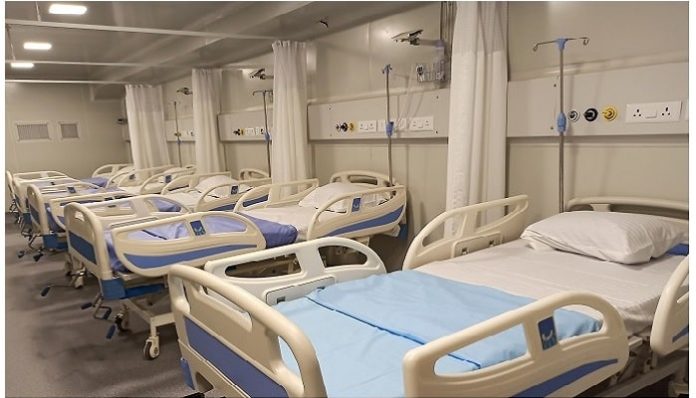
Each mobile medical facility unit has five beds and is entirely prefabricated, making it easy to configure the number of beds based on the needs, as per a statement from the company. It can also be redeployed to different locations across the country using trailers.

โ€œWe need the ICU facilities to be fully airtight and insulated to ensure the safety of our healthcare workers and minimise transmission of the virus,โ€ said Soji Abraham, Senior Vice President, Strategy, Rinac India.

โ€œThanks to BASFโ€˜s Elastopir, the wall panels made with this excellent insulating material can help meet these requirements. With its extra high-temperature stability, the patients can recuperate comfortably with consistent indoor temperatures at 22-25 degrees Celsius. Most importantly, Elastopirโ€™s superior fire performance helps enhance the protection of these facilities against fires.โ€

By reducing air loss and solar gain, Elastopir lowers energy consumption and helps increase the facilitiesโ€™ energy efficiency. For the same insulation performance, panels produced with Elastopir are 50 per cent-100 per cent thinner than other traditional materials such as concrete. With thinner walls and envelopes, the mobile ICU facilities have more usable space and higher flexibility during construction.

โ€œBASF is also sponsoring a unit of the ICU facility as part of its social engagement,โ€ said Andy Postlethwaite, Senior Vice President of Performance Materials, Asia Pacific, BASF. Sponsorship of the ICU facility is by BASF South East Asia and BASF East Asia Regional Headquarters.

โ€œWe aim to โ€˜go beyondโ€™ by developing ever more innovative, sustainable solutions that help our customers, such as Rinac produce the highest quality and most energy-efficient insulation panels for their medical units.โ€

Patient engagement tools can speed, streamline COVID-19 vaccine rollout

 Patient engagement tools can speed, streamline COVID-19 vaccine rollout

As the slower-than-expected COVID-19 vaccine rollout continues around the United States, experts have noted the importance of the “last mile” โ€“ getting dosages into the arms of patients.

Some industry leaders say that although the logistics are certainly important, using existing patient engagement technology to complement vaccination outreach could be key to ensuring that every American who needs protection from COVID-19 can get it.

Guillaume de Zwirek, CEO of Well Health, told Healthcare IT News that he believes the best strategy is to “meet patients where they are.”

“I don’t think healthcare really understands what true patient engagement is,” said de Zwirek, whose company offers patient communication tools. “There is no single common standard. They’re all communicating with patients in different ways.”

“Healthcare is the third-worst industry when it comes to customer service,” de Zwirek continued. “It should be number one.”

De Zwirek noted that labyrinthine messaging systems and unclear pipelines can contribute to patient frustration and health risks.

For instance, at the time of his interview with Healthcare IT News, de Zwirek noted that it had taken him a full hour to book an appointment to get himself and his family tested for COVID-19 after an exposure, “with 12 different phone calls.

When the pandemic first began to sweep across the United States this spring, “the first thing our company did is, we thought about our platform and how we could help our customers handle the influx of patients,” de Zwirek said. “We built out a bunch of workflows.”

Now that the vaccine is becoming more widely available, Well plans to scale up in a similar fashion, he said, noting that 13 integrated delivery networks are using the platform to deliver vaccine-related communications via text message.

Since the beginning of December, the company says it has helped providers schedule more than 8,000 “dose 1” vaccine appointments.

“We took a customer live in four days last week specifically because of the COVID vaccine,” de Zwirek said.

Many electronic health records have been preparing their systems to record COVID-19 vaccinations and report back to health departments, with some using patient portals for vaccine-related communications.

“I’m not here to compete with or replace the patient portal,” said de Zwirek. But he said bundling workflows into the portal inevitably creates friction.

“I got my COVID results yesterday. I got an email with the link to my MyChart and couldn’t remember my password,” he said.

By contrast, there are HIPAA-compliant ways to use texting to convey information to patients.

“If there is an opportunity to eliminate friction, take it,” he said. “There are many use cases that don’t include [protected health information] that will get way higher compliance.”

Greg Johnsen, CEO of LifeLink, points to chatbots as a way to address patient demand and confusion around the vaccine.

“Additional complexities around new documentation, specific follow-up vaccination windows, and an influx of people that are new patients could overwhelm current intake and scheduling processes,” said Johnsen.

“Building a handful of digital assistants versus training thousands of individuals is also a key consideration when it comes to efficiency and cost,” he added.

Johnsen pointed out that conversational AI can engage people on their phones or other devices to help with scheduling, form completion, reminders, directions, screening and follow-up.

He noted that EHR integration is “critical,” saying that EHRs can trigger bots to reach out to patients and help to make the process more personal.

“It makes a difference if the bot knows your name, or knows your doctor, or knows the date you are due to get your second dose of the vaccination,” said Johnsen.

“Conversely, when a digital assistant collects information from patients, that data must be written back to the patient record in the EHR. Conversational AI is at its best when deployed as an engagement layer that ‘wraps’ and extends the big systems of record,” he added.

Like de Zwirek, Johnsen emphasized the importance of smoothing friction wherever possible. He says browser-based programs with a wide range of supported languages can boost access, enabling patient trust and ease of use.

“The human dimension to healthcare is vital and should not be diminished in any way. But the administrative overhead is ripe for automation,” he said.

LifeLink, which enables providers to deliver patient workflows as chatbot conversations, measures engagement as a key performance indicator.

“In light of the expected COVID-19 vaccination volume projections, saving just a few minutes on each case adds up to massive time and efficiency savings,” Johnsen said.

“It could be the difference between achieving herd immunity in 2021, or not,” he predicted.

Pouria Sanae, founder and CEO of ixLayer, said another way to smooth out friction could be streamlining as much pre-vaccination communication as possible.

ixLayer, which offers tools for health testing technology, can be integrated with EHRs to offer physician-ordered, patient-ordered or direct-to-consumer testing.

“When COVID happened, we had everything in place to start COVID testing,” said Sanae, who says ixLayer “sits in the background” for hundreds of COVID testing programs, including the U.S. Coast Guard’s.

Now, with individuals beginning to clamor for access to the COVID-19 vaccine, Sanae says ixLayer can be used for patients’ electronic consent forms and health history in order to make the process smoother.

One advantage, he says, is the platform’s ability to offer solutions “in as many languages as [the providers] want” โ€“ which will be increasingly important as the vaccine becomes available to the wider population.

“Once you’ve done the vaccine, there are patient CRMs in place so you can keep a closed loop,” Sanae continues, which will allow providers to more easily track any severe symptoms or adverse reactions.

As far as accessibility goes, Sanae says the company went through an audit to try and ensure the platform does not present hurdles for users with disabilities.

“But this is something the entire industry needs to improve,” Sanae said.

UCHealth Taps Conversa Health to Track COVID-19 Vaccine Effects on Frontline Healthcare Workers

UCHealth Taps Conversa Health to Track COVID-19 Vaccine Effects on Frontline Healthcare Workers

Conversa Health, a Portland, OR-based automated virtual care and triage platform, has expanded its suite of COVID-19 programs with tools to help the vaccine effort. As part of its expansion, Conversa has partnered with BioIntelliSense to monitor healthcare workers at UCHealth in Colorado before and after receiving COVID-19 vaccinations. UCHealth physicians, nurses, and other front-line staff members wear BioIntelliSenseโ€™s BioButton medical device two days before and seven days after vaccination. The BioButton continuously monitors temperature, respiratory rate and heart rate at rest. Conversa collects information from the BioButton and integrates the vital signs data with insights from a daily interactive vaccination health survey developed by Conversa.

Vaccine education, tracking and screening

Conversa also is assisting health systems across the country with the challenge of vaccinating millions of patients. This effort begins with educating patients on the safety and efficacy of the vaccines. Patients want to know when they will be eligible to receive vaccines and what their experience will be like, including potential side effects. And patients need an easy way to set up vaccine appointments and get reminders to follow through on their visits. Health systems also want to monitor potential side effects, both to ensure patients get needed follow-up care and to report any side effects to the Centers for Disease Control and Prevention.


NHS needs more resources to vaccinate public effectively warns BMA

UK patients urged to self-care ahead of vaccine roll-out

The BMA has warned the NHS will need more resources if it is to vaccinate the public effectively after a new survey has revealed the impact that the COVID-19 pandemic has had on health staff in the UK.

Carried out by the British Medical Association (BMA), the BMA tracker survey of doctors in England, Wales, and Northern Ireland, has shown how a year of unparalleled pressure from working in a global pandemic has left healthcare professionals in the UK understaffed and pushed to the brink of exhaustion.

The impact of COVID-19

New figures from the survey show that 58% of doctors are now suffering from some form of anxiety or depression, with 46% saying their condition had worsened since the start of the COVID-19 pandemic.

67% of doctors also say that current levels of fatigue and exhaustion are higher than normal as they tackle a mounting second wave and a growing backlog of care, on top of the usual seasonal demand.

BMA council chair Dr Chaand Nagpaul has now issued a stark warning that the NHS needs more resources and staff if it is to remain fit for purpose and vaccinate the public effectively.

He said: โ€œThe months ahead will be as challenging, if not more so, as when the virus first peaked in April. We know from our tracker surveys that over four in ten doctorsโ€™ mental health has deteriorated during the pandemic, with many exhausted from working flat out without taking adequate leave for over ten months.

โ€œItโ€™s vital that the vaccination programme is delivered as fast as humanly possible, so that both health and care workers and as much of the population can be immunised to relieve our health service from the scourge of COVID-19. This requires proper resourcing of staff, including GPs and primary care teams, who need to be given the space and time to vaccinate and protect the nation.โ€
Staff numbers

The doctorsโ€™ union fears that the current level of strain brought about by the COVID-19 pandemic could have a lasting impact on workforce numbers as 47% of doctors saying they are now more likely to work fewer hours in the future, and 27% of doctors saying they are now more likely to take early retirement. Another 27% noted in the survey that they are now more likely to take a career break.

With an existing shortage of more than 8,000 consultants and the number of fully qualified GPs continuing to fall, this reduction in staff cannot be afforded says the BMA.

Protecting staff

The BMA is also demanding that those currently working in the health service are properly protected against COVID-19 โ€“ both through vaccination and adequate PPE.

Dr Nagpaul said that we must never go back to an NHS which is under-staffed, under-resourced and under-prepared for surges in demand, let alone a pandemic: โ€œThis year the Chancellor must deliver on his promise to โ€˜give the NHS whatever it needsโ€™. Ultimately, 2021 needs to be a year where doctors feel valued and rewarded for serving the nation in a caring, supportive culture of equal opportunity.


Algorithm to identify heart attack risk before symptoms develop

Australian and New Zealand scientists use AI to predict heart disease risk

The team has been given a grant of ยฃ545,000 from the British Heart Foundation to create and test a computer algorithm capable of detecting undiagnosed coronary heart disease in CT scans.

CT scans are increasingly used to identify a range of diseases, unrelated to the heart. However, there are often signs of hardening of the arteries on these scans.

The researchers are looking to develop an automated way of finding and measuring these signs, and linking them with other risk factors for heart disease. The algorithm would be used to detect patients at risk of heart disease, enabling doctors to potentially treat people before they have a heart attack and potentially saving thousands of lives.

The project is being led by Dr Michelle Williams, from the British Heart Foundationโ€™s Centre for Cardiovascular Science at the University of Edinburgh. She said: โ€œThere are over 10,000 hospital admissions for heart attacks each year in Scotland alone and while survival rates have significantly improved over the years, it is vital we try to find new ways to stop them from happening in the first place.

โ€œThere is much work to be done to develop and test such an algorithm, but ultimately we would hope it could be used to spot the signs of coronary artery disease in clinical practice and identify patients who may otherwise be missed.โ€

The algorithm will be developed and tested using CT scans from previous and on-going research studies at the university.

The British Heart Foundationโ€™s Associate Medical Director, Professor James Leiper, said: โ€œThis is an exciting project that in the future could have real implications for clinicians and most importantly, of course, for patients. Itโ€™s vital we find new ways to identify risk factors for heart disease so we can treat patients before symptoms occur. Over the years, research has played a pivotal role in increasing survival rates from heart attack. In the 1960s, more than seven out of 10 heart attacks in the UK were fatal. Now, thanks in part to research funded by us, at least seven out of 10 people survive and we hope new projects like this one in Edinburgh could help save and improve many more lives.โ€

Amazon, AstraZeneca, Pfizer, Merck to Build $10M Digital Health Innovation Lab in Israel

Amazon, AstraZeneca, Pfizer, Merck to Build $10M Digital Health Innovation Lab in Israel

Pfizer, AstraZeneca, Merck, and Teva, as well as the Israel Biotech Fund and tech giant Amazon Web Services (AWS)โ€” to establish an innovation lab in the fields of digital health and computational biology. The companies were selected from a competitive bid process conducted by the Israel Innovation Authority together with the National Digital Israel Initiative at the National Digital Ministry.

The group will establish the Lab at the Rehovot Science Park and invest in building a wet computational lab infrastructure in order to assist early-stage entrepreneurs and startups to meet the challenges of the healthcare industry, from the ideation stage to attaining proof of concept. The Lab, scheduled to open in 2021, will be joining existing innovation labs as part of the Israel Innovation Authorityโ€™s Innovation Lab Program.

$10M Operational Budget Over Next 5 Years

The innovation lab will operate on a government budget of NIS 32 million ($10M USD), as well as additional funding from the partner companies. The group will operate over the next five years, during which the Innovation Authority, together with the National Digital Ministry, will finance 85% of a total NIS 3 million budget for each startup that joins the lab, enabling them to reach significant milestones in their technological development. The Innovation Authority and National Digital Ministry will also participate in the operating costs and in setting up the labโ€™s infrastructure.

Innovation Lab Focus Areas

The purpose of the Lab is to assist in the establishment and advancement of new startups developing innovative AI-based computational technologies aimed at discovering personalized solutions and treatments. The Lab will also help its startups โ€” with the assistance of the lab partners and access they provide to their unique scientific know-how and leading experts โ€” in developing groundbreaking medications and treatments.

Translate ยป