












Close
Digital Health & Ai Innovation summit 2026
Medical Taiwan 2026

Delphi Research Group Enhances COVIDcast With Change Healthcare COVID-19 De-Identified Claims Data

Delphi Research Group Enhances COVIDcast With Change Healthcare COVID-19 De-Identified Claims Data

Change Healthcare and Carnegie Mellon Universityโ€™s Delphi Research Group today announced the launch of Delphi’s enhanced COVIDcast real-time COVID-19 indicators.

Since April, Delphi has been collecting real-time data on self-reported COVID-19 symptoms and other disease indicators nationwide. This county-level information about the coronavirus pandemic is updated continuously and shared with both the public and health researchers. Now, COVIDcast is taking a further step by adding de-identified COVID-19 claims from Change Healthcare to its unique combination of survey, testing, and mobility data.

“Tracking and forecasting the spread of a novel disease such as COVID-19 is a challenging task that requires new types and sources of data,” said Ryan Tibshirani, co-director of the Delphi Research Group. “We are always evaluating our data streams and looking at ways of filling gaps in our knowledge. Change Healthcare has stepped up in the biggest way possible to give us crucial information for understanding the current state of the pandemic. We are extremely appreciative of their contributions to our effort.”

As a preeminent research university, Carnegie Mellon leverages its leadership in machine learning, statistics, and data science, as well as its partnership with The U.S. Centers for Disease Control and Prevention, to offer a more complete and real-time picture of COVID-19 than previously possible. Its Delphi Research Group works to advance the theory and practice of epidemic forecasting. Now enhanced with Change Healthcare’s de-identified claims, COVIDcast helps researchers better understand the pandemicโ€™s impact at the community level by providing comprehensive, geographically detailed, and continuously updated indicators of pandemic activity. Understanding the impact of the pandemic on individual communities helps researchers learn patterns and identify trends that will make it possible to improve patient treatment within each community. The data used by COVIDcast is de-identified in accordance with HIPAA privacy regulations.

โ€œDelphi groupโ€™s vision is to make epidemiological forecasting as universally accepted and useful as weather forecasting,โ€ said Tim Suther, senior vice president of Data Solutions at Change Healthcare. โ€œThe addition of de-identified COVID-19 claims from Change Healthcare allows COVIDcast to present a more complete, multi-dimensional picture of the pandemic and its impact.โ€

Change Healthcare operates one of the nation’s largest datasets of de-identified claims and remittances. For details on how authorized healthcare stakeholders can use de-identified, aggregated data to help solve some of healthcareโ€™s biggest problems, visit the Healthcare Data and Analytics Solutions site or contact the Change Healthcare sales team.

About Delphi Research Group

Headquartered at Carnegie Mellon University, the Delphi Research Group was founded in 2012 to advance the theory and practice of epidemic forecasting. Beginning in March 2020, we refocused efforts towards combating the COVID-19 pandemic by supporting informed decision-making at federal, state, and local levels of government and in the healthcare sector. Our primary efforts include (i) comprehensive, validated, geographically detailed, and continuously updated indicators of pandemic activity and its impact; (ii) short-term forecasts of epidemic spread and healthcare demand; and (iii) interactive visualizations to make this information available to the wider public.

About Change Healthcare

Change Healthcare is a leading independent healthcare technology company, focused on insights, innovation, and accelerating the transformation of the U.S. healthcare system through the power of the Change Healthcare Platform. We provide data and analytics-driven solutions to improve clinical, financial, administrative, and patient engagement outcomes in the U.S. healthcare system.

 

How Virtual Reality Can Facilitate Better Healthcare Experience

How Virtual Reality Can Facilitate Better Healthcare Experience

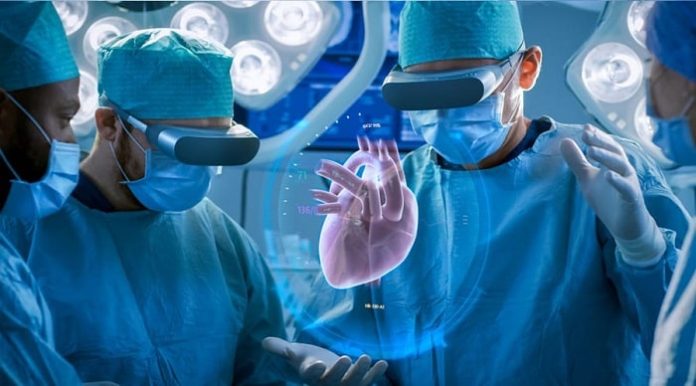
Virtual reality (VR) for enhanced immersive experience is now evolved from a buzzword to a mainstream business arena. It is being used across diverse business areas such as workforce training, 3D simulation to improve productivity, and much more. In healthcare, VR technology is starting to gain ground and visibility as a potential diagnostic tool, delivering full immersive 3D simulation in the treatment of several ailments such as autism, post-traumatic stress disorder, anxiety and severe pain cases. Surgeons are turning to this technology to plan surgical procedures. Not only do medical professionals benefit from VR, but also it reassures patients as they can tour a virtual model of their own body.

VR with closely related augmented reality (AR) can be effective in surgical navigation and robotic surgery. They can assist surgeons to work more quickly and accurately and eliminate potential human error during surgery. AR and VR also provide them with more precise information and visuals that can help a medical professional to make faster and more accurate decisions.

Applications of VR and AR in healthcare are feasible in medical education. By embracing realistic surgical simulators, medical students can better prepare for operating on actual patients by providing realistic views of surgical situations.

Medical Practices Influenced by VR Tech

Since virtual reality in healthcare continues to reach heights, it is changing how medical education and practices have been performed over years. It is likely to be an ideal tool for training in hands-on practices. Indeed, surgical and other interventional procedures are the main fields of application of VR. By leveraging this tech, healthcare professionals can demonstrate to their patients exactly what will be happening during their procedure. They can even clearly explain every step of operation by guiding them through the process step by step.

To train medical students of all kinds, VR medical software is an increasingly prevalent method. It provides medical students who practice surgical procedures ease of operation, with 29 percent faster-operating speeds, six times less likely to make errors, nine times more likely to show marked improvement of skills, and significantly more improvement in hand-eye coordination, according to a study.

Improving Patient Experience Using VR

Virtual reality as well as augmented reality have a broad array of patient-facing use cases such as pain management, therapy and improved patient care by lessening fear. For instance, Cedars-Sinai Medical Center with AppliedVR, a developer of scalable therapeutic VR, implemented VR technology in its department of Surgery and Orthopaedic Center. The medical center also launched a pilot study with devices from Samsung that designed to ease the stress of patients staying in the hospital. The purpose behind this pilot was to test VR scenarios with patients to determine if they enjoyed virtual reality experiences while waiting for procedures or even throughout their hospital stay as an alternative for pain relief.

VR technology is quickly progressing through the healthcare industry, expecting to reach US$2.4 billion by 2026 in the sector. Although the technology is relatively new in this space, there are increasingly great potential VR is having on patientsโ€™ lives and physiciansโ€™ work. Furthermore, there are a growing number of companies offering virtual reality solutions to train surgeons and hone their skills.


3M and Rad AI Partner on AI-Powered Efficiencies for Radiology Reporting

3M and Rad AI Partner on AI-Powered Efficiencies for Radiology Reporting

3M Health Information Systems and Rad AI have teamed up to offer Rad AIโ€™s advanced technology for generating customized radiology report impressions integrated with 3Mโ„ข M*Modal Fluency for Imaging, 3Mโ€™s complete radiology reporting and workflow management solution. By building on the artificial intelligence (AI) capabilities of both companies, 3M and Rad AI will further streamline the reporting process, yielding substantial time savings for radiologists, alleviating burnout, and creating more time to focus on patient care.

โ€œRad AI and 3M share a common goal of helping radiology teams become stronger and more resilient in the face of growing demand, complex regulations and increased competition,โ€ said Dr. Jeff Chang, ER radiologist and Rad AI co-founder. โ€œWorking together, we can streamline radiology workflows so radiologists experience less burnout and can enjoy their daily practice to the fullest.โ€ According to Chang, radiologists can experience total time savings of up to 24 percent by using Rad AI software to automatically generate customized report impressions as part of their standard speech-driven reporting workflow.

3M Health Information Systems and Rad AI will demo the integrated workflow at RSNA 2020, the annual conference of the Radiological Society of North America which is scheduled for Nov. 29 โ€“ Dec. 5 in a virtual format.

Enhanced with computer-assisted physician documentation (CAPD) technology, 3M Fluency for Imaging offers proactive, real-time clinical insights to radiologists, helping them close gaps in clinical documentation. Accurate documentation and coding are a critical focus for radiology practices given major changes to Evaluation and Management (E/M) Services coding scheduled for January 2021.

Abercrombie Radiology, an imaging services provider with 25 radiologists in Knoxville, TN, is using 3M Fluency for Imaging integrated with the 3Mโ„ข CodeAssistโ„ข System for professional fee coding to promote coding compliance and accurate reimbursement. In a pilot of automated CAPD nudges for just three coding concepts, radiologists were able to capture greater documentation specificity for a projected annualized financial impact of $150,000 in increased reimbursement.

โ€œLike all radiology practices, keeping pace with changing regulations is important to our financial health,โ€ said Shannon Hampson, chief executive officer of Abercrombie Radiology. โ€œ3M M*Modal technology helps our radiologists document the full patient story in real-time, during their standard reporting workflow. We avoid back-end coding queries and corrections so our radiologists can focus on patient care. And it gives us confidence that our coding and reimbursement is as accurate as possible.โ€

Ranked #1 KLAS Category Leader, Front-End Speech Recognition, Imaging for 2020, 3M Fluency for Imaging combines advanced front-end speech recognition technology and integrated productivity enhancing tools for faster creation of higher quality diagnostic interpretations. Additionally, 3Mโ„ข M*Modal Scout provides AI-powered analytics that help monitor and improve overall clinical and business outcomes.

About Rad AI

Rad AI aims to streamline radiology workflow, providing time savings for radiologists and improving report consistency, while helping reduce radiologist burnout. Co-founded by the youngest US radiologist on record, Rad AI is working with 5 of the 10 largest radiology practices in the US and expanding quickly. Rad AI is based in Berkeley, CA, and backed by Gradient (Alphabetโ€™s AI fund, which invests in the top companies using AI to positively transform their fields). Learn more about Rad AI at www.radai.com or on Twitter @radai.

About 3M

At 3M, we apply science in collaborative ways to improve lives daily. With $32 billion in sales, our 96,000 employees connect with customers all around the world.

Medical Billing a Challenge for Struggling Primary Care Practices

 VA Announces First Cerner EHR Go-Live at Mann-Grandstaff VA Medical Center

Over half of primary care clinicians say their practice is overwhelmed by constantly changing medical billing rules and some are having to alter processes to accommodate new patient needs.

Medical billing is a major challenge for primary care practices already struggling to stay afloat during the COVID-19 pandemic, according to a new survey of nearly 1,500 primary care clinicians.

The survey conducted by the Primary Care Collaborative, the Larry A. Green Center, and 3rd Generation found that 52 percent of responding primary care clinicians said their practice is often overwhelmed with constantly changing information, including protocols and billing codes.

Patient questions are also becoming overwhelming for clinicians. About 43 percent of respondents said high volumes of patient questions are creating administrative hurdles and operational challenges during the pandemic.

In response, many primary care practices are making changes to their medical billing processes in order to accommodate new patient needs, such financial assistance with bills.

A fifth of clinicians said their practices have waived copays and reduced fees to accommodate loss of employment and/or health insurance among their patients. About an equal proportion of practices are also getting more involved with assisting with food insecurity and housing insecurity, as clinicians see increasing levels of unemployment, as well as food and housing insecurity.

The changes align with evolving patient needs during pandemic, which clinicians are noticing. For example, 64 percent said their patients have higher levels of unemployment and a third have observed higher levels of food and housing insecurity.

Primary care practices are also accommodating increased demand for telehealth services. The survey found that telehealth use continues to be prevalent, with almost 70 percent of surveyed clinicians saying they used telehealth over the last four weeks for patients with stable chronic conditions and 64 percent are using it for mental or behavioral health counseling.

Clinicians are also still engaging with audio-only services, with about 37 percent of survey respondents saying they used phone-based care for at least 20 percent of their patients.

While these accommodations are helping to keep patients healthy during the pandemic, they are creating operational and financial challenges for practices trying to stay afloat during the difficult time.

About a quarter of clinicians responding to the survey reported that their practiceโ€™s fee-for-service volume is still over 30 percent lower than pre-pandemic levels.

Additionally, the financial fallout from the loss of in-person visits has led some practices to close (2 percent) or merge with larger systems (5 percent). Additionally, 44 percent of clinicians said they have reduced or skipped their salaries altogether.

For now, telehealth reimbursement continues to be on par with in-person care rates – only 16 percent of clinicians said that video visits were not covered at parity with in-person care. Although, another 28 percent said they were โ€œunsureโ€ and nearly half said phone visits were not covered at parity with in-person care.

But ensuring payment parity for both video and phone visits at least until a vaccine is available is critical to the financial sustainability of primary care practices, researchers stated. They also urged payers to waive all copays and deductibles for primary care and for immediate investment in the primary care workforce.

โ€œKeeping primary care robust and able to respond to myriad patient needs โ€“ medical and beyond โ€“ is going to take payers committed to continuing telehealth parity, reducing financial barriers patients face in getting primary care, and providing additional support,โ€ said Ann Greiner, president and CEO of the PCC. โ€œFurther strengthening primary care is good medicine for patients and the health system overall.โ€

UK patients urged to self-care ahead of vaccine roll-out

UK patients urged to self-care ahead of vaccine roll-out

GPs in the UK have been urged to encourage patients to self-care, in advance of the anticipated roll-out of COVID-19 vaccines and the extra workload this will create.

Findings of a survey from the digital self-care platform Healthily show GPs reported half of all appointments are for conditions that could have been managed by patients themselves.

The medically-approved self-care platform is this month launching its #LiveHealthily campaign encouraging people from the UK to take control of their health.

The survey of 2,200 adults and 100 GPs showed that 67% of family doctors urged patients to take greater responsibility for their own health and relieve pressure on the NHS as restrictions continue.

Findings of the survey carried out by Census Wide showed that 41% of GPs would urge people to practise better self-care and stay away from surgeries unless โ€œabsolutely necessaryโ€.

The common cold tops the list of conditions GPs are encouraging people to self-manage at 60% followed by cold sores (47%), insect bites (45%), simple sprains (45%) and dandruff (44%).

The Local Government Association has found 1 in 5 GP appointments are for minor ailments, including headaches, heartburn or a blocked nose, which people can treat themselves.

Minor conditions are responsible for 57 million GP visits and 3.7 million A&E admissions every year, costing the NHS over ยฃ2 billion.

Previous research by Healthily has shown that instead of accessing NHS services during the lockdown, more than one in ten (12%) have turned to healthcare apps or websites for advice and support since the start of the COVID-19 outbreak in the UK.

Of those, four in ten (41%) reported doing so in order to relieve pressure on the NHS. Almost a fifth of all respondents (17%) self-treated an illness they would usually contact a clinician for, such as headaches, an upset stomach, or splinters.

Commenting on the findings Professor Maureen Baker, former chair of the Royal College of General Practitioners and chief medical officer at Healthily said: โ€œWe must ensure that we are doing our best to relieve pressure on GPs and NHS staff during this difficult time.

โ€œThe pandemic has had a huge impact on society, but it has also helped the public to embrace self-care, that is a positive thing when there are so many things people can manage themselves.โ€


CMS Unveils New Telehealth Program to Treat Acute Care Patients at Home

CMS Unveils New Telehealth Program to Treat Acute Care Patients at Home

Six health systems across the country are expanding their telehealth platform to treat patients at home under a new program launched by the Centers for Medicare & Medicaid Services.

The Acute Hospital Care at Home program will give participating hospitals the ability to reduce inpatient volume by treating certain acute care patients at home through a telehealth platform that allows for daily check-ins and monitoring. The program builds off of CMSโ€™ Hospitals Without Walls program, which was launched in March 2020 to expand connected health programs to the home during the coronavirus pandemic.

โ€œWeโ€™re at a new level of crisis response with COVID-19 and CMS is leveraging the latest innovations and technology to help health care systems that are facing significant challenges to increase their capacity to make sure patients get the care they need,โ€ CMS Administrator Seema Verma said in a press release. โ€œWith new areas across the country experiencing significant challenges to the capacity of their health care systems, our job is to make sure that CMS regulations are not standing in the way of patient care for COVID-19 and beyond.โ€

The program is designed for patients who would otherwise require hospitalizations for a broad range of acute conditions, including asthma, congestive heart failure, pneumonia and chronic obstructive pulmonary disease (COPD). To qualify for CMS waivers, participating hospitals would have to screen patients and their homes to assess compatibility, a process that would include an analysis of working utilities and broadband access, family issues and mobility concerns.

โ€œThe program clearly differentiates the delivery of acute hospital care at home from more traditional home health services,โ€ CMS said in the press release. โ€œWhile home health care provides important skilled nursing and other skilled care services, Acute Hospital Care at Home is for beneficiaries who require acute inpatient admission to a hospital and who require at least daily rounding by a physician and a medical team monitoring their care needs on an ongoing basis.โ€

The agency said qualifying patients will only be admitted into the program from the Emergency Department or in-patient care, with an in-person exam required prior to being sent home. Once situated there, the patient would be evaluated daily by a registered nurse โ€“ either in person or via telehealth โ€“ and two other daily in-person visits would be help with registered nurses or mobile integrated health (MIH) paramedics, based on the care needed.

Along with introducing the new program, the agency identified six health systems that have already been approved to use it: Brigham and Womenโ€™s Hospital and Massachusetts General Hospital in Massachusetts, the Mount Sinai Health System in New York, Huntsman Cancer Institute in Utah, Presbyterian Healthcare Services in New Mexico and UnityPoint Health in Iowa.

โ€œThe home hospital approach has repeatedly demonstrated its enormous benefit and value as an important treatment option for patients,โ€ Mass General President Peter Slavin, MD, said in a separate release issued by CMS highlighting the six health systems. โ€œThis innovative model has made available safe, cost-effective hospital-level care to patients at home โ€“ a reassuring environment that is comfortable, familiar and healing. CMSโ€™ decision to cover home hospital care will not only make this program more viable but will also enable more patients and families to experience this high quality high-level of care in their own homes in their own communities.โ€

CMS officials said they will โ€œclosely monitor the program to safeguard beneficiaries by requiring hospitals to report quality and safety data to CMS on a frequency that is based on their prior experience with the Hospital At Home model.โ€

Longhua Hospital integrates Microsoft Surface for Business to enhance its mobile healthcare services

Longhua Hospital integrates Microsoft Surface for Business to enhance its mobile healthcare services

Longhua Hospital, Shanghaiโ€™s first internet medical institution, has integrated Microsoft Surface for Business across their daily operations and patient care to support evolving healthcare demands amid COVID-19. The hospital is leading the way in mobile healthcare and research by integrating technology to drive transformation across the sector in China.

Behind their success is a 2-in-1 device โ€“ Microsoft Surface Pro 7 for Business โ€“ that addresses the diverse needs of Chinaโ€™s medical staff in mobile healthcare and at the office. The integration of Surface has generated higher productivity and safety across Longhua Hospitalโ€™s office and mobile healthcare services, allowing them to respond efficiently to patient needs. This is also supported by Office 365 Enterprise that enables effective cross-functional collaboration within the hospital.

โ€œThe integration of Surface at Longhua Hospital has transformed the way healthcare institutions serve its patients, especially during this pandemic. The most prominent feature of Surface is its convenience, supporting the productivity and efficiency of medical practitioners at work. The device is also lightweight with a long battery life and has a touchscreen and stylus to meet the multi-functional requirements of hospitals. Today, medical staff can use Surface devices effortlessly in their everyday work and communication,โ€ said Mr. Dong Liang, CIO, Longhua Hospital.

Achieving optimum productivity with the right hardware and software

Compatibility and versatility were key considerations in developing a connected ecosystem of hardware and software for Longhua Hospitalโ€™s Information Center. In this respect, Surface became the biggest advantage of Microsoftโ€™s integrated software and hardware solution, enhancing the management experience for users and the IT department. Longhua Hospital achieved a new omnichannel experience with smooth end-to-end data flow, vastly improving hospital productivity.

Microsoft Surface for Business series โ€“ including Surface Book, Surface Laptop, and Surface Studio โ€“ created a rich and comprehensive experience for staff across the hospitalโ€™s many departments. All devices were pre-installed with Windows 10 Professional, providing advanced security protection, enterprise-grade manageability, and enhanced productivity tools for all staff.

Additionally, Longhua Hospital upgraded its information architecture to simplify IT operations, allowing medical staff to access the Windows Server on multiple devices at work. This software was developed on the Windows operating system (OS) making the upgrade to the latest Surface devices seamless and fuss-free.
Longhua Hospital plans to deploy the Surfaceโ€™s capabilities in its advanced 5G lab, doctor training, and university student internships.

Shaping a digital future for healthcare in China

From medical informatization to โ€œInternet Plusโ€ action plan to mobile healthcare, Microsoft is a longtime partner for Longhua Hospital for more than 20 years and together, they continue to pave the way for greater digital healthcare adoption. With its affiliation to the Shanghai University of Traditional Chinese Medicine, Longhua Hospital seeks to integrate Surface devices for a wide range of educational purposes, including rigorous joint training sessions for doctors and physicians, as well as university student internships. Surface will also soon be deployed in the hospitalโ€™s advanced 5G lab, a step further to digitize and upgrade themselves.

About Microsoft

Microsoft enables digital transformation for the era of the intelligent cloud and intelligent edge. Its mission is to empower every person and every organization on the planet to achieve more.

About Longhua Hospital

Founded in July 1960, Longhua Hospital affiliated to Shanghai University of Traditional Chinese Medicine (TCM) is one of the four earliest built TCM clinical centers in China. Over 50 years, Longhua Hospital has been dedicated to the development of TCM and is known nationwide for the outstanding patient care provided by its physicians and staff. With its distinguished offerings and expertise in TCM, Longhua Hospital is well-known for combining health care, education, and scientific research. It is regarded as an exemplary model TCM hospital and is categorized as a Shanghai grade III level A hospital.


Oliver Healthcare Packaging Celebrates Expanded Manufacturing Facility in Feasterville, PA

Oliver Healthcare Packaging Celebrates Expanded Manufacturing Facility in Feasterville, PA

Oliver Healthcare Packaging Company celebrated the grand opening of an expanded manufacturing facility in Feasterville, Pennsylvania.

The updated facility includes a new ~37,000 square foot high-bay warehouse for material storage. The new warehouse has been optimized for pick-and-pull, delivery, and final shipment to ensure organizational and labor efficiency, which will lead to improved customer support & service. As a part of the facility expansion, Oliver added a new ~7,000 square foot ISO 8 cleanroom and connected their two existing facilities to improve operational efficiency and safety. The update to the Feasterville facility is just one of the many investments Oliver has made to ensure future growth and customer success.

ABOUT OLIVER HEALTHCARE PACKAGING COMPANY
Oliver Healthcare Packaging Company is a leading supplier of sterile barrier packaging solutions. Oliver offers sterile-grade die-cut lid, roll stock, HDPE card, and pouch products to the medical device and pharmaceutical markets. Headquartered in Grand Rapids, MI, Oliver has manufacturing operations in Feasterville, PA; New Britain, PA; Hamilton, OH; Anaheim, CA; Venray, Netherlands; and Suzhou, China; and has sales offices and technical centers throughout the United States, Europe, China and Singapore.

Bayer and Blackford Analysis to Collaborate on Integration of AI Solutions in Medical Imaging Workflow

Elucid Bio's vascuCAP enters IBM Imaging AI Marketplace

Bayer and Blackford Analysis Ltd announced a development and license agreement to establish a digital platform for medical imaging. The platform will provide access to a curated marketplace through which healthcare professionals can centrally manage digital clinical imaging and workflow applications including artificial intelligence (AI) enabled solutions. These will be created by Bayer together with its strategic partners. Integrated into the medical imaging workflow, these offerings will aim to support the complex decision-making processes of radiologists and their teams.

โ€œOur partnership with Blackford Analysis will accelerate innovation in the field of overall disease managementโ€, said Alexandre Salvador, new Head of Digital Business Solutions, Radiology, Bayer AG. โ€œBy driving forward AI-enabled medical imaging, we support radiologists and their teams in providing clear direction from diagnosis to care.โ€

โ€œWe are pleased that Bayer, as a leading life science company, has chosen to partner with Blackford to support the delivery of their medical imaging platformโ€, said Ben Panter, Chief Executive Officer Blackford Analysis. โ€œThe collaboration will leverage Blackfordโ€™s knowledge and experience as one of the first and most widely deployed platform providers in the industry. This expertise and our advanced platform technology will empower Bayer in offering solutions which aim to deliver clinical value to their customersโ€™ existing workflows.โ€

The new platform will be focused on enhancing diagnostic confidence while enabling earlier disease management and interventions for patients. The announcement was made at this yearโ€™s annual meeting of the Radiological Society of North America (RSNA), which is taking place virtually from 29 November to 5 December 2020.

With aging populations and changing lifestyles leading to an increase in chronic conditions such as cardiovascular disease and other severe illnesses like cancer, the need for medical imaging to facilitate diagnosis, treatment decisions and therapy planning is growing exponentially. However, medical imaging data continues to increase and becomes ever more complex at a disproportionate rate when compared with the number of available trained readers. Studies report that, in some cases, an average radiologist must interpret one image every 3โ€“4 seconds in an 8-hour workday to meet demands. These trends drive an increasing need for integrated solutions which support radiology suites to manage complexity and deliver accurate diagnostic information more efficiently.

The digital platform by Bayer and Blackford Analysis will provide access to a growing number of diagnostic imaging analysis applications, protocol management tools, departmental workflow tools and AI algorithms. Integrated into the radiology workflow, such offerings have the potential to increase efficiency and reduce errors as well as the level of manual input needed โ€“ for example, by providing trained radiologists with pre-screened images and identified features.

Under the terms of the agreement, Blackford Analysis will provide the underlying technology for Bayer. Bayer will use the technology to provide integrated digital solutions developed both in-house and in cooperation with third parties.

About Bayer in Radiology
Everyone deserves clear answers about their health, starting with an early and accurate diagnosis. As a true life-science company with a heritage of around 100 years in Radiology, Bayer is committed to providing excellence, from innovative products to high-quality services. The portfolio includes contrast media for computed tomography (CT), X-Ray, and magnetic resonance imaging (MRI), devices for their precise administration, informatics solutions to support efficient and optimal patient care, as well as acknowledged educational programs. In addition, Bayer is strongly committed to research and development and leverages artificial intelligence, thus further driving innovation in medical imaging. Each of these offerings helps radiologists in their mission to deliver answers and a clear direction โ€“ from diagnosis to care.

About Artificial Intelligence at Bayer Pharmaceuticals
Artificial intelligence provides significant opportunities for Bayerโ€™s Pharmaceuticals business. Bayer is committed to realizing the potential value associated with big data, advanced analytics, and artificial intelligence, as it continues to explore and leverage them along the value chain. Bayer believes that there are three ways that artificial intelligence could be applied in our business: to strengthen and accelerate innovation, to advance operations and to identify new business opportunities. Such technologies could therefore support Bayer in getting the right treatment to the right patient at the right time, more efficiently and faster than we do today.

About Bayer
Bayer is a global enterprise with core competencies in the life science fields of health care and nutrition. Its products and services are designed to benefit people by supporting efforts to overcome the major challenges presented by a growing and aging global population. At the same time, the Group aims to increase its earning power and create value through innovation and growth. Bayer is committed to the principles of sustainable development, and the Bayer brand stands for trust, reliability and quality throughout the world. In fiscal 2019, the Group employed around 104,000 people and had sales of 43.5 billion euros. Capital expenditures amounted to 2.9 billion euros, R&D expenses to 5.3 billion euros.

About Blackford Analysis
Founded in 2010, Blackford provides an independent platform for the effective selection, deployment, management and use of best-in-class medical imaging applications and AI. As one of the first and most widely deployed platform providers in the industry, Blackford is focused on delivering clinical value and operational ROI to their customers. From their deep roots in partnership to their intense focus on clinical value and technical excellence, the Blackford platform is geared towards providing multiple imaging applications and AI that deliver the best results within customersโ€™ existing workflow.

Canon Medical Continues to Boost Image Quality Across Modalities with Further Expansion of Its AI-Based Image Reconstruction Technology

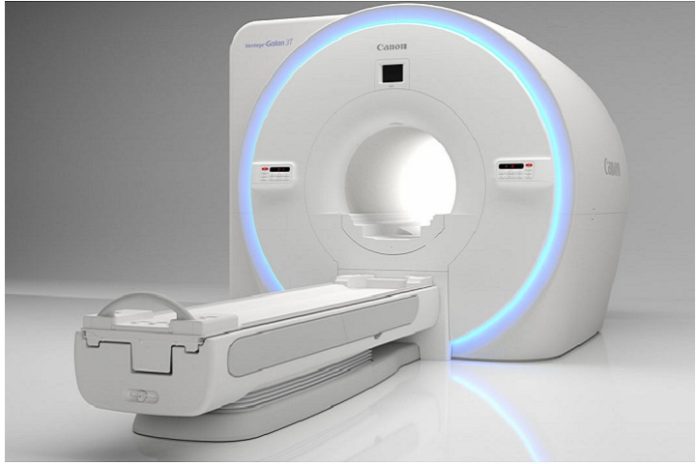
Canon Medicals 3T MR System Receives FDA Clearance for AI Based Image Reconstruction Technology

Canon Medical is bringing the power of accessible artificial intelligence (AI) for improved image quality to more patients. The company is expanding its Advanced intelligent Clear-IQ Engine (AiCE) Deep Learning Reconstruction (DLR) to additional modalities, clinical indications and systems, making this the widest availability of DLR imaging technology.

โ€œAs we continue to expand the availability of AiCE, Canon Medical is ensuring that the maximum number of patients can benefit from the advanced images, expanded clinical capabilities and seamless integration that this advanced AI technology provides,โ€ said Satrajit Misra, vice president, Marketing, Canon Medical Systems USA, Inc. โ€œIn todayโ€™s environment, making images easy to read and acquire is more important than ever, and this is the latest demonstration of our commitment to offering accessible AI that clinicians can use to make the greatest impact on patient care.โ€

AiCE was trained using vast amounts of high-quality image data, and features a deep learning neural network that can reduce noise and boost signal to quickly deliver sharp, clear and distinct images, further opening doors for advancements across multiple imaging exam types.

Introducing AI for MI

Bringing the power of artificial intelligence (AI) to molecular imaging, Canon Medical will showcase AiCE DLR for the Cartesion Prime Digital PET/CT system (pending 510(k) clearance) at this yearโ€™s RSNA annual meeting. An innovative approach to reconstruction, AiCE on the Cartesion Prime Digital PET/CT can bring the possibility of faster scan times, lower dose and improved image quality than traditionally acquired during both the PET and CT acquisitions.

DLR Now Widely Available for CT Radiology Portfolio

Canon Medical first brought AiCE DLR technology to CT in 2018, and now that technology is available across many CT scanners in its radiology portfolio. AiCE is seamlessly integrated into routine CT workflow for operational efficiency without causing any extra steps, producing sharp, clear and distinct images at low doses.

Canon Medical has once again brought advanced innovation across product lines and continues to deliver on its commitment to provide the same level of high-quality care for every patient.

AiCE Expands Indications and Applications in MR

AiCE DLR is now available for virtually all types of clinical exams on Canon Medicalโ€™s Vantage Orian 1.5T MRI system.* The capacity to scan a vastly larger number of clinical indications, from prostate to shoulders, including all joints, cardiac, pelvis, abdomen and spine, in combination with accelerated scan technologies like Compressed SPEEDER, empowers clinicians using MR to boost their image quality, performance and productivity on a whole new scale.

With the expansion of indications, Canon Medicalโ€™s AiCE Challenge has also expanded. To see if you can tell the difference between 1.5T AiCE and traditional 3T image quality, take the AiCE Challenge today.

Learn more about the expansion of AiCE DLR at this yearโ€™s virtual RSNA annual meeting at Canon Medicalโ€™s unique, immersive booth experience.

About Canon Medical Systems USA, Inc.

Canon Medical Systems USA, Inc., headquartered in Tustin, Calif., markets, sells, distributes and services radiology and cardiovascular systems, including CT, MR, ultrasound, X-ray and interventional X-ray equipment.

About Canon Medical Systems Corporation

Canon Medical offers a full range of diagnostic medical imaging solutions including CT, X-Ray, Ultrasound, Vascular and MR, as well as a full suite of Healthcare IT solutions, across the globe. In line with our continued Made for Life philosophy, patients are at the heart of everything we do. Our mission is to provide medical professionals with solutions that support their efforts in contributing to the health and wellbeing of patients worldwide. Our goal is to deliver optimum health opportunities for patients through uncompromised performance, comfort and safety features.

At Canon Medical, we work hand in hand with our partners – our medical, academic and research community. We build relationships based on transparency, trust and respect. Together as one, we strive to create industry-leading solutions that deliver an enriched quality of life. For more information, visit the Canon Medical website: https://global.medical.canon.


Translate ยป