










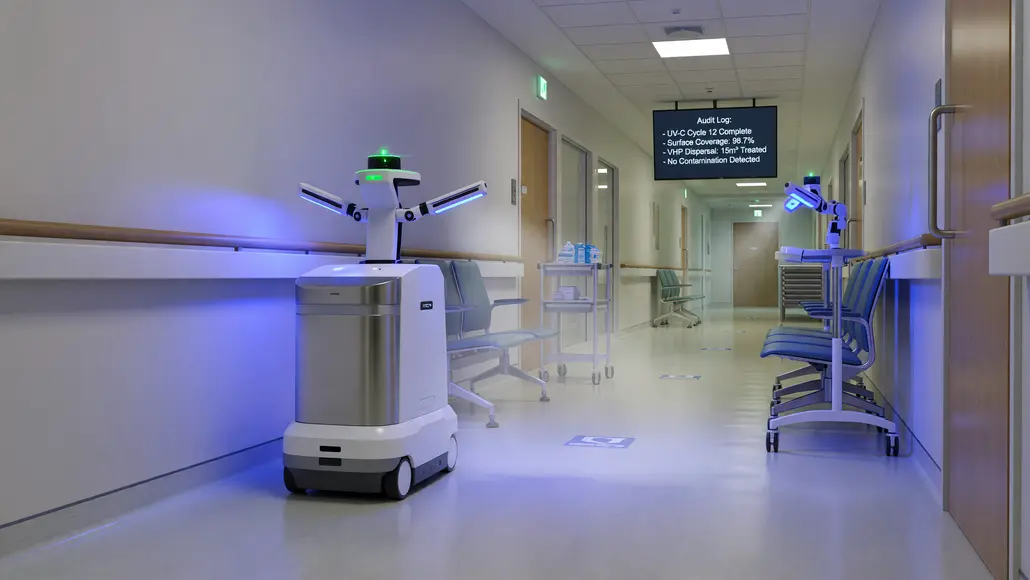
The global healthcare community has long faced a formidable opponent in the form of hospital-acquired infections (HAIs), which contribute to thousands of patient complications and significant financial strain on medical systems each year. Traditional cleaning methods, while essential, are often limited by human error, the invisible nature of microscopic pathogens, and the sheer volume of surfaces that require constant sterilization. As the medical industry searches for more robust solutions, the integration of fighting hospital infections with autonomous robots is emerging as a critical line of defense. These sophisticated machines bring a level of consistency and thoroughness to the sanitation process that manual labor alone cannot achieve. By utilizing cutting-edge technology such as ultraviolet-C (UV-C) light and electrostatic spraying, autonomous robots are transforming hospitals into safer environments for both patients and healthcare providers.
The Technological Vanguard of Infection Control Robots
The primary strength of infection control robots lies in their ability to operate without human supervision in high-risk environments. Many of these units are equipped with high-intensity UV-C lamps that emit light at a specific wavelength (typically 254 nanometers), which is lethal to the DNA and RNA of microorganisms like MRSA, C. difficile, and even seasonal viruses. Unlike liquid disinfectants, which require precise contact times and can be missed in hard-to-reach areas, UV-C light fills a room, reflecting off surfaces and penetrating the shadows to ensure a comprehensive kill rate. This form of hospital sanitation automation allows for the disinfection of entire operating rooms or patient suites in a fraction of the time it would take a manual crew, and with a significantly higher degree of measurable efficacy. The robots navigate using advanced lidar and mapping software, ensuring that every square inch of a targeted area is exposed to the germicidal light.
In addition to UV-C technology, some robots use vaporized hydrogen peroxide (VHP) to provide a deeper level of sterilization. VHP is a powerful antimicrobial agent that can penetrate permeable materials such as upholstery and ventilation filters, where traditional liquid wipes might be ineffective. By automating the dispersal and neutralization of VHP, hospitals can achieve a “six-log reduction” in pathogens, which is the scientific gold standard for sterilization. This multi-modal approach to fighting hospital infections with autonomous robots ensures that the environment is sanitized at a microscopic level, significantly reducing the environmental reservoir of bacteria and viruses that contribute to cross-contamination between patients.
Implementing UV Robots Healthcare Protocols
Integrating UV robots healthcare protocols into the daily workflow of a busy hospital requires careful planning and coordination between environmental services and clinical staff. Because UV-C light is harmful to human skin and eyes, these robots are designed to operate in unoccupied spaces. They use motion sensors and sophisticated safety algorithms to immediately shut down if a door is opened or if a person enters the room unexpectedly. This level of healthcare safety technology is essential for maintaining a secure environment while the robot performs its duties. Once a room is cleared of patients and staff, the robot is deployed, and it systematically moves through the space, following a pre-programmed path that targets “high-touch” surfaces like bed rails, light switches, and medical equipment. The data from each cleaning cycle is then uploaded to a central server, providing hospital administrators with a verifiable audit trail of sanitation activities.
Beyond simple surface disinfection, these protocols are increasingly being used to sanitize high-traffic public areas, such as waiting rooms and corridors, during off-peak hours. This proactive approach to infection control ensures that the “background” environment of the hospital is consistently maintained at a high level of hygiene, reducing the overall microbial load of the facility. For hospitals with large, open spaces, the use of autonomous robots is far more cost-effective than manual labor, as a single unit can cover thousands of square feet in a single overnight shift. This allows for a more comprehensive and frequent cleaning schedule, which is a key factor in breaking the chain of infection in a complex healthcare setting.
Comparing Disinfection Robots to Traditional Methods
When comparing disinfection robots to traditional manual cleaning, the differences in consistency and speed are striking. While a dedicated cleaning person is vital for removing physical debris and biological material, they are limited by physical fatigue and the potential for oversight. In contrast, an autonomous robot performs with the same level of intensity and precision on its tenth room of the day as it did on its first. Furthermore, many modern robots are now using “dry” disinfection methods, such as hydrogen peroxide vapor or specialized chemical mists, which can reach deep into ventilation systems and upholstery where pathogens often hide. This multi-modal approach to fighting hospital infections with autonomous robots ensures that the environment is sanitized at a microscopic level, significantly reducing the environmental reservoir of bacteria and viruses that contribute to cross-contamination between patients.
The ability to measure and verify the cleaning results is another significant advantage of robotic systems. Most autonomous disinfection units are equipped with sensors that track the amount of light or chemical exposure at various points in a room. This data can be compared against established biological kill rates to confirm that the room is truly safe for the next patient. In a manual cleaning scenario, the quality of the work is often subjective and difficult to verify without expensive and time-consuming biological testing. By providing a digital record of every cleaning cycle, robots offer a level of transparency and accountability that is essential for modern healthcare quality management. This data can also be used to identify areas of the hospital that are particularly prone to contamination, allowing for targeted interventions and improvements in workflow.
Economic and Clinical Impact of Hospital Sanitation Automation
The financial implications of hospital-acquired infections are staggering, often costing facilities tens of thousands of dollars per infected patient in additional care and extended stays. By investing in infection control robots, hospitals can realize a substantial return on investment through the reduction of these preventable complications. Clinically, the impact is even more profound. Studies have shown that facilities utilizing automated disinfection systems see a measurable decrease in the transmission rates of antibiotic-resistant organisms. This improvement in the safety profile of the hospital not only saves lives but also enhances the facility’s reputation and compliance with stringent healthcare regulations. As regulatory bodies continue to place a greater emphasis on patient safety metrics, the adoption of autonomous sanitation technology is becoming a necessity rather than an elective luxury for modern medical centers.
Furthermore, the reduction in HAIs leads to a more efficient use of hospital resources. Fewer infections mean fewer patients requiring isolation, specialized antibiotics, and intensive care. This frees up hospital beds and staff to treat other patients, increasing the facility’s overall throughput and financial stability. In an era where healthcare systems are increasingly focused on “value-based care,” the ability to demonstrate a lower rate of preventable complications is a major competitive advantage. For many hospitals, the cost of a fleet of disinfection robots is easily justified by the prevention of just a few serious surgical site infections or pneumonia cases per year. The long-term benefits to patient health and institutional viability make robotic sanitation a cornerstone of a modern healthcare strategy.
Overcoming Obstacles to Widespread Robotic Disinfection
Despite the clear advantages, the transition to fully autonomous infection control is not without its challenges. The initial cost of high-quality disinfection robots can be a significant barrier for smaller community hospitals or clinics with limited budgets. Additionally, there is the ongoing need for technical support and software updates to ensure the machines remain effective against emerging pathogen strains. There is also a cultural component to consider; hospital staff must be trained to work alongside these machines, understanding their role as a supplement to, rather than a replacement for, existing cleaning protocols. To address these issues, some manufacturers are offering “robots as a service” models, allowing hospitals to lease the technology and receive regular maintenance and upgrades, thereby lowering the barrier to entry and ensuring that the latest sanitation technology is accessible to more facilities.
Another technical challenge is the complexity of hospital environments, which often contain delicate medical equipment that could be damaged by certain types of disinfection, such as high-intensity UV-C or caustic chemical vapors. Modern robots must be equipped with sophisticated vision systems to identify and protect these sensitive items while still providing thorough disinfection for the rest of the room. This requires a high degree of “situational awareness” and the ability to adapt to changing room layouts. As the technology continues to evolve, we can expect to see more specialized robots that are tailored for specific hospital environments, such as neonatal intensive care units or high-end diagnostic suites, where the requirements for safety and precision are even higher.
The Role of Data and AI in Future Infection Control
The next generation of fighting hospital infections with autonomous robots will likely incorporate even more advanced artificial intelligence to optimize cleaning schedules. By analyzing real-time data from patient flow and bed management systems, these robots could be automatically dispatched to a room as soon as a patient is discharged, ensuring that the space is sanitized and ready for the next occupant with minimal delay. Some systems are already being developed with sensors that can detect the presence of specific pathogens in the air or on surfaces, allowing the robot to adjust its disinfection intensity based on the actual biological load of the environment. This level of intelligent automation would represent a significant leap forward in our ability to maintain a sterile clinical environment, moving from scheduled cleaning to a reactive, data-driven defense system.
These AI models could also be used to predict the “path of an outbreak” within a hospital. By correlating data from infection control robots with electronic health record data, administrators could identify hotspots where cross-contamination is occurring and deploy a surge of robotic sanitation to those areas. This “precision disinfection” approach would be far more effective than traditional blanket cleaning methods, allowing hospitals to squash an outbreak before it can spread. As we collect more data on the interactions between hospital environments, patients, and pathogens, the role of AI in guiding robotic infection control will become increasingly vital, turning the hospital into a self-healing environment that actively works to protect its occupants.
Advancing Healthcare Safety Through Innovation
As we move forward, the role of robotics in hospital safety will only continue to grow. Beyond just cleaning, we are seeing the emergence of robots designed for sterile material transport, ensuring that surgical instruments and medications are moved through the facility without the risk of contamination. The integration of fighting hospital infections with autonomous robots is a testament to the power of technology to solve some of the most persistent and dangerous problems in medicine. By embracing these innovations, healthcare leaders are not just improving their operational efficiency; they are fulfilling their fundamental promise to patients: to provide a place of healing that is as safe as it is advanced.
The synergy of human oversight and robotic precision is creating a new standard of cleanliness that will protect the most vulnerable among us for years to come. We are moving toward a future where “clinical grade” sanitation is no longer a goal but a guaranteed baseline for every patient, in every room, every day. As the technology becomes more pervasive and the costs continue to fall, the autonomous disinfection robot will likely become as common in the hospital as the stethoscope or the heart rate monitor a silent, tireless guardian of patient health that works in the background to ensure that the hospital remains a sanctuary of recovery and care.